Pain Management in Infants and Children Celeste Martin
- Slides: 40
Pain Management in Infants and Children Celeste Martin, MD Elisha Peterson, MD FAAP Children’s National Hospital
Disclosures No relevant financial relationships
Learning Objectives: • Define pain • Characterize different types of pain • List age appropriate pediatric pain assessment tools • Identify classes of medications used for pain treatment • Recognize special considerations for pain treatment in children
What is Pain? Pain is “An aversive sensory and emotional experience typically caused by, or resembling that caused by, actual or potential tissue injury” - International Association for the Study of Pain, proposed new definition 2019
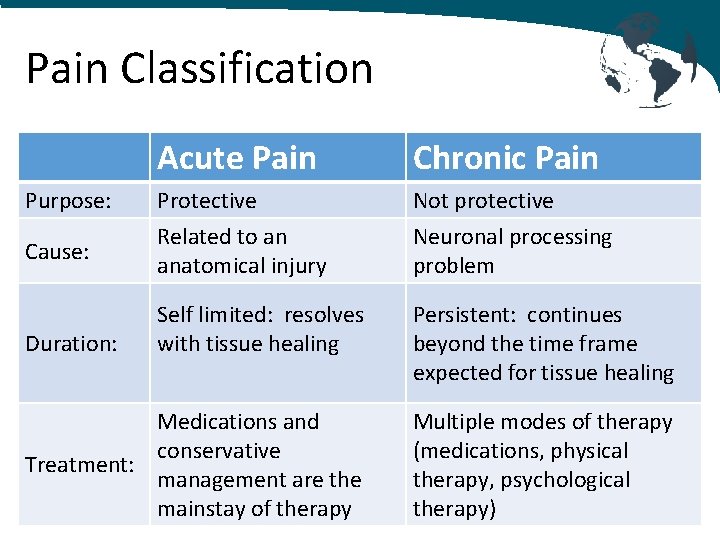
Pain Classification Acute Pain Chronic Pain Purpose: Protective Not protective Cause: Related to an anatomical injury Neuronal processing problem Self limited: resolves with tissue healing Persistent: continues beyond the time frame expected for tissue healing Duration: Medications and conservative Treatment: management are the mainstay of therapy Multiple modes of therapy (medications, physical therapy, psychological therapy)
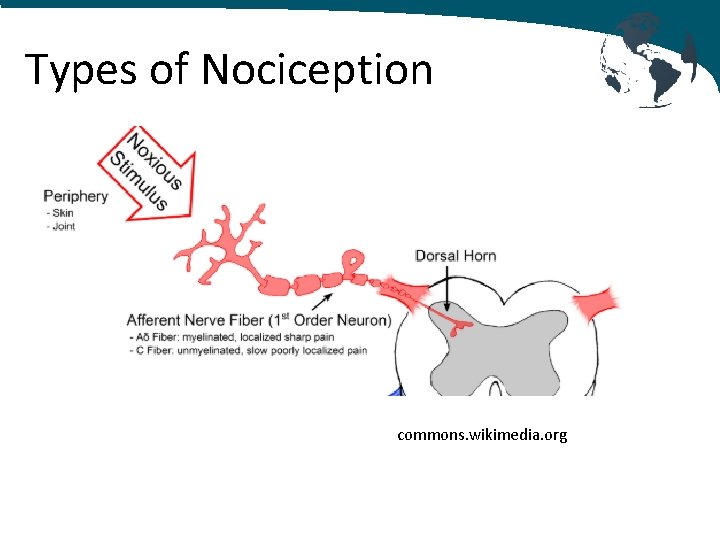
Types of Nociception commons. wikimedia. org
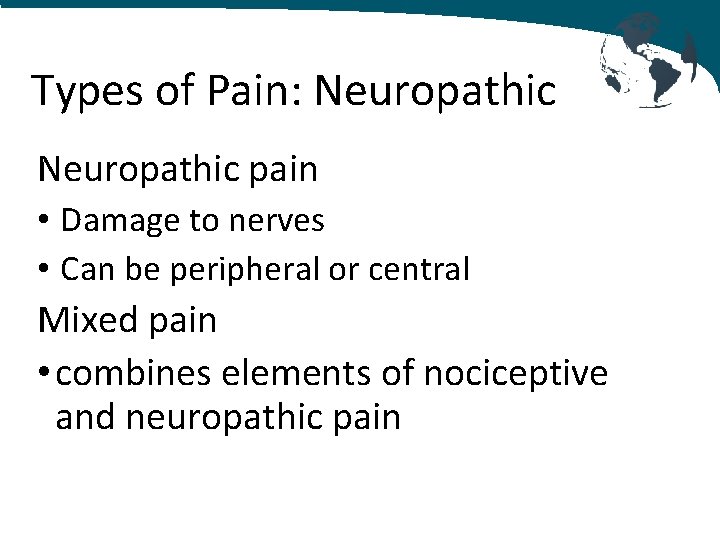
Types of Pain: Neuropathic pain • Damage to nerves • Can be peripheral or central Mixed pain • combines elements of nociceptive and neuropathic pain
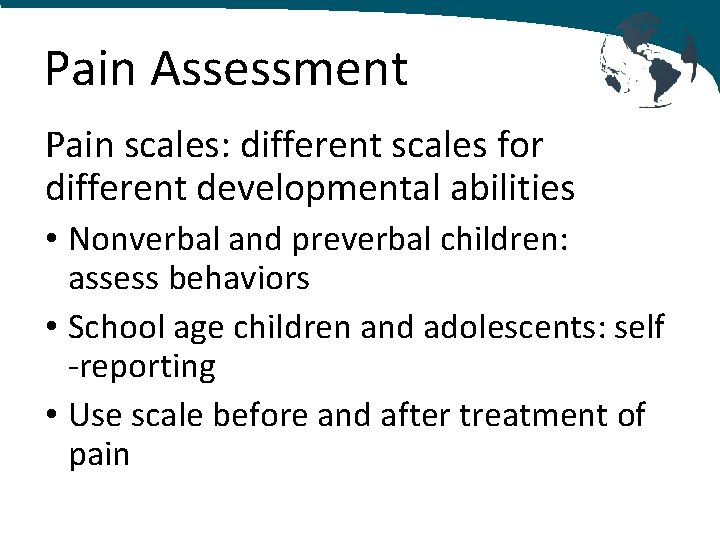
Pain Assessment Pain scales: different scales for different developmental abilities • Nonverbal and preverbal children: assess behaviors • School age children and adolescents: self -reporting • Use scale before and after treatment of pain
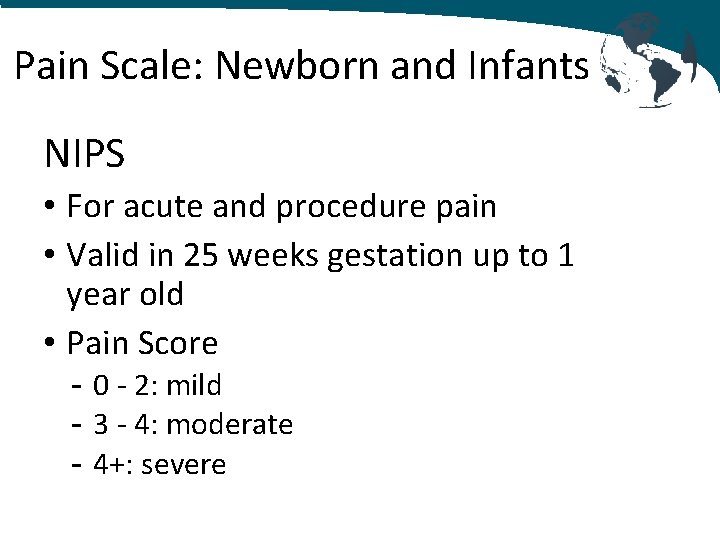
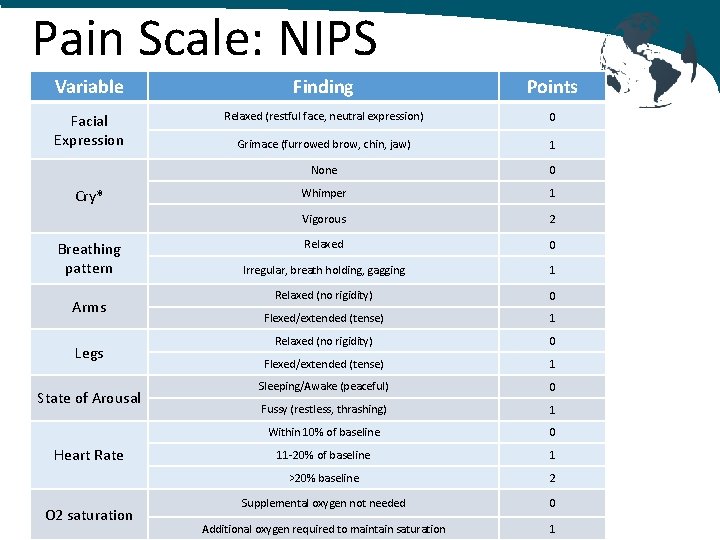
Pain Scale: Newborn and Infants NIPS • For acute and procedure pain • Valid in 25 weeks gestation up to 1 year old • Pain Score - 0 - 2: mild - 3 - 4: moderate - 4+: severe
Pain Scale: NIPS Variable Finding Points Facial Expression Relaxed (restful face, neutral expression) 0 Grimace (furrowed brow, chin, jaw) 1 None 0 Whimper 1 Vigorous 2 Relaxed 0 Irregular, breath holding, gagging 1 Relaxed (no rigidity) 0 Flexed/extended (tense) 1 Sleeping/Awake (peaceful) 0 Fussy (restless, thrashing) 1 Within 10% of baseline 0 11 -20% of baseline 1 >20% baseline 2 Supplemental oxygen not needed 0 Additional oxygen required to maintain saturation 1 Cry* Breathing pattern Arms Legs State of Arousal Heart Rate O 2 saturation
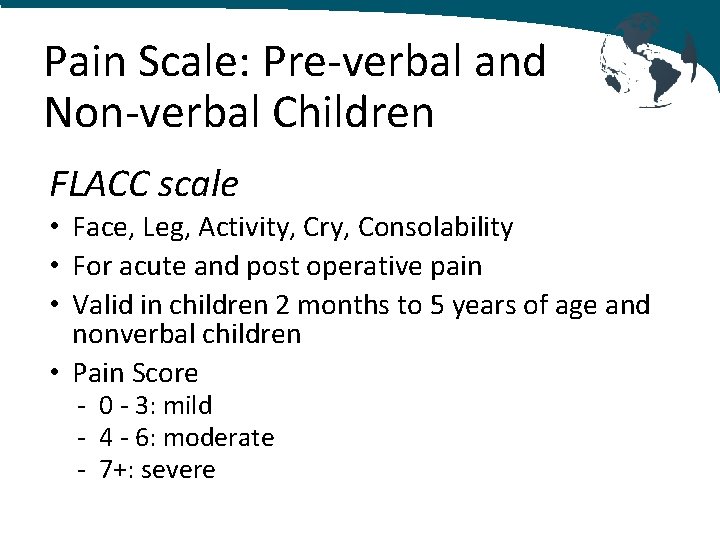
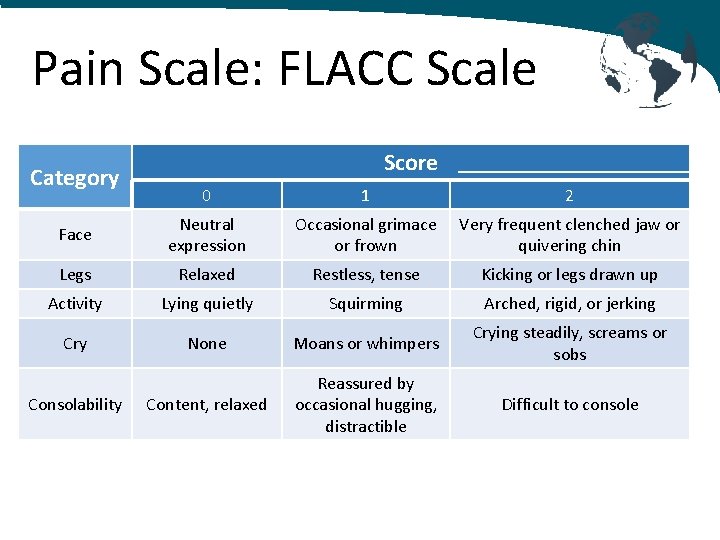
Pain Scale: Pre-verbal and Non-verbal Children FLACC scale • Face, Leg, Activity, Cry, Consolability • For acute and post operative pain • Valid in children 2 months to 5 years of age and nonverbal children • Pain Score - 0 - 3: mild - 4 - 6: moderate - 7+: severe
Pain Scale: FLACC Scale Category Score 0 1 2 Face Neutral expression Occasional grimace or frown Very frequent clenched jaw or quivering chin Legs Relaxed Restless, tense Kicking or legs drawn up Activity Lying quietly Squirming Arched, rigid, or jerking Cry None Moans or whimpers Crying steadily, screams or sobs Content, relaxed Reassured by occasional hugging, distractible Difficult to console Consolability
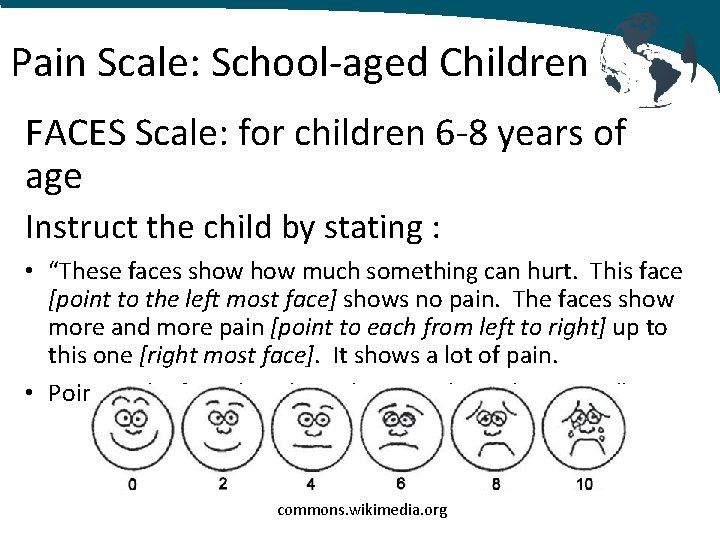
Pain Scale: School-aged Children FACES Scale: for children 6 -8 years of age Instruct the child by stating : • “These faces show much something can hurt. This face [point to the left most face] shows no pain. The faces show more and more pain [point to each from left to right] up to this one [right most face]. It shows a lot of pain. • Point to the face that shows how much you hurt now. ” commons. wikimedia. org
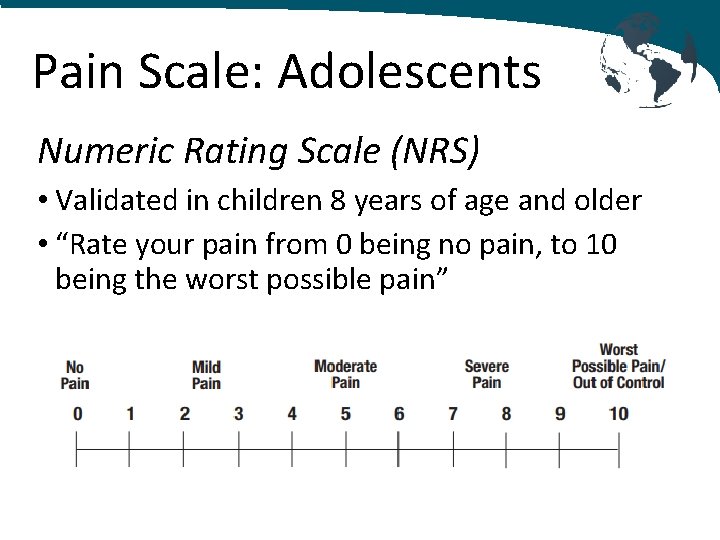
Pain Scale: Adolescents Numeric Rating Scale (NRS) • Validated in children 8 years of age and older • “Rate your pain from 0 being no pain, to 10 being the worst possible pain”
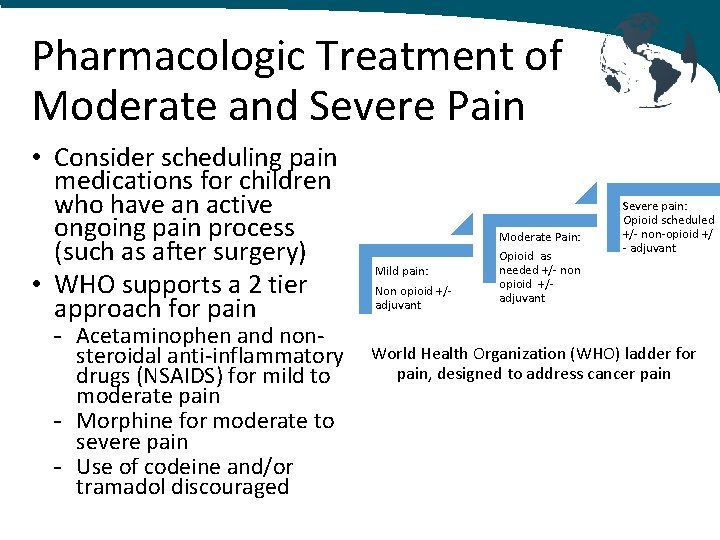
Pharmacologic Treatment of Moderate and Severe Pain • Consider scheduling pain medications for children who have an active ongoing pain process (such as after surgery) • WHO supports a 2 tier approach for pain - Acetaminophen and nonsteroidal anti-inflammatory drugs (NSAIDS) for mild to moderate pain - Morphine for moderate to severe pain - Use of codeine and/or tramadol discouraged Mild pain: Non opioid +/- adjuvant Moderate Pain: Opioid as needed +/- non opioid +/adjuvant Severe pain: Opioid scheduled +/- non-opioid +/ - adjuvant World Health Organization (WHO) ladder for pain, designed to address cancer pain
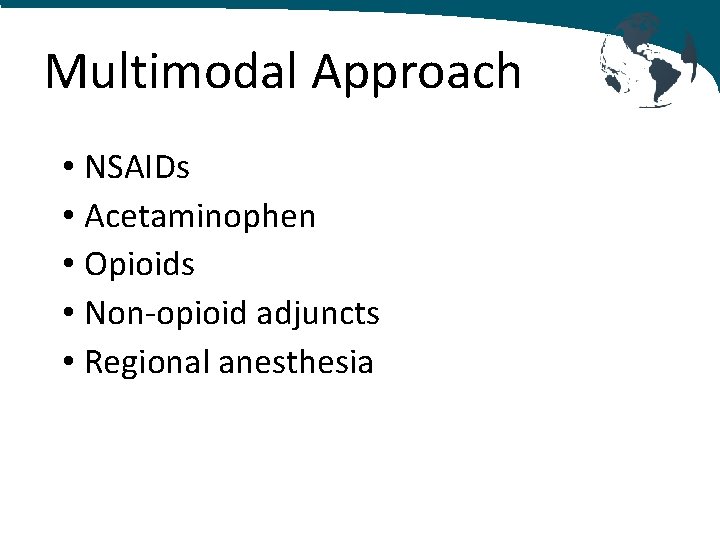
Multimodal Approach • NSAIDs • Acetaminophen • Opioids • Non-opioid adjuncts • Regional anesthesia
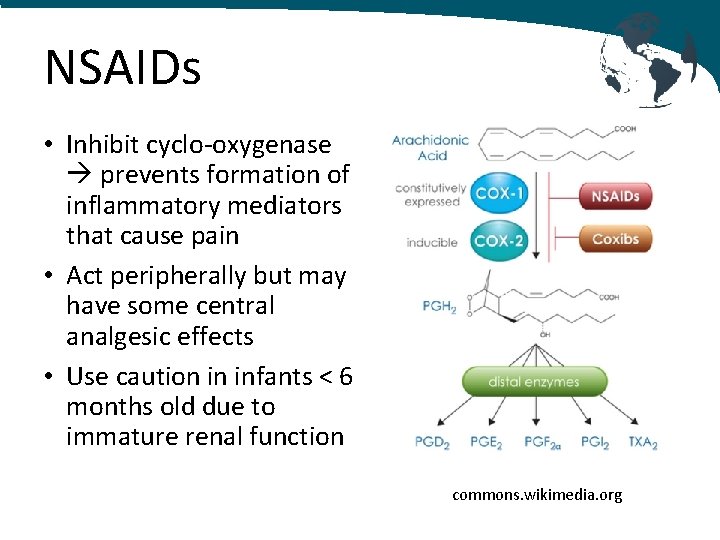
NSAIDs • Inhibit cyclo-oxygenase prevents formation of inflammatory mediators that cause pain • Act peripherally but may have some central analgesic effects • Use caution in infants < 6 months old due to immature renal function commons. wikimedia. org
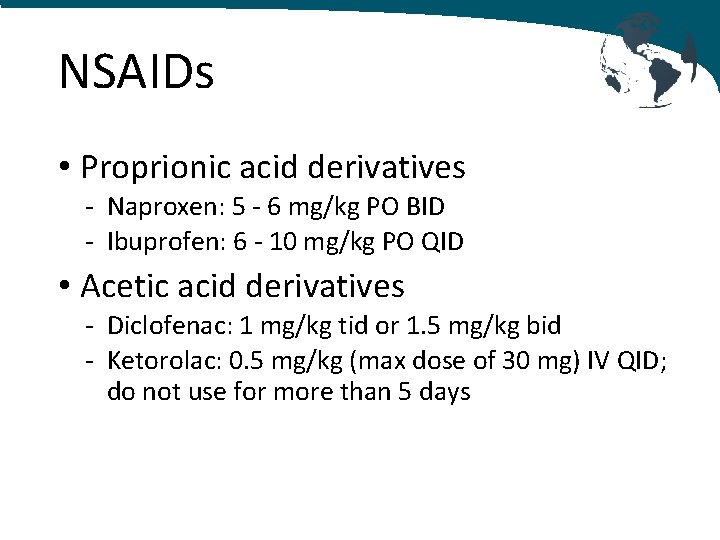
NSAIDs • Proprionic acid derivatives - Naproxen: 5 - 6 mg/kg PO BID - Ibuprofen: 6 - 10 mg/kg PO QID • Acetic acid derivatives - Diclofenac: 1 mg/kg tid or 1. 5 mg/kg bid - Ketorolac: 0. 5 mg/kg (max dose of 30 mg) IV QID; do not use for more than 5 days
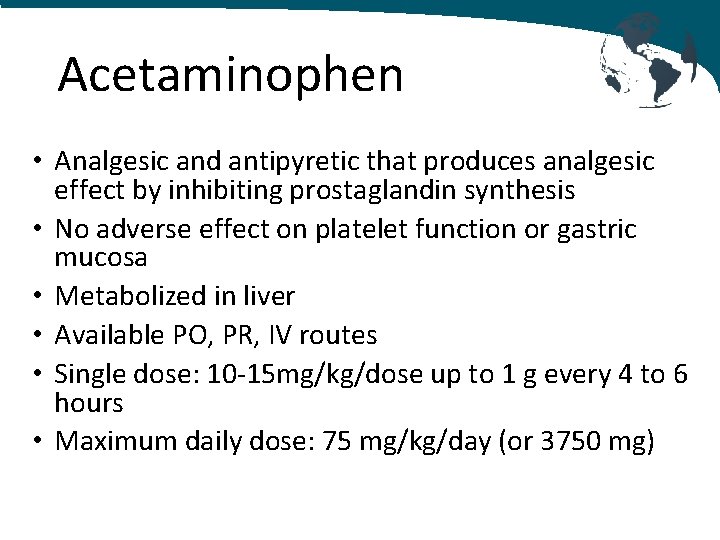
Acetaminophen • Analgesic and antipyretic that produces analgesic effect by inhibiting prostaglandin synthesis • No adverse effect on platelet function or gastric mucosa • Metabolized in liver • Available PO, PR, IV routes • Single dose: 10 -15 mg/kg/dose up to 1 g every 4 to 6 hours • Maximum daily dose: 75 mg/kg/day (or 3750 mg)
Acetaminophen Major side effect is Hepatotoxicity • Not usually seen unless significant overdose or high doses used consistently for several days • No guidelines to limit length of time used, but caution urged when given continuously for > 10 -14 days
Acetaminophen Be cautious when using medications containing opioid-acetaminophen mixtures • Percocet (oxycodone-acetaminophen) • Vicodin (hydrocodone-acetaminophen) Risk of acetaminophen overdose when acetaminophen alone is used with these opioid-acetaminophen medications
Opioids • Derivative of opium/poppy plant • Act as a μ receptor agonist at the level of the spine and the brain • Side effects: - Short term: sedation, respiratory depression, delayed GI motility, pruritus, urinary retention - Long term: decrease testosterone production, opioid induced hyperalgesia, tolerance, dependence Continuous pulse oximeter and regular physical exams assessing mentation, oxygenation and ventilation recommended for safety
Opioids: Morphine • Potency used as comparison for all other opioids • Bolus IV dose 0. 05 - 0. 2 mg/kg every 2 to 4 hours as needed - Decrease dose in neonates, critically ill, and in patients with obstructive sleep apnea • Active metabolites (can accumulate in renal dysfunction) - Morphine-6 -glucuronide: analgesia - Morphine-3 -glucuronide: no analgesia, agitation, seizures
Opioids: Hydromorphone • 5 - 7. 5 times more potent than morphine • Bolus IV dose* 10 - 20 μg/kg every 4 - 6 hours • No active metabolites
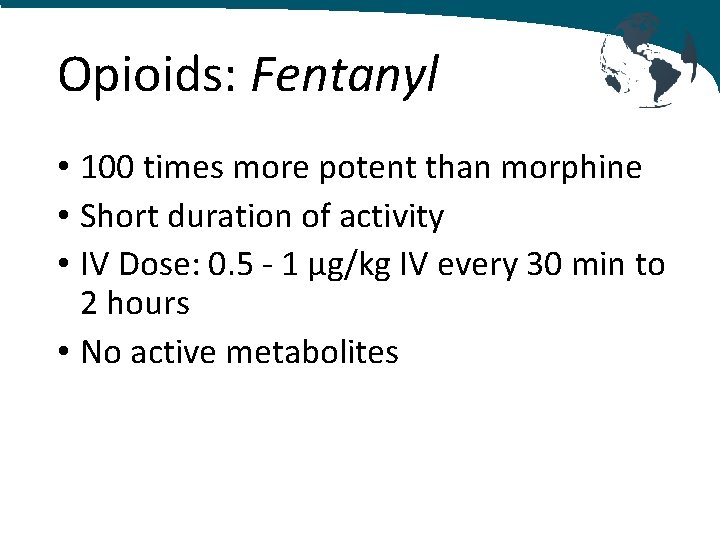
Opioids: Fentanyl • 100 times more potent than morphine • Short duration of activity • IV Dose: 0. 5 - 1 μg/kg IV every 30 min to 2 hours • No active metabolites
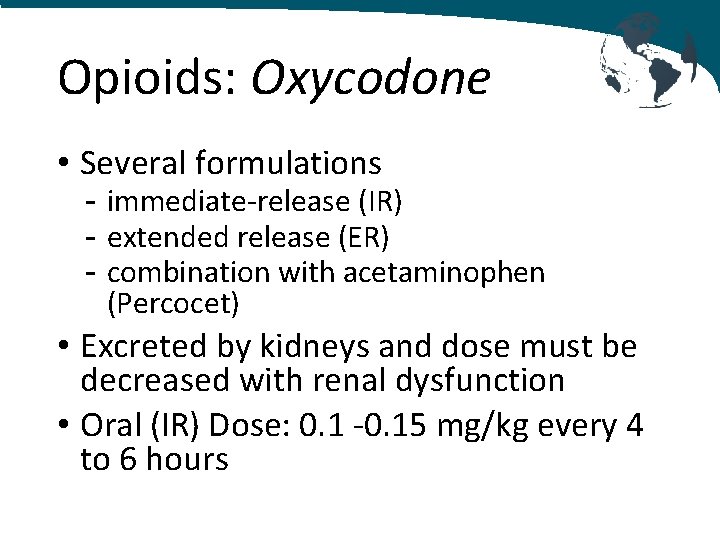
Opioids: Oxycodone • Several formulations - immediate-release (IR) - extended release (ER) - combination with acetaminophen (Percocet) • Excreted by kidneys and dose must be decreased with renal dysfunction • Oral (IR) Dose: 0. 1 -0. 15 mg/kg every 4 to 6 hours
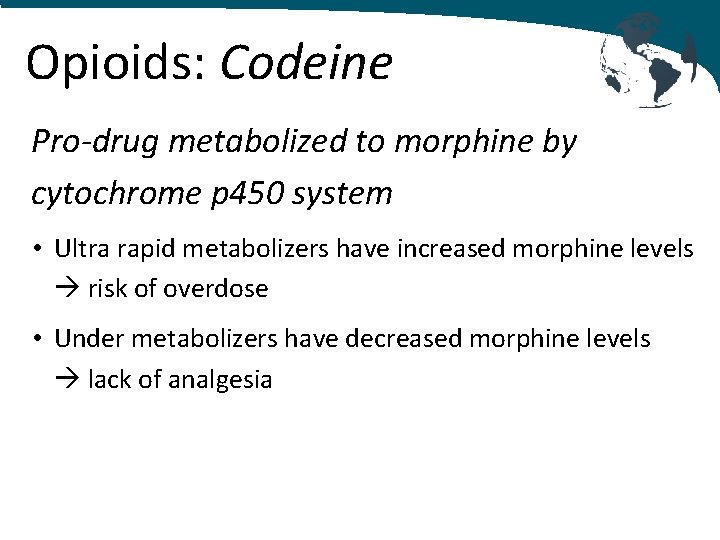
Opioids: Codeine Pro-drug metabolized to morphine by cytochrome p 450 system • Ultra rapid metabolizers have increased morphine levels risk of overdose • Under metabolizers have decreased morphine levels lack of analgesia
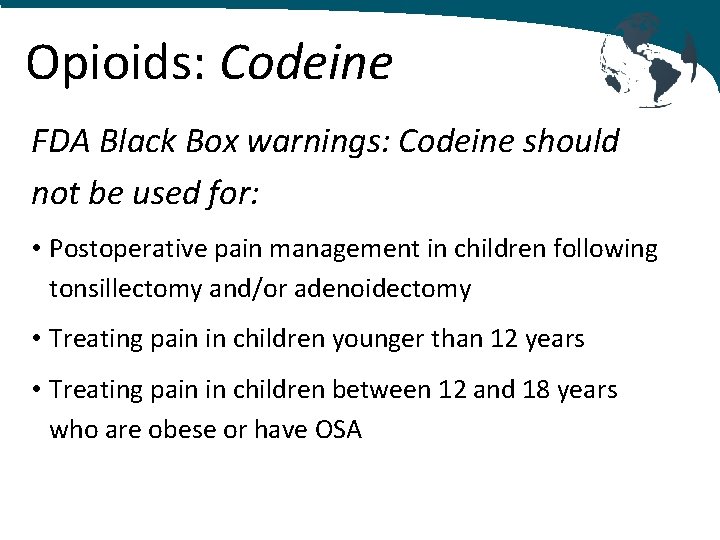
Opioids: Codeine FDA Black Box warnings: Codeine should not be used for: • Postoperative pain management in children following tonsillectomy and/or adenoidectomy • Treating pain in children younger than 12 years • Treating pain in children between 12 and 18 years who are obese or have OSA
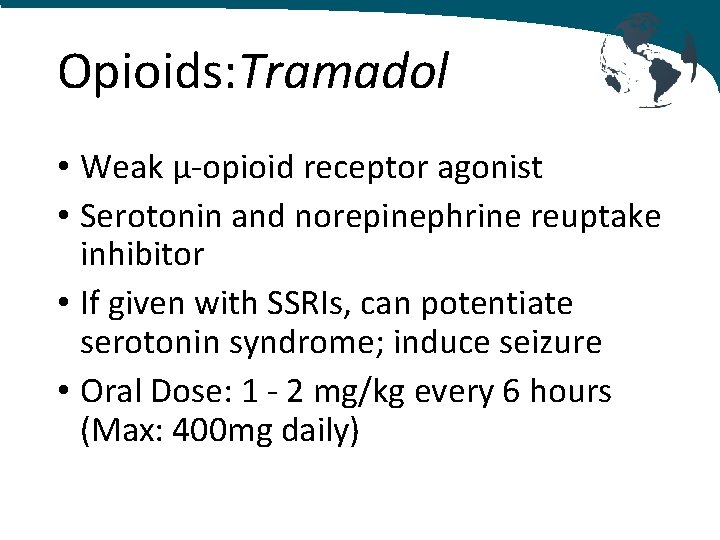
Opioids: Tramadol • Weak μ-opioid receptor agonist • Serotonin and norepinephrine reuptake inhibitor • If given with SSRIs, can potentiate serotonin syndrome; induce seizure • Oral Dose: 1 - 2 mg/kg every 6 hours (Max: 400 mg daily)
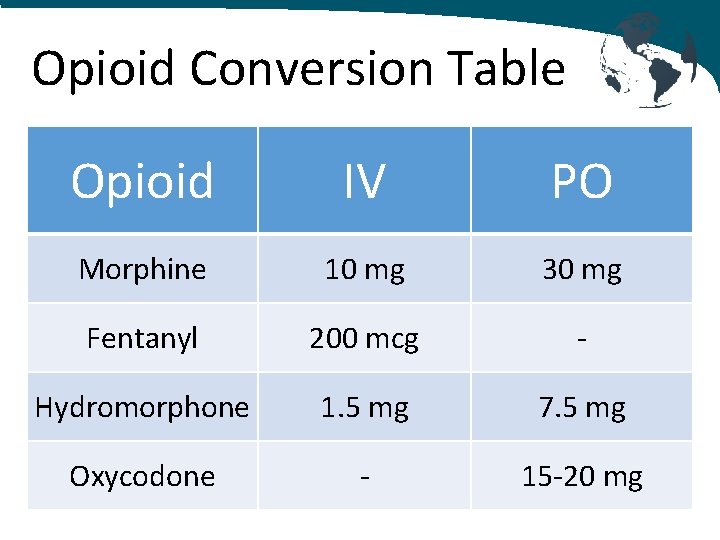
Opioid Conversion Table Opioid IV PO Morphine 10 mg 30 mg Fentanyl 200 mcg - Hydromorphone 1. 5 mg 7. 5 mg Oxycodone - 15 -20 mg
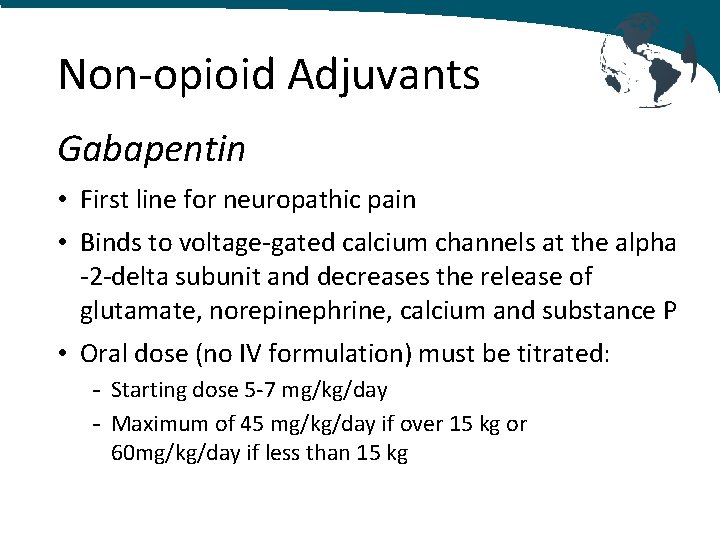
Non-opioid Adjuvants Gabapentin • First line for neuropathic pain • Binds to voltage-gated calcium channels at the alpha -2 -delta subunit and decreases the release of glutamate, norepinephrine, calcium and substance P • Oral dose (no IV formulation) must be titrated: - Starting dose 5 -7 mg/kg/day - Maximum of 45 mg/kg/day if over 15 kg or 60 mg/kg/day if less than 15 kg
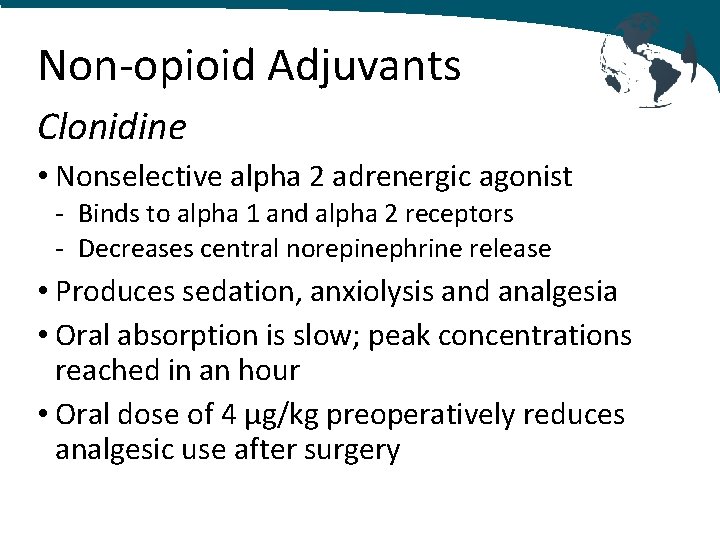
Non-opioid Adjuvants Clonidine • Nonselective alpha 2 adrenergic agonist - Binds to alpha 1 and alpha 2 receptors - Decreases central norepinephrine release • Produces sedation, anxiolysis and analgesia • Oral absorption is slow; peak concentrations reached in an hour • Oral dose of 4 μg/kg preoperatively reduces analgesic use after surgery
Non-opioid Adjuvants Ketamine • N-methyl-D-aspartate (NMDA) receptor antagonist - Inhibits release of glutamate, an excitatory amino acid, from the central nervous system - Responsible for analgesia • Facilitates analgesia in patients with chronic pain or chronic opioid use • IV Infusion dose for analgesia: 0. 1 - 0. 2 mg/kg/hour • Side effects: confusion, dysphoria, hallucinations, tachycardia and hypertension
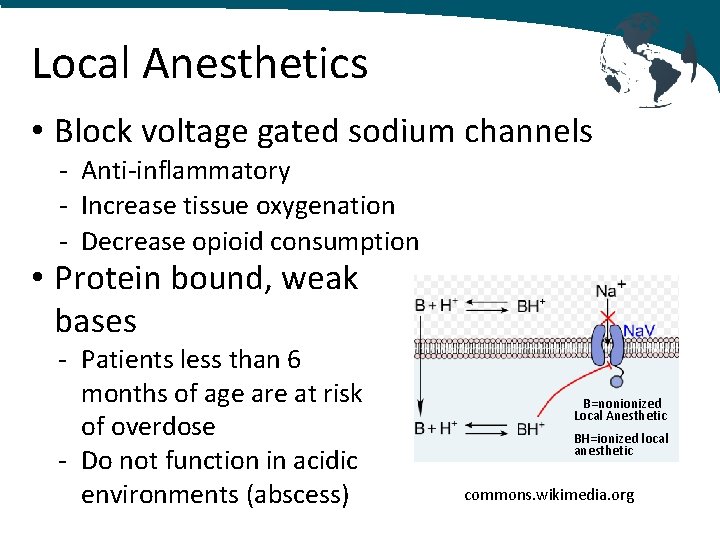
Local Anesthetics • Block voltage gated sodium channels - Anti-inflammatory - Increase tissue oxygenation - Decrease opioid consumption • Protein bound, weak bases - Patients less than 6 months of age are at risk of overdose - Do not function in acidic environments (abscess) B=nonionized Local Anesthetic BH=ionized local anesthetic commons. wikimedia. org
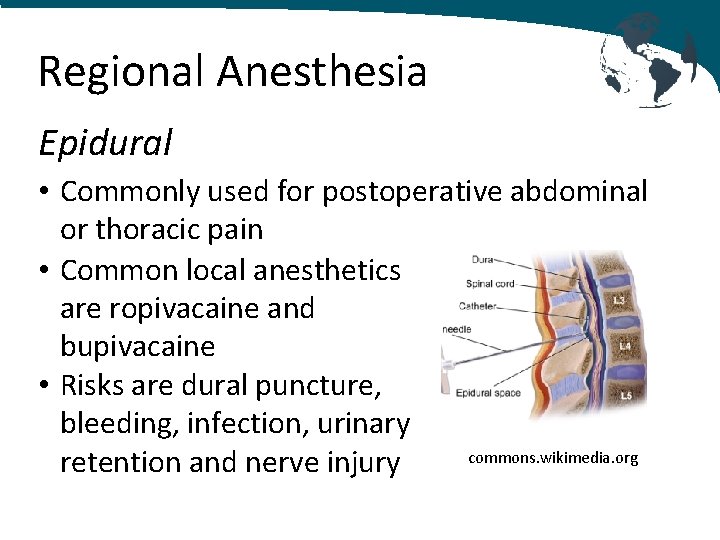
Regional Anesthesia Epidural • Commonly used for postoperative abdominal or thoracic pain • Common local anesthetics are ropivacaine and bupivacaine • Risks are dural puncture, bleeding, infection, urinary commons. wikimedia. org retention and nerve injury
Regional Anesthesia Truncal Blocks • Can be used for umbilical hernia repairs and other abdominal surgery • Include rectus sheath block, transversus abdominal plane block (TAP) and quadratus lumborum block • 0. 3% rate of complication when done under ultrasound guidance
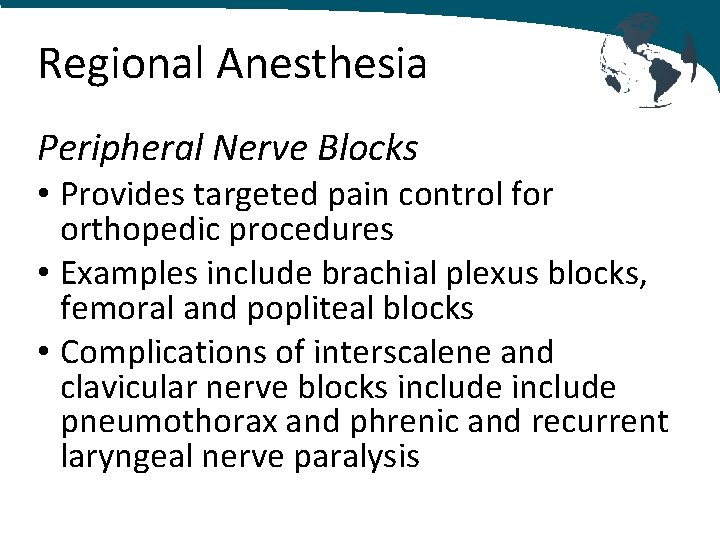
Regional Anesthesia Peripheral Nerve Blocks • Provides targeted pain control for orthopedic procedures • Examples include brachial plexus blocks, femoral and popliteal blocks • Complications of interscalene and clavicular nerve blocks include pneumothorax and phrenic and recurrent laryngeal nerve paralysis
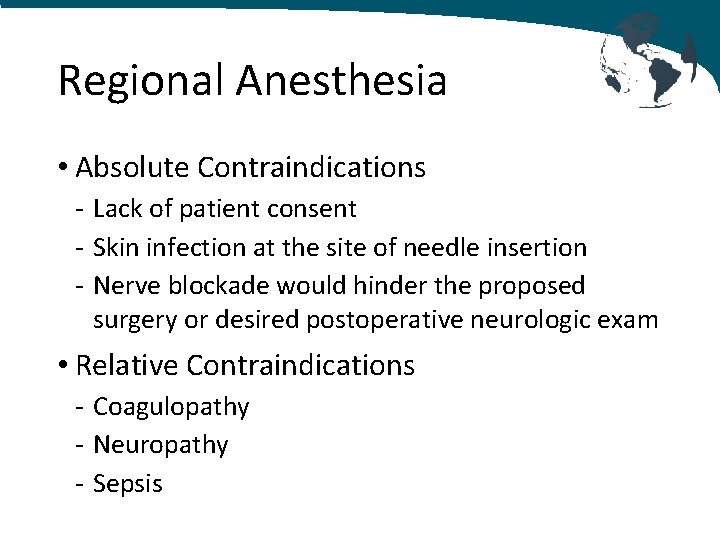
Regional Anesthesia • Absolute Contraindications - Lack of patient consent - Skin infection at the site of needle insertion - Nerve blockade would hinder the proposed surgery or desired postoperative neurologic exam • Relative Contraindications - Coagulopathy - Neuropathy - Sepsis
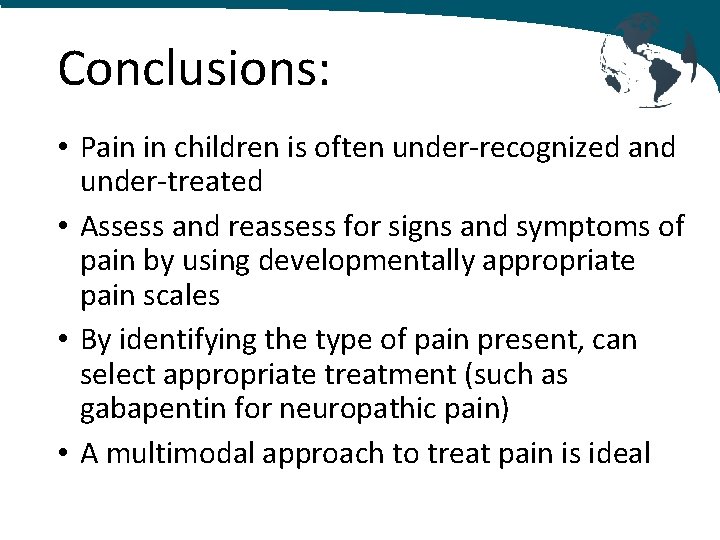
Conclusions: • Pain in children is often under-recognized and under-treated • Assess and reassess for signs and symptoms of pain by using developmentally appropriate pain scales • By identifying the type of pain present, can select appropriate treatment (such as gabapentin for neuropathic pain) • A multimodal approach to treat pain is ideal
References: 1. Anand KJS and Craig KD. New perspectives on the definition of pain. Pain, 67 (1996) 3 -6. 2. Beltramini, A, Milojevic, K, Pateron, D. Pain assessment in newborns, infants, and children. Pediatr Ann. 2017; 46(10): 387– 395. 3. Schechter NL, Berde CB, Yaster M. Pain in infants, children, and adolescents. 2003. 4. WHO Guidelines on the Pharmacological Treatment of Persisting Pain in Children with Medical Illnesses. Geneva: World Health Organization; 2012. 1, CLASSIFICATION OF PAIN IN CHILDREN. Available from: https: //www. ncbi. nlm. nih. gov/books/NBK 138356/. 5. Scholten, W. WHO Persisting Pediatric Pain Guidelines: A Research Agenda. November 2011. 6. Crellin DJ, Harrison D, Santamaria N, Huque H, Babl FE. The psychometric properties of the FLACC scale used to assess procedural pain. J Pain 2018 Aug; 19(8): 862 -872. 7. IASP https: //www. iasp-pain. org/Education/Content. aspx? Item. Number=1519. 8. Cravero JP, Agarwal R, Berde C, et al. The Society for Pediatric Anesthesia recommendations for the use of opioids in children during the perioperative period. Pediatr Anesth. 2019. Barash P et al, editors: Clinical Anesthesia (6 th ed), Philadelphia, 2009, Lippincott Williams & Wilkins. 10. Wheatley BM, Nappo KE, et al. Effect of NSAIDs on bone healing rates: a meta-analysis. J Am Acad Orthop Surg. 2019; 27(7): e 330–e 336. 11. Konturek PC, Kania J, Burnat G, Hahn EG, Konturek SJ. Prostaglandins as mediators of COX-2 derived carcinogenesis in gastrointestinal tract. J Physiol Pharmacol. 2005; 56 Suppl 5: 57– 73. 12. Cravero JP, Kaplan RF, Landrigan-Ossar M, Coté CJ. A Practice of Anesthesia for Infants and Children. Sixth Edition. Elsevier Inc; 2019: 1109 -1128. e 7. 13. Kaguelidou F, Le Roux E, Mangiarini L, et al. Non-inferiority double-blind randomised controlled trial comparing gabapentin versus tramadol for the treatment of chronic neuropathic or mixed pain in children and adolescents: the GABA-1 trial-a study protocol. BMJ Open. 2019; 9(2): e 023296. Published 2019 Feb 20. doi: 10. 1136/bmjopen-2018023296 14. Lambert P, Cyna AM, Knight N, Middleton P. Clonidine premedication for postoperative analgesia in children. Cochrane Database of Systematic Reviews 2014, Issue 1. Art. No. : CD 009633. DOI: 10. 1002/14651858. CD 009633. pub 2. 15. Mion G, Villevieille T. Ketamine pharmacology: an update (pharmacodynamics and molecular aspects, recent findings). CNS Neurosci Ther. 2013; 19(6): 370– 380. doi: 10. 1111/cns. 12099 16. Schwenk ES, Viscusi ER, Buvanendran A, et al. Consensus Guidelines on the Use of Intravenous Ketamine Infusions for Acute Pain Management From the American Society of Regional Anesthesia and Pain Medicine, the American Academy of Pain Medicine, and the American Society of Anesthesiologists. Reg Anesth Pain Med. 2018; 43(5): 456– 466. doi: 10. 1097/AAP. 0000000806 17. Wilder, RT. Local Anesthetics for the pediatric patient. Pediatric Clin June 2000; 47 (3): 545 -558. . 18. Long JB, Birmingham PK, De Oliveira GS Jr, Schaldenbrand KM, Suresh S. Transversus abdominis plane block in children: a multicenter safety analysis of 1994 cases from the PRAN (Pediatric Regional Anesthesia Network) database. Anesth Analg. 2014; 119(2): 395– 399.