OSR On some interesting Curves Aditya Kiran Grad


- Slides: 26
OSR On some interesting Curves. . . Aditya Kiran Grad 1 st yr Applied Math
Curvature • The fact of being curved or the degree to which something is curved. . • Tendency to deviate from moving in a straight line. .
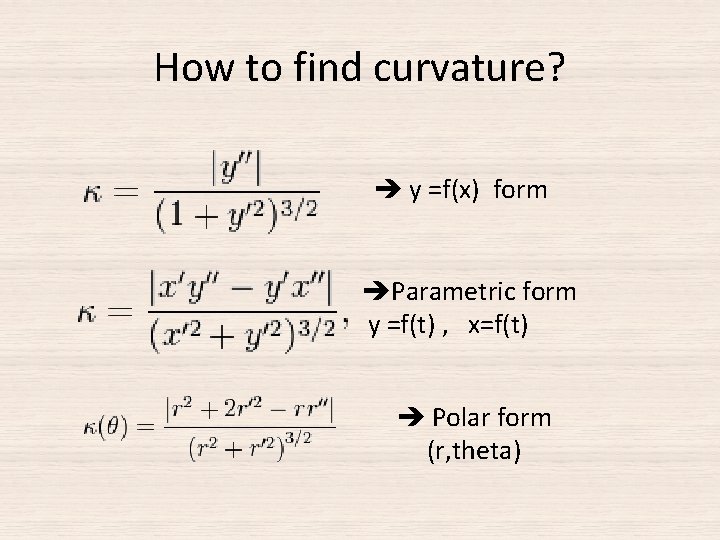
How to find curvature? y =f(x) form Parametric form y =f(t) , x=f(t) Polar form (r, theta)
4 ‘interesting’ curves • We discuss about 4 curves today: • • 1)Catenary 2)Tractrix 3)Archimedean Spiral 4) Tautochrone
#1
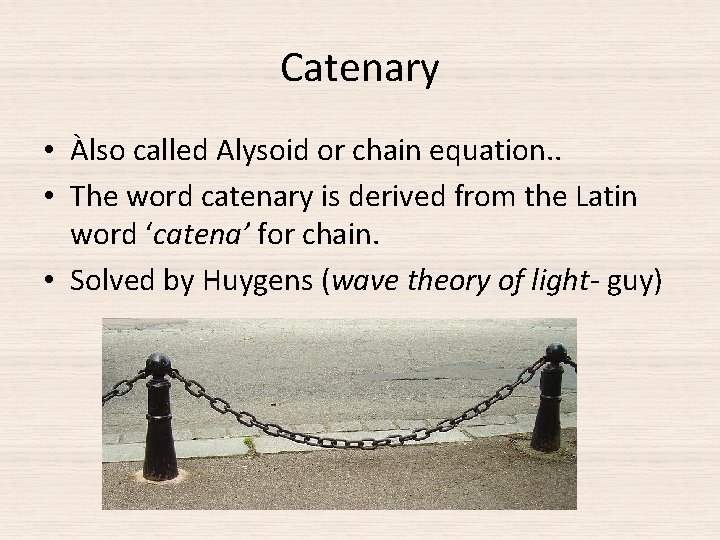
Catenary • Àlso called Alysoid or chain equation. . • The word catenary is derived from the Latin word ‘catena’ for chain. • Solved by Huygens (wave theory of light- guy)
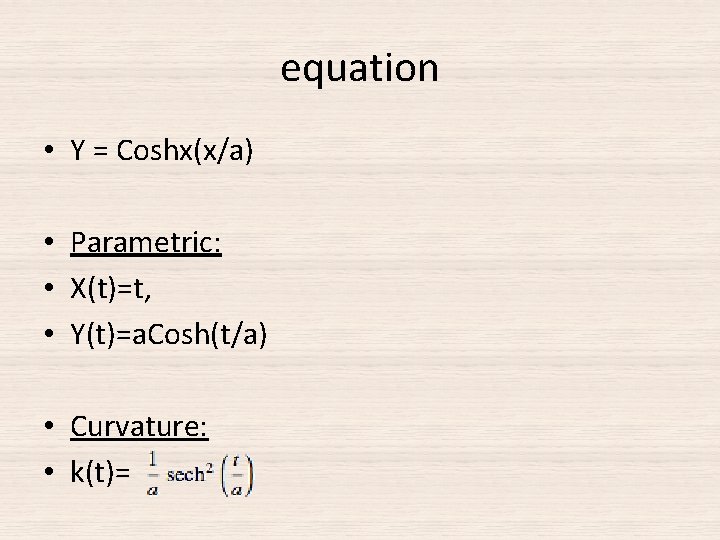
equation • Y = Coshx(x/a) • Parametric: • X(t)=t, • Y(t)=a. Cosh(t/a) • Curvature: • k(t)=
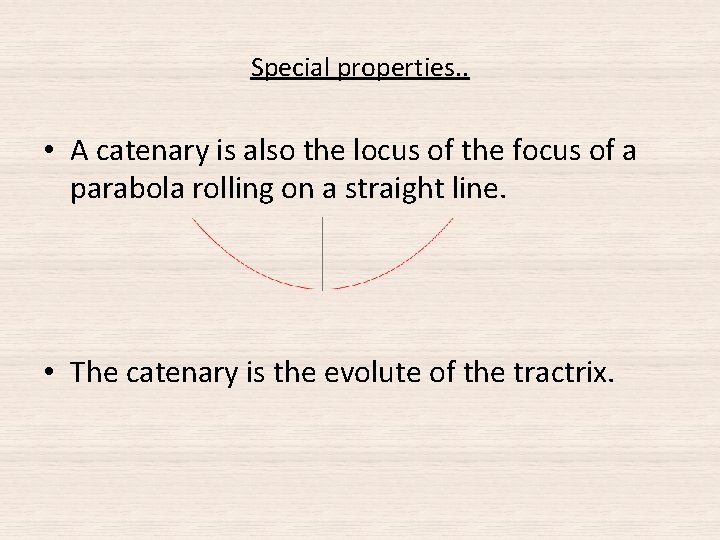
Special properties. . • A catenary is also the locus of the focus of a parabola rolling on a straight line. • The catenary is the evolute of the tractrix.
#2
Tractrix • From the Latin ‘trahere’ meaning drag/pull. . • Also called drag curve or donkey curve. • The tractrix was first studied by Huygens in 1692
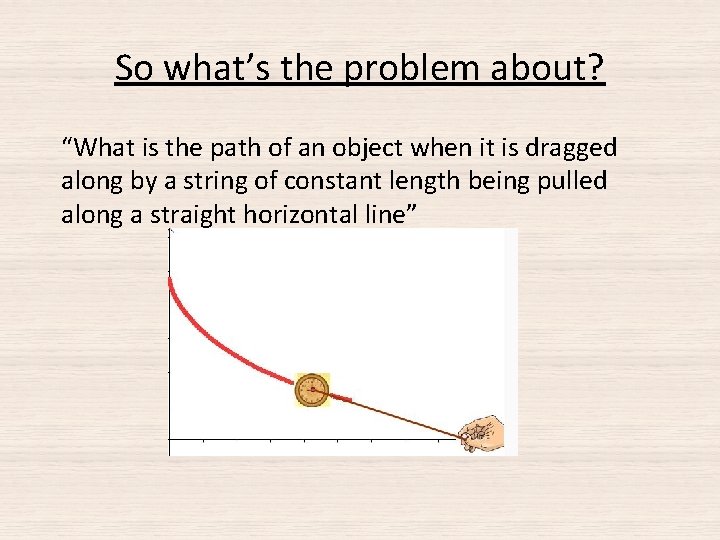
So what’s the problem about? “What is the path of an object when it is dragged along by a string of constant length being pulled along a straight horizontal line”
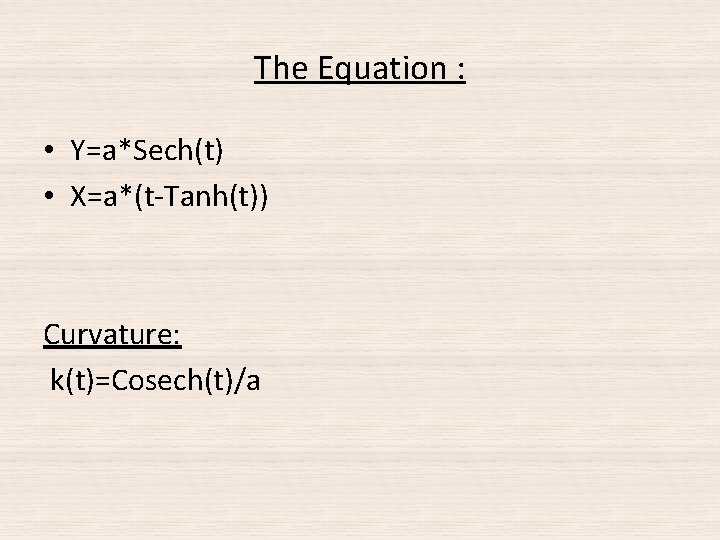
The Equation : • Y=a*Sech(t) • X=a*(t-Tanh(t)) Curvature: k(t)=Cosech(t)/a
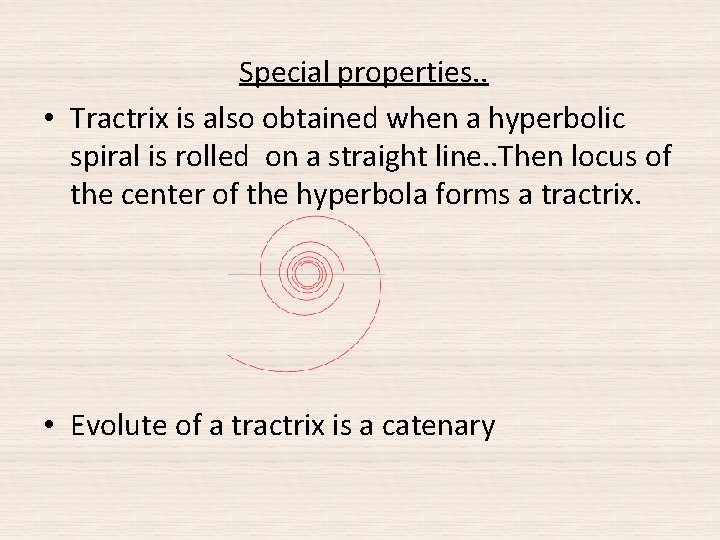
Special properties. . • Tractrix is also obtained when a hyperbolic spiral is rolled on a straight line. . Then locus of the center of the hyperbola forms a tractrix. • Evolute of a tractrix is a catenary
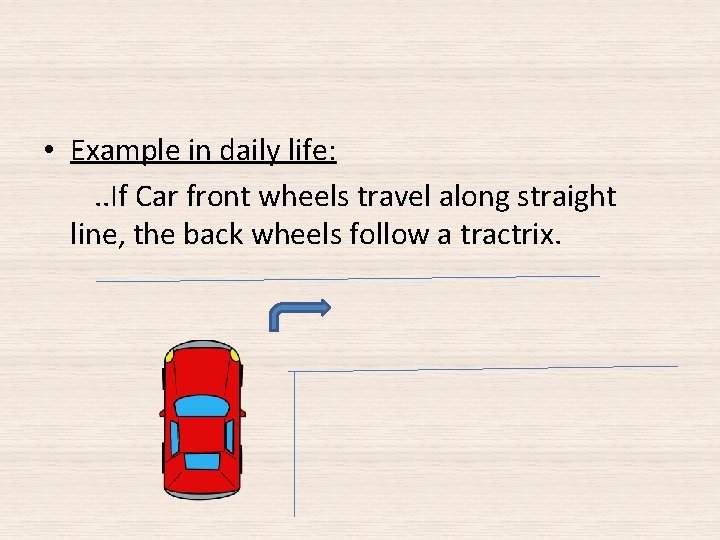
• Example in daily life: . . If Car front wheels travel along straight line, the back wheels follow a tractrix.
#3
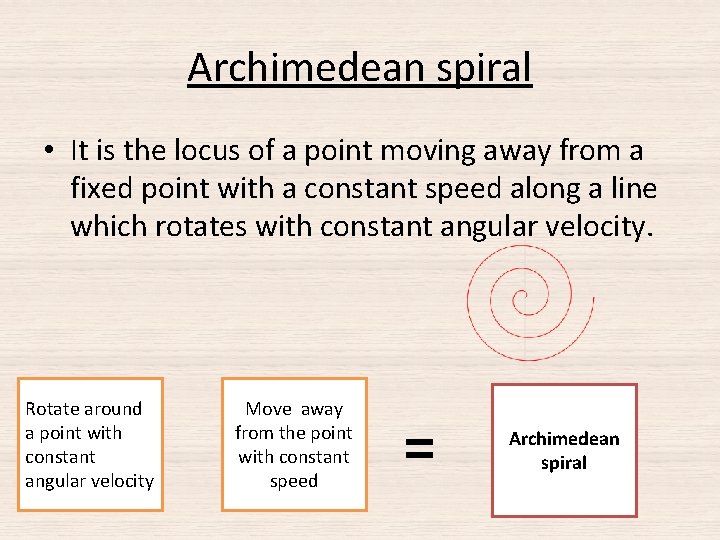
Archimedean spiral • It is the locus of a point moving away from a fixed point with a constant speed along a line which rotates with constant angular velocity. Rotate around a point with constant angular velocity Move away from the point with constant speed = Archimedean spiral
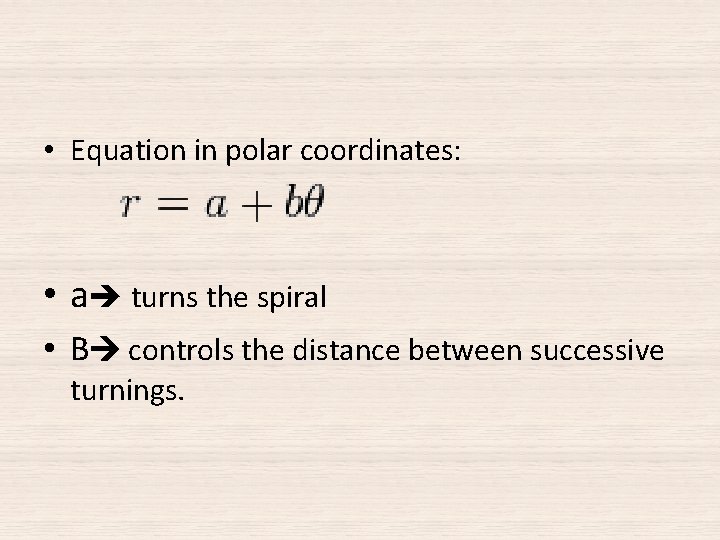
• Equation in polar coordinates: • a turns the spiral • B controls the distance between successive turnings.
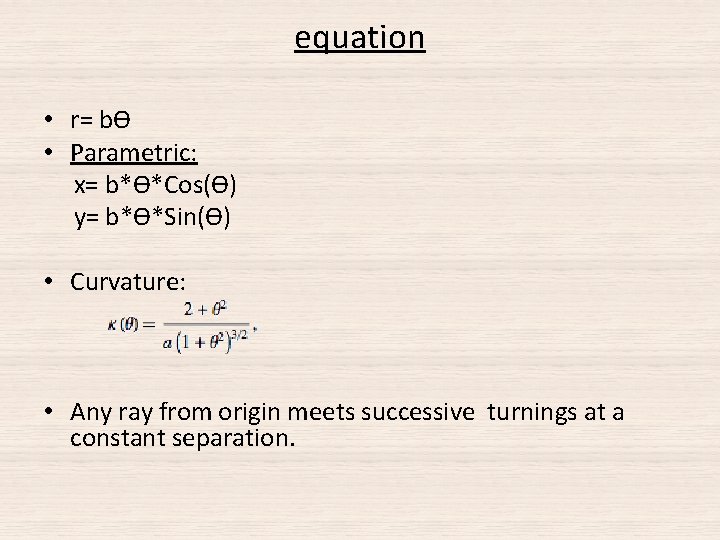
equation • r= bϴ • Parametric: x= b*ϴ*Cos(ϴ) y= b*ϴ*Sin(ϴ) • Curvature: • Any ray from origin meets successive turnings at a constant separation.
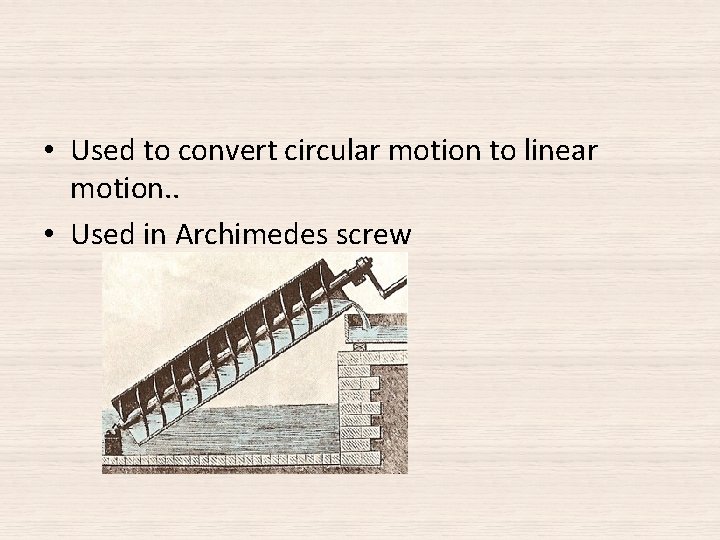
• Used to convert circular motion to linear motion. . • Used in Archimedes screw
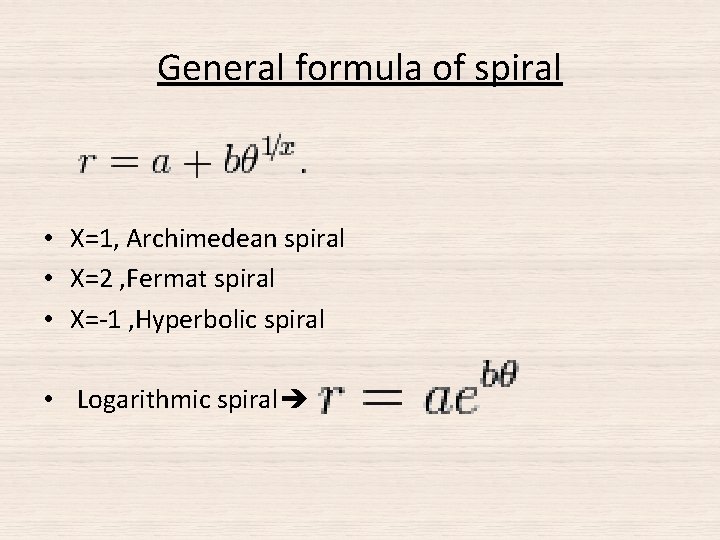
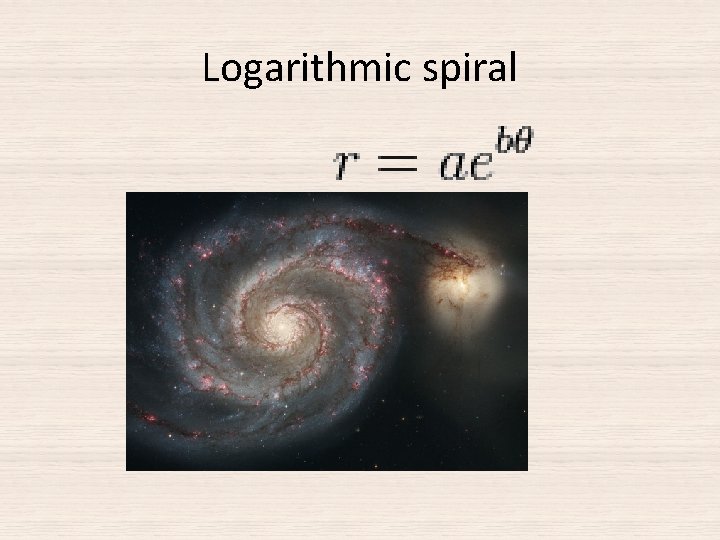
General formula of spiral • X=1, Archimedean spiral • X=2 , Fermat spiral • X=-1 , Hyperbolic spiral • Logarithmic spiral
Logarithmic spiral
#4
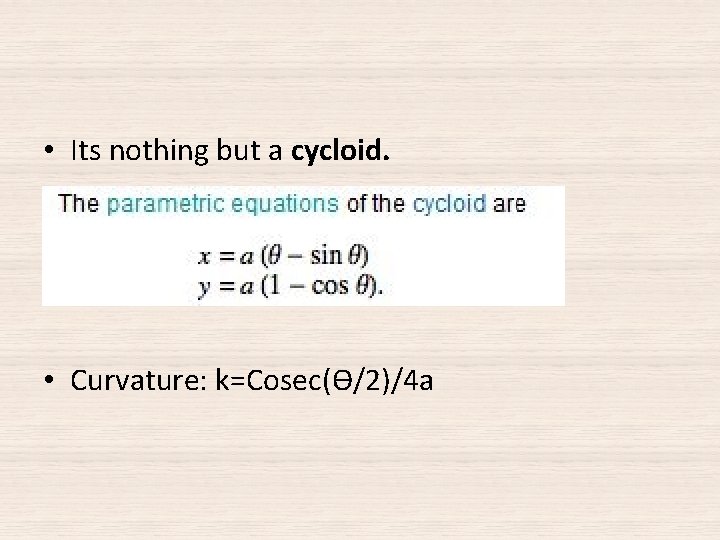
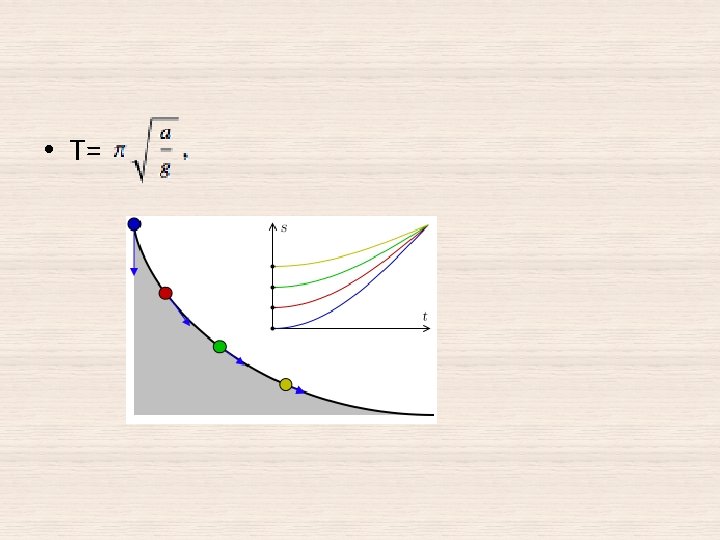
Tautochrone • A tautochrone or isochrone curve • Tauto=same, and chrono =time • Solved by Christian Huygens in 1659. • “the curve for which the time taken by an object sliding without friction in uniform gravity to its lowest point is independent of its starting point”
• Its nothing but a cycloid. • ( • Curvature: k=Cosec(ϴ/2)/4 a
Thank you. !!!