Ornamental and Turf Licenses for Florida Applicators 1




- Slides: 21
Ornamental and Turf Licenses for Florida Applicators
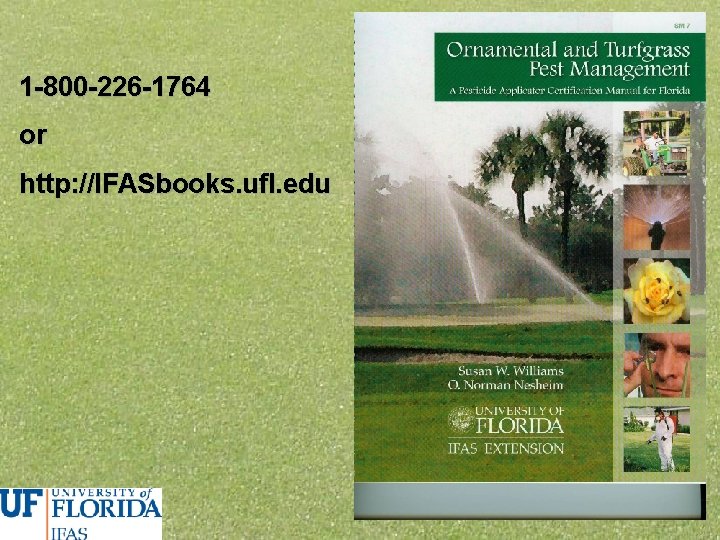
1 -800 -226 -1764 or http: //IFASbooks. ufl. edu
Learning Objectives 1. Name and describe each license. 2. Explain which license you should have and why. 3. List the qualifications for your license. 4. Explain what you can do with your license. 5. Explain what you cannot do with your license.
2 Laws in Florida • Florida Pesticide Law (Ch. 487) • Florida Structural Pest Control (Ch. 482)
4 O & T Pest Control Licenses in Florida • • Describes each license Explains the qualifications for each license Tells what you can and cannot do Tells how to get in touch for information
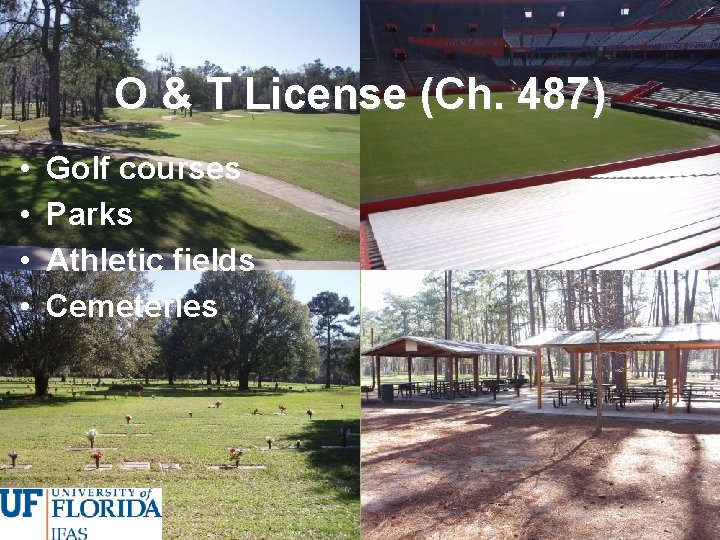
O & T License (Ch. 487) • • Golf courses Parks Athletic fields Cemeteries
O & T License (Ch. 487)
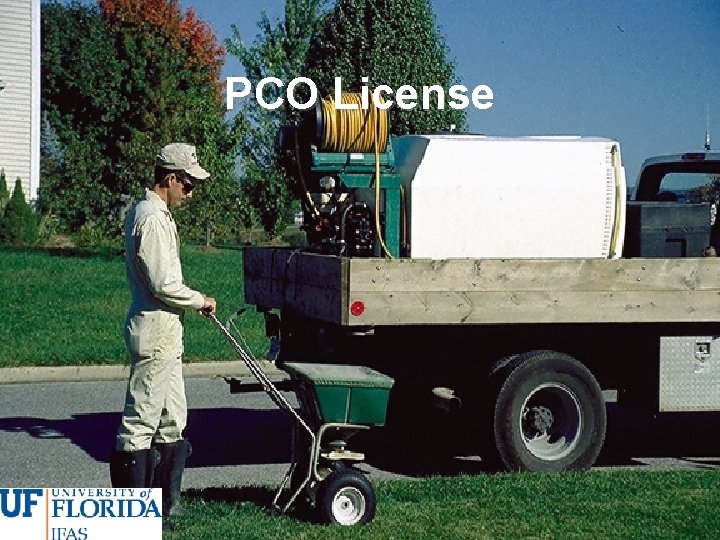
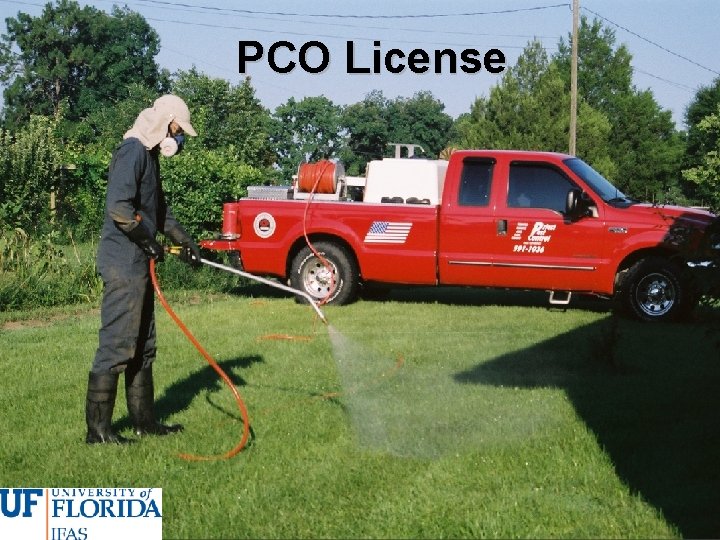
PCO License
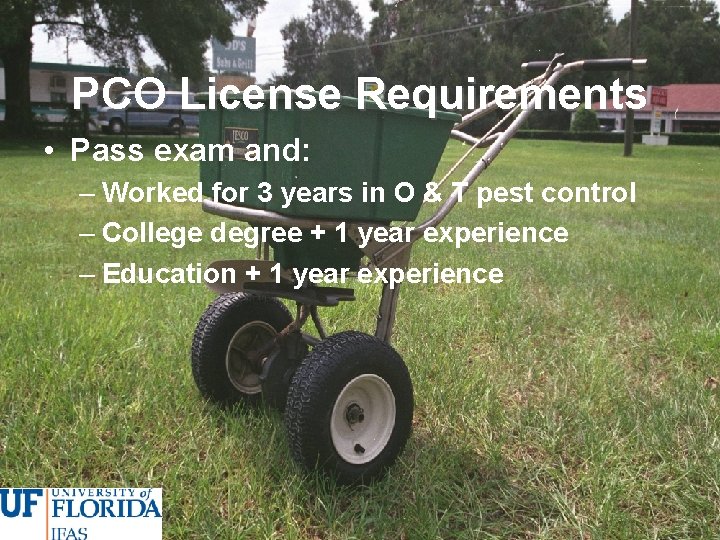
PCO License Requirements • Pass exam and: – Worked for 3 years in O & T pest control – College degree + 1 year experience – Education + 1 year experience
PCO License
Limited Lawn & Ornamental • Government employees • Business owners or their employees
Limited Lawn & Ornamental • Government employees • Business owners or their employees
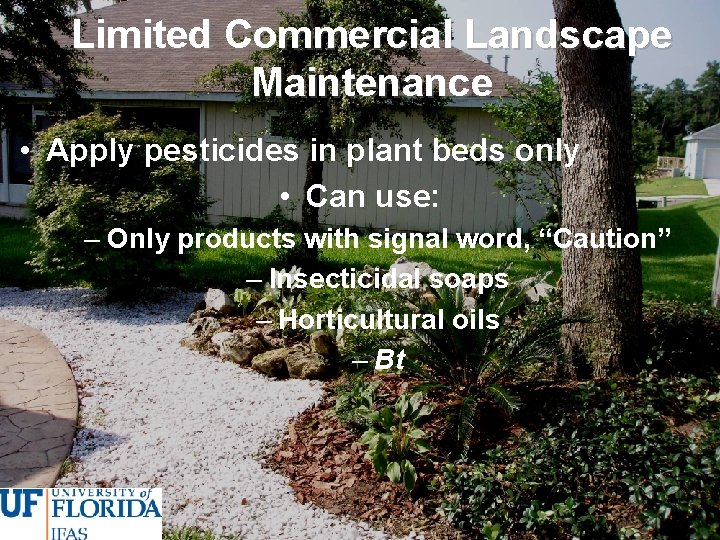
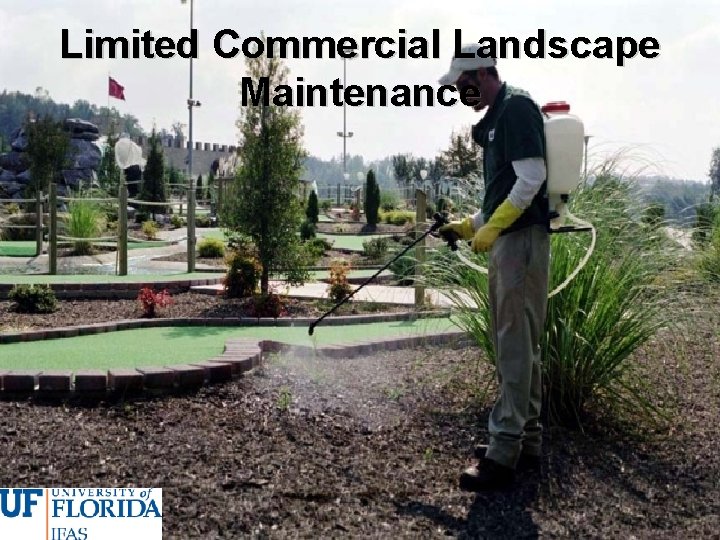
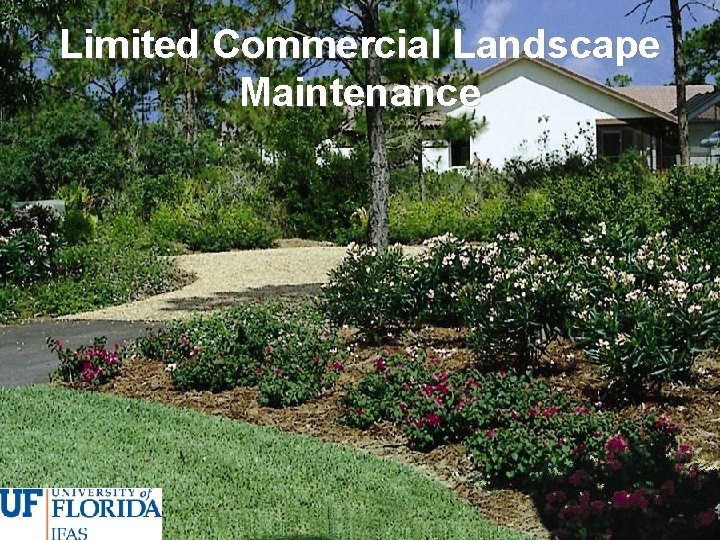
Limited Commercial Landscape Maintenance • Apply pesticides in plant beds only • Can use: – Only products with signal word, “Caution” – Insecticidal soaps – Horticultural oils – Bt
Limited Commercial Landscape Maintenance
Limited Commercial Landscape Maintenance
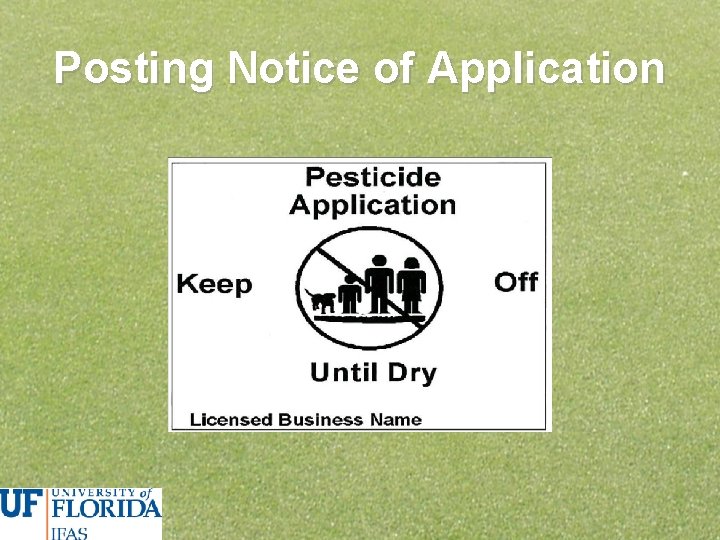
Posting Notice of Application
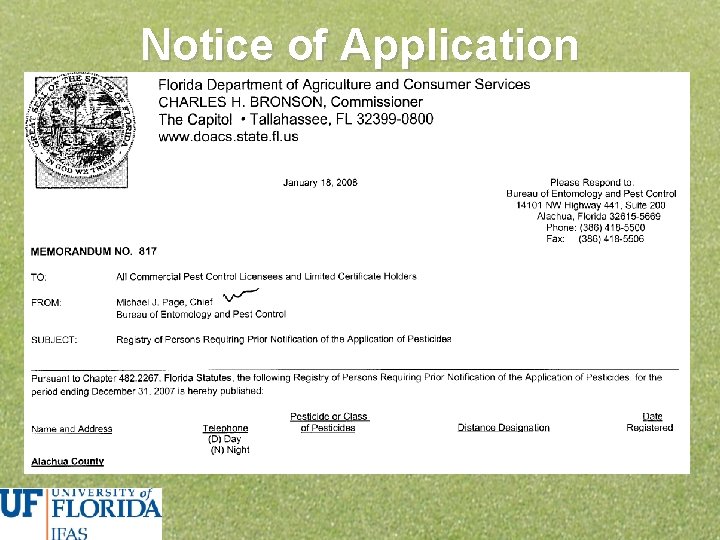
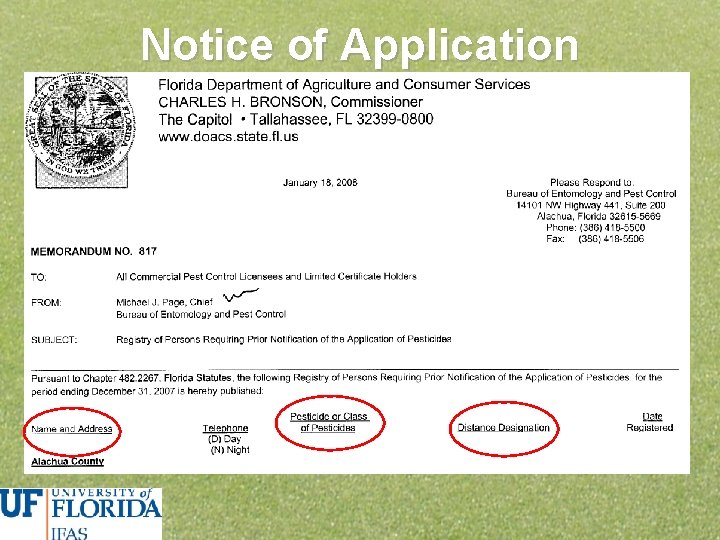
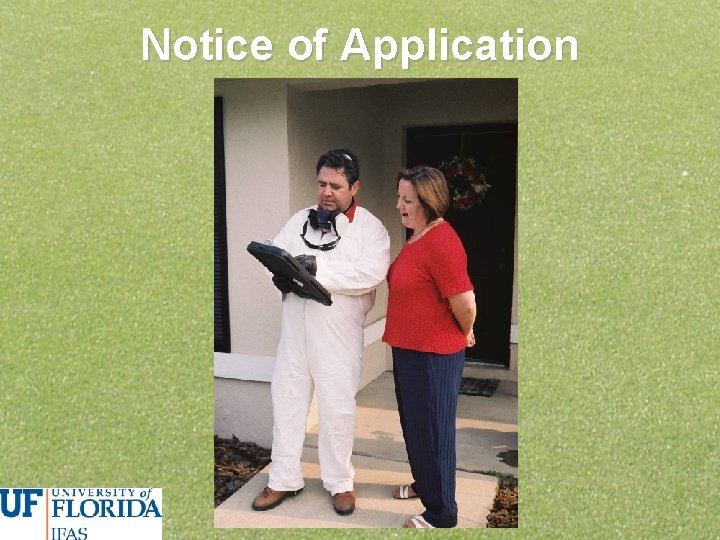
Notice of Application
Notice of Application
Notice of Application
Information FDACS Bureau of Compliance Monitoring (850) 488 -3314 http: //www. flaes. org/complimonitoring/index. html FDACS Bureau of Entomology & Pest Control (850) 921 -4177 http: //www. flaes. org/aes-ent/index. html University of Florida/IFAS Pesticide Information Office (352) 392 -4721 http: //pested. ifas. ufl. edu/
Photo/Diagram Credits • University of Florida/IFAS • Virginia Tech University Mention of trade names in this presentation is solely for providing specific information. It is not a guarantee or warranty of the products named, and does not signify that they are approved to the exclusion of others of suitable composition. Use pesticides safely. Read and follow directions on the manufacturer’s label. Fred Fishel, Ph. D. Department of Agronomy University of Florida/IFAS Copyright 2008 University of Florida