Nursing Theorists Dr Imogene King Ed D MSN



















- Slides: 93
Nursing Theorists Dr. Imogene King Ed. D, MSN, RN, FAAN
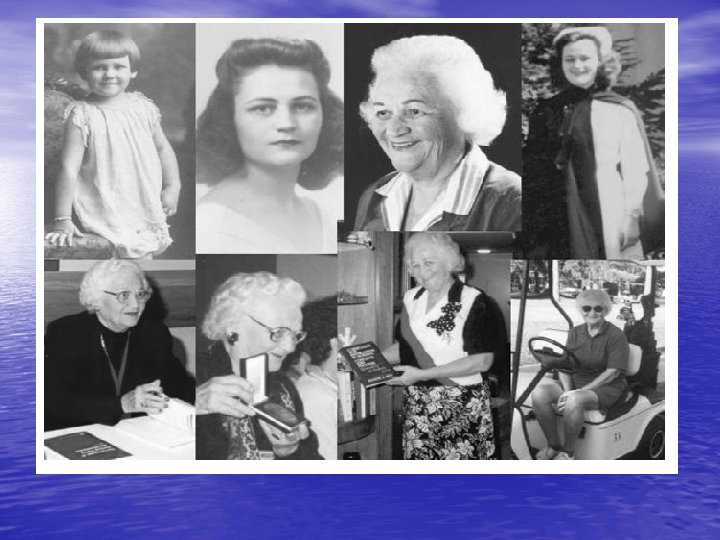
Dr. Imogene King Bio • Born Jan. 30, 1923 in West Point, Iowa. • Received a diploma in nursing from St. John's Hospital • • • School of Nursing in St. Louis, Mo. in 1945; A bachelor's degree in science in nursing education in 1945; A master's degree in science in nursing from St. Louis University in 1957; A doctorate in education from the Teacher's College at Columbia University in 1961.
Dr. Imogene King Bio • Professor at Loyola University in Chicago, Ill. • Director of Nursing at Ohio State University. • Professor at University of South Florida.
King developed theory of goal attainment in 1981, after creating her interacting system framework.
She began thinking “what is the nature of nursing, ” and used this to guide her to develop her theory.
Dr. King used different criteria to confirm that her theory posed questions that could be researched and verified. Some of the other criteria were to make sure that the concepts were clearly recognized and defined, and to recognize the rational assumptions (Alligood & Tomey, 2006, p. 302).
King tested her theory by describing how the nurses & patients interact and how this can lead to goal attainment, which is a little different than how she normally performed her studies.
She was determined to see if nurses made transactions. She broke her groups into the volunteer group and the nonparticipant group.
King then trained the non-participant group before collecting any of her data. She observed nonverbal and verbal interactions from both groups that helped to form her theory of goal attainment.
She then was able to answer her question as to “what the nature of nursing” was by stating that it is “the way in which nurses, in their role, do with and for individuals that differentiates nursing from other health professions” (Alligood & Tomey, 2006, p. 302).
King used her own assumptions and experiences to help create her theory. She used nursing, individuals, health, environment and the nurse-client interaction to help form these ideas. King stated that her interaction framework and Theory of Goal Attainment were “‘based on an overall assumption that the focus of nursing is human beings interacting with their environment leading to a state of health for individuals, which is an ability to function in social roles’” (Alligood & Tomey, 2006, p. 303).
Nursing This is the behavior between nurses and their patients that helps the patients to be able to function independently in their role in life. King recognized that there is a process being used in the nurse-to-patient interaction. This process is action, reaction, interaction and transaction. Each step in this process can be subject to change depending on the interaction between the nurse and patient (Alligood & Tomey, 2006, p. 303).
• Person King had many different ideas about individuals that were very empowering. She believed that each individual: 1. 2. 3. 4. 5. 6. Has the ability to make their own decisions that will result in different actions. Has a spiritual component. Can record their history and culture using different forms of communication. Has their own necessities and goals that they are trying to obtain. Has a distinctive way of thinking in each situation. Is connected with their environment. (Alligood & Tomey, 2006, p. 303)
Health is an important part in each individual’s life and everyone is different. Each individual’s body is constantly adjusting itself depending on the internal and external atmosphere. According to King, our health depends on using the resources available to us to maintain a healthy lifestyle (Alligood & Tomey, 2006, p. 303).
Environment King believes that it is critical for nurses to understand how individuals work together with their environment to preserve their health. As the environment changes, each individual needs to be able to make changes as well to control their health. Nurses need to be able to adjust to these changes in order to provide the best care possible for each individual (Alligood & Tomey, 2006, p. 303).
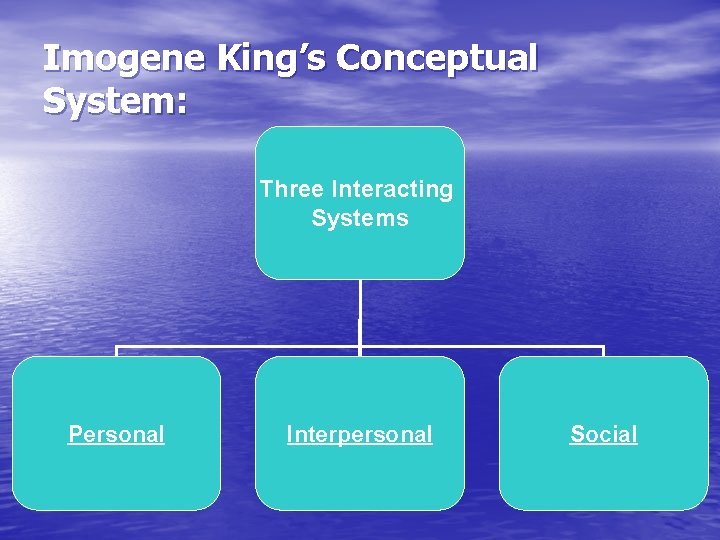
Imogene King’s Conceptual System: Three Interacting Systems Personal Interpersonal Social
“King clearly identifies that the concepts in the framework are not limited to only one of the dynamic interacting systems but cut across all three systems”. (Tomey, 2006, p. 301)
Personal System
Dr. King’s Philosophy On Nursing “Nursing is an observable behavior found in the health care systems in society. It is a process of action, reaction, and interaction whereby nurse and client share information about their perceptions in the nursing situation. The goal of nursing is to help individuals maintain their health so they can function in their roles. ” Imogene King (1998). Quoted in Nursing Theorist and Their Work
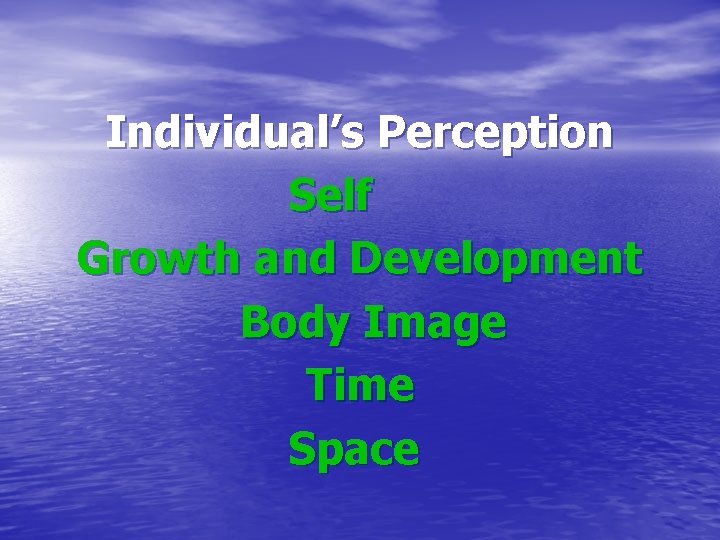
Individual’s Perception Self Growth and Development Body Image Time Space
The Individual’s Perception The primary feature of the personal system because it influences all other behaviors. This refers to a person’s representation of reality. It is universal, yet highly subjective and unique to each person.
Self The person’s subjective: Ø Values Ø Ideas Ø Attitudes Ø Commitment
Growth and Development Involves all the changes that occur: Cellular Molecular Behavioral These changes are usually orderly and predictable, but may very with individuals.
Body Image The way a person perceive their body and the reaction of others to their body. Body image is subjective and changes as the changes physically and emotionally.
Example Clinical A patient with a traumatic amputation of an extremity. After meeting the physical requirements to care for this patient, a nurse should assess the patient’s perception of self and the resulting self esteem. The treatment plan should be adapted accordingly to the nurse’s assessment.
Example Pt Assessment When assessing a pt with body image changes, the nurse must keep in mind that some pt my have a difficult time dealing with their loss or feeling of disfigurement. Support groups are a good way for pt to see other people and how the deal with the loss or change in their body appearance.
Space The immediate physical territory occupied by person and person’s behavior.
Time The order of events and their relationship to each other.
“King emphasized that waiting makes time even longer” (Williams, 2001, p. 26)
Example Clinical A patient who is waiting for the physician to return with an important test result. For the case of example, let’s presume it is a value that determines whether the patient’s cancer has returned or not.
Example Pt Assessment Patient is waiting to go for a procedure i. e. , cath lab, open heart surgery, etc. Intervention and planning should focus on distractions to help the patient and family pass time until the procedure. Some interventions may include medication, education video or just simply talking with the patient and family to reduce worry and frustration.
Dr. King’s Philosophy On Health “Health implies continuous adjustment to stress in the internal and external environment through optimum use of one’s resources to achieve potential for daily living. ” Imogene King (1998). Quoted in Nursing Theorist and Their Work
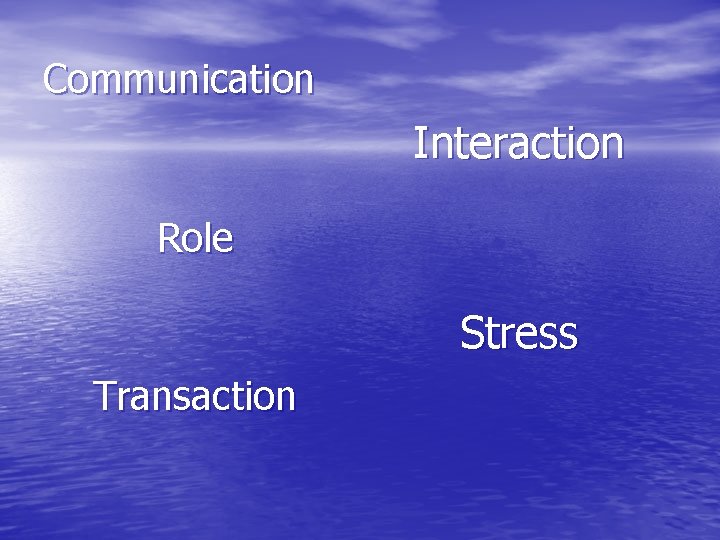
Communication Interaction Role Stress Transaction
Interaction The belief that each individual brings a different set of values, ideas, attitudes, and perception to each interaction. The individuals will come together for a purpose, make a judgment, take action, and react to the individual and situation.
Transaction Interaction between a person and another person or a person and the environment for purpose of goal attainment.
Role The expected behavior of a person in a specific position and the rules that govern the position and affect the interactions between two or more people.
Stress The exchange of energy is either positive or negative between a person and the environment, object, events and persons can serve as stressor.
Social
Imogene King’s Assumptions of the Individual are: Ø Individuals are spiritual beings. Ø Individuals have the capacity to think, to know, to make choices, and to select alternative courses of action. Ø Individuals have the ability through their language and other symbols to record their history and to preserve their culture.
ØIndividuals are open systems in transaction with environment. ØIndividuals are unique and holistic and are of intrinsic worth who are capable of rational thinking and decision making in most situations. ØIndividuals differ in their needs, wants, and goals. Imogene King (1998). Quoted in Nursing Theorist and Their Work
Organization Authority Decision Making Status
Organization A group of people with similar interests who have prescribed roles and positions who use resources to achieve personal and organizational roles.
Organization Can Include
Family
Religious groups
Schools
Work
Peers
Authority Refers to the observable behavior of providing guidance and order for actions. It is active and reciprocal.
Decision Making Results from developing and acting on perceived choices for goal attainment.
Power Is characterized by the ability to use resources for goal achievement. It also is a means by which one or more persons can influence others.
Status Refers to the position occupied by a person in a group or the position occupied by a group in relation to other groups in an organization. It is accompanied by certain duties, privileges, and obligations
Current Research
Research will continue to add to King’s conceptualizations into 2050.
King’s philosophical assumptions about human beings and values and beliefs about nursing have not changed in 60 years.
“The interaction of these three systems will not change as long as human beings make up the world in which we live. The transaction process in theory will not change but the ways that we communicate and interact have changed because of the multiple technologies available. ” (King, n. d. )
The multiple programs in nursing in 2006 do not meet the healthcare needs of clients now or in the future. Technology alone cannot prepare the professional nurses for the 21 st century. Interdisciplinary collaboration among healthcare professionals is important to provide healthcare for individuals and families in the 21 st century.
Strength of the Model
The Theory of Goal attainment improves patient care by many concepts including:
• Goal setting • Goal Achieving
These two concepts of the model provide interacting frameworks.
The Theory of Goal Attainment concepts are easily understood and with the exception of the concept of self, they have been derived from research literature. (p. 308)
Weaknesses of the Model
King’s (1981) Theory of Goal Attainment has been criticized for having limited application in areas of nursing in which patients are unable to interact competently with the nurse. (Tomey & Alligood, 2006, p. 308)
However… • King has responded that 70% of communication is non verbal. (p. 308) • King believes that critics assume that a theory will address every person event and situation, which is clearly impossible. (p. 308)
Cultural Limitations
A. Theories usefulness in certain situations, suggests usefulness is limited to Western “sick role attitudes” stereotype Expectation patient follow guidelines from medical team i. e. rest, eat appropriately , and focus energy on getting well
B. Modern times, person has control over health • Does not factor in elderly and other cultures, as giving control to the health care practitioner. • “Doctor is god” mentality of 50’s and 60’s. Those patients would prefer to have goal setting created by health professionals.
C. Some cultures prefer indirect communications • Give hints instead of telling them what to do.
Nurse must always ask if her cultural beliefs about King’s concept will interfere with the patient’s own cultural beliefs. Always try to establish a trusting relationship. Can bridge cultural gap if nurse is open to differences, creative and flexible regarding issues.
Patient Competence
• Unique patient populations- neurological patients, children, • King argues, “ 70 percent communication nonverbal” pg 308 • Must have three systems present to enact transaction ( personal, interpersonal, social)
• Unable to judge response of comatose or • • neurological impaired patient. Research suggests changes (neurologically) do occur but unable to say to what extent while nurse is interacting with patient Nurse must be cautious and more acutely aware of changes physiologically when dealing with neurologically impaired patients
Analysis of the Model
Imogene kings model of interaction and middle range theory of goal attainment contributed to the contemporary nursing framework. It can be found in nursing schools throughout the world.
King describes the purpose of her book as follows “……Proposing a conceptual frame of reference for nursing. It is intended to be utilized specifically by students and teachers, and also by researchers and practitioners to identify and analyze events in specific nursing situations. The framework suggests that the essential characteristics of nursing are those properties that have persisted in spite of environmental changes. “ “It is a way of thinking about nursing; an approach for selecting concepts perceived to be fundamental for the practice of professional nursing. ” (Alligood, 2006)
King’s theory can be applied to the past, the present and the future. The basis of her theory of interaction between the three systems provides a contemporary view that can easily be applied to countless situations.
King’s theory is based on empirical research, as well as day to day interactions with the patient. Her theory can be applied to different populous across the lifespan as well.
Some may argue the generality of verbiage in her theories does not provide concrete analysis and measurability. The generalization of the wording allows for much interpretation and autonomy.
Relativity to King’s theory can be found in multiple nursing specialties and different cultures and work places around the world.
With the current trend in nursing leaning towards evidence based practice and nursing interventions, King’s theory is the blueprint to follow.
Nursing is based on interactions with the patient, families and other health care professionals. The goal attainment theory adds value to what nurses are already doing on a day to day basis, interaction with patients.
Introducing your hosts
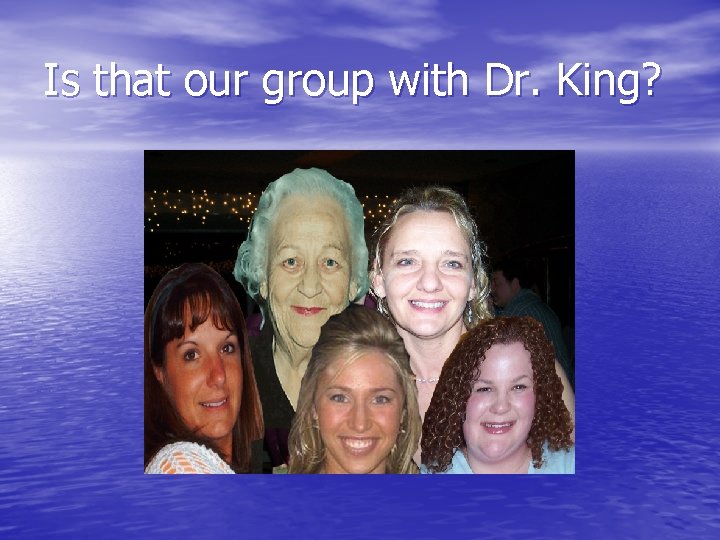
Is that our group with Dr. King?
Lori
Pam
Roger Da Yooper (he’s a little bit camera shy)
Shirley
Teresa
We hope that you enjoyed the show and now have a better understanding of Dr. King’s Theory. Your questions and comments are welcome.
Works Cited • Alligood, M. R. & Tomey, A. M. (2006). Nursing • • Theorists and Their Work (6 th ed. ). St. Louis: Mosby Elsevier. Carter, K. a. (1994, July). King's Theory: A Critique of the Critiques. Nursing Science Quarterly Vol 7 No 3 , 128 -133. King, I. , (n. d. ). King’s Conceptual System, Theory of Goal Attainment, and Transaction Process in the 21 st Century. Retrieved February 19, 2007 from http: //0 -nsq. sage pub. com. libcat. ferris. edu/cgi/reprint/20/2/109
• Ruby, W. L. (1995) Nursing Theories and Models (2 nd ed). Chapter 13, Springhouse Corp. , Pa. • William, L. A. (2001) Imogene Kings Interactive Systems Theory: Application in Emergency and Rural Nursing. Online Journal of Rural Nursing and Healthcare, Vol 2, No. 1, pg 25 -30.








![Msn]](https://slidetodoc.com/wp-content/uploads/2020/12/3305482_b48b1a63b3813712ffceded1012692e7-300x225.jpg "Msn]")