NEPHROLOGY CASE PRESENTATION Presenting Complaint 56 yr old



- Slides: 24
NEPHROLOGY CASE PRESENTATION • Presenting Complaint: – 56 yr old female known to nephrology – Bought in by ambulance – found at home cyanotic and gasping – At a recent clinic visit: diagnosed with a UTI and started on oral antibiotics – Has since experienced SEVERE nausea and vomiting limiting oral intake of food, fluids and medication
• Background Hx – Known with mixed connective tissue disease with features of CREST syndrome – Followed up at nephrology for chronic renal failure • Not on dialysis • Creatinine stable at 400 umol/l • Complicated by anaemia and hypertension – both appear well managed – Known with severe oesophageal dysmotility – Treated at last clinic visit for an e coli UTI (begun on cefuroxime three days ago)
• Current Medication Sotalol 80 mg po od Enalapril 5 mg po bd Adalat XL 30 mg po od Fe. SO 4 one tab daily Omerprazole 20 mg po od Lasix 125 mg po bd Prednisone 10 mg po od Slow K II po bd
• On General Examination – Initial Assessment • Acutely ill with respiratory distress • Severe peripheral cyanosis – including ears and tip of nose • Cold peripheries with impalpable peripheral pulses • Drowsy/Encephalopathic • BP 243/130 • Saturation un-recordable • Conjunctival pallor • no jaundice, oedema, lymphadenopathy
– Upon Re-Examination: Once stable the in ward • Sclerodactyly • Telangiectasia • Puckering of the skin around the mouth
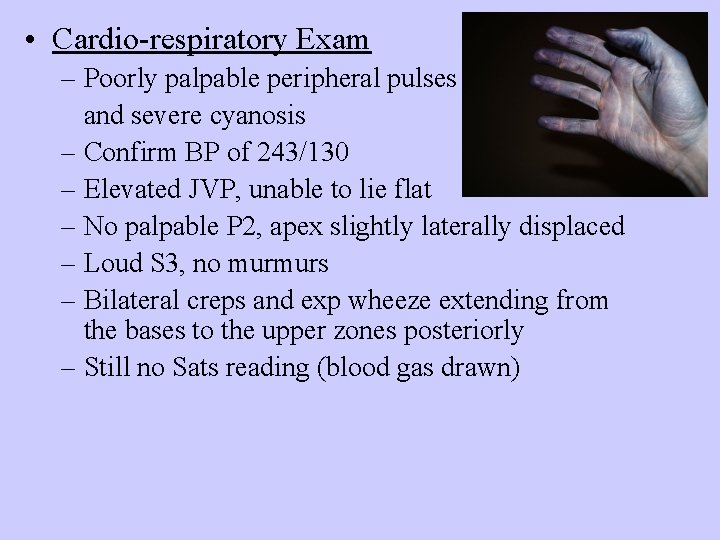
• Cardio-respiratory Exam – Poorly palpable peripheral pulses and severe cyanosis – Confirm BP of 243/130 – Elevated JVP, unable to lie flat – No palpable P 2, apex slightly laterally displaced – Loud S 3, no murmurs – Bilateral creps and exp wheeze extending from the bases to the upper zones posteriorly – Still no Sats reading (blood gas drawn)
• Neurological Exam – GCS 14/15, marked drowsiness – Able to follow commands and appears to be able to move all limbs against gravity – No facial asymmetry – Fundoscopy limited by severe distress • Abdominal Exam – No organomegally – Non tender abdomen – No bruit
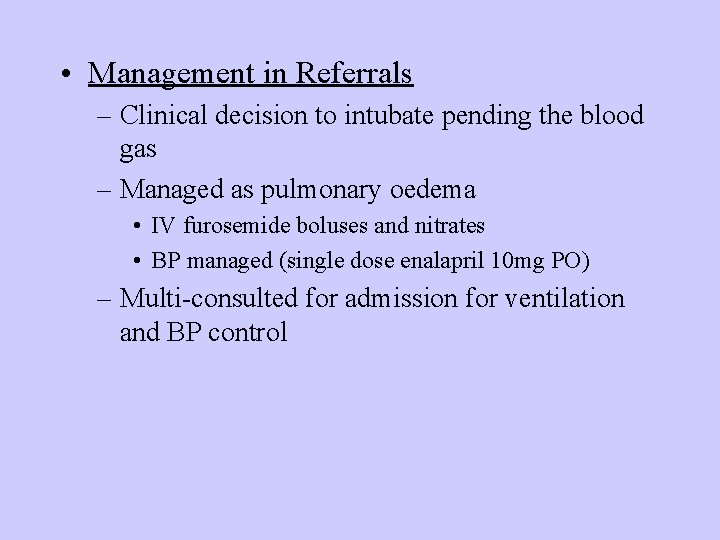
• Management in Referrals – Clinical decision to intubate pending the blood gas – Managed as pulmonary oedema • IV furosemide boluses and nitrates • BP managed (single dose enalapril 10 mg PO) – Multi-consulted for admission for ventilation and BP control
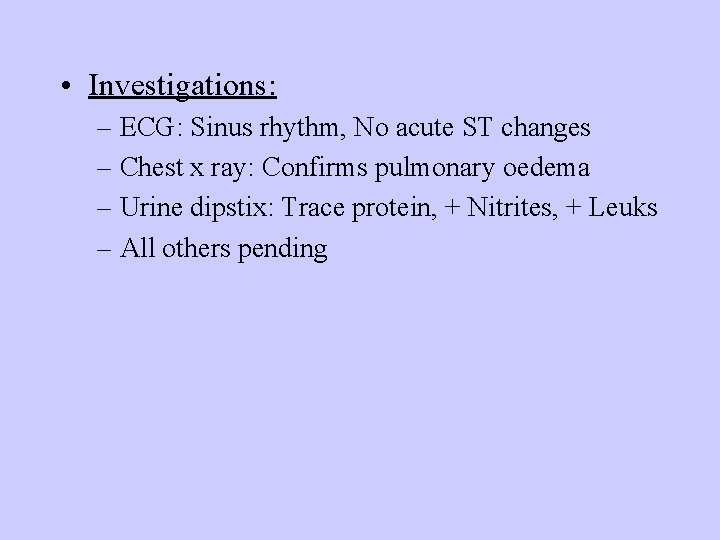
• Investigations: – ECG: Sinus rhythm, No acute ST changes – Chest x ray: Confirms pulmonary oedema – Urine dipstix: Trace protein, + Nitrites, + Leuks – All others pending
• Differential Diagnosis?
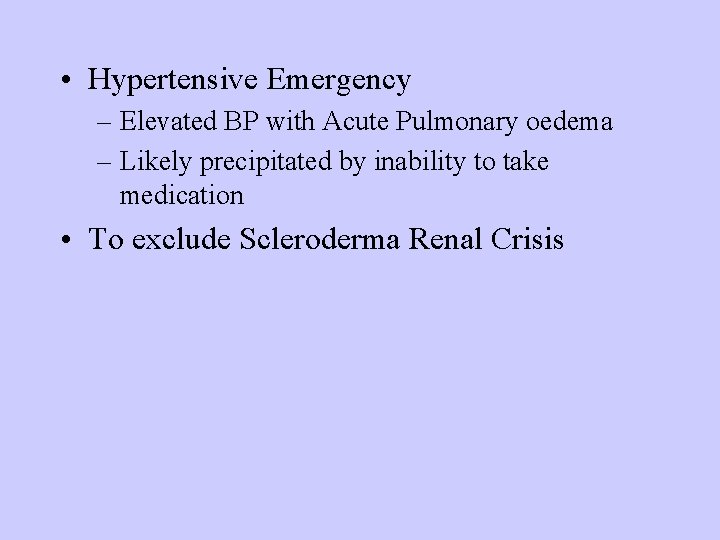
• Hypertensive Emergency – Elevated BP with Acute Pulmonary oedema – Likely precipitated by inability to take medication • To exclude Scleroderma Renal Crisis
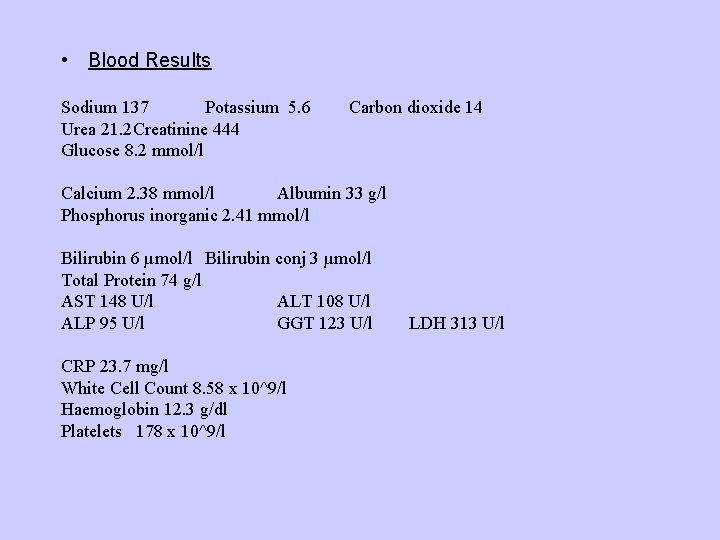
• Blood Results Sodium 137 Potassium 5. 6 Urea 21. 2 Creatinine 444 Glucose 8. 2 mmol/l Carbon dioxide 14 Calcium 2. 38 mmol/l Albumin 33 g/l Phosphorus inorganic 2. 41 mmol/l Bilirubin 6 µmol/l Bilirubin conj 3 µmol/l Total Protein 74 g/l AST 148 U/l ALT 108 U/l ALP 95 U/l GGT 123 U/l CRP 23. 7 mg/l White Cell Count 8. 58 x 10^9/l Haemoglobin 12. 3 g/dl Platelets 178 x 10^9/l LDH 313 U/l
• Progress in ICU – Responded well to BP control with IV labetolol – Kept on ACE inhibitor for management of possible Scleroderma Renal Crisis – Pulmonary oedema resolved with PPV and BP control – Creatinine remained stable, urine output adequate – (Rising urea attributed to dehydration and dipeptivan administration – resolved)
SCLERODERMA RENAL CRISIS
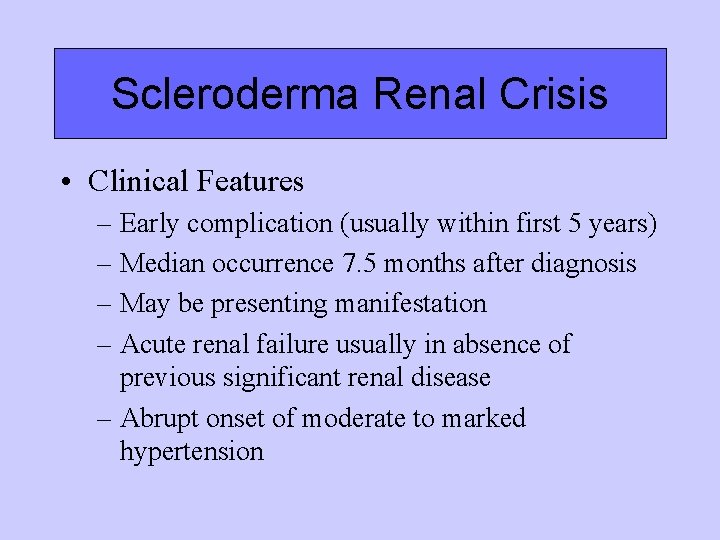
Introduction • Renal involvement common in Systemic Sclerosis – usually manifesting as mild renal dysfunction • Scleroderma Renal Crisis is a life threatening disease that develops in 10 -20% of patients with Diffuse Cuntaneous form of Systemic Sclerosis • (Much less frequent in Limited Cutaneous form) • High morbidity and mortality • Characterized by: – Abrupt onset of moderate to severe hypertension – Mild proteinuria or few cells or casts – Progressive renal failure
General Renal Involvement • One half of patients have renal involvement • Proteinuria, elevated creatinine, hypertension • Multifactorial – Disease itself: lesion in interlobular arteries associated with chronic renal ischaemia – Hypertension – Renal artery stenosis – Pre. Renal: Hypovolamia (GI invlovement, diuretic use, heart failure) – Drugs: NSAIDS, cyclosporine, D-penacillamine
Scleroderma Renal Crisis • Clinical Features – Early complication (usually within first 5 years) – Median occurrence 7. 5 months after diagnosis – May be presenting manifestation – Acute renal failure usually in absence of previous significant renal disease – Abrupt onset of moderate to marked hypertension
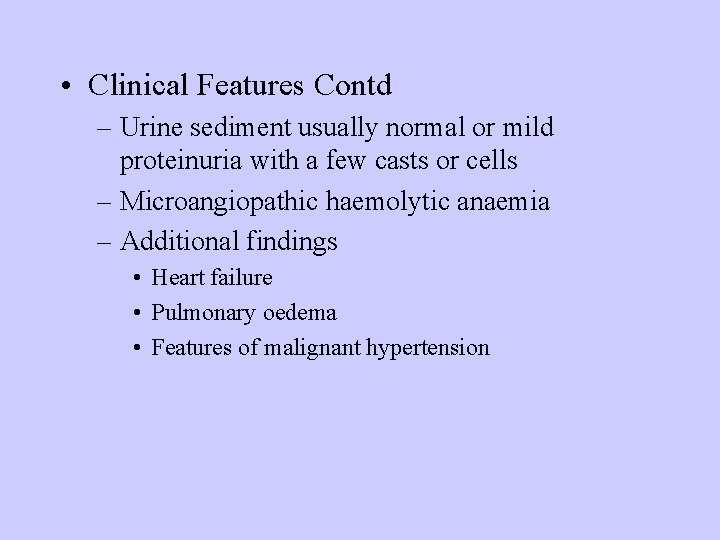
• Clinical Features Contd – Urine sediment usually normal or mild proteinuria with a few casts or cells – Microangiopathic haemolytic anaemia – Additional findings • Heart failure • Pulmonary oedema • Features of malignant hypertension
Risk Factors • Most NB risk factor - diffuse skin involvement • Glucocorticoid use • Presence of autoantibodies to RNA polymerase • ? Cyclosporin • New onset heart failure, pericardial effusion, new onset anaemia
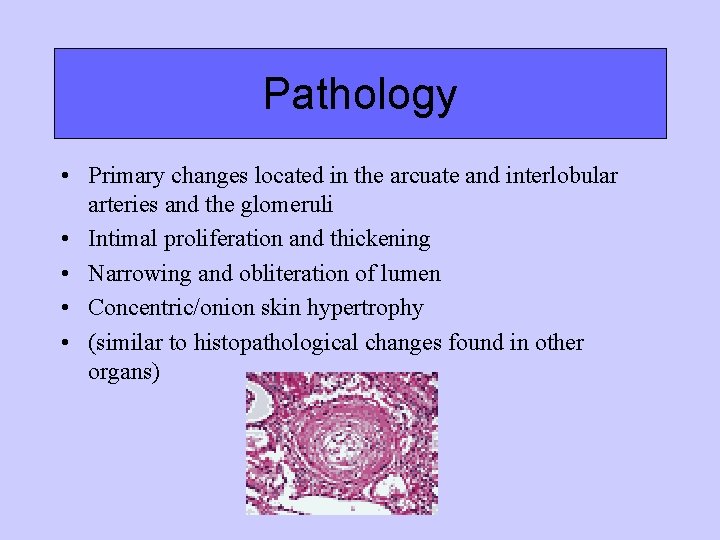
Pathology • Primary changes located in the arcuate and interlobular arteries and the glomeruli • Intimal proliferation and thickening • Narrowing and obliteration of lumen • Concentric/onion skin hypertrophy • (similar to histopathological changes found in other organs)
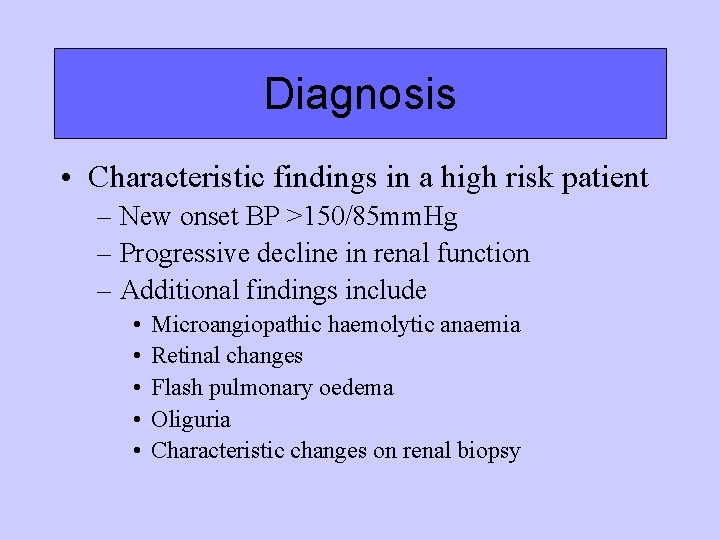
Diagnosis • Characteristic findings in a high risk patient – New onset BP >150/85 mm. Hg – Progressive decline in renal function – Additional findings include • • • Microangiopathic haemolytic anaemia Retinal changes Flash pulmonary oedema Oliguria Characteristic changes on renal biopsy
Treatment • Mainstay: Prompt BP control (attempt to return BP to baseline within 72 hrs) • Optimal class = ACE Inhibitors • IV nitroprusside for malignant HPT with CNS involvement • ARB’s would be expected to be effective but no clinical trials have compared these to ACEI • IV prostacyclins (anecdotal observations of benefit) • Fish oil (theoretical benefit on haemodynamics and antipalatelet properties)
Renal Outcomes • Despite treatment with ACE 20 -50% progress to end-stage renal disease • If indicated either haemo- or peritoneal dialysis may be initiated • Survival on dialysis of patients with systemic sclerosis is worse than those with other forms of end-stage renal disease • Limited experience with renal transplant (often precluded due to severity of extra-renal manifestations) • Survival is reduced compared to transplant recipients with other disorders
Prognosis • Potentially life-threatening complication • Prior to ACEI use most died within 1 year • 76% one year survival in those treated with ACEI (compared to 28% with other antihypertensives)