Module E PRINCIPLES AND PRACTICES OF ASEPSIS Role

- Slides: 37
Module E PRINCIPLES AND PRACTICES OF ASEPSIS Role of hands and the environment in disease transmission
OBJECTIVES • Describe the principles and practice of asepsis • Understand hygiene • Understand the role of the environment in disease transmission
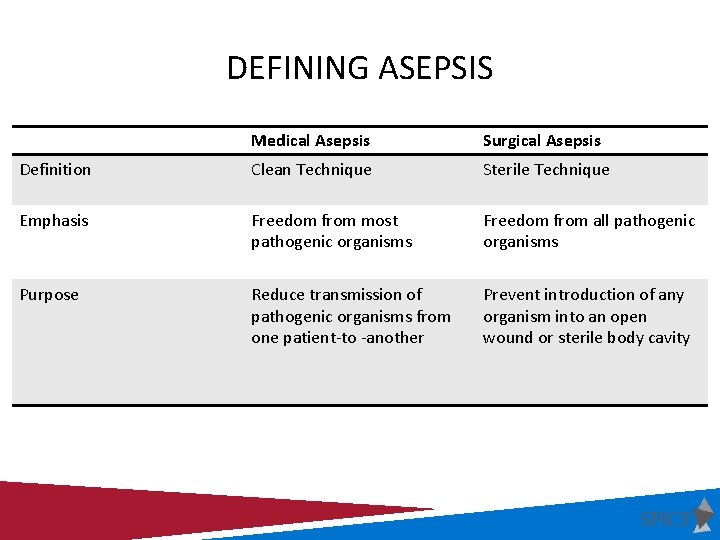
DEFINING ASEPSIS Medical Asepsis Surgical Asepsis Definition Clean Technique Sterile Technique Emphasis Freedom from most pathogenic organisms Freedom from all pathogenic organisms Purpose Reduce transmission of pathogenic organisms from one patient-to -another Prevent introduction of any organism into an open wound or sterile body cavity
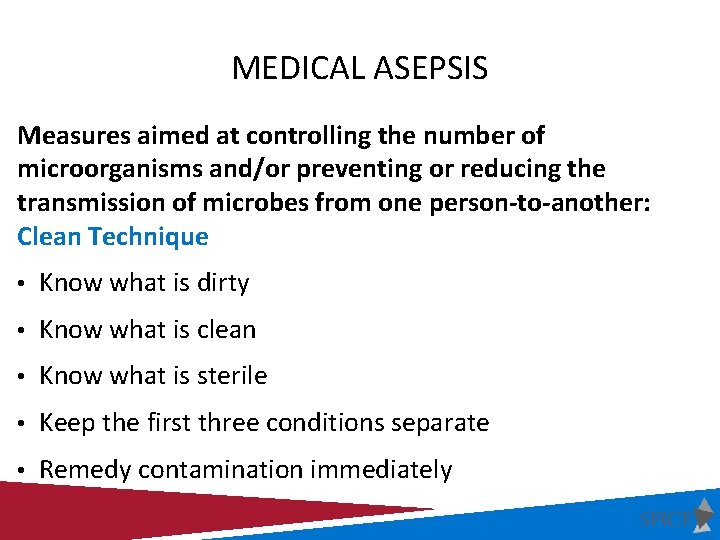
MEDICAL ASEPSIS Measures aimed at controlling the number of microorganisms and/or preventing or reducing the transmission of microbes from one person-to-another: Clean Technique • Know what is dirty • Know what is clean • Know what is sterile • Keep the first three conditions separate • Remedy contamination immediately
PRINCIPLES OF MEDICAL ASEPSIS When the body is penetrated, natural barriers such as skin and mucous membranes are bypassed, making the patient susceptible to microbes that might enter. • Perform hand hygiene and put on gloves • When invading sterile areas of the body, maintain the sterility of the body system • When placing an item into a sterile area of the body, make sure the item is sterile
PRINCIPLES OF MEDICAL ASEPSIS Even though skin is an effective barrier against microbial invasion, a patient can become colonized with other microbes if precautions are not taken. • Perform hand hygiene between patient contacts • When handling items that only touch patient’s intact skin, or do not ordinarily touch the patient, make sure item is clean and disinfected (between patients).
PRINCIPLES OF MEDICAL ASEPSIS All body fluids from any patient should be considered contaminated • Body fluids can be the source of infection for the patient and you • Utilize appropriate personal protective equipment (PPE) • When performing patient care, work from cleanest to dirtiest patient area.
PRINCIPLES OF MEDICAL ASEPSIS The healthcare team and the environment can be a source of contamination for the patient • Health care providers (HCP) should be free from disease • Single use items can be a source of contamination • Patients environment should be as clean as possible
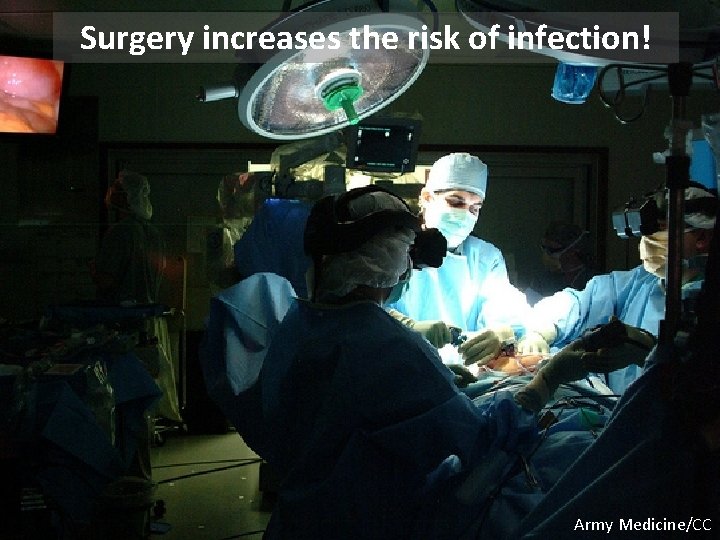
Surgery increases the risk of infection! Army Medicine/CC
SURGICAL ASEPSIS Practices designed to render and maintain objects and areas maximally free from microorganisms: Sterile Technique • Know what is sterile • Know what is not sterile • Keep sterile and not sterile items apart • Remedy contamination immediately
PRINCIPLES OF SURGICAL ASEPSIS • The patient should not be the source of contamination • The operating room (OR) team should not be the source of contamination • The surgical scrub should be done meticulously • The OR technique of the surgeon is very important • Recognize potential environmental contamination
DEFINE STERILITY
REMEDY CONTAMINATION • Every case is considered dirty and the same infection control precautions are taken for all patients • When contamination occurs, address it immediately • Breaks in technique are pointed out and action is taken to eliminate them.
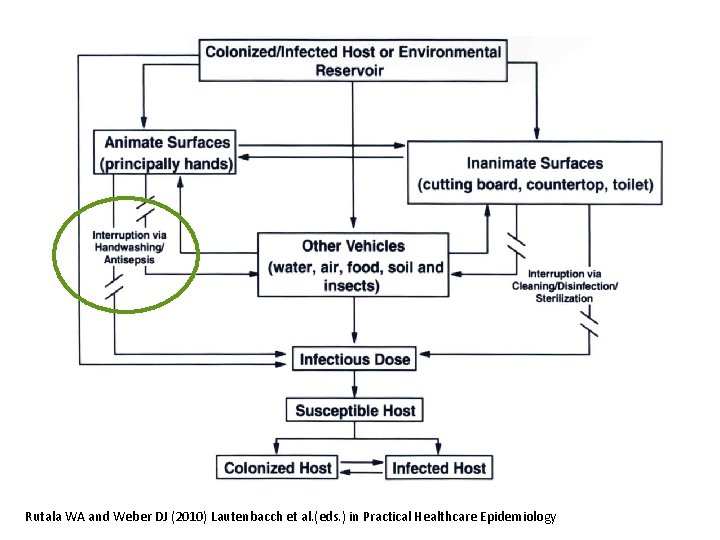
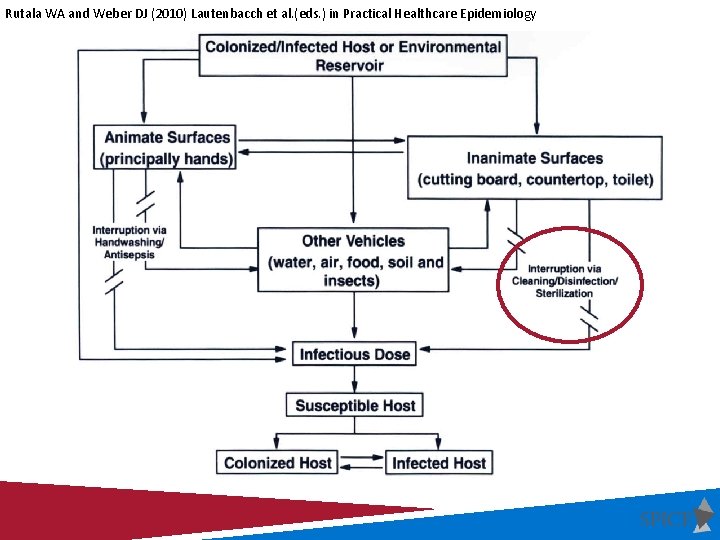
Rutala WA and Weber DJ (2010) Lautenbacch et al. (eds. ) in Practical Healthcare Epidemiology
HAND HYGIENE THE SUBSTANCE OF ASEPSI i. Stockphoto
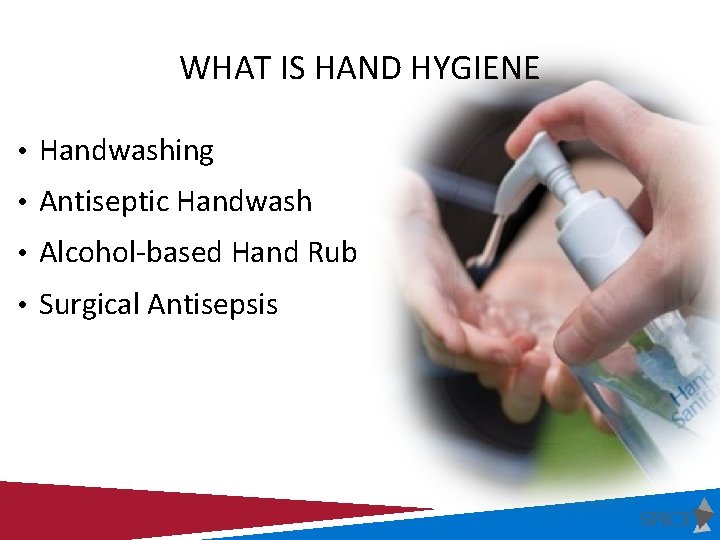
WHAT IS HAND HYGIENE • Handwashing • Antiseptic Handwash • Alcohol-based Hand Rub • Surgical Antisepsis
WHY IS HAND HYGIENE SO IMPORTANT? • Hands are the most common mode of pathogen transmission • Reduces the spread of antimicrobial resistance • Prevents healthcare-associated infections
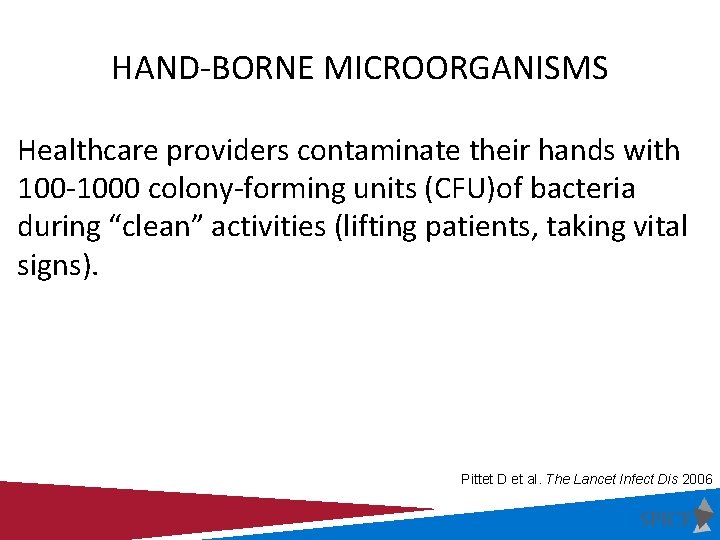
HAND-BORNE MICROORGANISMS Healthcare providers contaminate their hands with 100 -1000 colony-forming units (CFU)of bacteria during “clean” activities (lifting patients, taking vital signs). Pittet D et al. The Lancet Infect Dis 2006
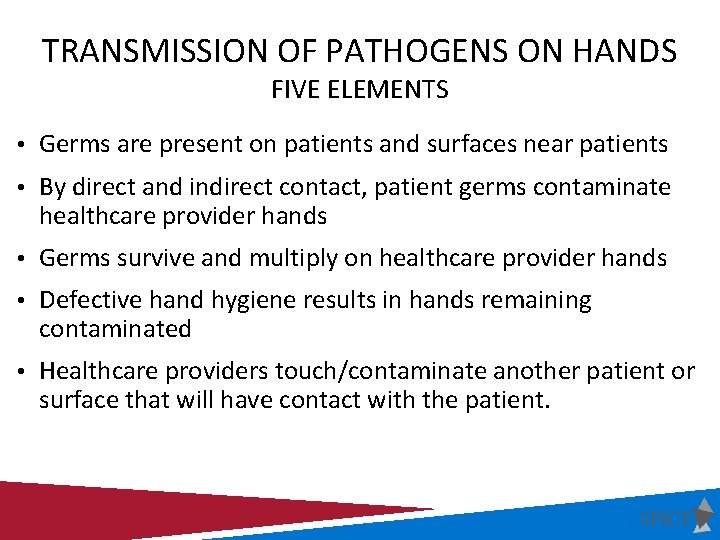
TRANSMISSION OF PATHOGENS ON HANDS FIVE ELEMENTS • Germs are present on patients and surfaces near patients • By direct and indirect contact, patient germs contaminate healthcare provider hands • Germs survive and multiply on healthcare provider hands • Defective hand hygiene results in hands remaining contaminated • Healthcare providers touch/contaminate another patient or surface that will have contact with the patient.
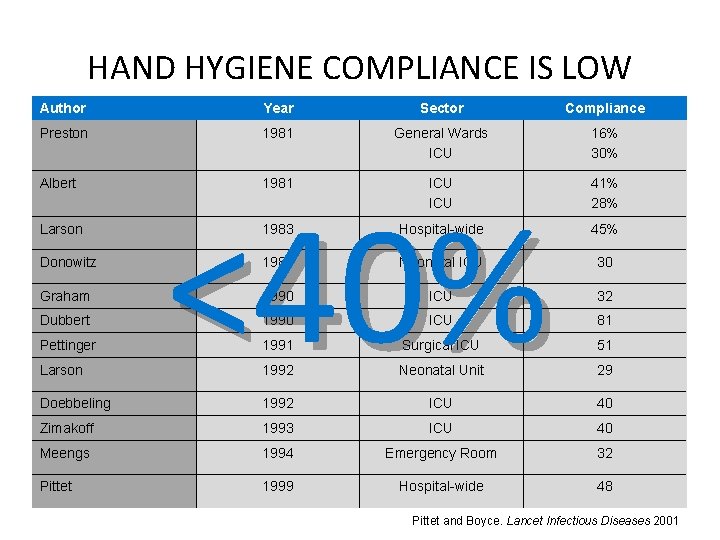
HAND HYGIENE COMPLIANCE IS LOW Author Year Sector Compliance Preston 1981 General Wards ICU 16% 30% Albert 1981 ICU 41% 28% 1983 Hospital-wide 45% 1987 Neonatal ICU 30 1990 ICU 32 1990 ICU 81 1991 Surgical ICU 51 1992 Neonatal Unit 29 1992 ICU 40 Zimakoff 1993 ICU 40 Meengs 1994 Emergency Room 32 Pittet 1999 Hospital-wide 48 Larson Donowitz Graham Dubbert Pettinger Larson Doebbeling <40% Pittet and Boyce. Lancet Infectious Diseases 2001
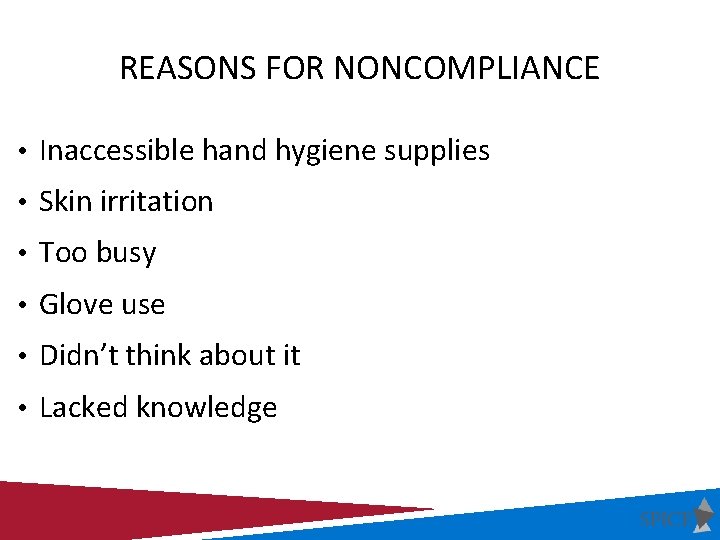
REASONS FOR NONCOMPLIANCE • Inaccessible hand hygiene supplies • Skin irritation • Too busy • Glove use • Didn’t think about it • Lacked knowledge
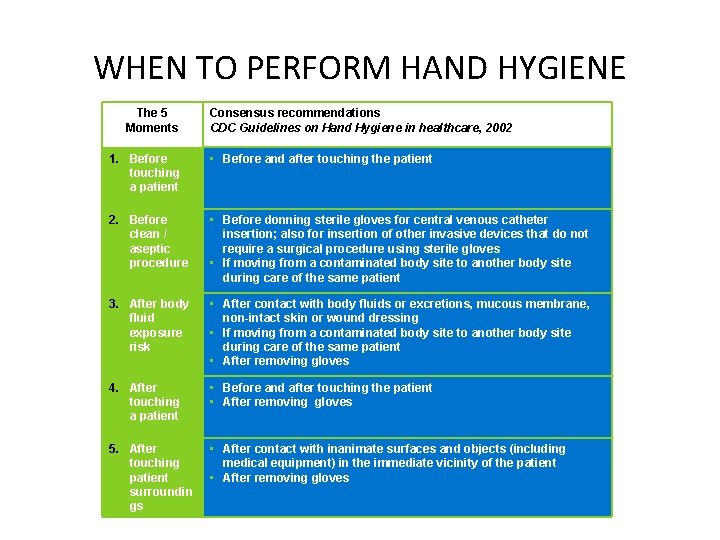
WHEN TO PERFORM HAND HYGIENE The 5 Moments Consensus recommendations CDC Guidelines on Hand Hygiene in healthcare, 2002 1. Before touching a patient • Before and after touching the patient 2. Before clean / aseptic procedure • Before donning sterile gloves for central venous catheter insertion; also for insertion of other invasive devices that do not require a surgical procedure using sterile gloves • If moving from a contaminated body site to another body site during care of the same patient 3. After body fluid exposure risk • After contact with body fluids or excretions, mucous membrane, non-intact skin or wound dressing • If moving from a contaminated body site to another body site during care of the same patient • After removing gloves 4. After touching a patient • Before and after touching the patient • After removing gloves 5. After touching patient surroundin gs • After contact with inanimate surfaces and objects (including medical equipment) in the immediate vicinity of the patient • After removing gloves
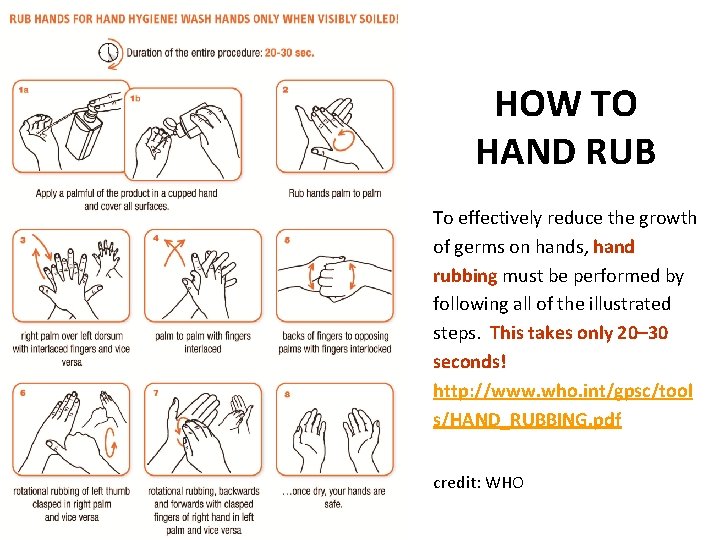
HOW TO HAND RUB To effectively reduce the growth of germs on hands, hand rubbing must be performed by following all of the illustrated steps. This takes only 20– 30 seconds! http: //www. who. int/gpsc/tool s/HAND_RUBBING. pdf credit: WHO
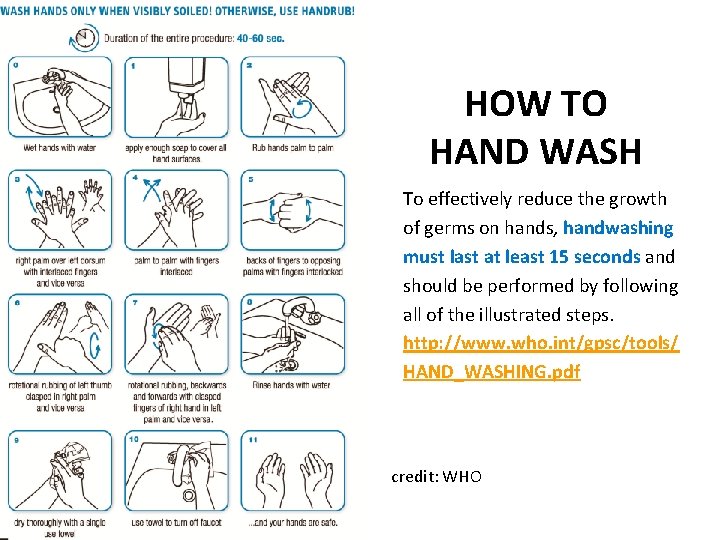
HOW TO HAND WASH To effectively reduce the growth of germs on hands, handwashing must last at least 15 seconds and should be performed by following all of the illustrated steps. http: //www. who. int/gpsc/tools/ HAND_WASHING. pdf credit: WHO
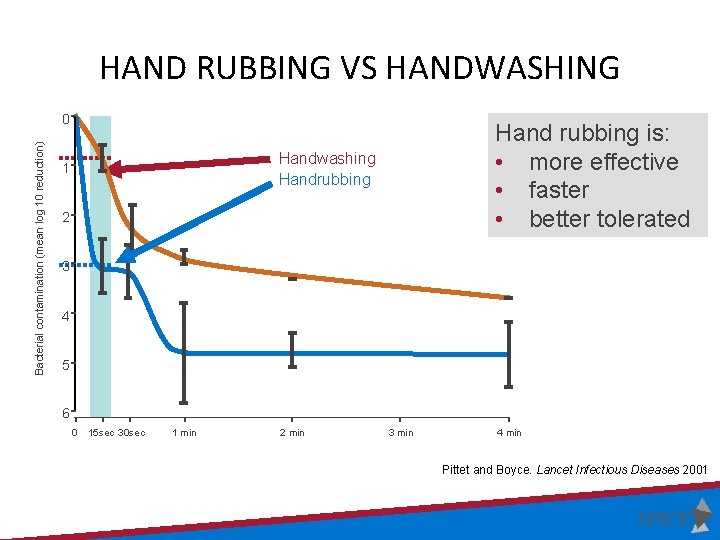
HAND RUBBING VS HANDWASHING Bacterial contamination (mean log 10 reduction) 0 Hand rubbing is: • more effective • faster • better tolerated Handwashing Handrubbing 1 2 3 4 5 6 0 15 sec 30 sec 1 min 2 min 3 min 4 min Pittet and Boyce. Lancet Infectious Diseases 2001
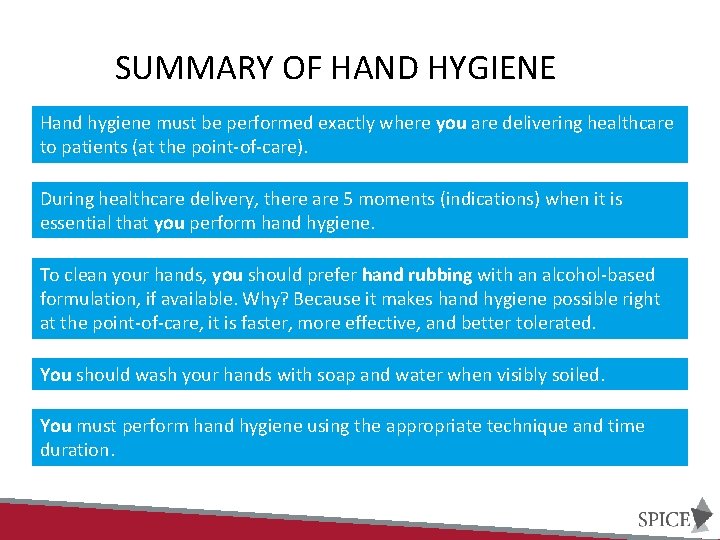
SUMMARY OF HAND HYGIENE Hand hygiene must be performed exactly where you are delivering healthcare to patients (at the point-of-care). During healthcare delivery, there are 5 moments (indications) when it is essential that you perform hand hygiene. To clean your hands, you should prefer hand rubbing with an alcohol-based formulation, if available. Why? Because it makes hand hygiene possible right at the point-of-care, it is faster, more effective, and better tolerated. You should wash your hands with soap and water when visibly soiled. You must perform hand hygiene using the appropriate technique and time duration.
Rutala WA and Weber DJ (2010) Lautenbacch et al. (eds. ) in Practical Healthcare Epidemiology
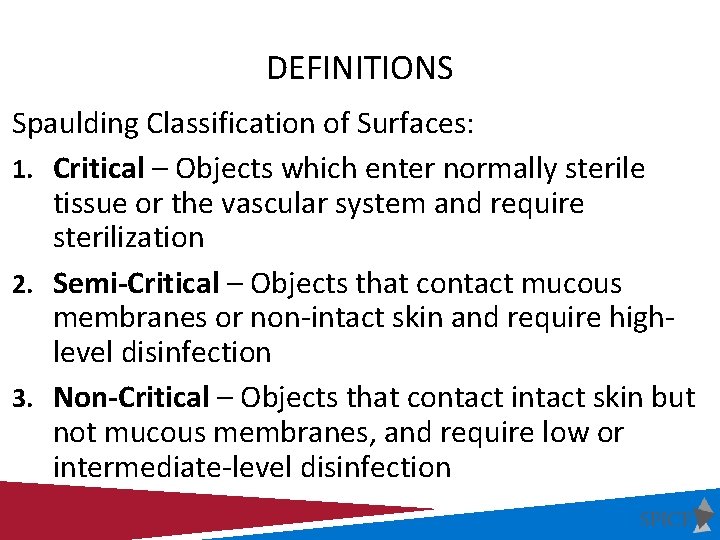
DEFINITIONS Spaulding Classification of Surfaces: 1. Critical – Objects which enter normally sterile tissue or the vascular system and require sterilization 2. Semi-Critical – Objects that contact mucous membranes or non-intact skin and require highlevel disinfection 3. Non-Critical – Objects that contact intact skin but not mucous membranes, and require low or intermediate-level disinfection
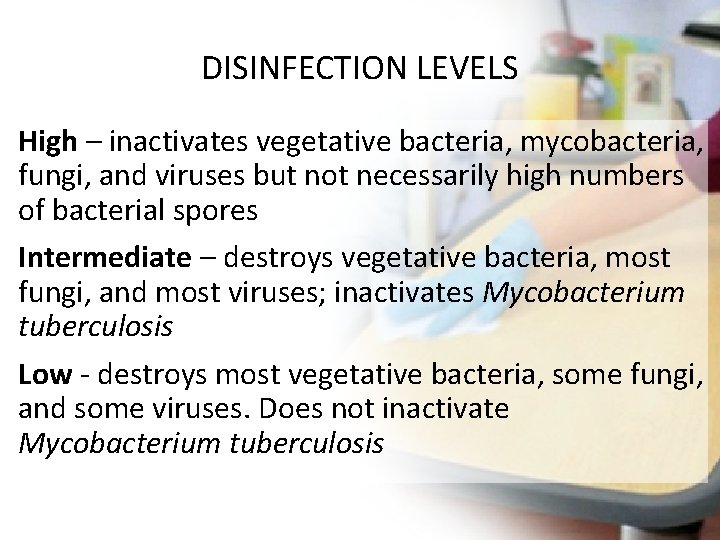
DISINFECTION LEVELS High – inactivates vegetative bacteria, mycobacteria, fungi, and viruses but not necessarily high numbers of bacterial spores Intermediate – destroys vegetative bacteria, most fungi, and most viruses; inactivates Mycobacterium tuberculosis Low - destroys most vegetative bacteria, some fungi, and some viruses. Does not inactivate Mycobacterium tuberculosis
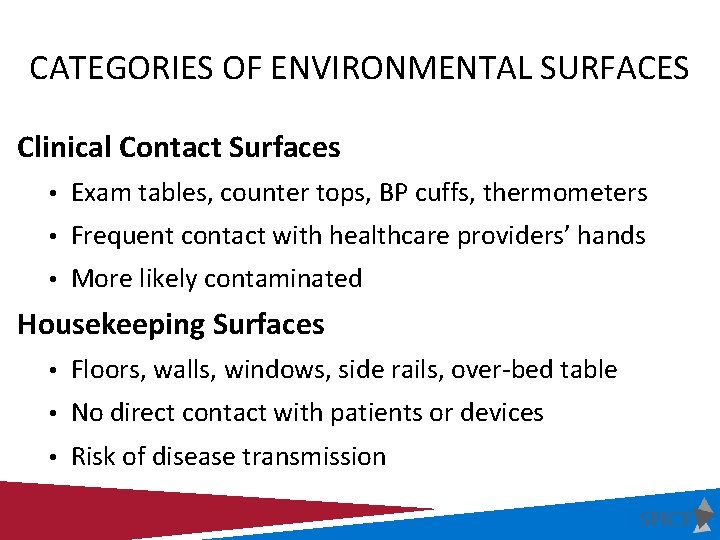
CATEGORIES OF ENVIRONMENTAL SURFACES Clinical Contact Surfaces • Exam tables, counter tops, BP cuffs, thermometers • Frequent contact with healthcare providers’ hands • More likely contaminated Housekeeping Surfaces • Floors, walls, windows, side rails, over-bed table • No direct contact with patients or devices • Risk of disease transmission
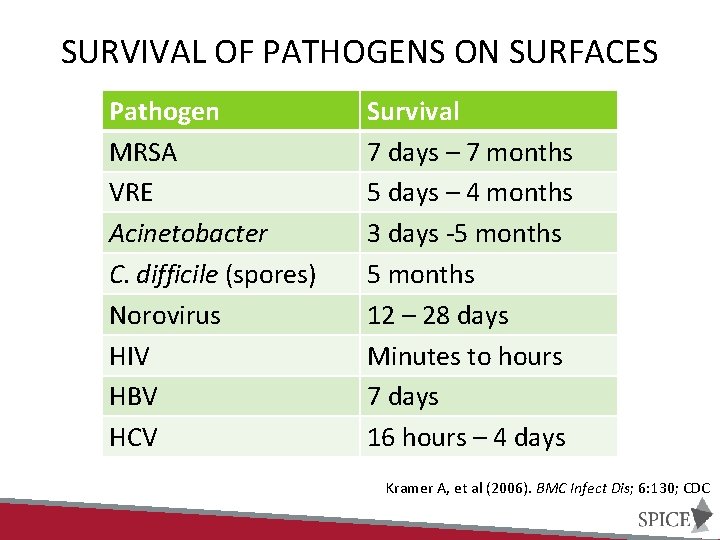
SURVIVAL OF PATHOGENS ON SURFACES Pathogen MRSA VRE Acinetobacter C. difficile (spores) Norovirus HIV HBV HCV Survival 7 days – 7 months 5 days – 4 months 3 days -5 months 12 – 28 days Minutes to hours 7 days 16 hours – 4 days Kramer A, et al (2006). BMC Infect Dis; 6: 130; CDC
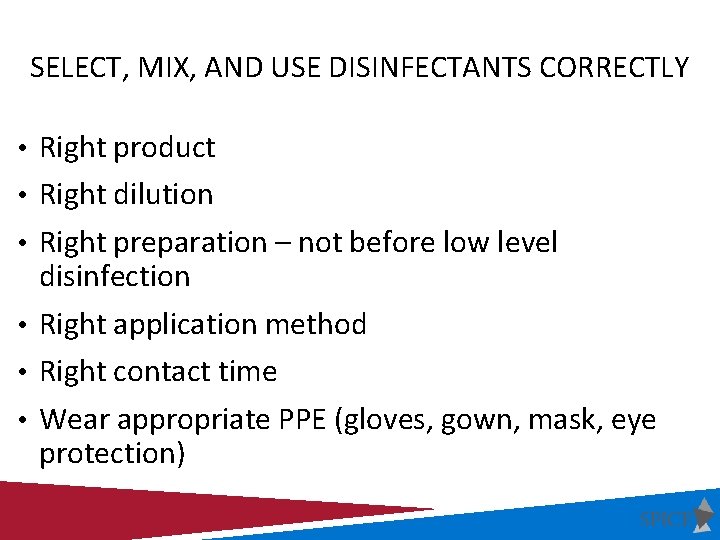
SELECT, MIX, AND USE DISINFECTANTS CORRECTLY • Right product • Right dilution • Right preparation – not before low level disinfection • Right application method • Right contact time • Wear appropriate PPE (gloves, gown, mask, eye protection)
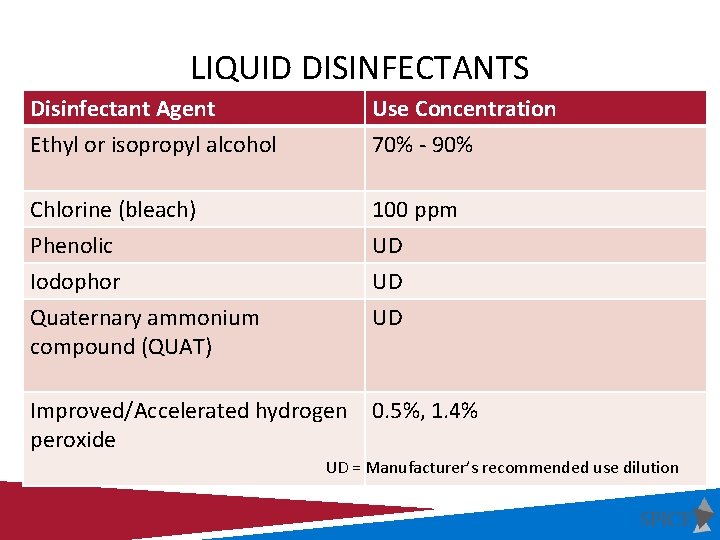
LIQUID DISINFECTANTS Disinfectant Agent Ethyl or isopropyl alcohol Use Concentration 70% - 90% Chlorine (bleach) 100 ppm Phenolic Iodophor Quaternary ammonium compound (QUAT) UD UD UD Improved/Accelerated hydrogen peroxide 0. 5%, 1. 4% UD = Manufacturer’s recommended use dilution
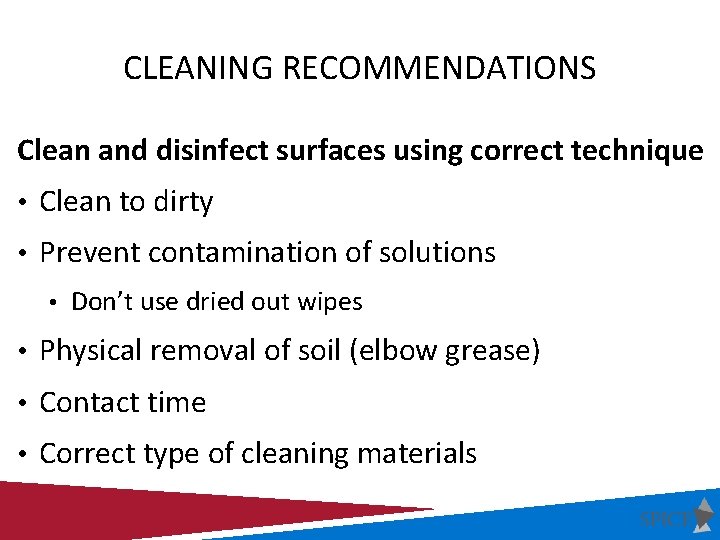
CLEANING RECOMMENDATIONS Clean and disinfect surfaces using correct technique • Clean to dirty • Prevent contamination of solutions • Don’t use dried out wipes • Physical removal of soil (elbow grease) • Contact time • Correct type of cleaning materials
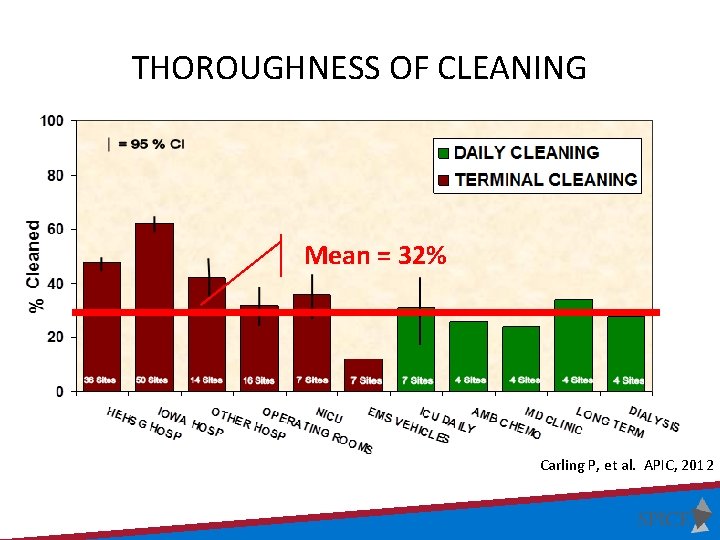
THOROUGHNESS OF CLEANING Mean = 32% Carling P, et al. APIC, 2012
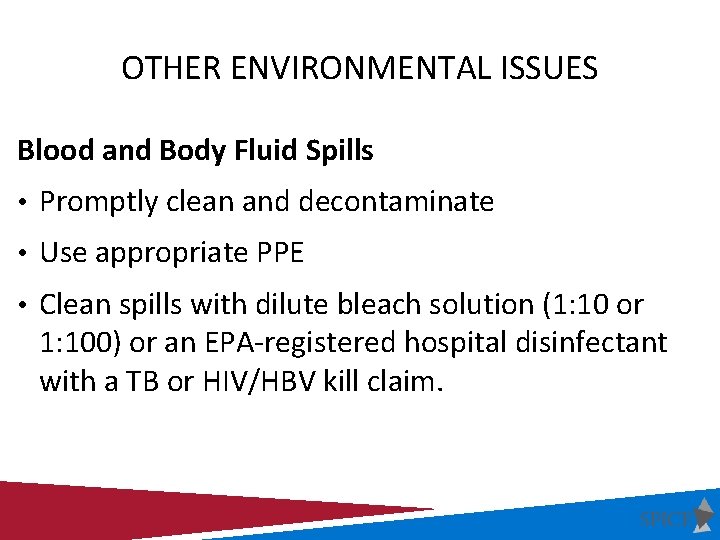
OTHER ENVIRONMENTAL ISSUES Blood and Body Fluid Spills • Promptly clean and decontaminate • Use appropriate PPE • Clean spills with dilute bleach solution (1: 10 or 1: 100) or an EPA-registered hospital disinfectant with a TB or HIV/HBV kill claim.
REFERENCES • CDC Guidelines for Hand Hygiene in Healthcare Settings – Recommendations of the Healthcare Infection Control Practices Advisory Committee and the HICPAC/SHEA/APIC Hand Hygiene Task Force. MMWR October 25, 2002, 51(RR-16). • CDC Guidelines for Environmental Infection Control in Health-care Facilities, HICPAC, MMWR June 6, 2003, 52(RR-10).