MMORPG Servers 1 MMORPGs Features n n n
- Slides: 39
MMORPG Servers 1
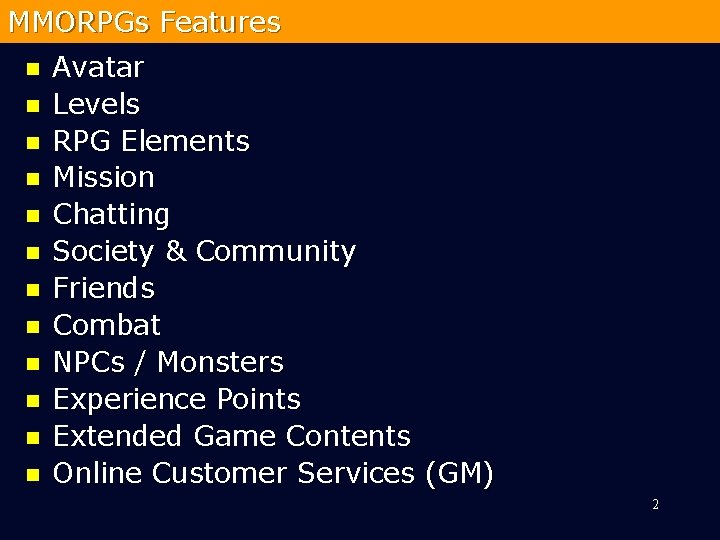
MMORPGs Features n n n Avatar Levels RPG Elements Mission Chatting Society & Community Friends Combat NPCs / Monsters Experience Points Extended Game Contents Online Customer Services (GM) 2
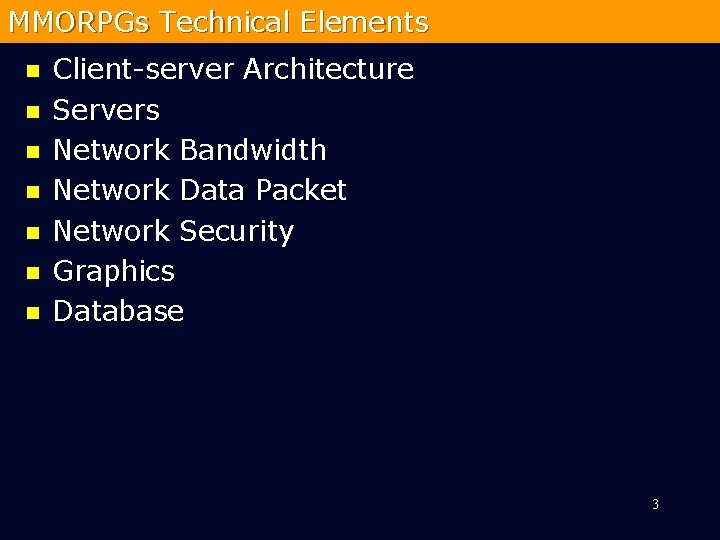
MMORPGs Technical Elements n n n n Client-server Architecture Servers Network Bandwidth Network Data Packet Network Security Graphics Database 3
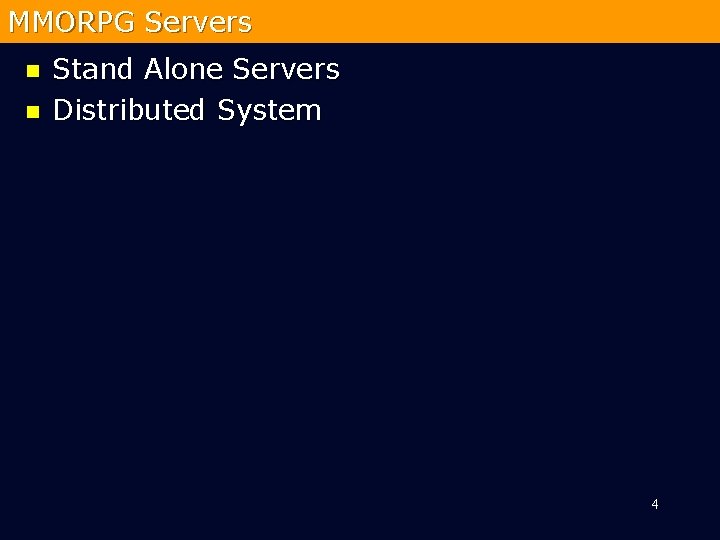
MMORPG Servers n n Stand Alone Servers Distributed System 4
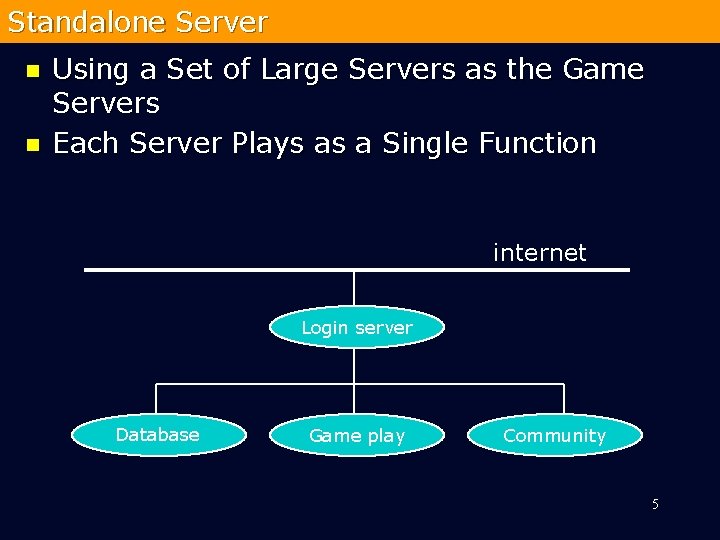
Standalone Server n n Using a Set of Large Servers as the Game Servers Each Server Plays as a Single Function internet Login server Database Game play Community 5
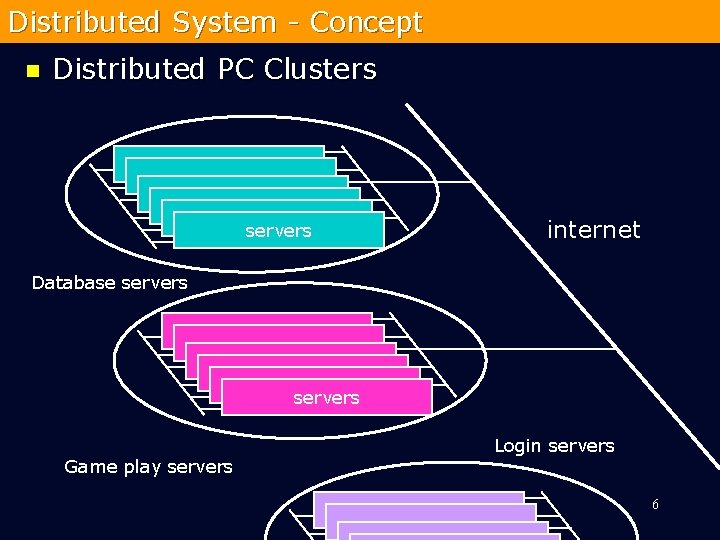
Distributed System - Concept n Distributed PC Clusters servers internet Database servers Game play servers Login servers 6
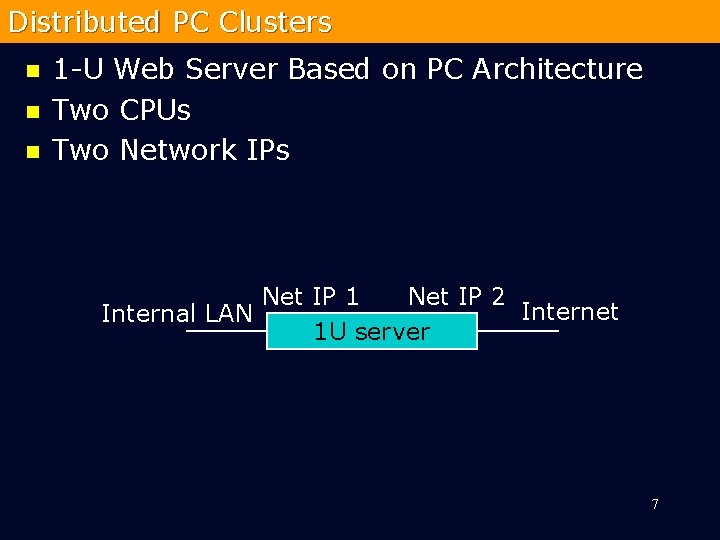
Distributed PC Clusters n n n 1 -U Web Server Based on PC Architecture Two CPUs Two Network IPs Net IP 1 Net IP 2 Internet Internal LAN 1 U server 7
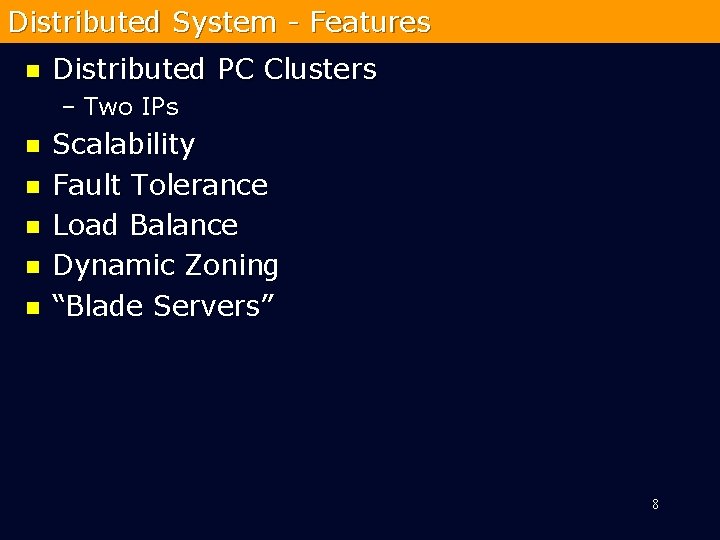
Distributed System - Features n Distributed PC Clusters – Two IPs n n n Scalability Fault Tolerance Load Balance Dynamic Zoning “Blade Servers” 8
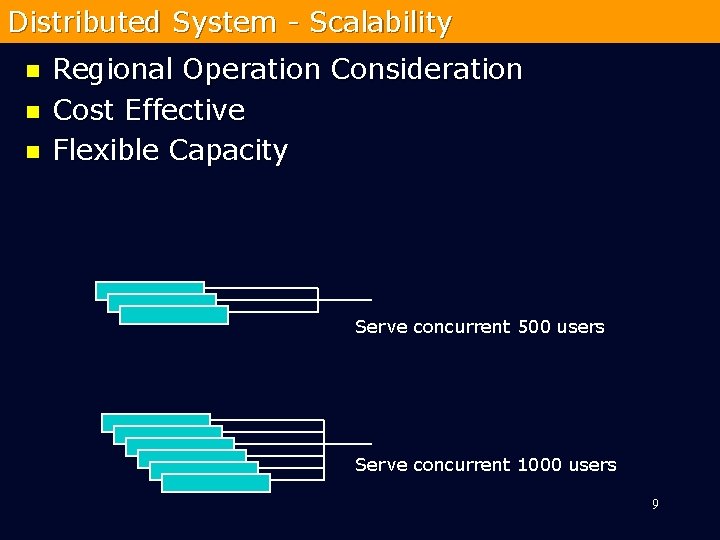
Distributed System - Scalability n n n Regional Operation Consideration Cost Effective Flexible Capacity Serve concurrent 500 users Serve concurrent 1000 users 9
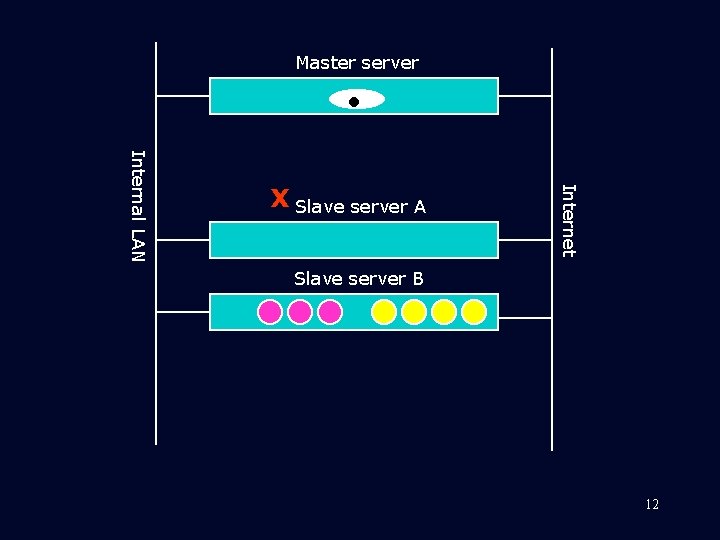
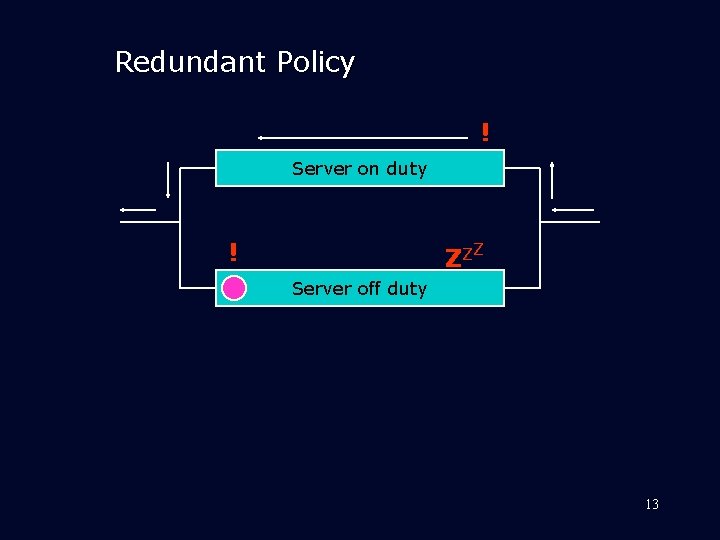
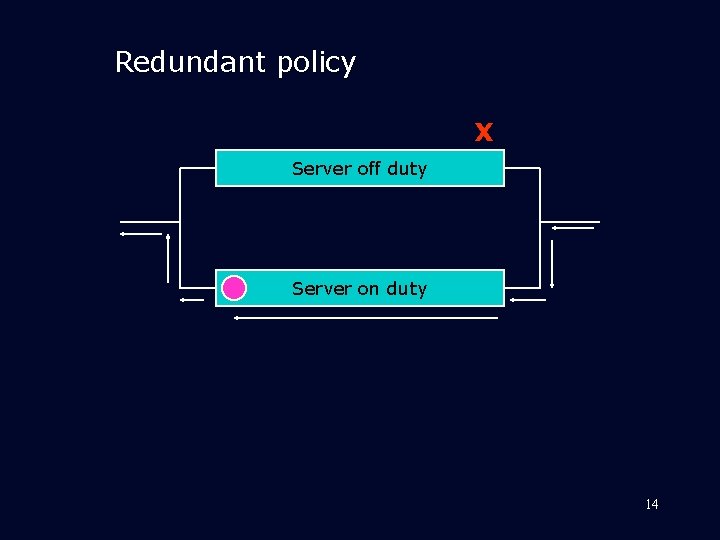
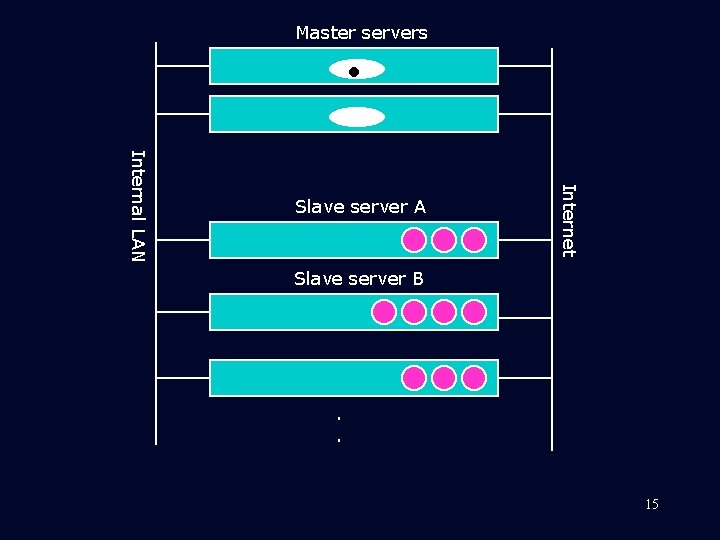
Distributed System – Fault Tolerance n n n All Servers Can Not Be Down in Anytime For Distributed Servers, Every Job Must Be Transferred Between Servers For Standalone Server, Use Redundant Policy 10
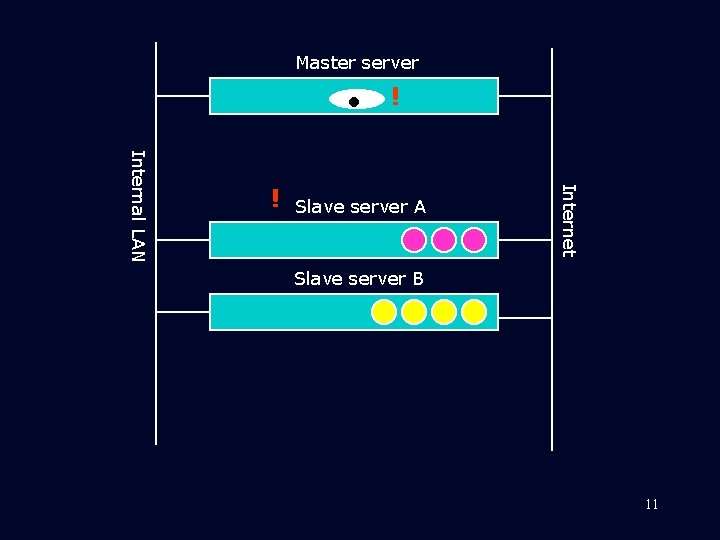
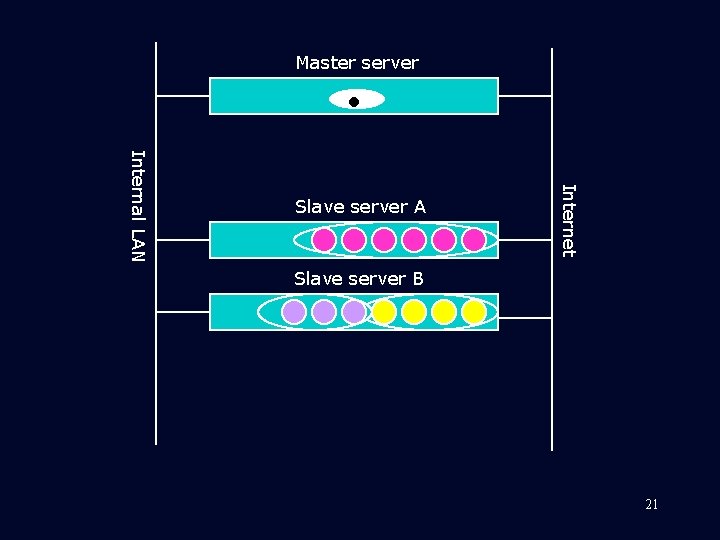
Master server ! Slave server A Internet Internal LAN ! Slave server B 11
Master server Internet Internal LAN X Slave server A Slave server B 12
Redundant Policy ! Server on duty ! Z ZZ Server off duty 13
Redundant policy X Server off duty Server on duty 14
Master servers Internet Internal LAN Slave server A Slave server B . . 15
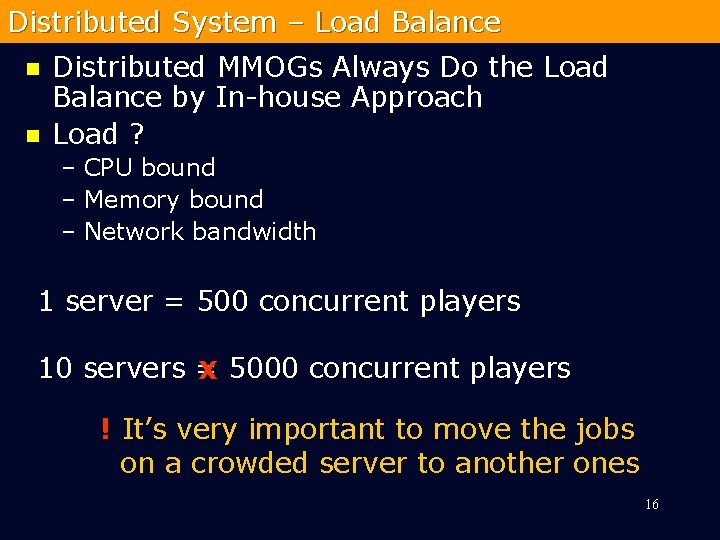
Distributed System – Load Balance n n Distributed MMOGs Always Do the Load Balance by In-house Approach Load ? – CPU bound – Memory bound – Network bandwidth 1 server = 500 concurrent players 10 servers = X 5000 concurrent players ! It’s very important to move the jobs on a crowded server to another ones 16
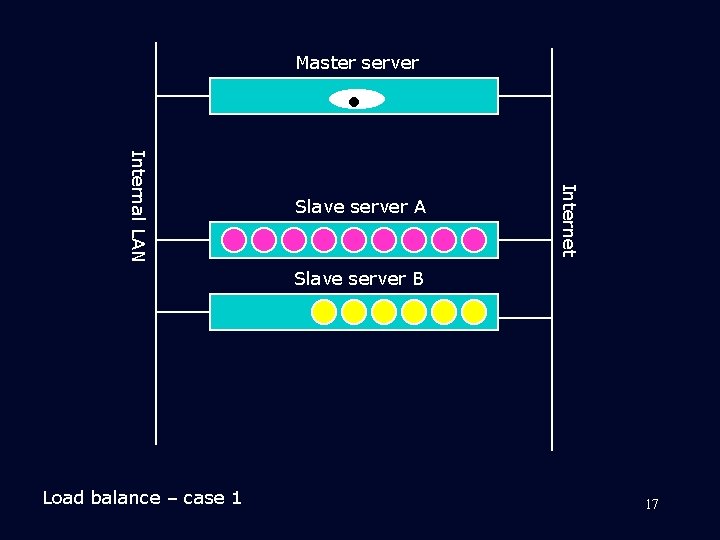
Master server Internet Internal LAN Slave server A Slave server B Load balance – case 1 17
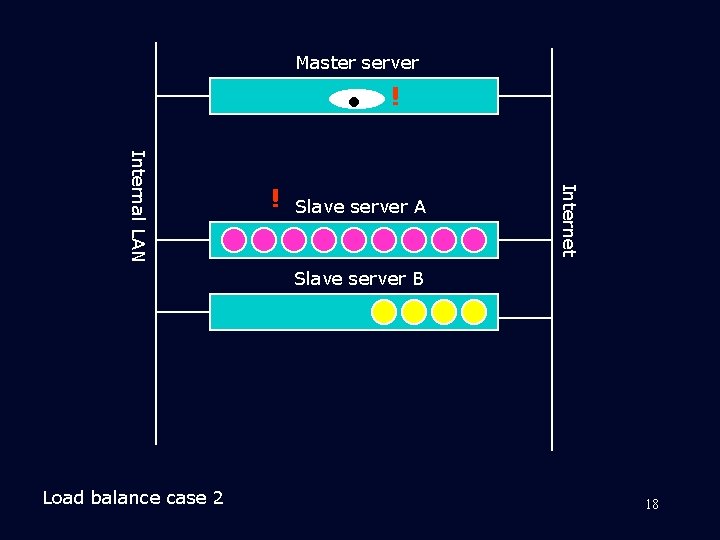
Master server ! Slave server A Internet Internal LAN ! Slave server B Load balance case 2 18
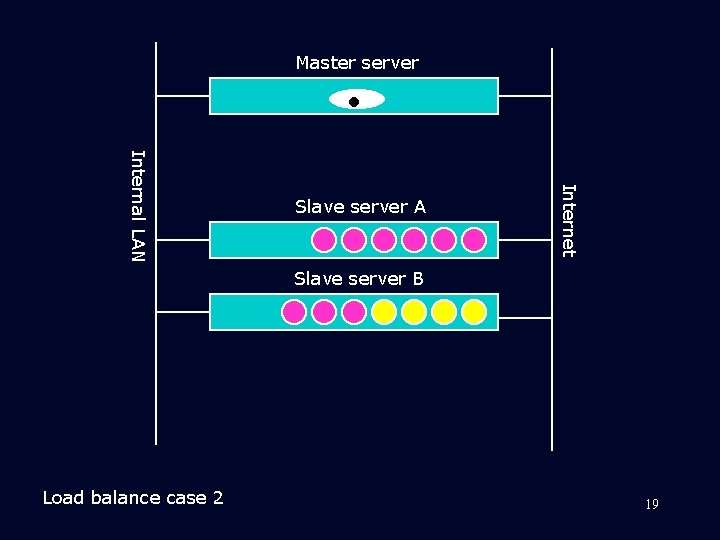
Master server Internet Internal LAN Slave server A Slave server B Load balance case 2 19
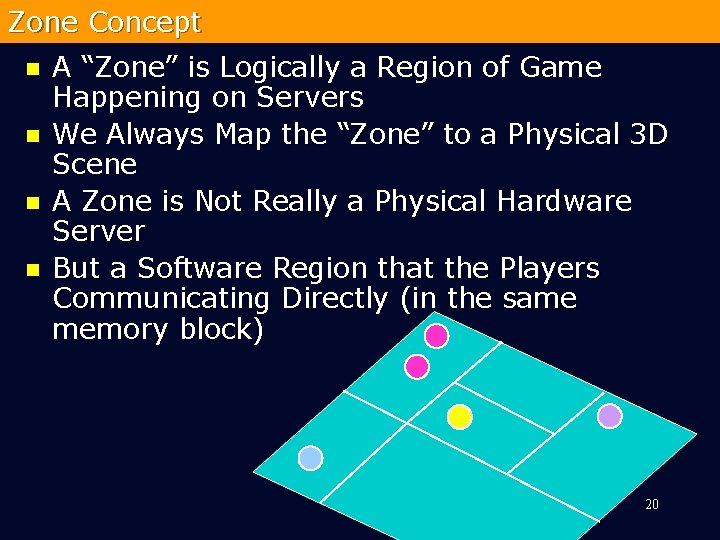
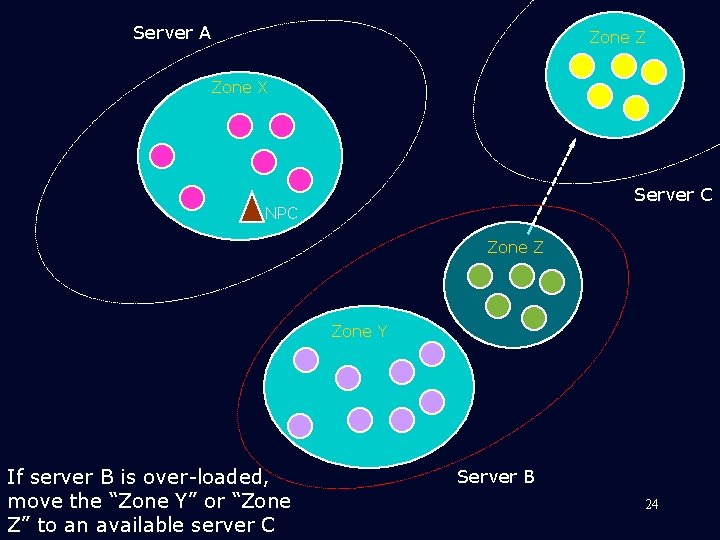
Zone Concept n n A “Zone” is Logically a Region of Game Happening on Servers We Always Map the “Zone” to a Physical 3 D Scene A Zone is Not Really a Physical Hardware Server But a Software Region that the Players Communicating Directly (in the same memory block) 20
Master server Internet Internal LAN Slave server A Slave server B 21
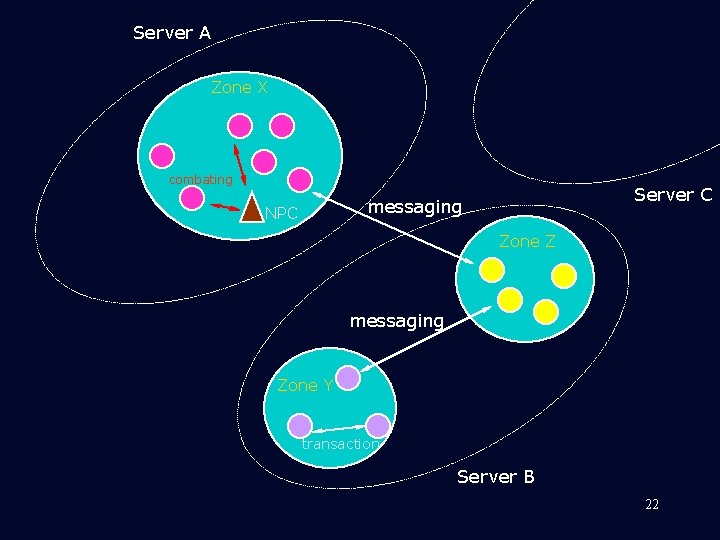
Server A Zone X combating Server C messaging NPC Zone Z messaging Zone Y transaction Server B 22
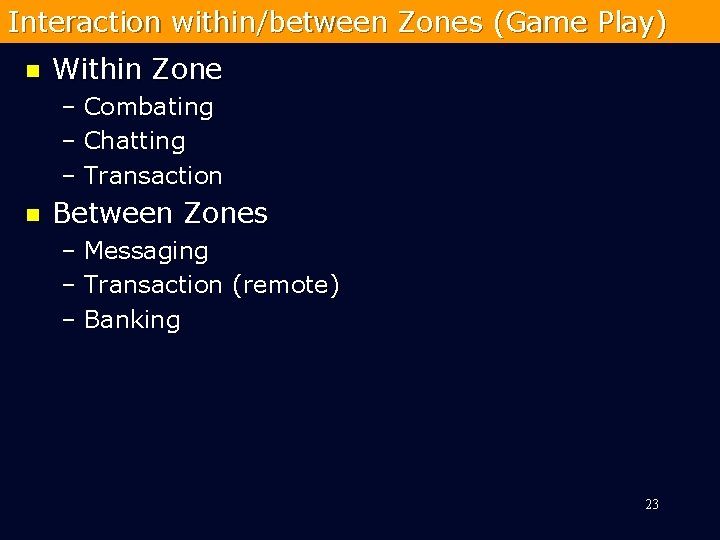
Interaction within/between Zones (Game Play) n Within Zone – Combating – Chatting – Transaction n Between Zones – Messaging – Transaction (remote) – Banking 23
Server A Zone Z Zone X Server C NPC Zone Z Zone Y If server B is over-loaded, move the “Zone Y” or “Zone Z” to an available server C Server B 24
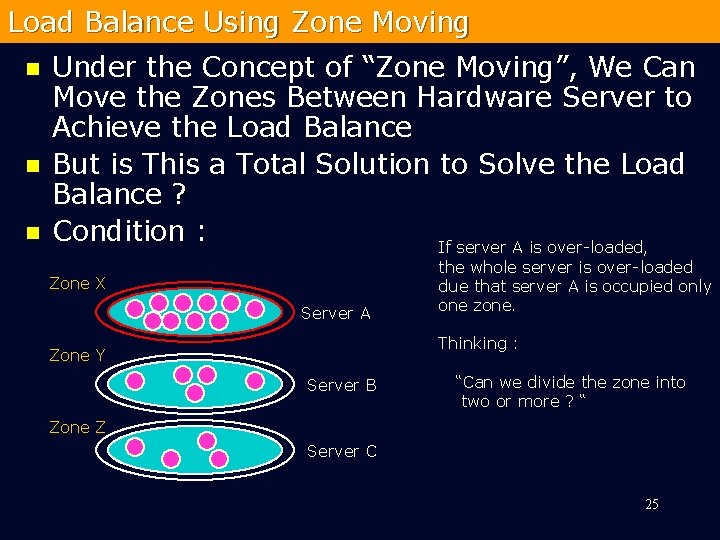
Load Balance Using Zone Moving n n n Under the Concept of “Zone Moving”, We Can Move the Zones Between Hardware Server to Achieve the Load Balance But is This a Total Solution to Solve the Load Balance ? Condition : If server A is over-loaded, Zone X Server A the whole server is over-loaded due that server A is occupied only one zone. Thinking : Zone Y Server B “Can we divide the zone into two or more ? “ Zone Z Server C 25
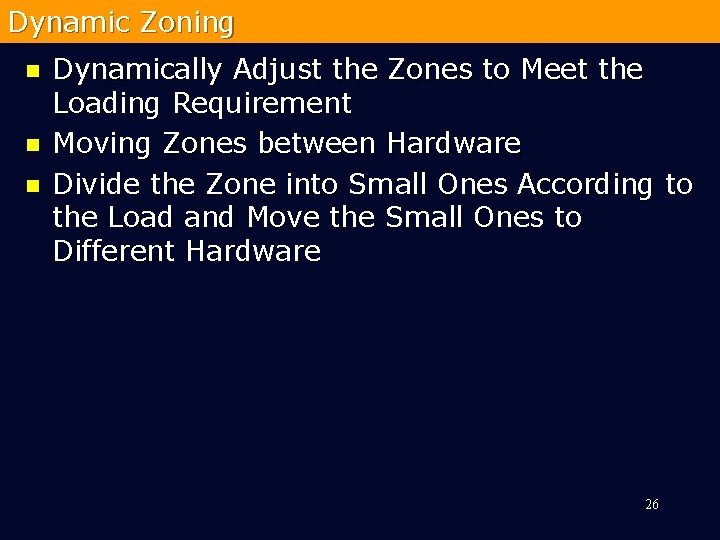
Dynamic Zoning n n n Dynamically Adjust the Zones to Meet the Loading Requirement Moving Zones between Hardware Divide the Zone into Small Ones According to the Load and Move the Small Ones to Different Hardware 26
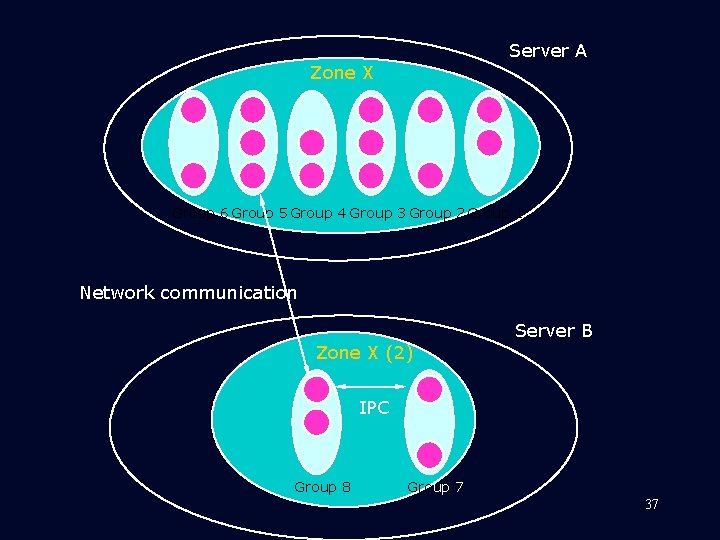
Dynamic Zoning (1) n n n A “Zone” is Mapping to a Physical Scene or Map (geometry) A Zone is Composed by Several Groups A “Group” is a Collection of Players (Population) All Players in the Same Group Running in the same Process Players in Different Group Communicate between Processes – Inter-process communication (IPC) ? 27
Dynamic Zoning (2) n Group is More Dynamic Based on the Concept of Population – Create – Delete – Move 28
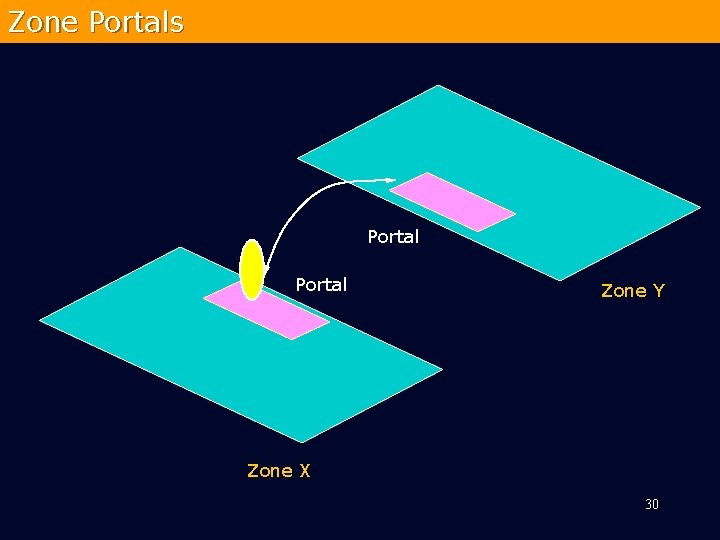
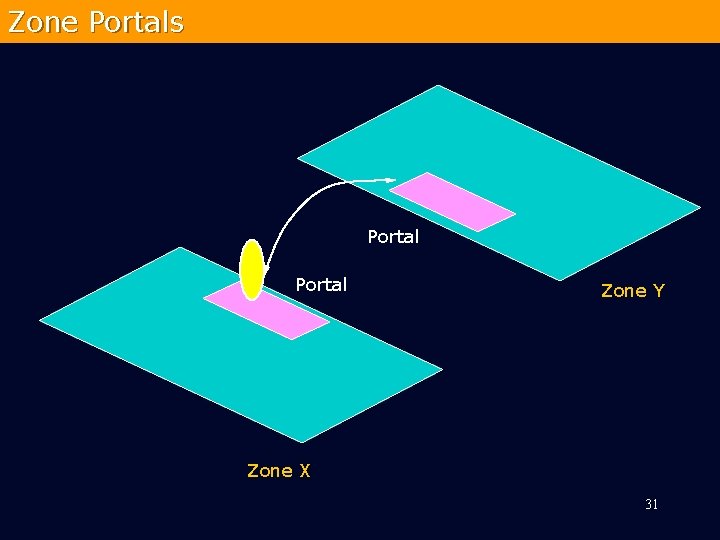
Zone = A 3 D Scene n A 3 D Scene – 3 D models – Moving objects – NPCs –… n n n Zones are Physically Neighboring Together Using Portals to Connect the Relationship Player Travels between Zones – Logout current scene and login to another neighboring zone when stepping on the zone portal – Players will wait for a short moment during the moving 29
Zone Portals Portal Zone Y Zone X 30
Zone Portals Portal Zone Y Zone X 31
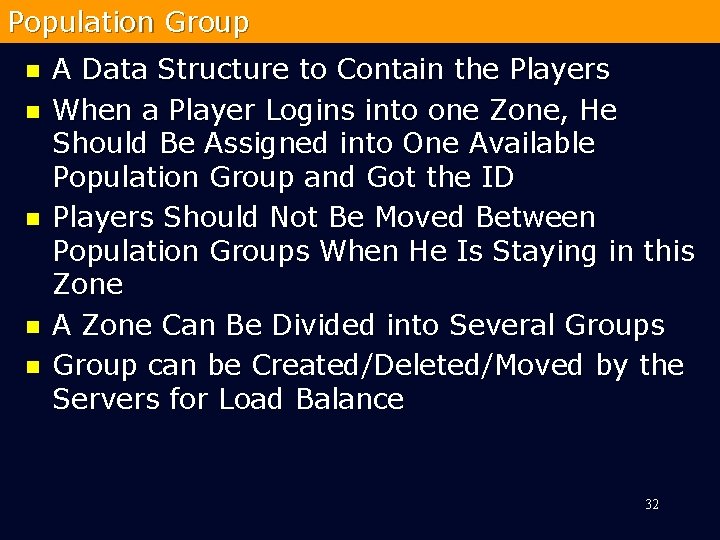
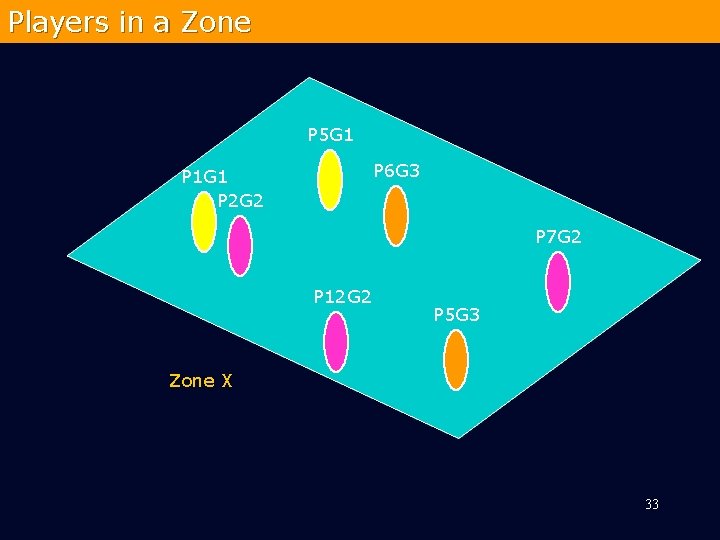
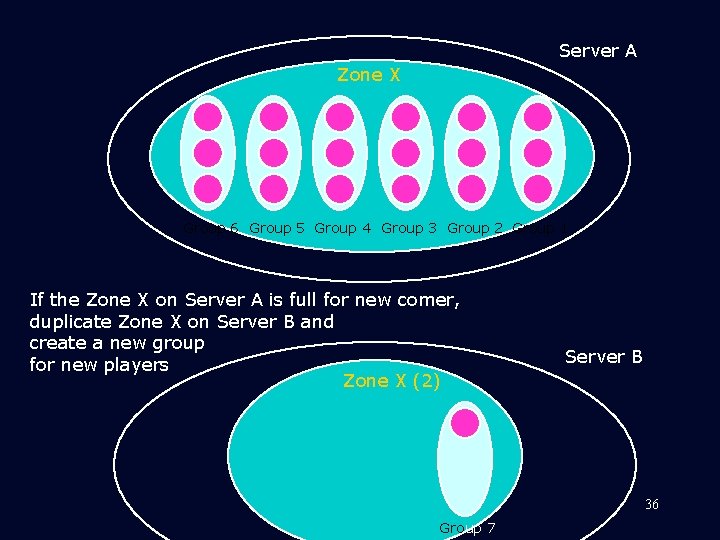
Population Group n n n A Data Structure to Contain the Players When a Player Logins into one Zone, He Should Be Assigned into One Available Population Group and Got the ID Players Should Not Be Moved Between Population Groups When He Is Staying in this Zone A Zone Can Be Divided into Several Groups Group can be Created/Deleted/Moved by the Servers for Load Balance 32
Players in a Zone P 5 G 1 P 6 G 3 P 1 G 1 P 2 G 2 P 7 G 2 P 12 G 2 P 5 G 3 Zone X 33
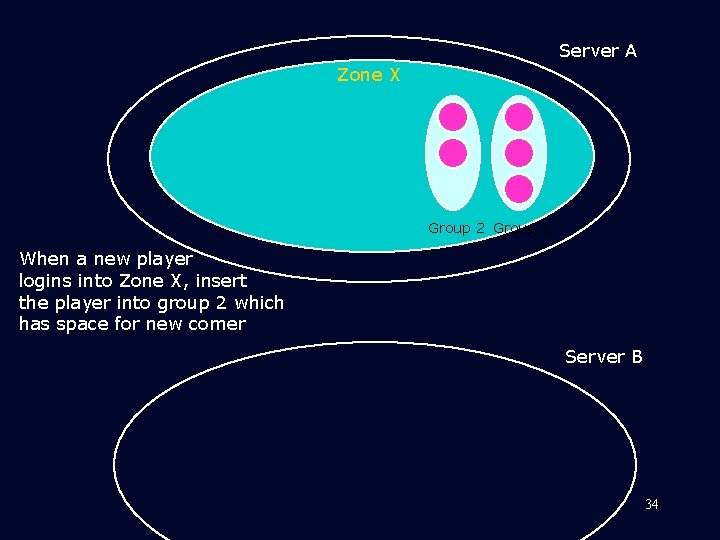
Server A Zone X Group 2 Group 1 When a new player logins into Zone X, insert the player into group 2 which has space for new comer Server B 34
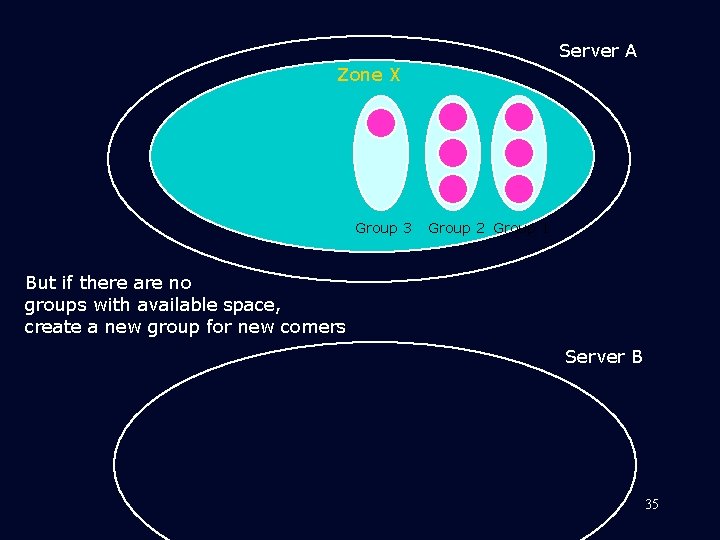
Server A Zone X Group 3 Group 2 Group 1 But if there are no groups with available space, create a new group for new comers Server B 35
Server A Zone X Group 6 Group 5 Group 4 Group 3 Group 2 Group 1 If the Zone X on Server A is full for new comer, duplicate Zone X on Server B and create a new group for new players Zone X (2) Server B 36 Group 7
Server A Zone X Group 6 Group 5 Group 4 Group 3 Group 2 Group 1 Network communication Server B Zone X (2) IPC Group 8 Group 7 37
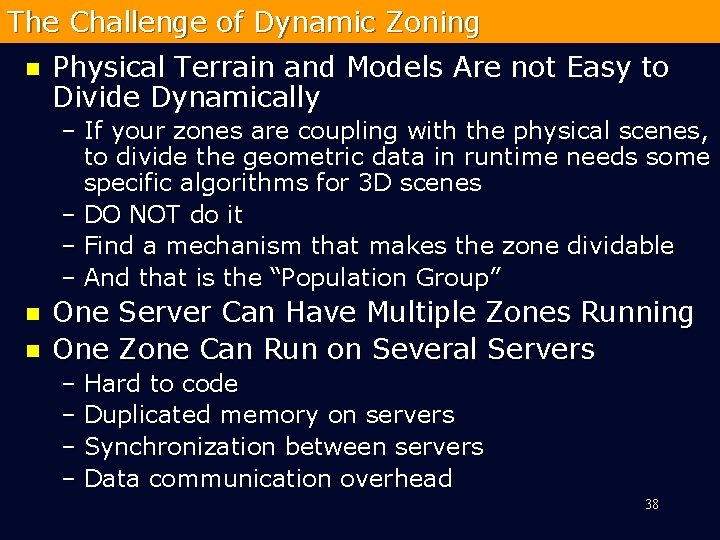
The Challenge of Dynamic Zoning n Physical Terrain and Models Are not Easy to Divide Dynamically – If your zones are coupling with the physical scenes, to divide the geometric data in runtime needs some specific algorithms for 3 D scenes – DO NOT do it – Find a mechanism that makes the zone dividable – And that is the “Population Group” n n One Server Can Have Multiple Zones Running One Zone Can Run on Several Servers – Hard to code – Duplicated memory on servers – Synchronization between servers – Data communication overhead 38
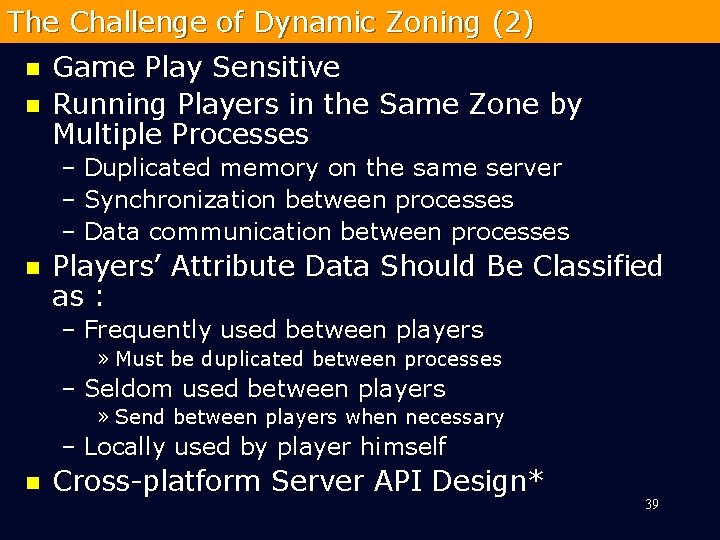
The Challenge of Dynamic Zoning (2) n n Game Play Sensitive Running Players in the Same Zone by Multiple Processes – Duplicated memory on the same server – Synchronization between processes – Data communication between processes n Players’ Attribute Data Should Be Classified as : – Frequently used between players » Must be duplicated between processes – Seldom used between players » Send between players when necessary – Locally used by player himself n Cross-platform Server API Design* 39