Metal Nanoparticle Hydrogen Sensor Igor Pavlovsky Applied Nanotech

- Slides: 15
Metal Nanoparticle Hydrogen Sensor Igor Pavlovsky, Applied Nanotech, Inc.
Outline § Review of Pd-based sensor technologies § ANI approach: Pd nanoparticles § Why NANO? § Performance of ANI sensors § Applications and prospects
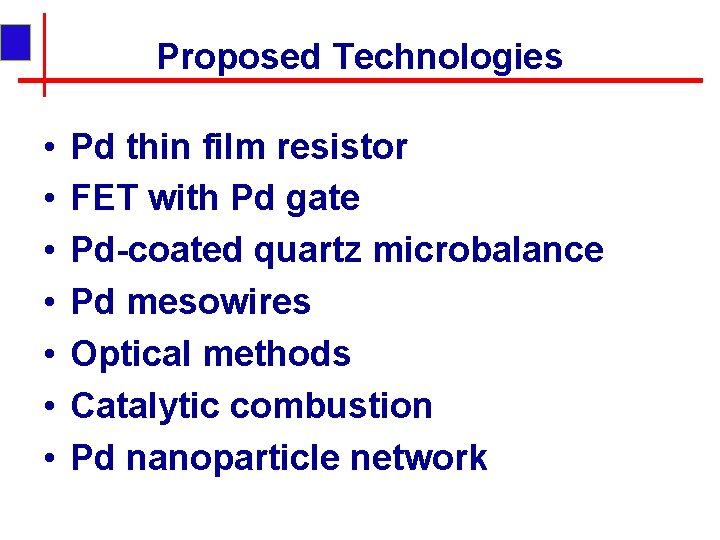
Proposed Technologies • • Pd thin film resistor FET with Pd gate Pd-coated quartz microbalance Pd mesowires Optical methods Catalytic combustion Pd nanoparticle network
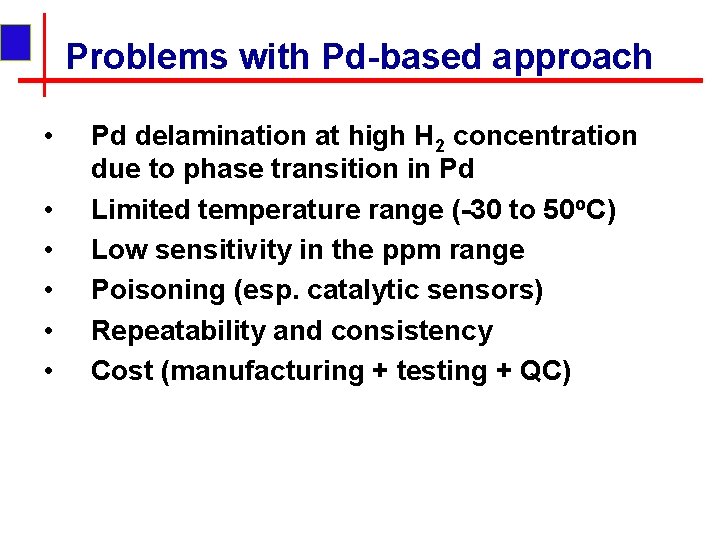
Problems with Pd-based approach • • • Pd delamination at high H 2 concentration due to phase transition in Pd Limited temperature range (-30 to 50 o. C) Low sensitivity in the ppm range Poisoning (esp. catalytic sensors) Repeatability and consistency Cost (manufacturing + testing + QC)
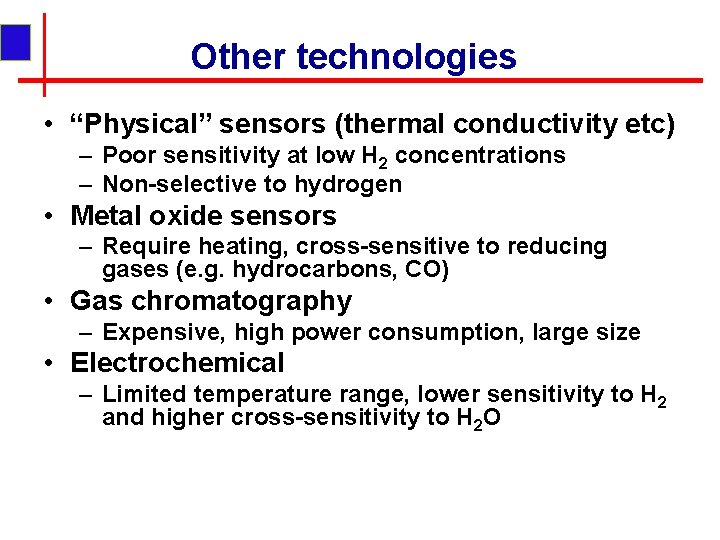
Other technologies • “Physical” sensors (thermal conductivity etc) – Poor sensitivity at low H 2 concentrations – Non-selective to hydrogen • Metal oxide sensors – Require heating, cross-sensitive to reducing gases (e. g. hydrocarbons, CO) • Gas chromatography – Expensive, high power consumption, large size • Electrochemical – Limited temperature range, lower sensitivity to H 2 and higher cross-sensitivity to H 2 O
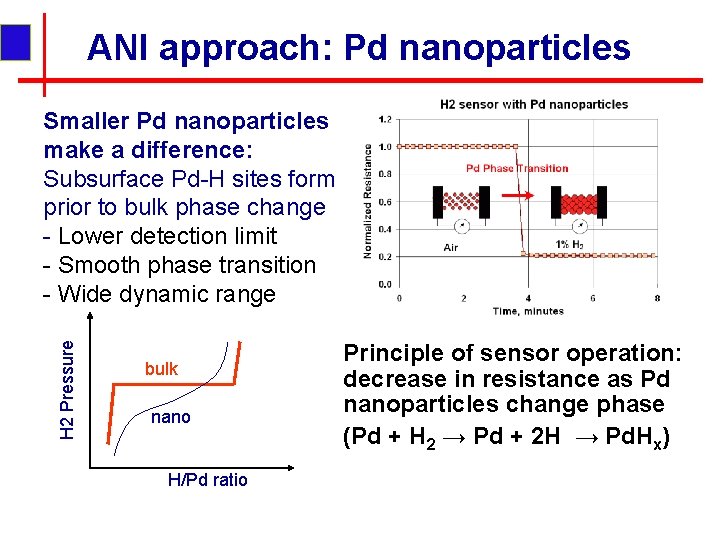
ANI approach: Pd nanoparticles H 2 Pressure Smaller Pd nanoparticles make a difference: Subsurface Pd-H sites form prior to bulk phase change - Lower detection limit - Smooth phase transition - Wide dynamic range bulk nano H/Pd ratio Principle of sensor operation: decrease in resistance as Pd nanoparticles change phase (Pd + H 2 → Pd + 2 H → Pd. Hx)
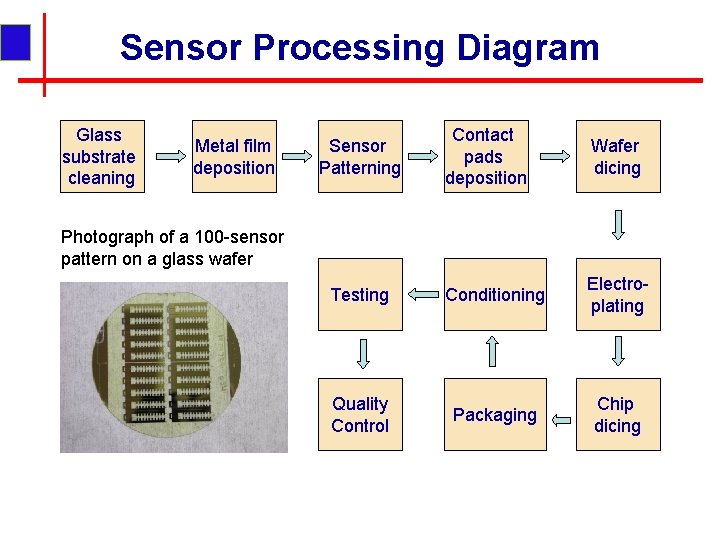
Sensor Processing Diagram Glass substrate cleaning Metal film deposition Contact pads deposition Wafer dicing Testing Conditioning Electroplating Quality Control Packaging Chip dicing Sensor Patterning Photograph of a 100 -sensor pattern on a glass wafer
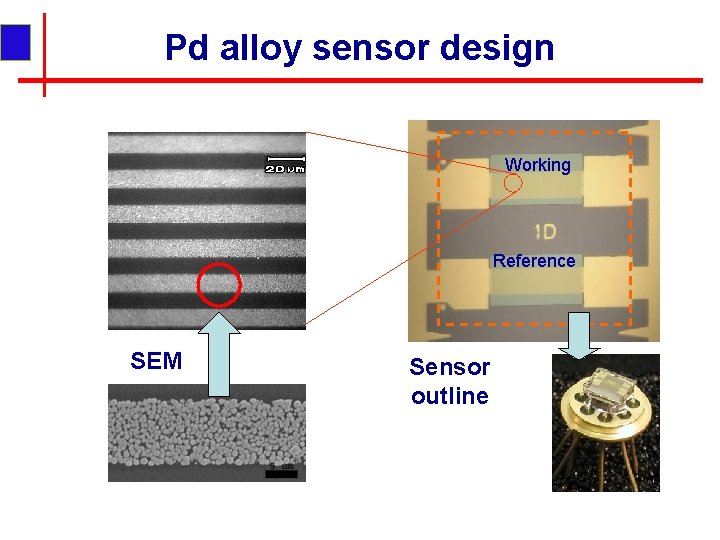
Pd alloy sensor design Working Reference SEM Sensor outline
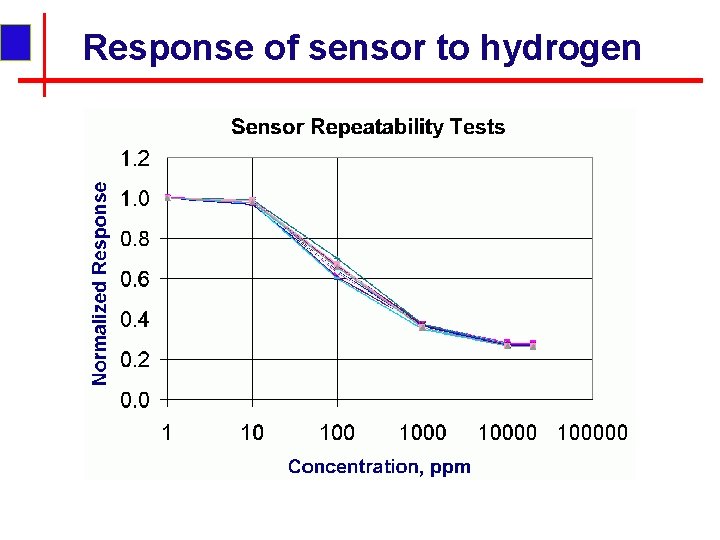
Response of sensor to hydrogen
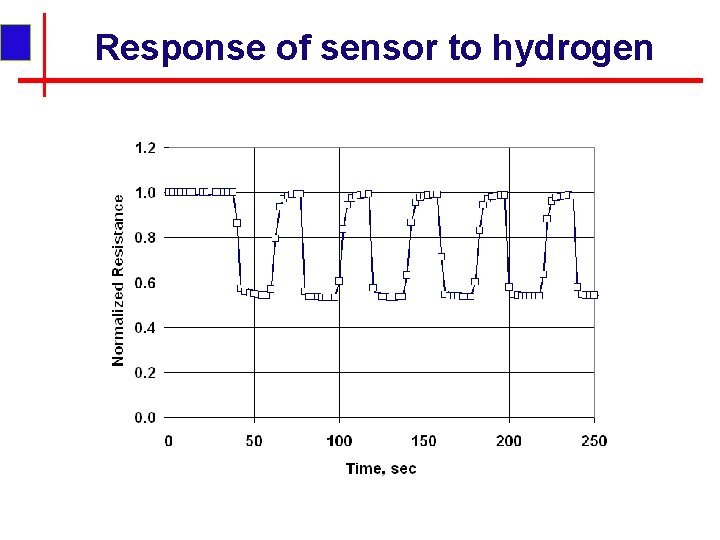
Response of sensor to hydrogen
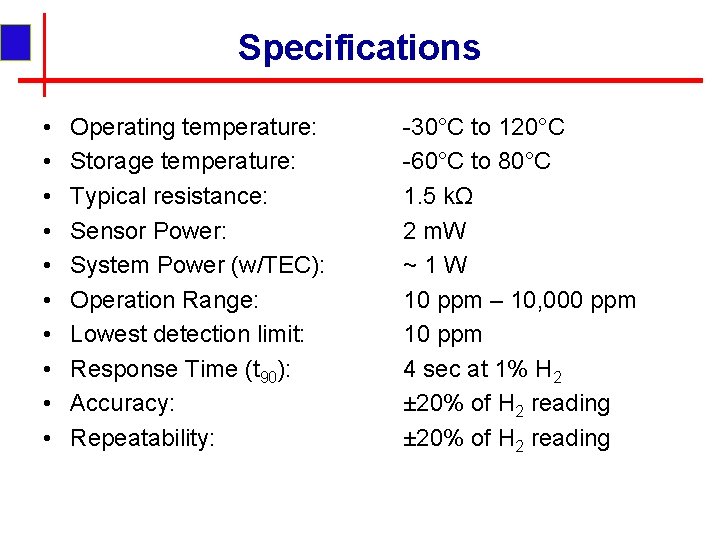
Specifications • • • Operating temperature: Storage temperature: Typical resistance: Sensor Power: System Power (w/TEC): Operation Range: Lowest detection limit: Response Time (t 90): Accuracy: Repeatability: -30°C to 120°C -60°C to 80°C 1. 5 kΩ 2 m. W ~1 W 10 ppm – 10, 000 ppm 10 ppm 4 sec at 1% H 2 ± 20% of H 2 reading
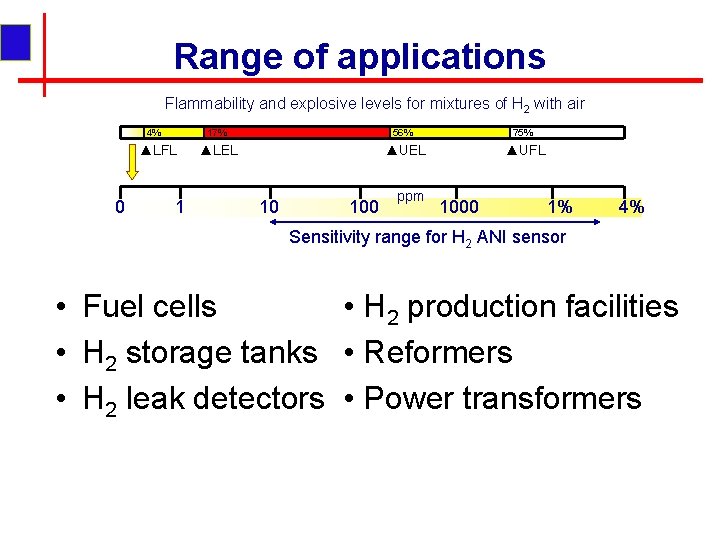
Range of applications Flammability and explosive levels for mixtures of H 2 with air 4% 17% ▲LFL 0 1 56% ▲LEL 75% ▲UEL 10 100 ppm ▲UFL 1000 1% 4% Sensitivity range for H 2 ANI sensor • Fuel cells • H 2 production facilities • H 2 storage tanks • Reformers • H 2 leak detectors • Power transformers
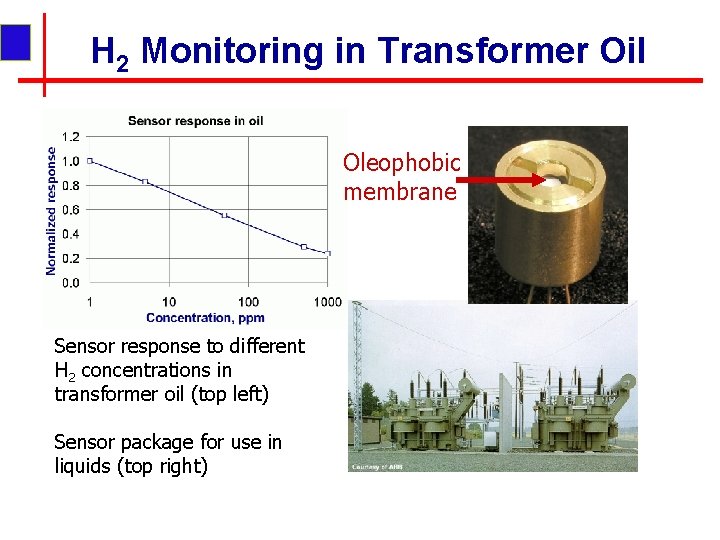
H 2 Monitoring in Transformer Oil Oleophobic membrane Sensor response to different H 2 concentrations in transformer oil (top left) Sensor package for use in liquids (top right)
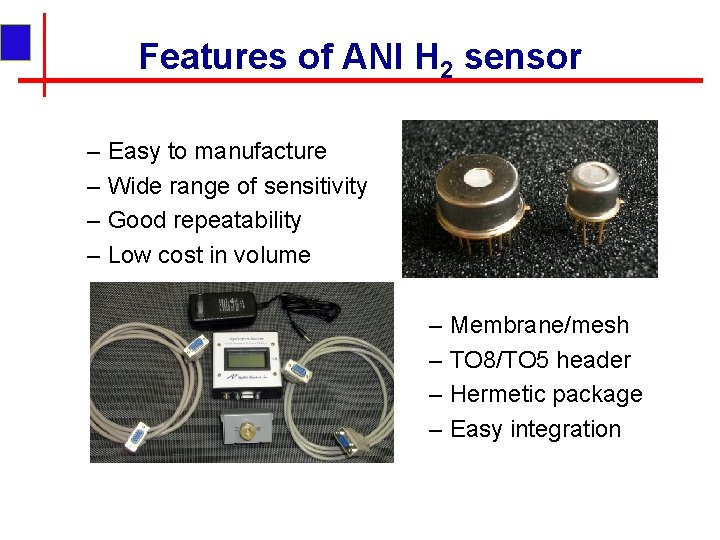
Features of ANI H 2 sensor – Easy to manufacture – Wide range of sensitivity – Good repeatability – Low cost in volume – Membrane/mesh – TO 8/TO 5 header – Hermetic package – Easy integration
Future development • • • Miniaturization Built-in temperature sensor Built-in calibration chip Application-specific design Functional membranes