LINEAR CONTROL SYSTEMS Ali Karimpour Associate Professor Ferdowsi

- Slides: 32
LINEAR CONTROL SYSTEMS Ali Karimpour Associate Professor Ferdowsi University of Mashhad
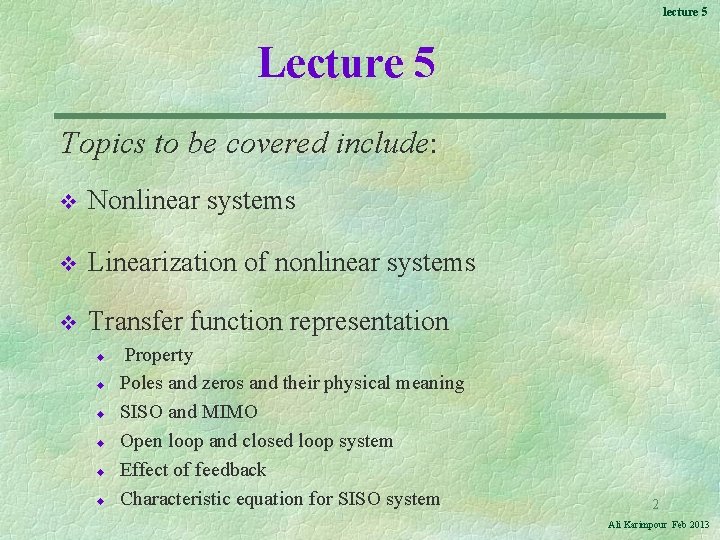
lecture 5 Lecture 5 Topics to be covered include: v Nonlinear systems v Linearization of nonlinear systems v Transfer function representation u u u Property Poles and zeros and their physical meaning SISO and MIMO Open loop and closed loop system Effect of feedback Characteristic equation for SISO system 2 Ali Karimpour Feb 2013
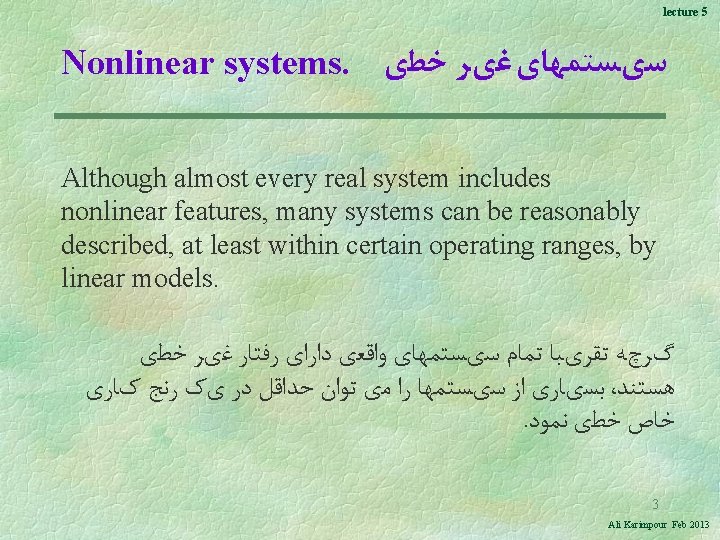
lecture 5 Nonlinear systems. ﺳیﺴﺘﻤﻬﺎی ﻏیﺮ ﺧﻄی Although almost every real system includes nonlinear features, many systems can be reasonably described, at least within certain operating ranges, by linear models. ﺧﻄی ﻏیﺮ ﺭﻓﺘﺎﺭ ﺩﺍﺭﺍی ﻭﺍﻗﻌی ﺳیﺴﺘﻤﻬﺎی ﺗﻤﺎﻡ ﺗﻘﺮیﺒﺎ گﺮچﻪ کﺎﺭی ﺭﻧﺞ یک ﺩﺭ ﺣﺪﺍﻗﻞ ﺗﻮﺍﻥ ﻣی ﺭﺍ ﺳیﺴﺘﻤﻬﺎ ﺍﺯ ﺑﺴیﺎﺭی ، ﻫﺴﺘﻨﺪ . ﻧﻤﻮﺩ ﺧﻄی ﺧﺎﺹ 3 Ali Karimpour Feb 2013
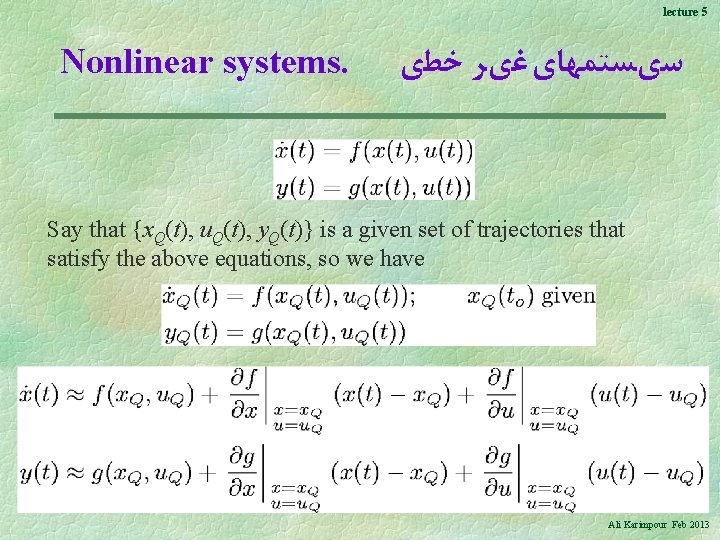
lecture 5 Nonlinear systems. ﺳیﺴﺘﻤﻬﺎی ﻏیﺮ ﺧﻄی Say that {x. Q(t), u. Q(t), y. Q(t)} is a given set of trajectories that satisfy the above equations, so we have 4 Ali Karimpour Feb 2013
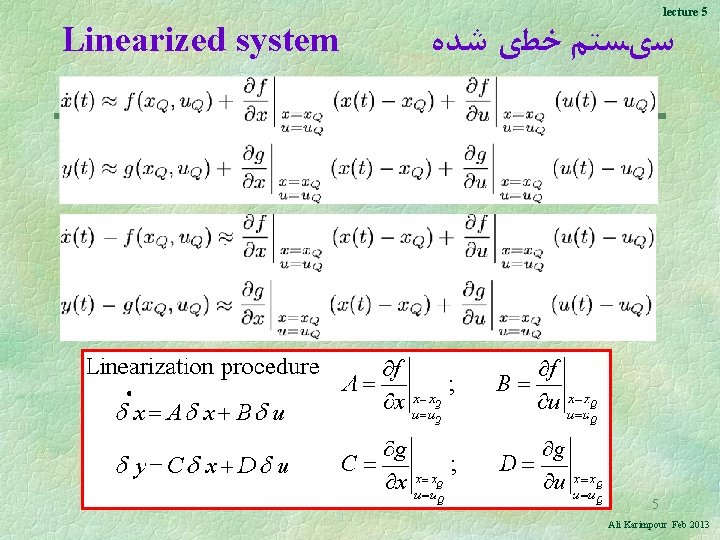
lecture 5 Linearized system ﺳیﺴﺘﻢ ﺧﻄی ﺷﺪﻩ 5 Ali Karimpour Feb 2013
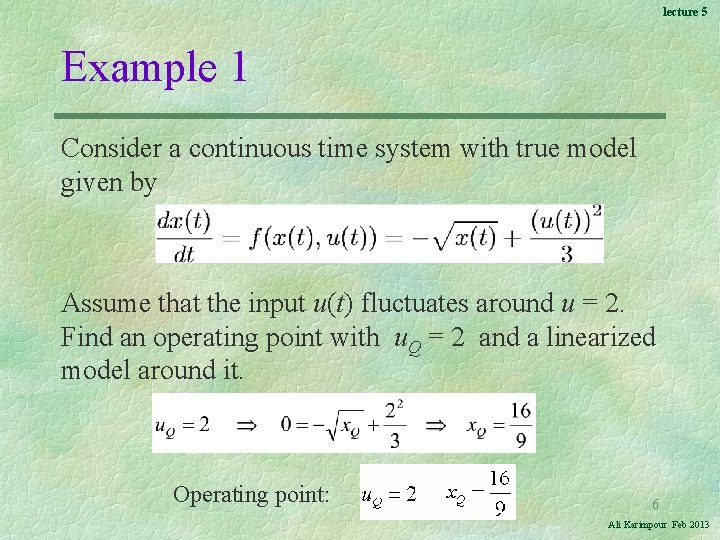
lecture 5 Example 1 Consider a continuous time system with true model given by Assume that the input u(t) fluctuates around u = 2. Find an operating point with u. Q = 2 and a linearized model around it. Operating point: 6 Ali Karimpour Feb 2013
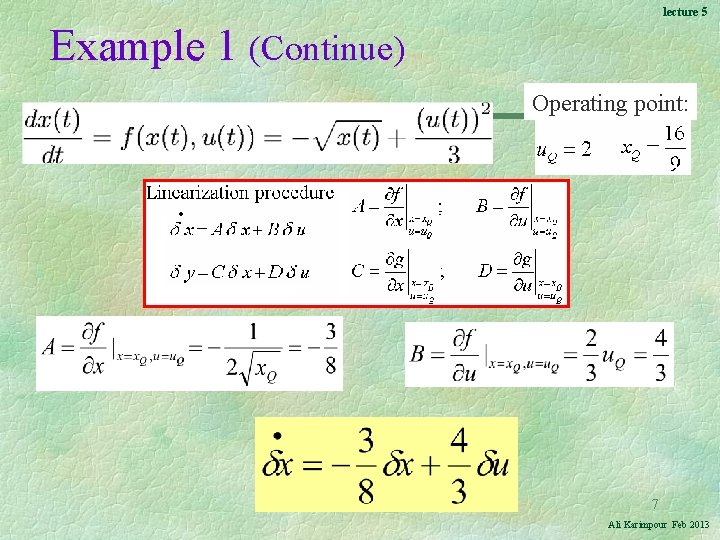
lecture 5 Example 1 (Continue) Operating point: 7 Ali Karimpour Feb 2013
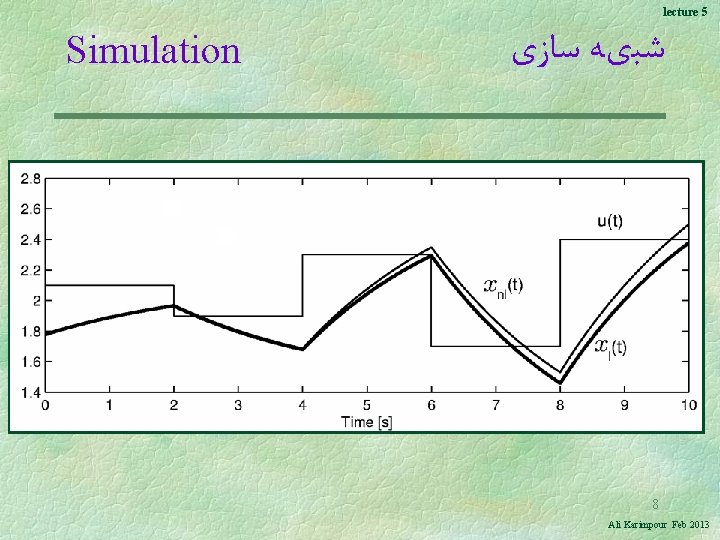
Simulation ﺳﺎﺯی ﺷﺒیﻪ lecture 5 8 Ali Karimpour Feb 2013
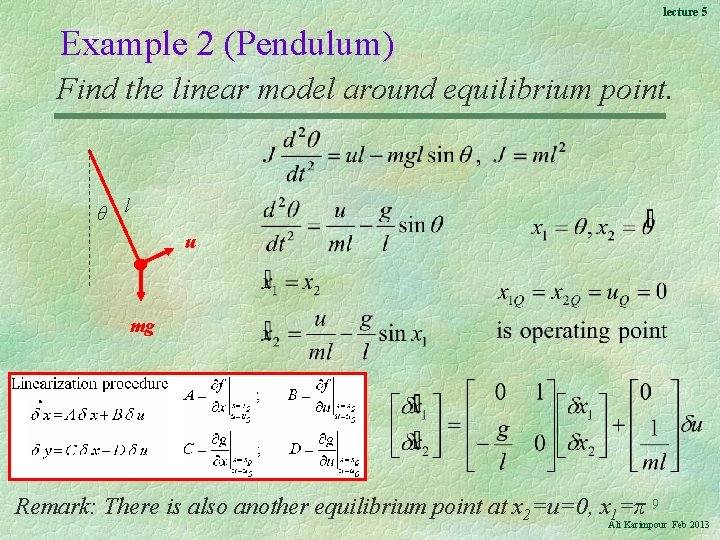
lecture 5 Example 2 (Pendulum) Find the linear model around equilibrium point. θ l u mg Remark: There is also another equilibrium point at x 2=u=0, x 1=π 9 Ali Karimpour Feb 2013
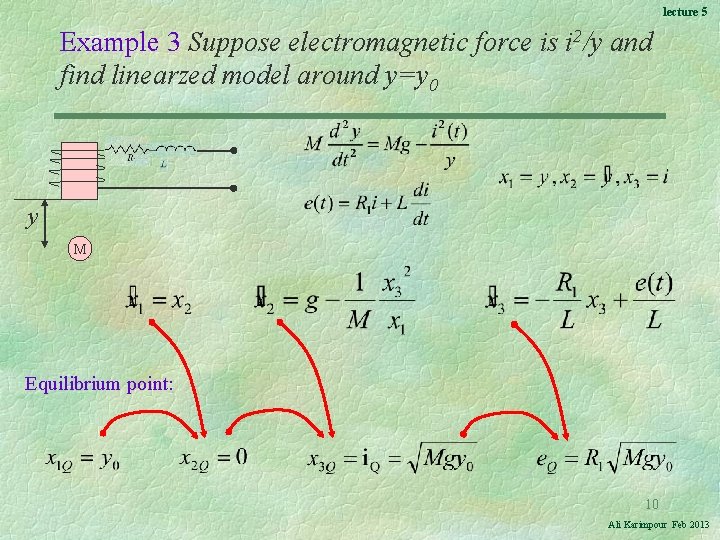
lecture 5 Example 3 Suppose electromagnetic force is i 2/y and find linearzed model around y=y 0 y M Equilibrium point: 10 Ali Karimpour Feb 2013
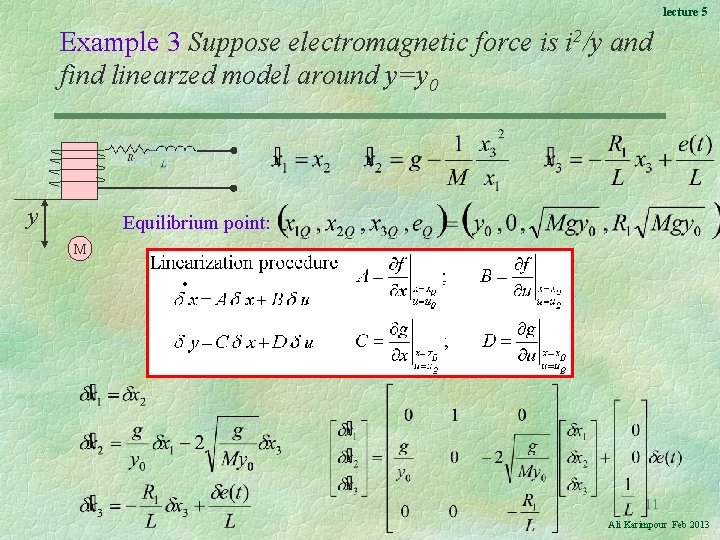
lecture 5 Example 3 Suppose electromagnetic force is i 2/y and find linearzed model around y=y 0 y Equilibrium point: M 11 Ali Karimpour Feb 2013
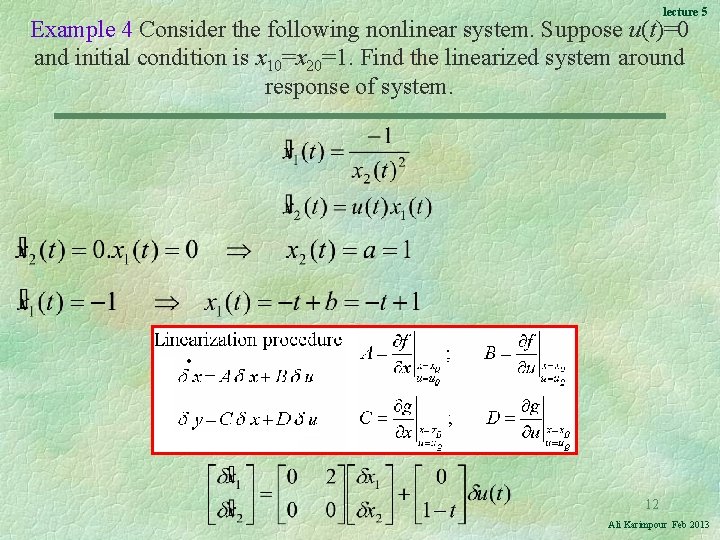
lecture 5 Example 4 Consider the following nonlinear system. Suppose u(t)=0 and initial condition is x 10=x 20=1. Find the linearized system around response of system. 12 Ali Karimpour Feb 2013
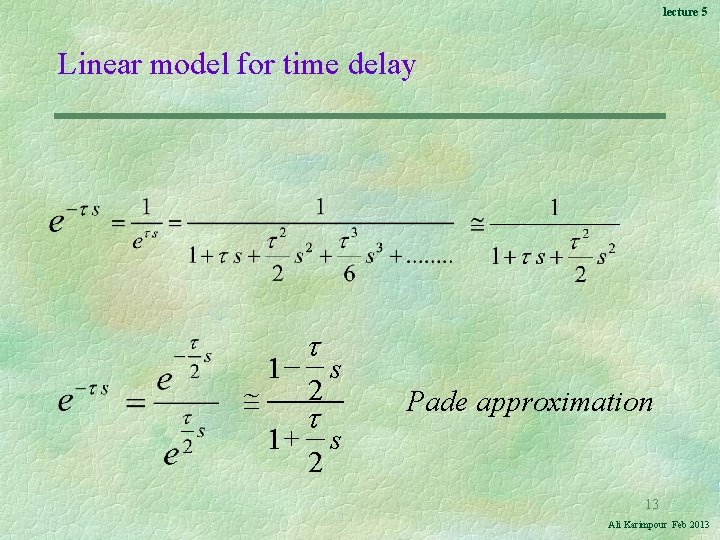
lecture 5 Linear model for time delay t 1 - s 2 t 1+ s 2 Pade approximation 13 Ali Karimpour Feb 2013
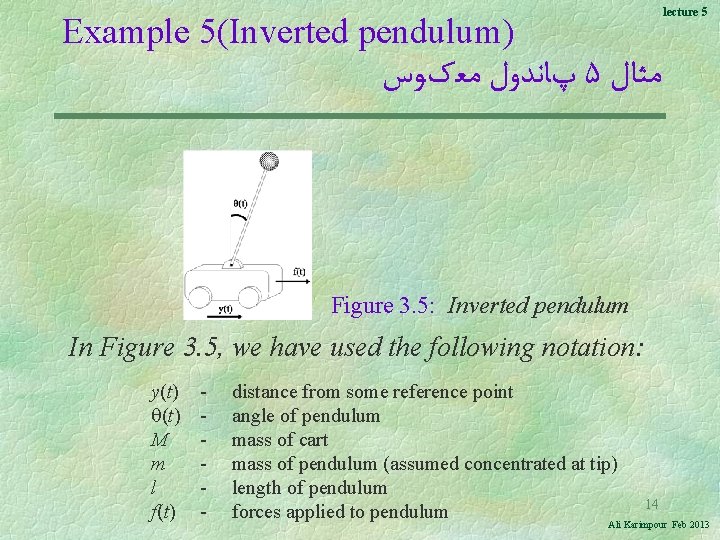
Example 5(Inverted pendulum) ﻣﻌکﻮﺱ پﺎﻧﺪﻭﻝ 5 ﻣﺜﺎﻝ lecture 5 Figure 3. 5: Inverted pendulum In Figure 3. 5, we have used the following notation: y(t) M m l f(t) - - - distance from some reference point angle of pendulum mass of cart mass of pendulum (assumed concentrated at tip) length of pendulum 14 forces applied to pendulum Ali Karimpour Feb 2013
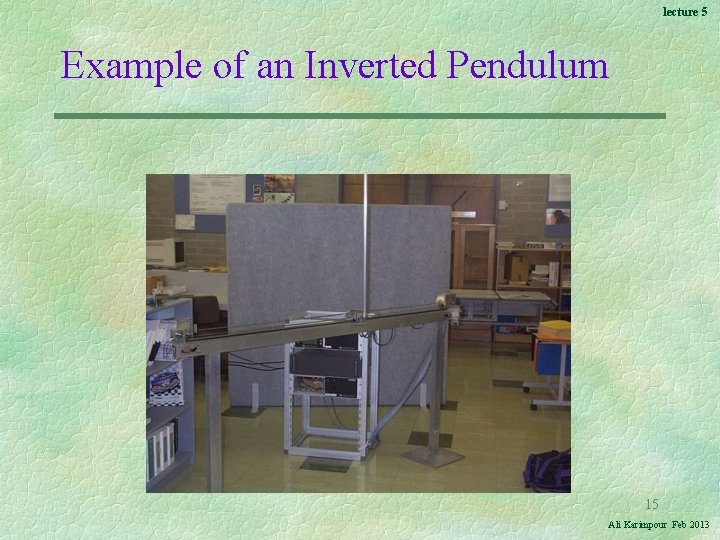
lecture 5 Example of an Inverted Pendulum 15 Ali Karimpour Feb 2013
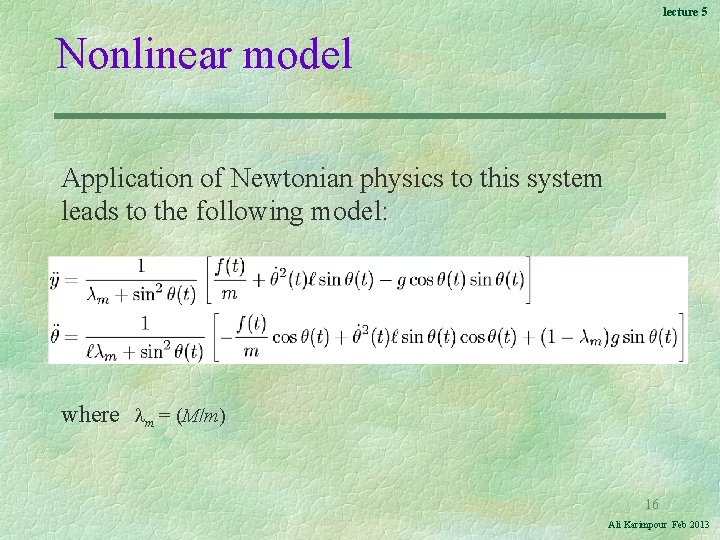
lecture 5 Nonlinear model Application of Newtonian physics to this system leads to the following model: where m = (M/m) 16 Ali Karimpour Feb 2013
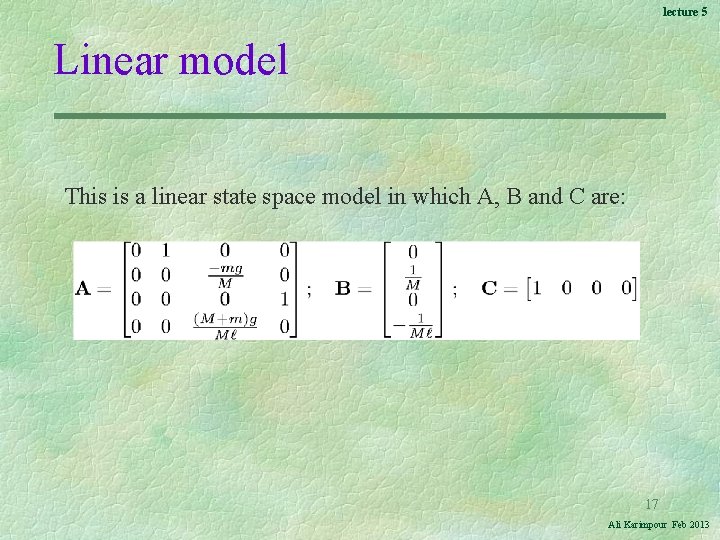
lecture 5 Linear model This is a linear state space model in which A, B and C are: 17 Ali Karimpour Feb 2013
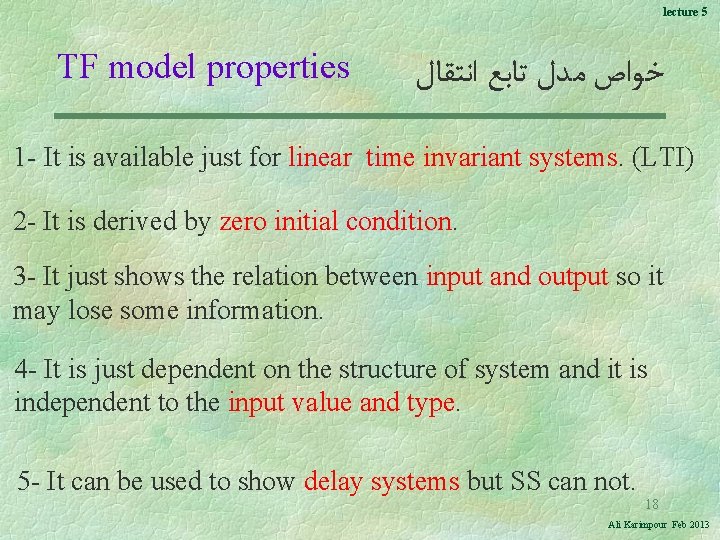
lecture 5 TF model properties ﺍﻧﺘﻘﺎﻝ ﺗﺎﺑﻊ ﻣﺪﻝ ﺧﻮﺍﺹ 1 - It is available just for linear time invariant systems. (LTI) 2 - It is derived by zero initial condition. 3 - It just shows the relation between input and output so it may lose some information. 4 - It is just dependent on the structure of system and it is independent to the input value and type. 5 - It can be used to show delay systems but SS can not. 18 Ali Karimpour Feb 2013
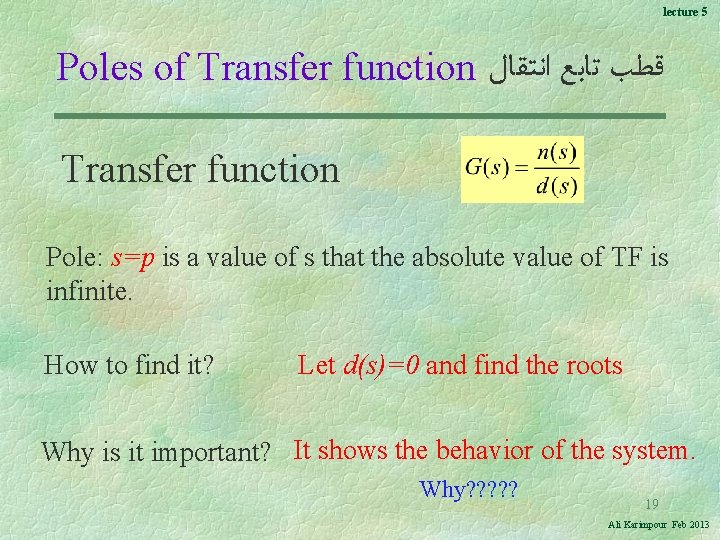
lecture 5 Poles of Transfer function ﺍﻧﺘﻘﺎﻝ ﺗﺎﺑﻊ ﻗﻄﺐ Transfer function Pole: s=p is a value of s that the absolute value of TF is infinite. How to find it? Let d(s)=0 and find the roots Why is it important? It shows the behavior of the system. Why? ? ? 19 Ali Karimpour Feb 2013
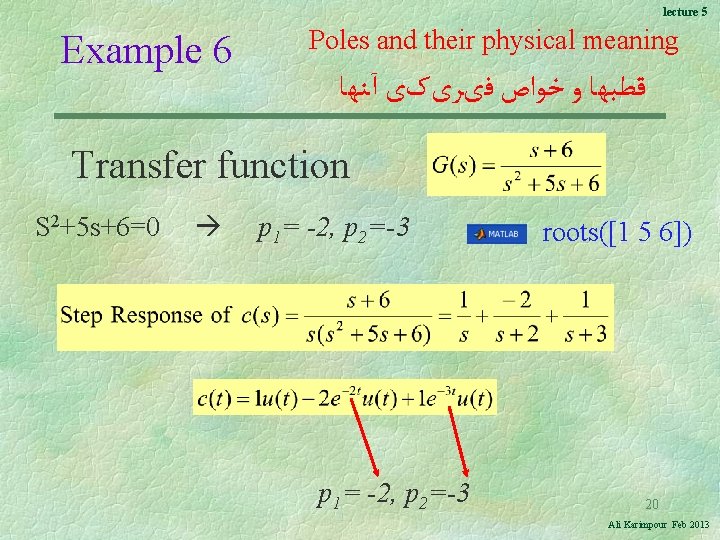
lecture 5 Example 6 Poles and their physical meaning آﻨﻬﺎ ﻓیﺮیکی ﺧﻮﺍﺹ ﻭ ﻗﻄﺒﻬﺎ Transfer function S 2+5 s+6=0 p 1= -2, p 2=-3 roots([1 5 6]) 20 Ali Karimpour Feb 2013
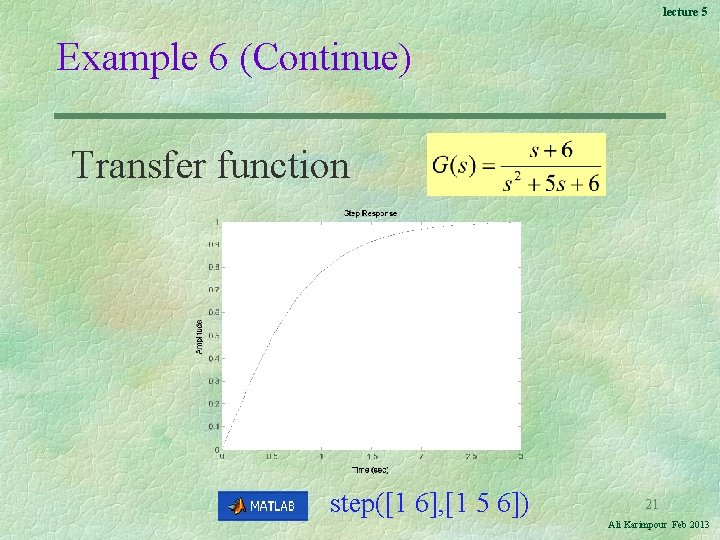
lecture 5 Example 6 (Continue) Transfer function step([1 6], [1 5 6]) 21 Ali Karimpour Feb 2013
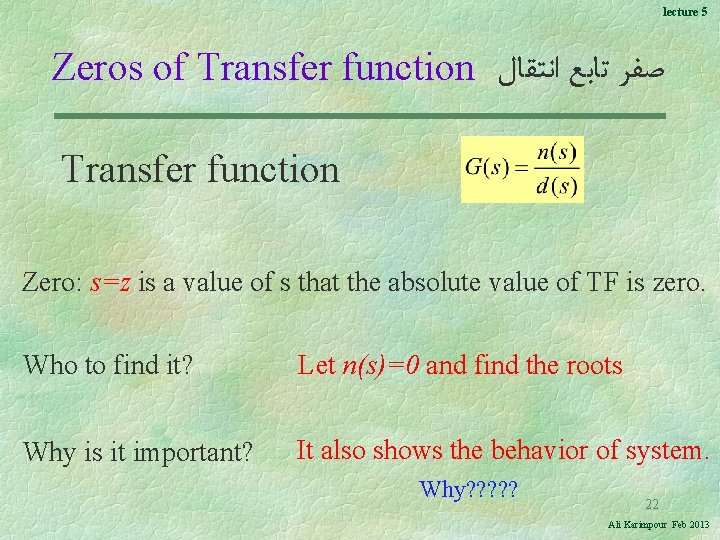
lecture 5 Zeros of Transfer function ﺍﻧﺘﻘﺎﻝ ﺗﺎﺑﻊ ﺻﻔﺮ Transfer function Zero: s=z is a value of s that the absolute value of TF is zero. Who to find it? Let n(s)=0 and find the roots Why is it important? It also shows the behavior of system. Why? ? ? 22 Ali Karimpour Feb 2013
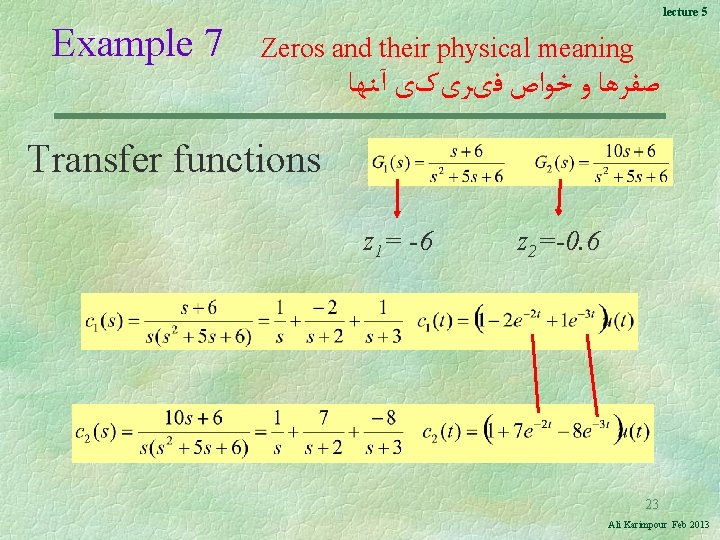
lecture 5 Example 7 Zeros and their physical meaning آﻨﻬﺎ ﻓیﺮیکی ﺧﻮﺍﺹ ﻭ ﺻﻔﺮﻫﺎ Transfer functions z 1= -6 z 2=-0. 6 23 Ali Karimpour Feb 2013
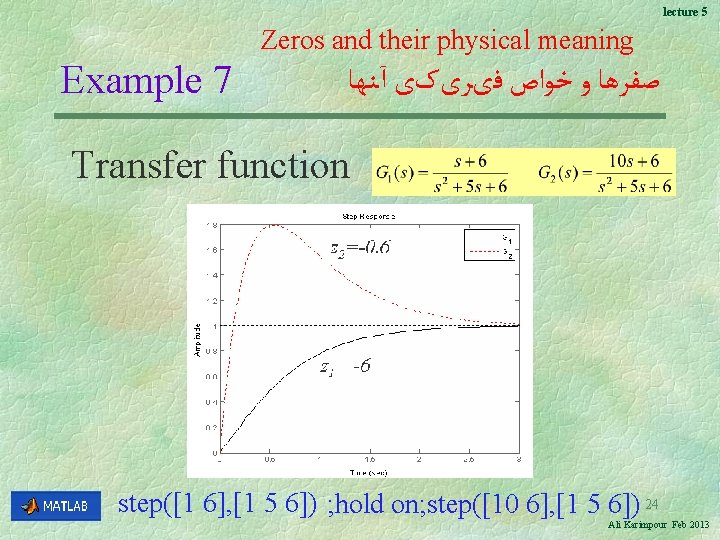
lecture 5 Zeros and their physical meaning Example 7 آﻨﻬﺎ ﻓیﺮیکی ﺧﻮﺍﺹ ﻭ ﺻﻔﺮﻫﺎ Transfer function step([1 6], [1 5 6]) ; hold on; step([10 6], [1 5 6]) 24 Ali Karimpour Feb 2013
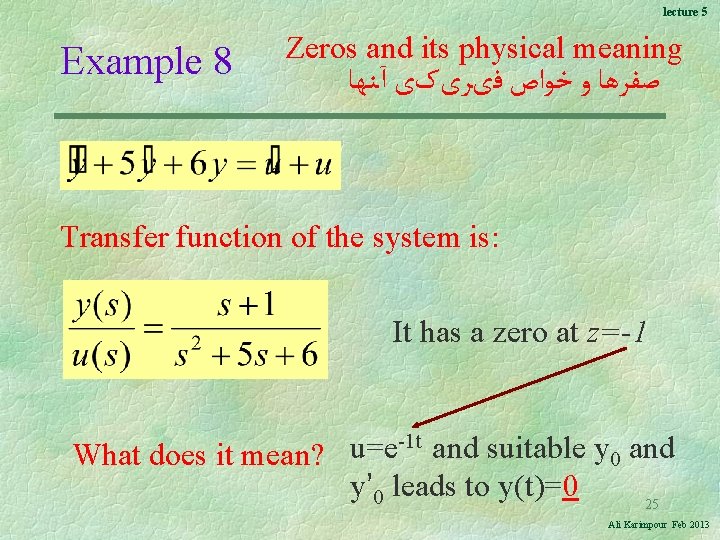
lecture 5 Example 8 Zeros and its physical meaning آﻨﻬﺎ ﻓیﺮیکی ﺧﻮﺍﺹ ﻭ ﺻﻔﺮﻫﺎ Transfer function of the system is: It has a zero at z=-1 -1 t and suitable y and u=e What does it mean? 0 y’ 0 leads to y(t)=0 25 Ali Karimpour Feb 2013
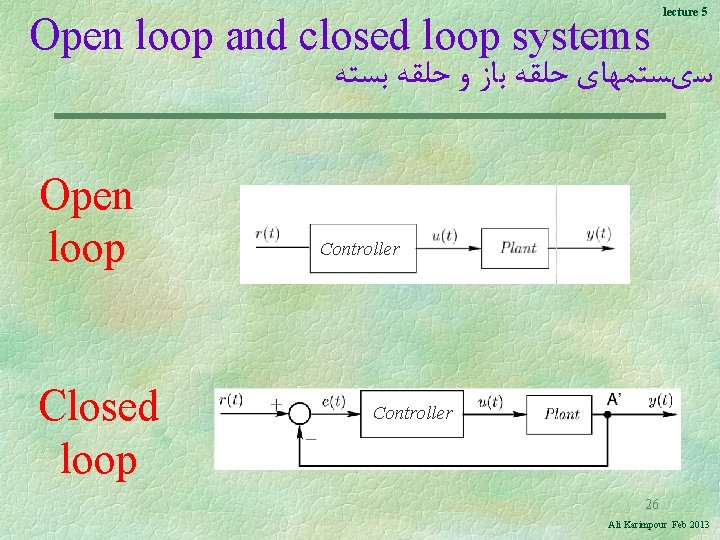
Open loop and closed loop systems lecture 5 ﺑﺴﺘﻪ ﺣﻠﻘﻪ ﻭ ﺑﺎﺯ ﺣﻠﻘﻪ ﺳیﺴﺘﻤﻬﺎی Open loop Closed loop Controller 26 Ali Karimpour Feb 2013
When is the open loop representation applicable? lecture 5 ﺍﺳﺖ؟ ﻣﻨﺎﺳﺐ ﺑﺎﺯ ﺣﻠﻘﻪ کﻨﺘﺮﻝ ﺷﺮﺍیﻄی چﻪ ﺩﺭ v The model on which the design of the controller has been based is a very good representation of the plant, v The model must be stable, and v Disturbances and initial conditions are negligible. 27 Ali Karimpour Feb 2013
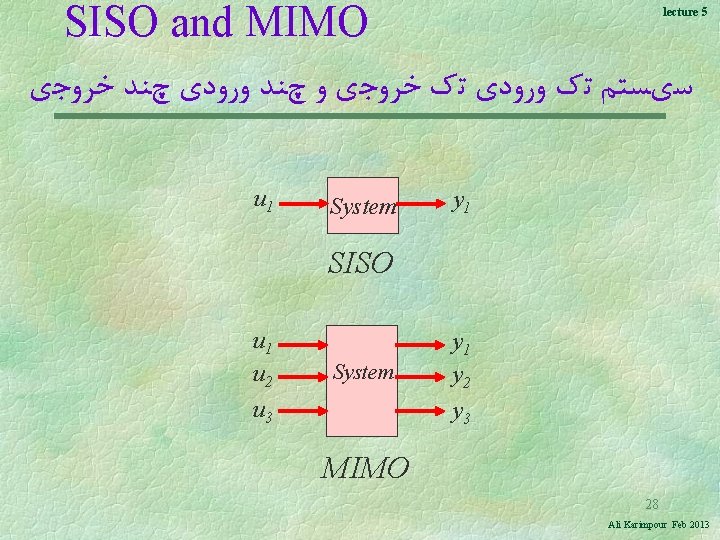
SISO and MIMO lecture 5 ﺧﺮﻭﺟی چﻨﺪ ﻭﺭﻭﺩی چﻨﺪ ﻭ ﺧﺮﻭﺟی ﺗک ﻭﺭﻭﺩی ﺗک ﺳیﺴﺘﻢ u 1 System y 1 SISO u 1 u 2 u 3 System y 1 y 2 y 3 MIMO 28 Ali Karimpour Feb 2013
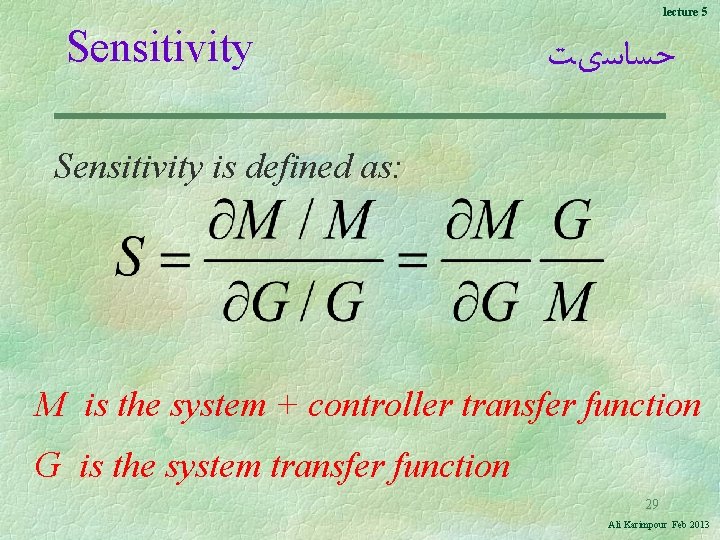
lecture 5 Sensitivity ﺣﺴﺎﺳیﺖ Sensitivity is defined as: M is the system + controller transfer function G is the system transfer function 29 Ali Karimpour Feb 2013
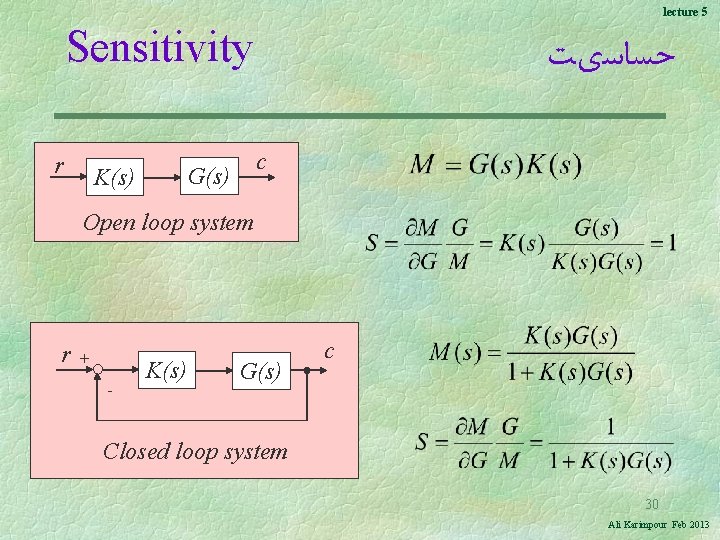
lecture 5 Sensitivity r c G(s) K(s) ﺣﺴﺎﺳیﺖ Open loop system r + - K(s) G(s) c Closed loop system 30 Ali Karimpour Feb 2013
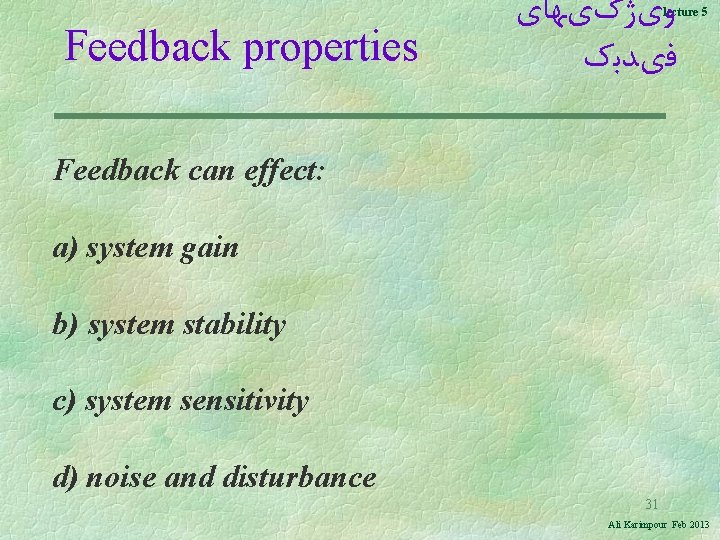
ﻭیژگیﻬﺎی ﻓیﺪﺑک lecture 5 Feedback properties Feedback can effect: a) system gain b) system stability c) system sensitivity d) noise and disturbance 31 Ali Karimpour Feb 2013
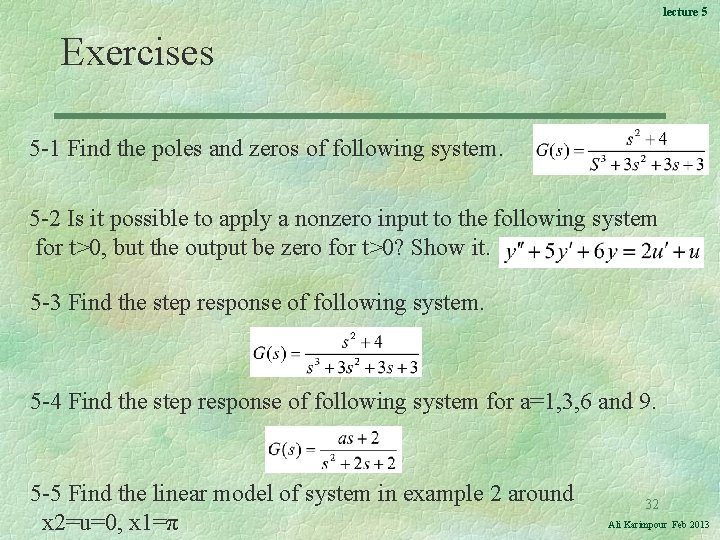
lecture 5 Exercises 5 -1 Find the poles and zeros of following system. 5 -2 Is it possible to apply a nonzero input to the following system for t>0, but the output be zero for t>0? Show it. 5 -3 Find the step response of following system. 5 -4 Find the step response of following system for a=1, 3, 6 and 9. 5 -5 Find the linear model of system in example 2 around x 2=u=0, x 1=π 32 Ali Karimpour Feb 2013