Leticia QuintanillaFend LYWS275 C 646 15 Institute of
- Slides: 12
Leticia Quintanilla-Fend LYWS-275 (C 646 -15) Institute of Pathology University of Tübingen, Germany
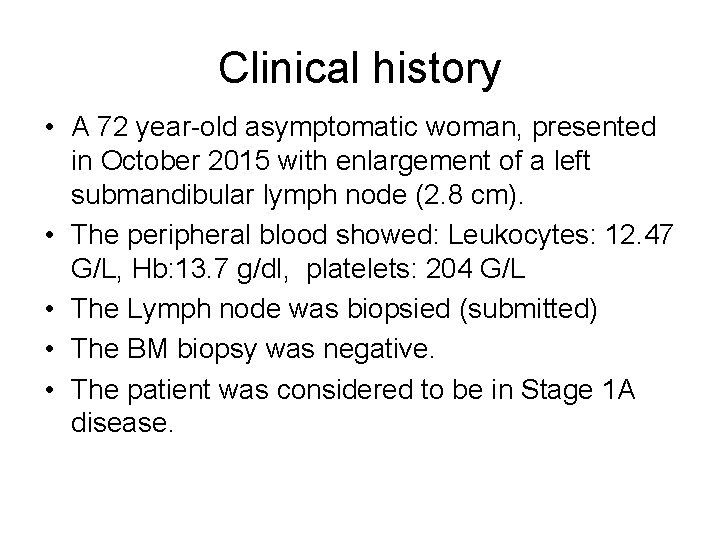
Clinical history • A 72 year-old asymptomatic woman, presented in October 2015 with enlargement of a left submandibular lymph node (2. 8 cm). • The peripheral blood showed: Leukocytes: 12. 47 G/L, Hb: 13. 7 g/dl, platelets: 204 G/L • The Lymph node was biopsied (submitted) • The BM biopsy was negative. • The patient was considered to be in Stage 1 A disease.
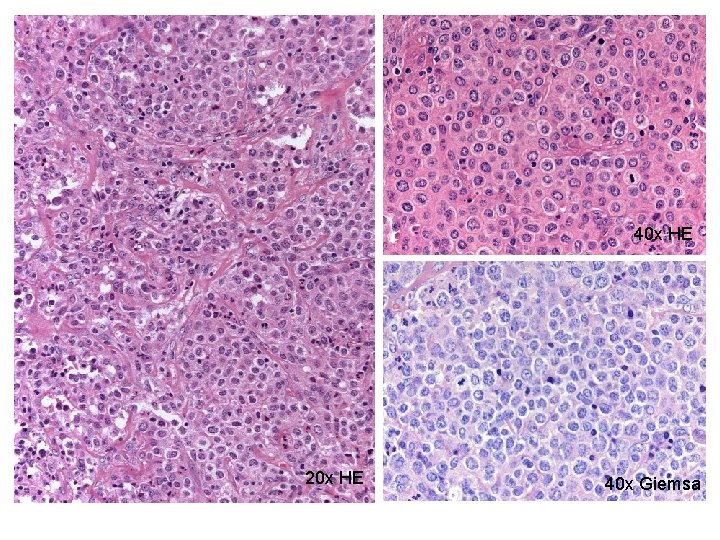
40 x HE 20 x HE 40 x Giemsa
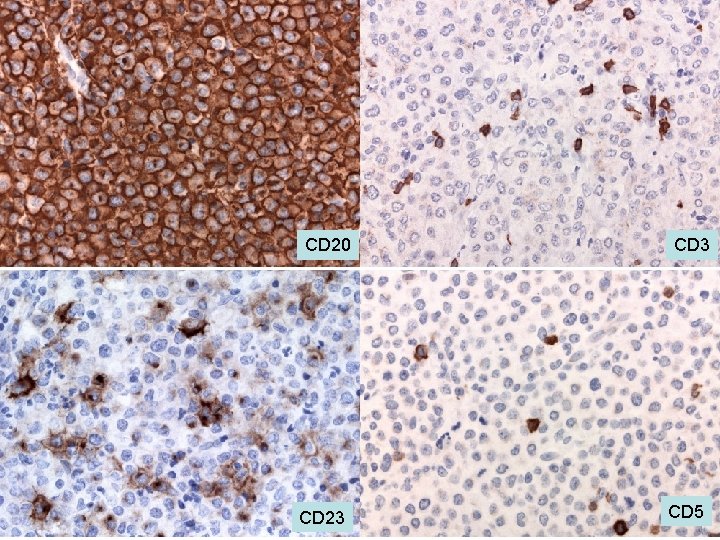
CD 20 CD 23 CD 5
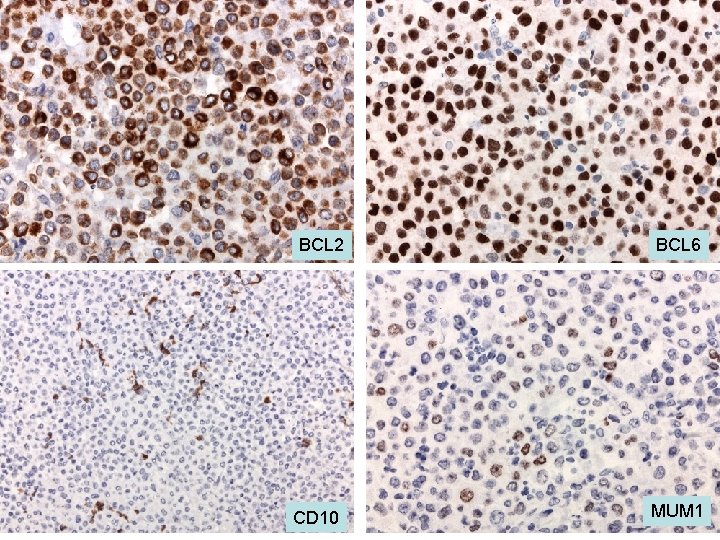
BCL 2 BCL 6 CD 10 MUM 1
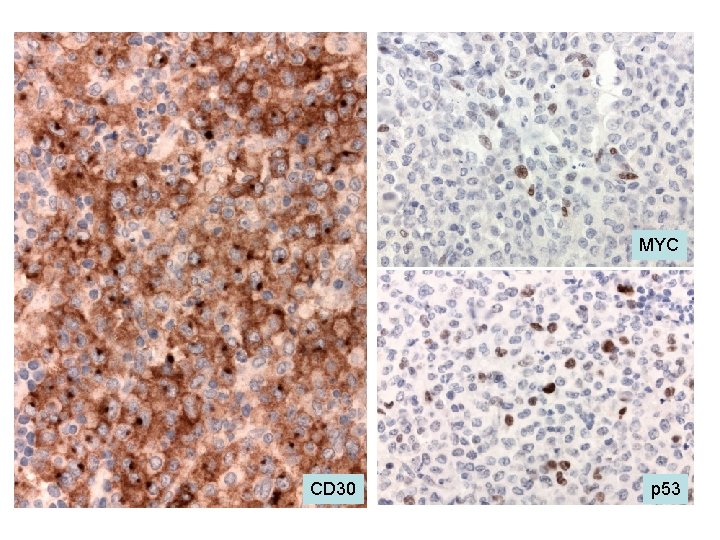
MYC CD 30 p 53
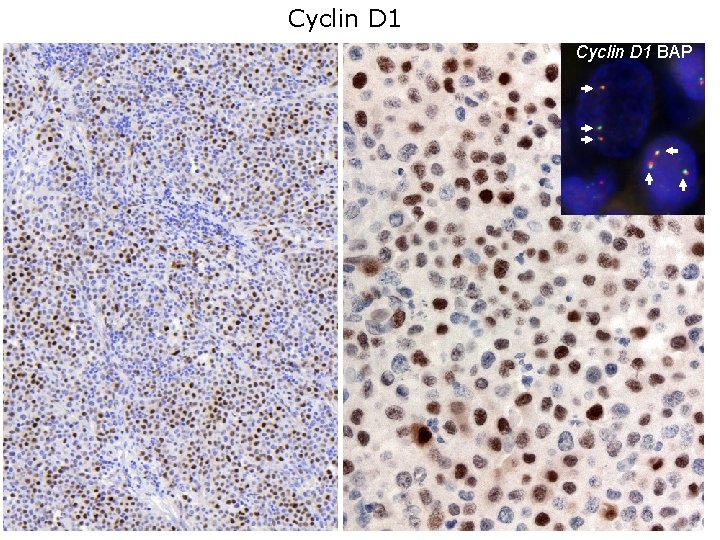
Cyclin D 1 BAP
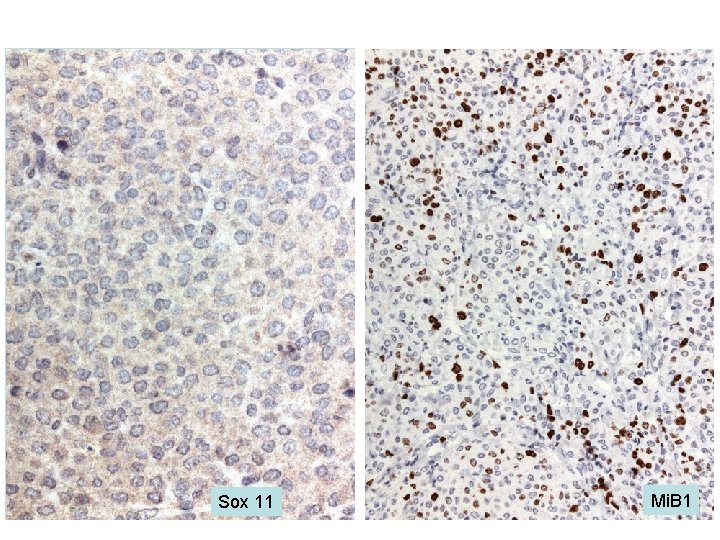
Sox 11 Mi. B 1
Proposed diagnosis • Diffuse large B-cell lymphoma, nos with CD 30 and cyclin D 1 expression with CCND 1 trisomy, presenting with stage 1 A disease. Ø A primary mediastinal B-cell lymphoma in a submandibular lymph node without mediastinal involvement cannot be ruled out
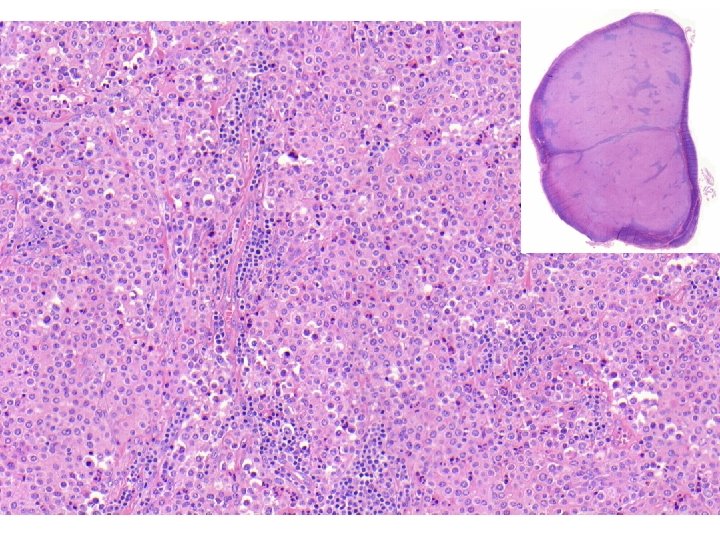
Interesting features (1) • This case was referred to us with the diagnosis of blastoid mantle cell lymphoma due to the unusual morphology and the strong homogeneous expression of cyclin D 1. However, the tumor cells were SOX 11 and CD 5 negative and the FISH analysis did not demostrate a CCND 1 break, instead a CCND 1 trisomy was identified. The morphology and the phenotype of the tumor cells are reminiscent of PMBL but without mediastinal involvement. Such cases have been recently described (Am J Surg Pathol 2015; 39: 1322). • The expression of cyclin D 1 in DLBCL has been reported in several series representing 1. 5 to 15% of all DLBCL cases of both GCB and ABC type. The percentage of cells that expresses cyclin D 1 varies with most cases showing a heterogeneous, weak expression in up to 50% of tumor cells. In most cases no CCND 1 genetic alterations have been documented. However, rarely like in this case, three copies of CCND 1 have been identified by FISH analysis, which is likely the explanation for the strong homogeneous expression of cyclin D 1 in this case. This scenario seems to be similar to the situation in plasma cell myeloma, where we demonstrated that extra copies of chromosome 11 explain in some myeloma cases the cyclin D 1 expression.
Interesting features (2) • The third point of interest is the strong homogeneous expression of CD 30. DLBCL with CD 30 expression represents around 14 to 25% of all DLBCL cases, depending on the cutoff used. Several studies have shown that CD 30+ DLBCL tend to have a more favourable outcome. PMBL were excluded from these studies. Nevertheless, recent gene expression profile analysis has shown that a subset of these CD 30+ DLBCLs could represent PMBL without mediastinal involvement, which may partially explain the better prognosis of these tumors. In the present case, the localization of the LN, the morphology, the CD 30 and variable CD 23 positivity and lack of Ig expression raises the possibility of a nodal PMBL. Gene expression profile analysis is necessary to confirm this diagnosis. Despite cyclin D 1 expression, the tumor had a low proliferation rate and the patient presented with stage 1 A disease and has responded very well to therapy. This finding underlies the importance of investigating CD 30 expression in DLBCL and the possibility of PMBL without evidence of mediastinal involvement.