Lecture 8 Precipitation and Evaporation Reading Applied Hydrology

- Slides: 16
Lecture 8: Precipitation and Evaporation • Reading: Applied Hydrology Sec 3. 5 -3. 6 on evaporation and evapotranspiration
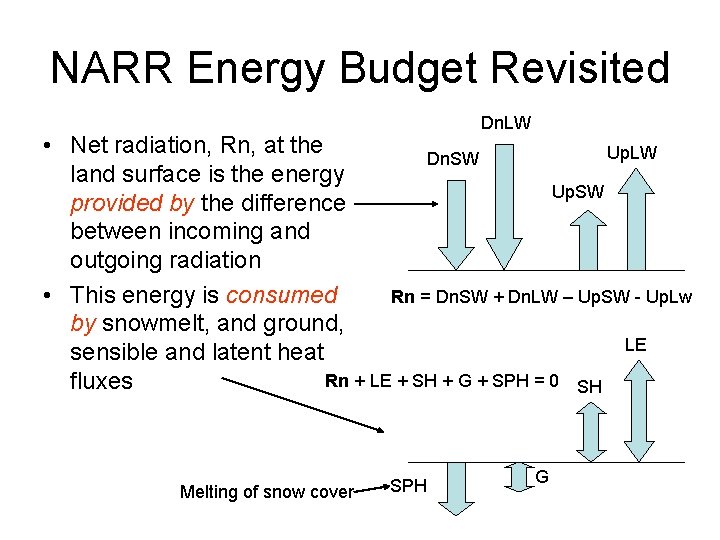
NARR Energy Budget Revisited Dn. LW • Net radiation, Rn, at the Up. LW Dn. SW land surface is the energy Up. SW provided by the difference between incoming and outgoing radiation • This energy is consumed Rn = Dn. SW + Dn. LW – Up. SW - Up. Lw by snowmelt, and ground, LE sensible and latent heat Rn + LE + SH + G + SPH = 0 SH fluxes Melting of snow cover SPH G
Precipitation • Precipitation requires air mass lifting. This can occur in 3 ways: – Convective cells – Fronts – Orographic (mountains) – Or by a combination of the above
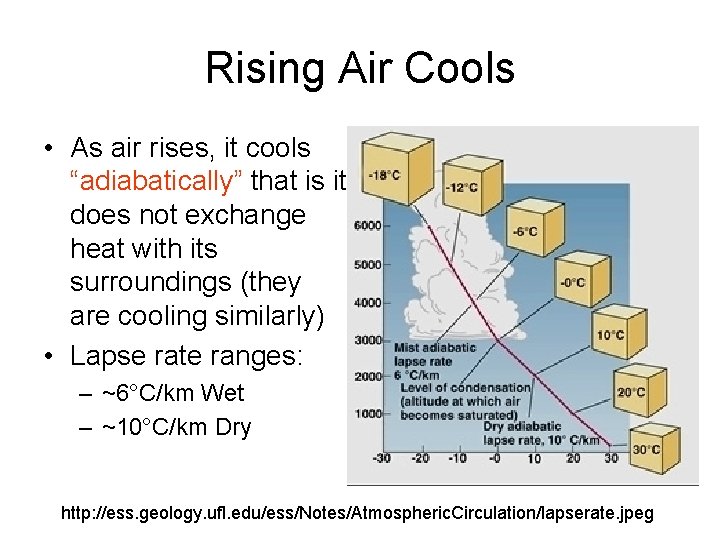
Rising Air Cools • As air rises, it cools “adiabatically” that is it does not exchange heat with its surroundings (they are cooling similarly) • Lapse rate ranges: – ~6°C/km Wet – ~10°C/km Dry http: //ess. geology. ufl. edu/ess/Notes/Atmospheric. Circulation/lapserate. jpeg
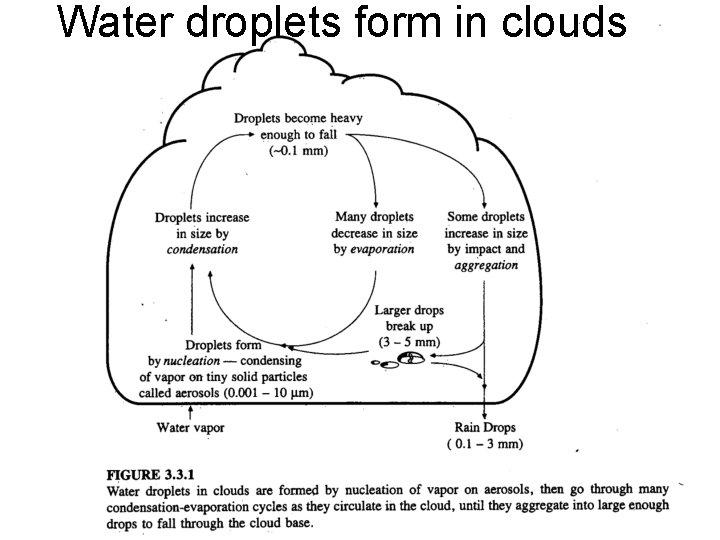
Water droplets form in clouds
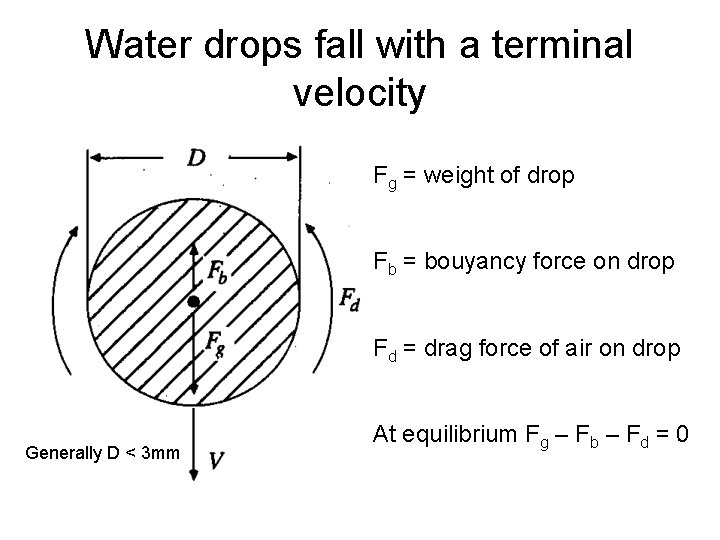
Water drops fall with a terminal velocity Fg = weight of drop Fb = bouyancy force on drop Fd = drag force of air on drop Generally D < 3 mm At equilibrium Fg – Fb – Fd = 0
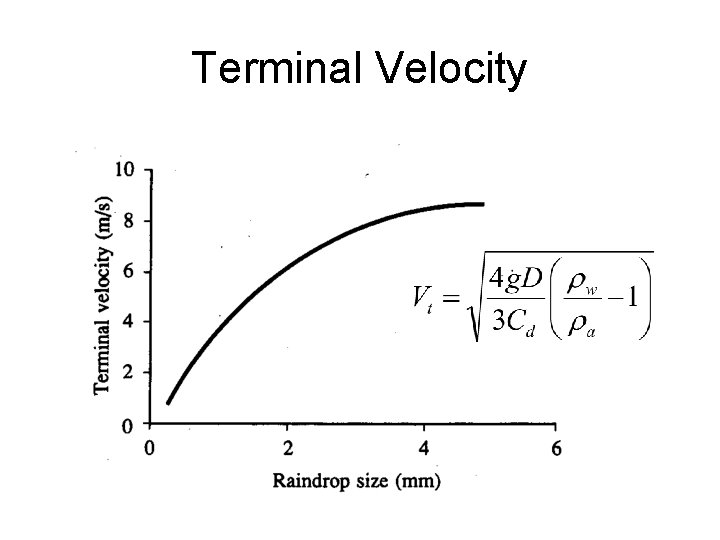
Terminal Velocity
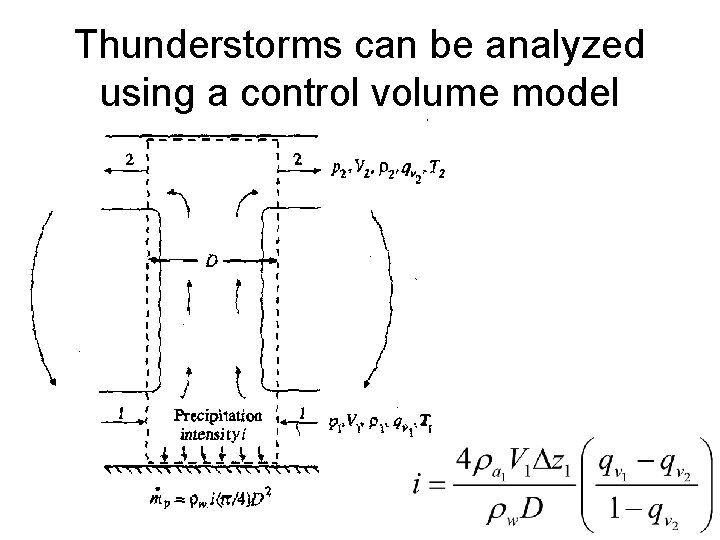
Thunderstorms can be analyzed using a control volume model
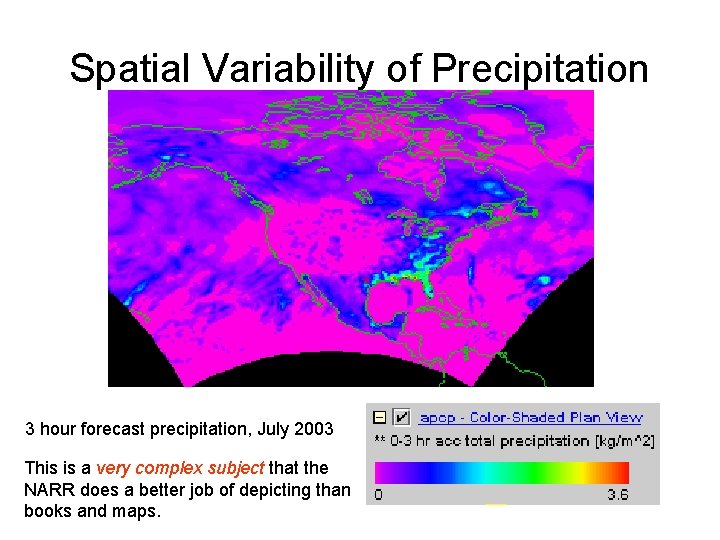
Spatial Variability of Precipitation 3 hour forecast precipitation, July 2003 This is a very complex subject that the NARR does a better job of depicting than books and maps.
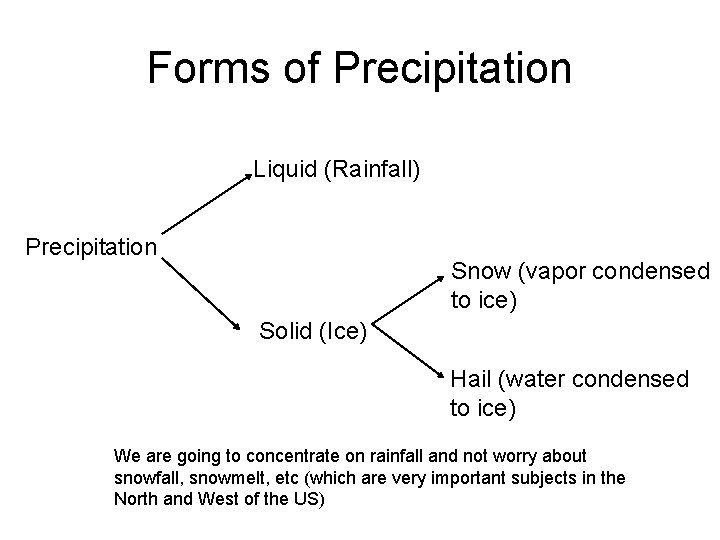
Forms of Precipitation Liquid (Rainfall) Precipitation Snow (vapor condensed to ice) Solid (Ice) Hail (water condensed to ice) We are going to concentrate on rainfall and not worry about snowfall, snowmelt, etc (which are very important subjects in the North and West of the US)
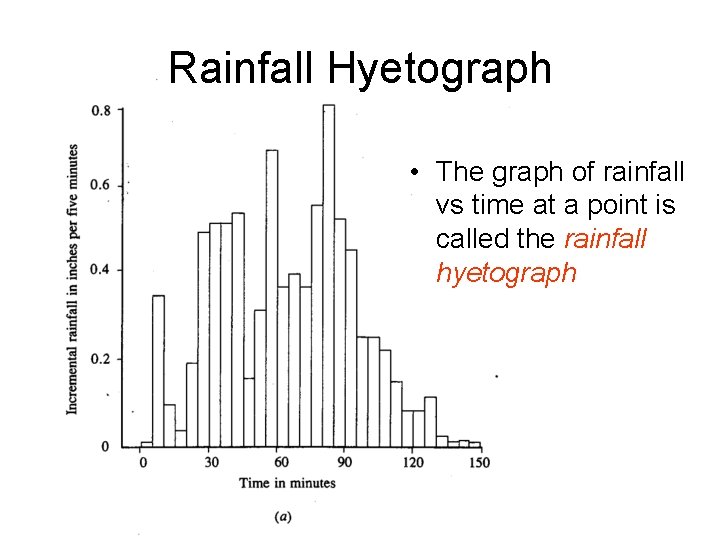
Rainfall Hyetograph • The graph of rainfall vs time at a point is called the rainfall hyetograph
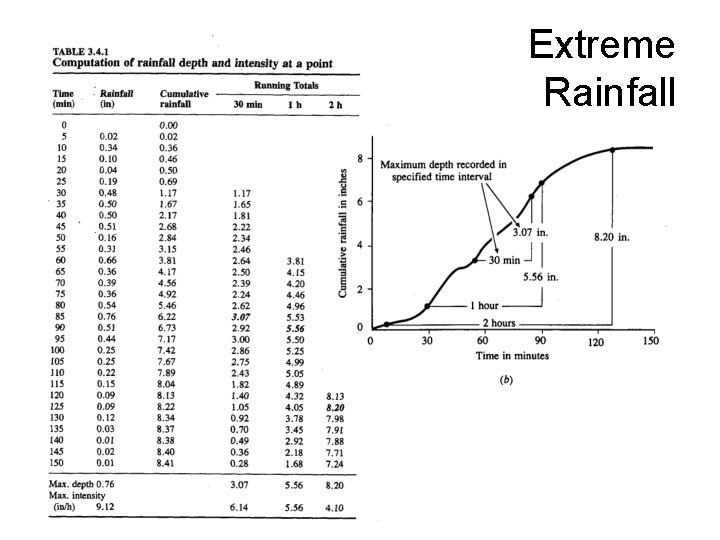
Extreme Rainfall
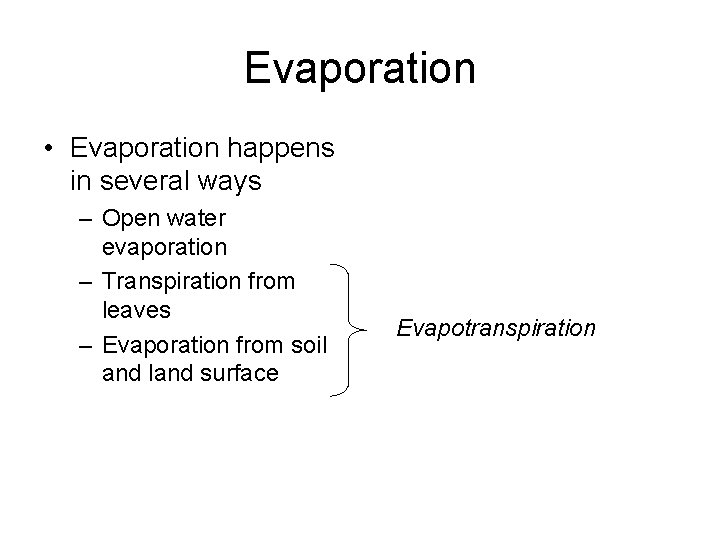
Evaporation • Evaporation happens in several ways – Open water evaporation – Transpiration from leaves – Evaporation from soil and land surface Evapotranspiration
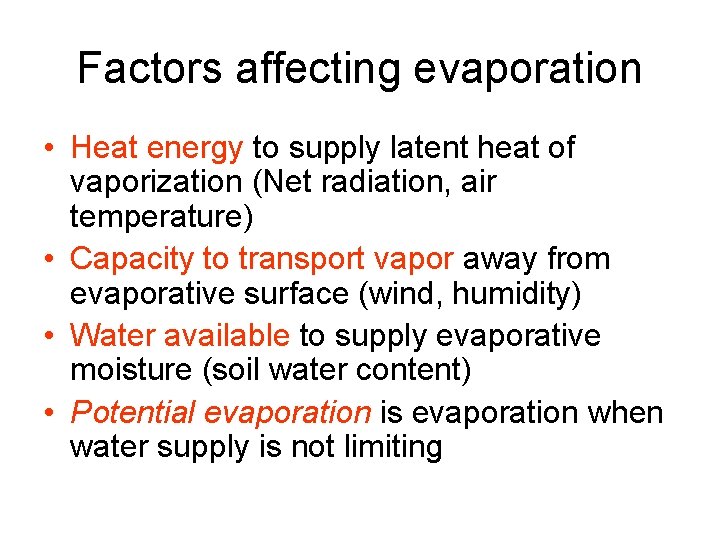
Factors affecting evaporation • Heat energy to supply latent heat of vaporization (Net radiation, air temperature) • Capacity to transport vapor away from evaporative surface (wind, humidity) • Water available to supply evaporative moisture (soil water content) • Potential evaporation is evaporation when water supply is not limiting
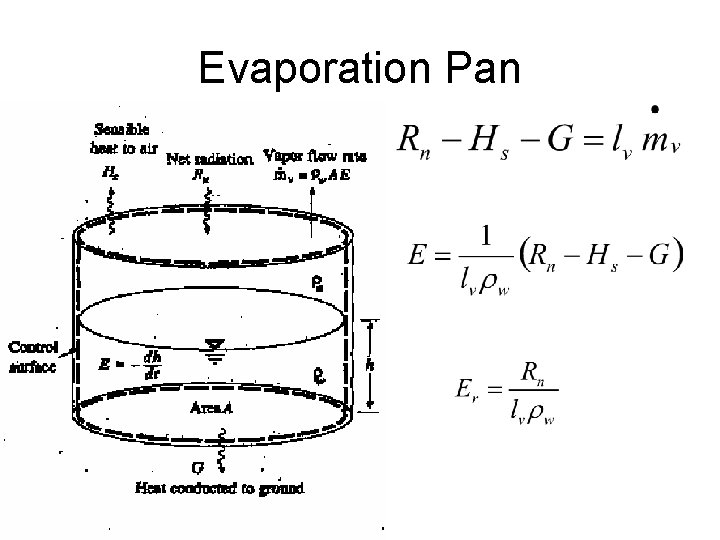
Evaporation Pan
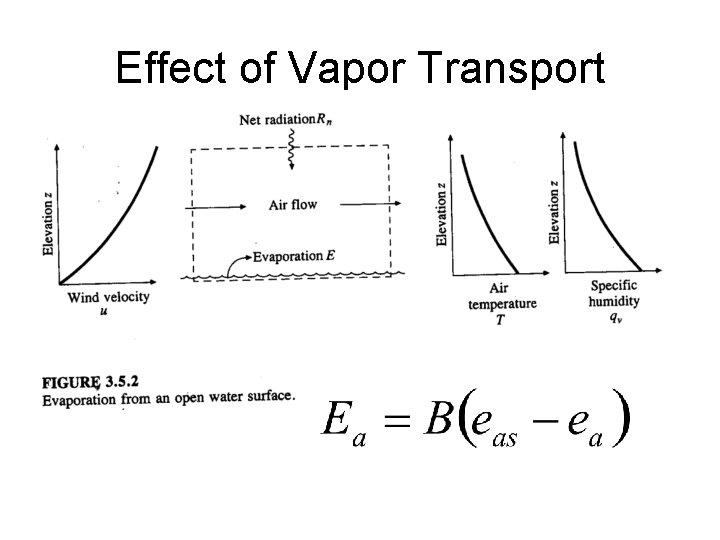
Effect of Vapor Transport