Latitude A geographic coordinate that specifies the northsouth
- Slides: 9
Latitude “A geographic coordinate that specifies the north-south position of a point on the Earth's surface. Latitude is an angle which ranges from 0° at the Equator to 90° (North or South) at the poles”. Latitude is used together with longitude to specify the precise location of a feature/location on the surface of the Earth. Determining latitude can be accomplished relatively easily using celestial navigation. In the Northern Hemisphere, mariners could determine the latitude by measuring the altitude of the North Star above the horizon. The angle in degrees was the latitude of the ship.
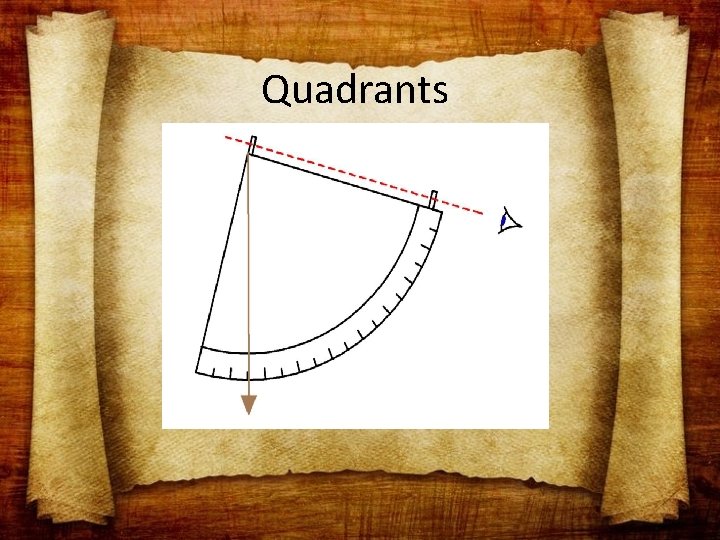
Quadrants
Quadrants • Named because it is one-fourth of a full circle, “quad” means 4 • Made of wood or brass • Device for measuring the angular height of a star or the sun • Even used to help aim a cannon to hit an enemy fortress • Earliest documented (written) use of the quadrant at sea was in the mid 1400 s
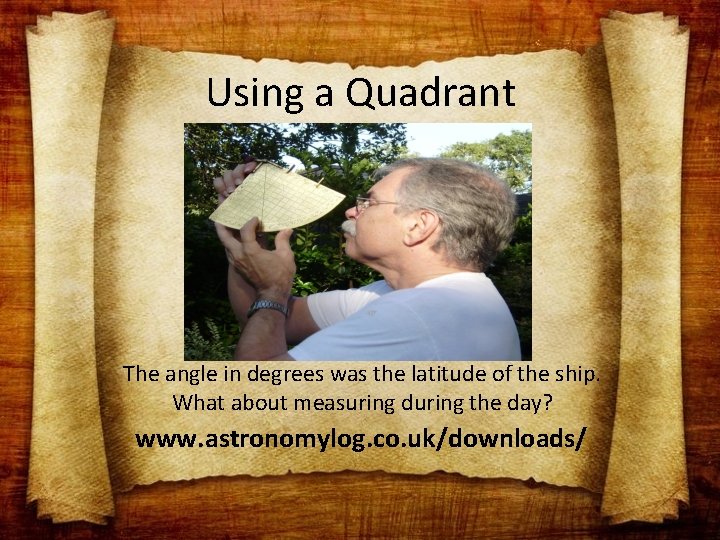
Using a Quadrant The angle in degrees was the latitude of the ship. What about measuring during the day? www. astronomylog. co. uk/downloads/
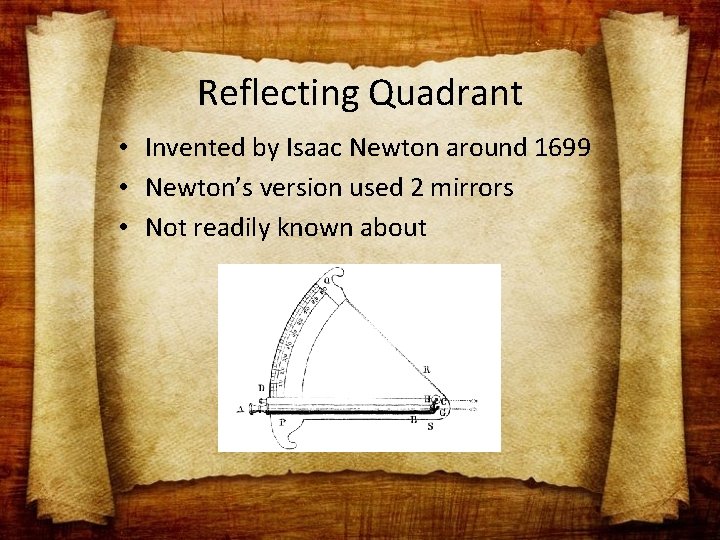
Reflecting Quadrant • Invented by Isaac Newton around 1699 • Newton’s version used 2 mirrors • Not readily known about
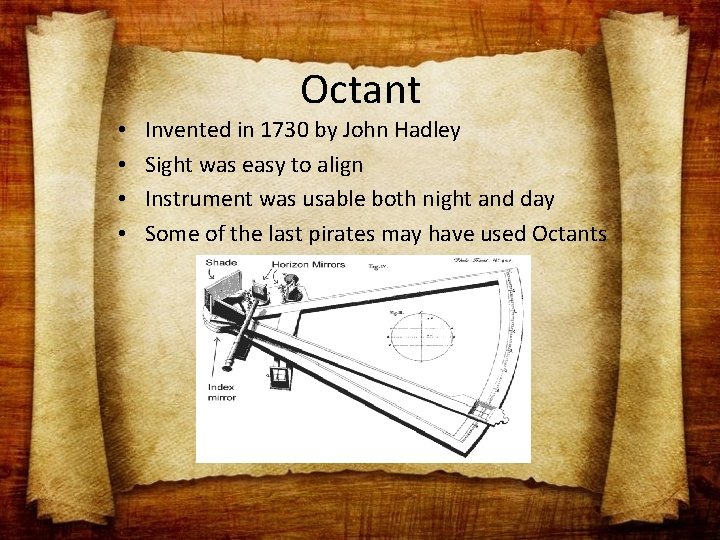
Octant • • Invented in 1730 by John Hadley Sight was easy to align Instrument was usable both night and day Some of the last pirates may have used Octants
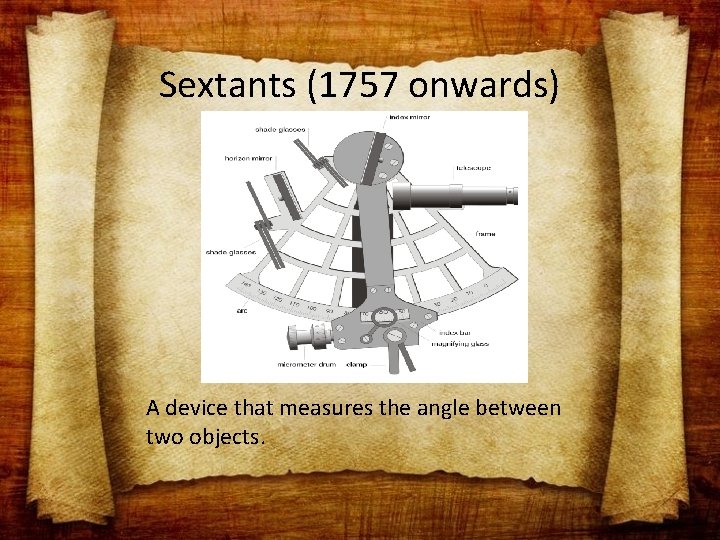
Sextants (1757 onwards) A device that measures the angle between two objects.
Sextants • Frame of a sextant is in the shape of a sector which is approximately 1⁄6 of a circle (60°) hence its name (sextāns, the Latin word for "one sixth“ • Celestial objects could be measured relative to the horizon, rather than relative to the instrument, increasing precision, great when the user is on a moving ship • Later on filters allowed direct observation of the sun
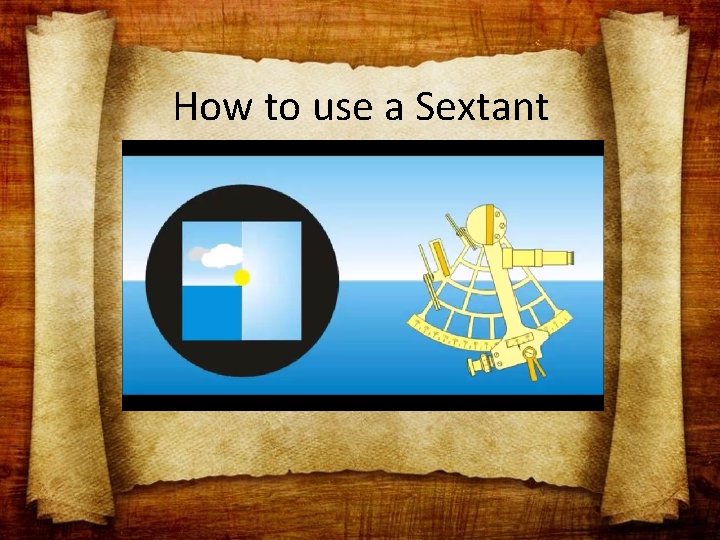
How to use a Sextant