LA CANAPA E LO STIMOLO DELLA FAME STORIA
- Slides: 22
LA CANAPA E LO STIMOLO DELLA FAME: STORIA DI AGONISMI ED ANTAGONISMI Dr. Uberto Pagotto Unità Operativa di Endocrinologia Dip. Medicina Int. e Gastroenterologia Ospedale S. Orsola-Malpighi Bologna
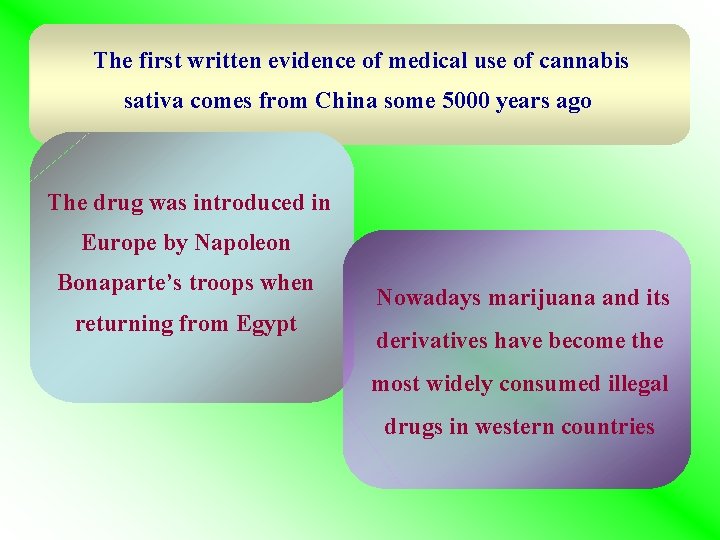
The first written evidence of medical use of cannabis sativa comes from China some 5000 years ago The drug was introduced in Europe by Napoleon Bonaparte’s troops when returning from Egypt Nowadays marijuana and its derivatives have become the most widely consumed illegal drugs in western countries
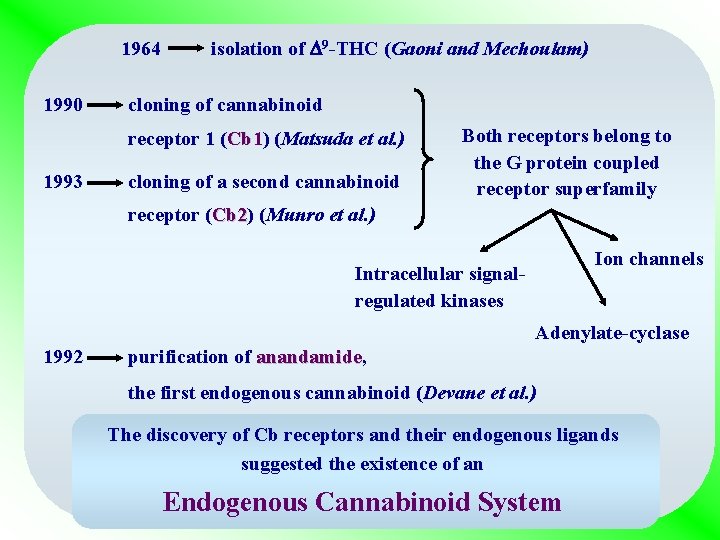
1964 1990 isolation of 9 -THC (Gaoni and Mechoulam) cloning of cannabinoid receptor 1 (Cb 1) Cb 1 (Matsuda et al. ) 1993 cloning of a second cannabinoid Both receptors belong to the G protein coupled receptor superfamily receptor (Cb 2) Cb 2 (Munro et al. ) Ion channels Intracellular signalregulated kinases Adenylate-cyclase 1992 purification of anandamide, anandamide the first endogenous cannabinoid (Devane et al. ) The discovery of Cb receptors and their endogenous ligands suggested the existence of an Endogenous Cannabinoid System
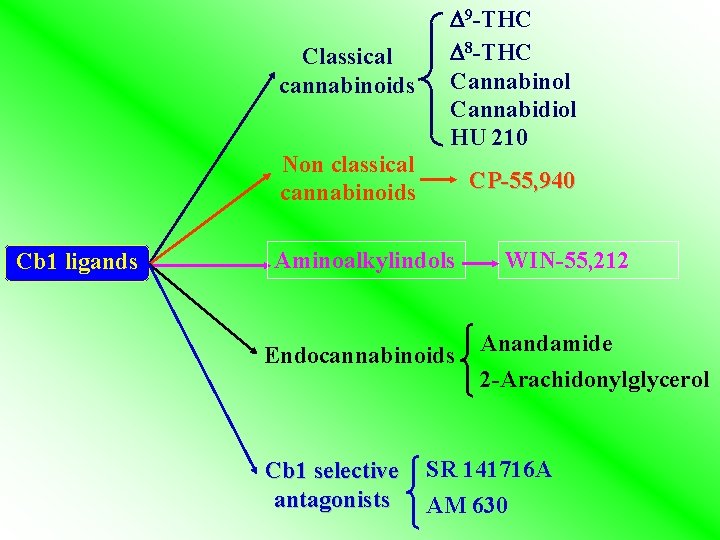
Cb 1 ligands Classical cannabinoids 9 -THC 8 -THC Cannabinol Cannabidiol HU 210 Non classical cannabinoids CP-55, 940 Aminoalkylindols Endocannabinoids Cb 1 selective antagonists WIN-55, 212 Anandamide 2 -Arachidonylglycerol SR 141716 A AM 630
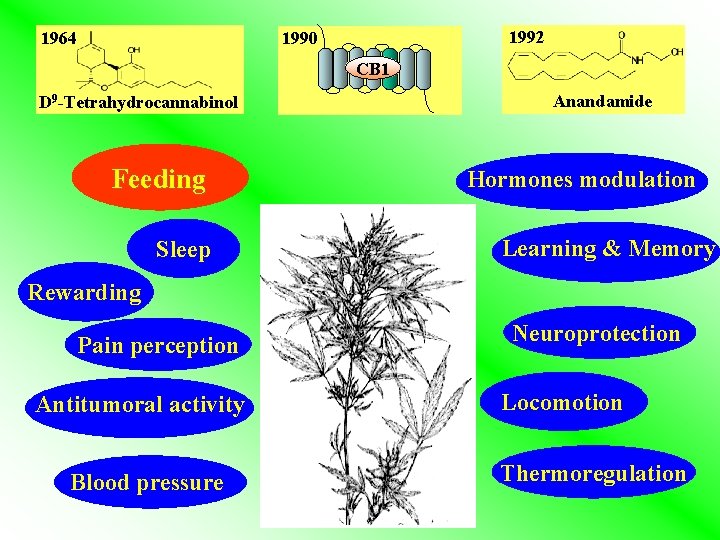
1992 1990 1964 CB 1 D 9 -Tetrahydrocannabinol Feeding Sleep Anandamide Hormones modulation Learning & Memory Rewarding Pain perception Antitumoral activity Blood pressure Neuroprotection Locomotion Thermoregulation
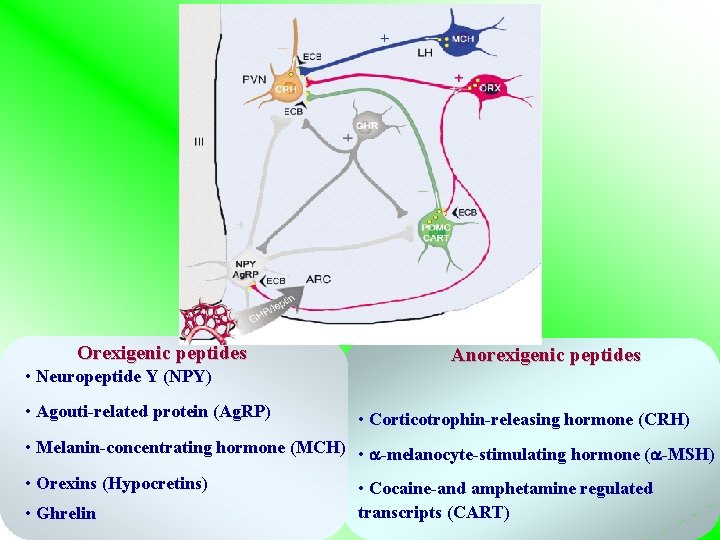
Orexigenic peptides • Neuropeptide Y (NPY) • Agouti-related protein (Ag. RP) Anorexigenic peptides • Corticotrophin-releasing hormone (CRH) • Melanin-concentrating hormone (MCH) • -melanocyte-stimulating hormone ( -MSH) • Orexins (Hypocretins) • Ghrelin • Cocaine-and amphetamine regulated transcripts (CART)
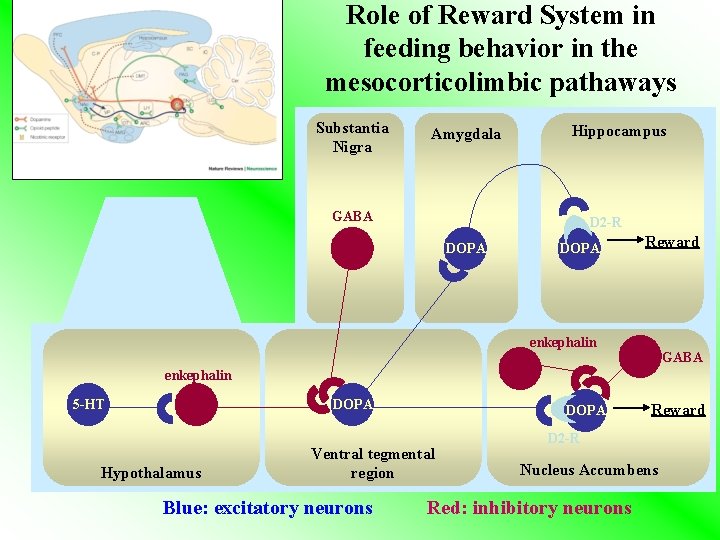
Role of Reward System in feeding behavior in the mesocorticolimbic pathaways Substantia Nigra Amygdala Hippocampus GABA D 2 -R DOPA Reward enkephalin GABA enkephalin 5 -HT DOPA Hypothalamus DOPA Ventral tegmental region Blue: excitatory neurons Reward D 2 -R Nucleus Accumbens Red: inhibitory neurons
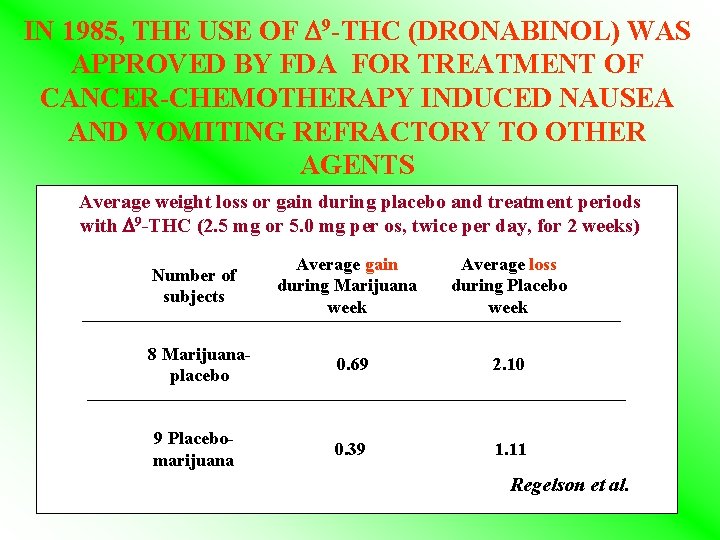
IN 1985, THE USE OF 9 -THC (DRONABINOL) WAS APPROVED BY FDA FOR TREATMENT OF CANCER-CHEMOTHERAPY INDUCED NAUSEA AND VOMITING REFRACTORY TO OTHER AGENTS Average weight loss or gain during placebo and treatment periods with 9 -THC (2. 5 mg or 5. 0 mg per os, twice per day, for 2 weeks) Number of subjects Average gain during Marijuana week Average loss during Placebo week 8 Marijuanaplacebo 0. 69 2. 10 9 Placebomarijuana 0. 39 1. 11 Regelson et al.
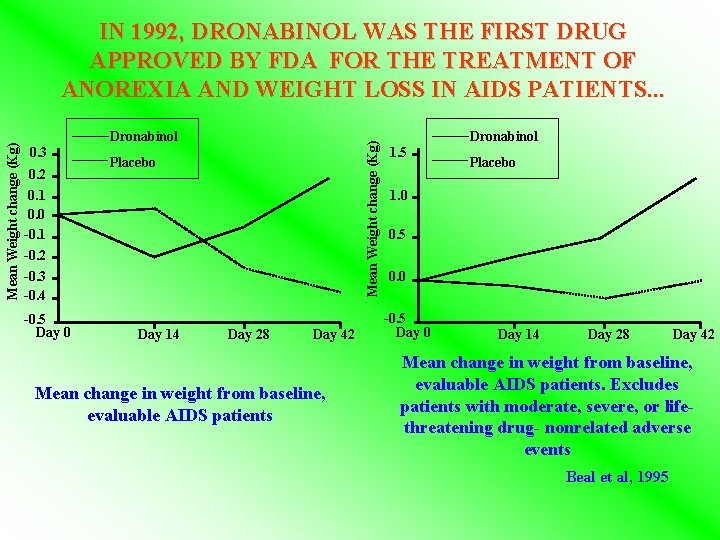
Dronabinol 0. 3 0. 2 Mean Weight change (Kg) IN 1992, DRONABINOL WAS THE FIRST DRUG APPROVED BY FDA FOR THE TREATMENT OF ANOREXIA AND WEIGHT LOSS IN AIDS PATIENTS. . . Placebo 0. 1 0. 0 -0. 1 -0. 2 -0. 3 -0. 4 -0. 5 Day 0 Day 14 Day 28 Day 42 Mean change in weight from baseline, evaluable AIDS patients Dronabinol 1. 5 Placebo 1. 0 0. 5 0. 0 -0. 5 Day 0 Day 14 Day 28 Day 42 Mean change in weight from baseline, evaluable AIDS patients. Excludes patients with moderate, severe, or lifethreatening drug- nonrelated adverse events Beal et al, 1995
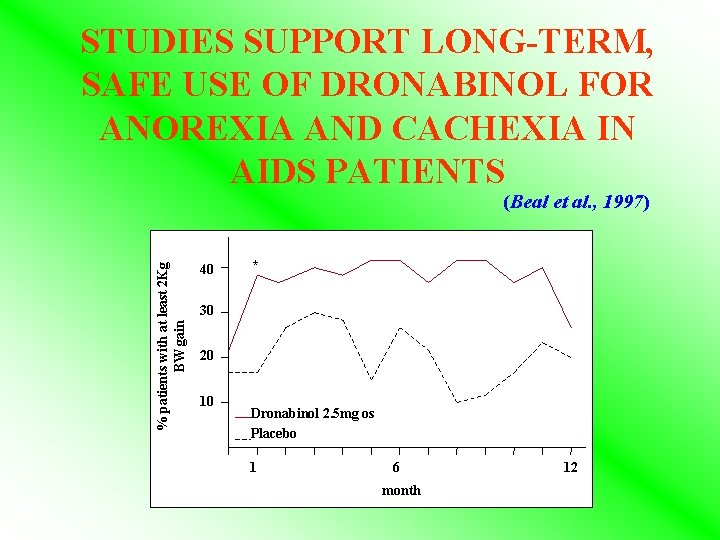
STUDIES SUPPORT LONG-TERM, SAFE USE OF DRONABINOL FOR ANOREXIA AND CACHEXIA IN AIDS PATIENTS % patients with at least 2 Kg BW gain (Beal et al. , 1997) 40 * 30 20 10 Dronabinol 2. 5 mg os Placebo 1 6 month 12
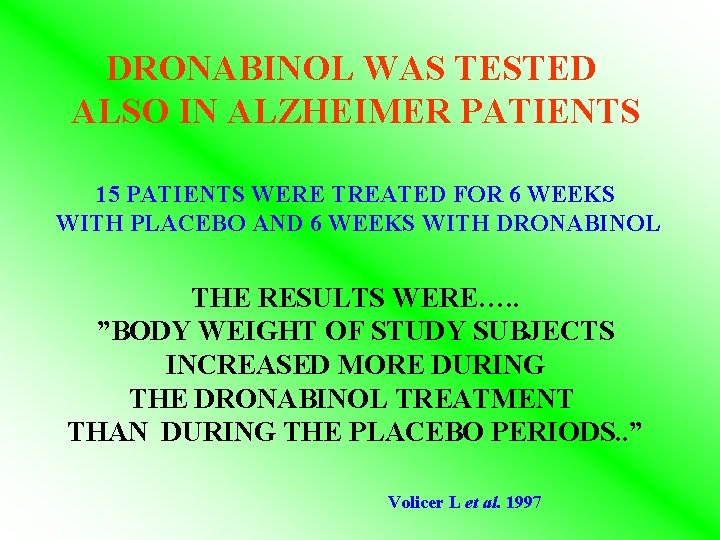
DRONABINOL WAS TESTED ALSO IN ALZHEIMER PATIENTS 15 PATIENTS WERE TREATED FOR 6 WEEKS WITH PLACEBO AND 6 WEEKS WITH DRONABINOL THE RESULTS WERE…. . ”BODY WEIGHT OF STUDY SUBJECTS INCREASED MORE DURING THE DRONABINOL TREATMENT THAN DURING THE PLACEBO PERIODS. . ” Volicer L et al. 1997
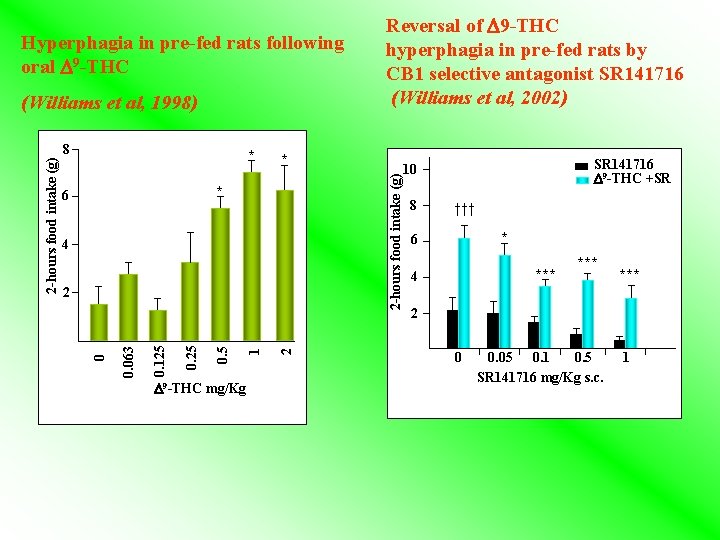
Hyperphagia in pre-fed rats following oral 9 -THC 8 * 2 -hours food intake (g) * * 6 4 9 -THC mg/Kg 2 1 0. 5 0. 25 0. 125 0. 063 2 0 2 -hours food intake (g) (Williams et al, 1998) Reversal of 9 -THC hyperphagia in pre-fed rats by CB 1 selective antagonist SR 141716 (Williams et al, 2002) SR 141716 9 -THC +SR 10 8 ††† * 6 *** 4 *** 2 0 0. 05 0. 1 0. 5 SR 141716 mg/Kg s. c. 1
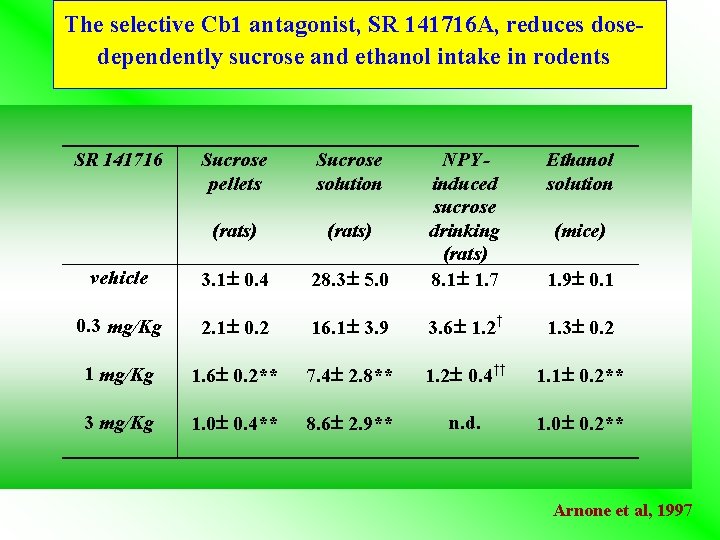
The selective Cb 1 antagonist, SR 141716 A, reduces dosedependently sucrose and ethanol intake in rodents SR 141716 Sucrose pellets Sucrose solution Ethanol solution 28. 3 ± 5. 0 NPYinduced sucrose drinking (rats) 8. 1 ± 1. 7 (rats) vehicle 3. 1 ± 0. 4 0. 3 mg/Kg 2. 1 ± 0. 2 16. 1 ± 3. 9 3. 6 ± 1. 2 † 1. 3 ± 0. 2 1 mg/Kg 1. 6 ± 0. 2** 7. 4 ± 2. 8** 1. 2 ± 0. 4 †† 1. 1 ± 0. 2** 3 mg/Kg 1. 0 ± 0. 4** 8. 6 ± 2. 9** n. d. 1. 0 ± 0. 2** (mice) 1. 9 ± 0. 1 Arnone et al, 1997
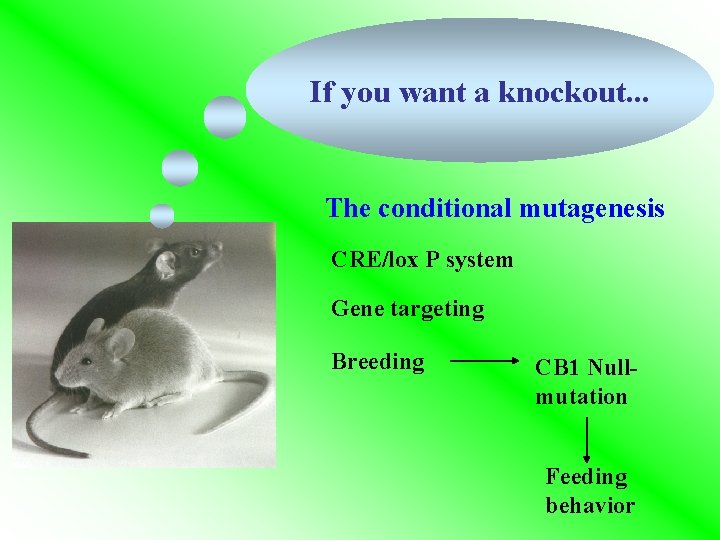
If you want a knockout. . . The conditional mutagenesis CRE/lox P system Gene targeting Breeding CB 1 Nullmutation Feeding behavior
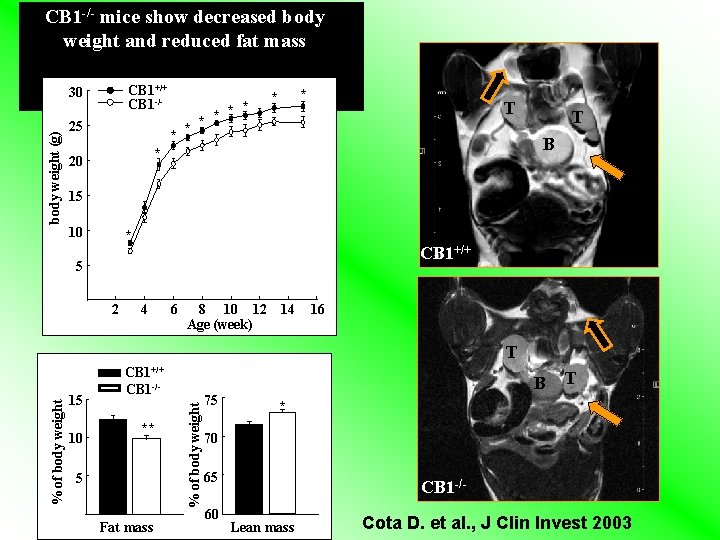
CB 1 -/- mice show decreased body weight and reduced fat mass CB 1+/+ CB 1 -/- body weight (g) 30 25 * * * * T B * 20 T 15 10 * CB 1+/+ 5 2 4 6 8 10 12 Age (week) 14 16 15 10 CB 1+/+ CB 1 -/** 5 Fat mass % of body weight T 75 B T * 70 65 60 CB 1 -/Lean mass Cota D. et al. , J Clin Invest 2003
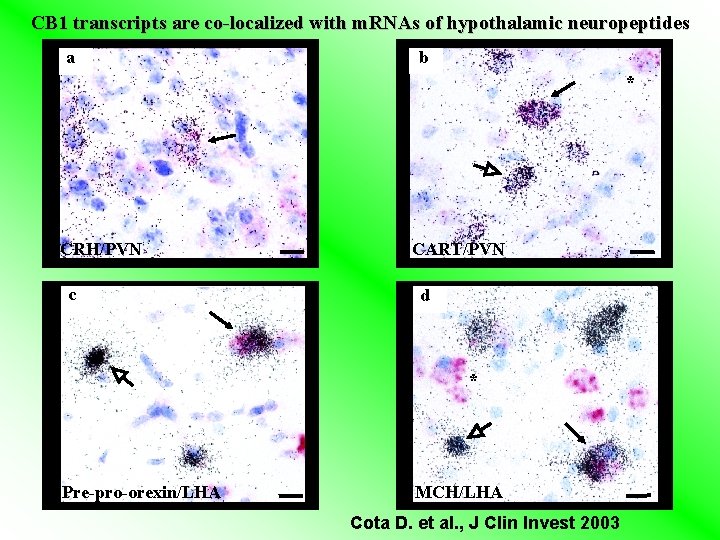
CB 1 transcripts are co-localized with m. RNAs of hypothalamic neuropeptides a b * CRH/PVN c CART/PVN d * Pre-pro-orexin/LHA MCH/LHA Cota D. et al. , J Clin Invest 2003
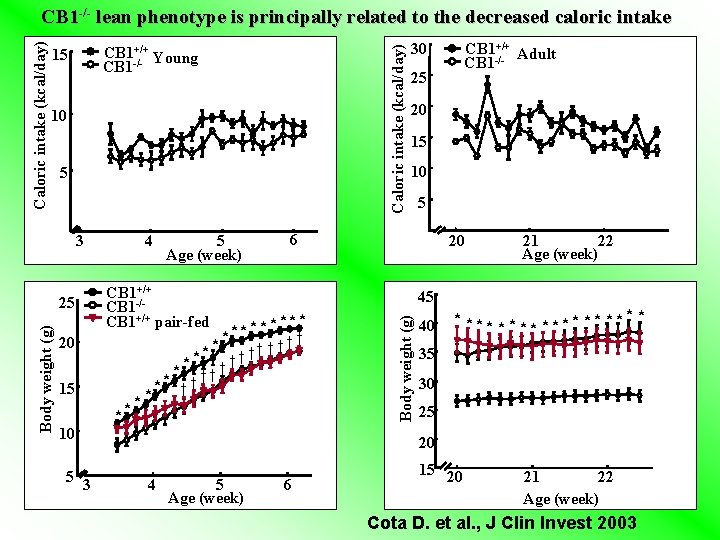
Caloric intake (kcal/day) CB 1+/+ Young CB 1 -/- 15 10 5 3 Body weight (g) 25 4 CB 1+/+ CB 1 -/CB 1+/+ pair-fed 20 15 5 Age (week) * ** † † * ** †† 20 15 10 5 20 45 * ** * * * †† †† † † CB 1+/+ Adult CB 1 -/- 25 6 10 5 3 30 Body weight (g) Caloric intake (kcal/day) CB 1 -/- lean phenotype is principally related to the decreased caloric intake 40 21 22 Age (week) ** * * ** 35 30 25 20 4 5 Age (week) 6 15 20 21 22 Age (week) Cota D. et al. , J Clin Invest 2003
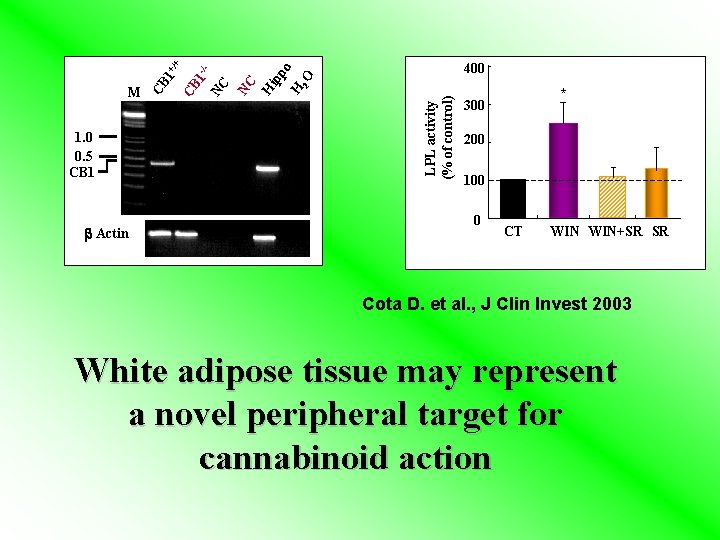
Actin pp o H 2 O Hi NC LPL activity (% of control) 1. 0 0. 5 CB 1 +/+ CB 1 -/NC M 400 * 300 200 100 0 CT WIN+SR SR Cota D. et al. , J Clin Invest 2003 White adipose tissue may represent a novel peripheral target for cannabinoid action
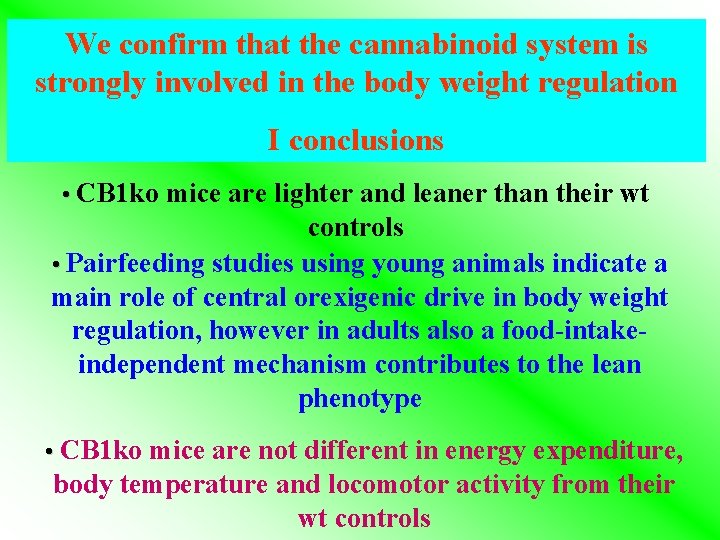
We confirm that the cannabinoid system is strongly involved in the body weight regulation I conclusions • CB 1 ko mice are lighter and leaner than their wt controls • Pairfeeding studies using young animals indicate a main role of central orexigenic drive in body weight regulation, however in adults also a food-intakeindependent mechanism contributes to the lean phenotype • CB 1 ko mice are not different in energy expenditure, body temperature and locomotor activity from their wt controls
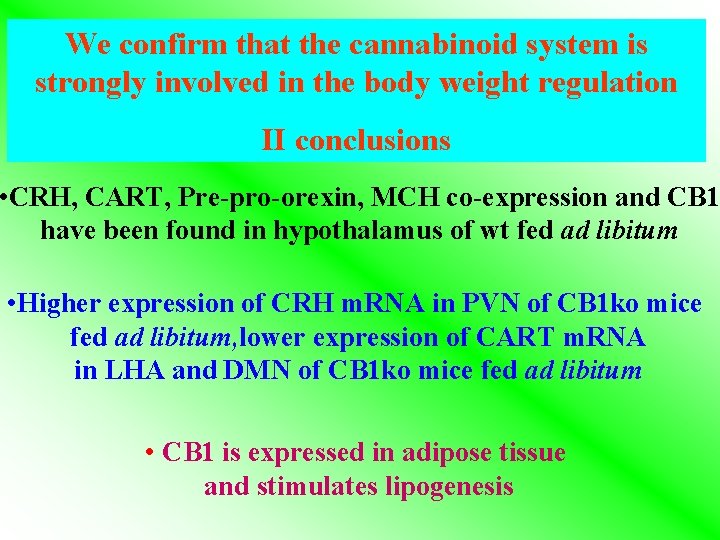
We confirm that the cannabinoid system is strongly involved in the body weight regulation II conclusions • CRH, CART, Pre-pro-orexin, MCH co-expression and CB 1 have been found in hypothalamus of wt fed ad libitum • Higher expression of CRH m. RNA in PVN of CB 1 ko mice fed ad libitum, lower expression of CART m. RNA in LHA and DMN of CB 1 ko mice fed ad libitum • CB 1 is expressed in adipose tissue and stimulates lipogenesis
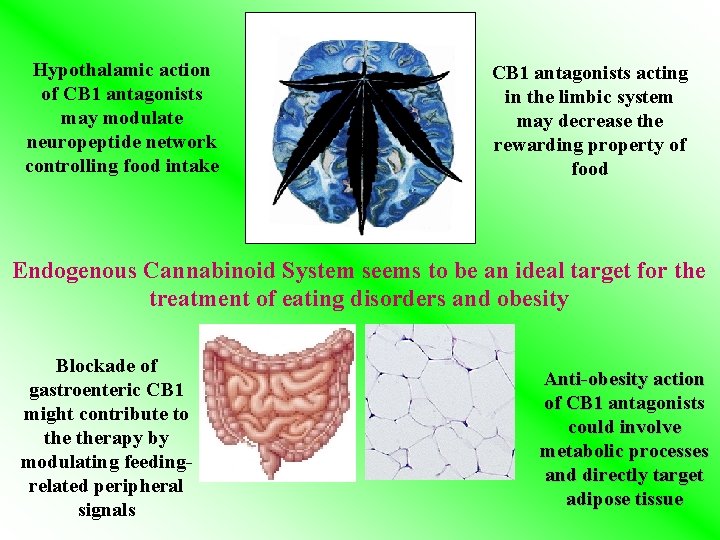
Hypothalamic action of CB 1 antagonists may modulate neuropeptide network controlling food intake CB 1 antagonists acting in the limbic system may decrease the rewarding property of food Endogenous Cannabinoid System seems to be an ideal target for the treatment of eating disorders and obesity Blockade of gastroenteric CB 1 might contribute to therapy by modulating feedingrelated peripheral signals Anti-obesity action of CB 1 antagonists could involve metabolic processes and directly target adipose tissue
The cannabinoid system is involved in several physiological functions and might be related to a general stress-recovery system. Such a variety of effects was concisely summarized by a recent statement by Di Marzo: “…. . FEEL LESS PAIN, CONTROL YOUR MOVEMENT, RELAX, EAT, FORGET, SLEEP AND PROTECT. ” Di Marzo et al. Trends Neurosc, 1998