Key signatures Key sigs as rules Order of


- Slides: 18
Key signatures Key sigs as rules Order of sharps/flats Circle of 5 ths Enharmonic keys
Any pitch can be Do. • We move Do around to accommodate ranges of various instruments, quality of sound, and personal preference. • “Minuet in G” – key of G major. G is Do. • Beethoven’s Symphony No. 2 in D Major – D is Do.
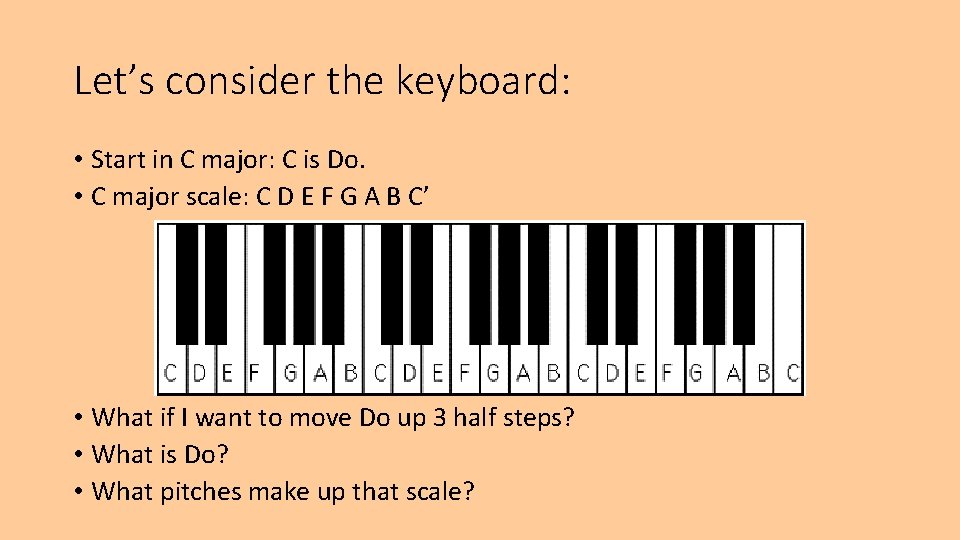
Let’s consider the keyboard: • Start in C major: C is Do. • C major scale: C D E F G A B C’ • What if I want to move Do up 3 half steps? • What is Do? • What pitches make up that scale?
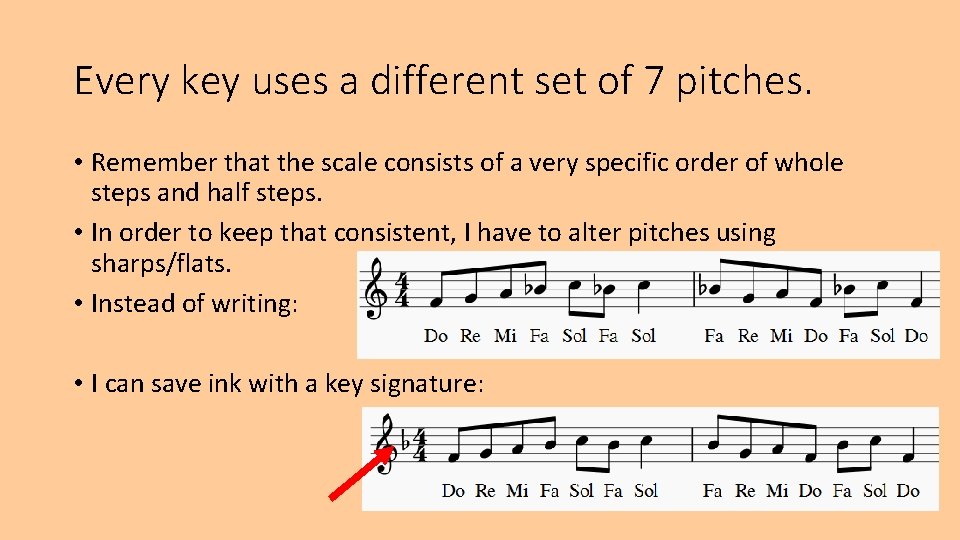
Every key uses a different set of 7 pitches. • Remember that the scale consists of a very specific order of whole steps and half steps. • In order to keep that consistent, I have to alter pitches using sharps/flats. • Instead of writing: • I can save ink with a key signature:
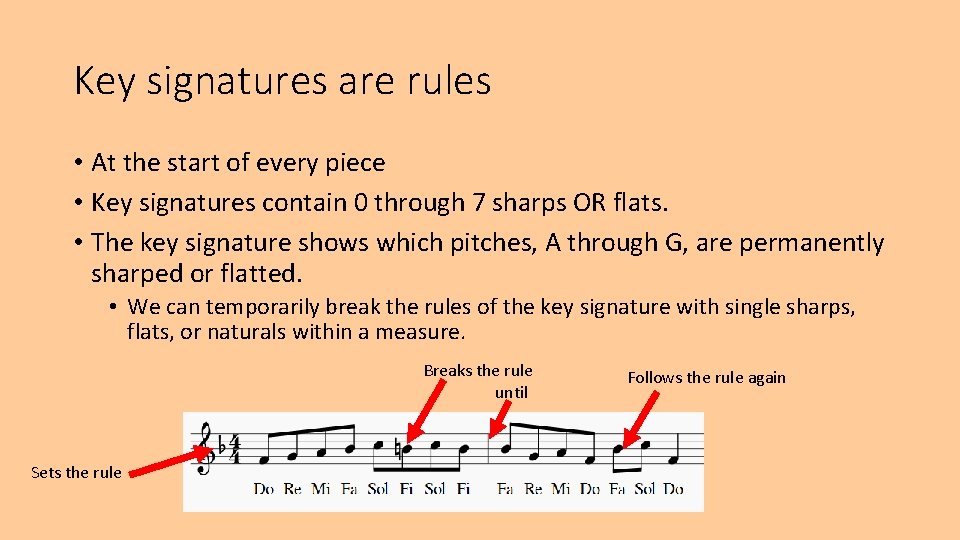
Key signatures are rules • At the start of every piece • Key signatures contain 0 through 7 sharps OR flats. • The key signature shows which pitches, A through G, are permanently sharped or flatted. • We can temporarily break the rules of the key signature with single sharps, flats, or naturals within a measure. Breaks the rule until Sets the rule Follows the rule again
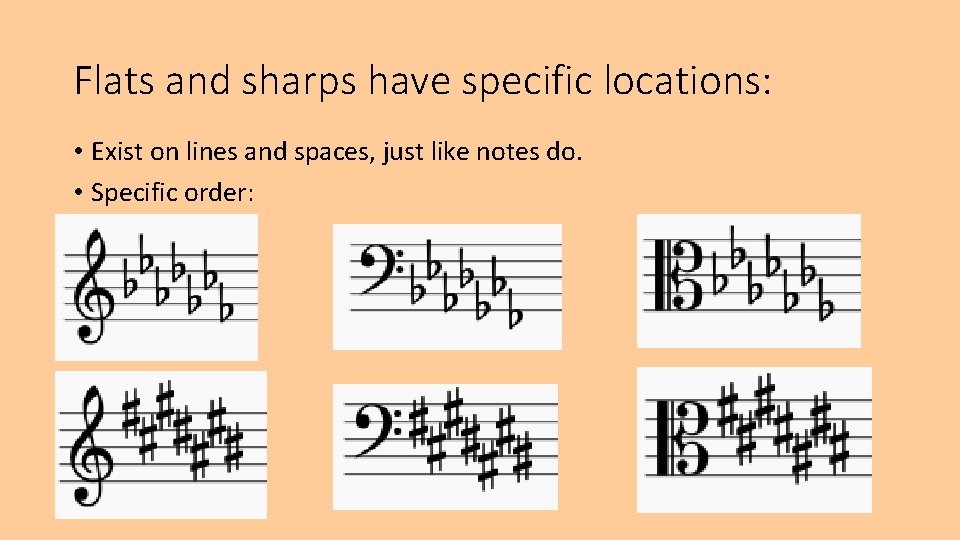
Flats and sharps have specific locations: • Exist on lines and spaces, just like notes do. • Specific order:
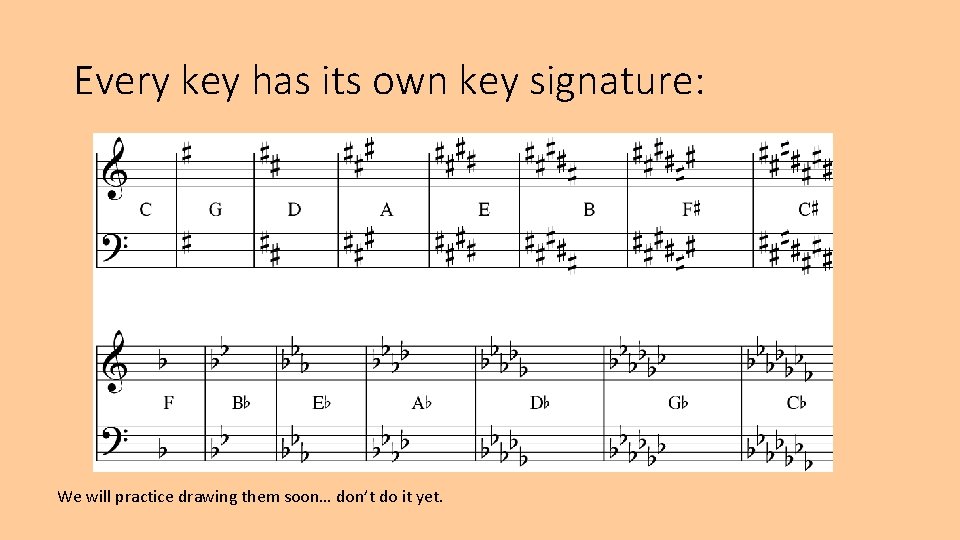
Every key has its own key signature: We will practice drawing them soon… don’t do it yet.
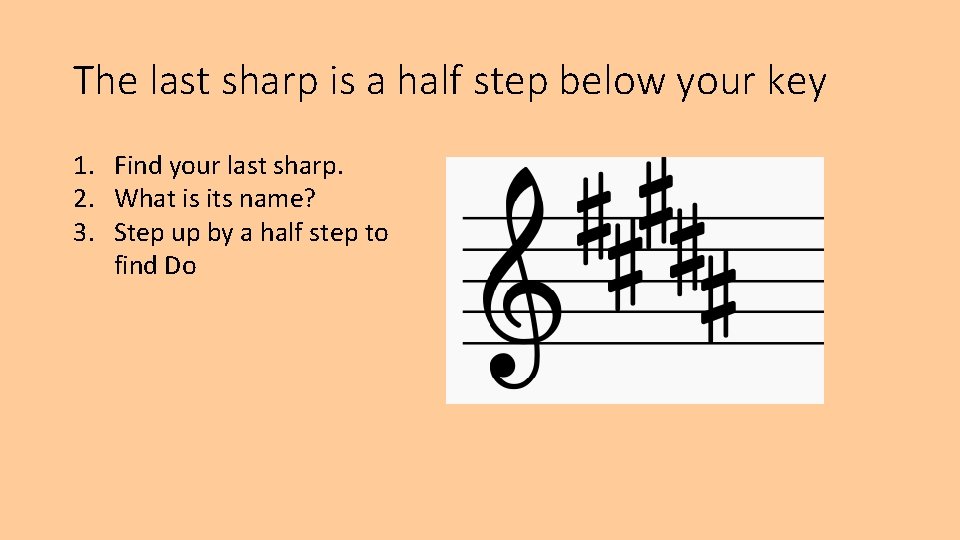
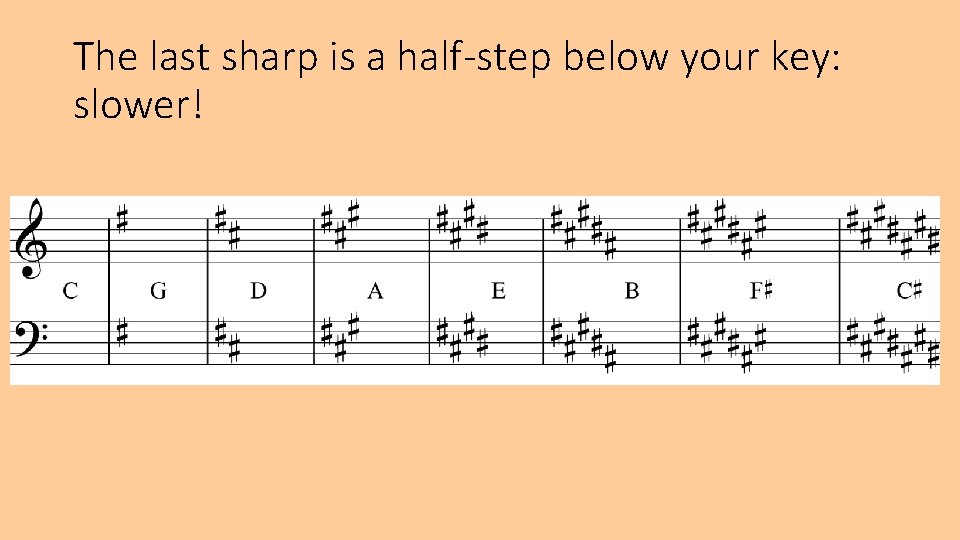
Key signatures with sharps • C major has an empty key signature: 0 sharps, 0 flats. • Keys of G, D, A, E, B, F#, C#, G# major • Order of sharps is always the same: FCGDAEB • The last sharp is a half step below your key.
The last sharp is a half step below your key 1. Find your last sharp. 2. What is its name? 3. Step up by a half step to find Do
The last sharp is a half-step below your key: slower!
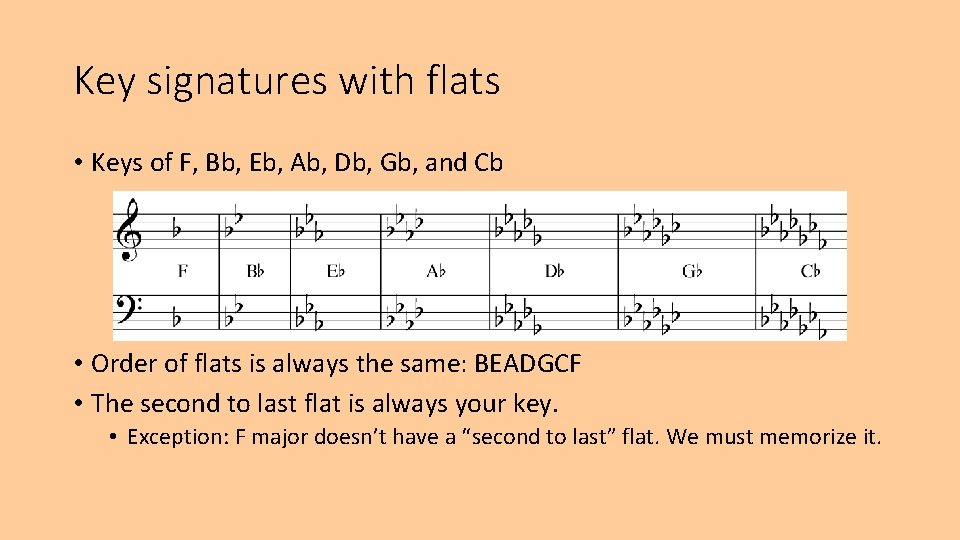
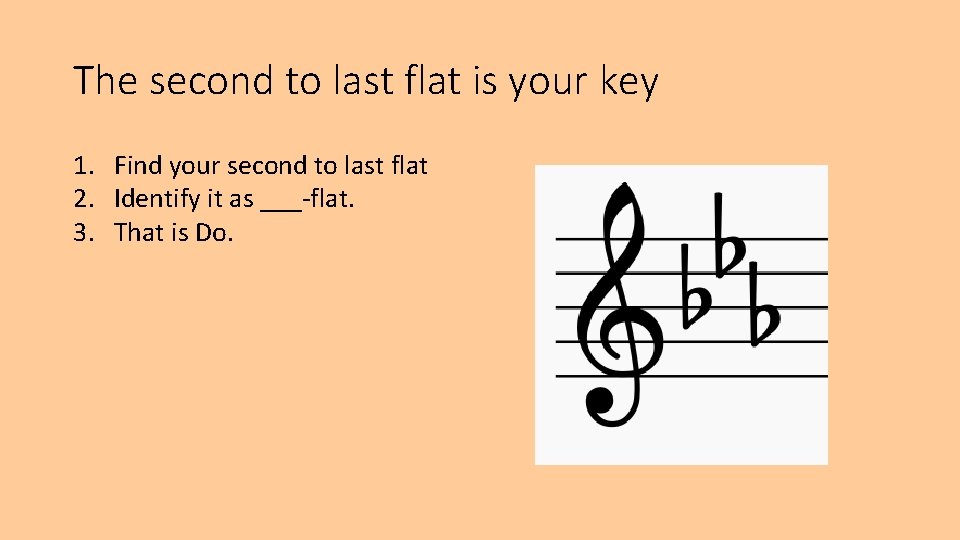
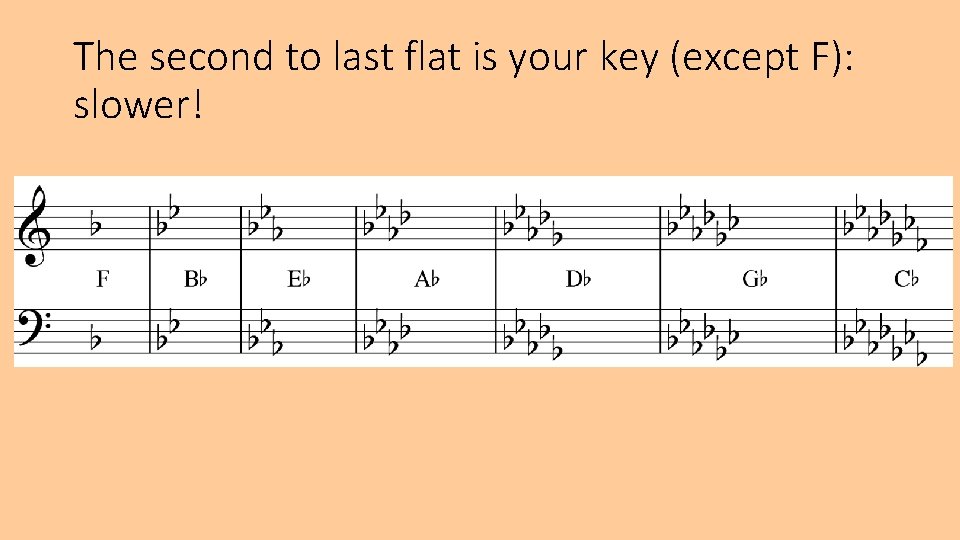
Key signatures with flats • Keys of F, Bb, Eb, Ab, Db, Gb, and Cb • Order of flats is always the same: BEADGCF • The second to last flat is always your key. • Exception: F major doesn’t have a “second to last” flat. We must memorize it.
The second to last flat is your key 1. Find your second to last flat 2. Identify it as ___-flat. 3. That is Do.
The second to last flat is your key (except F): slower!
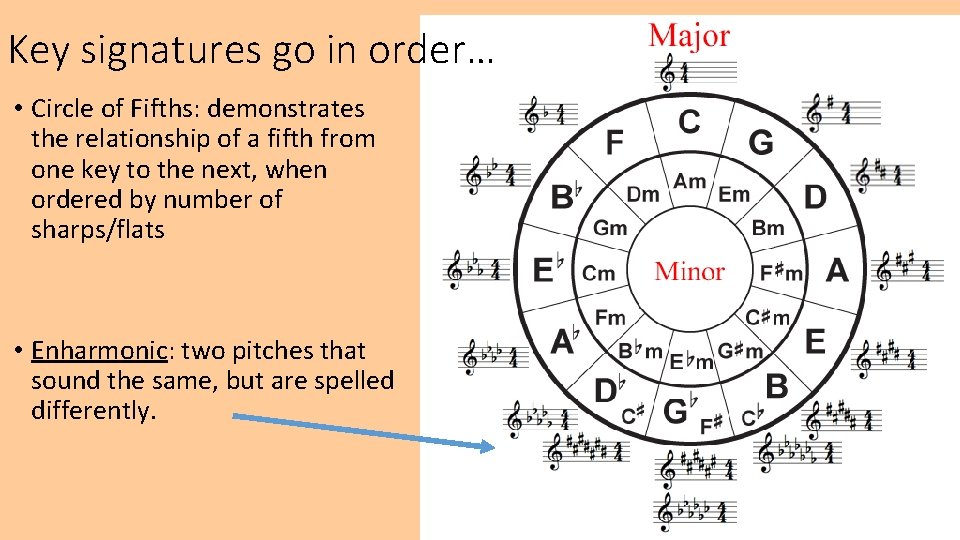
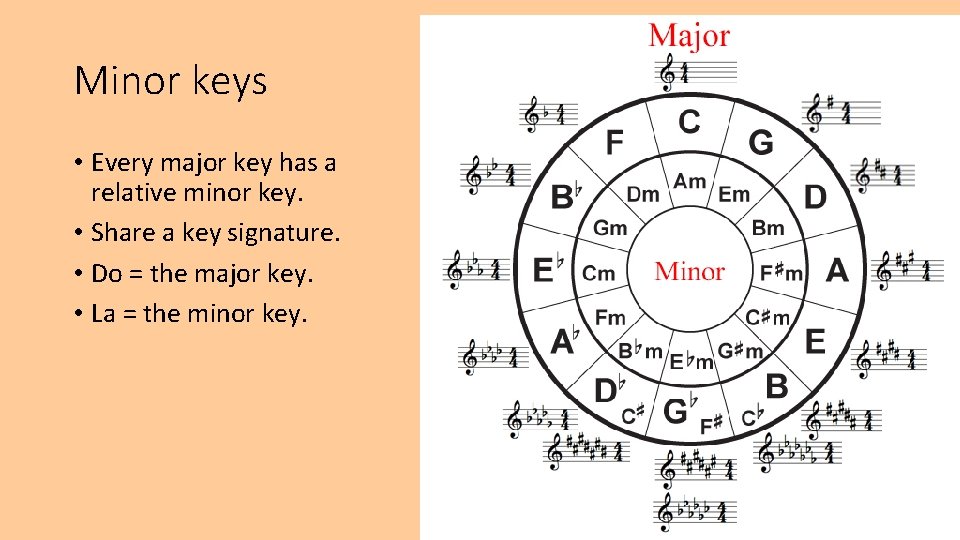
Key signatures go in order… • Circle of Fifths: demonstrates the relationship of a fifth from one key to the next, when ordered by number of sharps/flats • Enharmonic: two pitches that sound the same, but are spelled differently.
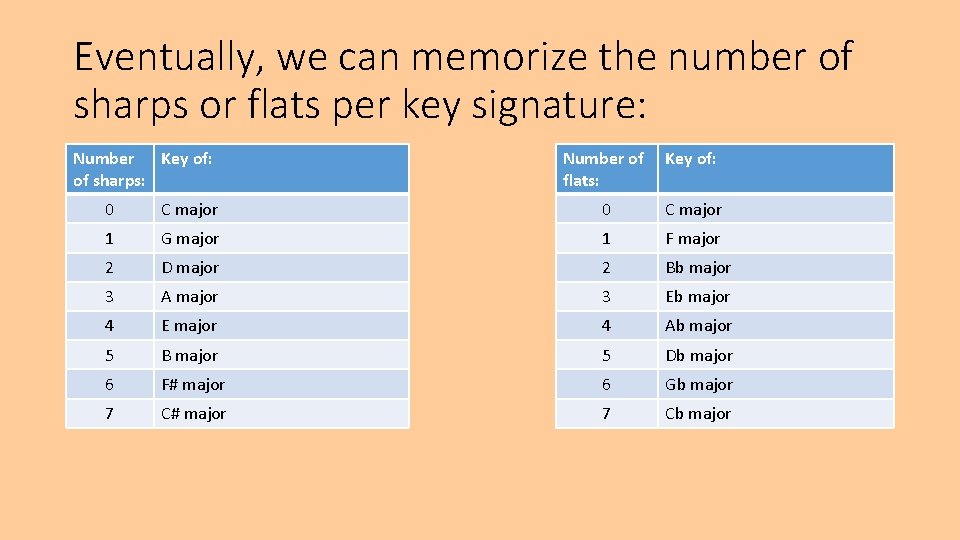
Eventually, we can memorize the number of sharps or flats per key signature: Number Key of: of sharps: Number of flats: Key of: 0 C major 1 G major 1 F major 2 D major 2 Bb major 3 A major 3 Eb major 4 E major 4 Ab major 5 B major 5 Db major 6 F# major 6 Gb major 7 C# major 7 Cb major
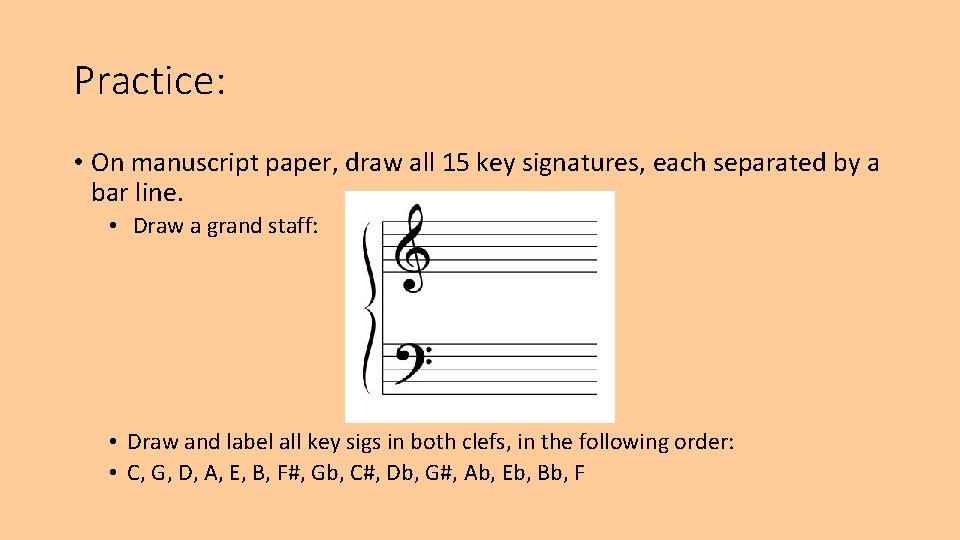
Practice: • On manuscript paper, draw all 15 key signatures, each separated by a bar line. • Draw a grand staff: • Draw and label all key sigs in both clefs, in the following order: • C, G, D, A, E, B, F#, Gb, C#, Db, G#, Ab, Eb, Bb, F
Minor keys • Every major key has a relative minor key. • Share a key signature. • Do = the major key. • La = the minor key.
How to label major vs. minor keys • Major keys: capital letters, followed by “major” or “maj. ” • Minor keys: capital letters, must be followed by “minor, ” “min, ” or lower-case “m” • If a capital letter is presented alone, assume it is signifying a major key.