
JOCaml 5 jeanjacques levyinria fr pauillac inria frlevyqinghuajocaml
- Slides: 17
J-O-Caml (5) jean-jacques. levy@inria. fr pauillac. inria. fr/~levy/qinghua/j-o-caml Qinghua, December 3
Plan of this class • • solution of exercices modules and signatures parameterised modules, functors manipulating terms as AST (moved to next lecture) duality between objects and modules primitives for concurrency ariane 5 story (end) overall structure of labeling program
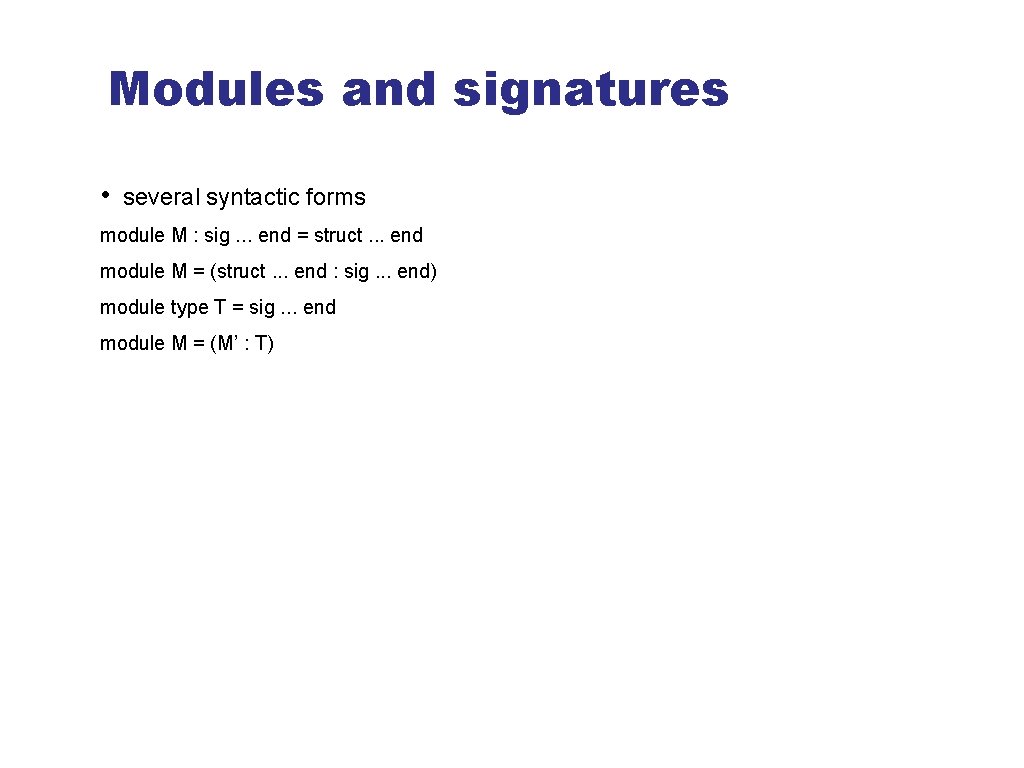
Modules and signatures • several syntactic forms module M : sig. . . end = struct. . . end module M = (struct. . . end : sig. . . end) module type T = sig. . . end module M = (M’ : T)
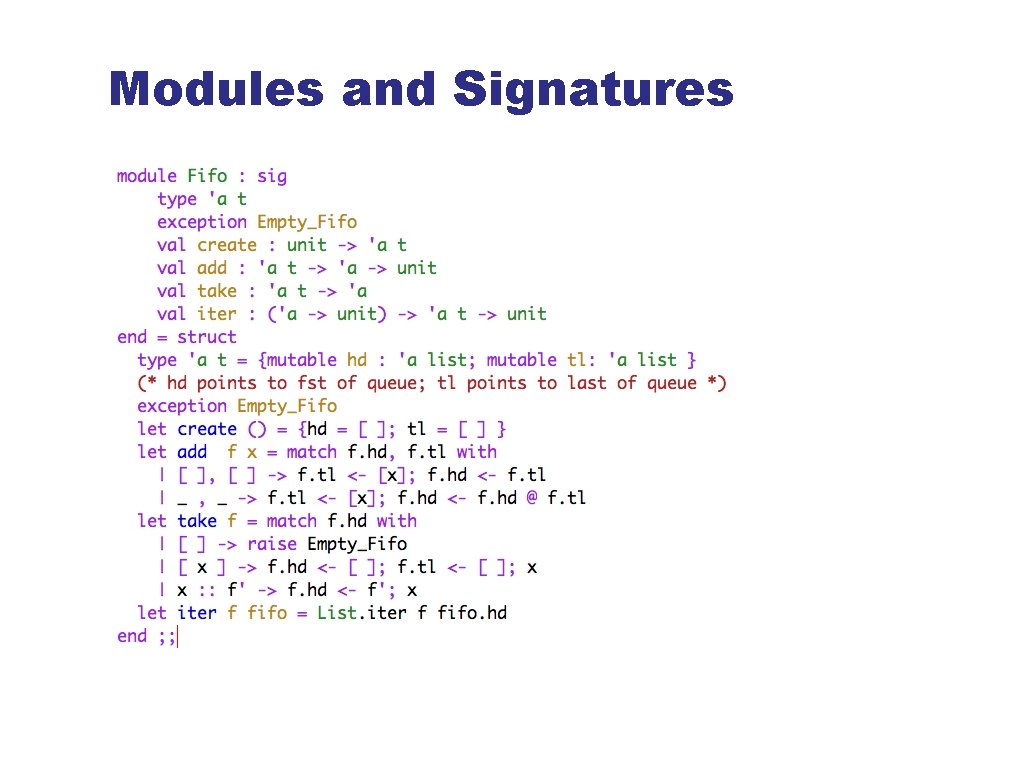
Modules and Signatures
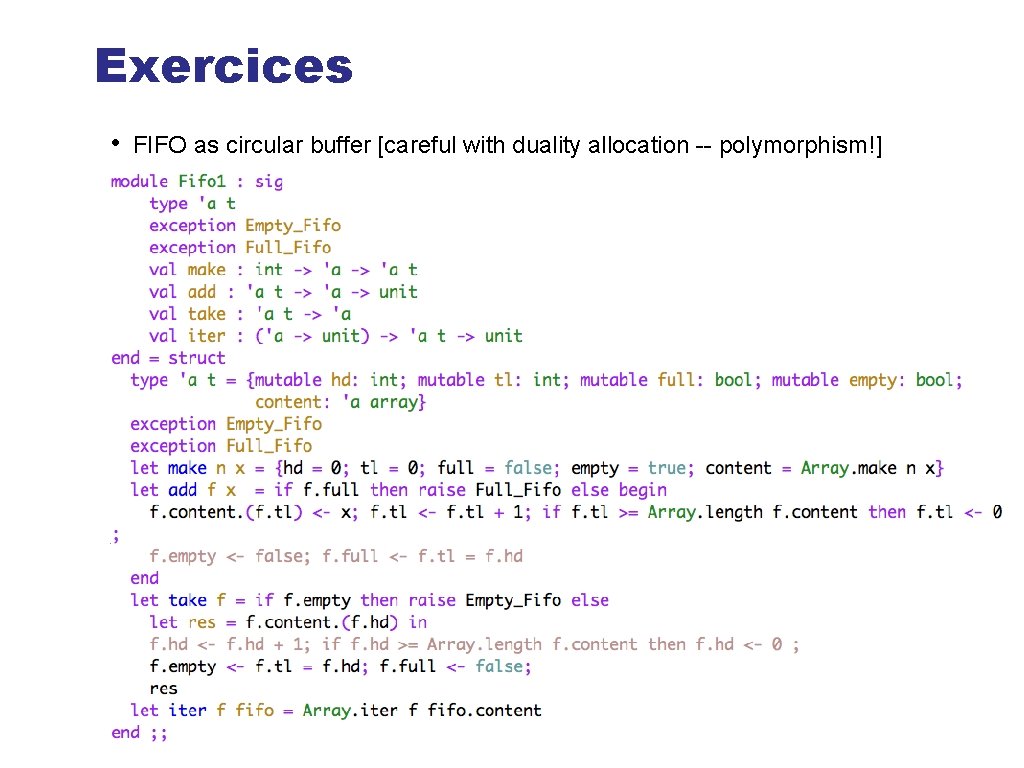
Exercices • FIFO as circular buffer [careful with duality allocation -- polymorphism!]
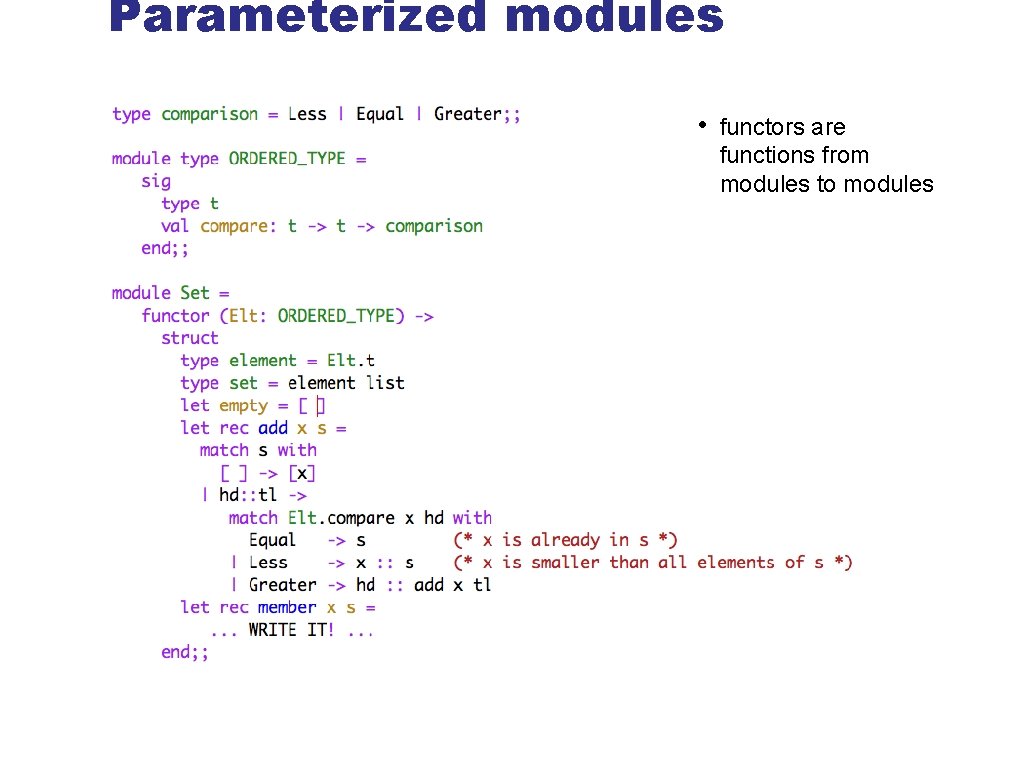
Parameterized modules • functors are functions from modules to modules
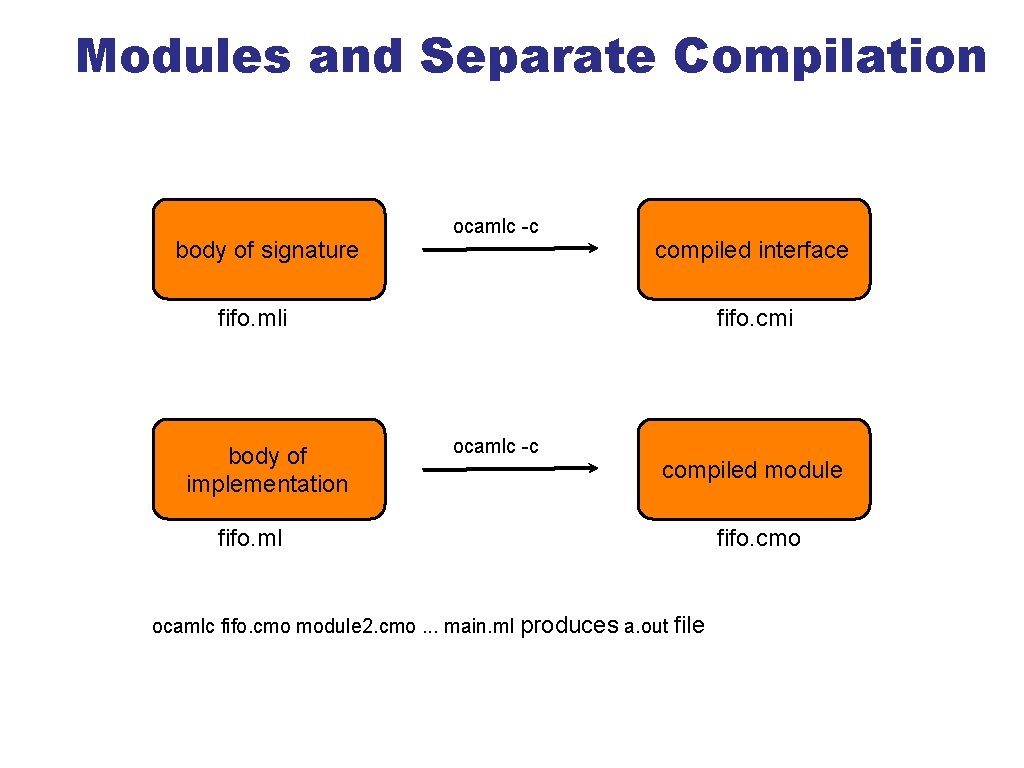
Modules and Separate Compilation body of signature ocamlc -c compiled interface fifo. mli body of implementation fifo. cmi ocamlc -c compiled module fifo. ml ocamlc fifo. cmo module 2. cmo. . . main. ml produces a. out file fifo. cmo
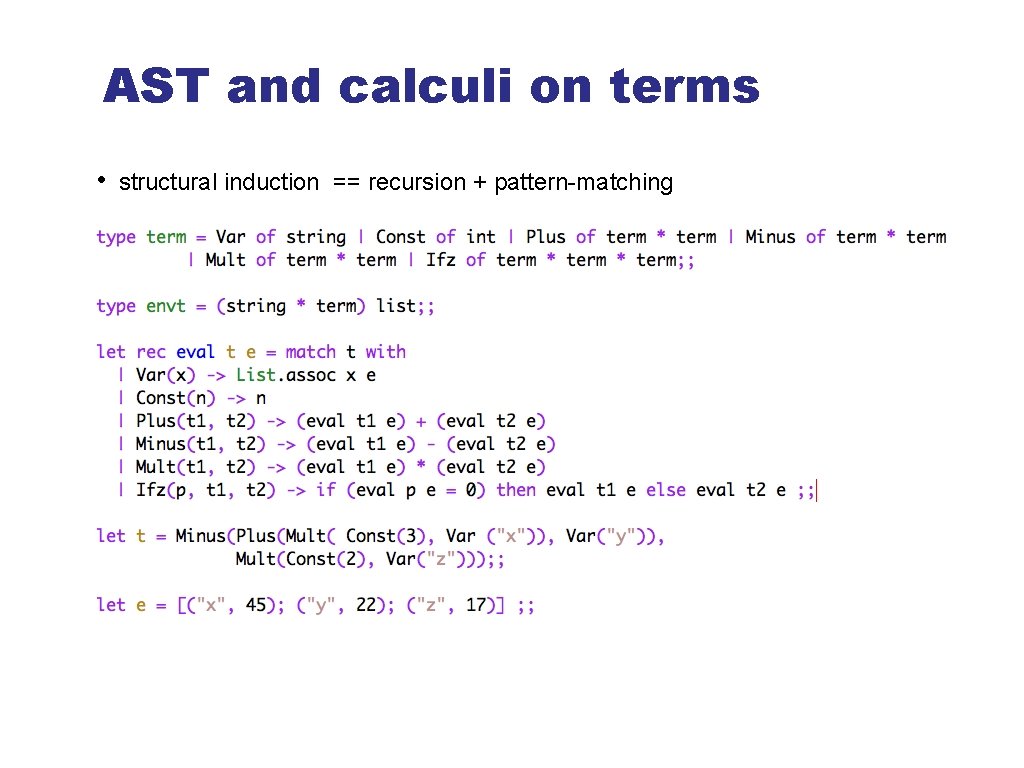
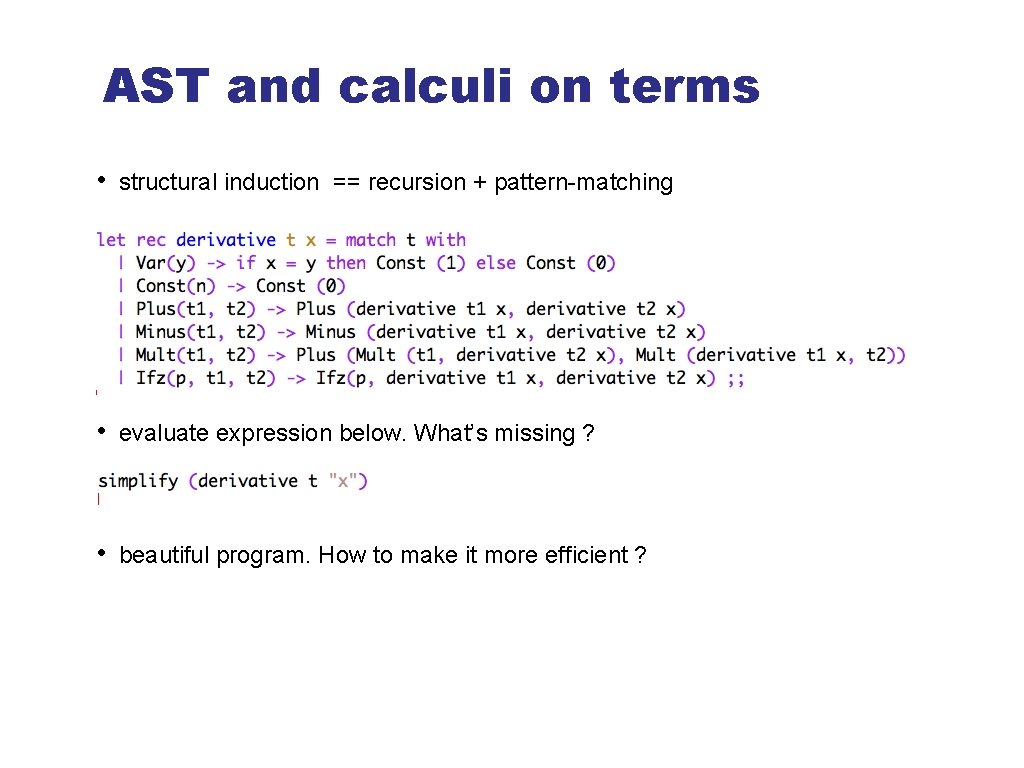
AST and calculi on terms • structural induction == recursion + pattern-matching
AST and calculi on terms • structural induction == recursion + pattern-matching • evaluate expression below. What’s missing ? • beautiful program. How to make it more efficient ?
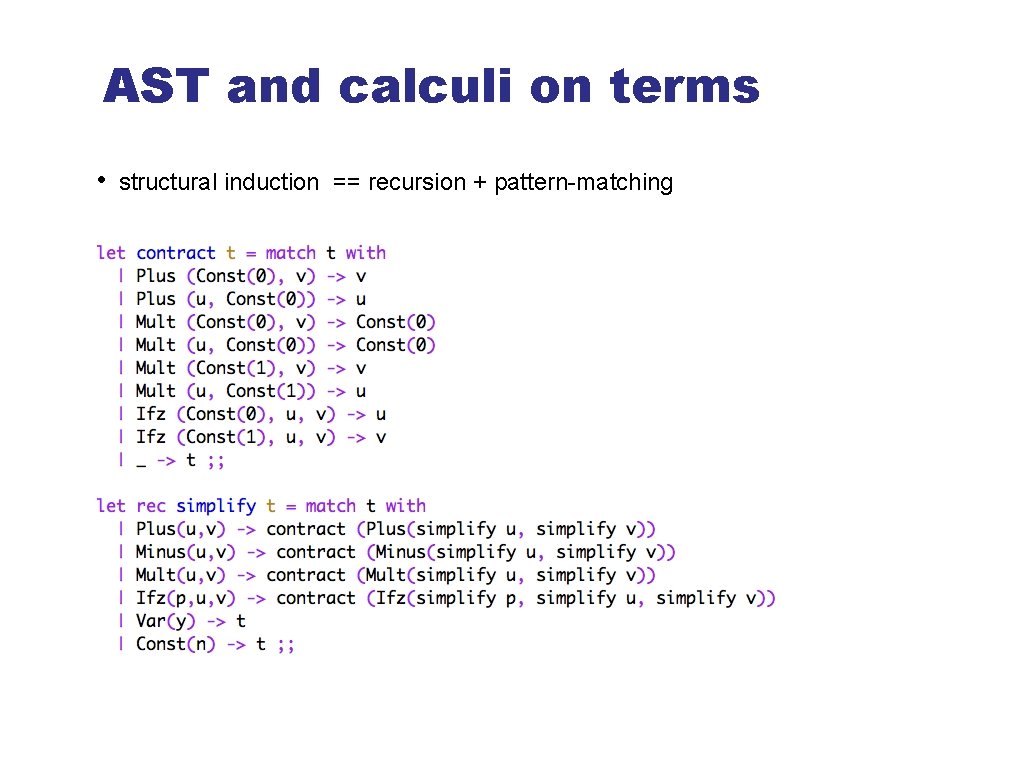
AST and calculi on terms • structural induction == recursion + pattern-matching
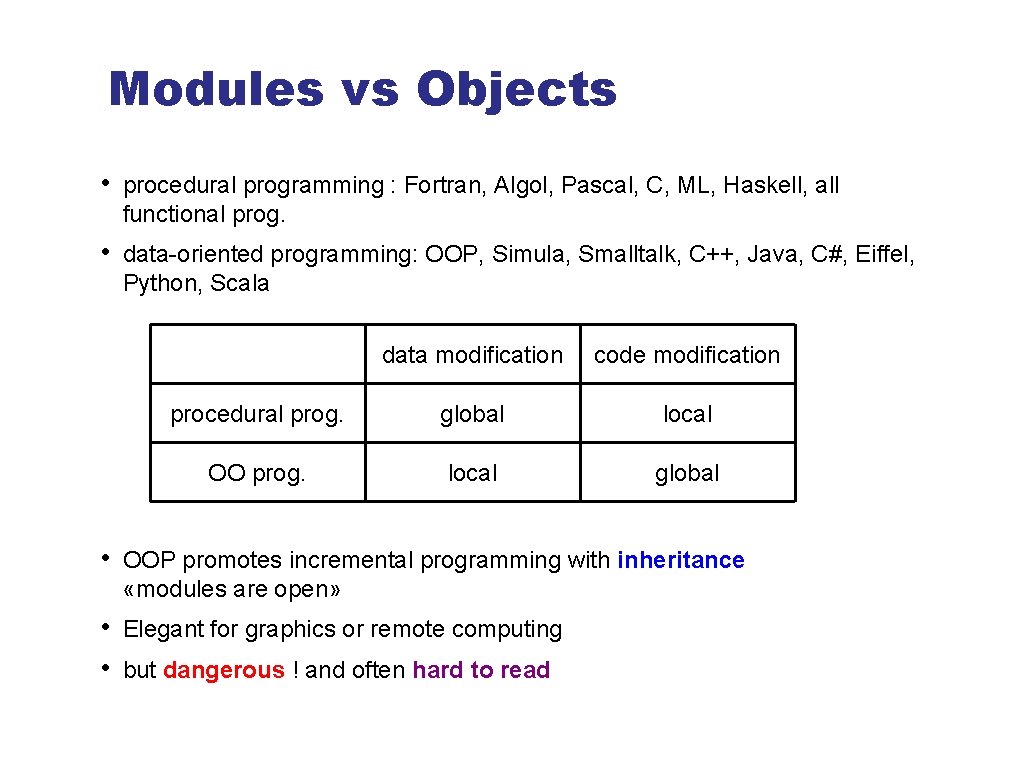
Modules vs Objects • procedural programming : Fortran, Algol, Pascal, C, ML, Haskell, all functional prog. • data-oriented programming: OOP, Simula, Smalltalk, C++, Java, C#, Eiffel, Python, Scala data modification code modification procedural prog. global local OO prog. local global • OOP promotes incremental programming with inheritance «modules are open» • • Elegant for graphics or remote computing but dangerous ! and often hard to read
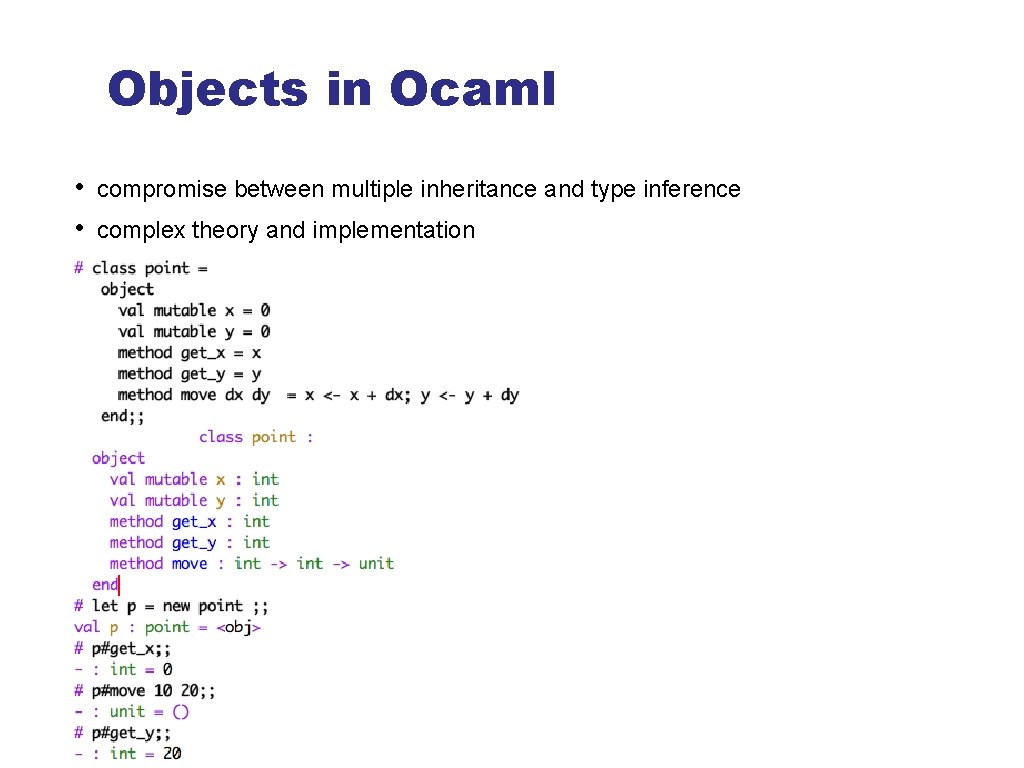
Objects in Ocaml • • compromise between multiple inheritance and type inference complex theory and implementation
Combien d’objets dans une image? Jean-Jacques Lévy INRIA
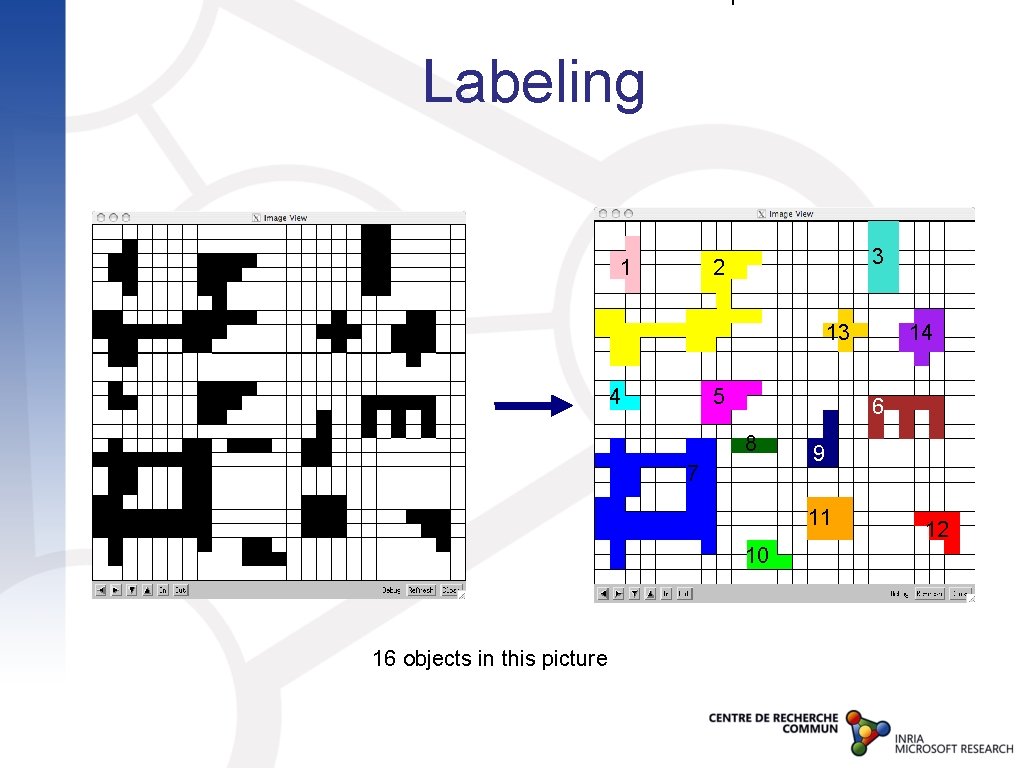
1 Labeling 1 3 2 13 4 5 6 8 7 9 11 10 16 objects in this picture 14 12
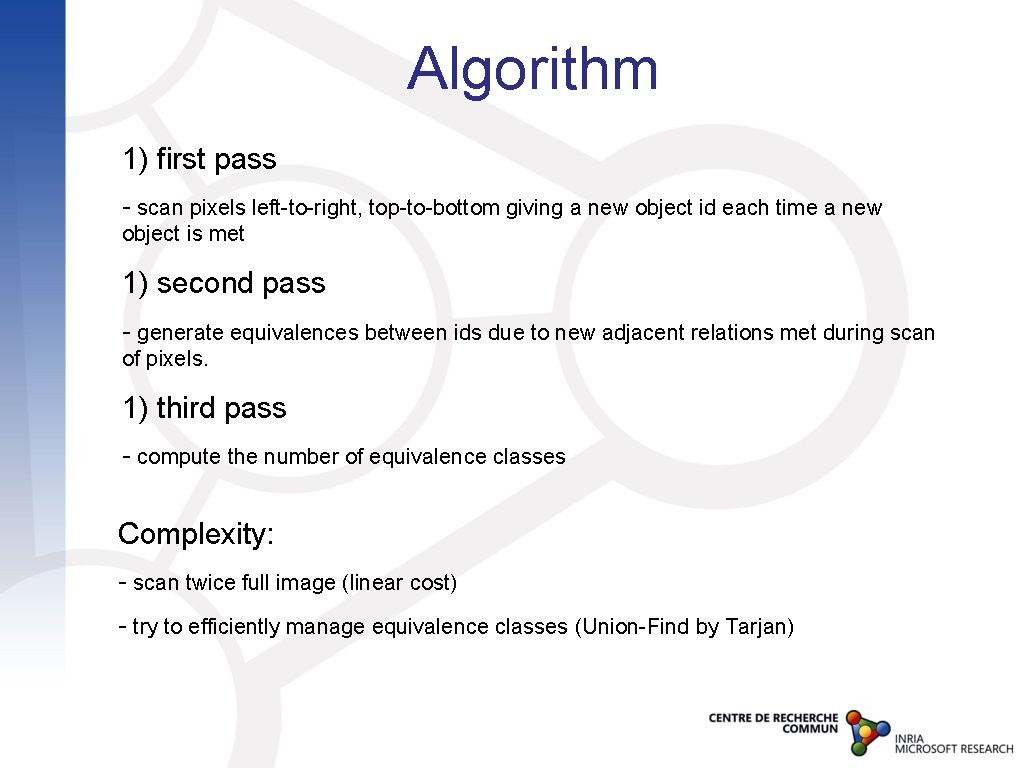
Algorithm 1) first pass - scan pixels left-to-right, top-to-bottom giving a new object id each time a new object is met 1) second pass - generate equivalences between ids due to new adjacent relations met during scan of pixels. 1) third pass - compute the number of equivalence classes Complexity: - scan twice full image (linear cost) - try to efficiently manage equivalence classes (Union-Find by Tarjan)
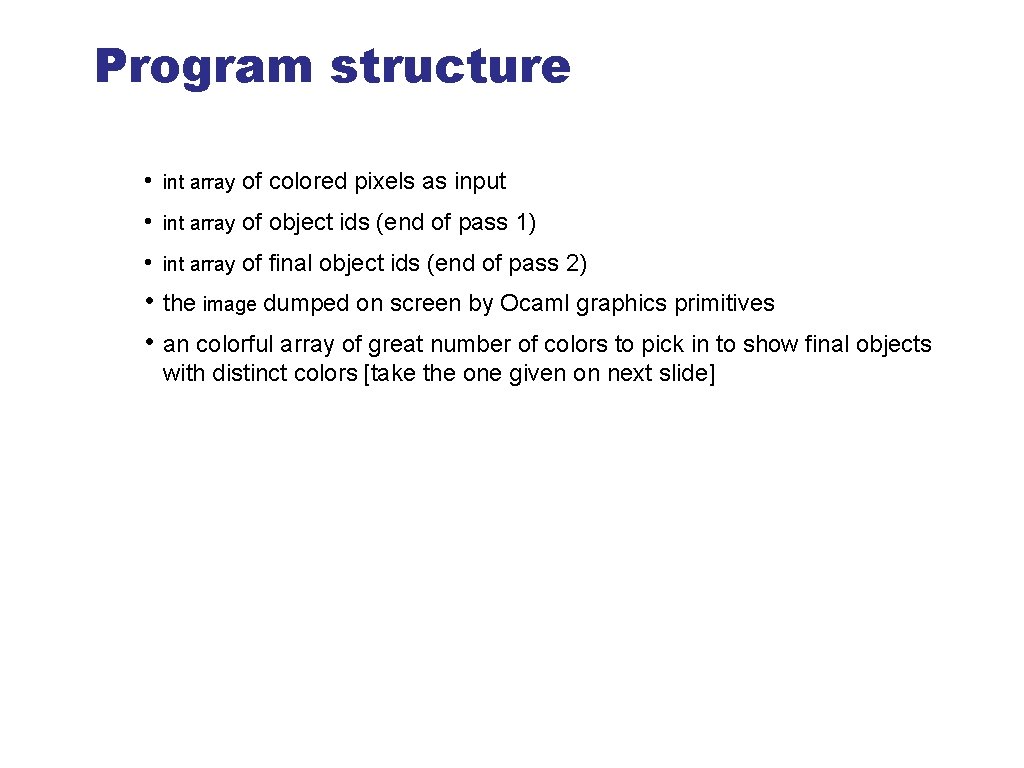
Program structure • int array of colored pixels as input • int array of object ids (end of pass 1) • int array of final object ids (end of pass 2) • the image dumped on screen by Ocaml graphics primitives • an colorful array of great number of colors to pick in to show final objects with distinct colors [take the one given on next slide]
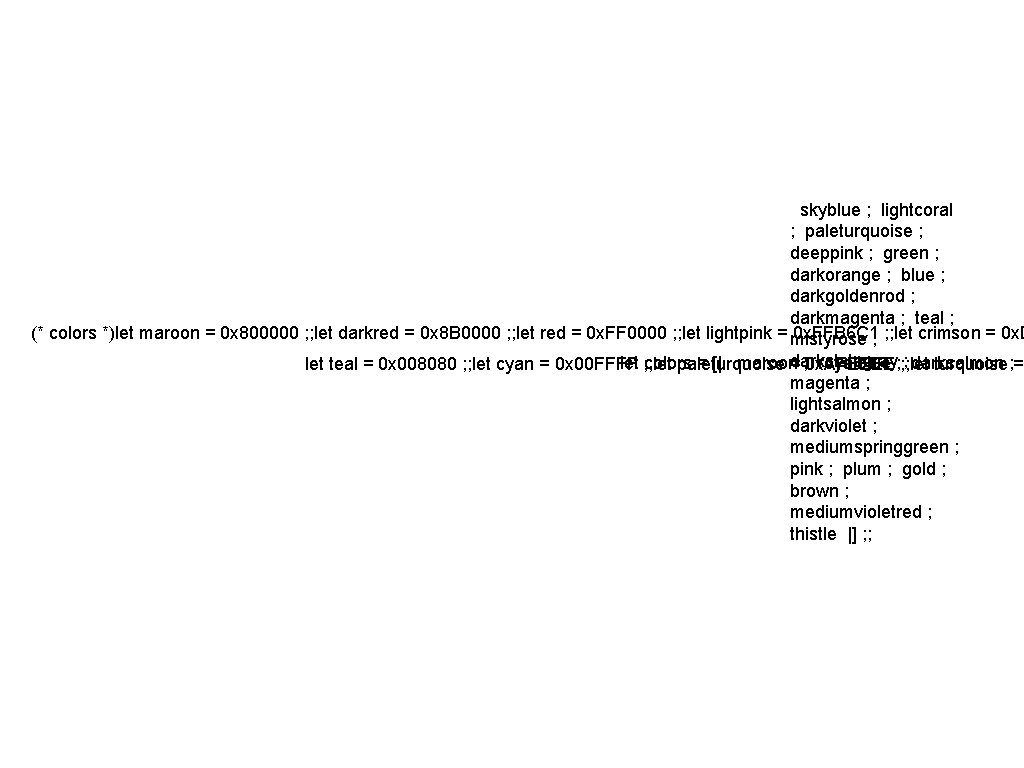
skyblue ; lightcoral ; paleturquoise ; deeppink ; green ; darkorange ; blue ; darkgoldenrod ; darkmagenta ; teal ; (* colors *)let maroon = 0 x 800000 ; ; let darkred = 0 x 8 B 0000 ; ; let red = 0 x. FF 0000 ; ; let lightpink = mistyrose 0 x. FFB 6 C 1; ; ; let crimson = 0 x. D darkslategray ; darksalmon let ; ; let colors = [| maroon= ; 0 x. AFEEEE royalblue ; ; ; let teal = 0 x 008080 ; ; let cyan = 0 x 00 FFFF paleturquoise ; =d magenta ; lightsalmon ; darkviolet ; mediumspringgreen ; pink ; plum ; gold ; brown ; mediumvioletred ; thistle |] ; ;