Journal Do you like seafood Why or Why


- Slides: 24
Journal • Do you like seafood? Why or Why not? Which types if you do?
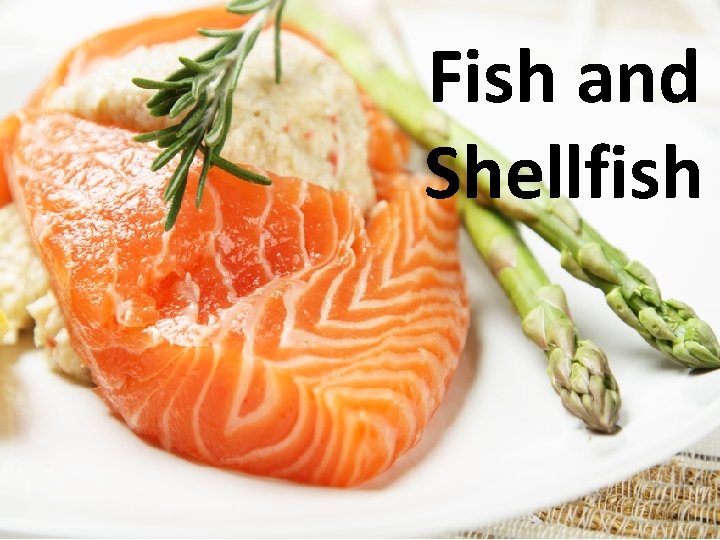
Fish and Shellfish
Classification of Fish and Shellfish 1. Finfish – they have fins and backbones A. Lean fish (aka white fish) – very lean fish with a white flesh i. Ex. Swordfish, haddock, cod B. Fat Fish – flesh that is fattier than lean fish, they are usually pink, yellow, or gray in color i. Ex. Mackerel, catfish, and salmon 2. Shellfish- shells instead of backbones A. Mollusks – soft bodies that are partially or fully covered by hard shells i. Ex. Oysters, clams, scallops
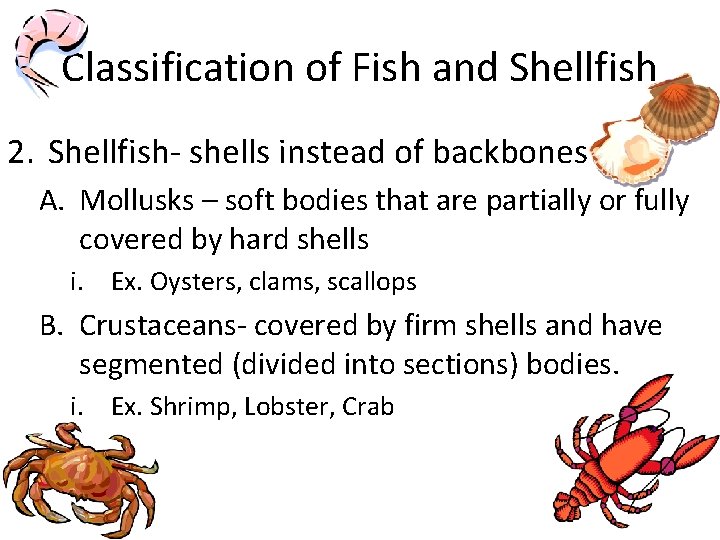
Classification of Fish and Shellfish 2. Shellfish- shells instead of backbones A. Mollusks – soft bodies that are partially or fully covered by hard shells i. Ex. Oysters, clams, scallops B. Crustaceans- covered by firm shells and have segmented (divided into sections) bodies. i. Ex. Shrimp, Lobster, Crab
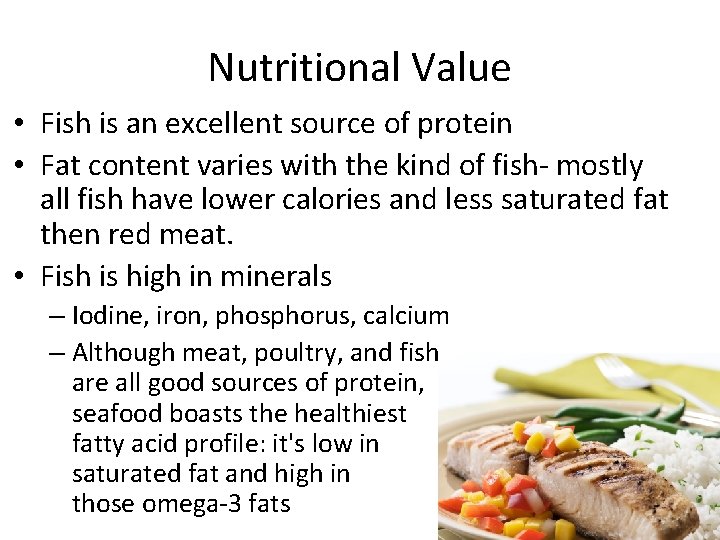
Nutritional Value • Fish is an excellent source of protein • Fat content varies with the kind of fish- mostly all fish have lower calories and less saturated fat then red meat. • Fish is high in minerals – Iodine, iron, phosphorus, calcium – Although meat, poultry, and fish are all good sources of protein, seafood boasts the healthiest fatty acid profile: it's low in saturated fat and high in those omega-3 fats
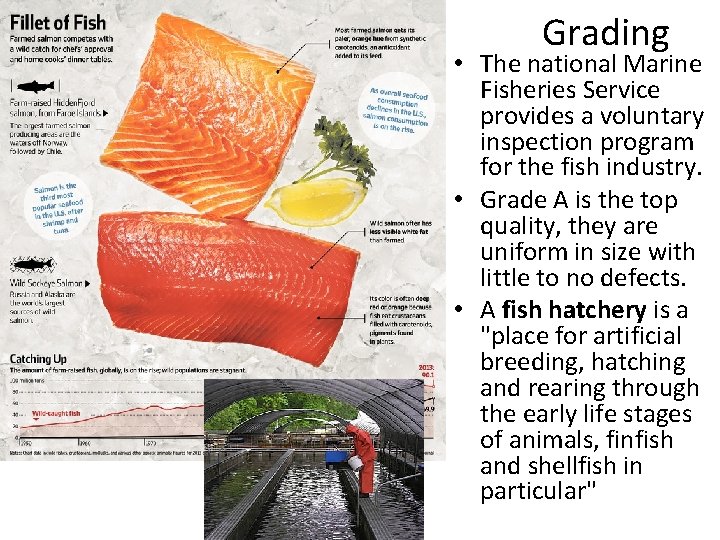
Grading • The national Marine Fisheries Service provides a voluntary inspection program for the fish industry. • Grade A is the top quality, they are uniform in size with little to no defects. • A fish hatchery is a "place for artificial breeding, hatching and rearing through the early life stages of animals, finfish and shellfish in particular"
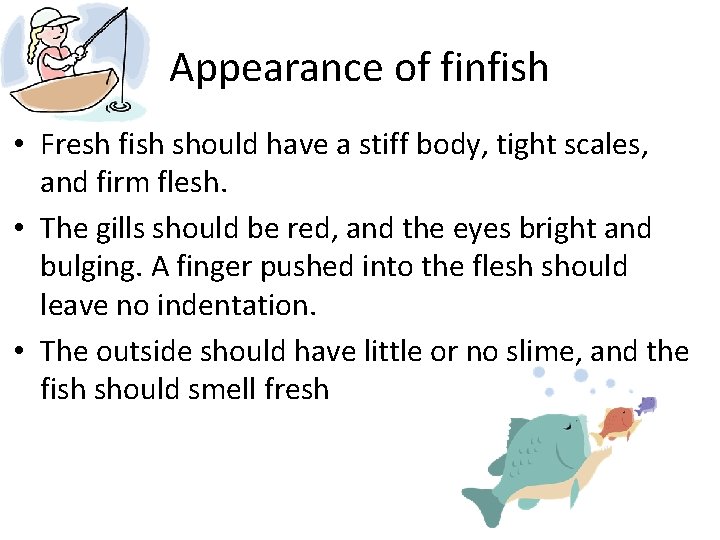
Appearance of finfish • Fresh fish should have a stiff body, tight scales, and firm flesh. • The gills should be red, and the eyes bright and bulging. A finger pushed into the flesh should leave no indentation. • The outside should have little or no slime, and the fish should smell fresh
You can purchase fish whole, drawn, dressed, as a steak, or as a filet.
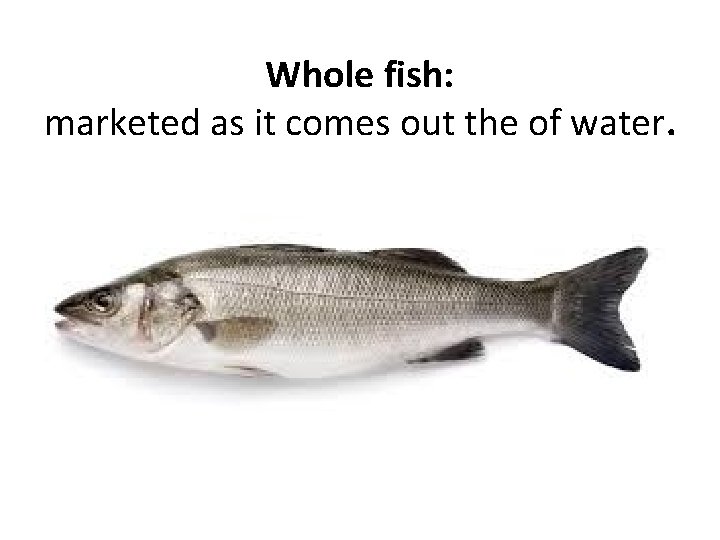
Whole fish: marketed as it comes out the of water.
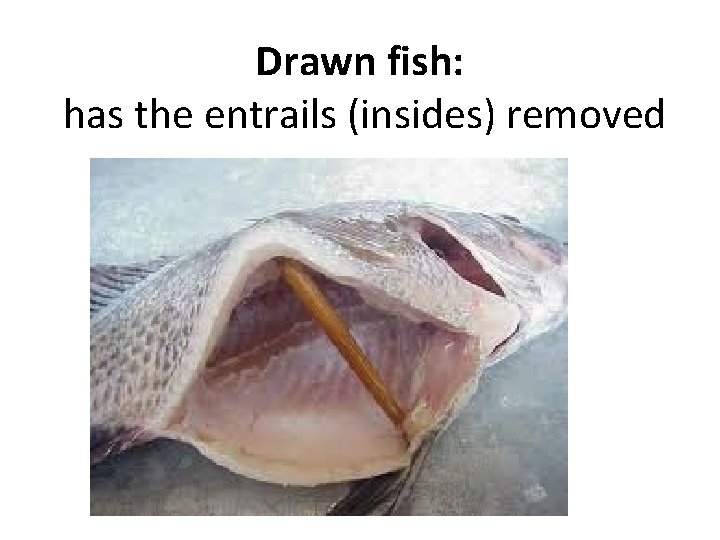
Drawn fish: has the entrails (insides) removed
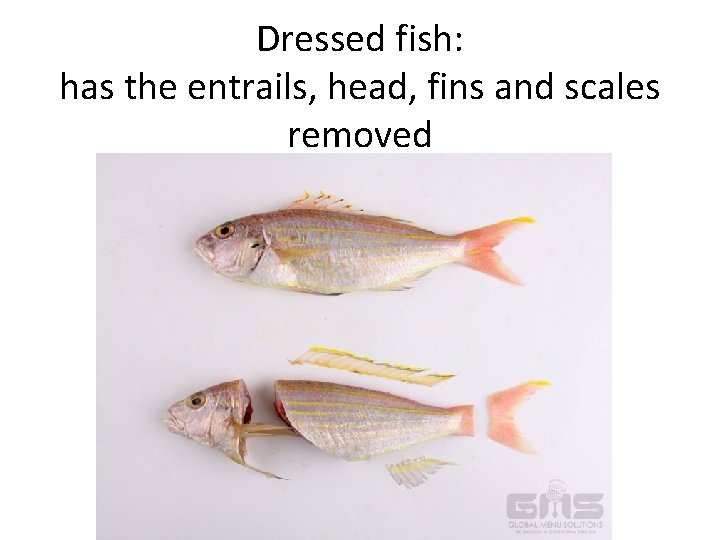
Dressed fish: has the entrails, head, fins and scales removed
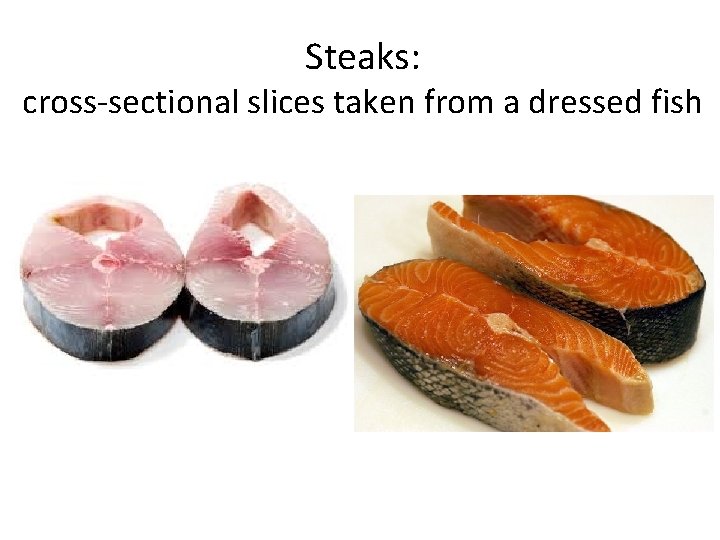
Steaks: cross-sectional slices taken from a dressed fish
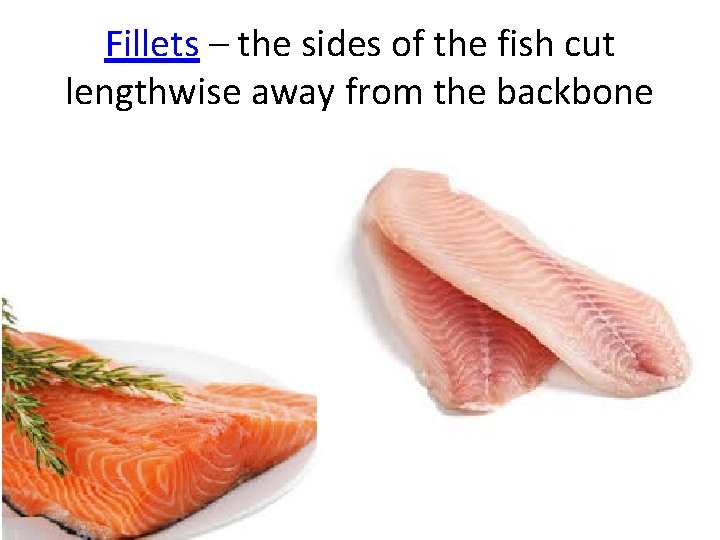
Fillets – the sides of the fish cut lengthwise away from the backbone
Shrimp • There are several varieties of shrimp. They differ in color and size when they are raw. • Most shrimp are sold without the head and thorax (middle division of the body). • The intestinal track appears as a dark streak that runs along one side of the shrimp. Shrimp sold without the intestinal tract are labeled as deveined shrimp. • Shrimp sizes are jumbo, large-medium, medium and small. • Available fresh, frozen, raw or cooked.
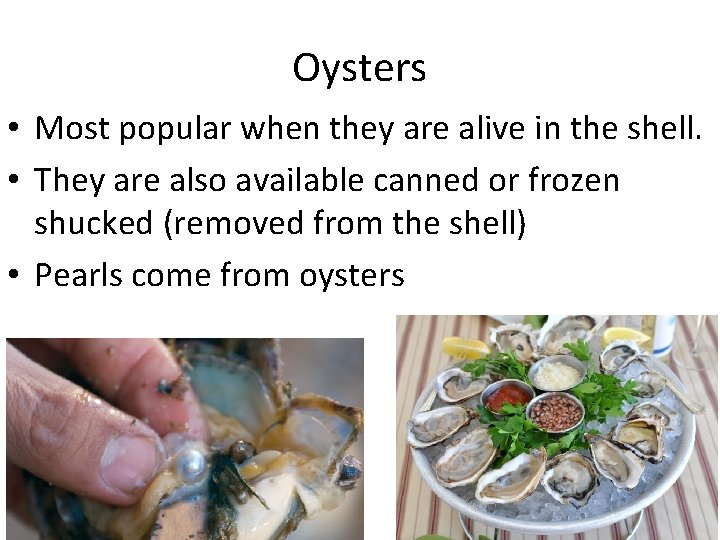
Oysters • Most popular when they are alive in the shell. • They are also available canned or frozen shucked (removed from the shell) • Pearls come from oysters
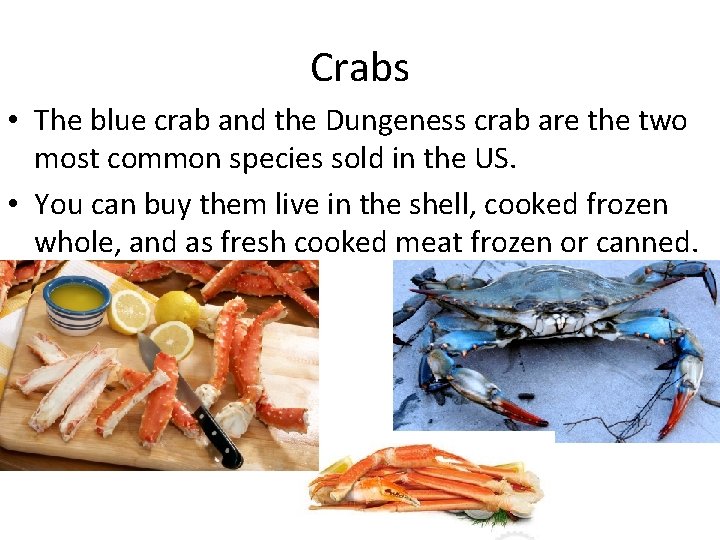
Crabs • The blue crab and the Dungeness crab are the two most common species sold in the US. • You can buy them live in the shell, cooked frozen whole, and as fresh cooked meat frozen or canned.
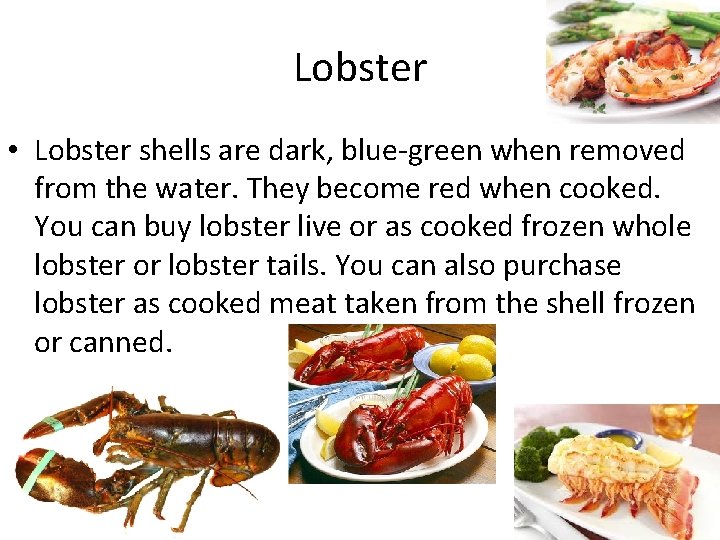
Lobster • Lobster shells are dark, blue-green when removed from the water. They become red when cooked. You can buy lobster live or as cooked frozen whole lobster or lobster tails. You can also purchase lobster as cooked meat taken from the shell frozen or canned.
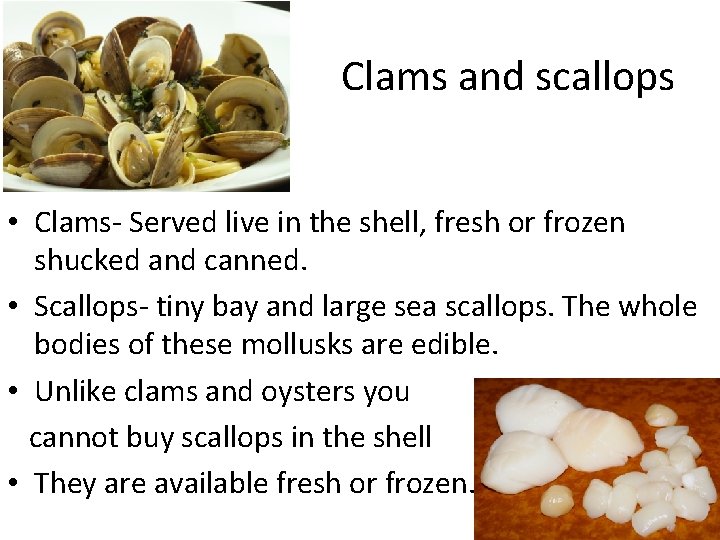
Clams and scallops • Clams- Served live in the shell, fresh or frozen shucked and canned. • Scallops- tiny bay and large sea scallops. The whole bodies of these mollusks are edible. • Unlike clams and oysters you cannot buy scallops in the shell • They are available fresh or frozen.
Signs of freshness: • The shell covering the shrimp should be firm and attached. Shrimp should be odorless • The tail of a live main lobster should snap back quickly after you flatten it • A fresh sea scallop is white, a fresh bay scallop is creamy white or pink • Live oyster and clam shells should be tightly closed or close when you touch them. • Shucked oysters and clams should be plump, creamy in color, and odorless.
Canned • Tuna, salmon, sardines, shrimp, crab, lobster and clams are often canned. • To reduce fat in your diet look for fish canned in water instead of oil.
Buying fresh fish • Fresh seafood can be a source of bacteria that can cause foodborne illness. To ensure the safety of the fish you buy only deal with reputable sellers. • The cost of fish will depend on the type and the region it came from.
Storing fish and shellfish • Fish is very perishable so you must store it with care. • Use fish within a day or two • Cooked fish should reach 145 internally • Its important to know what type of fish you are cooking because it will affect the preparation method. (ex. Some softer fishes fall through the grill) • Cooked fish should flake easily with a fork
• Generally fat fish (mackerel, catfish, salmon, and trout) are cooked by dry heat (baked and broiled) while fin fish (swordfish, halibut, haddock and flounder are cooked by moist heat (fried, poached or steamed) • Cook fish for 10 min per inch of thickness. Turn piece of fish once when cooking. Do not over handle fish or it will fall apart. • Fish that is frozen will take twice as long.