
Scombroid Food Poisoning in Frozen seafood factory Samutprakarn

Scombroid Food Poisoning in Frozen seafood factory, Samutprakarn Province, 21– 25 July 2007 Nalinee Hongchumpon, DVM. 1 st year FETP trainee 1
Introduction to Scombroid (Histamine) poisoning o o Consumption foods that contain high level of histamine and other vasoactive amines and compounds Eating spoiled fish of families Scombridae and Scomberesocidae o o o Tuna Mackerel Sardine Histamine formed by histidine decarboxylating enzyme Histidine decarboxylase producing bacteria : o o Proteus morganii Enterobactor aerogenes 2
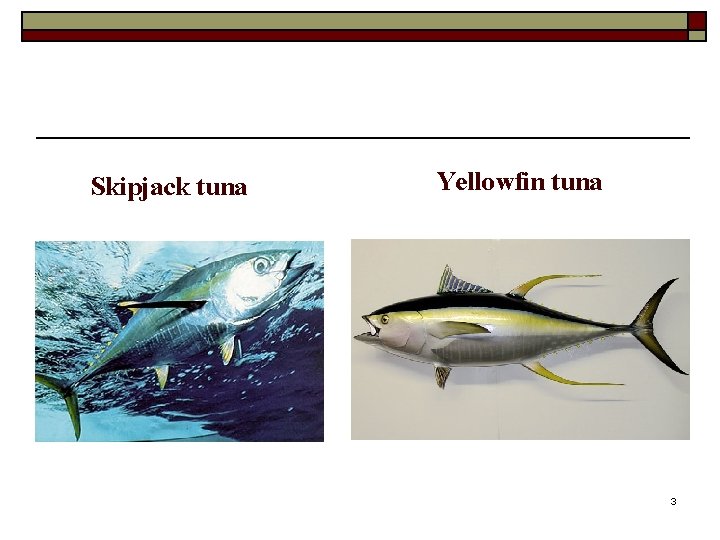
Skipjack tuna Yellowfin tuna 3
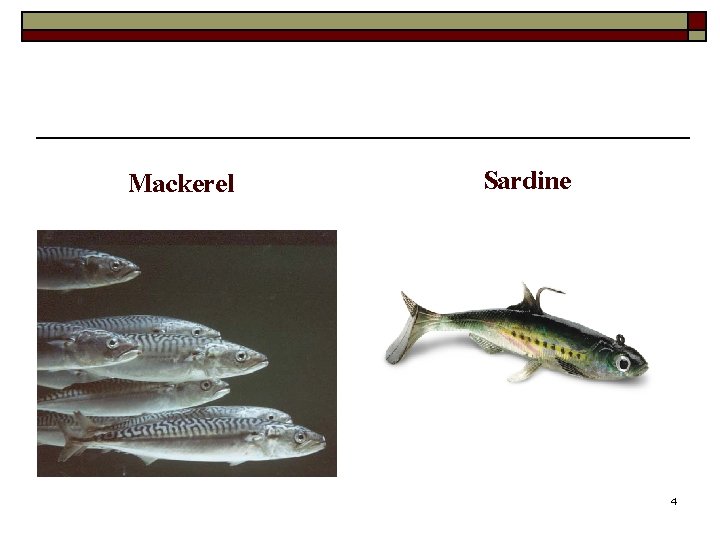
Mackerel Sardine 4
Introduction to Scombroid (Histamine) poisoning o o o Symptoms very rapidly : burning sensation in the mouth, rash on upper body, drop in blood pressure, nausea, vomiting and diarrhea Incubation period : 30 minutes after consumption (long last several days) Histamine level (US FDA) : o o Flesh fish ≤ 100 ppm. Hazardous level ≥ 200 ppm 5
Background o o o Bo. E received report from Samutprakarn provincial health office on 24 th July 2007 Food poisoning outbreak among employees in frozen seafood factory in Samutprakarn province on 21 st July 2007 Bo. E sent investigation team during 24 th – 25 th July 2007 6
Objective o o o To confirm diagnosis and outbreak To define etiologic agent and cause of the outbreak To implement control and prevention measure 7
Methodology o o Descriptive study n Interviewed the patients who had been admitted in the hospitals n Interviewed staffs who worked in the frozen seafood factory n Active case finding Analytic study n Case – control study o n case : control = 1: 2 Structured questionnaires were used for collecting data 8
Methodology o Environmental survey n Interviewed food handler about process of cooking each lunch menu n Collected frozen tuna and fried fermented tuna the same lot as the patients ate on 21 st July 2007, frozen mackerel and water samples for laboratory testing n Survey factory product line 9
Case definition o o o A case was defined as an employee who worked in the Frozen Seafood Factory S on 21 st July 2007 and had symptoms as the criteria: Criteria: Two major criteria or one major criterion plus two minor criteria n Major criteria: diarrhea, nausea, vomiting, flushing, abdominal cramp, mouth numbness, extremities numbness, dry mouth, rash, itchy and swelling n Minor criteria: headache, diplopia, fever and fatigue Total number of cases: 89 persons 10
Control definition o o o Any persons who worked in the frozen seafood factory on 21 st July 2007 and did not has the symptoms meeting the criteria as case Selected by systemic random sampling: Every 4 persons by the listed name and skipped the person who was defined as case Total number of control : 176 persons 11
Statistical analysis o o Type of data n Categorical data : percentage of symptoms, each kind of food n Continuous data : Median for age Software n Epi-data: To collect data n Stata: to analyze data 12

Results 13
Descriptive part o o Seafood factory located at Muang district, Samutprakarn province 100% seafood production export 1, 084 employees in 4 different section All employees have lunch at cafeteria 14
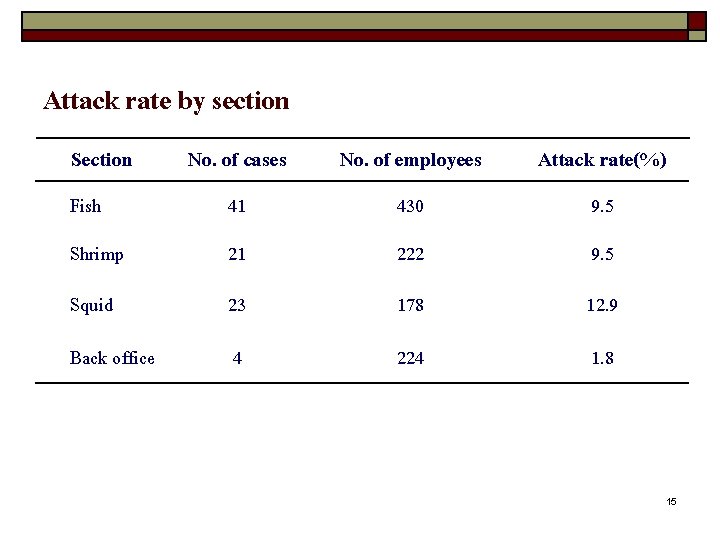
Attack rate by section Section No. of cases No. of employees Attack rate(%) Fish 41 430 9. 5 Shrimp 21 222 9. 5 Squid 23 178 12. 9 Back office 4 224 1. 8 15
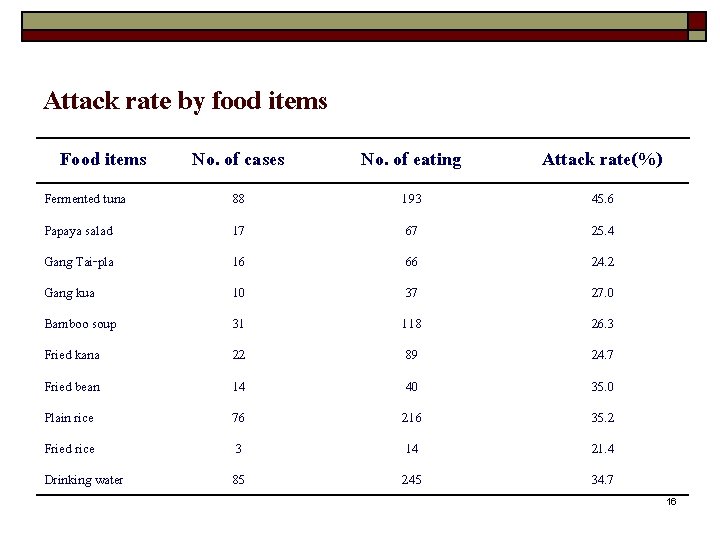
Attack rate by food items Food items No. of cases No. of eating Attack rate(%) Fermented tuna 88 193 45. 6 Papaya salad 17 67 25. 4 Gang Tai-pla 16 66 24. 2 Gang kua 10 37 27. 0 Bamboo soup 31 118 26. 3 Fried kana 22 89 24. 7 Fried bean 14 40 35. 0 Plain rice 76 216 35. 2 Fried rice 3 14 21. 4 Drinking water 85 245 34. 7 16
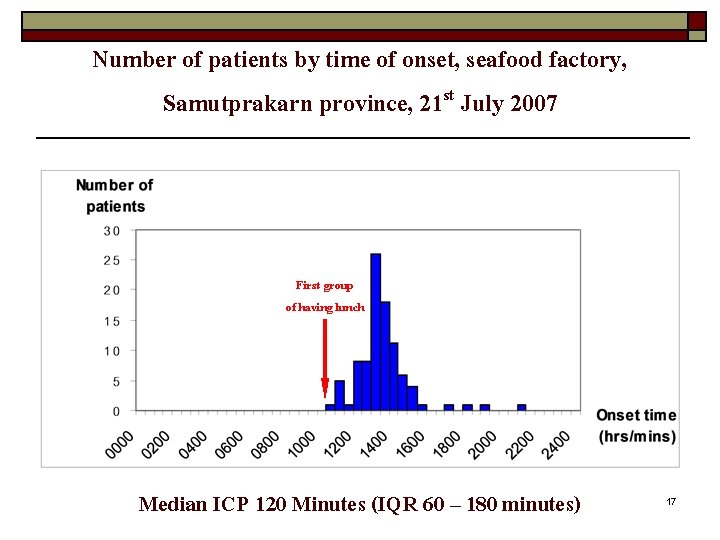
Number of patients by time of onset, seafood factory, Samutprakarn province, 21 st July 2007 First group of having lunch Median ICP 120 Minutes (IQR 60 – 180 minutes) 17
Percentage of each symptoms (n=89) 18
Analytic part 19
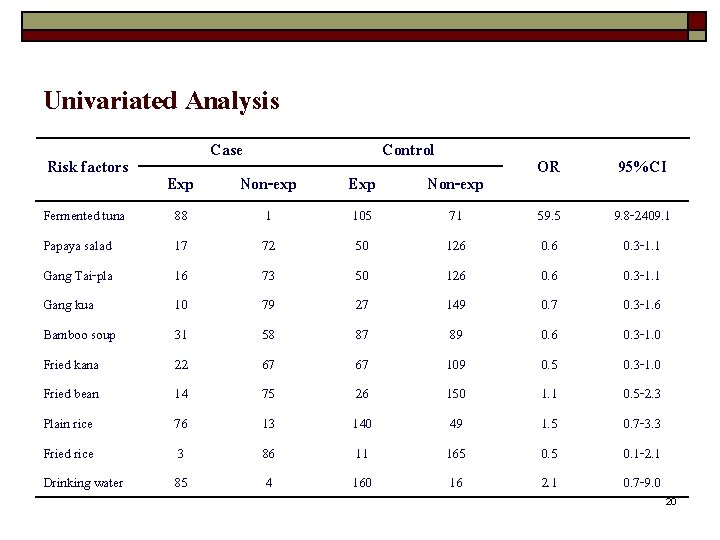
Univariated Analysis Risk factors Fermented tuna Papaya salad Gang Tai-pla Gang kua Bamboo soup Fried kana Fried bean Plain rice Fried rice Drinking water Case Exp Non-exp 88 17 16 10 31 22 14 76 3 85 1 72 73 79 58 67 75 13 86 4 Control Exp Non-exp OR 95%CI 105 50 50 27 87 67 26 140 11 160 59. 5 0. 6 0. 7 0. 6 0. 5 1. 1 1. 5 0. 5 2. 1 9. 8 -2409. 1 0. 3 -1. 6 0. 3 -1. 0 0. 5 -2. 3 0. 7 -3. 3 0. 1 -2. 1 0. 7 -9. 0 71 126 149 89 109 150 49 165 16 20
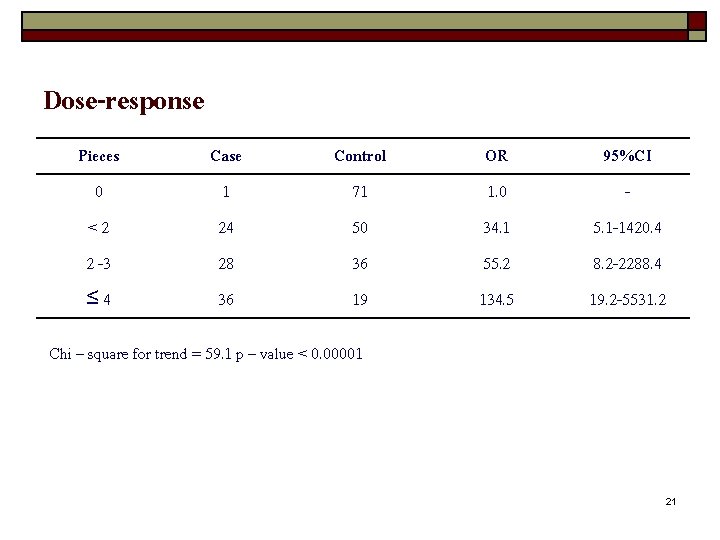
Dose-response Pieces Case Control OR 95%CI 0 <2 2 -3 1 24 28 71 50 36 1. 0 34. 1 55. 2 5. 1 -1420. 4 8. 2 -2288. 4 ≤ 4 36 19 134. 5 19. 2 -5531. 2 Chi – square for trend = 59. 1 p – value < 0. 00001 21
Environmental survey 22
o Environment & Producing line n n Divided into 4 sections >>> fish, shrimp, squid and back office Employees have to take a bath and changed working suit before each section entering 23
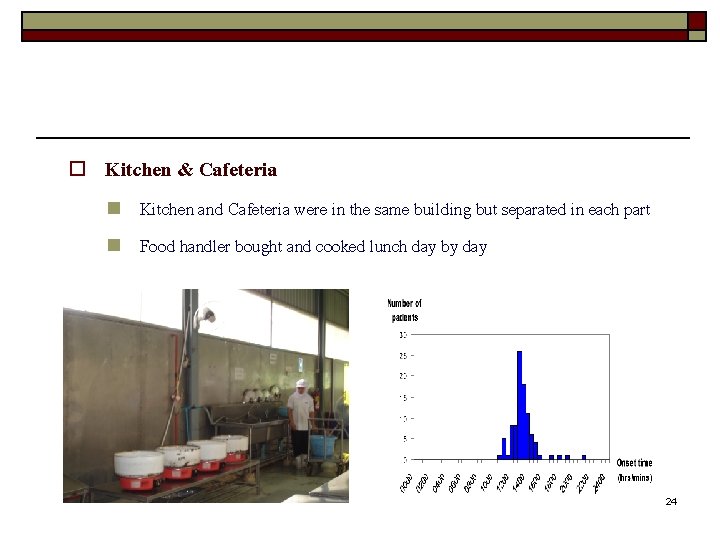
o Kitchen & Cafeteria n n Kitchen and Cafeteria were in the same building but separated in each part Food handler bought and cooked lunch day by day 24
o Fermented Tuna cooked n n n o Frozen tuna fermented with ingredient Left in room temperature for a few day Fried before serving as lunch Water supply n n Drinking water Producing line 25
Frozen tuna Fried fermented tuna 26
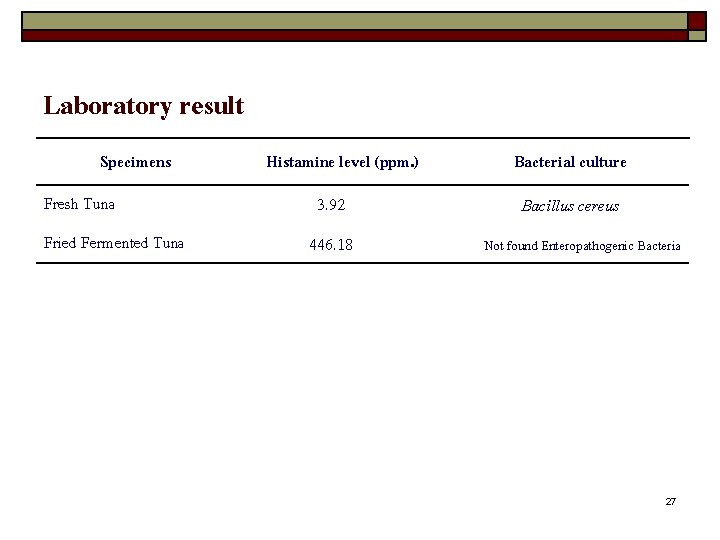
Laboratory result Specimens Fresh Tuna Fried Fermented Tuna Histamine level (ppm. ) 3. 92 446. 18 Bacterial culture Bacillus cereus Not found Enteropathogenic Bacteria 27
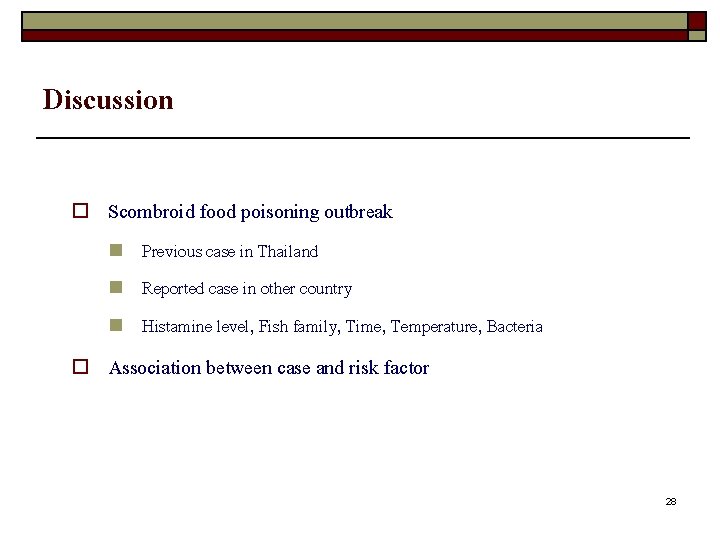
Discussion o Scombroid food poisoning outbreak n n n o Previous case in Thailand Reported case in other country Histamine level, Fish family, Time, Temperature, Bacteria Association between case and risk factor 28
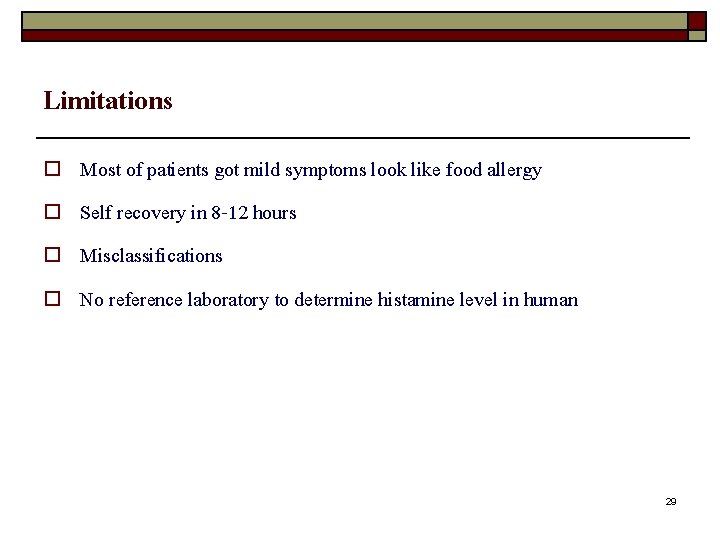
Limitations o o Most of patients got mild symptoms look like food allergy Self recovery in 8 -12 hours Misclassifications No reference laboratory to determine histamine level in human 29
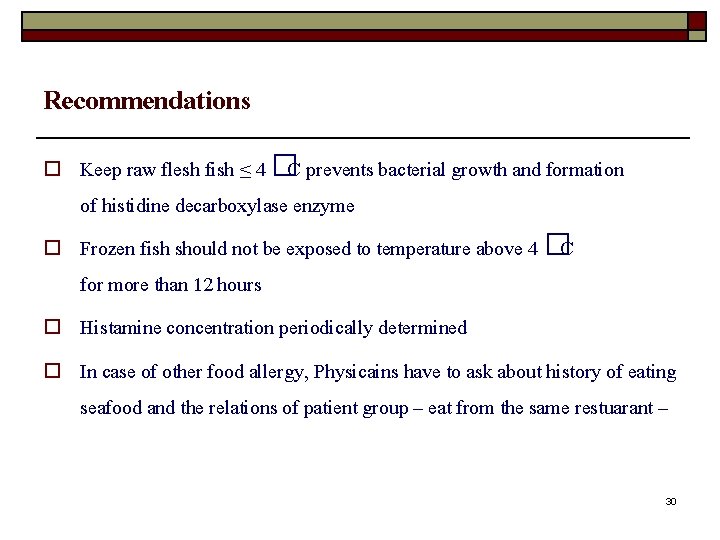
Recommendations o o Keep raw flesh fish ≤ 4 �C prevents bacterial growth and formation of histidine decarboxylase enzyme Frozen fish should not be exposed to temperature above 4 �C for more than 12 hours Histamine concentration periodically determined In case of other food allergy, Physicains have to ask about history of eating seafood and the relations of patient group – eat from the same restuarant – 30

Conclusions o o o Scombroid food poisoning had occurred in seafood factory Employees were eating fried fermented tuna which contain high level of histamine at lunch time 21 st July 2007 Common source outbreak 31
Acknowledgement o o o o Seafood factory Samutprakarn provincial health office District and Sub district health office Samutprakarn Hospital Puttharaksa health center Department of Fisheries Department of Medical Science 32
- Slides: 32