Islam Cultural Encounters AP World History Chapter 11
- Slides: 25
Islam & Cultural Encounters AP World History Chapter 11 Notes
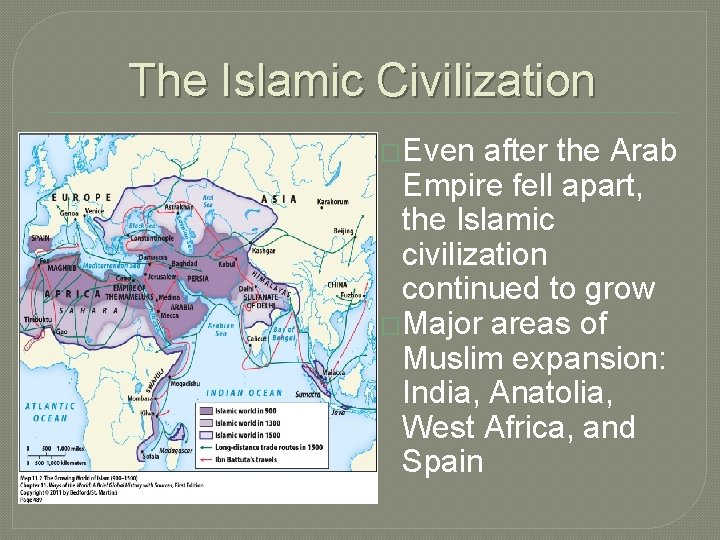
The Islamic Civilization �Even after the Arab Empire fell apart, the Islamic civilization continued to grow �Major areas of Muslim expansion: India, Anatolia, West Africa, and Spain
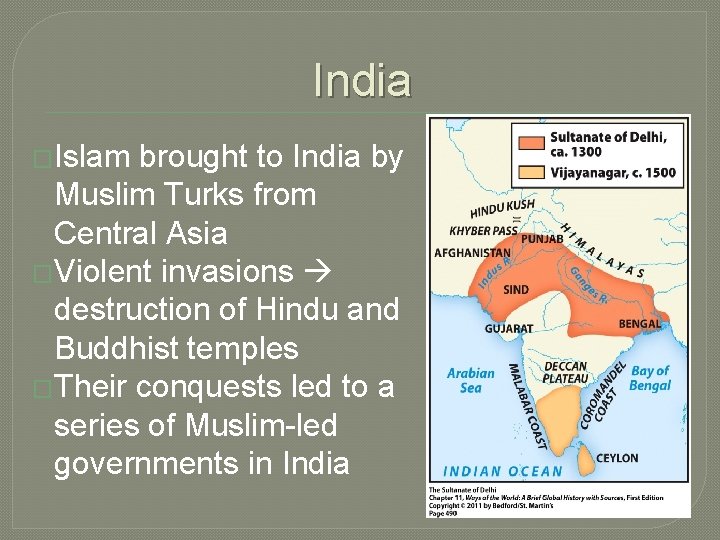
India �Islam brought to India by Muslim Turks from Central Asia �Violent invasions destruction of Hindu and Buddhist temples �Their conquests led to a series of Muslim-led governments in India
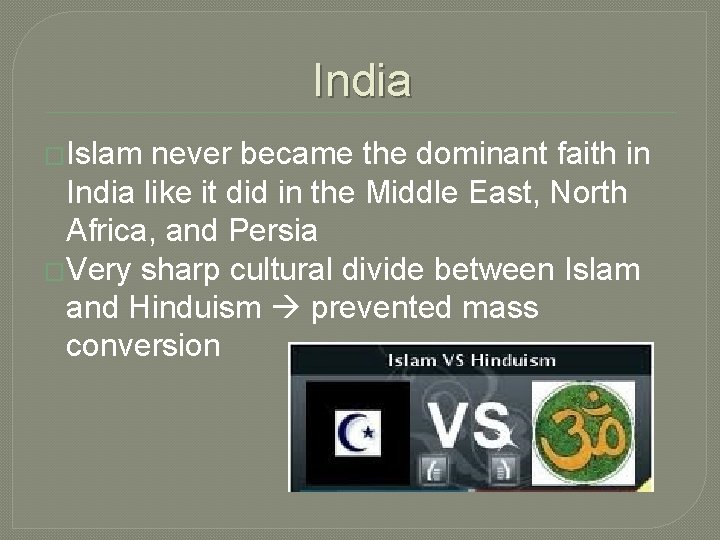
India �Islam never became the dominant faith in India like it did in the Middle East, North Africa, and Persia �Very sharp cultural divide between Islam and Hinduism prevented mass conversion
Islam vs. Hinduism � Monotheistic � Polytheistic � No � Endless representation of Allah � Equality of all believers � Sexual modesty statues and images of the divine � Caste system � Sexual openness
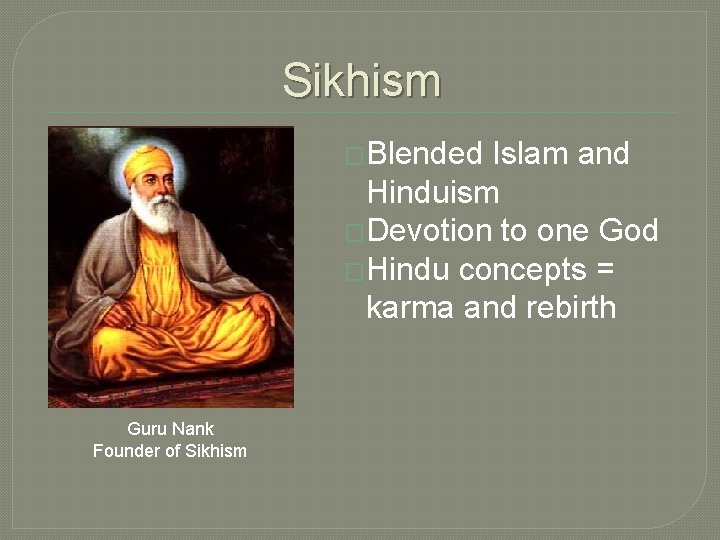
Sikhism �Blended Islam and Hinduism �Devotion to one God �Hindu concepts = karma and rebirth Guru Nank Founder of Sikhism
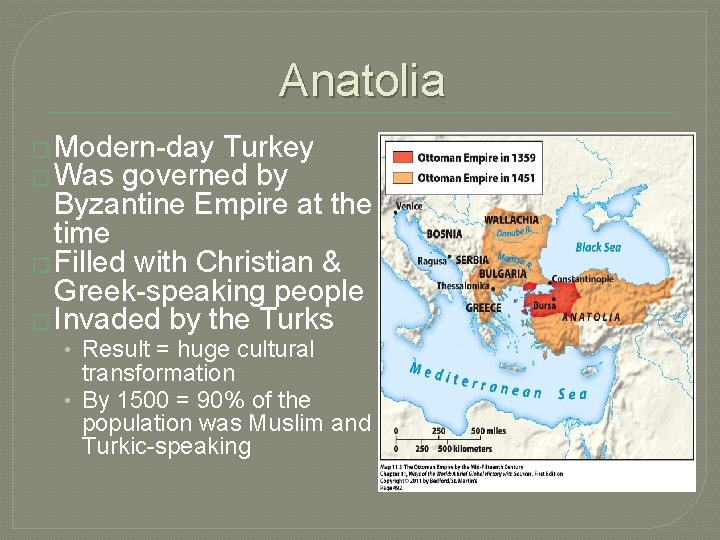
Anatolia � Modern-day Turkey � Was governed by Byzantine Empire at the time � Filled with Christian & Greek-speaking people � Invaded by the Turks • Result = huge cultural transformation • By 1500 = 90% of the population was Muslim and Turkic-speaking
Conversion of Anatolia �Small population of about 8 million people = easy to convert �Extensive disruption of Anatolian society when the Byzantine Empire weakened • Enslavement, famine, massacres, church properties destroyed, many discriminations • Many Christians came to believe that these disasters were proof that Islam was the true religion
Conversion of Anatolia � Cultural barriers to conversion were less severe in Anatolia than in India • Most people in Anatolia already monotheistic (Christian) • Muslim respect for Jesus and the Christian scriptures � Divide between Islam and Christianity not as major as the one between Islam and Hinduism � Sufi missionaries also built: schools, mills, orchards, hospices, and rest places for travelers
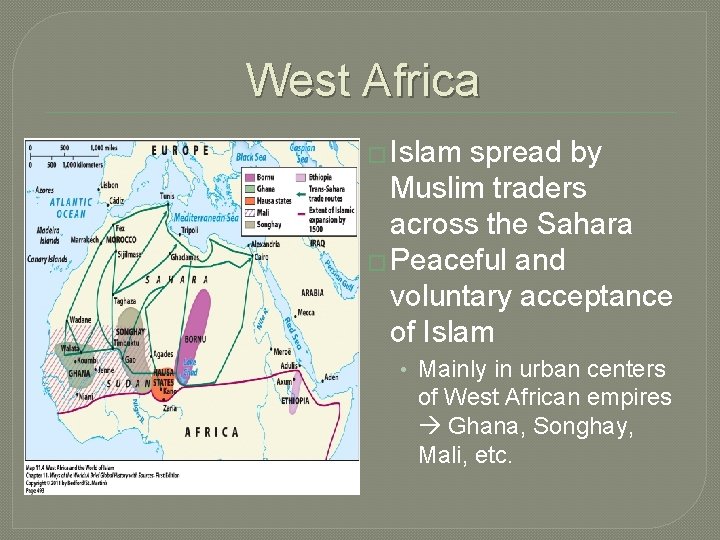
West Africa � Islam spread by Muslim traders across the Sahara � Peaceful and voluntary acceptance of Islam • Mainly in urban centers of West African empires Ghana, Songhay, Mali, etc.
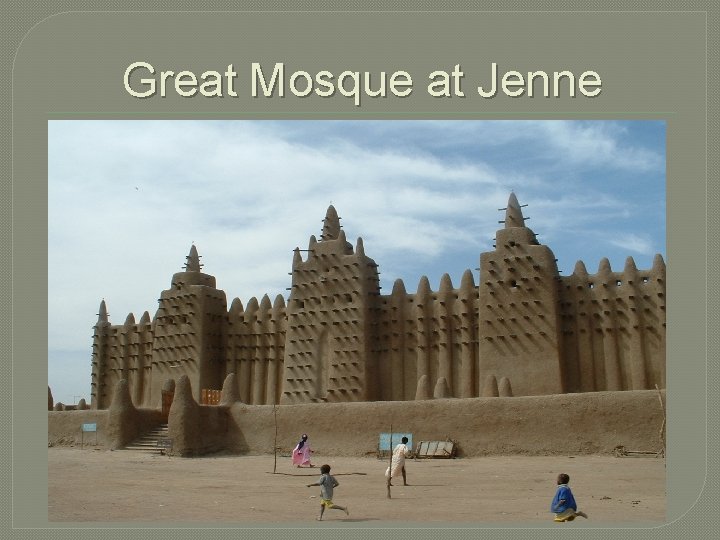
West Africa �Many West African cities became major centers of Islamic religious and intellectual life �Especially Timbuktu • • • More than 150 Quranic schools Several major centers of higher education Libraries with tens of thousands of texts Construction of huge mosques Adopted Arabic as the language of religion, education, administration, and trade
Great Mosque at Jenne
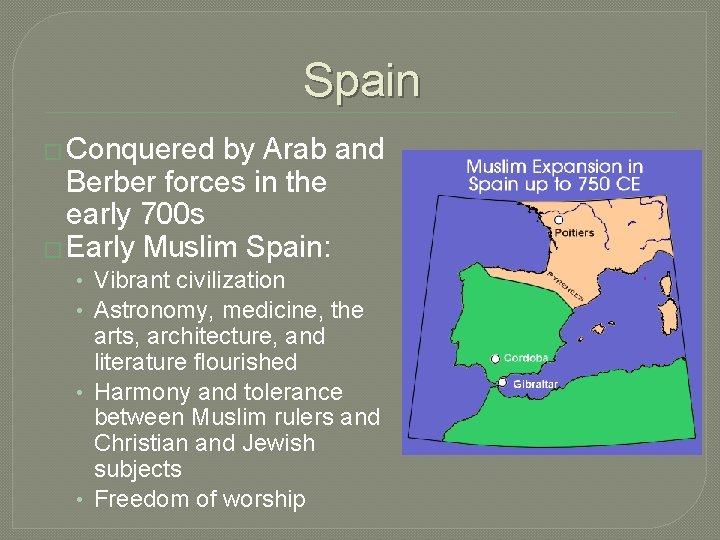
Spain � Conquered by Arab and Berber forces in the early 700 s � Early Muslim Spain: • Vibrant civilization • Astronomy, medicine, the arts, architecture, and literature flourished • Harmony and tolerance between Muslim rulers and Christian and Jewish subjects • Freedom of worship
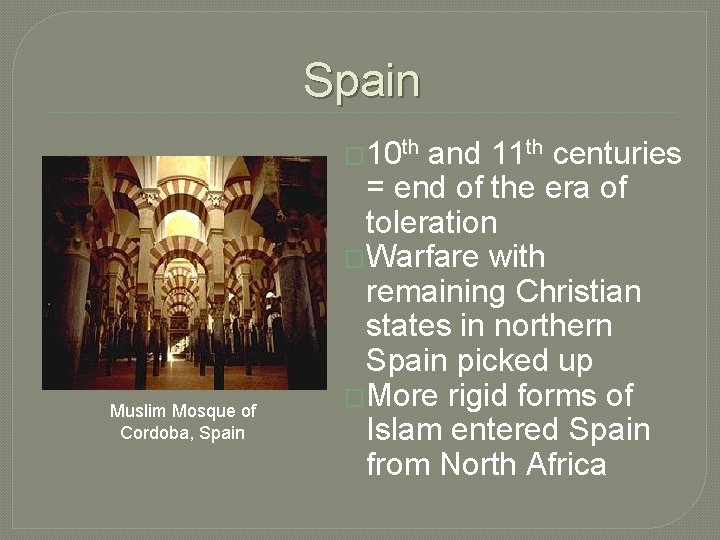
Spain � 10 th Muslim Mosque of Cordoba, Spain and 11 th centuries = end of the era of toleration �Warfare with remaining Christian states in northern Spain picked up �More rigid forms of Islam entered Spain from North Africa
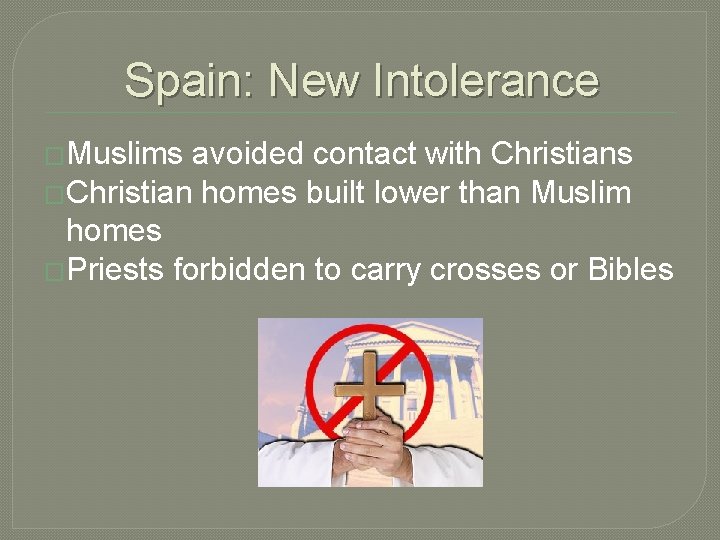
Spain: New Intolerance �Muslims avoided contact with Christians �Christian homes built lower than Muslim homes �Priests forbidden to carry crosses or Bibles
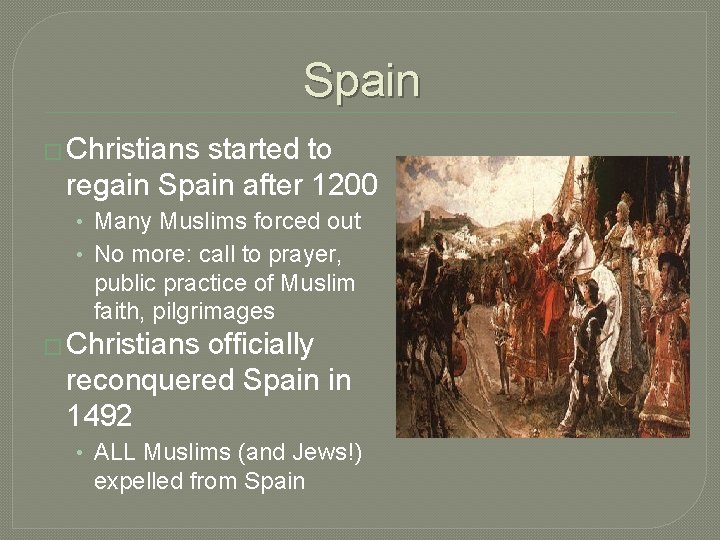
Spain � Christians started to regain Spain after 1200 • Many Muslims forced out • No more: call to prayer, public practice of Muslim faith, pilgrimages � Christians officially reconquered Spain in 1492 • ALL Muslims (and Jews!) expelled from Spain
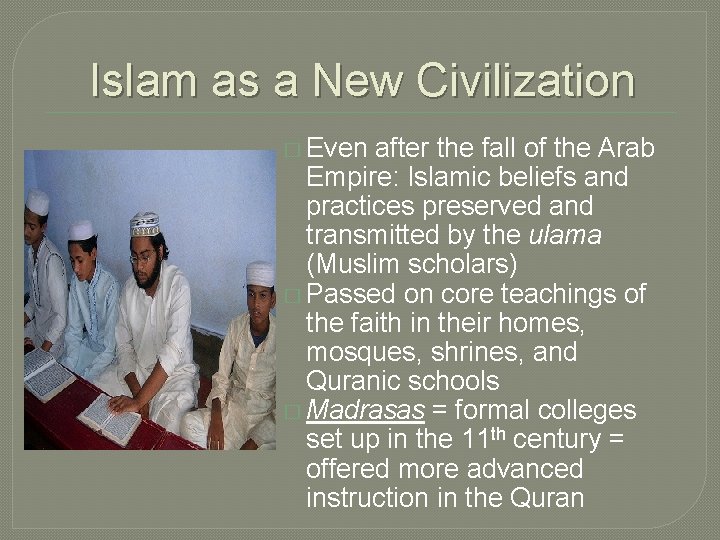
Islam as a New Civilization � Even after the fall of the Arab Empire: Islamic beliefs and practices preserved and transmitted by the ulama (Muslim scholars) � Passed on core teachings of the faith in their homes, mosques, shrines, and Quranic schools � Madrasas = formal colleges set up in the 11 th century = offered more advanced instruction in the Quran
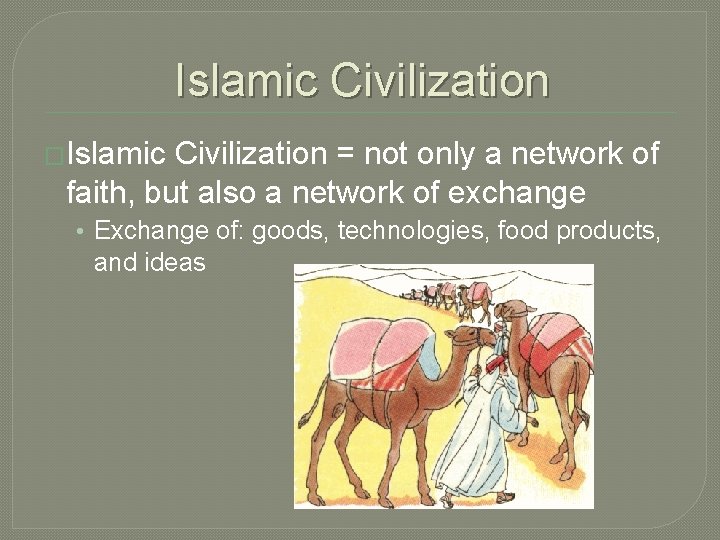
Islamic Civilization �Islamic Civilization = not only a network of faith, but also a network of exchange • Exchange of: goods, technologies, food products, and ideas
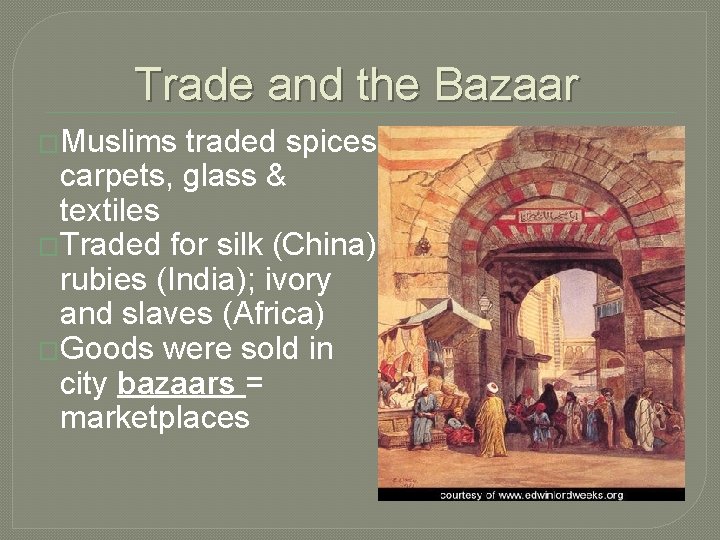
Trade and the Bazaar �Muslims traded spices, carpets, glass & textiles �Traded for silk (China); rubies (India); ivory and slaves (Africa) �Goods were sold in city bazaars = marketplaces
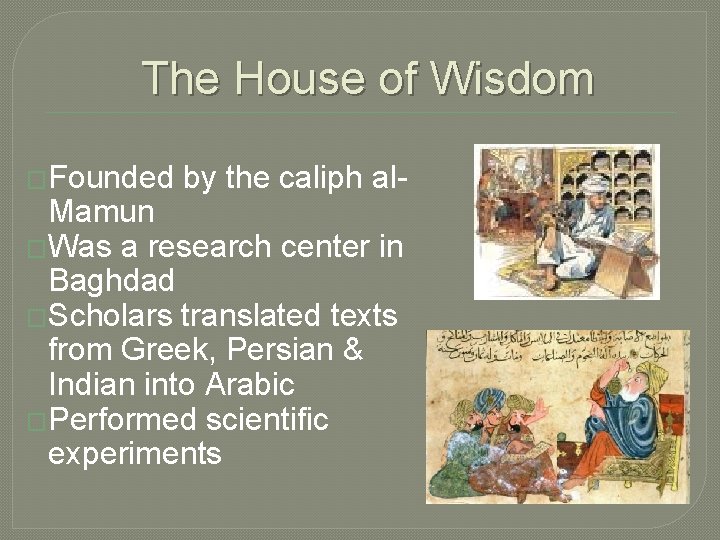
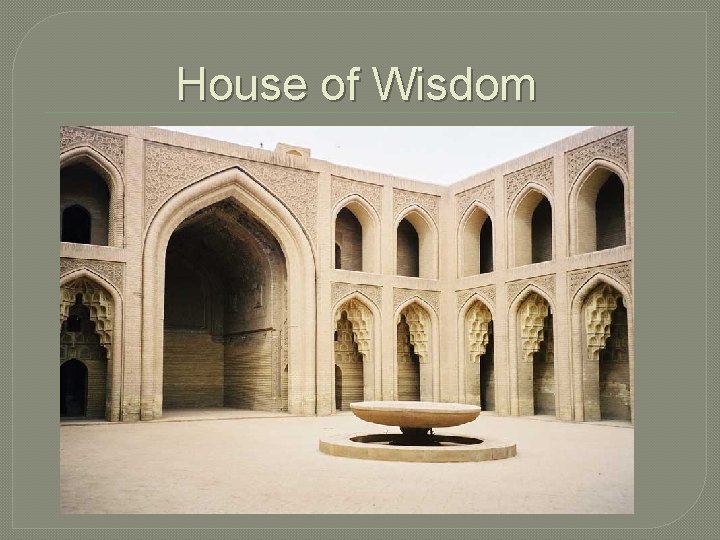
The House of Wisdom �Founded by the caliph al- Mamun �Was a research center in Baghdad �Scholars translated texts from Greek, Persian & Indian into Arabic �Performed scientific experiments
House of Wisdom
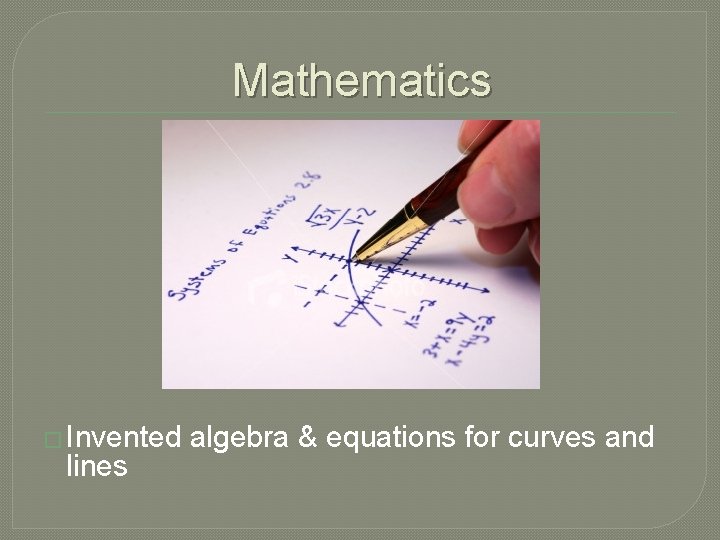
Mathematics � Invented lines algebra & equations for curves and
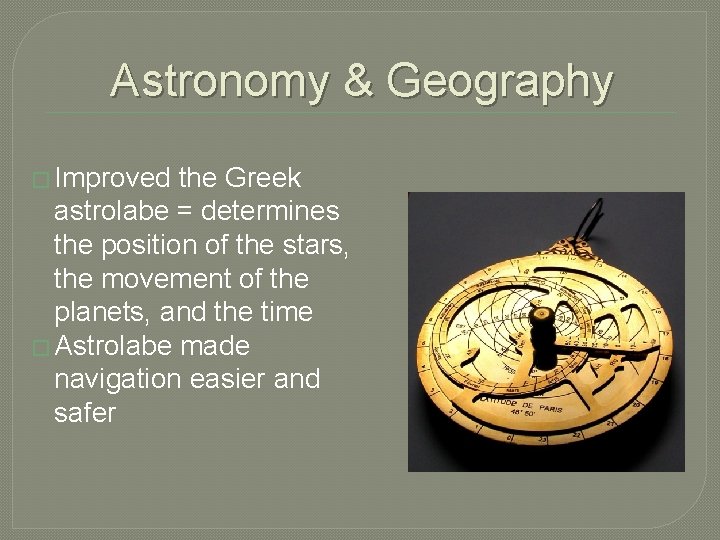
Astronomy & Geography � Improved the Greek astrolabe = determines the position of the stars, the movement of the planets, and the time � Astrolabe made navigation easier and safer
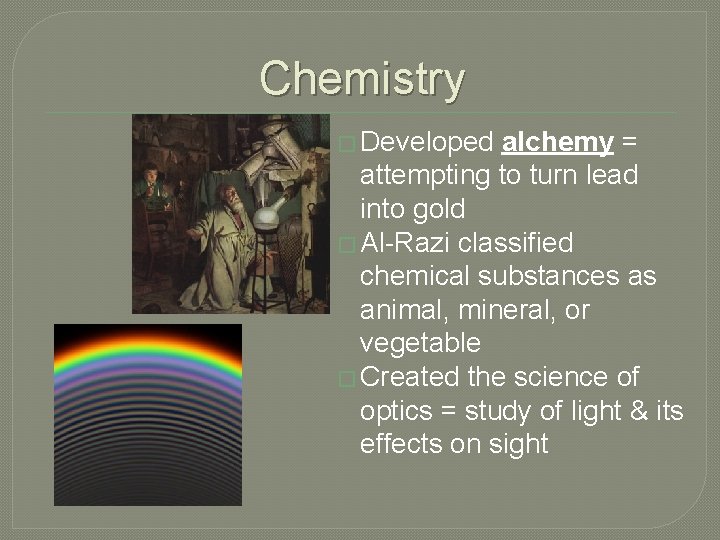
Chemistry � Developed alchemy = attempting to turn lead into gold � Al-Razi classified chemical substances as animal, mineral, or vegetable � Created the science of optics = study of light & its effects on sight
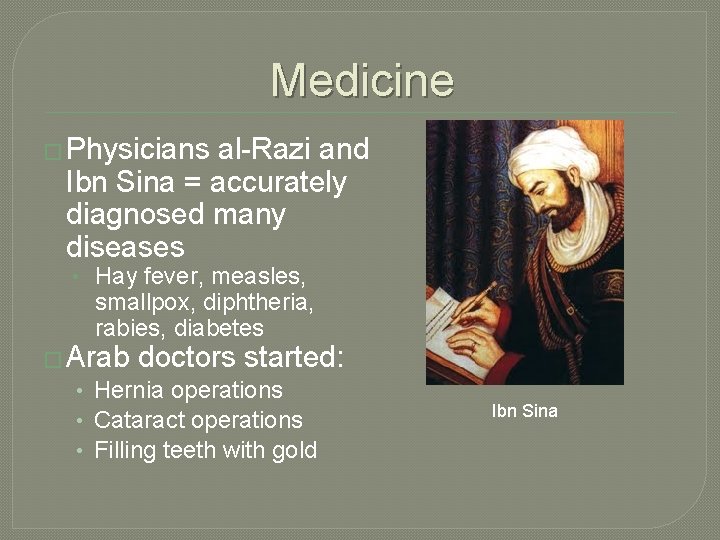
Medicine � Physicians al-Razi and Ibn Sina = accurately diagnosed many diseases • Hay fever, measles, smallpox, diphtheria, rabies, diabetes � Arab doctors started: • Hernia operations • Cataract operations • Filling teeth with gold Ibn Sina