
Chapter 22 Transoceanic Encounters and Global Connections 1
Chapter 22 Transoceanic Encounters and Global Connections 1
The Lure of Trade and Exploration • Unclaimed land to turn into cash crops • Maritime routes to Asia • Spices, silk, porcelain • Silk Roads more dangerous since spread of bubonic plague • Europe wanted to stop paying tariffs to Muslim traders • Cut out the middle man • Prices, profits increased as the Silk road declined • Indian pepper, Chinese ginger increasingly essential to diet of European wealthy classes • African gold, ivory, slaves 2
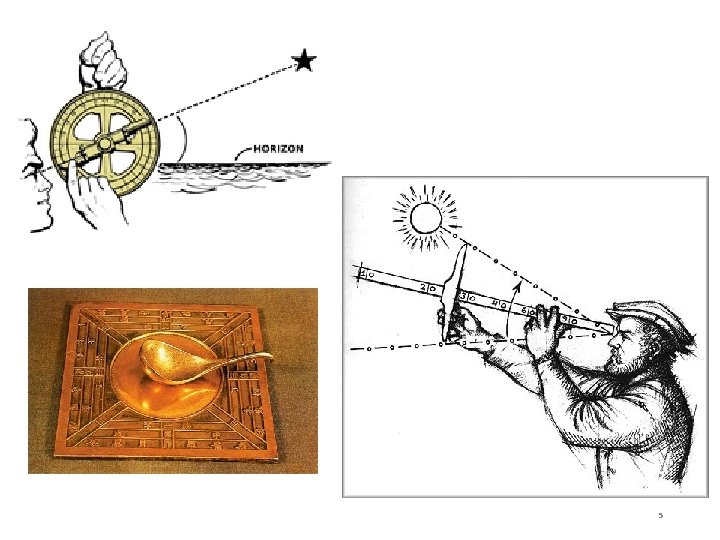
Portuguese Exploration • • Originally for fishing Land hunger- meaning Portugal wanted to find more land Discovery of Azores, Madeiras Islands Acquisition of land to plant sugarcane • Cape Verde Islands, Sao Tome • Navigational schools were set up • Prince Henry the Navigator The Technology of Exploration • Chinese rudder introduced in twelfth century • Square sails replaced by triangular lateen sails • Worked better with cross winds • Navigational instruments- Compass, astrolabe, cross staffs • Knowledge of winds, currents • The volta do mar • “Return through the sea” 3
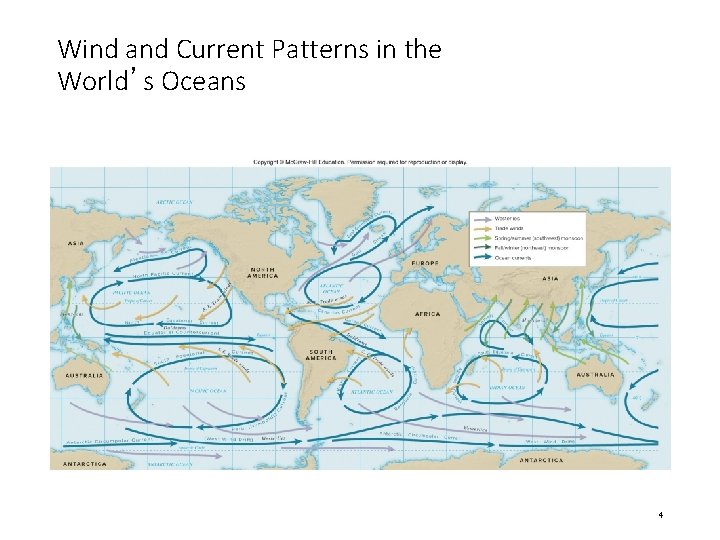
Wind and Current Patterns in the World’s Oceans 4
5
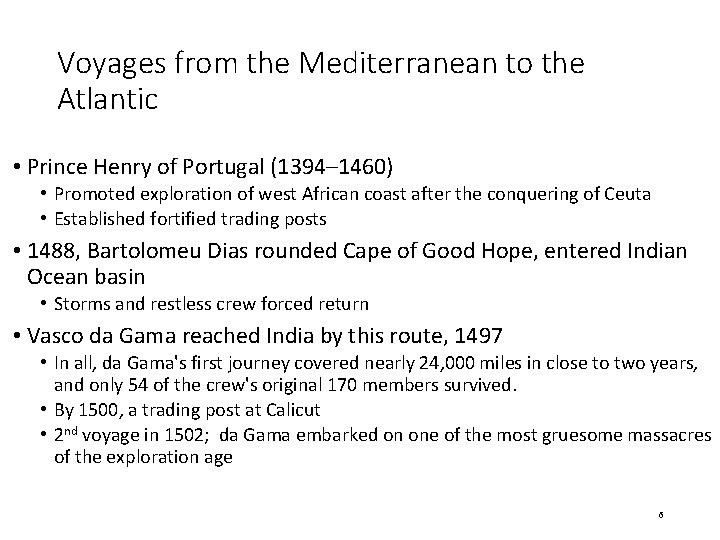
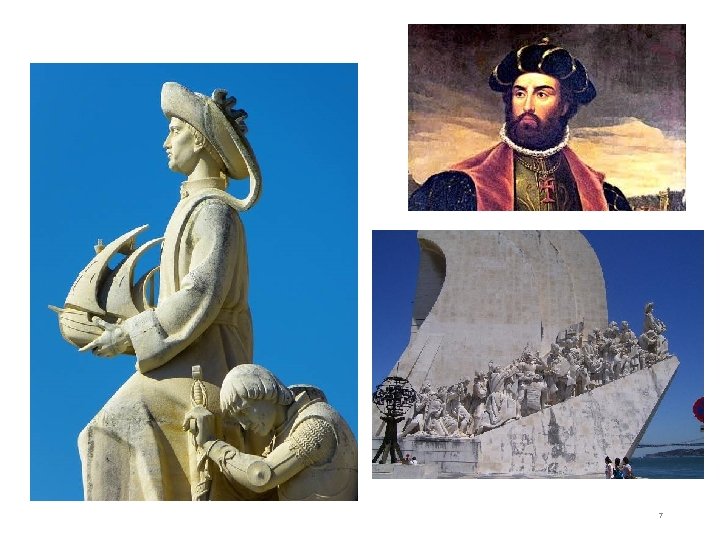
Voyages from the Mediterranean to the Atlantic • Prince Henry of Portugal (1394– 1460) • Promoted exploration of west African coast after the conquering of Ceuta • Established fortified trading posts • 1488, Bartolomeu Dias rounded Cape of Good Hope, entered Indian Ocean basin • Storms and restless crew forced return • Vasco da Gama reached India by this route, 1497 • In all, da Gama's first journey covered nearly 24, 000 miles in close to two years, and only 54 of the crew's original 170 members survived. • By 1500, a trading post at Calicut • 2 nd voyage in 1502; da Gama embarked on one of the most gruesome massacres of the exploration age 6
7
Christopher Columbus (1451– 1506) • Believed Earth was smaller • Estimated Japan less than 2, 500 nautical miles west of Canaries (actually more than 10, 000 nautical miles) • Portuguese kings refused to fund proposed westward trip • Voyage underwritten by Fernando and Isabel of Spain, Italian bankers • Discovery of Bahamas, Cuba • Tainos • Renamed island San Salvador • Columbus tried three times, never reached Asia • But by early sixteenth century, several powers followed • English, Spanish, French, Dutch • Realization of value of newly discovered Americas 8
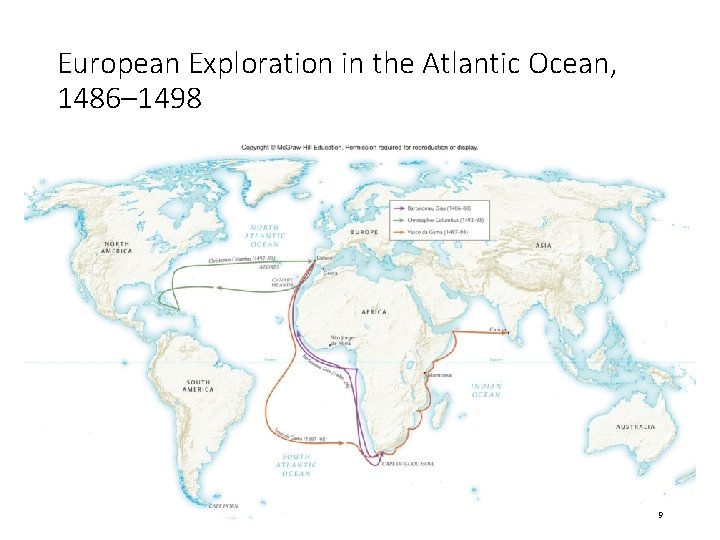
European Exploration in the Atlantic Ocean, 1486– 1498 9
Voyages from the Atlantic to the Pacific • Discovery of Pacific Ocean by Vasco Nuñez de Balboa while searching for gold in Panama, 1513 • Ferdinand Magellan (1480– 1521) Circumnavigation of globe through Strait of Magellan • Crew assailed by scurvy; only 18 of 250 sailors returned to Spain from journey • Magellan killed in local political dispute in Philippines • Spanish: Philippines–Mexico trade route • English, Russians sought northwest passage to Asia • Most of route clogged by ice in Arctic Circle • Norwegian Roald Amundsen completed route only in twentieth century • Sir Frances Drake (England) explored west coast of North America • Vitus Bering (Russia) sailed through Bering Strait • James Cook (England) explored southern Pacific 10
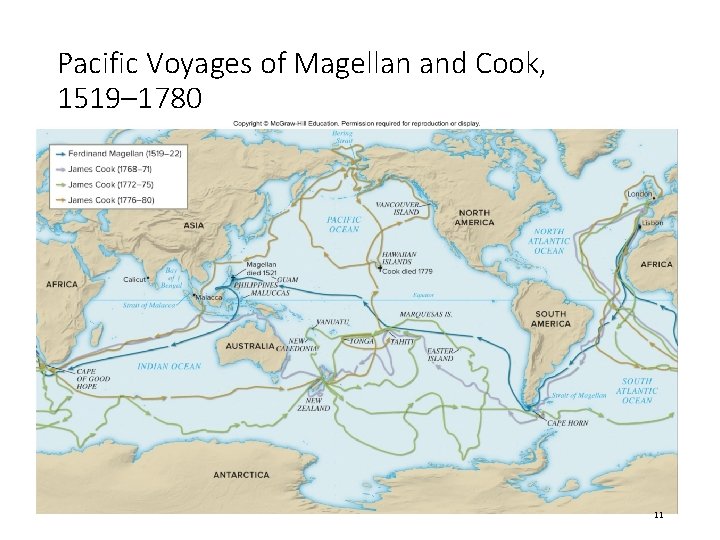
Pacific Voyages of Magellan and Cook, 1519– 1780 11
Trading-Post Empires • Portuguese first to set up trading posts • Fifty by mid-sixteenth century • Not to establish trade monopolies; rather, to charge duties • Major naval military strength • Afonso d’Alboquerque: major naval commander • Architect of trade duties policy: violators would have hands amputated • Conquered key trading posts of Hormuz, Goa and Melaka • Yet Arab traders continue to operate because while the Portuguese navy was brutal… didn’t have enough ships • Portuguese control declined by end of 16 th century because the country could not support such a large sea empire • The English and Dutch would take over Indian ocean trade routes 12
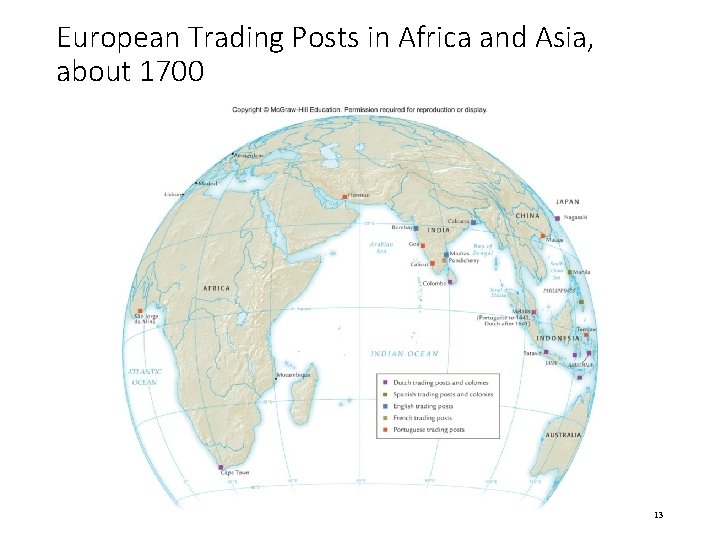
European Trading Posts in Africa and Asia, about 1700 13
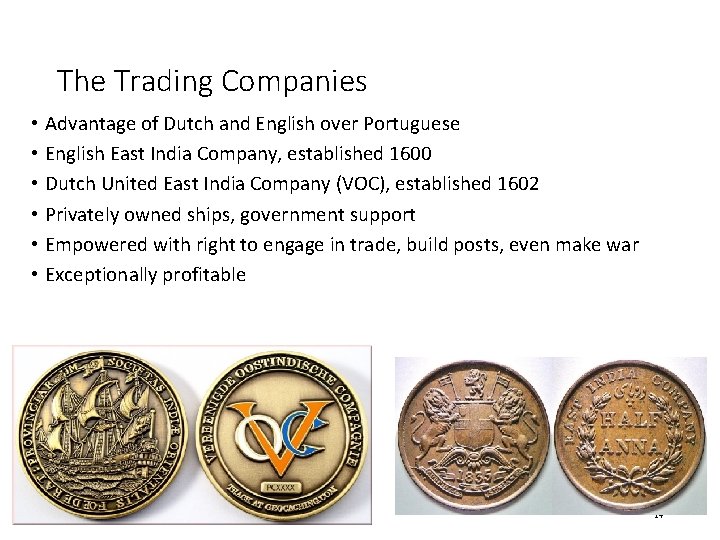
The Trading Companies • Advantage of Dutch and English over Portuguese • English East India Company, established 1600 • Dutch United East India Company (VOC), established 1602 • Privately owned ships, government support • Empowered with right to engage in trade, build posts, even make war • Exceptionally profitable 14
European Conquests in Southeast Asia • Philippines conquered by Spanish (Legazpi), named after King Philip II • Manila became major port city • Influx of Chinese traders highly resented • Frequent massacres, seventeenth to nineteenth century • Significant missionary activity, opened schools • Dutch concentration on spice trade in Indonesia • • Established Batavia, trading post in Java by Jan Coen Less missionary activity Monopolized Indonesian spice trade by force Did not try to directly colonize Indonesian islands but rather made alliances with local rulers to hold monopoly on spice trade ports 15
Russian Empire in Asia • Russian take-over of Mongol khanates, sixteenth century • Astrakhan became major trading city • Caucasus absorbed in eighteenth century • Siberian expansions in sixteenth to seventeenth century • Trade with indigenous Siberian peoples • Little success with missionary efforts • Some local rebellions • Exacted tribute of furs • Russian Occupation of Siberia • • • Criminals, prisoners of war exiled to Siberia Disgruntled peasants migrated east Trading posts developed Dramatic expansion of Russian population 420, 000 Russians in Siberia in 1763, outnumbering indigenous peoples 2: 1 16
The Seven Years’ War (1756– 1763) • Commercial rivalries between empires at sea • Dutch expelled most of Portuguese spice control • French and British rivalry in Indian Ocean cotton trade, Caribbean sugar trade • Pirating (Sir Francis Drake) • Global conflict: multiple conflicts in Europe, India, Caribbean, North America • North America: merged with French and Indian War, 1754– 1763 Britain won • British emerged victorious, established primacy in India, Canada • Treaty of Paris, 1763 • Sets the stage for British dominance on the sea and colonialization 17
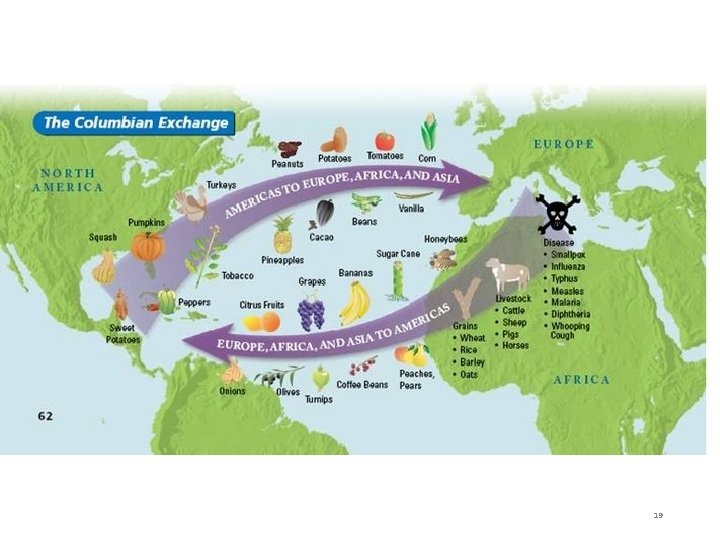
The Columbian Exchange • Named for Christopher Columbus • Global diffusion of plants and crops; animals; human populations; disease pathogens • Links between previously independent biological zones • Permanent alteration to human geography, natural environment Epidemic Diseases and Population Decline • Smallpox • Also measles, diphtheria, whooping cough, influenza • No prior exposure to these diseases in western hemisphere or Oceania • No inherited, acquired immunities • 1519, smallpox epidemic in Aztec empire • Population declined 90% within 100 years (17 million to 1. 3 million) 18
19
Food Crops, Animals and Migration • Columbian exchange also increased overall food supply • Introduction of European animals to Americas • Horses, cattle, pigs, chickens, etc. • Introduction of American foods to Europe, Asia, Africa • Maize, potatoes, beans, etc. • Enslaved Africans • To South America, North America, Caribbean • European pioneers 20
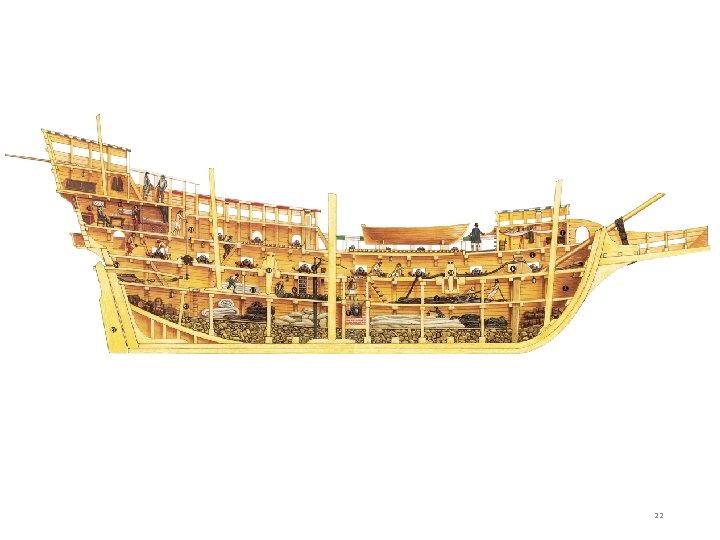
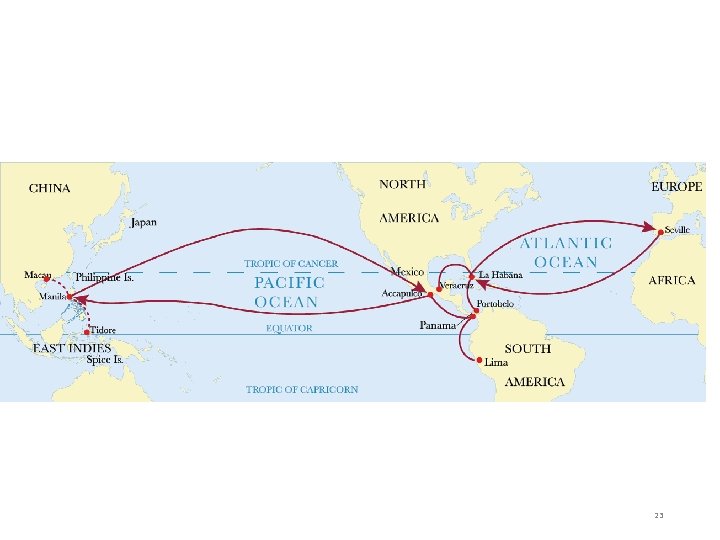
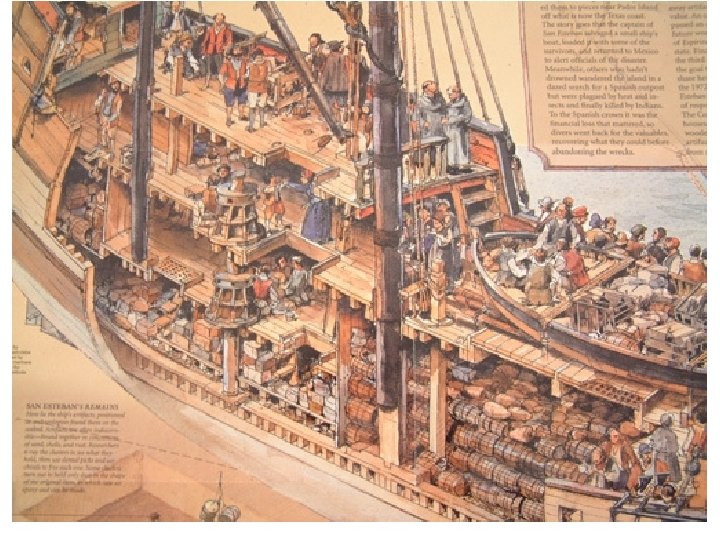
The Origins of Global Trade • Transoceanic trade in Atlantic Ocean basin • Manufactured goods from Europe • Raw goods from Americas • The Manila galleons • Spanish galleons dominated Pacific Ocean trade from 1565 to 1815 • Chinese luxury goods for American raw materials, especially silver Environmental Effects of Global Trade • Fur-bearing animals hunted to extinction or near-extinction • Also whales, codfish, other animals with industrial uses • Relentless human exploitation of the natural environment 21
22
23
24
- Slides: 24