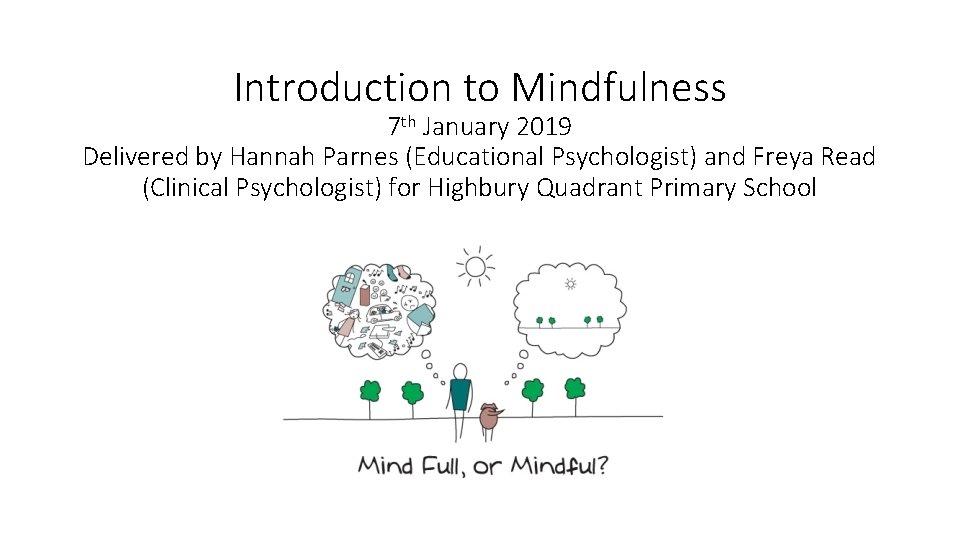
Introduction to Mindfulness 7 th January 2019 Delivered



- Slides: 21
Introduction to Mindfulness 7 th January 2019 Delivered by Hannah Parnes (Educational Psychologist) and Freya Read (Clinical Psychologist) for Highbury Quadrant Primary School
Session aims • An introduction to mindfulness…. - To increase understanding of theory behind mindfulness - To reflect on classroom strategies to deliver mindfulness practice - To engage in mindfulness practice
Discussion What do you think of when you hear the term ‘mindfulness? ’ Discuss in pairs and feed back
Chocolate or Raisin?
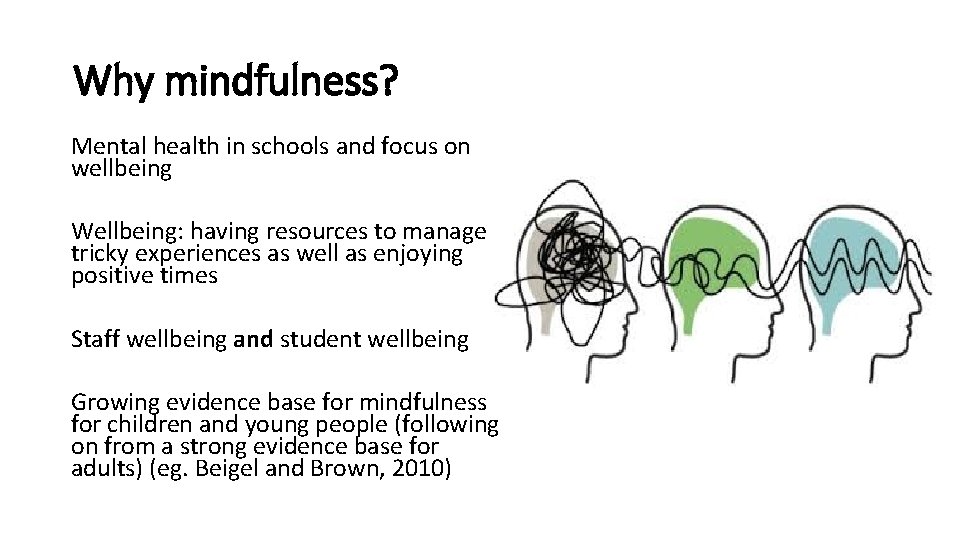
Why mindfulness? Mental health in schools and focus on wellbeing Wellbeing: having resources to manage tricky experiences as well as enjoying positive times Staff wellbeing and student wellbeing Growing evidence base for mindfulness for children and young people (following on from a strong evidence base for adults) (eg. Beigel and Brown, 2010)
Mindfulness is… …an evidence based, attention training and awareness technique Key principles • Non judging • Patience • Beginner’s mind • Trust • Non striving • Acceptance • Letting go “. . a way of being based on the nonjudgemental awareness of experience in the present moment” Jon Kabat Zinn (1990)
Myths about Mindfulness • Mindfulness is not… • Positive thinking • A relaxation technique • Trance • Trying to ‘not think’ or ‘go blank’ • A religious practice • Just ‘colouring in’ • Just for students • A ‘one off’ solution
Where has mindfulness come from? • Initially came from an Buddhist philosophy. • Adapted in the 1970 s, using the key principles to help people with a variety of health problems. • Has been applied to a variety of children, young people and adults, with many benefits identified through research.
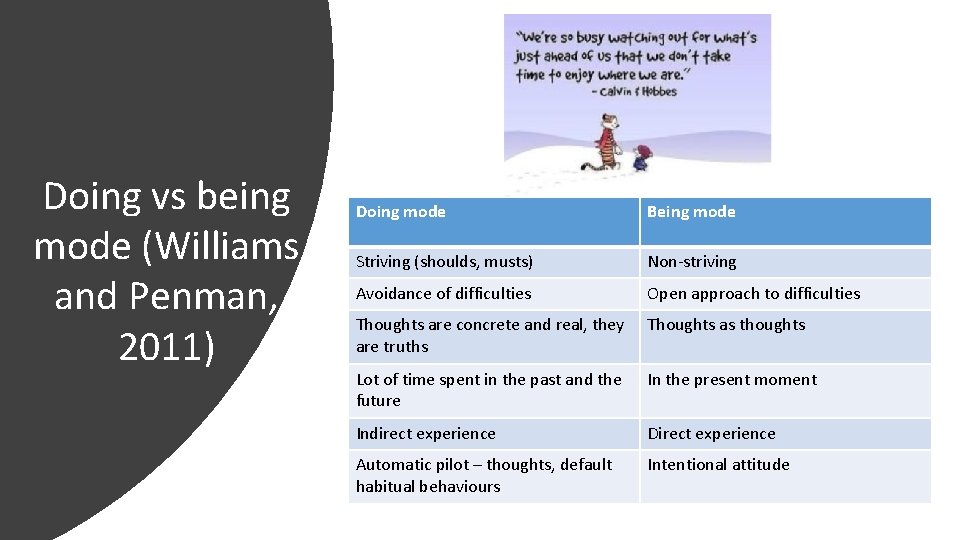
Doing vs being mode (Williams and Penman, 2011) Doing mode Being mode Striving (shoulds, musts) Non-striving Avoidance of difficulties Open approach to difficulties Thoughts are concrete and real, they are truths Thoughts as thoughts Lot of time spent in the past and the future In the present moment Indirect experience Direct experience Automatic pilot – thoughts, default habitual behaviours Intentional attitude
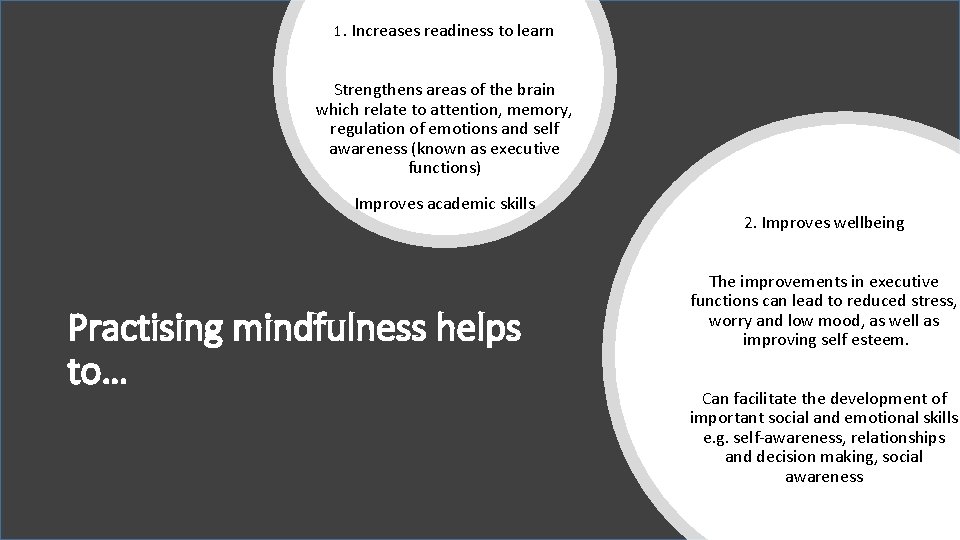
1. Increases readiness to learn Strengthens areas of the brain which relate to attention, memory, regulation of emotions and self awareness (known as executive functions) Improves academic skills Practising mindfulness helps to… 2. Improves wellbeing The improvements in executive functions can lead to reduced stress, worry and low mood, as well as improving self esteem. Can facilitate the development of important social and emotional skills e. g. self-awareness, relationships and decision making, social awareness
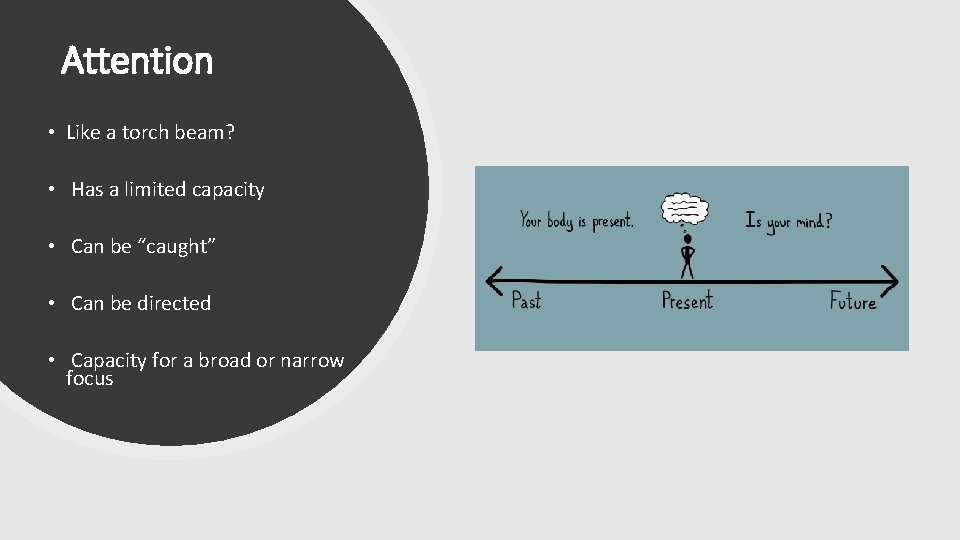
Attention • Like a torch beam? • Has a limited capacity • Can be “caught” • Can be directed • Capacity for a broad or narrow focus
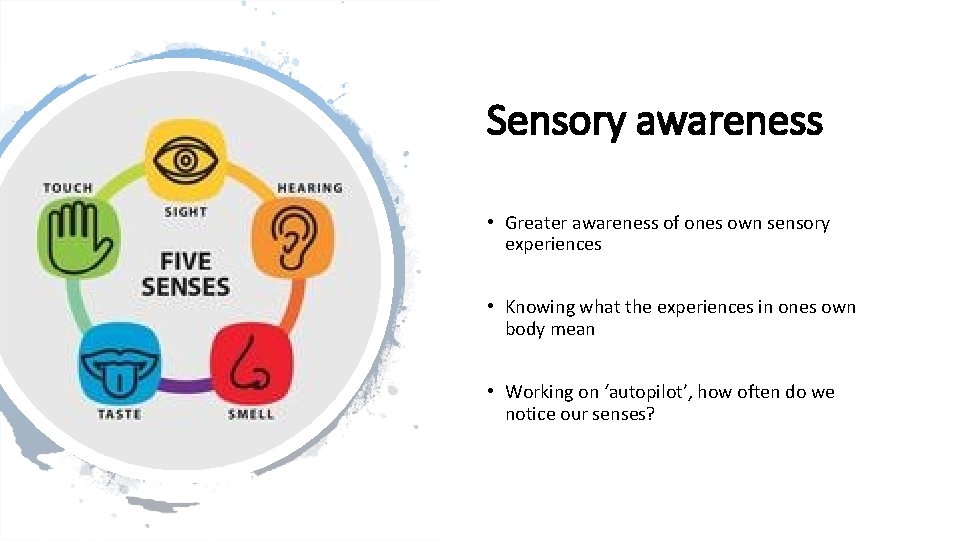
Sensory awareness • Greater awareness of ones own sensory experiences • Knowing what the experiences in ones own body mean • Working on ‘autopilot’, how often do we notice our senses?
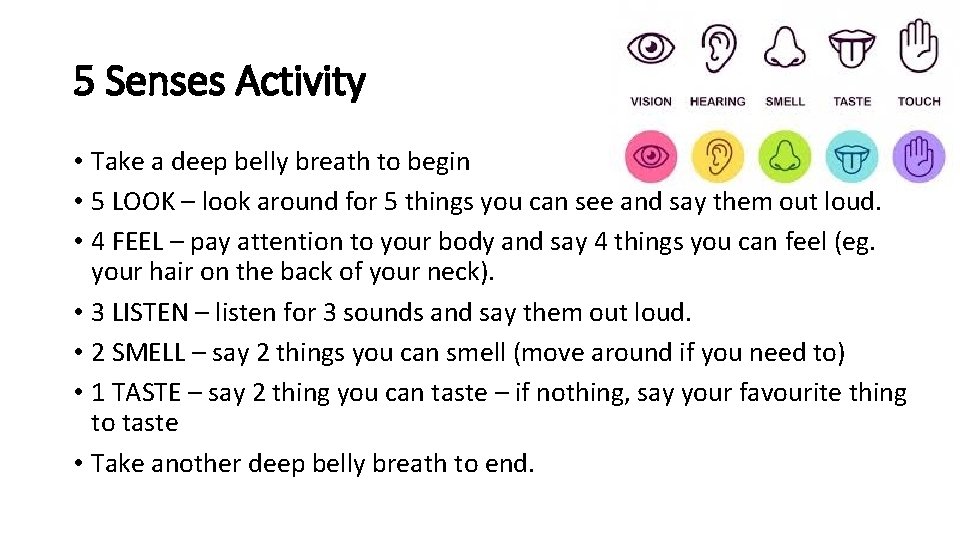
5 Senses Activity • Take a deep belly breath to begin • 5 LOOK – look around for 5 things you can see and say them out loud. • 4 FEEL – pay attention to your body and say 4 things you can feel (eg. your hair on the back of your neck). • 3 LISTEN – listen for 3 sounds and say them out loud. • 2 SMELL – say 2 things you can smell (move around if you need to) • 1 TASTE – say 2 thing you can taste – if nothing, say your favourite thing to taste • Take another deep belly breath to end.
Thoughts • Associations = memories, stories, comparisons • Judgements = liking or disliking • Emotions = feelings connected with our thoughts • Commentary = our own thought story on what is happening in our day
What children have to say… • https: //www. youtube. com/watch? v=8 j. CKO A 7 l. B-w
How do we practice mindfulness? • Drawing attention to our senses • Learning through experience • In the moment, here and now • Non judgmental awareness of our bodily sensations, thoughts and feelings • Formal practice may include body scans, moving • Informal practice
Introducing mindfulness to children • Providing the reasons for practising so children see the relevance of the sessions • How will it be introduced to the parents? • “the younger the child, the more they are imitating you: responding to your soothing voice, mimicking your physical posture and non-verbally attuning to your emotional and physiological state. ”
Introducing mindfulness ideas to Highbury Quadrant School Group A: how could these ideas be built into the routines for children? Group B: How could these ideas be built into the routines for staff?
Practical considerations When will it be used? How long will it take place for? How often will it take place Where in the class/school will it take place? • What resources might be needed? • How will you meet as a team to discuss this? • •
Resources you can access • Class dojo – mindful breathing with mojo • Dharma school – Mindfulness in Education ideas list • You. Tube videos • Written mindfulness scripts • Free Apps (Smiling Mind’s Own) • Audio mindfulness scripts (e. g. • https: //soundcloud. com/mindfulmagazine)
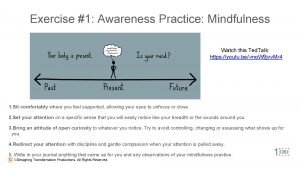
Mindful breathing practice to end