Introduction to Energy Management Week 3 Managing Human

- Slides: 26
Introduction to Energy Management
Week 3 Managing Human Comfort
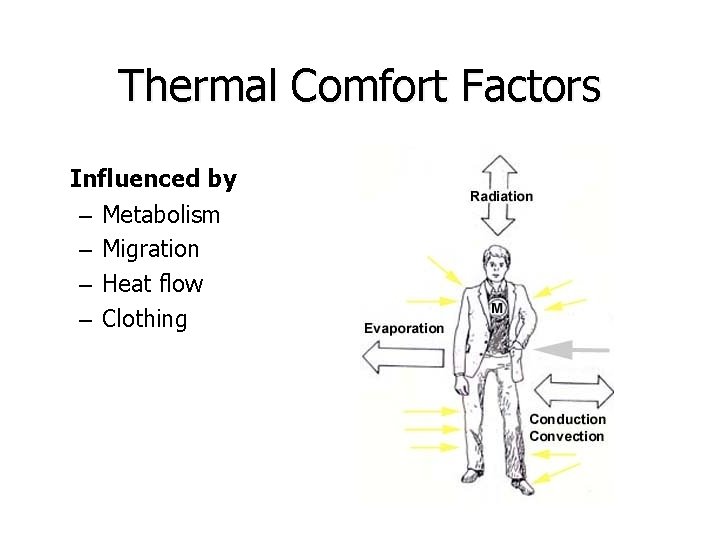
Thermal Comfort Factors Influenced by – Metabolism – Migration – Heat flow – Clothing
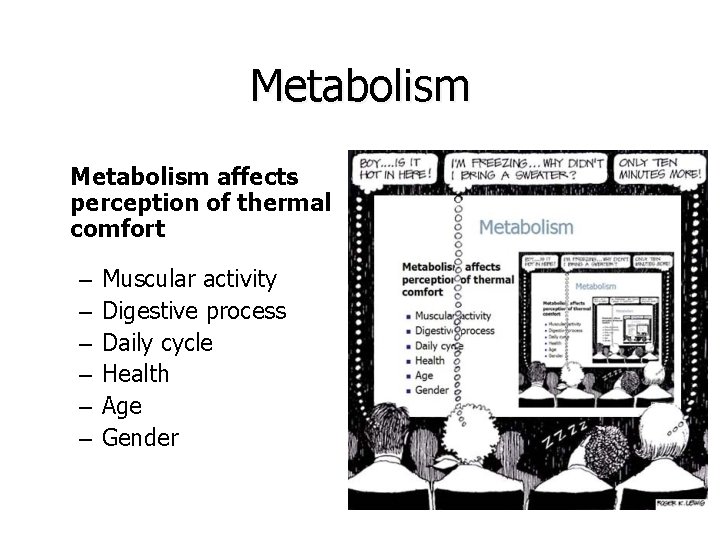
Metabolism affects perception of thermal comfort – – – Muscular activity Digestive process Daily cycle Health Age Gender
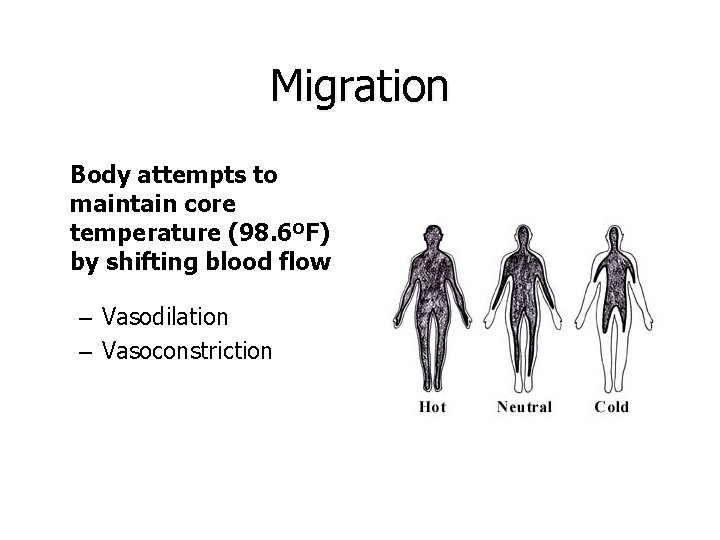
Migration Body attempts to maintain core temperature (98. 6ºF) by shifting blood flow – Vasodilation – Vasoconstriction
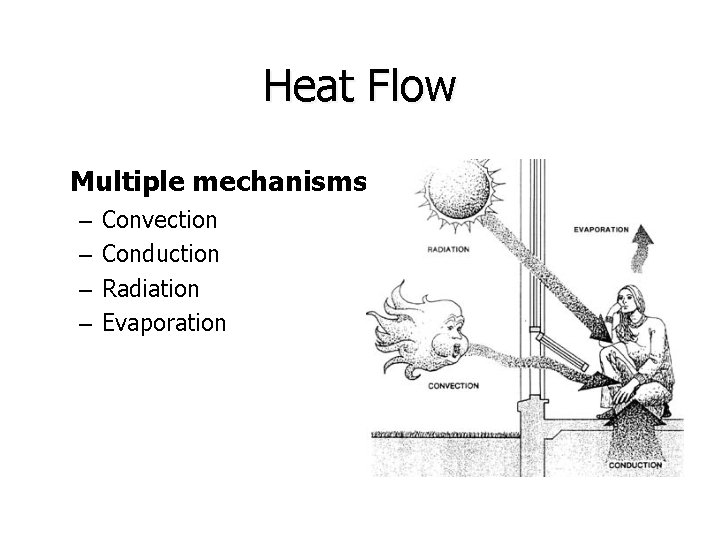
Heat Flow Multiple mechanisms – – Convection Conduction Radiation Evaporation
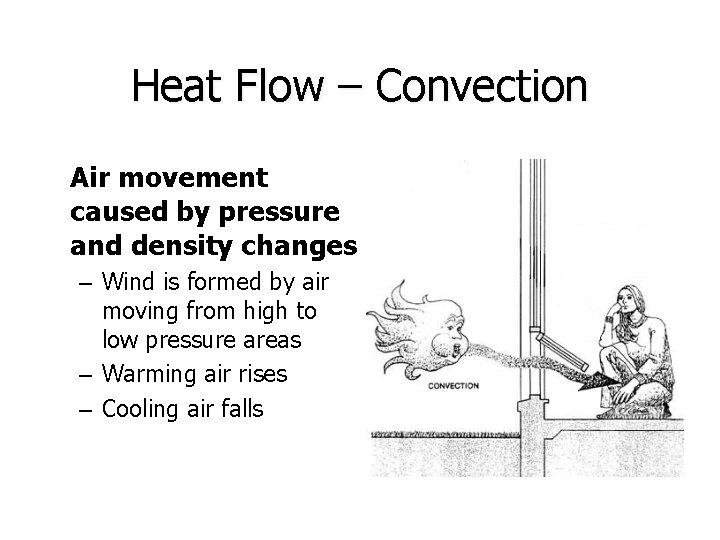
Heat Flow – Convection Air movement caused by pressure and density changes – Wind is formed by air moving from high to low pressure areas – Warming air rises – Cooling air falls
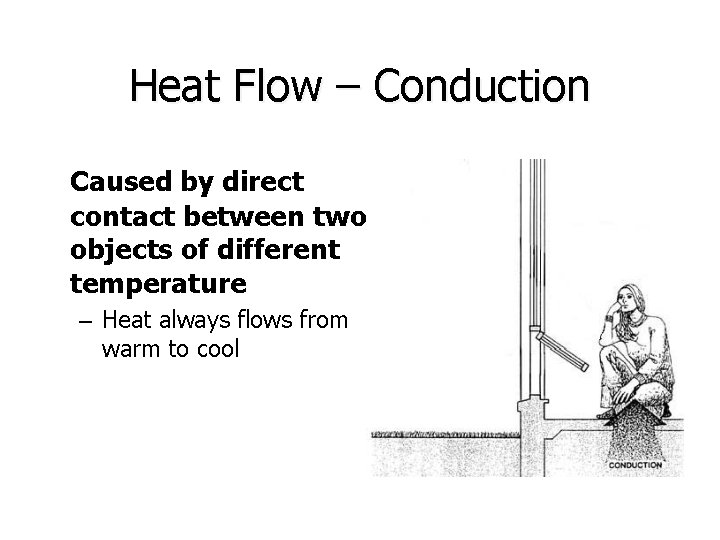
Heat Flow – Conduction Caused by direct contact between two objects of different temperature – Heat always flows from warm to cool
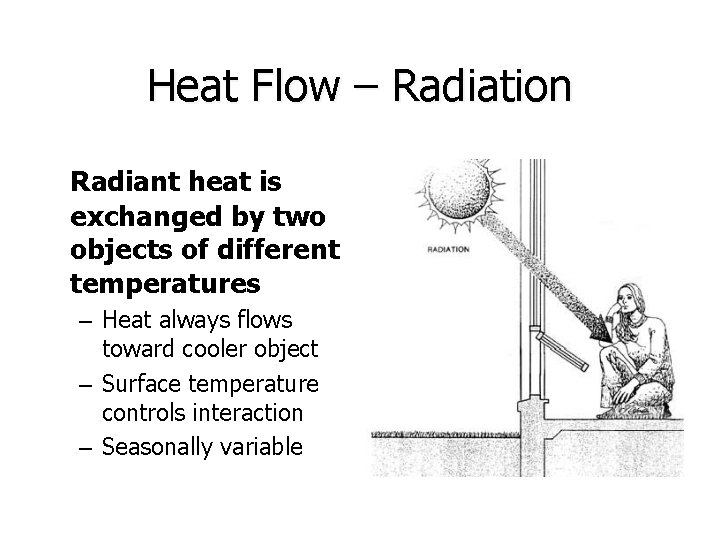
Heat Flow – Radiation Radiant heat is exchanged by two objects of different temperatures – Heat always flows toward cooler object – Surface temperature controls interaction – Seasonally variable
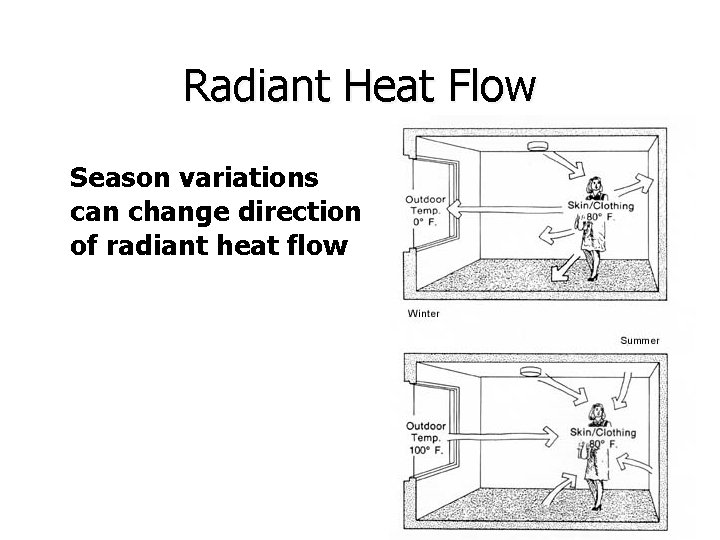
Radiant Heat Flow Season variations can change direction of radiant heat flow
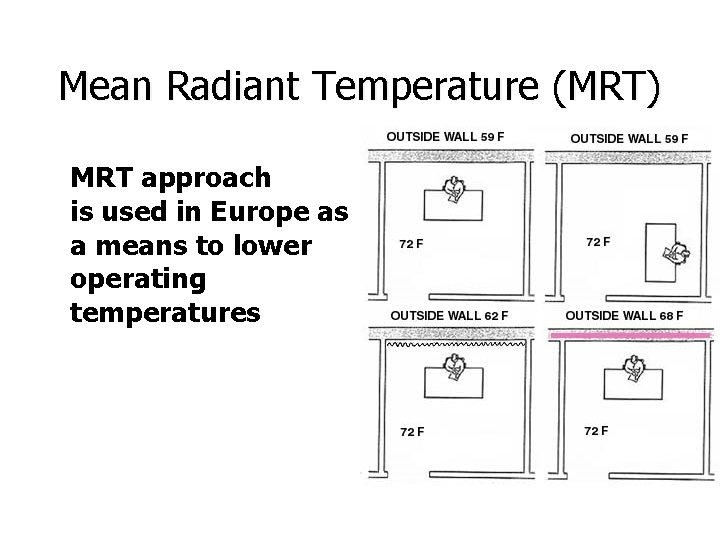
Mean Radiant Temperature (MRT) MRT approach is used in Europe as a means to lower operating temperatures
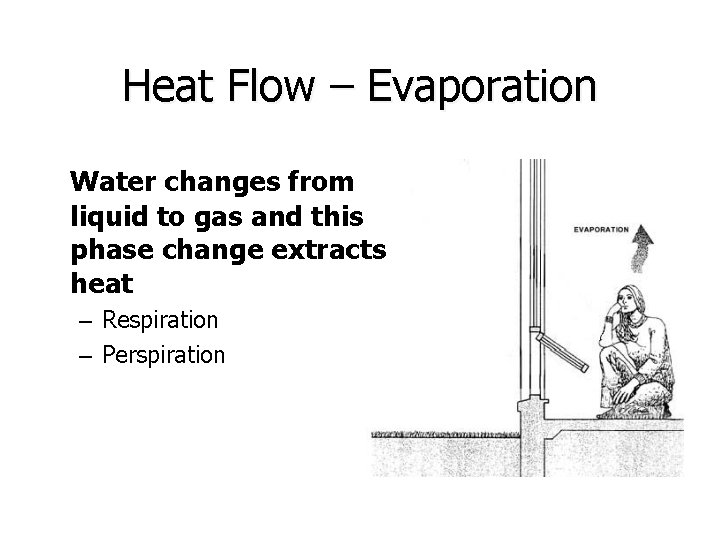
Heat Flow – Evaporation Water changes from liquid to gas and this phase change extracts heat – Respiration – Perspiration
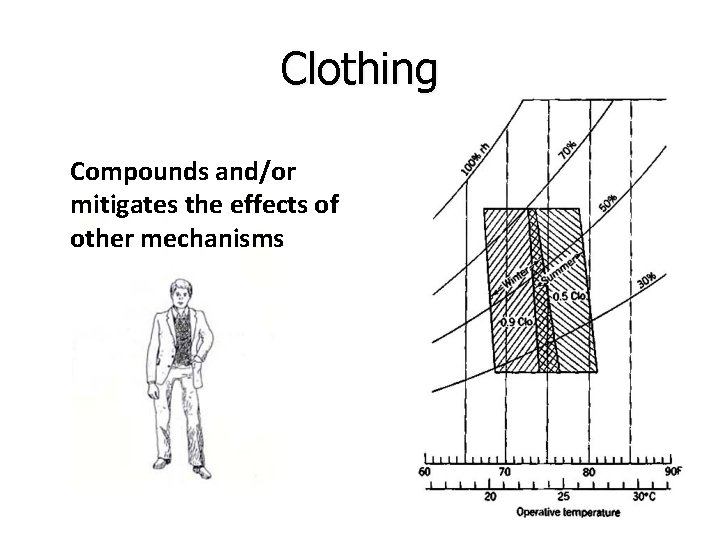
Clothing Compounds and/or mitigates the effects of other mechanisms
Managing Human Comfort Defining Human Comfort ± Reciprocative Factors • Diet, activity, clothing, exposure, etc. ± Physical Factors • Air temperature, relative humidity, etc. ± Organismic Factors Age, sex, genetics, body type, etc.
STANDARDS • Think of some building standards where the facility serves different activities
Managing Human Comfort Metabolism and Heat Loss from People ± Food metabolically converted to heat energy ± The body cools itself • Evaporation (latent heat loss) • Radiation (radiant heat loss) • Convection (sensible heat loss)
Managing Human Comfort Evaporative Heat Loss ± Evaporating perspiration from the body Radiant Heat Loss MRT – Mean radiant temperature ± Average temperature of surrounding surfaces ± Convective Heat Loss ± Loss of heat to surrounding air
Managing Human Comfort Factors Affecting Metabolic Heat Loss ± Evaporative losses depend on: • Skin surface temperature of the person • Relative humidity • Dry bulb temperature of the air • Velocity of the air
Managing Human Comfort ± Radiation losses depend on: • The mean radiant temperature (MRT) • Average temperature of exposed skin • Surface emissivities ± Convection losses depend on: • Dry bulb temperature of the air • Velocity of the air • Average temperature of exposed skin
Managing Human Comfort Physiological Reactions to Thermal Extremes ± The body reacts to protect its vital organs ± Extreme cold • Leads to frostbite and hypothermia • Reduced evaporation heat loss from skin ± Extreme Heat • Leads to heat stroke or brain injury • Increased evaporation heat loss
Managing Human Comfort Designing for Metabolism and Sedentary Activity ± Metabolic rates change with activities ± HVAC designers usually select “average” activities ± Sedentary activities are chosen for office environments ± Sedentary activity generates about 400 Btu/hr
Managing Human Comfort Defining Thermal Comfort Create an energy-balanced environment ± When a person loses metabolic heat at the same rate at which it is gained ± The ASHRAE thermal Comfort Standard 55 -1992 ± Generally acceptable comfort ranges ±
Managing Human Comfort Estimating Metabolic Heat Transfer Rates ± At 75ºF MRT, 40% Humidity, Air velocity of 40 fpm • Evaporative transfer rate is 100 Btu/hr • Radiation transfer rate is 150 Btu/hr • Convective transfer rate is 150 Btu/hr • MRT is below air temperature in the winter • MRT is above air temperature in the summer
Managing Human Comfort Designing for Thermal Comfort Weather conditions/Geographical location ± Building use and occupancy ± Architectural details ± Heating/cooling sources ± Heating/cooling distribution systems ± HVAC system controls ±
Managing Human Comfort List the factors that affect people’s comfort ± Explain the role of metabolism in thermal comfort ± List three means of losing metabolic heat ± Compare the effects of air conditions on metabolic heat transfer ± Describe how the body reacts to thermal extremes ±
Managing Human Comfort After completing this chapter, you will be able to: Understand how metabolism and activity affect thermal design ± Cite ASHRAE standards for thermal comfort ± List considerations for estimating metabolic heat transfer rate ± Identify the factors that designers can manipulate to achieve thermal comfort ±