Intro to the course Evolution and Development Rivera
- Slides: 46
Intro to the course Evolution and Development, Rivera 2018
What is this course about? • What does development tell us about evolution? • What does evolution tell us about development? • Where do interesting characters come from?
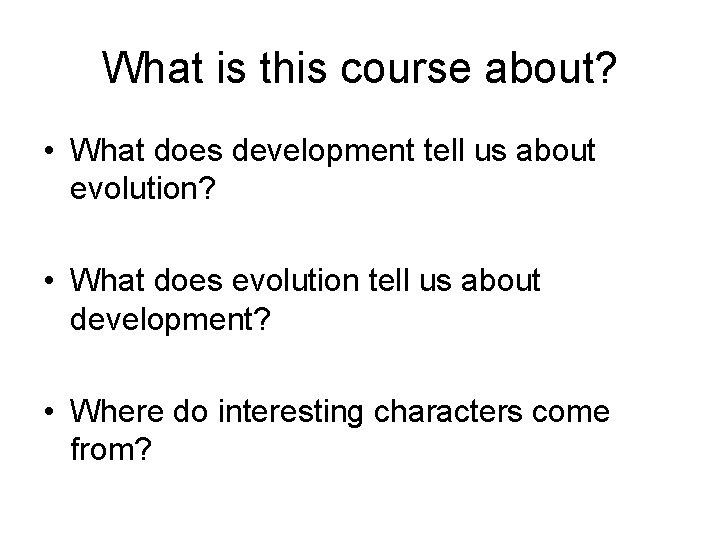
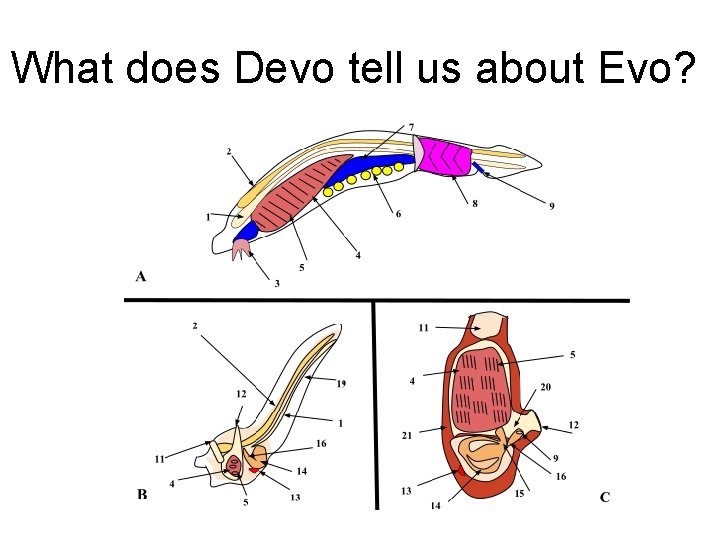
What does Devo tell us about Evo?
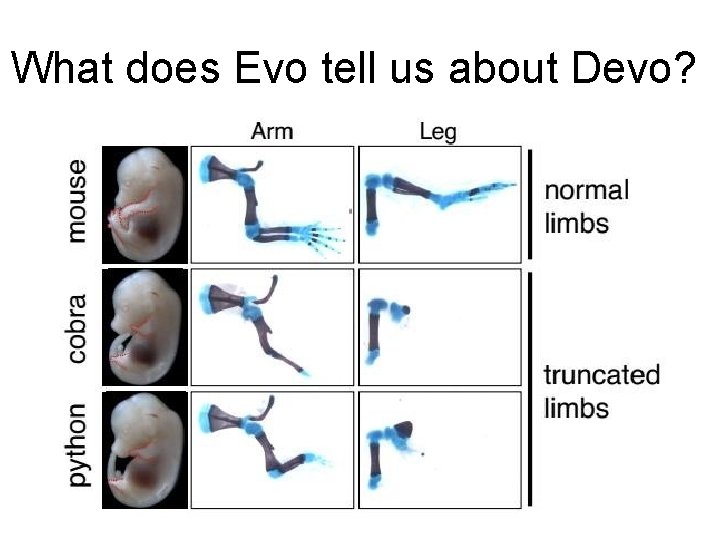
What does Evo tell us about Devo?
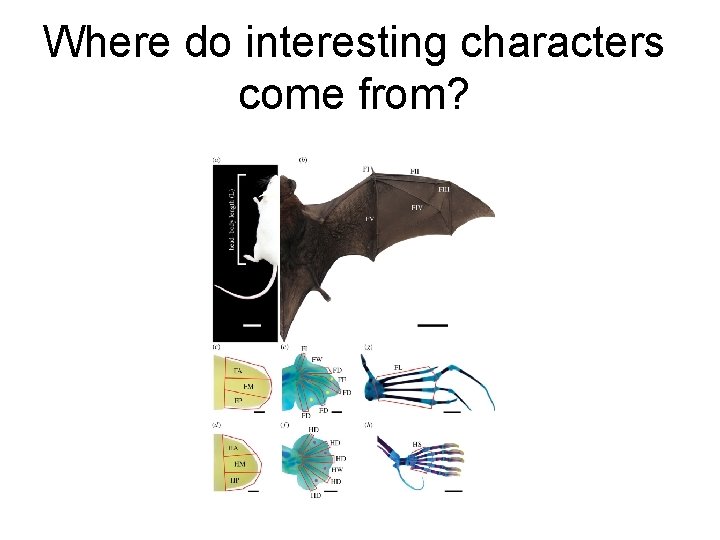
Where do interesting characters come from?
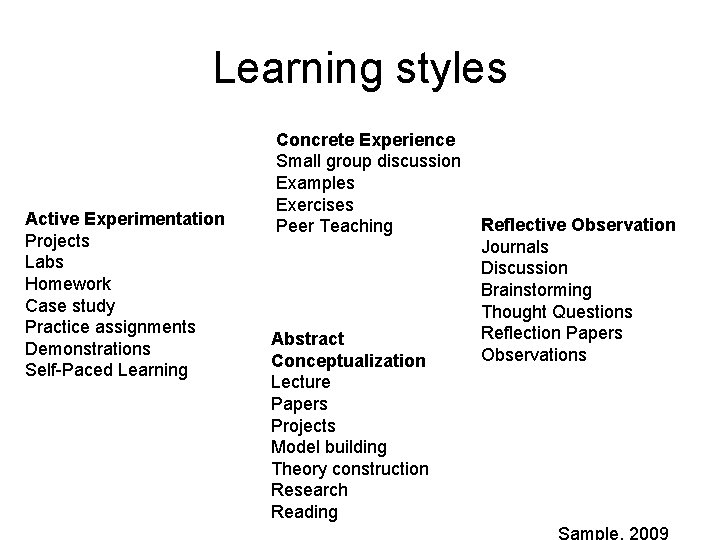
Learning styles Active Experimentation Projects Labs Homework Case study Practice assignments Demonstrations Self-Paced Learning Concrete Experience Small group discussion Examples Exercises Peer Teaching Abstract Conceptualization Lecture Papers Projects Model building Theory construction Research Reading Reflective Observation Journals Discussion Brainstorming Thought Questions Reflection Papers Observations Sample, 2009
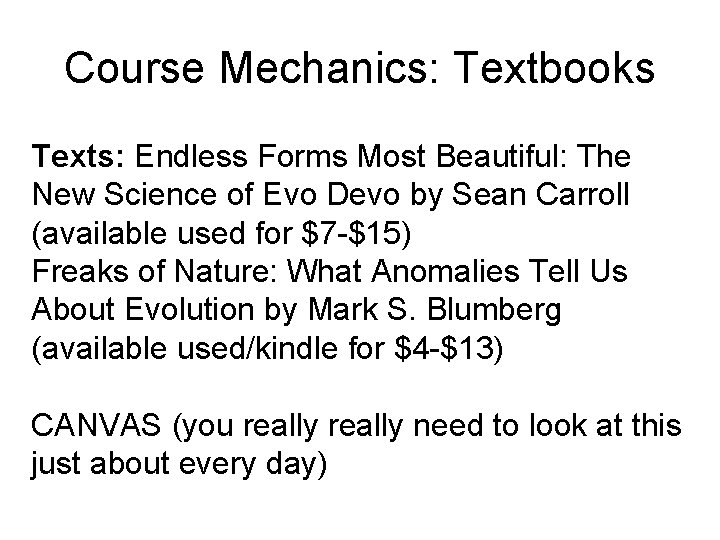
Course Mechanics: Textbooks Texts: Endless Forms Most Beautiful: The New Science of Evo Devo by Sean Carroll (available used for $7 -$15) Freaks of Nature: What Anomalies Tell Us About Evolution by Mark S. Blumberg (available used/kindle for $4 -$13) CANVAS (you really need to look at this just about every day)
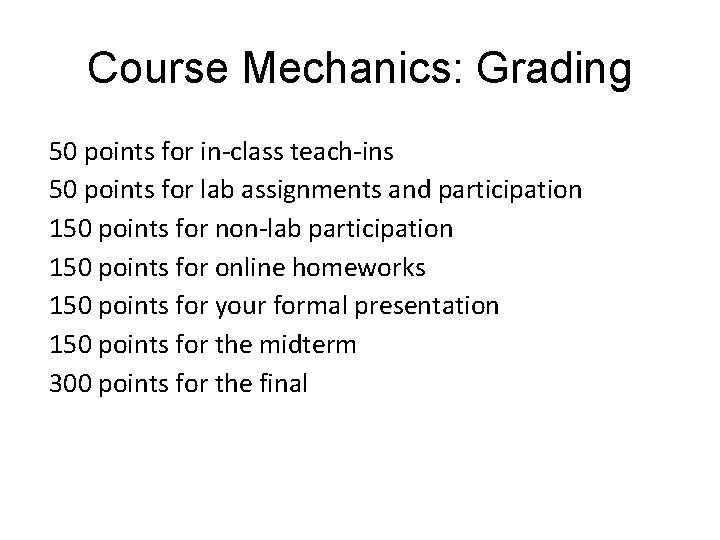
Course Mechanics: Grading 50 points for in-class teach-ins 50 points for lab assignments and participation 150 points for non-lab participation 150 points for online homeworks 150 points for your formal presentation 150 points for the midterm 300 points for the final
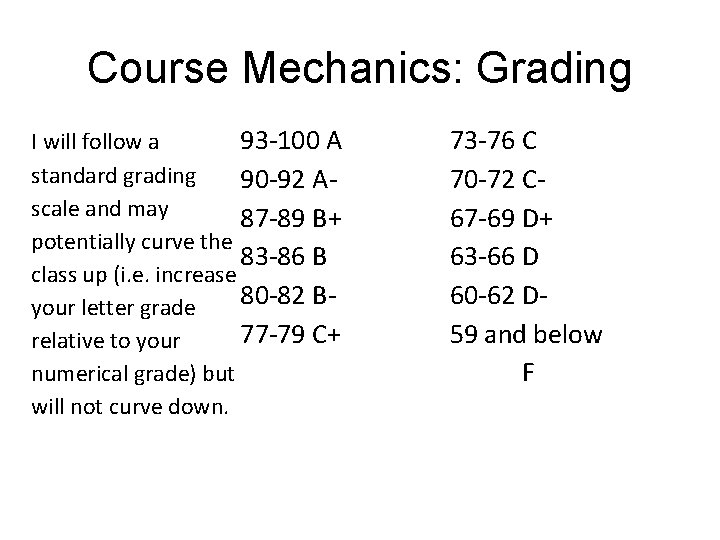
Course Mechanics: Grading 93 -100 A I will follow a standard grading 90 -92 Ascale and may 87 -89 B+ potentially curve the 83 -86 B class up (i. e. increase 80 -82 Byour letter grade 77 -79 C+ relative to your numerical grade) but will not curve down. 73 -76 C 70 -72 C 67 -69 D+ 63 -66 D 60 -62 D 59 and below F
Course mechanics No makeup tests No makeup presentations
Week 1: Intro to Evo-Devo Rivera 2018
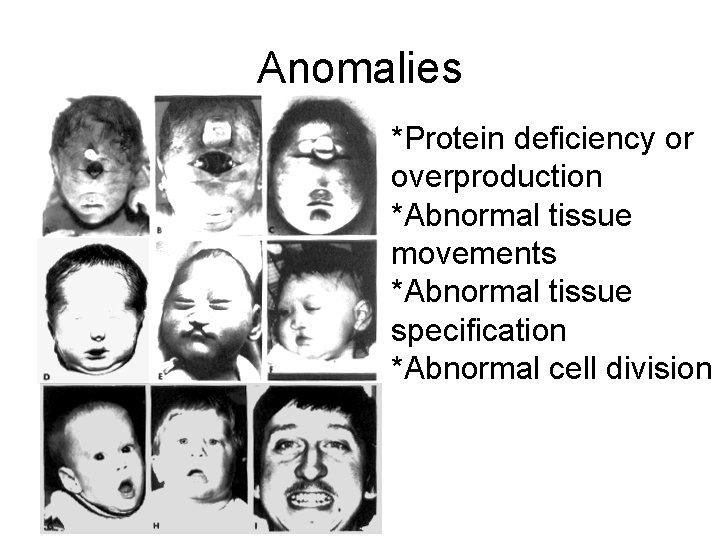
Anomalies *Protein deficiency or overproduction *Abnormal tissue movements *Abnormal tissue specification *Abnormal cell division
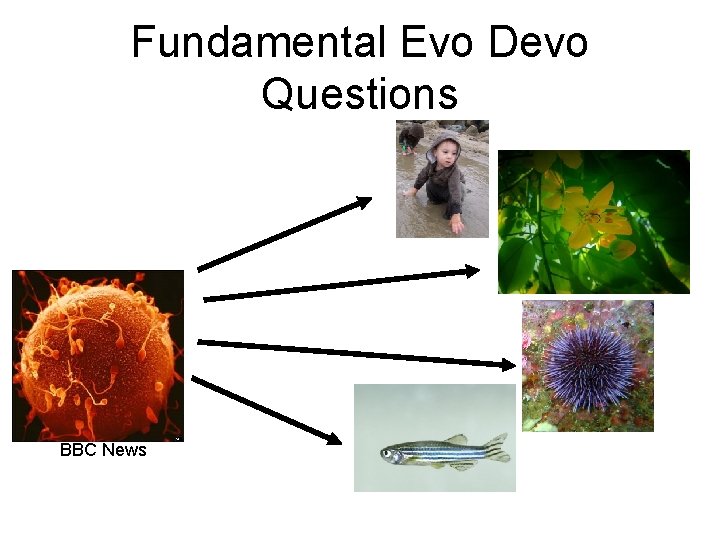
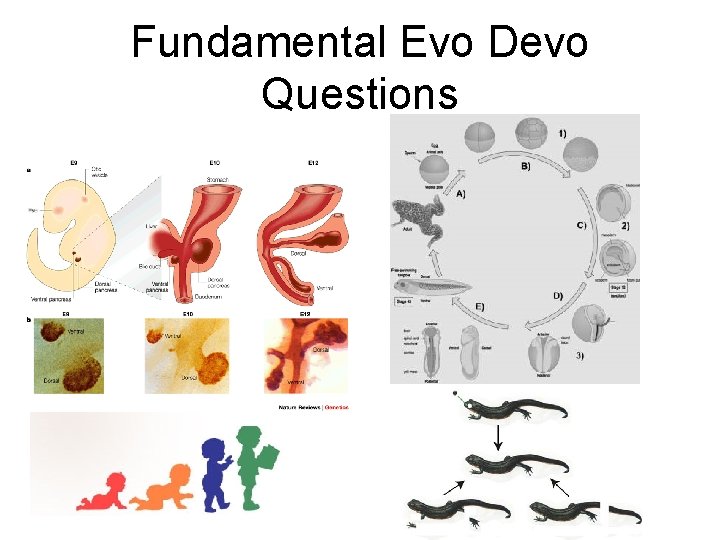
Fundamental Evo Devo Questions BBC News
Fundamental Evo Devo Questions
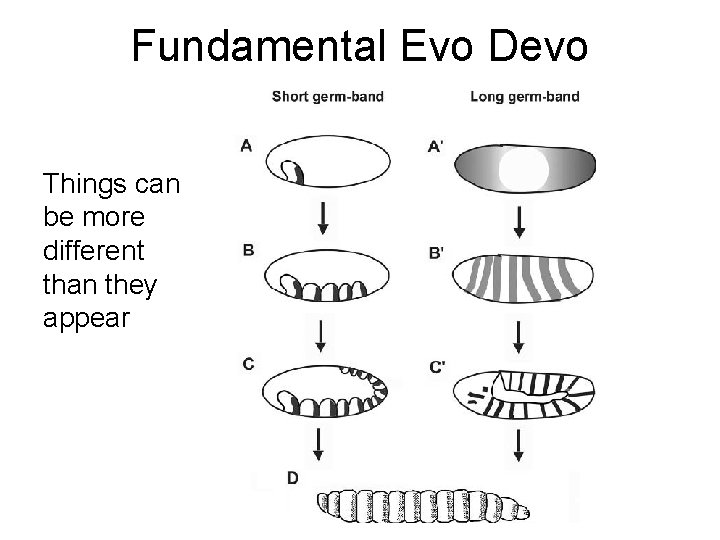
Fundamental Evo Devo Things can be more different than they appear
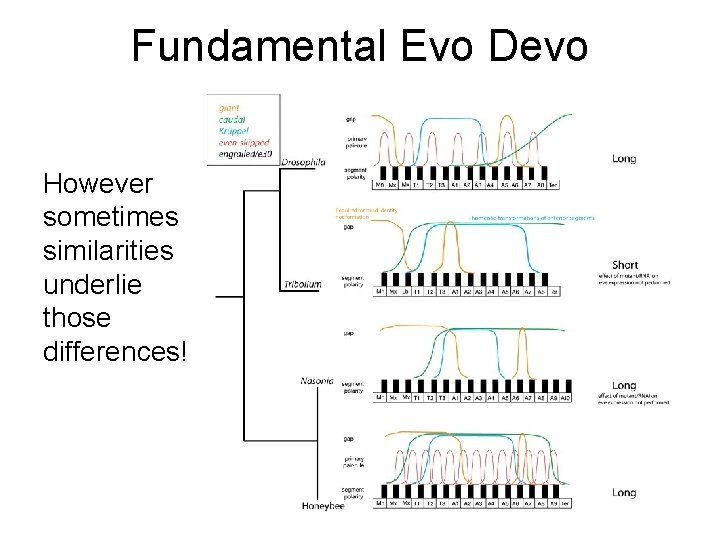
Fundamental Evo Devo However sometimes similarities underlie those differences!
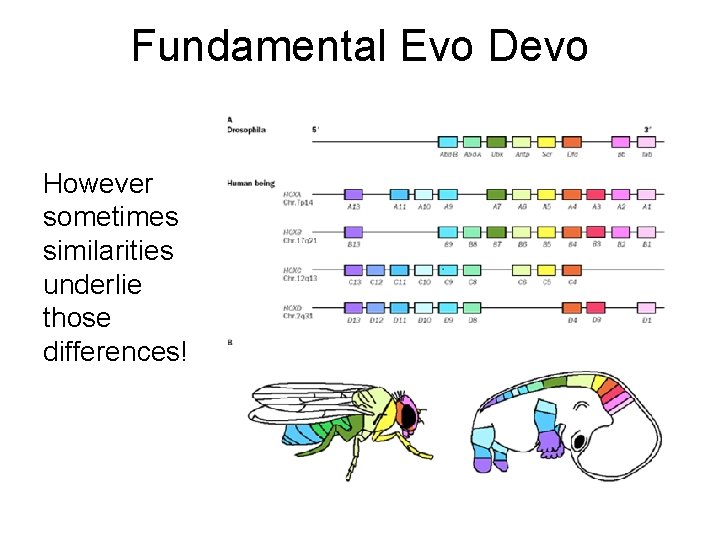
Fundamental Evo Devo However sometimes similarities underlie those differences!
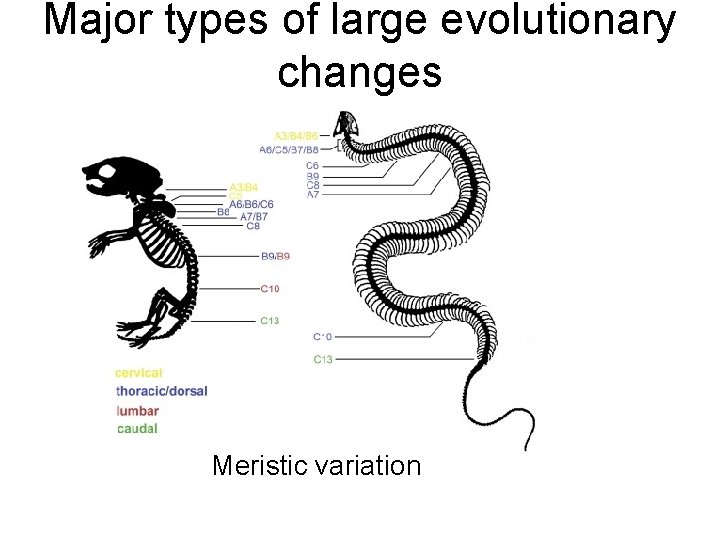
Major types of large evolutionary changes Meristic variation
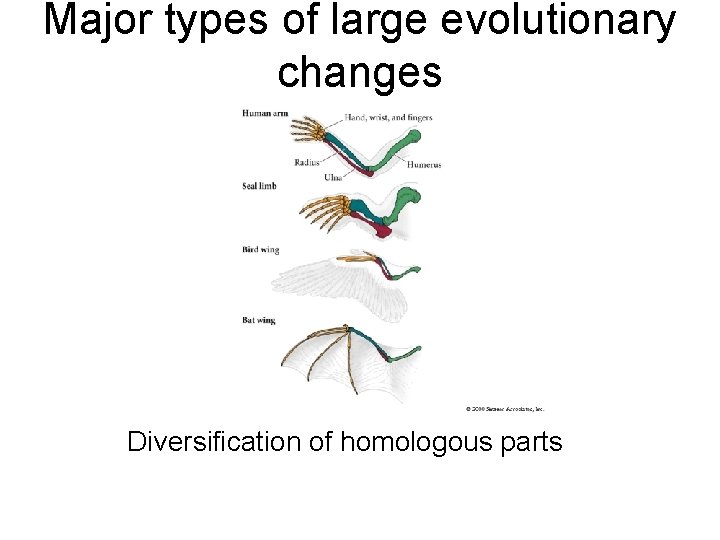
Major types of large evolutionary changes Diversification of homologous parts
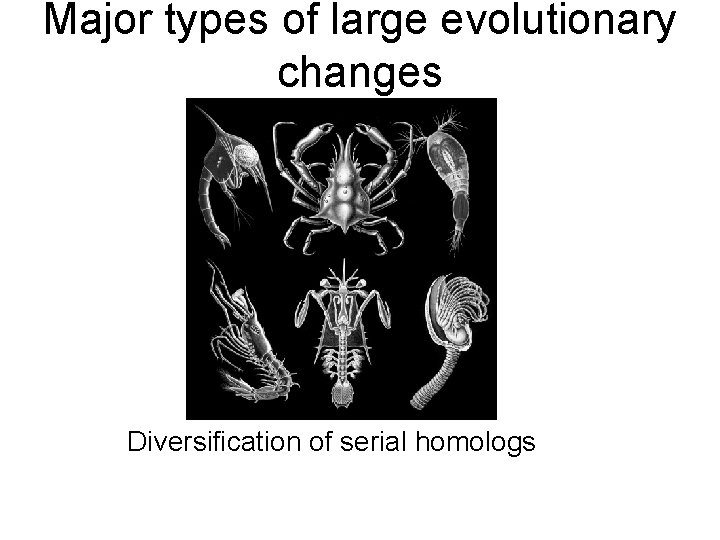
Major types of large evolutionary changes Diversification of serial homologs
Where do these changes come from? We use Developmental Biology and comparative Genetics to figure out the steps Evolution has taken to generate this riotous diversity.
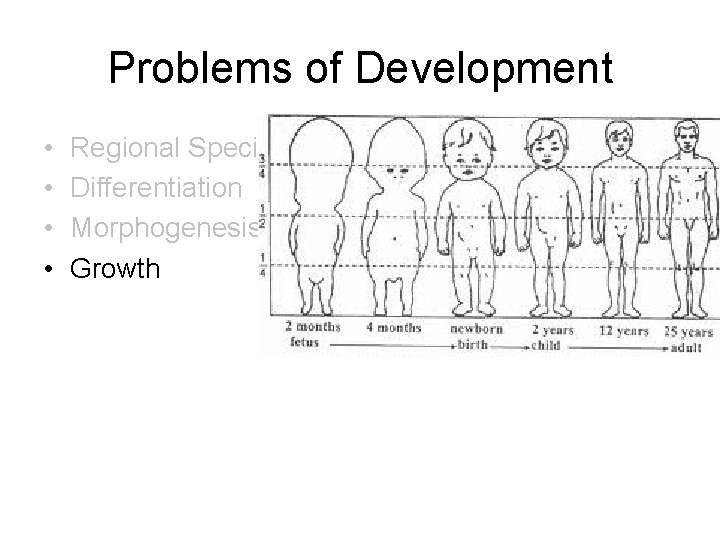
Problems of Development – Big Picture • • Regional Specification Differentiation Morphogenesis Growth
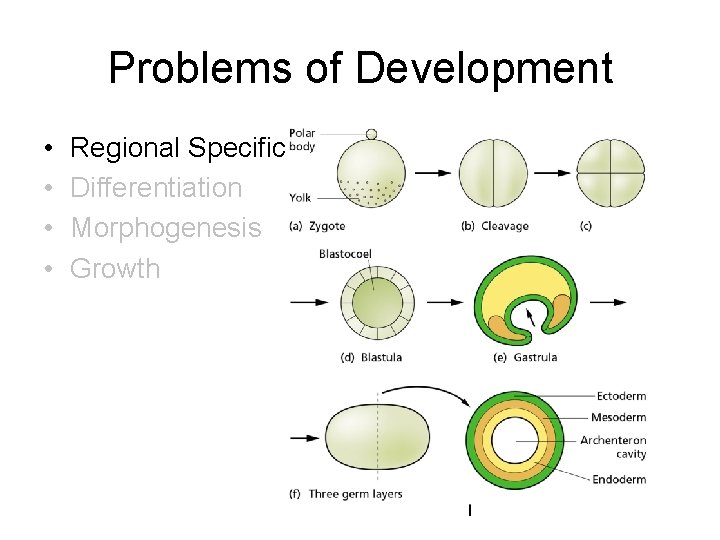
Problems of Development • • Regional Specification Differentiation Morphogenesis Growth
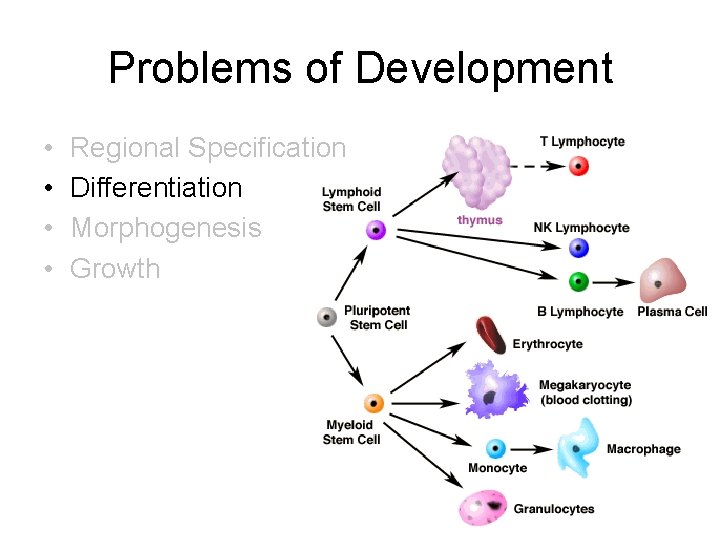
Problems of Development • • Regional Specification Differentiation Morphogenesis Growth
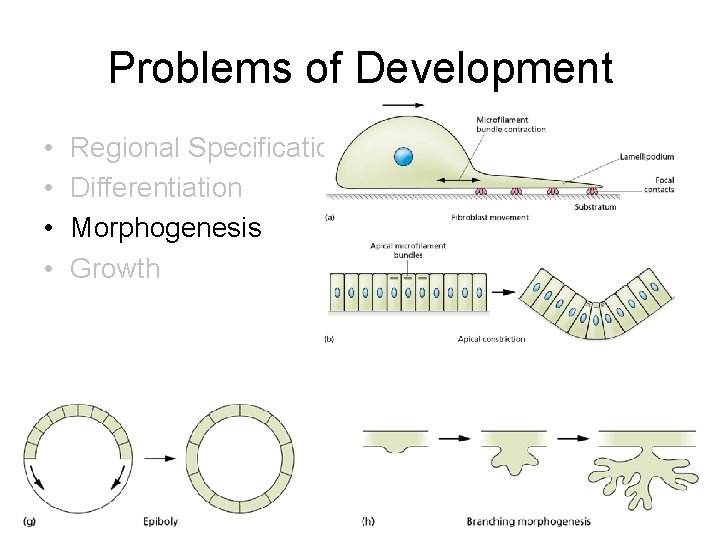
Problems of Development • • Regional Specification Differentiation Morphogenesis Growth
Problems of Development • • Regional Specification Differentiation Morphogenesis Growth
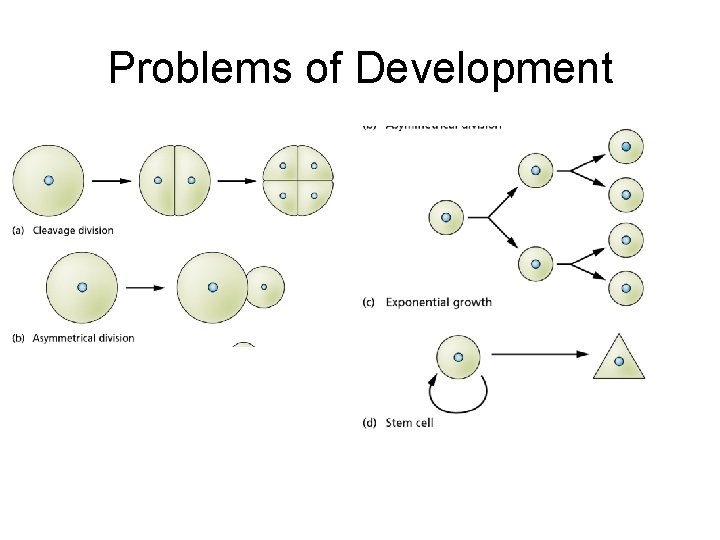
Problems of Development
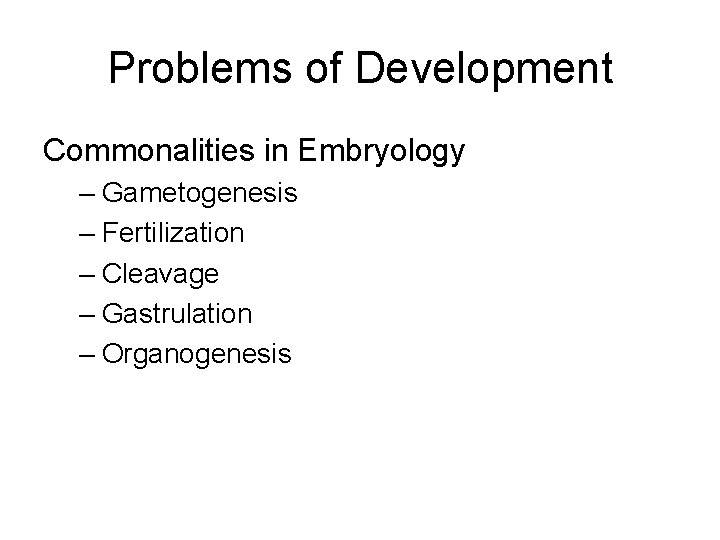
Problems of Development Commonalities in Embryology – Gametogenesis – Fertilization – Cleavage – Gastrulation – Organogenesis
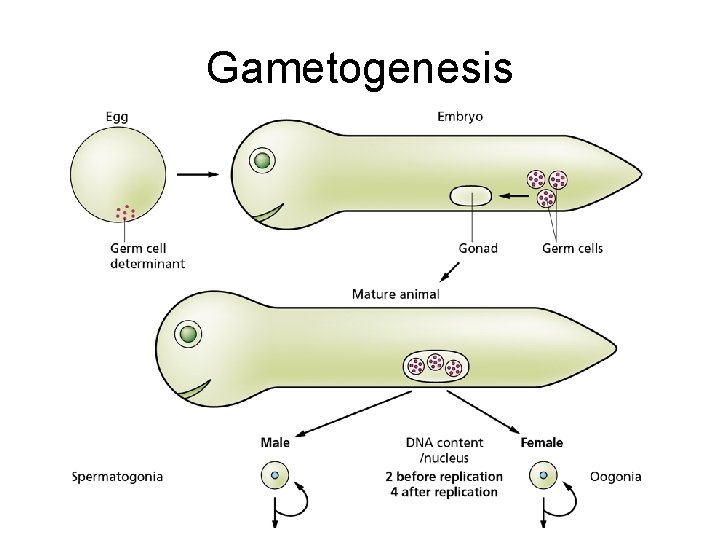
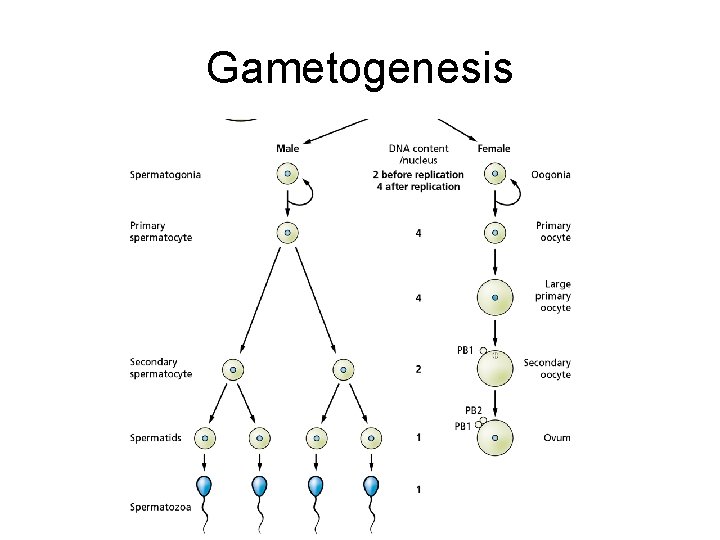
Gametogenesis
Gametogenesis
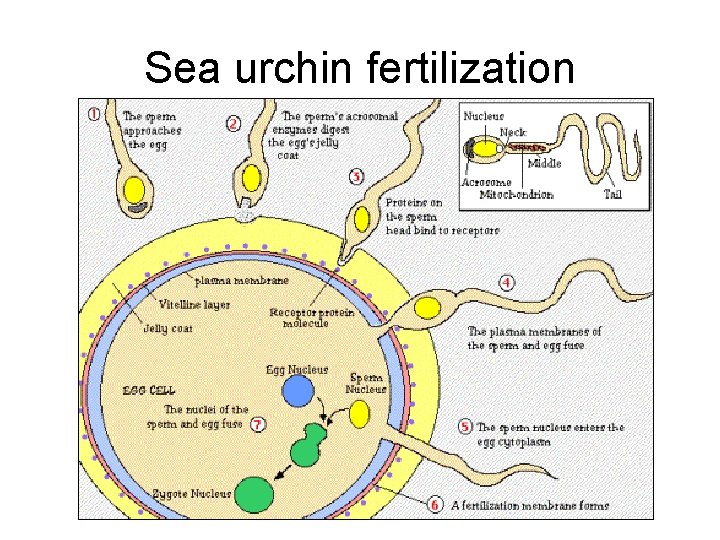
Fertilization • Sperm needs to find egg – Right sperm (species-specific recognition) • Sperm entry – Sperm needs to get into egg • Block to polyspermy – polyploidy -> death
Sea urchin fertilization
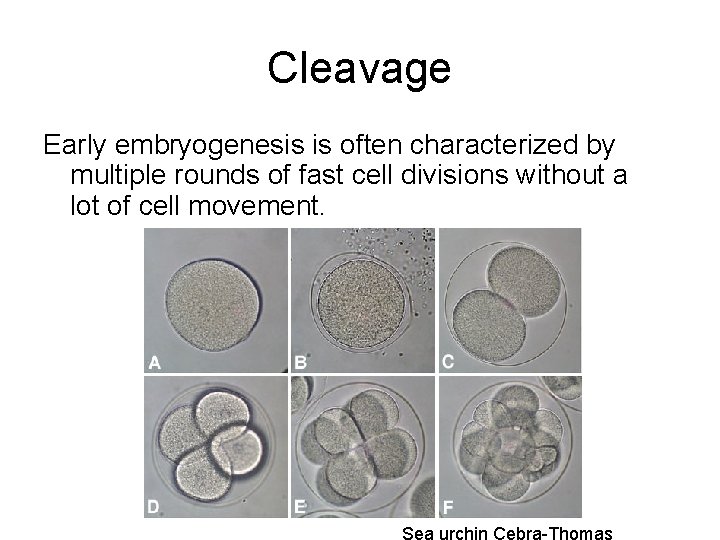
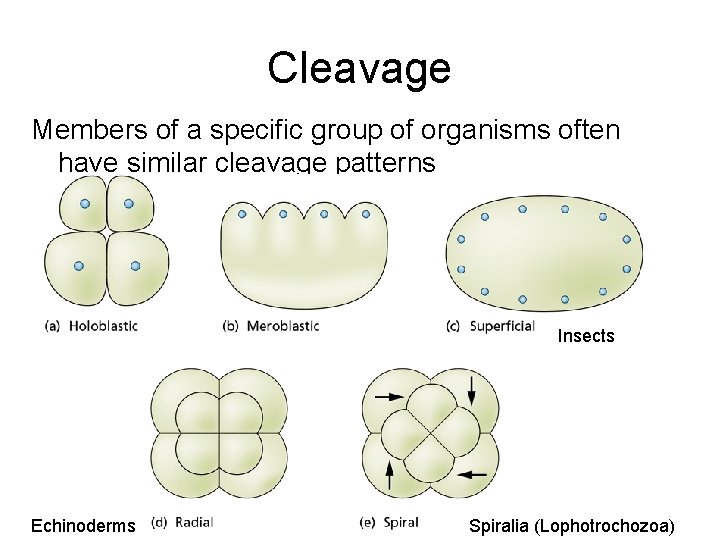
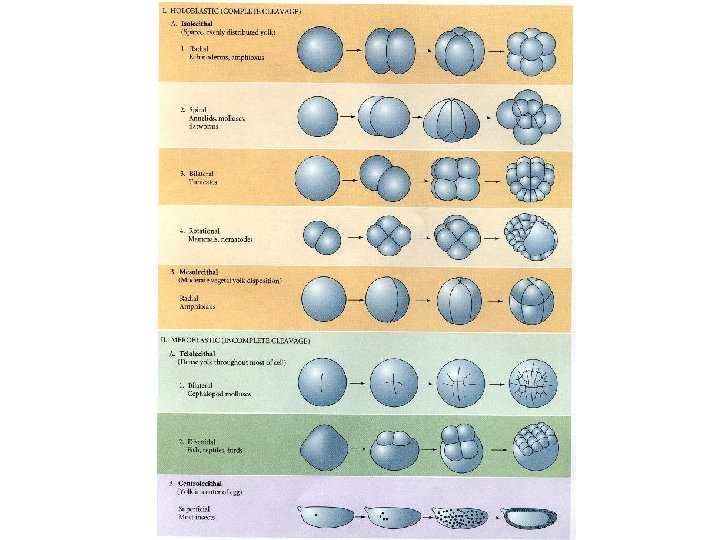
Cleavage Early embryogenesis is often characterized by multiple rounds of fast cell divisions without a lot of cell movement. Sea urchin Cebra-Thomas
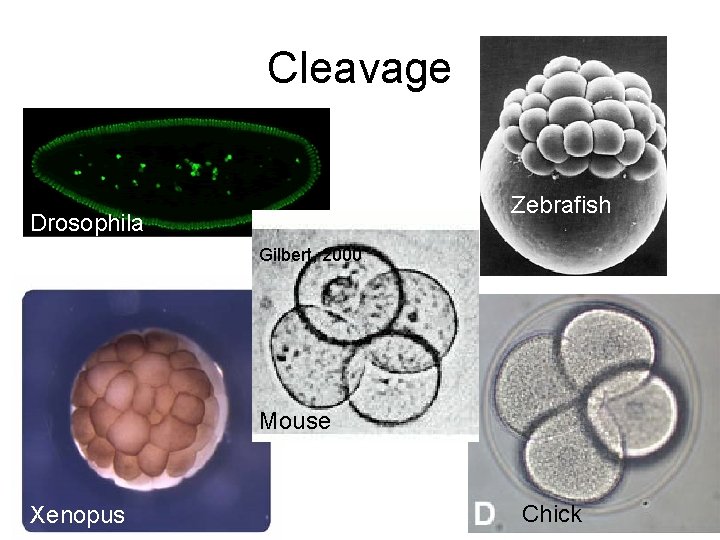
Cleavage Members of a specific group of organisms often have similar cleavage patterns Insects Echinoderms Spiralia (Lophotrochozoa)
Cleavage Zebrafish Drosophila Gilbert, 2000 Mouse Xenopus Chick
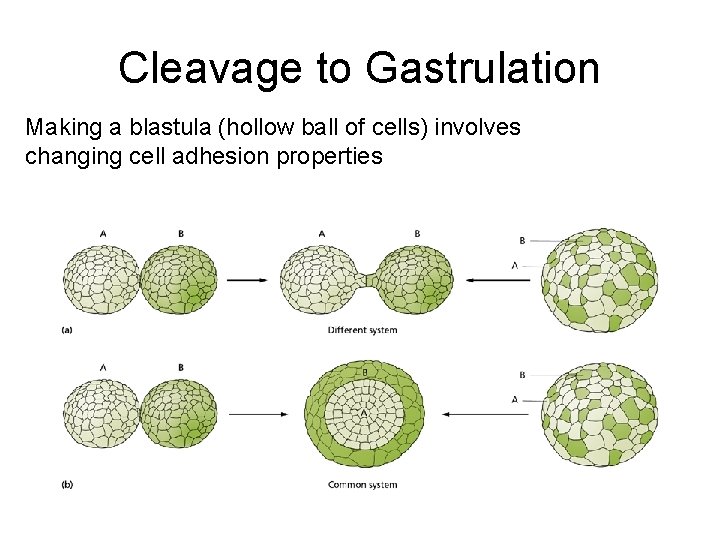
Cleavage to Gastrulation Making a blastula (hollow ball of cells) involves changing cell adhesion properties
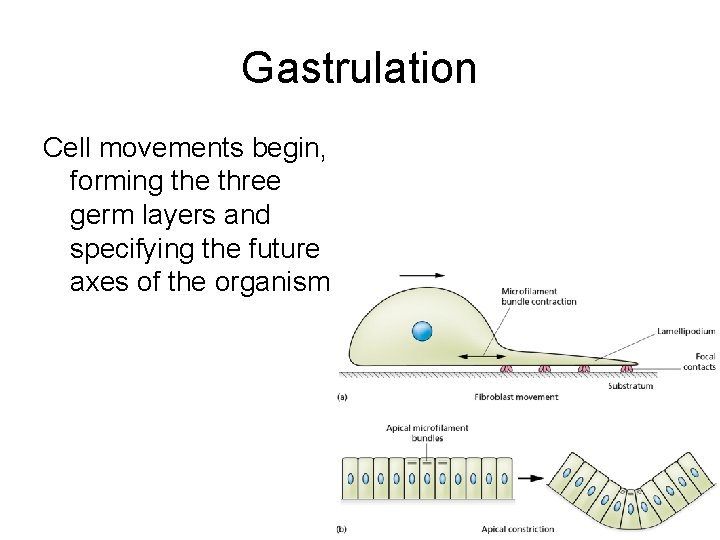
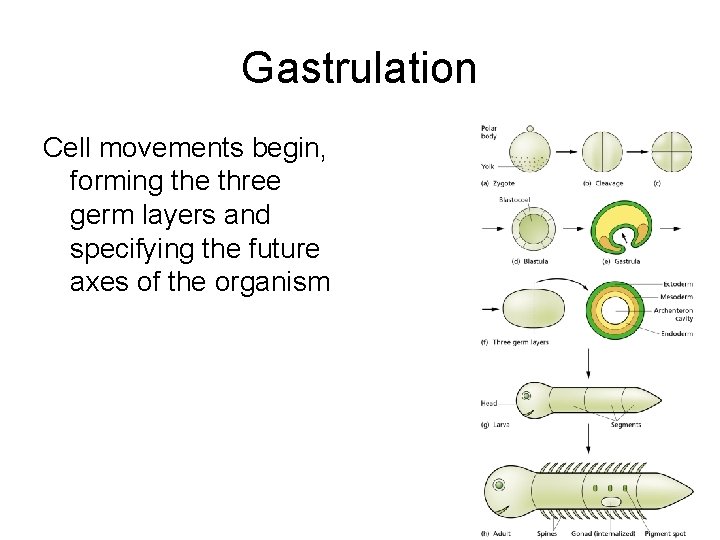
Gastrulation Cell movements begin, forming the three germ layers and specifying the future axes of the organism
Gastrulation Cell movements begin, forming the three germ layers and specifying the future axes of the organism
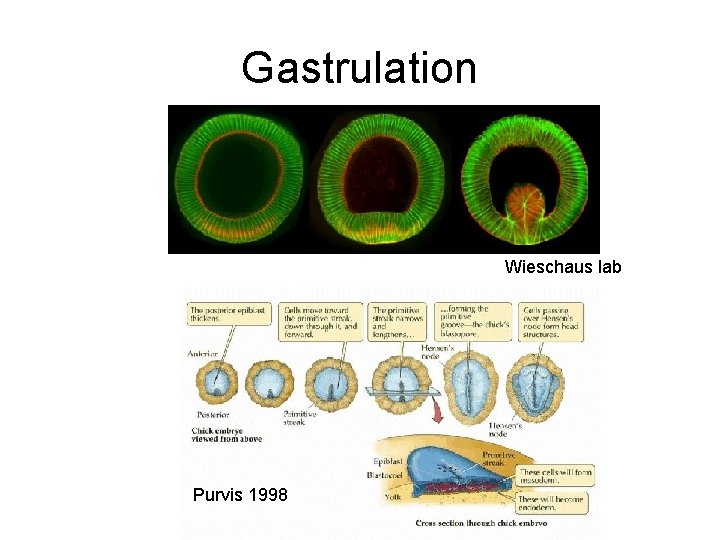
Gastrulation Wieschaus lab Purvis 1998
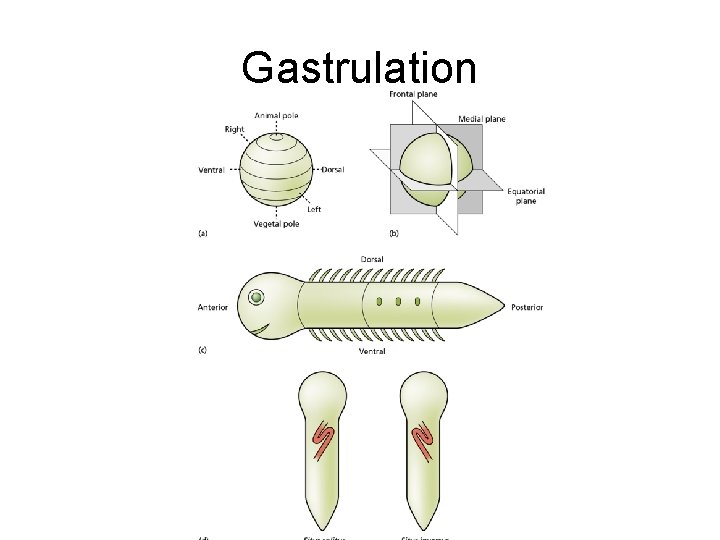
Gastrulation
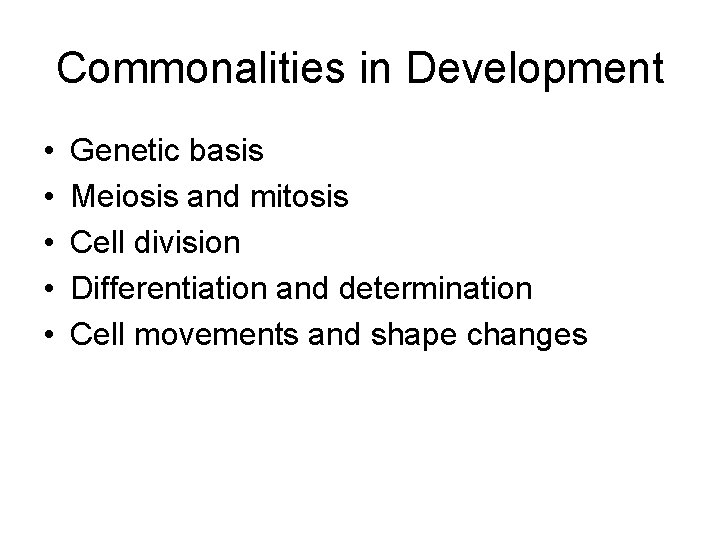
Commonalities in Development • • • Genetic basis Meiosis and mitosis Cell division Differentiation and determination Cell movements and shape changes
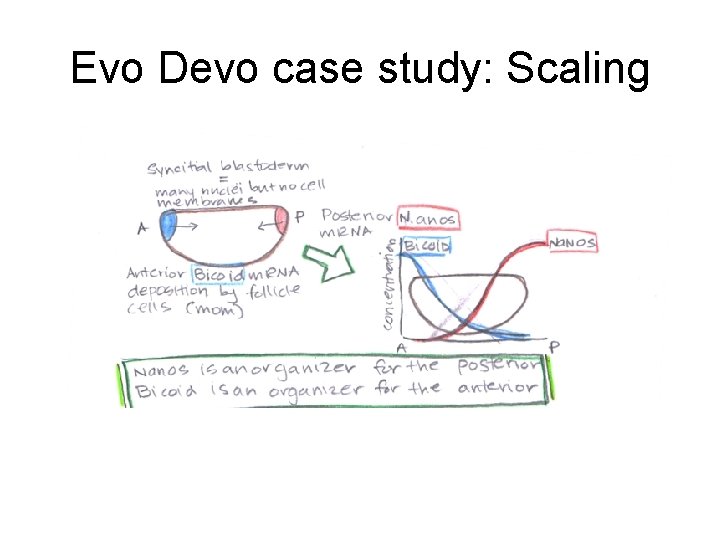
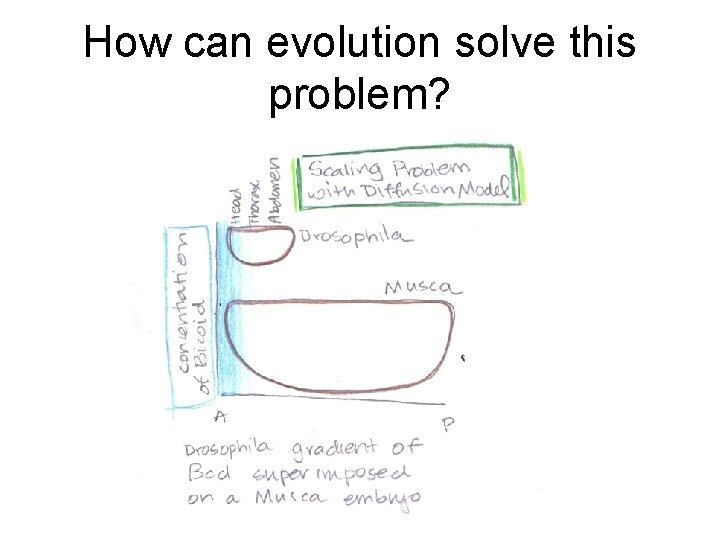
Evo Devo case study: Scaling
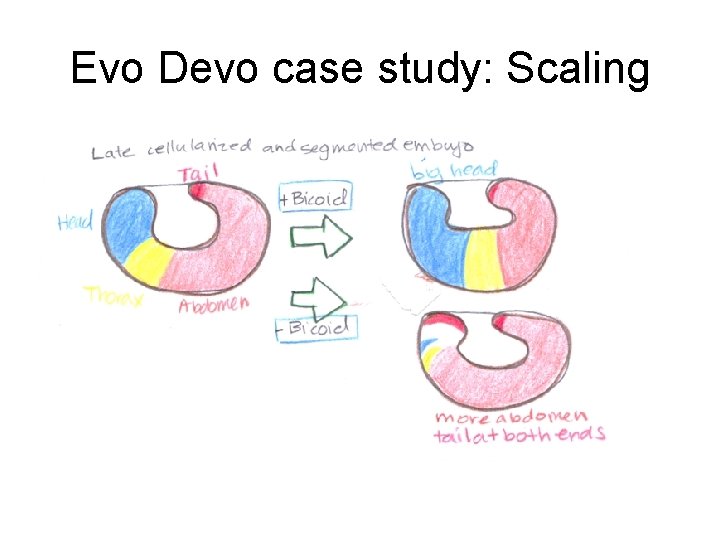
Evo Devo case study: Scaling
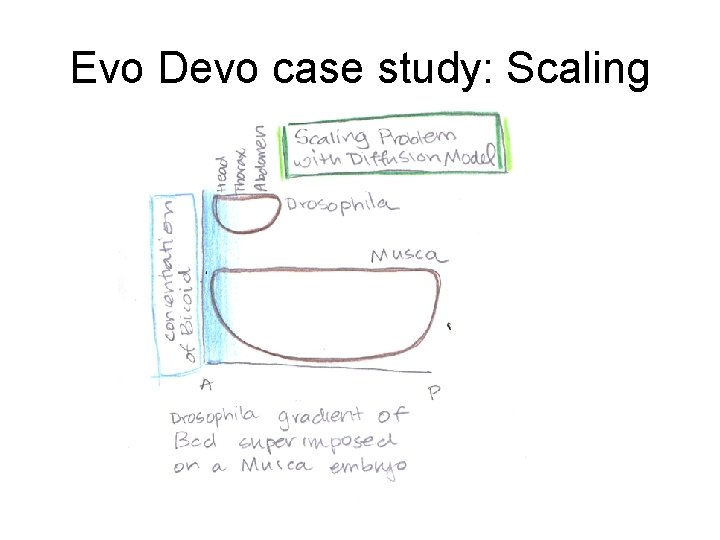
Evo Devo case study: Scaling
How can evolution solve this problem?