Interactions of Life Interaction There are three main


- Slides: 32
Interactions of Life
Interaction There are three main types of interaction between organisms: • Competition • Predation • Symbiosis
Competition • Different species can share the same habitat. • Different species can share the same food requirement. • If two species share the same niche, the result is competition and one will usually squeeze the other out. Gause’s principle.
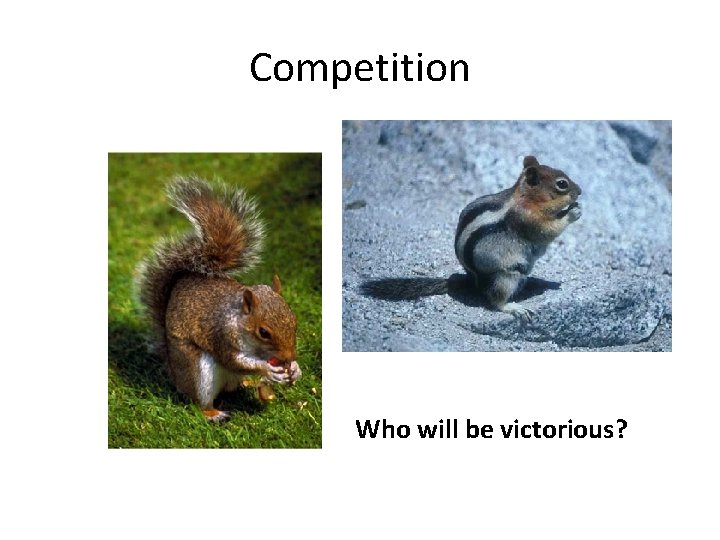
Competition Who will be victorious?
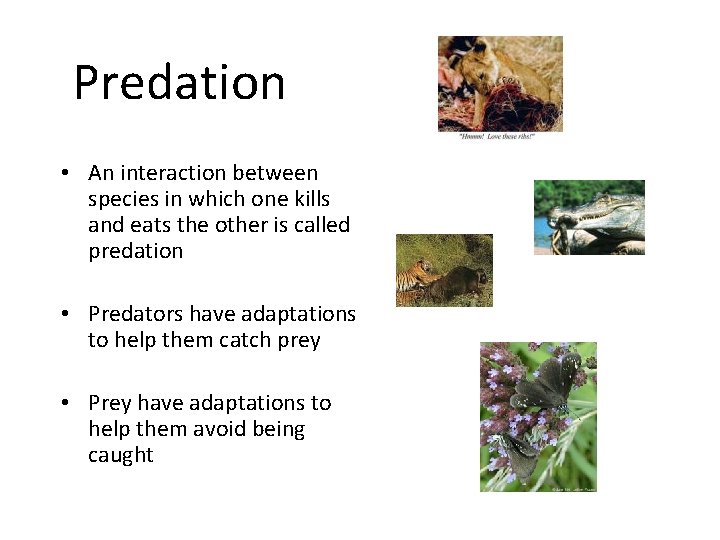
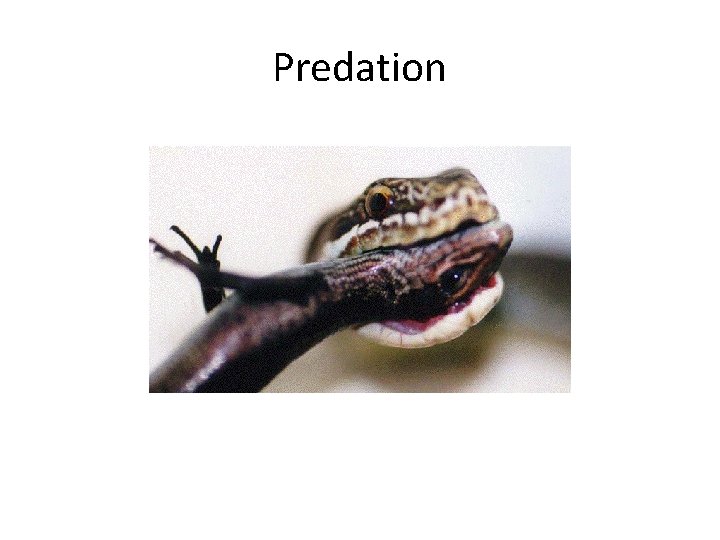
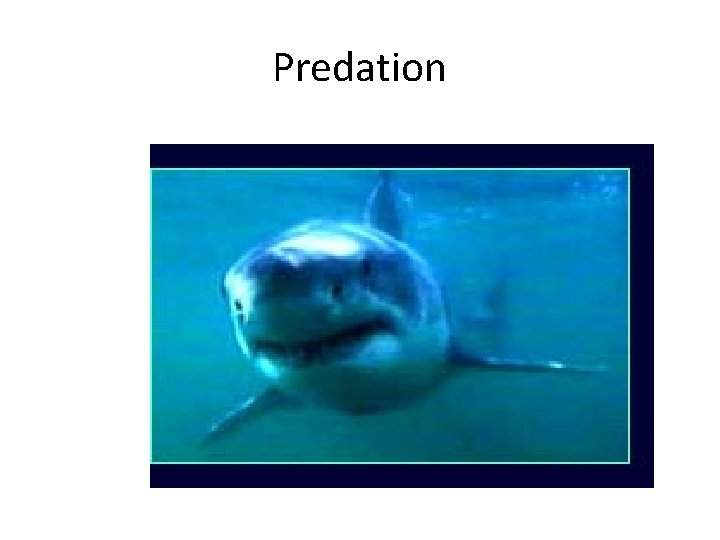
Predation • An interaction between species in which one kills and eats the other is called predation • Predators have adaptations to help them catch prey • Prey have adaptations to help them avoid being caught
Predation: Predator-Prey Relationships • Exploitative Competition • Predator: animals that feed on other animals (can also be applied to herbivores feeding on plants) • How is this Harmful to prey? • How does this Benefit prey species? • What is the Potential Benefit to Biotic Community?
Predation
Predation
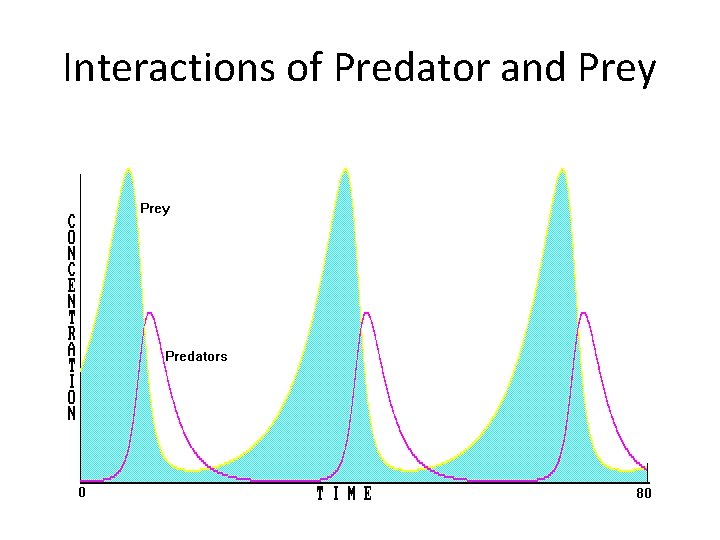
Predation: Linkage of predator and prey population sizes • • Decreased predator --> increased prey Increased predator --> decreased prey
Interactions of Predator and Prey
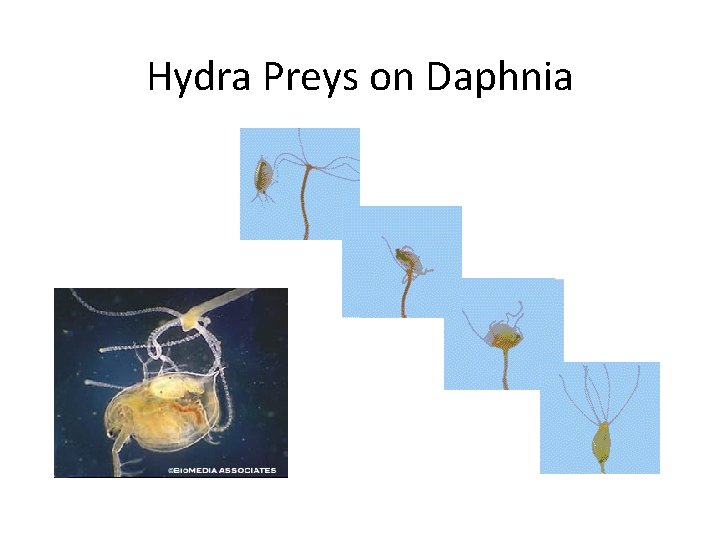
Hydra Preys on Daphnia
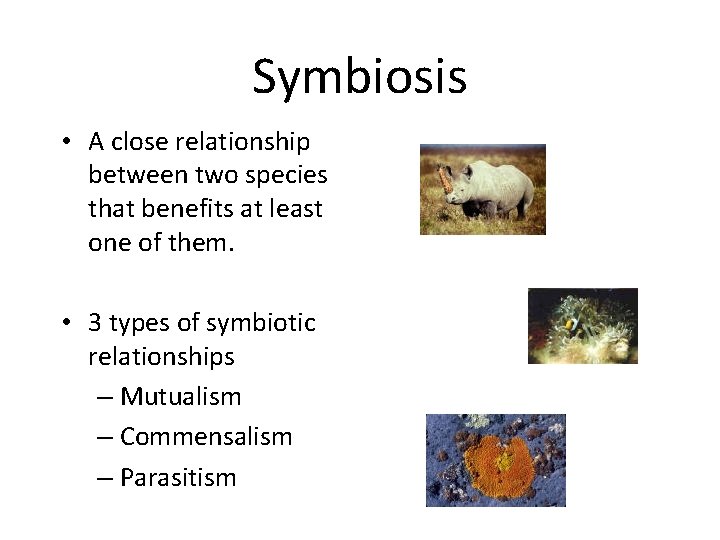
Symbiosis • A close relationship between two species that benefits at least one of them. • 3 types of symbiotic relationships – Mutualism – Commensalism – Parasitism
Mutualism: • Symbiotic relationship where both species benefit
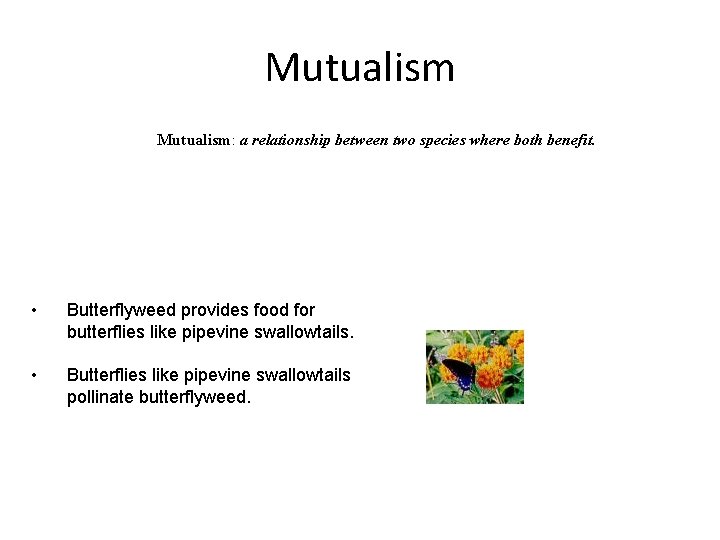
Mutualism: a relationship between two species where both benefit. • Butterflyweed provides food for butterflies like pipevine swallowtails. • Butterflies like pipevine swallowtails pollinate butterflyweed.
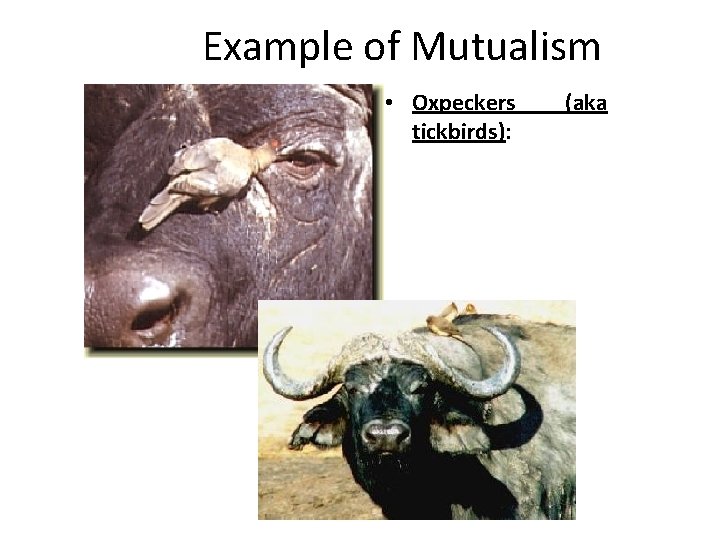
Example of Mutualism • Oxpeckers tickbirds): (aka
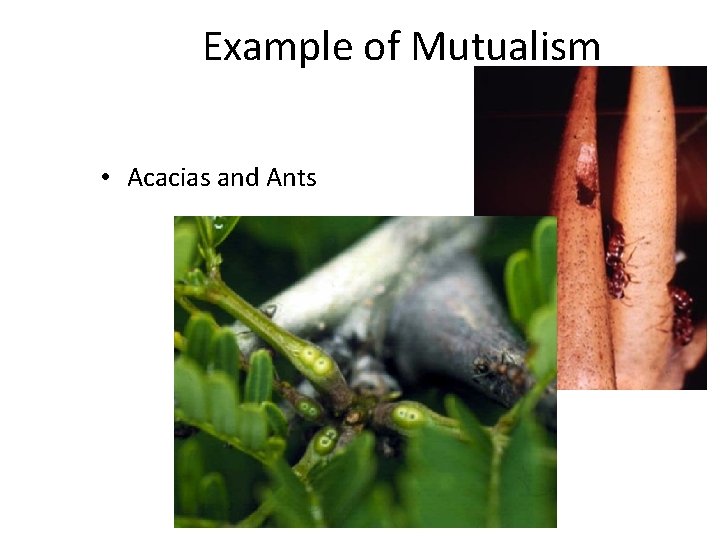
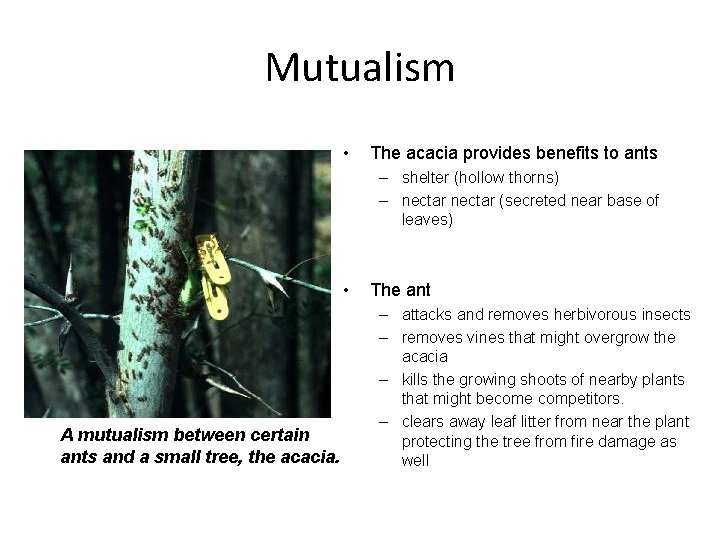
Example of Mutualism • Acacias and Ants
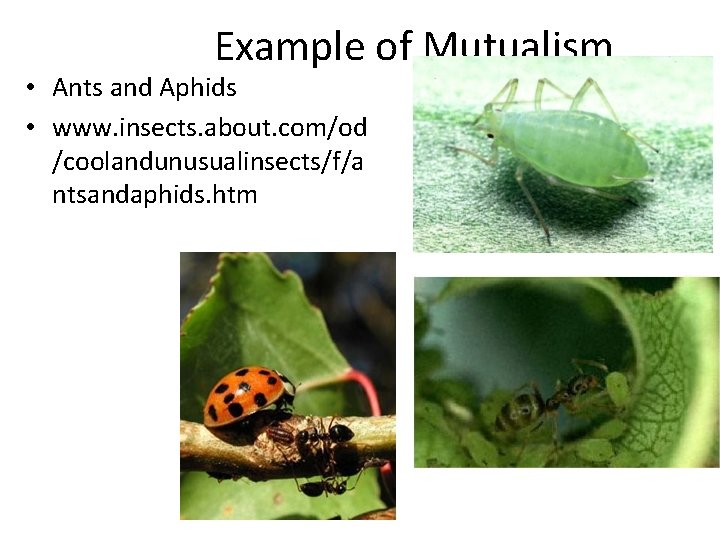
Example of Mutualism • Ants and Aphids • www. insects. about. com/od /coolandunusualinsects/f/a ntsandaphids. htm
Mutualism • The acacia provides benefits to ants – shelter (hollow thorns) – nectar (secreted near base of leaves) • A mutualism between certain ants and a small tree, the acacia. The ant – attacks and removes herbivorous insects – removes vines that might overgrow the acacia – kills the growing shoots of nearby plants that might become competitors. – clears away leaf litter from near the plant protecting the tree from fire damage as well
Examples of Mutualism • Termites and Protozoans: • Clownfish and Sea Anemone:
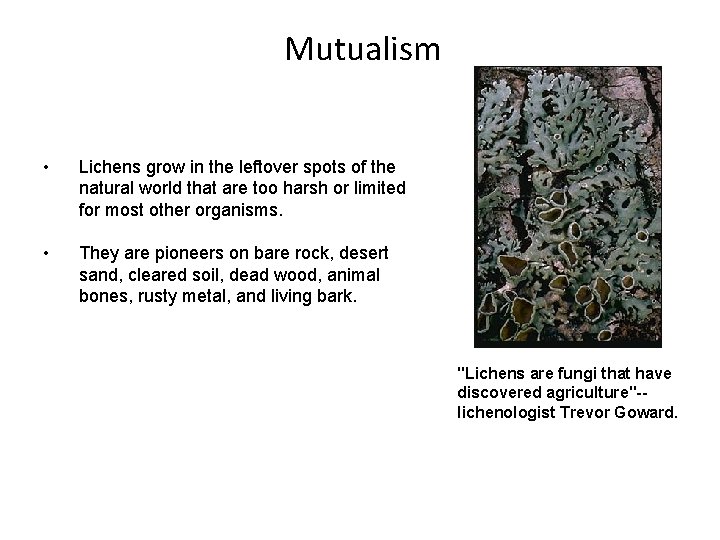
Mutualism • Lichens grow in the leftover spots of the natural world that are too harsh or limited for most other organisms. • They are pioneers on bare rock, desert sand, cleared soil, dead wood, animal bones, rusty metal, and living bark. "Lichens are fungi that have discovered agriculture"-lichenologist Trevor Goward.
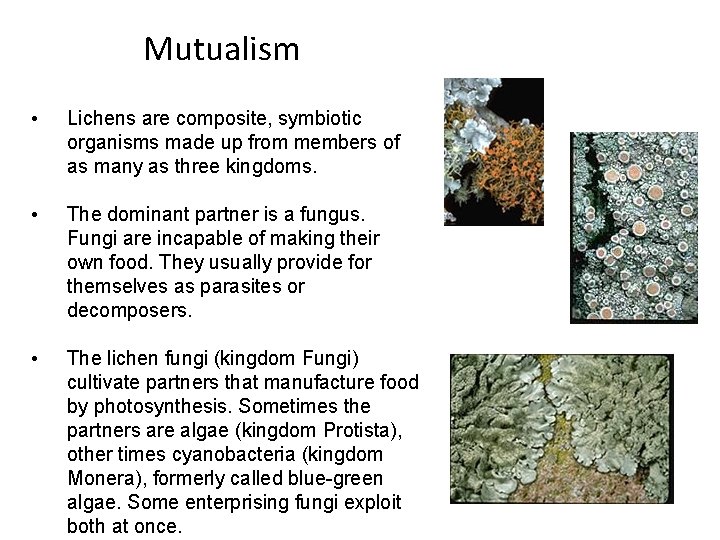
Mutualism • Lichens are composite, symbiotic organisms made up from members of as many as three kingdoms. • The dominant partner is a fungus. Fungi are incapable of making their own food. They usually provide for themselves as parasites or decomposers. • The lichen fungi (kingdom Fungi) cultivate partners that manufacture food by photosynthesis. Sometimes the partners are algae (kingdom Protista), other times cyanobacteria (kingdom Monera), formerly called blue-green algae. Some enterprising fungi exploit both at once.
Commensalism • Symbiotic relationship where one species benefits and the other is neither helped nor harmed
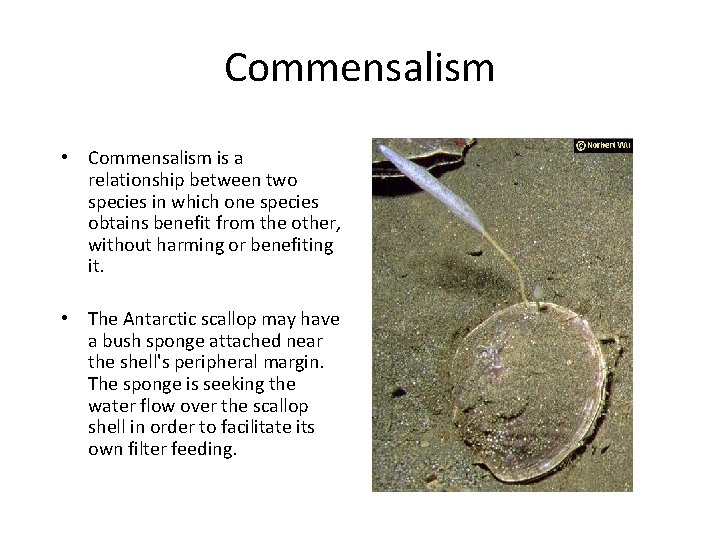
Commensalism • Commensalism is a relationship between two species in which one species obtains benefit from the other, without harming or benefiting it. • The Antarctic scallop may have a bush sponge attached near the shell's peripheral margin. The sponge is seeking the water flow over the scallop shell in order to facilitate its own filter feeding.
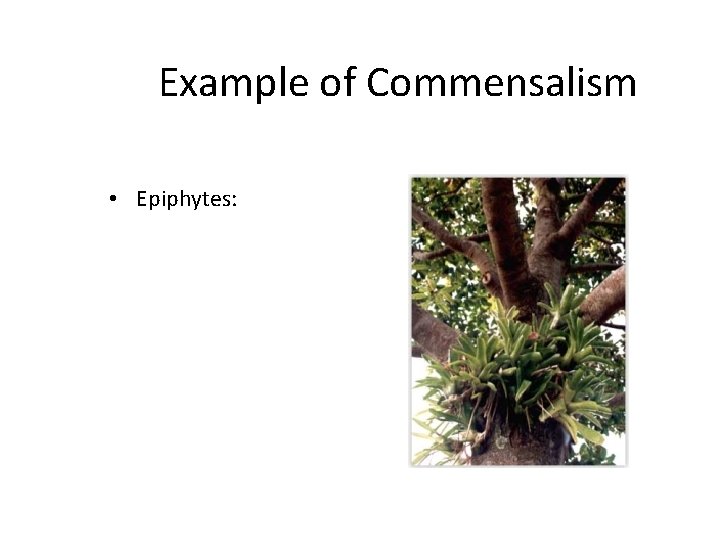
Example of Commensalism • Epiphytes:
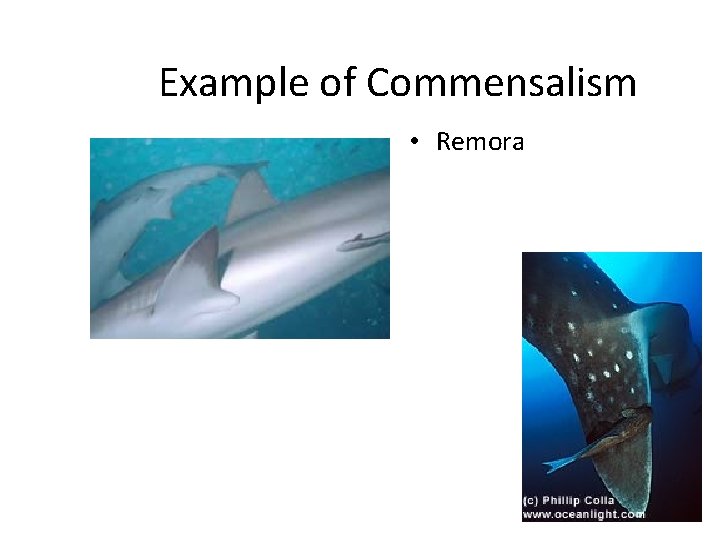
Example of Commensalism • Remora
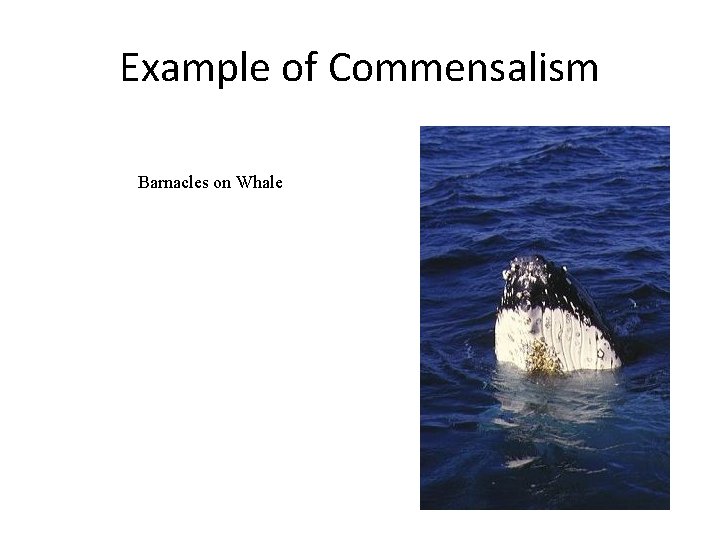
Example of Commensalism Barnacles on Whale
Symbiotic Interactions • Symbiosis: close relationship between two species • Parasitism: symbiotic relationship where one species benefits and the other is harmed
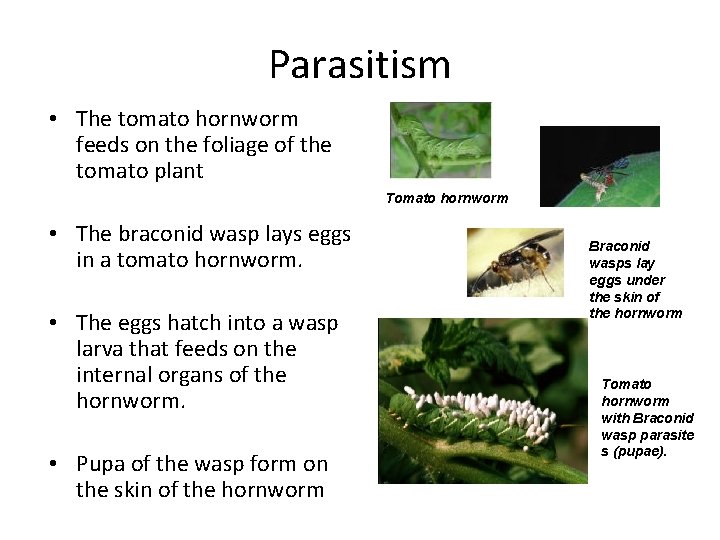
Parasitism • The tomato hornworm feeds on the foliage of the tomato plant Tomato hornworm • The braconid wasp lays eggs in a tomato hornworm. • The eggs hatch into a wasp larva that feeds on the internal organs of the hornworm. • Pupa of the wasp form on the skin of the hornworm Braconid wasps lay eggs under the skin of the hornworm Tomato hornworm with Braconid wasp parasite s (pupae).
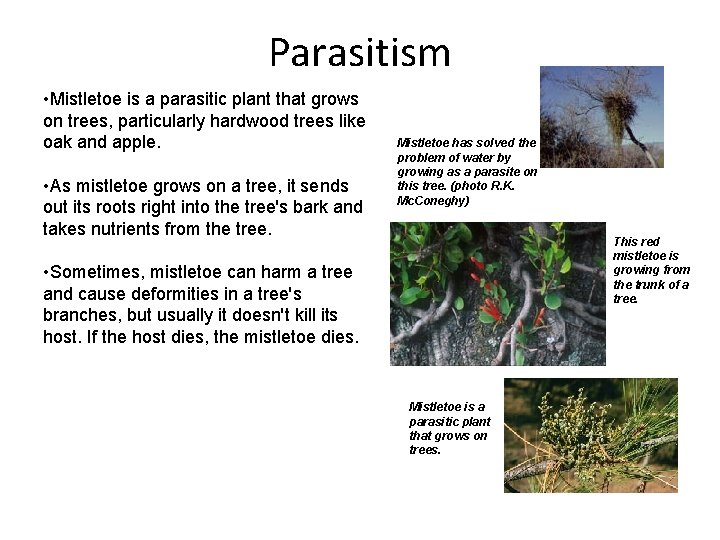
Parasitism • Mistletoe is a parasitic plant that grows on trees, particularly hardwood trees like oak and apple. • As mistletoe grows on a tree, it sends out its roots right into the tree's bark and takes nutrients from the tree. Mistletoe has solved the problem of water by growing as a parasite on this tree. (photo R. K. Mc. Coneghy) This red mistletoe is growing from the trunk of a tree. • Sometimes, mistletoe can harm a tree and cause deformities in a tree's branches, but usually it doesn't kill its host. If the host dies, the mistletoe dies. Mistletoe is a parasitic plant that grows on trees.
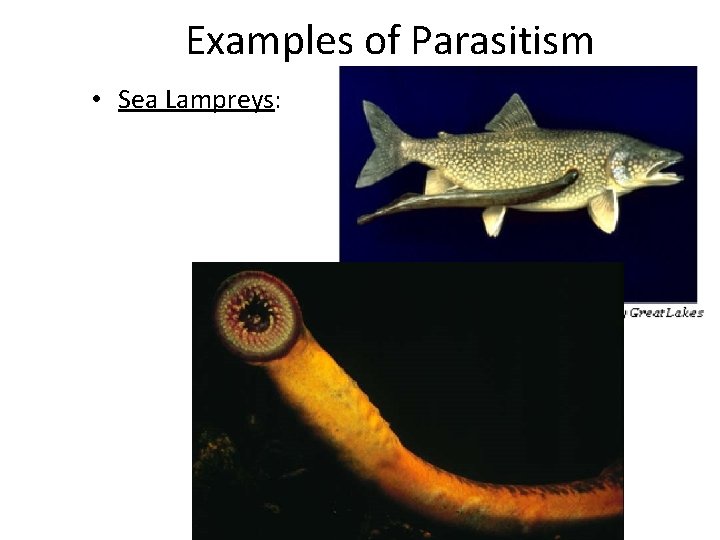
Examples of Parasitism • Sea Lampreys:
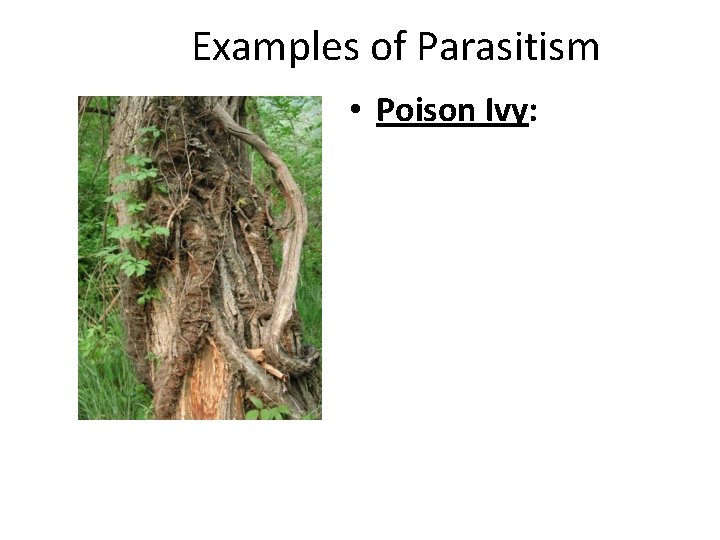
Examples of Parasitism • Poison Ivy:
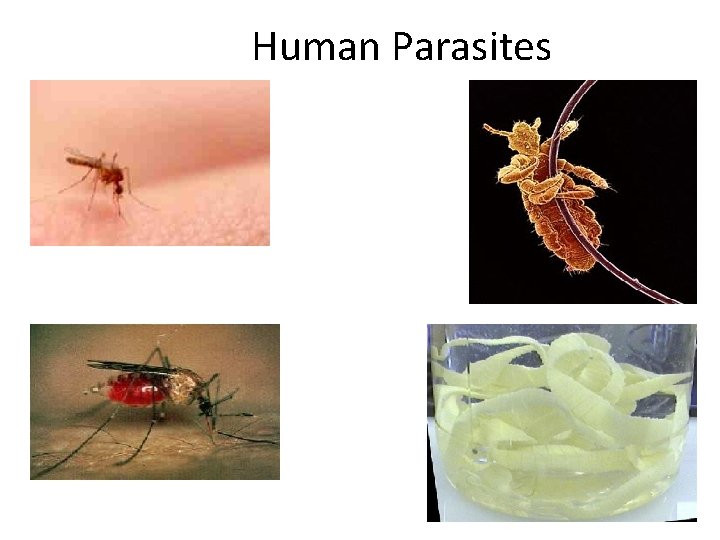
Human Parasites