Influence of interstitial fluid dynamics on growth and

- Slides: 29
Influence of interstitial fluid dynamics on growth and therapy of angiogenic tumor A. Kolobov, M. Kuznetsov Working group on modeling of blood flow and vascular pathologies (INM of RAS) RSF grant 14 -31 -00024 (new laboratories) & P. N. Lebedev Physical Institute of RAS The 8 th Workshop on Mathematical Models and Numerical Methods in Biology and Medicine INM RAS October 31 – November 3, 2016
OUTLINE • Interstitial fluid dynamics (IFD) in normal tissue • Tumor growth, progression and angiogenesis Necrotic core and peritumoral oedema • Motivation Why dynamic of interstitial liquid is important? ! • Mathematical model • Influence of IFD and antiangiogenic therapy on tumor growth • Main results and further development
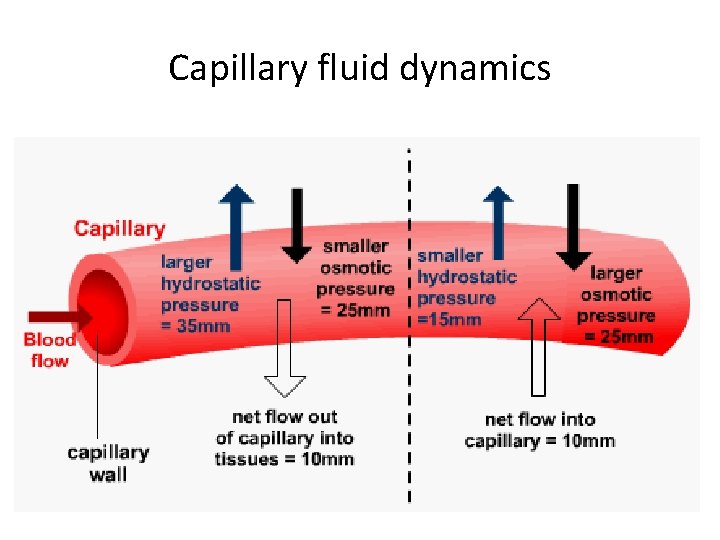
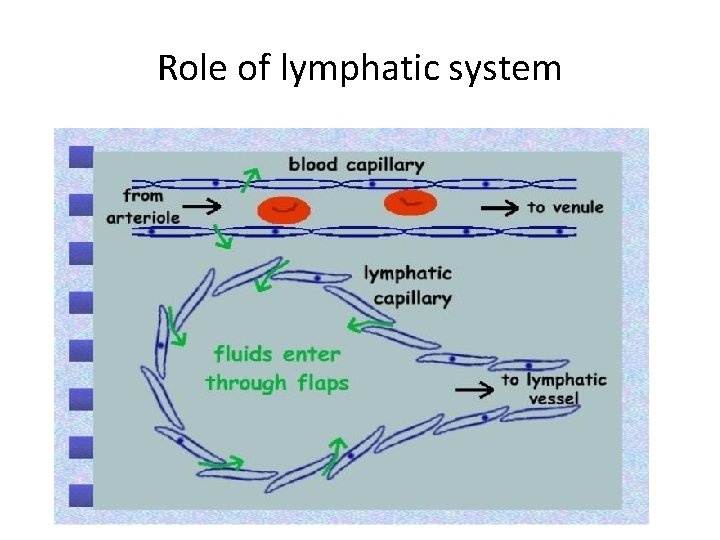
Formation of interstitial fluid • As blood flows through the capillaries some plasma passes into the tissues • This interstitial fluid is very similar to plasma but does not have large plasma protein molecules in it • This fluid bather every cell in the body supplying them with glucose, amino acid, fatty acids, salts and oxygen
Capillary fluid dynamics
Role of lymphatic system
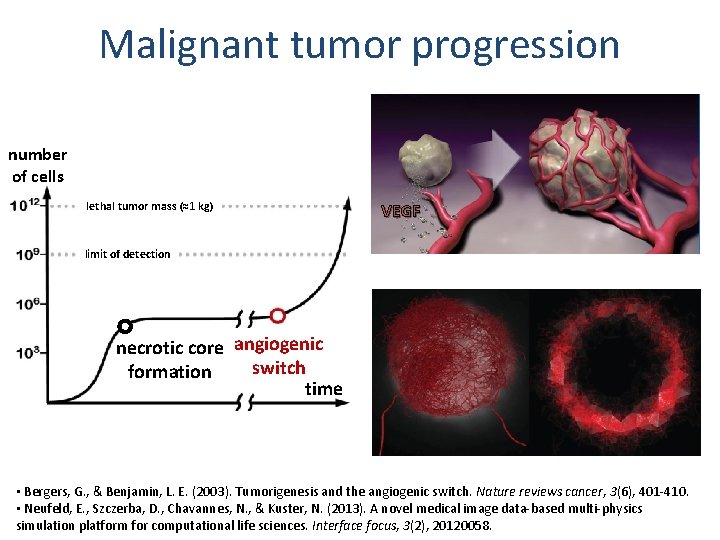
Malignant tumor progression number of cells lethal tumor mass (≈1 kg) VEGF limit of detection necrotic core angiogenic switch formation time • Bergers, G. , & Benjamin, L. E. (2003). Tumorigenesis and the angiogenic switch. Nature reviews cancer, 3(6), 401 -410. • Neufeld, E. , Szczerba, D. , Chavannes, N. , & Kuster, N. (2013). A novel medical image data-based multi-physics simulation platform for computational life sciences. Interface focus, 3(2), 20120058.
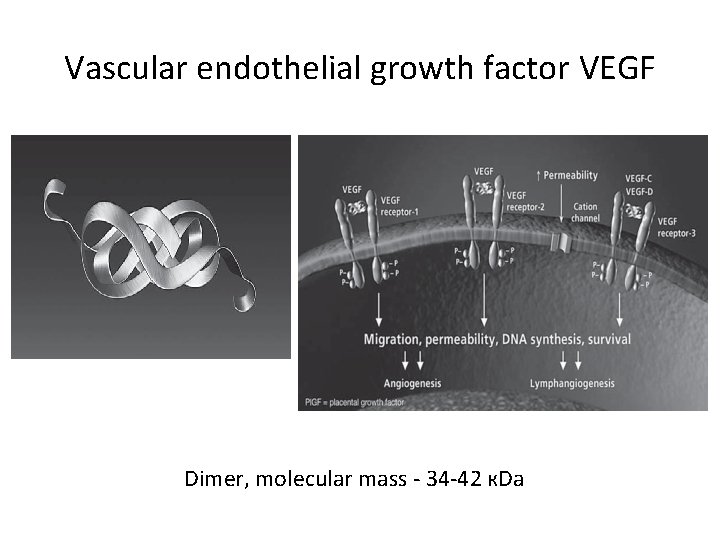
Vascular endothelial growth factor VEGF Dimer, molecular mass - 34 -42 к. Da
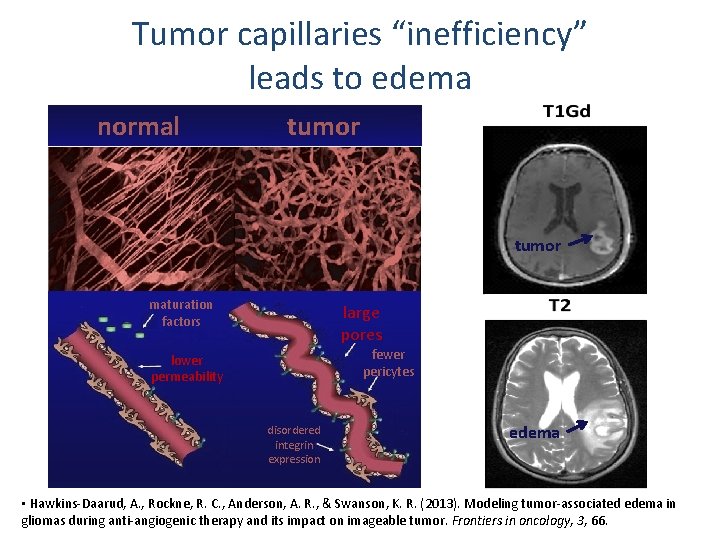
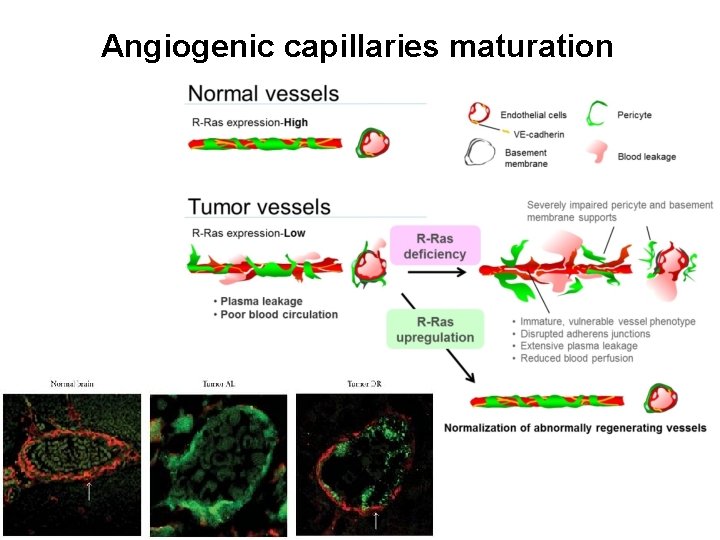
Tumor capillaries “inefficiency” leads to edema normal tumor maturation factors large pores fewer pericytes lower permeability disordered integrin expression edema • Hawkins-Daarud, A. , Rockne, R. C. , Anderson, A. R. , & Swanson, K. R. (2013). Modeling tumor-associated edema in gliomas during anti-angiogenic therapy and its impact on imageable tumor. Frontiers in oncology, 3, 66.
Angiogenic capillaries maturation
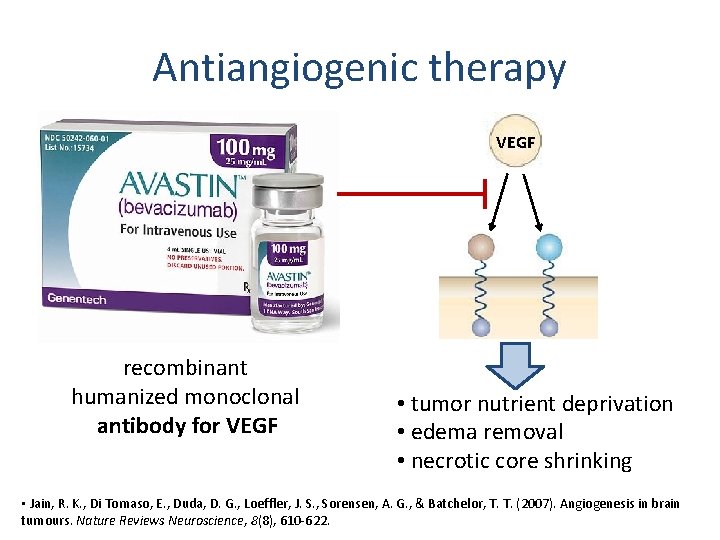
Antiangiogenic therapy VEGF recombinant humanized monoclonal antibody for VEGF • tumor nutrient deprivation • edema removal • necrotic core shrinking • Jain, R. K. , Di Tomaso, E. , Duda, D. G. , Loeffler, J. S. , Sorensen, A. G. , & Batchelor, T. T. (2007). Angiogenesis in brain tumours. Nature Reviews Neuroscience, 8(8), 610 -622.
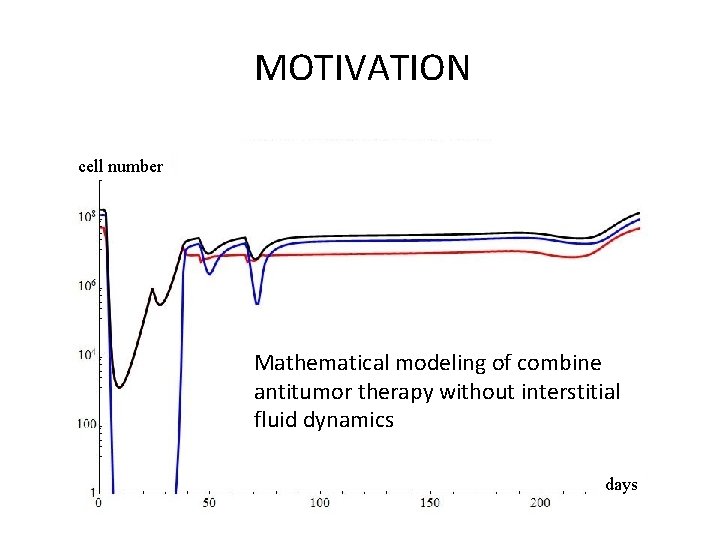
MOTIVATION cell number Mathematical modeling of combine antitumor therapy without interstitial fluid dynamics days
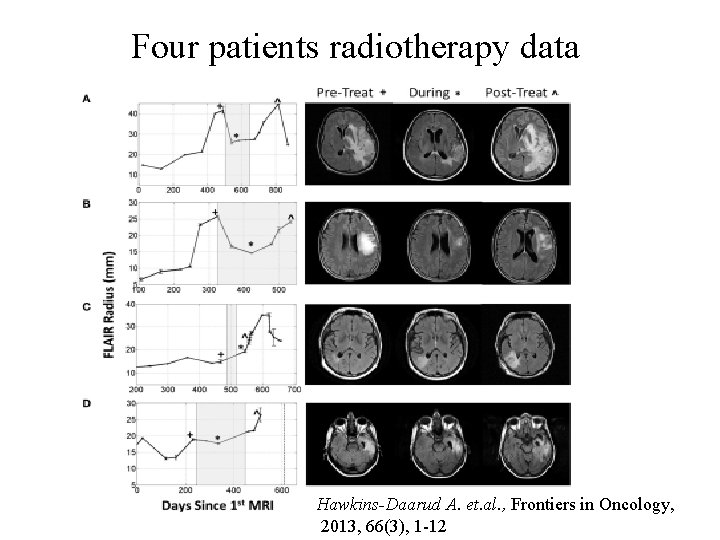
Four patients radiotherapy data Hawkins-Daarud A. et. al. , Frontiers in Oncology, 2013, 66(3), 1 -12
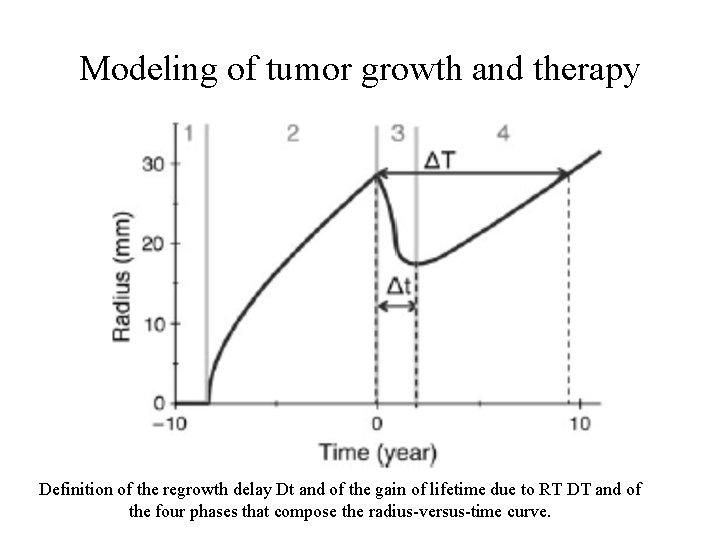
Modeling of tumor growth and therapy Definition of the regrowth delay Dt and of the gain of lifetime due to RT DT and of the four phases that compose the radius-versus-time curve.
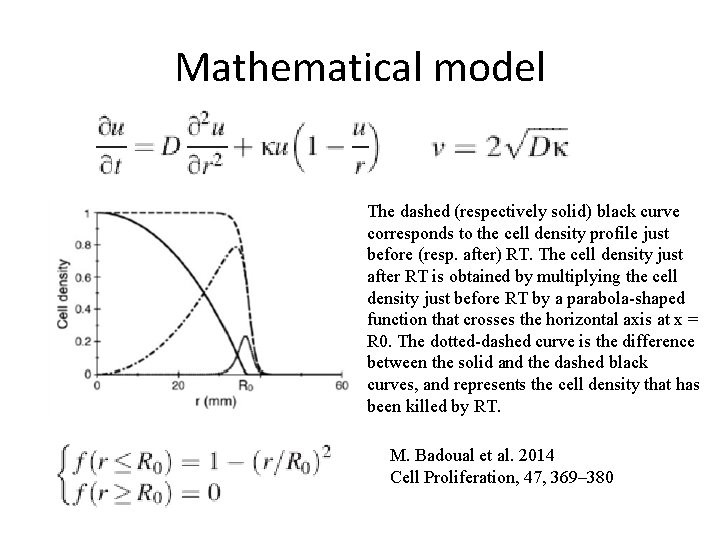
Mathematical model The dashed (respectively solid) black curve corresponds to the cell density profile just before (resp. after) RT. The cell density just after RT is obtained by multiplying the cell density just before RT by a parabola-shaped function that crosses the horizontal axis at x = R 0. The dotted-dashed curve is the difference between the solid and the dashed black curves, and represents the cell density that has been killed by RT. M. Badoual et al. 2014 Cell Proliferation, 47, 369– 380
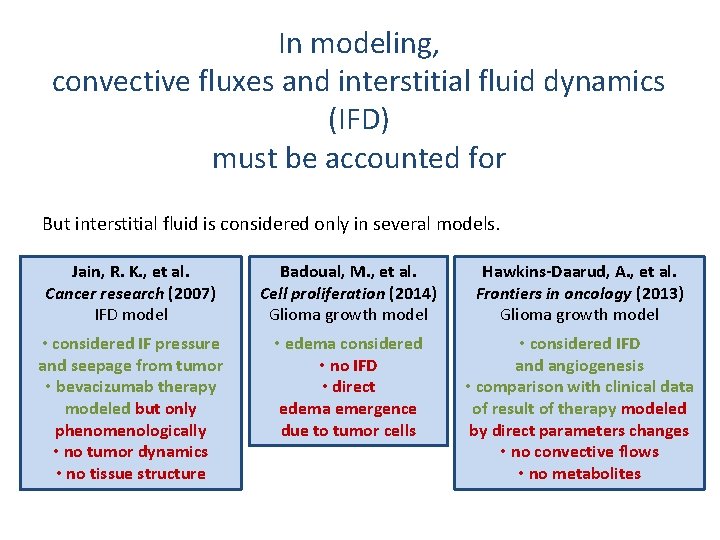
In modeling, convective fluxes and interstitial fluid dynamics (IFD) must be accounted for But interstitial fluid is considered only in several models. Jain, R. K. , et al. Cancer research (2007) IFD model Badoual, M. , et al. Cell proliferation (2014) Glioma growth model Hawkins-Daarud, A. , et al. Frontiers in oncology (2013) Glioma growth model • considered IF pressure and seepage from tumor • bevacizumab therapy modeled but only phenomenologically • no tumor dynamics • no tissue structure • edema considered • no IFD • direct edema emergence due to tumor cells • considered IFD and angiogenesis • comparison with clinical data of result of therapy modeled by direct parameters changes • no convective flows • no metabolites
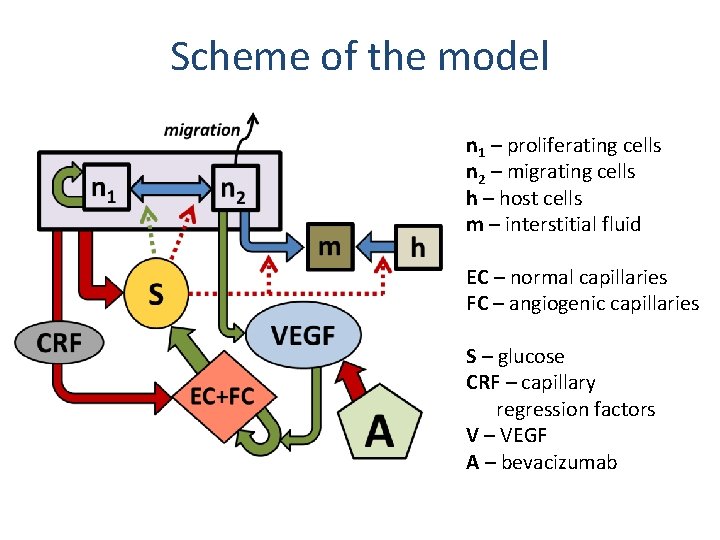
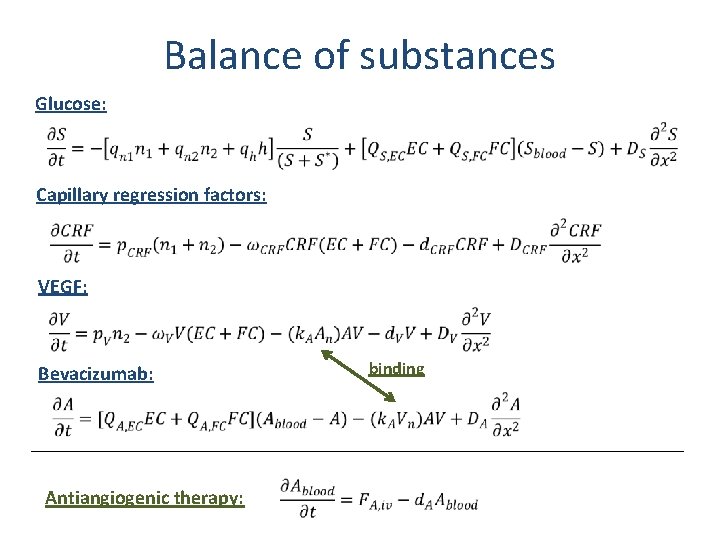
Scheme of the model n 1 – proliferating cells n 2 – migrating cells h – host cells m – interstitial fluid EC – normal capillaries FC – angiogenic capillaries S – glucose CRF – capillary regression factors V – VEGF A – bevacizumab
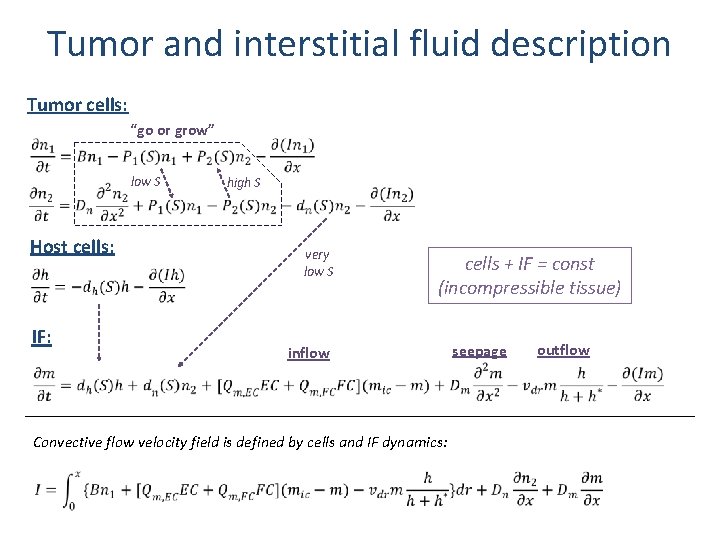
Tumor and interstitial fluid description Tumor cells: “go or grow” low S Host cells: IF: high S very low S cells + IF = const (incompressible tissue) inflow Convective flow velocity field is defined by cells and IF dynamics: seepage outflow
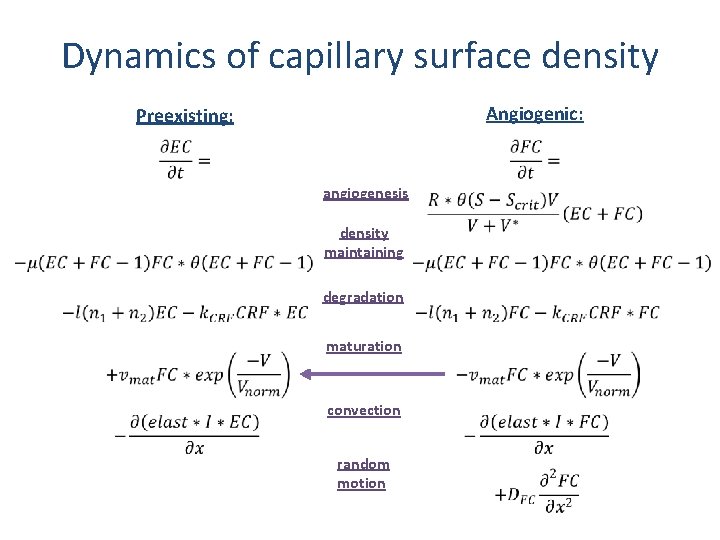
Dynamics of capillary surface density Angiogenic: Preexisting: angiogenesis density maintaining degradation maturation convection random motion
Balance of substances Glucose: Capillary regression factors: VEGF: binding Bevacizumab: Antiangiogenic therapy:
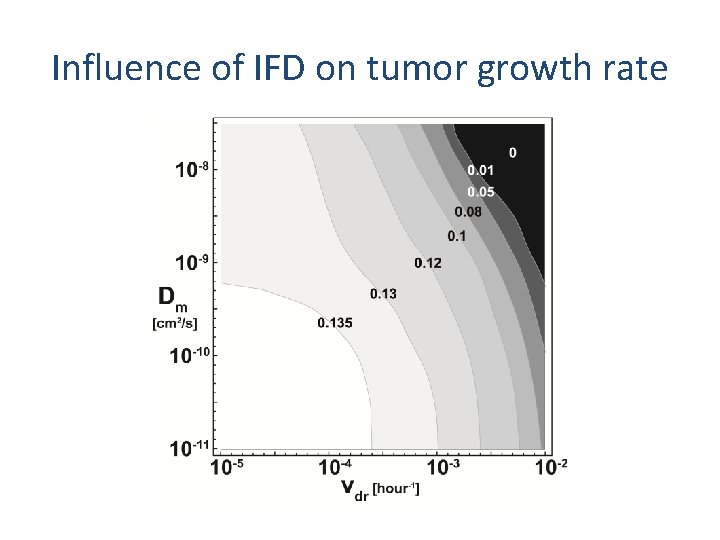
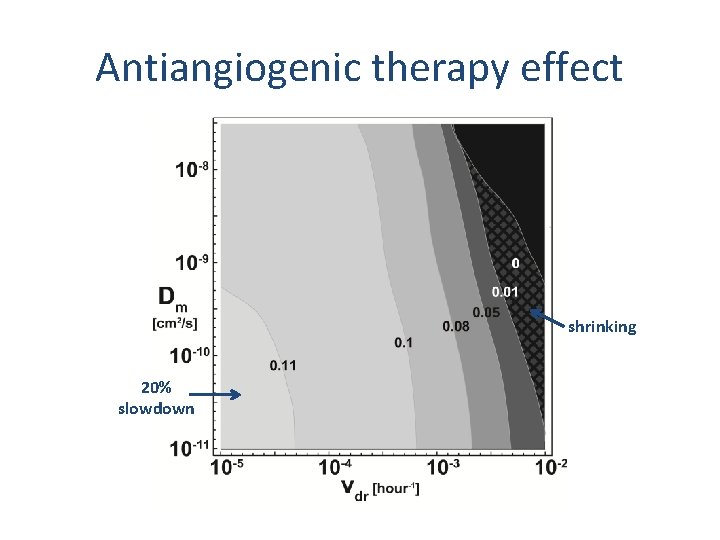
Influence of IFD on tumor growth rate
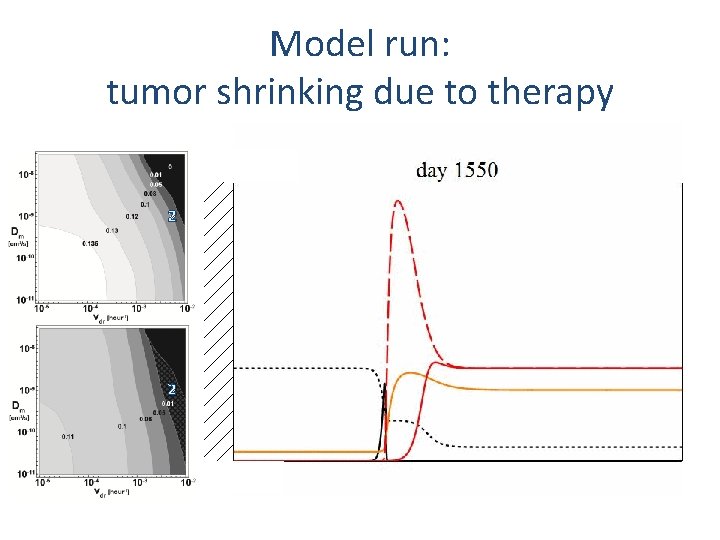
Antiangiogenic therapy effect shrinking 20% slowdown
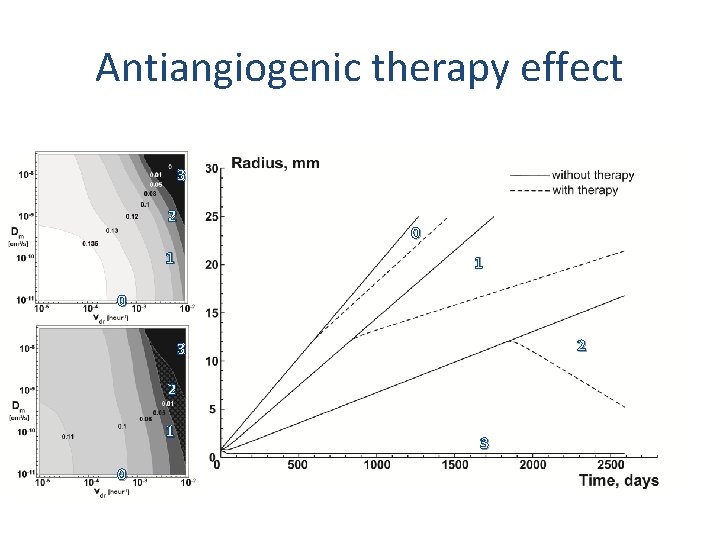
Antiangiogenic therapy effect 3 2 1 0 2 3 2 1 0 3
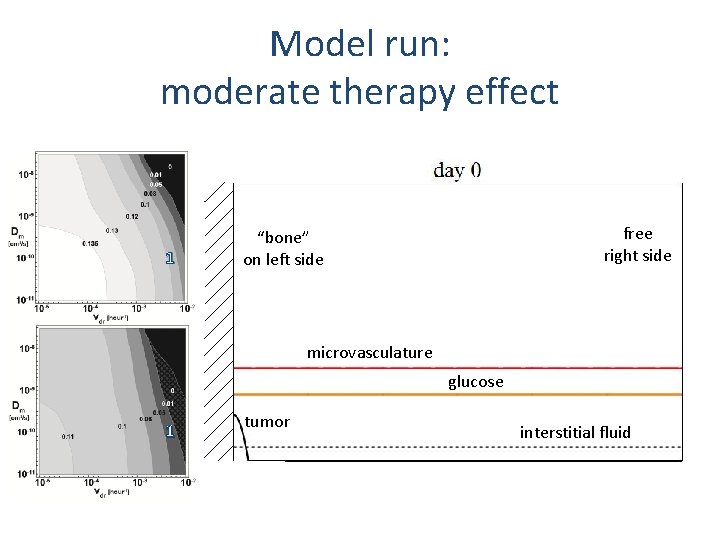
Model run: moderate therapy effect 1 free right side “bone” on left side microvasculature glucose 1 tumor interstitial fluid
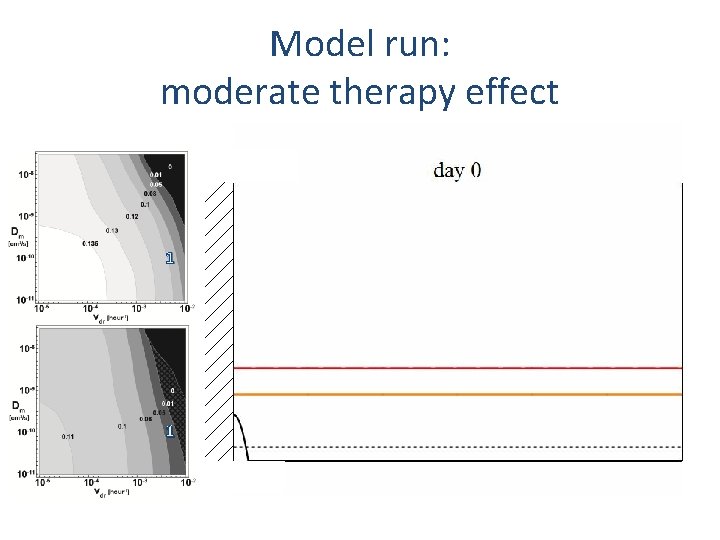
Model run: moderate therapy effect 1 1
Model run: tumor shrinking due to therapy 2 2
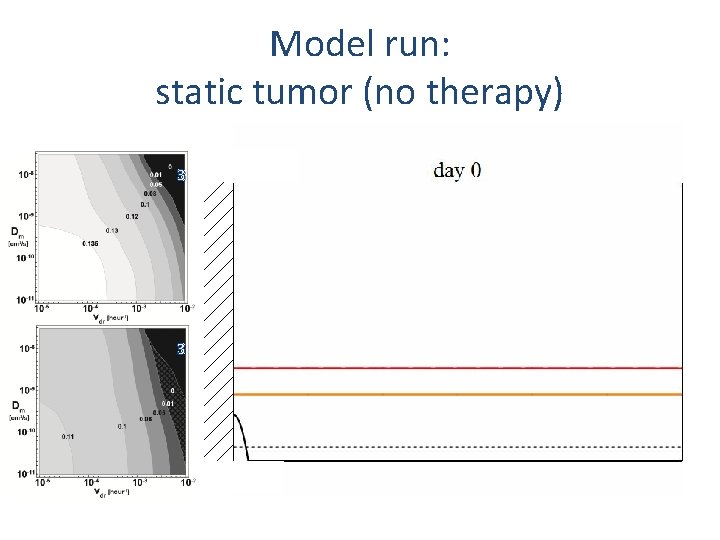
Model run: static tumor (no therapy) 3 3
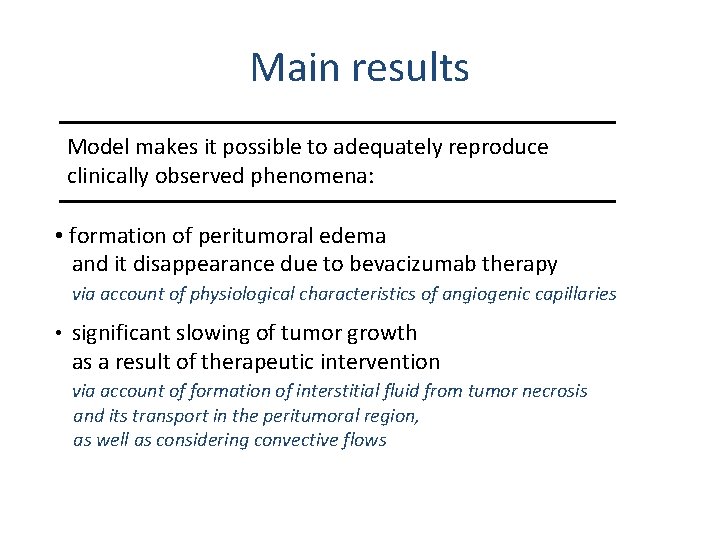
Main results Model makes it possible to adequately reproduce clinically observed phenomena: • formation of peritumoral edema and it disappearance due to bevacizumab therapy via account of physiological characteristics of angiogenic capillaries • significant slowing of tumor growth as a result of therapeutic intervention via account of formation of interstitial fluid from tumor necrosis and its transport in the peritumoral region, as well as considering convective flows
Future work • incorporation of cell debris dynamics in necrotic core • Improvement of IFD description (including of hydrodynamic issues); • modeling cytotoxic and other types of antitumor therapy, as well as combined therapy; • account for influence of IF concentration on dynamics of substances.
Thank you for your attention!