
Body Fluids its Compartments Dr Amir Ahmed Body
Body Fluids & its Compartments - Dr. Amir Ahmed
Body fluids/Fluid Compartment & Electrolytes • Body fluids, bodily fluids, or biofluids are liquids within the human body. • In lean healthy adult men, the total body water is about 60% (60– 67%) of the total body weight; it is usually slightly lower in women. • The exact percentage of fluid relative to body weight is inversely proportional to the percentage of body fat. A lean 70 kg (160 pound) man, for example, has about 42 (42– 47) liters of water in his body. • The total body of water is divided between the intracellular fluid (ICF) compartment (also called space, or volume) and the extracellular fluid (ECF) compartment (space, volume) • A mineral dissociated from a salt that carries an electrical charge (an ion) is called and electrolyte. For instance, sodium ions (Na+) and chloride ions (Cl–) are often referred to as electrolytes.
INTRACELLULAR FLUID • The ICF lies within cells and is the principal component of the cytosol/cytoplasm. • The ICF makes up about 60 percent of the total water in the human body, and in an average-size adult male, the ICF accounts for about 25 liters (seven gallons) of fluid. • This fluid volume tends to be very stable, because the amount of water in living cells is closely regulated. If the amount of water inside a cell falls to a value that is too low, the cytosol becomes too concentrated with solutes to carry on normal cellular activities; if too much water enters a cell, the cell may burst and be destroyed.
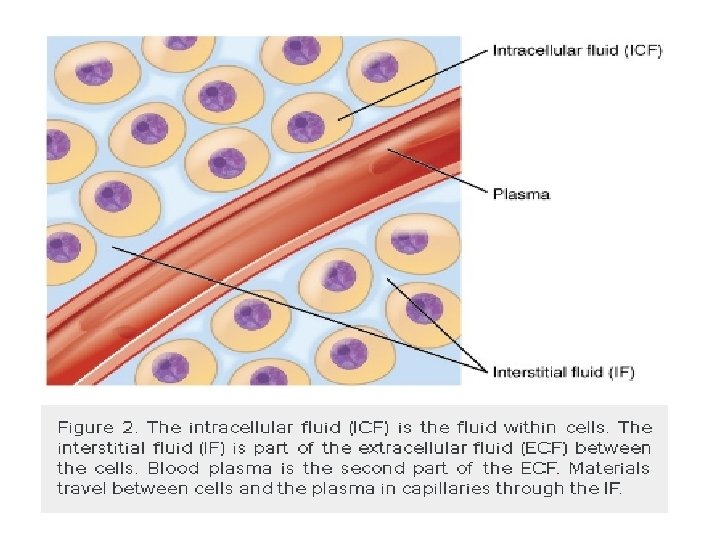
EXTRACELLULAR FLUID • The ECF accounts for the other one-third of the body’s water content. Approximately 20 percent of the ECF is found in plasma. Plasma travels through the body in blood vessels and transports a range of materials, including blood cells, proteins (including clotting factors and antibodies), electrolytes, nutrients, gases, and wastes. Gases, nutrients, and waste materials travel between capillaries and cells through the IF. • Cells are separated from the IF by a selectively permeable cell membrane that helps regulate the passage of materials between the IF and the interior of the cell. • The body has other water-based ECF. These include the cerebrospinal fluid that bathes the brain and spinal cord, lymph, the synovial fluid in joints, the pleural fluid in the pleural cavities, the pericardial fluid in the cardiac sac, the peritoneal fluid in the peritoneal cavity, and the aqueous humor of the eye. Because these fluids are outside of cells, these fluids are also considered components of the ECF compartment.
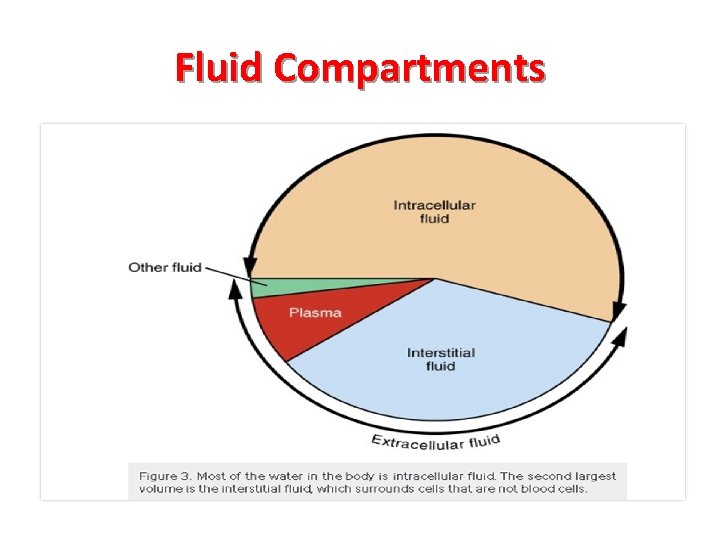
Fluid Compartments • Intracellular space • Extracellular space ØInterstitial ØIntravascular
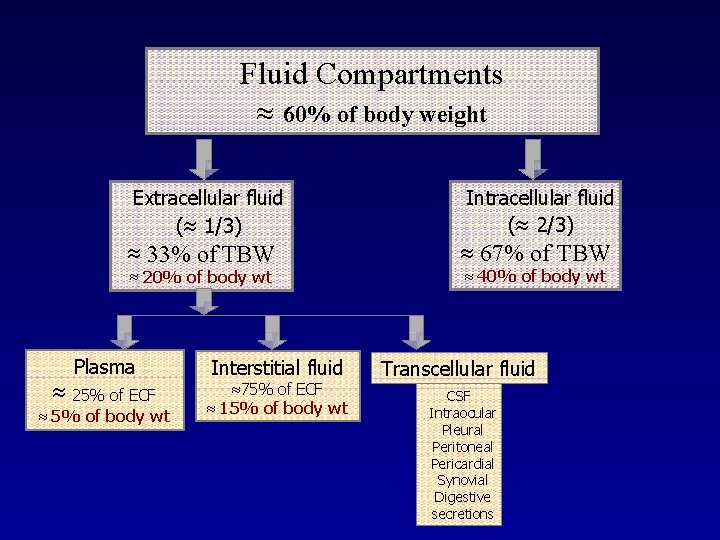
Fluid Compartments 60% of body weight Extracellular fluid ( 1/3) 33% of TBW 20% of body wt Plasma 25% of ECF 5% of body wt Interstitial fluid 75% of ECF 15% of body wt Intracellular fluid ( 2/3) 67% of TBW 40% of body wt Transcellular fluid CSF Intraocular Pleural Peritoneal Pericardial Synovial Digestive secretions
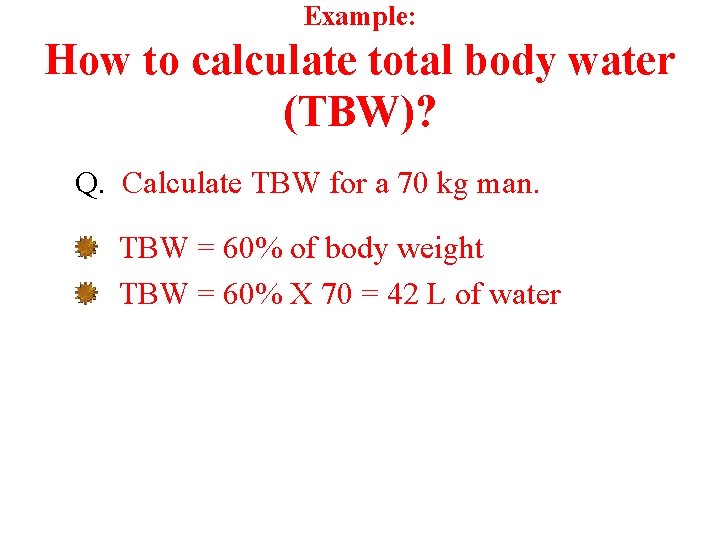
Example: How to calculate total body water (TBW)? Q. Calculate TBW for a 70 kg man. TBW = 60% of body weight TBW = 60% X 70 = 42 L of water
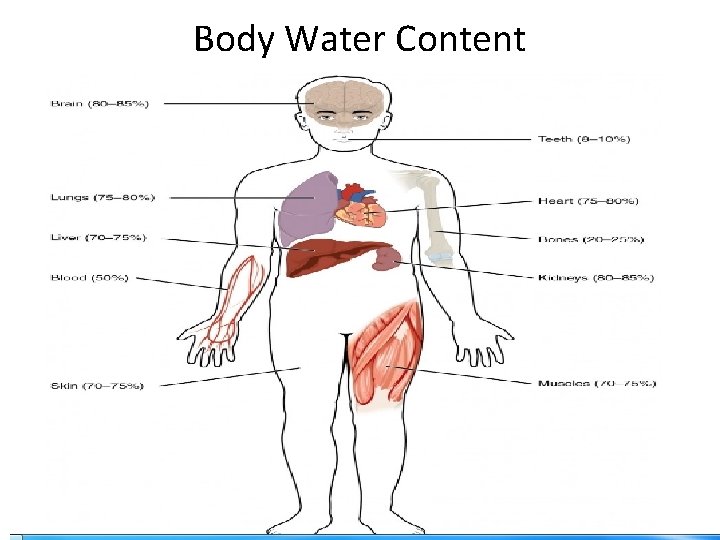
Body Water Content
Body Water Content • Human beings are mostly water, ranging from about 75 percent of body mass in infants to about 50– 60 percent in adult men and women, to as low as 45 percent in old age. • The percent of body water changes with development, because the proportions of the body given over to each organ and to muscles, fat, bone, and other tissues change from infancy to adulthood. • Your brain and kidneys have the highest proportions of water, which composes 80– 85 percent of their masses. In contrast, teeth have the lowest proportion of water, at 8– 10 percent.
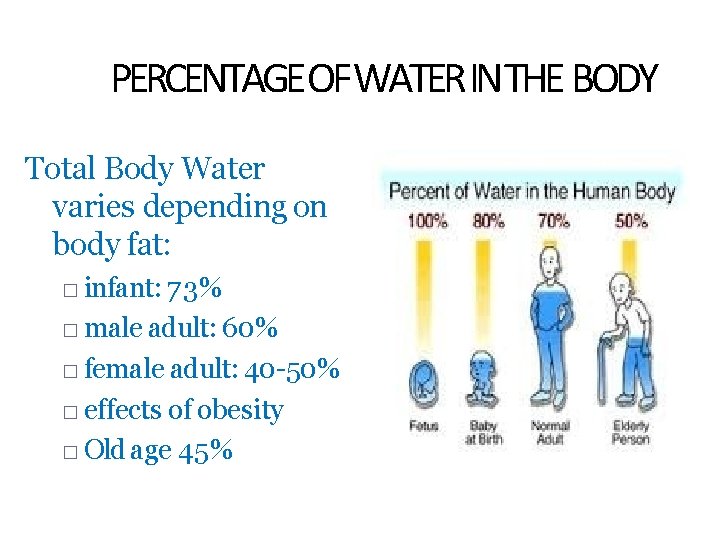
PERCENTAGEOFWATER INTHE BODY Total Body Water varies depending on body fat: � infant: 73% � male adult: 60% � female adult: 40 -50% � effects of obesity � Old age 45%
Composition of Body Fluids Nonelectrolytes include most organic molecules, do not dissociate in water, and carry no net electrical charge. Electrolytes dissociate in water to ions, and include inorganic salts, acids and bases, and some proteins. The major cation in extracellular fluids is sodium, and the major anion is chloride; in intracellular fluid the major cation is potassium, and the major anion is phosphate. Electrolytes are the most abundant solutes in body fluids, but proteins and some nonelectrolytes account for 60 -– 97% of dissolved solutes.
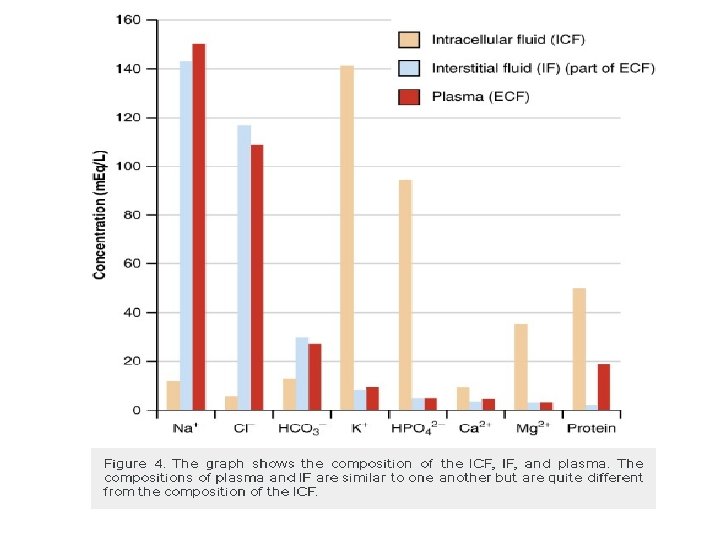
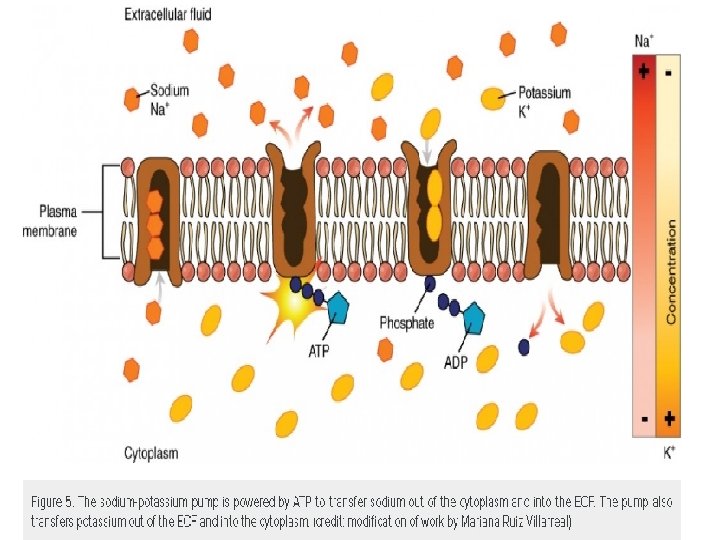
Composition of Body Fluids • Most body fluids are neutral in charge. Thus, cations, or positively charged ions, and anions, or negatively charged ions, are balanced in fluids. • As seen in the previous graph, sodium (Na+) ions and chloride (Cl–) ions are concentrated in the ECF of the body, whereas potassium (K+) ions are concentrated inside cells. Although sodium and potassium can “leak” through “pores” into and out of cells, respectively, the high levels of potassium and low levels of sodium in the ICF are maintained by sodium-potassium pumps in the cell membranes. These pumps use the energy supplied by ATP to pump sodium out of the cell and potassium into the cell.
Fluid Types • Fluids in the body generally aren’t found in pure forms • Isotonic, hypotonic, and hypertonic types • Balancing these fluids involves the shifting of fluid not the solute involved
Solute the substance that dissolved Solvent substance in which solute is dissolved Osmolality concentration of solute per kg of water Osmolarity concentration of solute per L of solution Solution- substance that dissolve in other substances
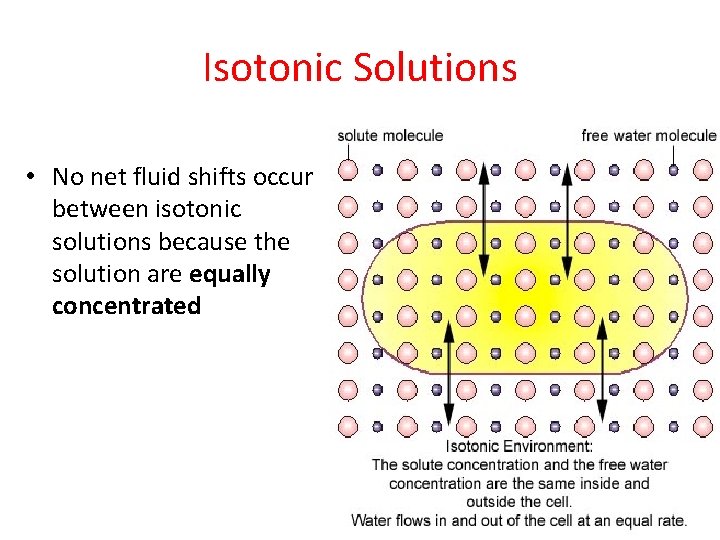
Isotonic Solutions • No net fluid shifts occur between isotonic solutions because the solution are equally concentrated
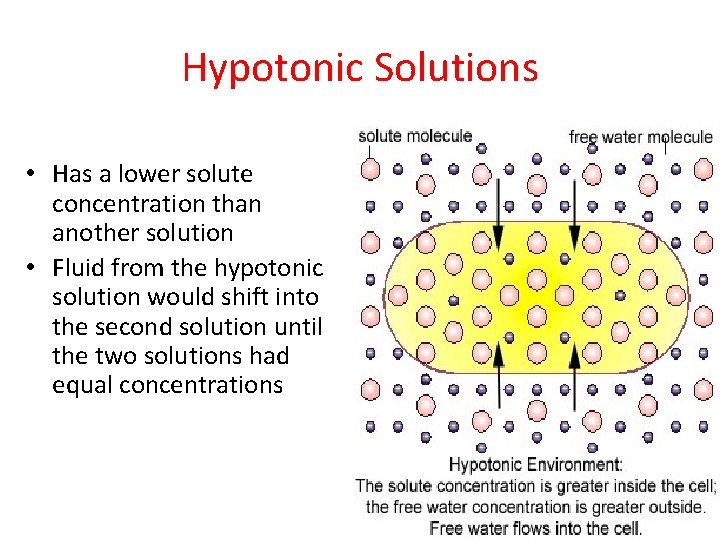
Hypotonic Solutions • Has a lower solute concentration than another solution • Fluid from the hypotonic solution would shift into the second solution until the two solutions had equal concentrations
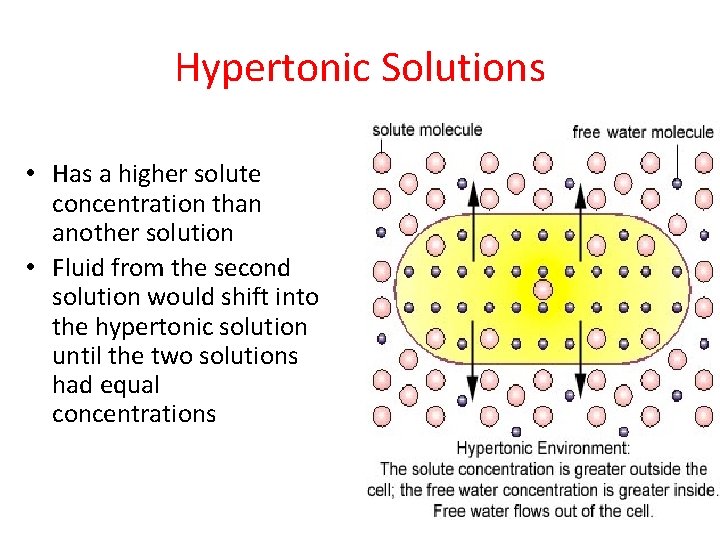
Hypertonic Solutions • Has a higher solute concentration than another solution • Fluid from the second solution would shift into the hypertonic solution until the two solutions had equal concentrations
Fluid Movements • Fluids and solutes constantly move within the body, which allows the body to maintain homeostasis • Fluids along with nutrients and waste products constantly shift within the body’s compartments from the cell to the interstitial spaces, to the blood vessels and back again
Homeostasis • A condition in which the internal environment of the body remains relatively constant despite changes in the external environment. • Examples would be the maintenance of body temperature and levels of glucose in the blood
Fluid Movements
Movement of BODY FLUIDS • Types of Transport – A. Active transport – B. Passive transport • Diffusion • Osmosis • Filtration
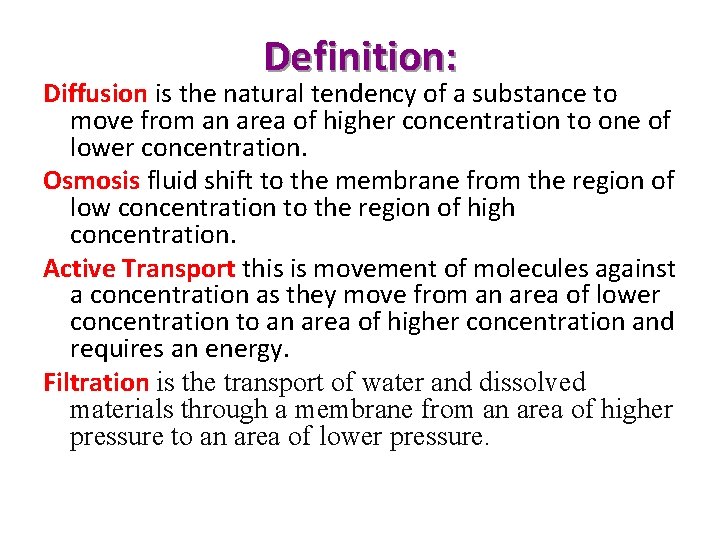
Definition: Diffusion is the natural tendency of a substance to move from an area of higher concentration to one of lower concentration. Osmosis fluid shift to the membrane from the region of low concentration to the region of high concentration. Active Transport this is movement of molecules against a concentration as they move from an area of lower concentration to an area of higher concentration and requires an energy. Filtration is the transport of water and dissolved materials through a membrane from an area of higher pressure to an area of lower pressure.
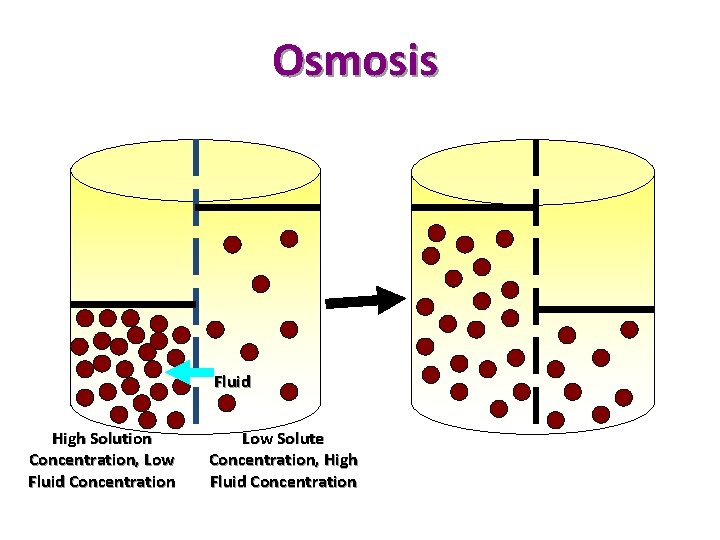
Osmosis Fluid High Solution Concentration, Low Fluid Concentration Low Solute Concentration, High Fluid Concentration
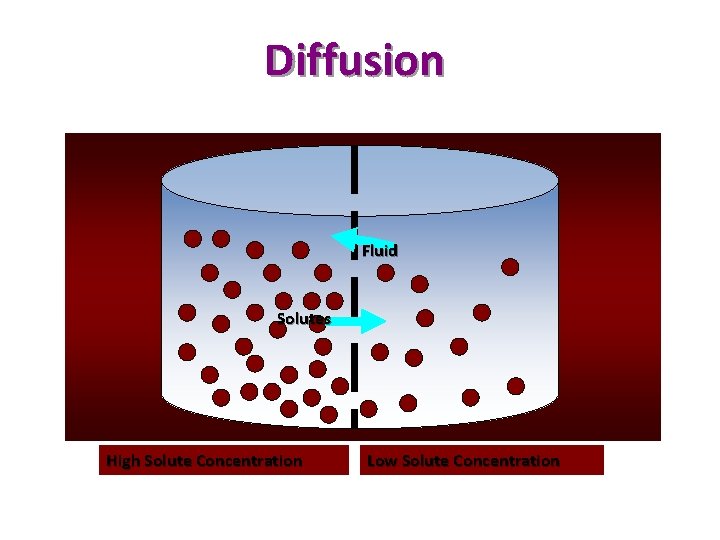
Diffusion Fluid Solutes High Solute Concentration Low Solute Concentration
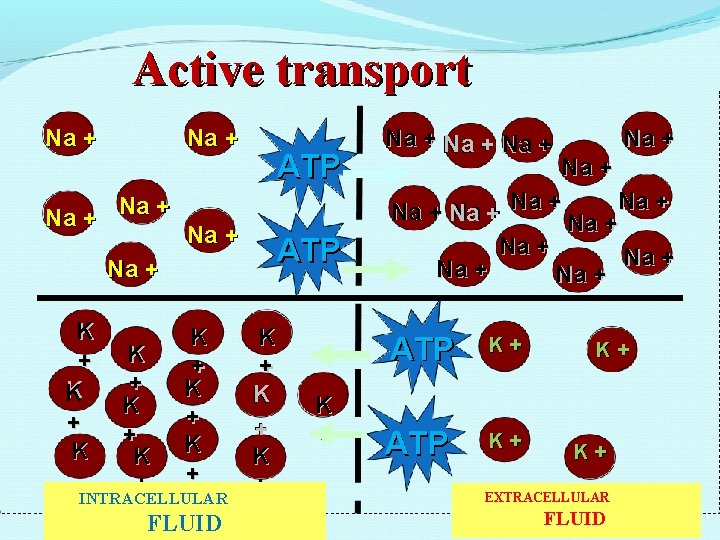
Active transport Na + ATP Na + K + K + K + +INTRACELLULAR FLUID K + K + Na + Na + Na + Na + ATP K+ K+ K+ EXTRACELLULAR FLUID
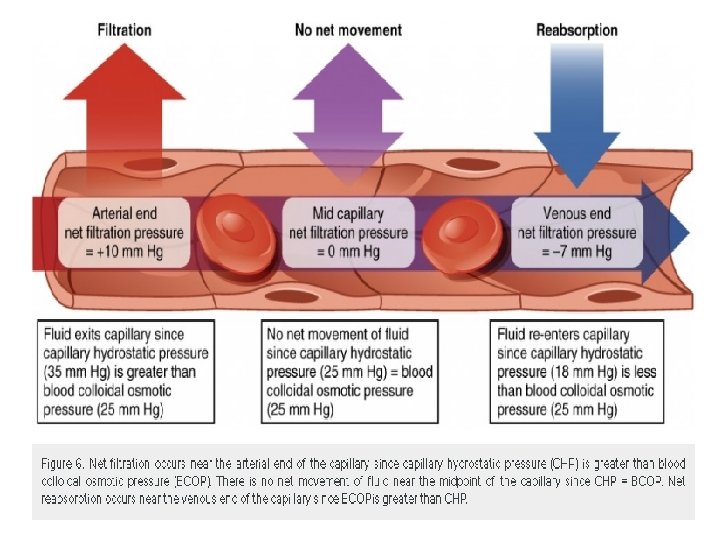
Fluid Movement between Compartments • Hydrostatic pressure, the force exerted by a fluid against a wall, causes movement of fluid between compartments. The hydrostatic pressure of blood is the pressure exerted by blood against the walls of the blood vessels by the pumping action of the heart. In capillaries, hydrostatic pressure (also known as capillary blood pressure) is higher than the opposing “colloid osmotic pressure” in blood • colloid osmotic pressure” in blood—a “constant” pressure primarily produced by circulating albumin—at the arteriolar end of the capillary. • This pressure forces plasma and nutrients out of the capillaries and into surrounding tissues. Fluid and the cellular wastes in the tissues enter the capillaries at the venule end, where the hydrostatic pressure is less than the osmotic pressure in the vessel.
Fluid Movement between Compartments • Filtration pressure squeezes fluid from the plasma in the blood to the IF surrounding the tissue cells. The surplus fluid in the interstitial space that is not returned directly back to the capillaries is drained from tissues by the lymphatic system, and then re-enters the vascular system at the subclavian veins.
Cont. . • Hydrostatic pressure is especially important in governing the movement of water in the nephrons of the kidneys to ensure proper filtering of the blood to form urine. As hydrostatic pressure in the kidneys increases, the amount of water leaving the capillaries also increases, and more urine filtrate is formed. If hydrostatic pressure in the kidneys drops too low, as can happen in dehydration, the functions of the kidneys will be impaired, and less nitrogenous wastes will be removed from the bloodstream. Extreme dehydration can result in kidney failure. • Fluid also moves between compartments along an osmotic gradient. The magnitude of the osmotic gradient is proportional to the difference in the concentration of solutes on one side of the cell membrane to that on the other side. Water will move by osmosis from the side where its concentration is high (and the concentration of solute is low) to the side of the membrane where its concentration is low (and the concentration of solute is high). In the body, water moves by osmosis from plasma to the IF (and the reverse) and from the IF to the ICF (and the reverse). In the body, water moves constantly into and out of fluid compartments as conditions change in different parts of the body.
Example of Fluid Movement between Compartments • For example, if you are sweating, you will lose water through your skin. Sweating depletes your tissues of water and increases the solute concentration in those tissues. As this happens, water diffuses from your blood into sweat glands and surrounding skin tissues that have become dehydrated because of the osmotic gradient. Additionally, as water leaves the blood, it is replaced by the water in other tissues throughout your body that are not dehydrated. If this continues, dehydration spreads throughout the body. When a dehydrated person drinks water and rehydrates, the water is redistributed by the same gradient, but in the opposite direction, replenishing water in all of the tissues.
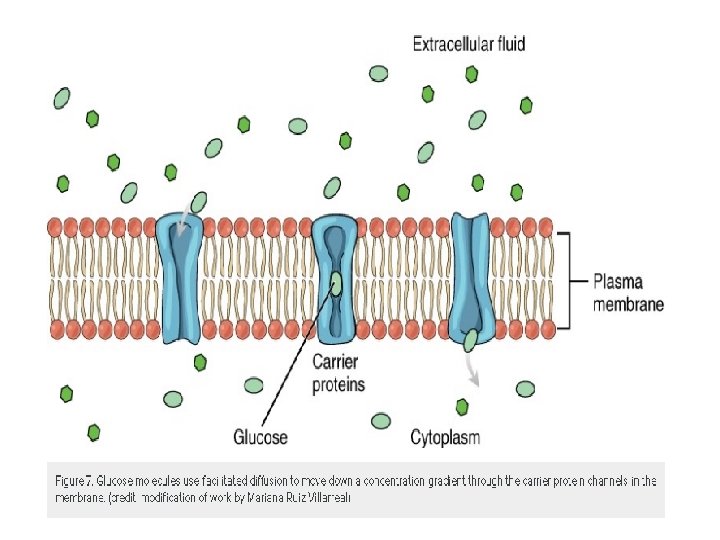
Solute Movement between Compartments • The movement of some solutes between compartments is active, which consumes energy and is an active transport process, whereas the movement of other solutes is passive, which does not require energy. Active transport allows cells to move a specific substance against its concentration gradient through a membrane protein, requiring energy in the form of ATP. For example, the sodium-potassium pump employs active transport to pump sodium out of cells and potassium into cells, with both substances moving against their concentration gradients. • Passive transport of a molecule or ion depends on its ability to pass through the membrane, as well as the existence of a concentration gradient that allows the molecules to diffuse from an area of higher concentration to an area of lower concentration. Some molecules, like gases, lipids, and water itself (which also utilizes water channels in the membrane called aquaporins), slip fairly easily through the cell membrane; others, including polar molecules like glucose, amino acids, and ions do not. Some of these molecules enter and leave cells using facilitated transport, whereby the molecules move down a concentration gradient through specific protein channels in the membrane. This process does not require energy. For example, glucose is transferred into cells by glucose transporters that use facilitated transport.
FLUID BALANCE The desirable amount of fluid intake and loss in adults ranges from 1500 to 3500 m. L each 24 hours. Ave= 2500 m. L • Normally INTAKE = OUTPUT • FLUID IMBALANCE • Changes in ECF volume = alterations in sodium balance • Change in sodium/water ratio = either hypoosmolarity or hyperosmolarity • Fluid excess or deficit = loss of fluid balance • As with all clinical problems, the same pathophysiologic change is not of equal significance to all people • For example, consider two persons who have the same viral syndrome with associated nausea and vomiting

Thank you….
- Slides: 37