Including Diverse Populations in NIHfunded Clinical Research Dawn

- Slides: 22
Including Diverse Populations in NIH-funded Clinical Research Dawn Corbett, MPH NIH Inclusion Policy Officer Division of Human Subjects Research, Office of Extramural Research NIH Virtual Seminar October 30, 2020
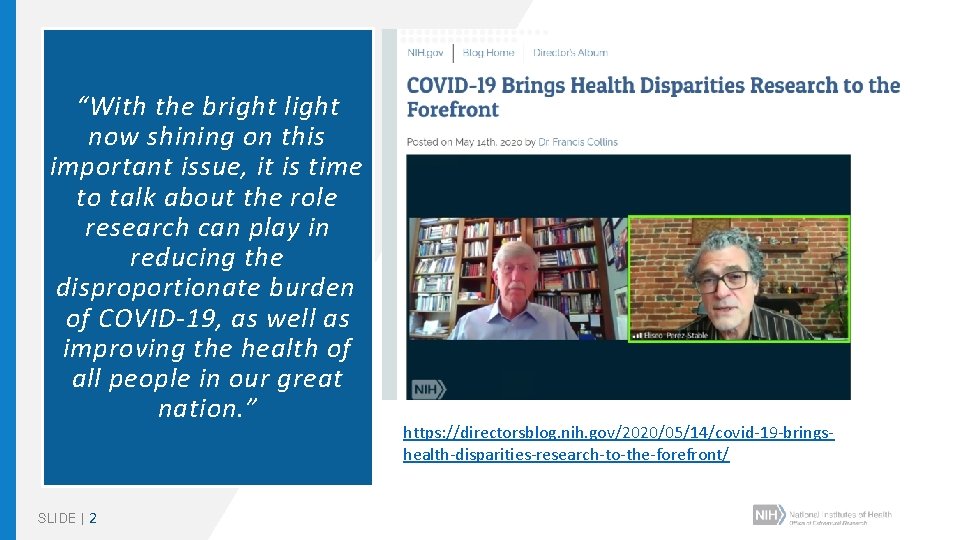
“With the bright light now shining on this important issue, it is time to talk about the role research can play in reducing the disproportionate burden of COVID-19, as well as improving the health of all people in our great nation. ” SLIDE | 2 https: //directorsblog. nih. gov/2020/05/14/covid-19 -bringshealth-disparities-research-to-the-forefront/
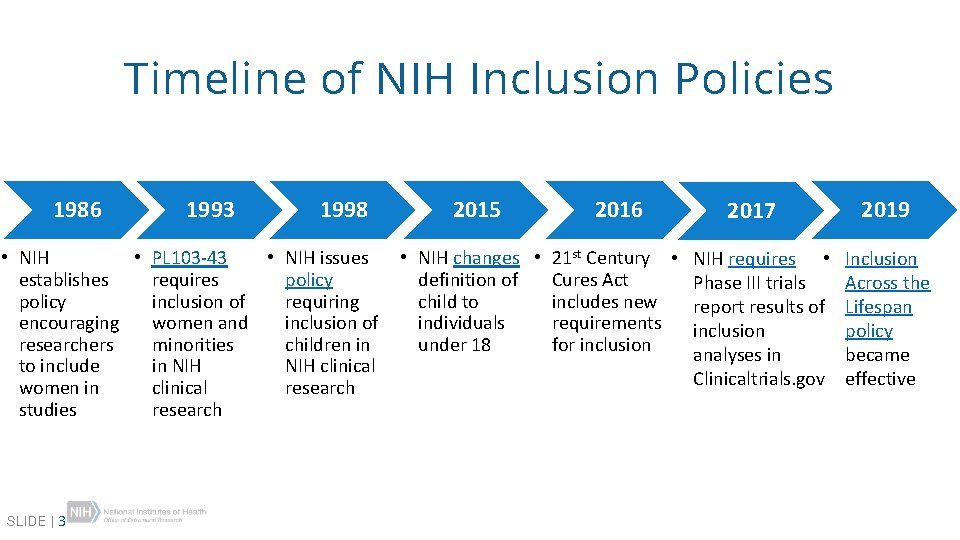
Timeline of NIH Inclusion Policies 1986 1993 1998 • NIH • PL 103 -43 • NIH issues establishes requires policy inclusion of requiring encouraging women and inclusion of researchers minorities children in to include in NIH clinical women in clinical research studies research SLIDE | 3 3 3 2015 2016 2017 • NIH changes • 21 st Century • NIH requires • definition of Cures Act Phase III trials child to includes new report results of individuals requirements inclusion under 18 for inclusion analyses in Clinicaltrials. gov 2019 Inclusion Across the Lifespan policy became effective
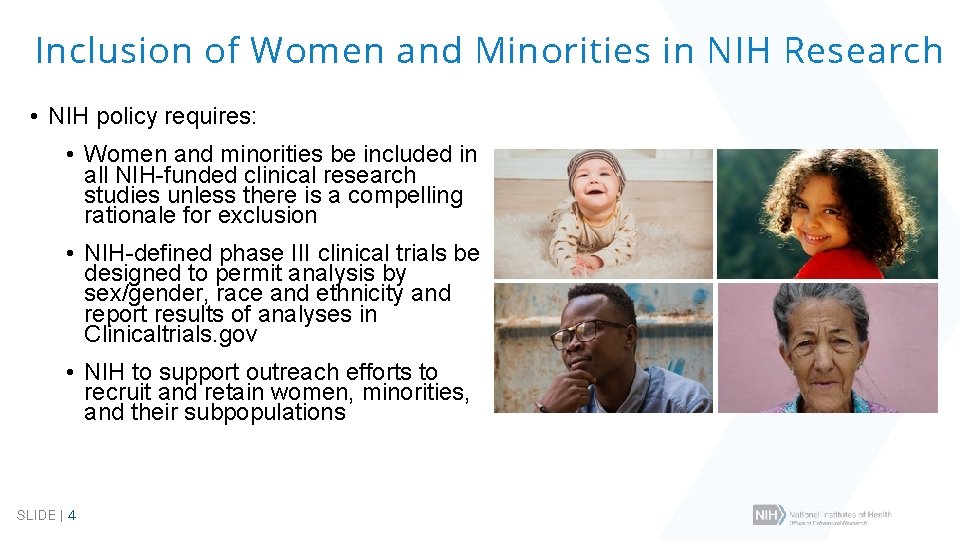
Inclusion of Women and Minorities in NIH Research • NIH policy requires: • Women and minorities be included in all NIH-funded clinical research studies unless there is a compelling rationale for exclusion • NIH-defined phase III clinical trials be designed to permit analysis by sex/gender, race and ethnicity and report results of analyses in Clinicaltrials. gov • NIH to support outreach efforts to recruit and retain women, minorities, and their subpopulations SLIDE | 4
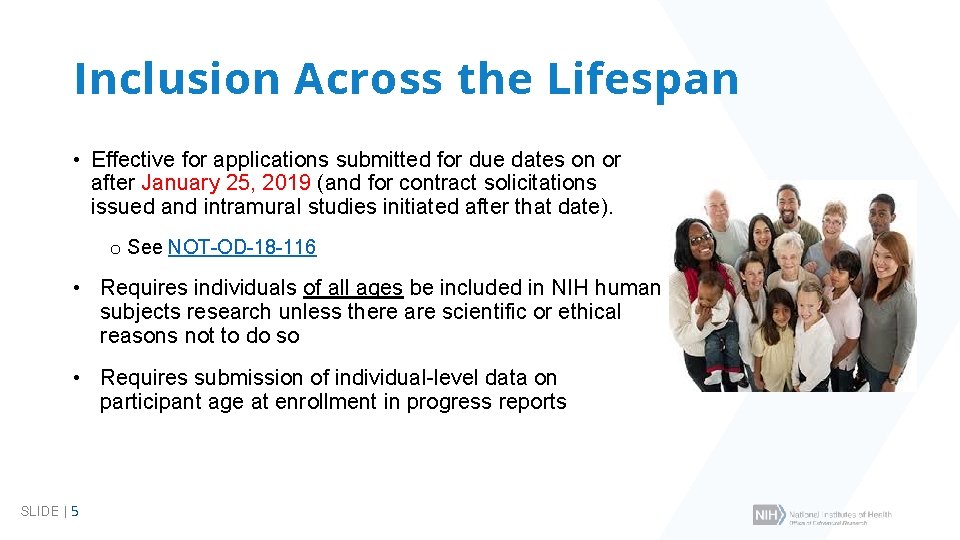
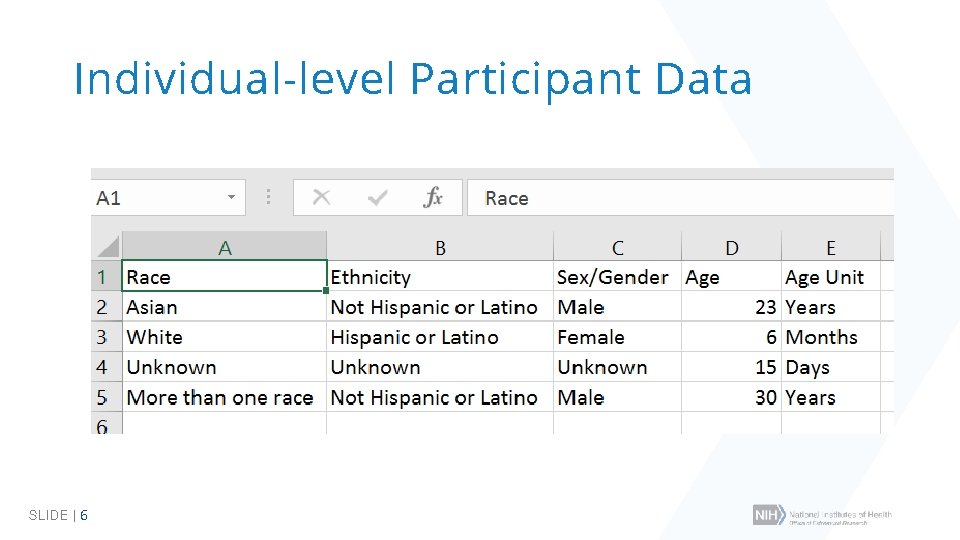
Inclusion Across the Lifespan • Effective for applications submitted for due dates on or after January 25, 2019 (and for contract solicitations issued and intramural studies initiated after that date). o See NOT-OD-18 -116 • Requires individuals of all ages be included in NIH human subjects research unless there are scientific or ethical reasons not to do so • Requires submission of individual-level data on participant age at enrollment in progress reports SLIDE | 5
Individual-level Participant Data SLIDE | 6
Knowledge Check Cost is an acceptable reason to exclude women from an NIH clinical research study FALSE SLIDE | 7
What’s Required When Applying for Funding? • Plans for inclusion of women and minorities • Plans for analyses by sex/gender, race, and ethnicity for Phase III trials • Inclusion enrollment report • Data on sex/gender, race, and ethnicity of the sample (planned and/or actual) • Plans for inclusion of individuals across the lifespan • Age limits (if applicable) and justification SLIDE | 8
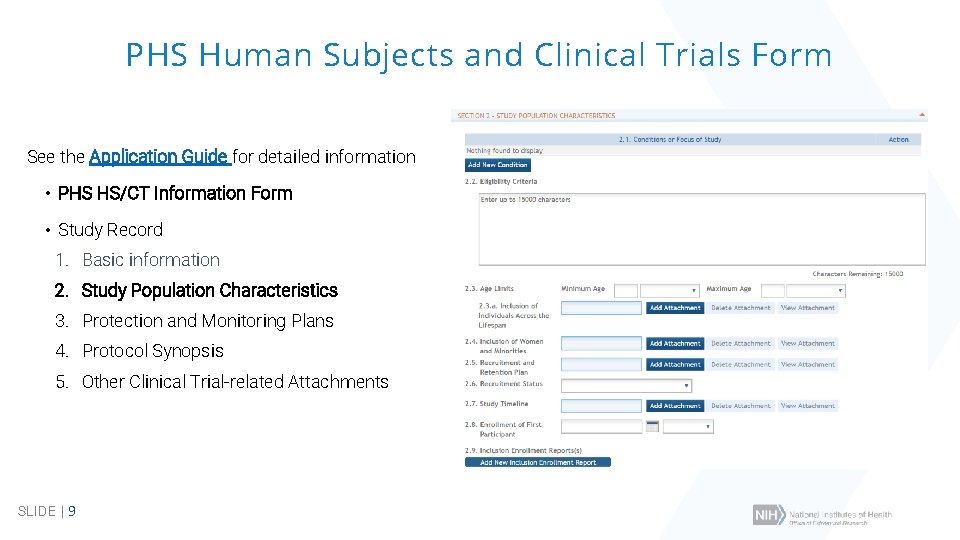
PHS Human Subjects and Clinical Trials Form See the Application Guide for detailed information • PHS HS/CT Information Form • Study Record 1. Basic information 2. Study Population Characteristics 3. Protection and Monitoring Plans 4. Protocol Synopsis 5. Other Clinical Trial-related Attachments SLIDE | 9
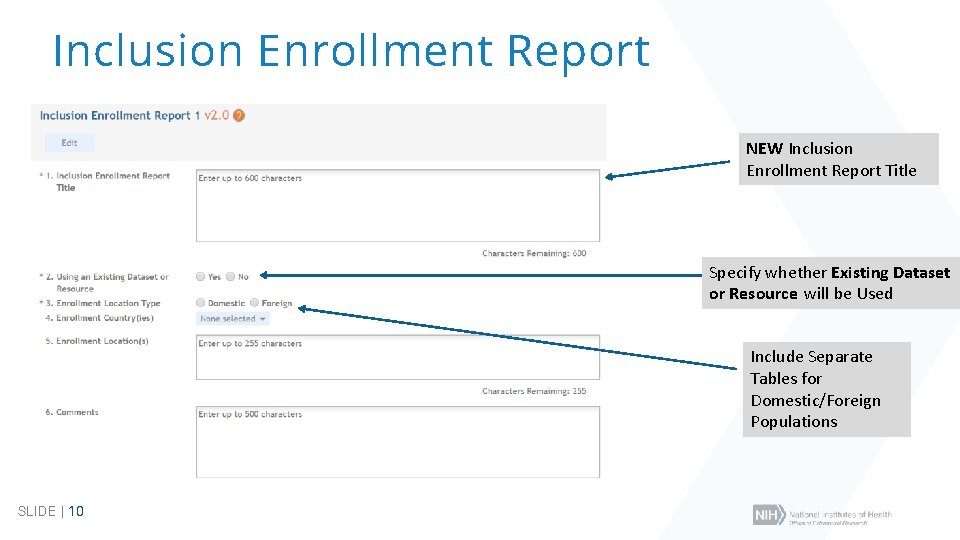
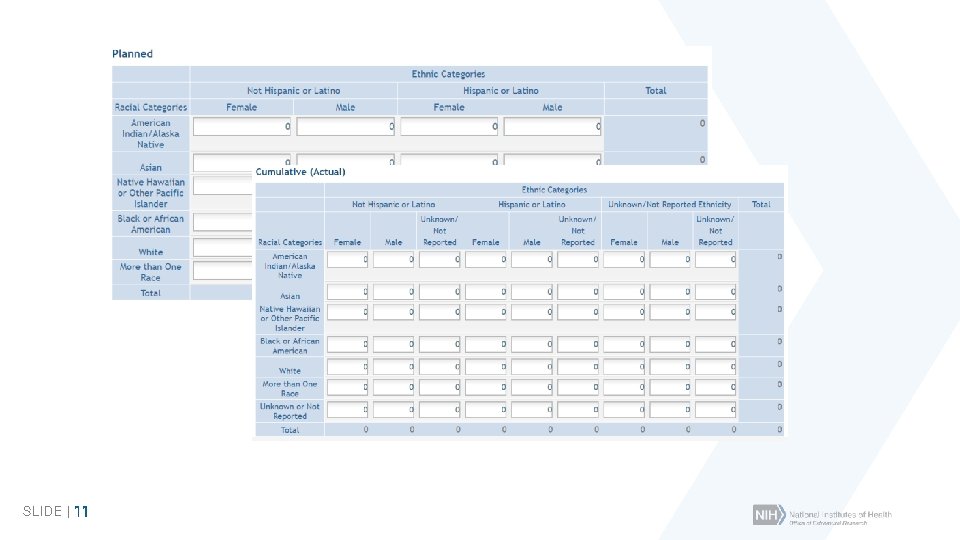
Inclusion Enrollment Report NEW Inclusion Enrollment Report Title Specify whether Existing Dataset or Resource will be Used Include Separate Tables for Domestic/Foreign Populations SLIDE | 10
Inclusion Enrollment Reports SLIDE | 11
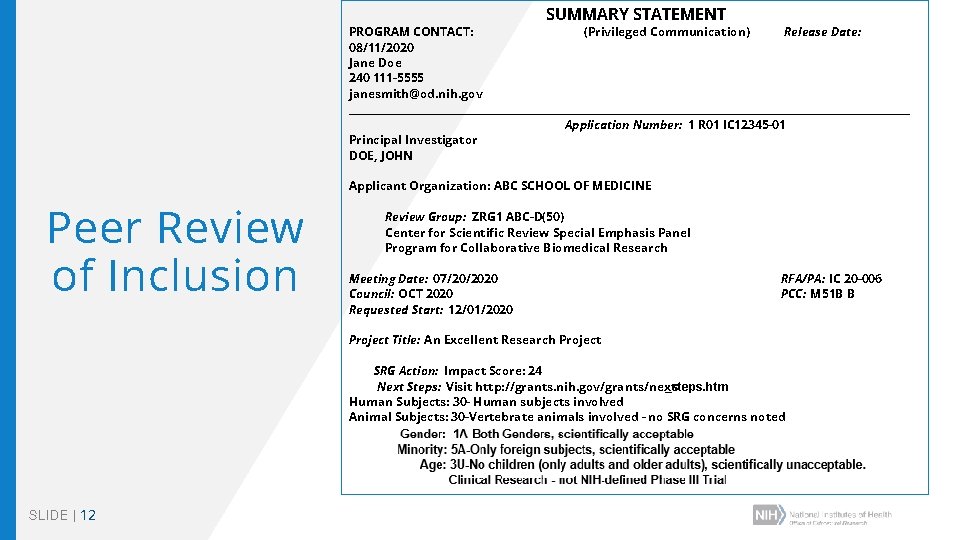
SUMMARY STATEMENT Peer Review of Inclusion SLIDE | 12 PROGRAM CONTACT: (Privileged Communication) Release Date: 08/11/2020 Jane Doe 240 111 -5555 janesmith@od. nih. gov __________________________________________ Application Number: 1 R 01 IC 12345 -01 Principal Investigator DOE, JOHN Applicant Organization: ABC SCHOOL OF MEDICINE Review Group: ZRG 1 ABC-D(50) Center for Scientific Review Special Emphasis Panel Program for Collaborative Biomedical Research Meeting Date: 07/20/2020 RFA/PA: IC 20 -006 Council: OCT 2020 PCC: M 51 B B Requested Start: 12/01/2020 Project Title: An Excellent Research Project SRG Action: Impact Score: 24 Next Steps: Visit http: //grants. nih. gov/grants/next _steps. htm Human Subjects: 30 - Human subjects involved Animal Subjects: 30 -Vertebrate animals involved - no SRG concerns noted Gender: 1 A-Both Genders, scientifically acceptable Minority: 5 A-Only foreign subjects, scientifically acceptable Age: 3 U-No children (only adults and older adults), scientifically unacceptable. Clinical Research - not NIH-defined Phase III Trial 12
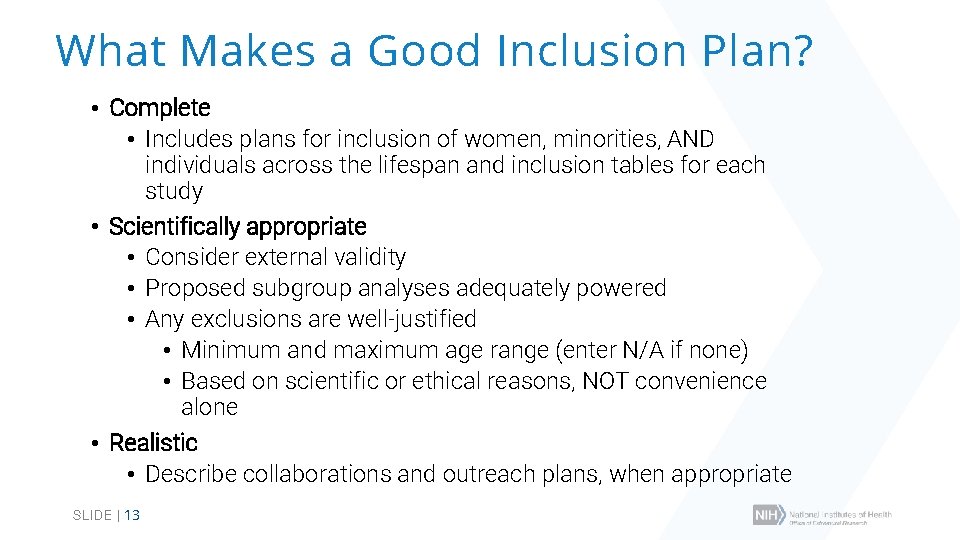
What Makes a Good Inclusion Plan? • Complete • Includes plans for inclusion of women, minorities, AND individuals across the lifespan and inclusion tables for each study • Scientifically appropriate • Consider external validity • Proposed subgroup analyses adequately powered • Any exclusions are well-justified • Minimum and maximum age range (enter N/A if none) • Based on scientific or ethical reasons, NOT convenience alone • Realistic • Describe collaborations and outreach plans, when appropriate SLIDE | 13
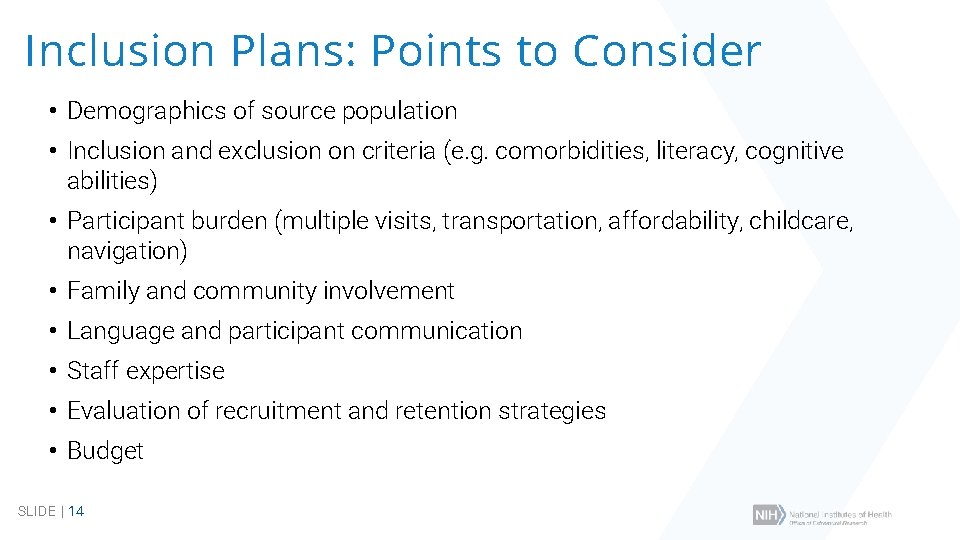
Inclusion Plans: Points to Consider • Demographics of source population • Inclusion and exclusion on criteria (e. g. comorbidities, literacy, cognitive abilities) • Participant burden (multiple visits, transportation, affordability, childcare, navigation) • Family and community involvement • Language and participant communication • Staff expertise • Evaluation of recruitment and retention strategies • Budget SLIDE | 14
Case Study #1 A researcher proposes a study to determine the efficacy of a novel treatment for prostate cancer. The study excludes individuals whose sex at birth is female. SLIDE | 15
Case Study #2 A researcher proposes a study to examine use of a smartphone app to improve glycemic control in diabetic individuals. The study excludes children and older adults due to generational differences in use of technology that may affect the statistical power of the study. . SLIDE | 16
Case Study #3 A researcher proposes a study in individuals 18 to 60. The study indicates children are excluded because the legal age to consent to research is 18 in the state where the research will be conducted. Individuals over 60 will be excluded because of the likelihood of co-morbidities in this group. SLIDE | 17
Just-in-Time Requirements • Work with Institute/Center staff to resolve unacceptable inclusion concerns • Provide inclusion enrollment report(s) if missing or needs updated as a result of peer review and/or programmatic adjustments SLIDE | 18 18
After the Award…Now What? • Provide actual inclusion enrollment data in progress reports • For NIH-defined Phase III Clinical Trials – report status/results of analyses by sex/gender, race, and ethnicity • For applicable NIH-defined Phase III Clinical Trials, report results by sex/gender and/or race/ethnicity in Clinicaltrials. gov within 1 year of primary completion date • Provide PHS Human Subjects and Clinical Trials Information Form for delayed onset studies SLIDE | 19
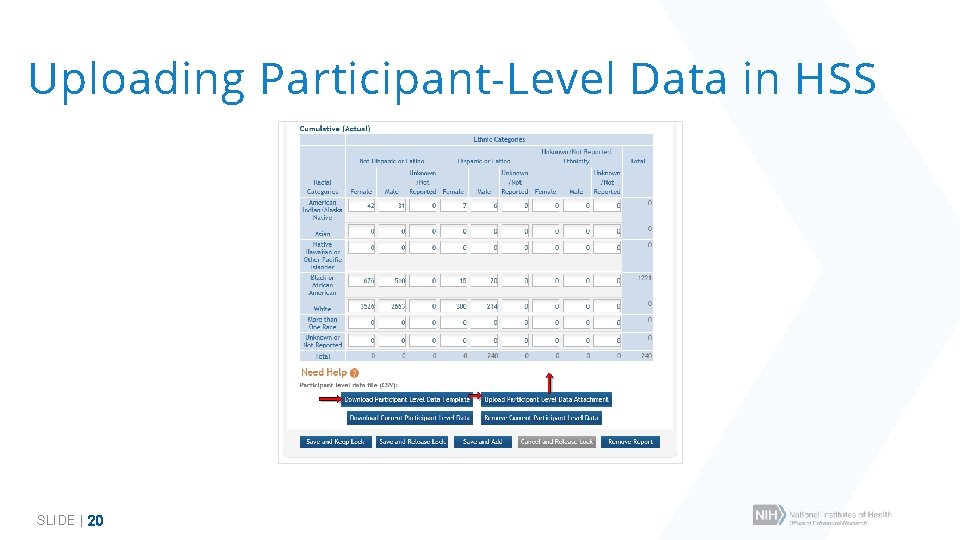
Uploading Participant-Level Data in HSS SLIDE | 20
Knowledge Check If funded, NIH recipients will need to provide data on participant race, ethnicity, sex/gender, and date of birth FALSE SLIDE | 21
RESOURCES WEB Inclusion of Women and Minorities https: //grants. nih. gov/grants/funding/women_min. htm Inclusion Across the Lifespan https: //grants. nih. gov/grants/funding/lifespan. htm EMAIL inclusion@mail. nih. gov