Ideology and the Meme Analyst as Actor Kreimir



- Slides: 45
Ideology and the Meme: Analyst as Actor Krešimir Petković, kpetkovic@fpzg. hr Faculty of Political Sciences, University of Zagreb Media Policy and Regulation & Agents of Power Conference Inter University Center, Dubrovnik, 24 -28 April 2017
Structure • Image and Concept • Ideology • Meme • Role of the Analyst
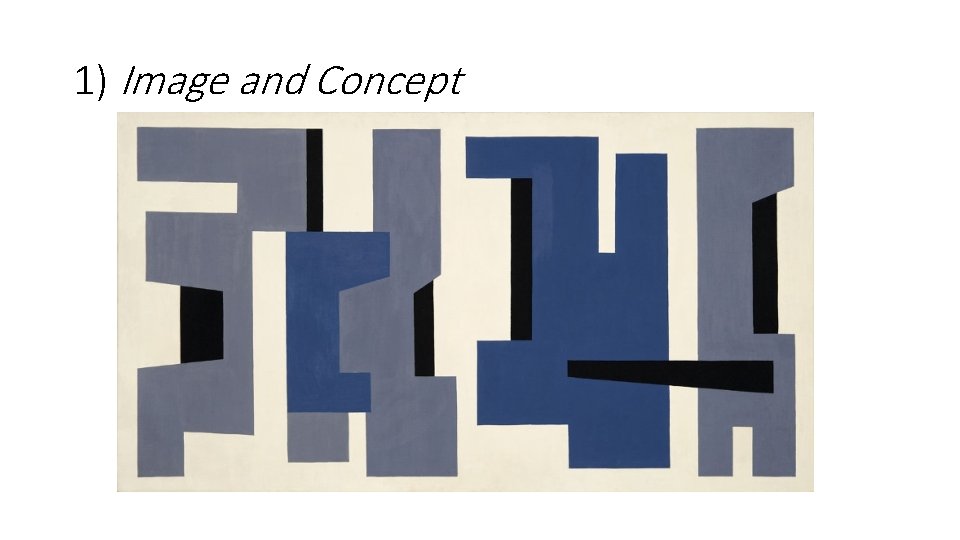
1) Image and Concept
Metaphor as proto-concept • The mythological image always means what it says and says only what it means. Concept has a level at which it says something other than what it means and means something other than what it says. On this level concept appears in the form of the metaphor, or rather it is this level which gives rise to the metaphor. Such is the concept in the Classical period, when it has a dual nature—one in form, another in sense.
From myth to narrative: separation of image and concept • Narration is conceptual myth. But myth was everything: thought, thing, action, being, word; it was the sole form of perceiving the world both as a whole and in each separate part. Narration is only a story. • Visuality is as much a part of spectacle as it is of mystery and cult. • Conceptual thought, after all, had only recently broken with the image; but, separated from the image, it became unstable. Concept still uses the image, but externally, as an external support, without which it cannot stand on its own.
However, concepts are not ahistorical… • Concept, like image, is not a constant quantity, but a historical and social variable. Concept, like image, through all the history of thought changed its character and its interconnection with the image. The Classical concept arose in the mythological image even structurally; it grew out of the image. Its history is the history of its emancipation from the mythological image, from the laws of thinking and the semantics that it had to overcome and break with. But this break took place only after the Classical age; it began in the Hellenistic period; Aristotle marks the time of the abstract concept emancipated from the concreteness of the mythological image.
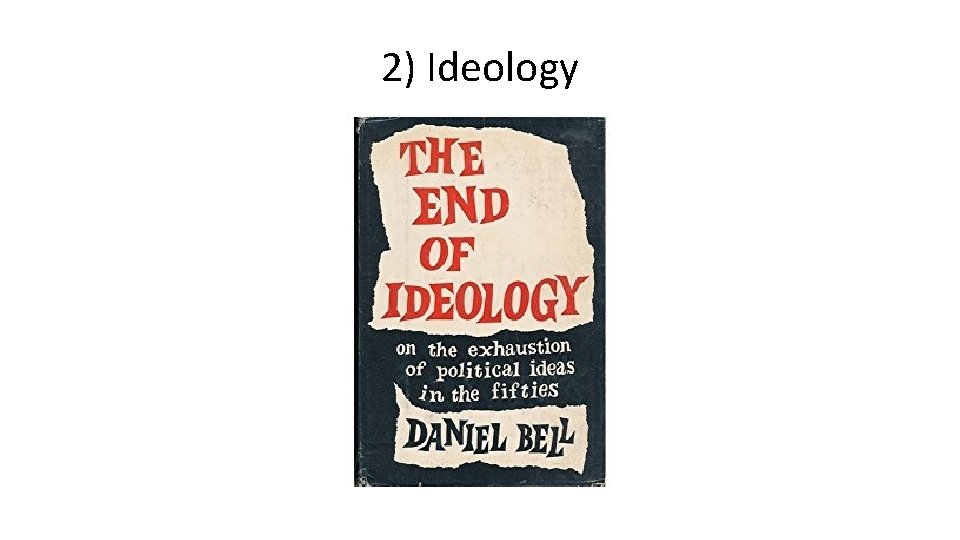
2) Ideology
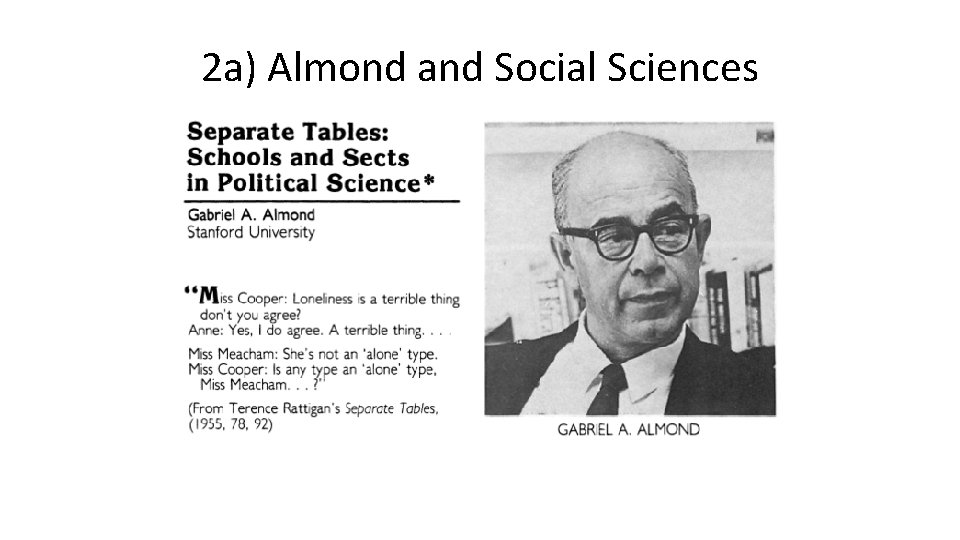
2 a) Almond and Social Sciences
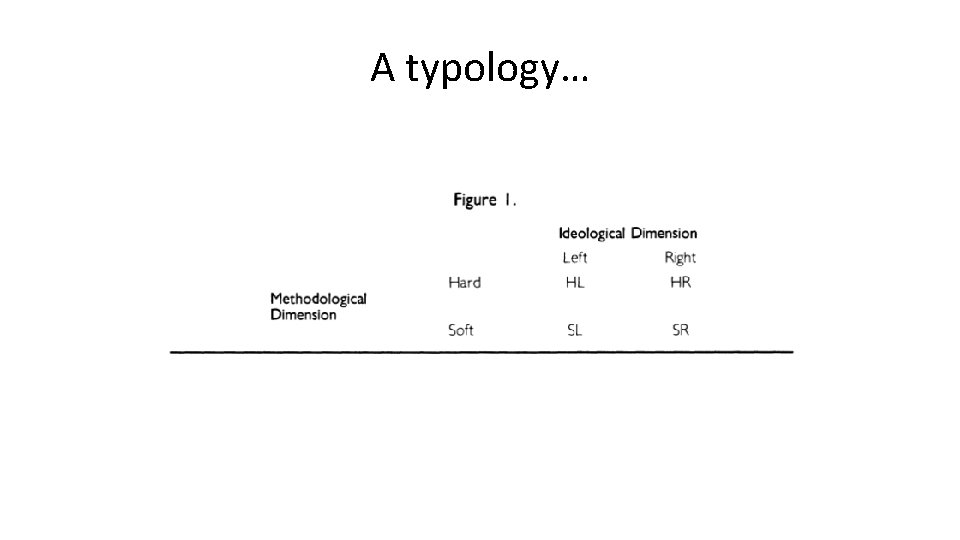
A typology…
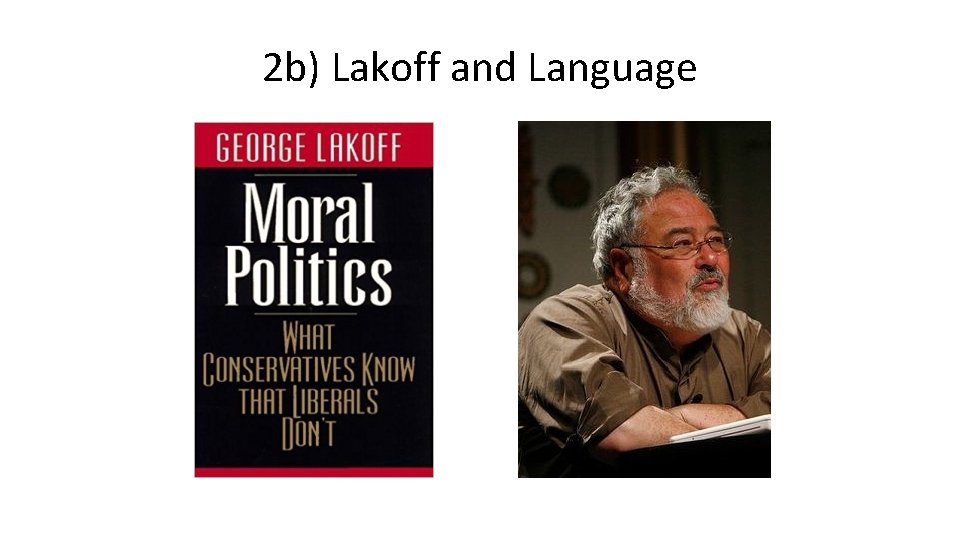
2 b) Lakoff and Language
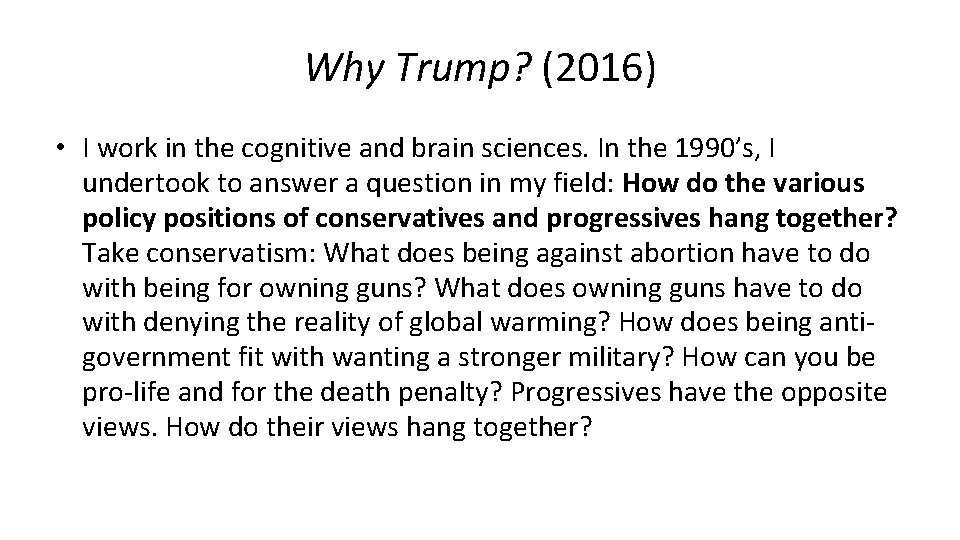
Why Trump? (2016) • I work in the cognitive and brain sciences. In the 1990’s, I undertook to answer a question in my field: How do the various policy positions of conservatives and progressives hang together? Take conservatism: What does being against abortion have to do with being for owning guns? What does owning guns have to do with denying the reality of global warming? How does being antigovernment fit with wanting a stronger military? How can you be pro-life and for the death penalty? Progressives have the opposite views. How do their views hang together?
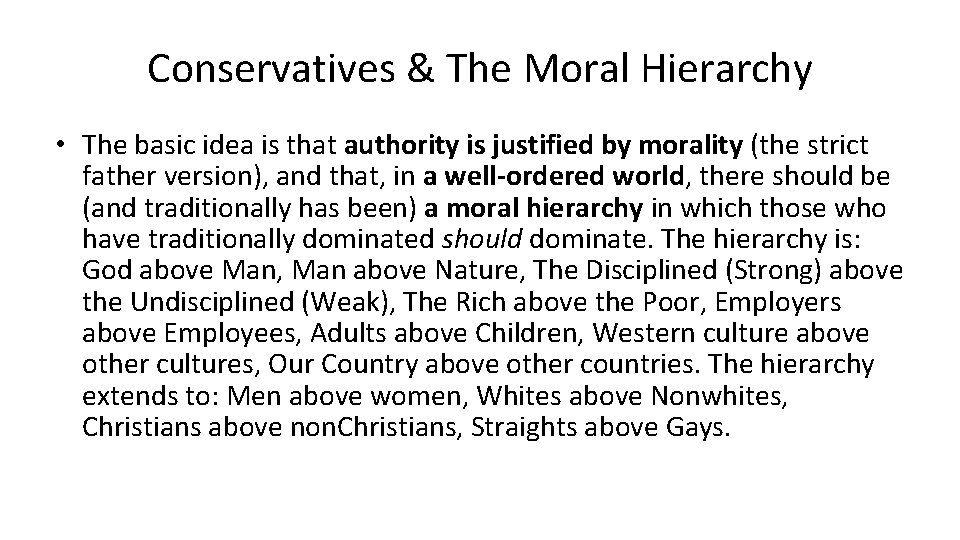
Conservatives & The Moral Hierarchy • The basic idea is that authority is justified by morality (the strict father version), and that, in a well-ordered world, there should be (and traditionally has been) a moral hierarchy in which those who have traditionally dominated should dominate. The hierarchy is: God above Man, Man above Nature, The Disciplined (Strong) above the Undisciplined (Weak), The Rich above the Poor, Employers above Employees, Adults above Children, Western culture above other cultures, Our Country above other countries. The hierarchy extends to: Men above women, Whites above Nonwhites, Christians above non. Christians, Straights above Gays.
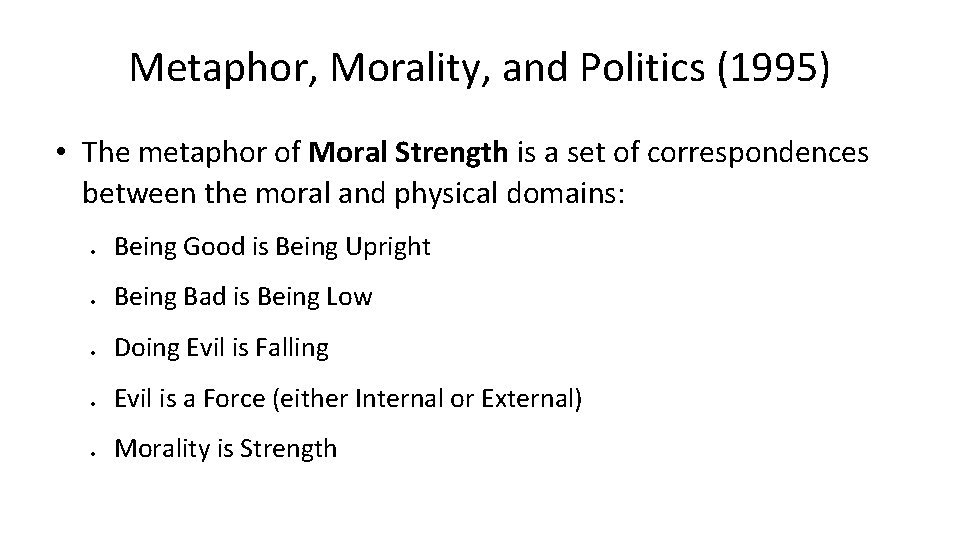
Metaphor, Morality, and Politics (1995) • The metaphor of Moral Strength is a set of correspondences between the moral and physical domains: Being Good is Being Upright Being Bad is Being Low Doing Evil is Falling Evil is a Force (either Internal or External) Morality is Strength
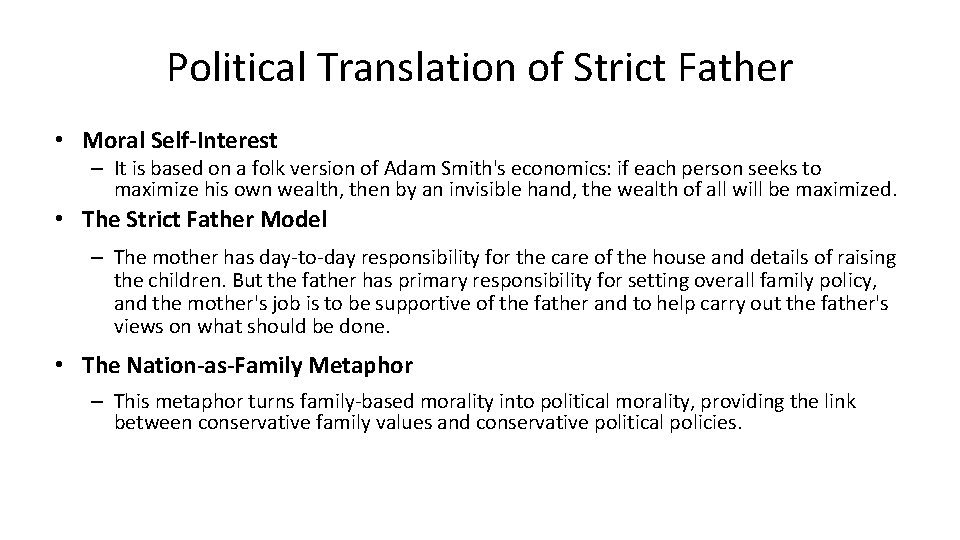
Political Translation of Strict Father • Moral Self-Interest – It is based on a folk version of Adam Smith's economics: if each person seeks to maximize his own wealth, then by an invisible hand, the wealth of all will be maximized. • The Strict Father Model – The mother has day-to-day responsibility for the care of the house and details of raising the children. But the father has primary responsibility for setting overall family policy, and the mother's job is to be supportive of the father and to help carry out the father's views on what should be done. • The Nation-as-Family Metaphor – This metaphor turns family-based morality into political morality, providing the link between conservative family values and conservative political policies.
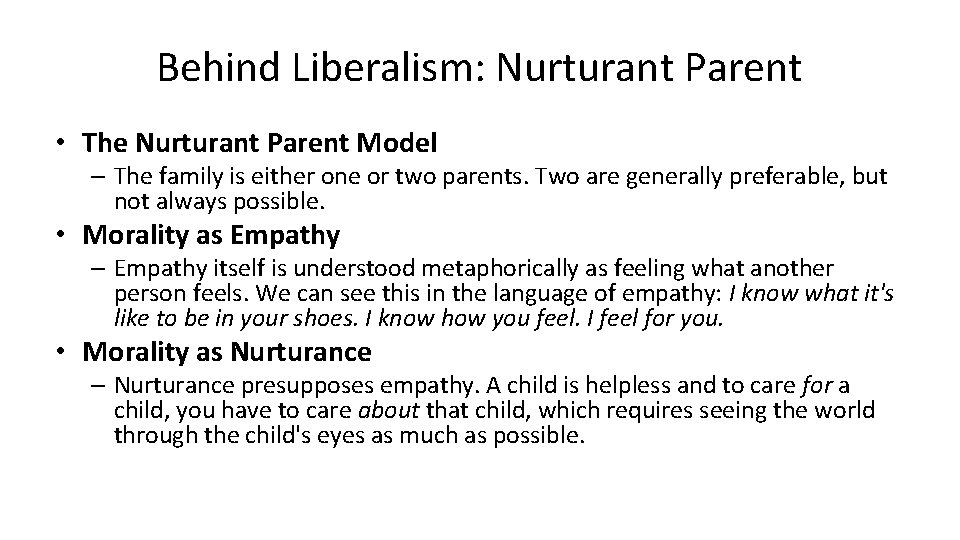
Behind Liberalism: Nurturant Parent • The Nurturant Parent Model – The family is either one or two parents. Two are generally preferable, but not always possible. • Morality as Empathy – Empathy itself is understood metaphorically as feeling what another person feels. We can see this in the language of empathy: I know what it's like to be in your shoes. I know how you feel. I feel for you. • Morality as Nurturance – Nurturance presupposes empathy. A child is helpless and to care for a child, you have to care about that child, which requires seeing the world through the child's eyes as much as possible.
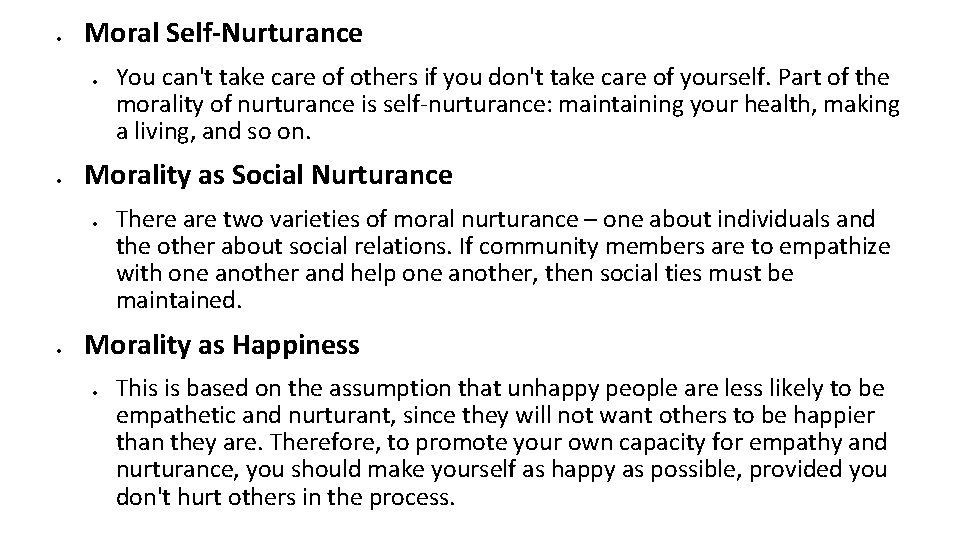
Moral Self-Nurturance Morality as Social Nurturance You can't take care of others if you don't take care of yourself. Part of the morality of nurturance is self-nurturance: maintaining your health, making a living, and so on. There are two varieties of moral nurturance – one about individuals and the other about social relations. If community members are to empathize with one another and help one another, then social ties must be maintained. Morality as Happiness This is based on the assumption that unhappy people are less likely to be empathetic and nurturant, since they will not want others to be happier than they are. Therefore, to promote your own capacity for empathy and nurturance, you should make yourself as happy as possible, provided you don't hurt others in the process.
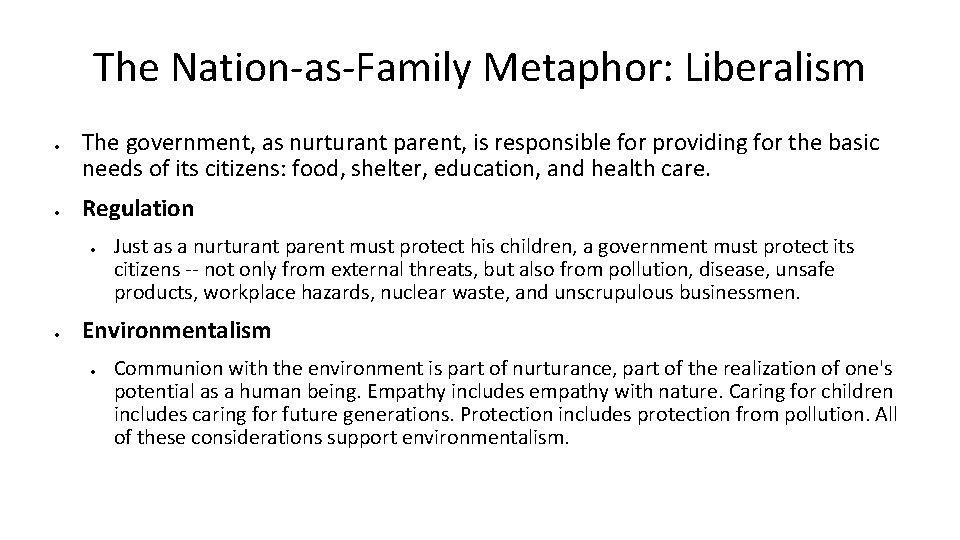
The Nation-as-Family Metaphor: Liberalism The government, as nurturant parent, is responsible for providing for the basic needs of its citizens: food, shelter, education, and health care. Regulation Just as a nurturant parent must protect his children, a government must protect its citizens -- not only from external threats, but also from pollution, disease, unsafe products, workplace hazards, nuclear waste, and unscrupulous businessmen. Environmentalism Communion with the environment is part of nurturance, part of the realization of one's potential as a human being. Empathy includes empathy with nature. Caring for children includes caring for future generations. Protection includes protection from pollution. All of these considerations support environmentalism.
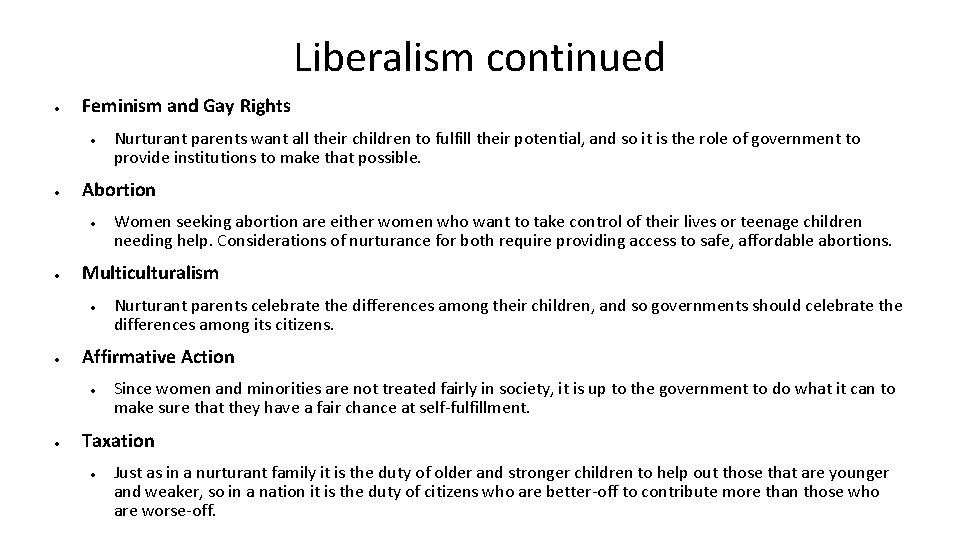
Liberalism continued Feminism and Gay Rights Abortion Nurturant parents celebrate the differences among their children, and so governments should celebrate the differences among its citizens. Affirmative Action Women seeking abortion are either women who want to take control of their lives or teenage children needing help. Considerations of nurturance for both require providing access to safe, affordable abortions. Multiculturalism Nurturant parents want all their children to fulfill their potential, and so it is the role of government to provide institutions to make that possible. Since women and minorities are not treated fairly in society, it is up to the government to do what it can to make sure that they have a fair chance at self-fulfillment. Taxation Just as in a nurturant family it is the duty of older and stronger children to help out those that are younger and weaker, so in a nation it is the duty of citizens who are better-off to contribute more than those who are worse-off.
Trump’s policy proposals: direct causation (2016) • Immigrants are flooding in from Mexico — build a wall to stop them. • For all the immigrants who have entered illegally, just deport them — even if there are 11 million of them working throughout the economy and living throughout the country. • The cure for gun violence is to have a gun ready to directly shoot the shooter. • To stop jobs from going to Asia where labor costs are lower and cheaper goods flood the market here, the solution is direct: put a huge tariff on those goods so they are more expensive than goods made here.
Don’t Think of an Elephant… • Both are characterized in the brain by neural circuitry. They are linked by a commonplace circuit: mutual inhibition. When one is turned on the other is turned off; when one is strengthened, the other is weakened. What turns them on or off? Language that fits that worldview activates that worldview, strengthening it, while turning off the other worldview and weakening it. The more Trump’s views are discussed in the media, the more they are activated and the stronger they get, both in the minds of hardcore conservatives and in the minds of moderate progressives.
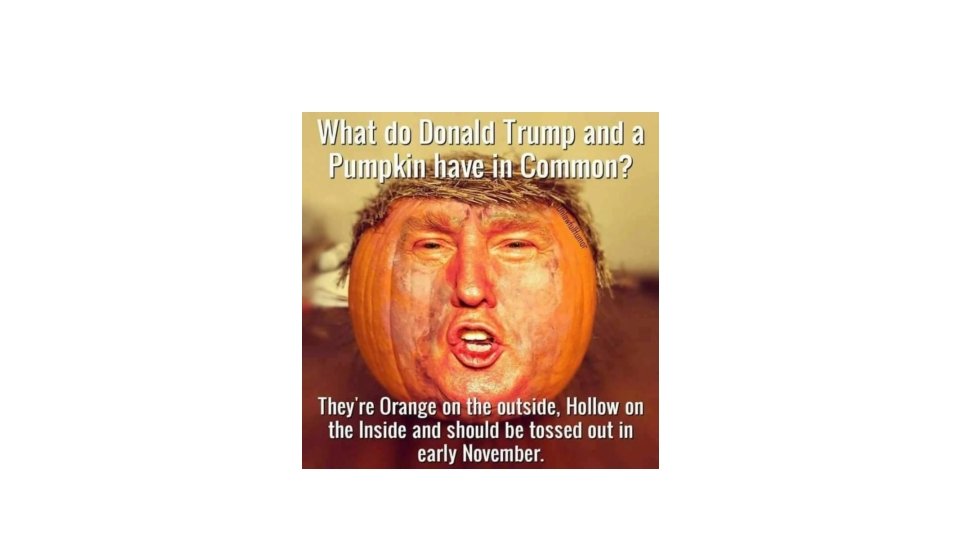
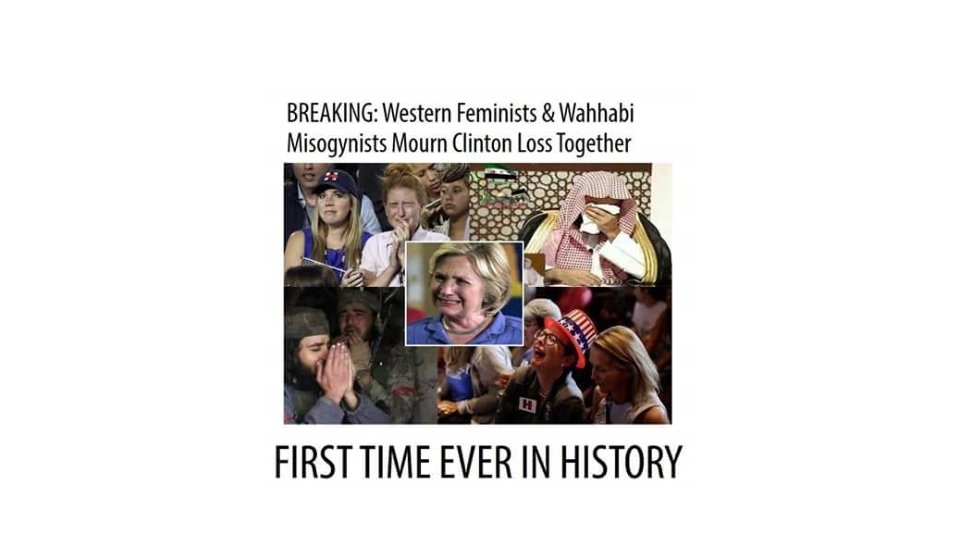
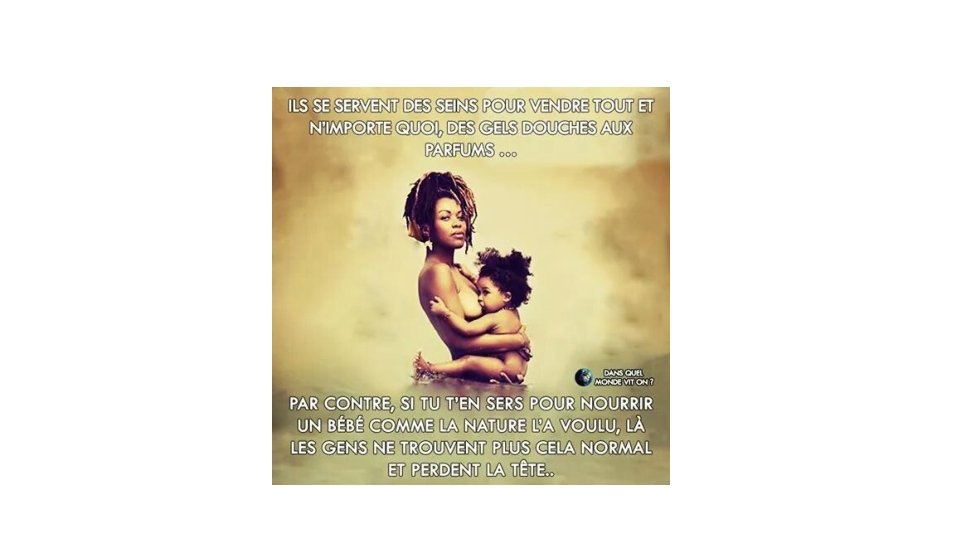
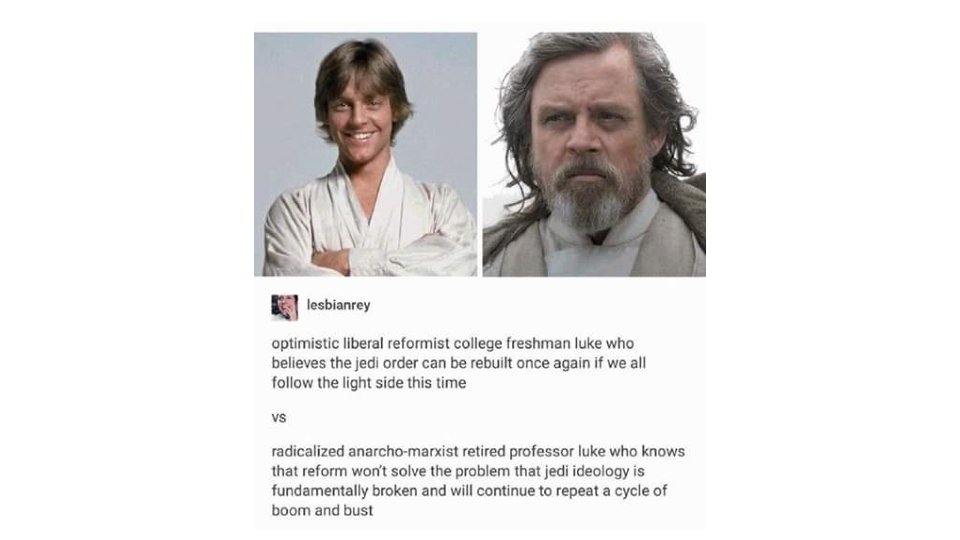
3) The Meme: Darwinism or Deliberate Action?
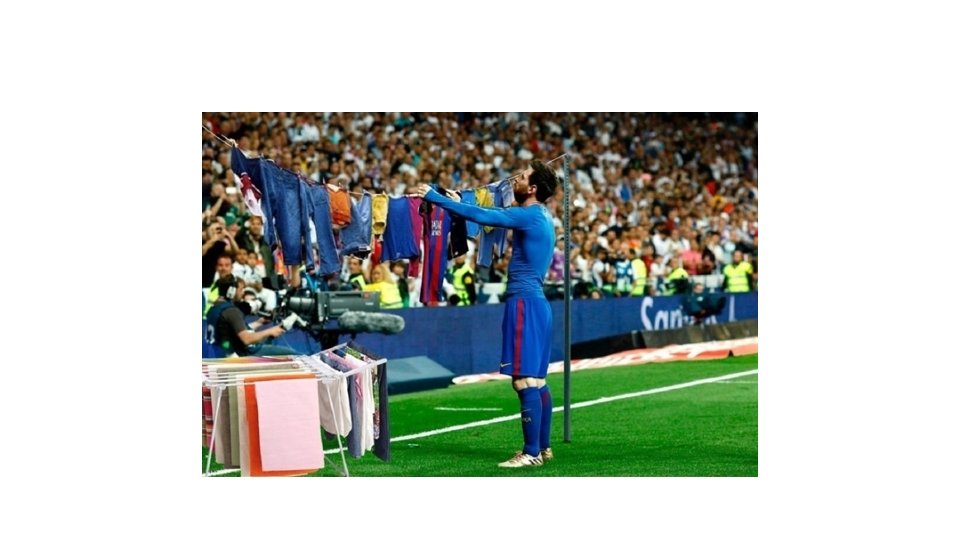
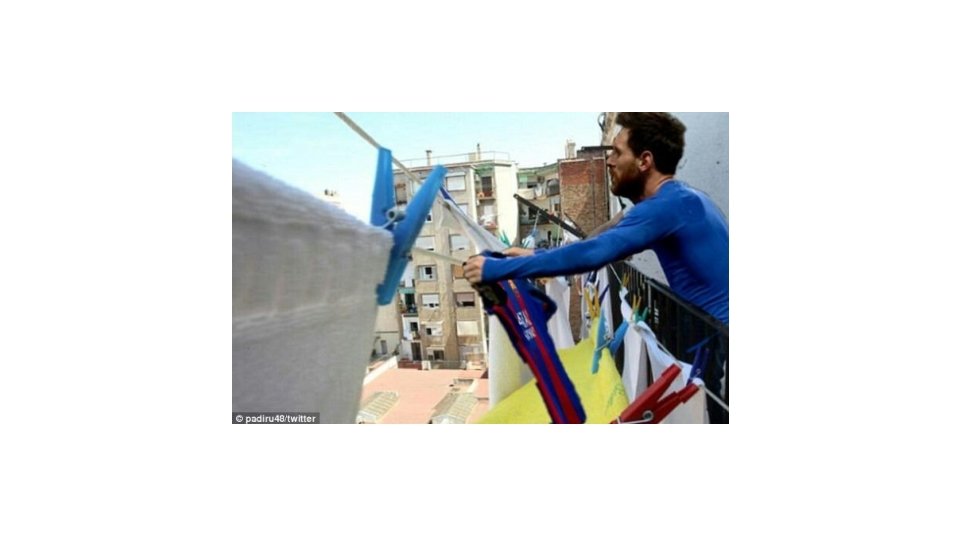
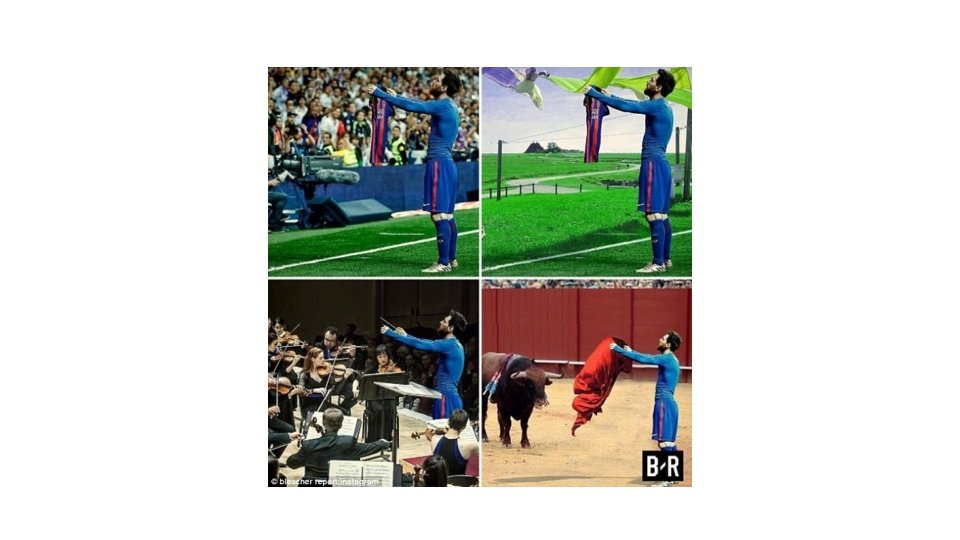
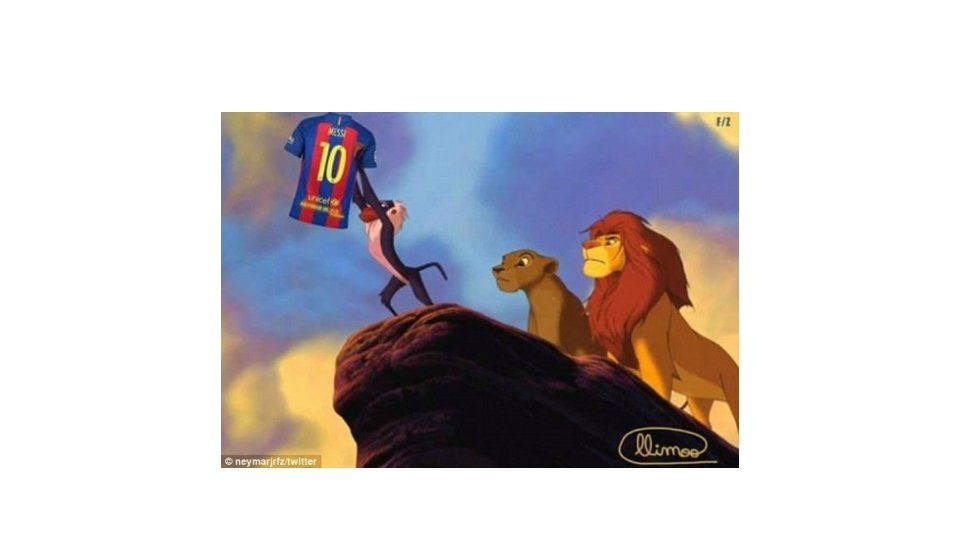
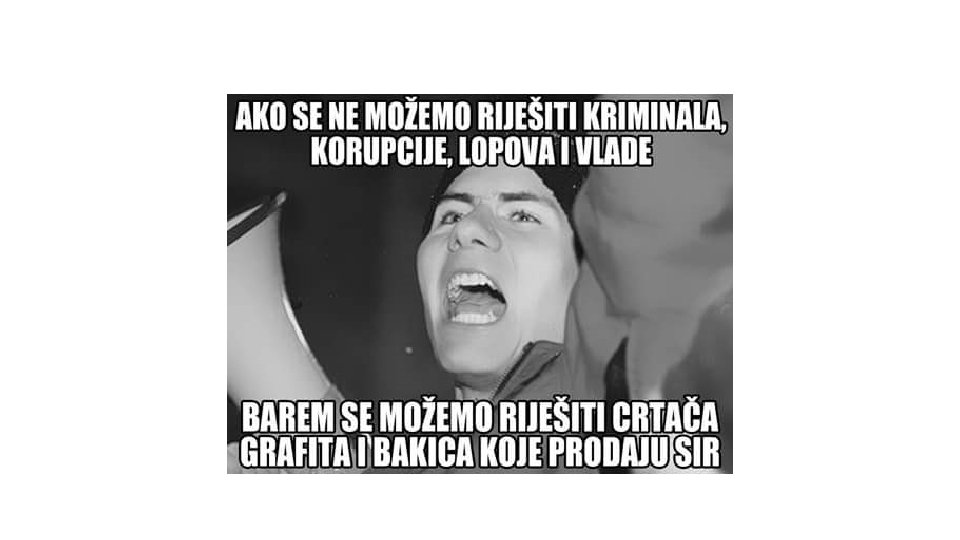
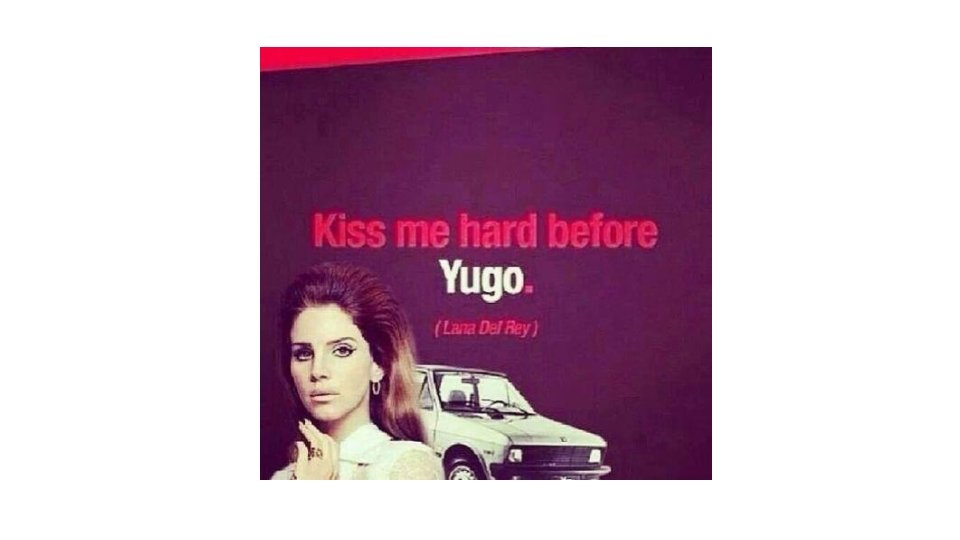
Evolutionary theory: from the idea to the meme • History of ideas, not interests? (Hegel vs. Marx) • Ideas: „Viruses that ‘mutate’, take on life of their own and infect political systems” (Cairney) • „Transmission of ideas within politics as transmission of memes within society” (John) • „Devolutionary” theory?
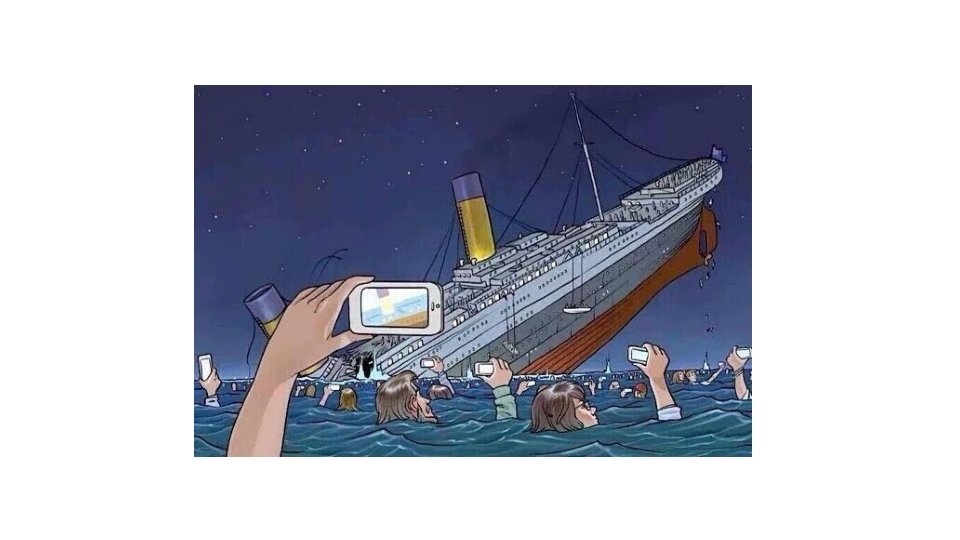
The rise of left-wing, anti-Trump fake news (BBC Trending) • Many people on the left right now are feeling overwhelmed and fearful and unsure of what's going to happen next. While they're scrolling through their information feeds at speed on small mobile phones their critical functions are not kicking in, and they're seeing information that makes them feel immediately connected with other people who think similarly to them. And without doing the usual checks that they would do, they're sharing and very quickly passing on similarly false and problematic content that we were seeing before the election. (Claire Wardle, First Draft)
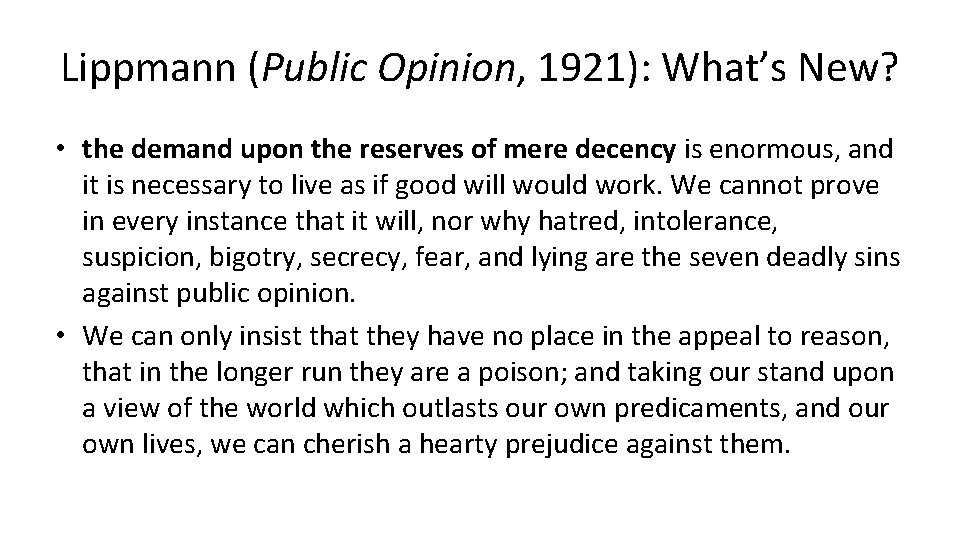
Lippmann (Public Opinion, 1921): What’s New? • the demand upon the reserves of mere decency is enormous, and it is necessary to live as if good will would work. We cannot prove in every instance that it will, nor why hatred, intolerance, suspicion, bigotry, secrecy, fear, and lying are the seven deadly sins against public opinion. • We can only insist that they have no place in the appeal to reason, that in the longer run they are a poison; and taking our stand upon a view of the world which outlasts our own predicaments, and our own lives, we can cherish a hearty prejudice against them.
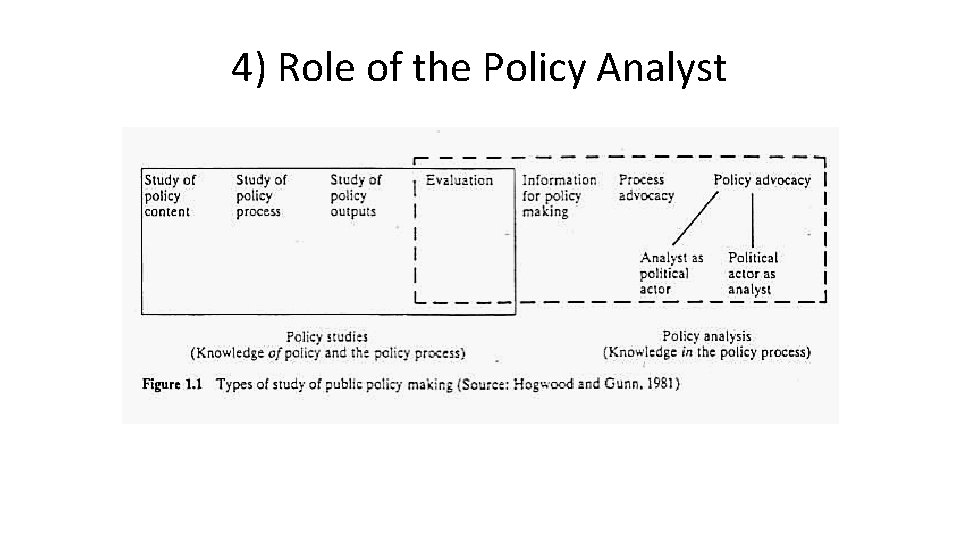
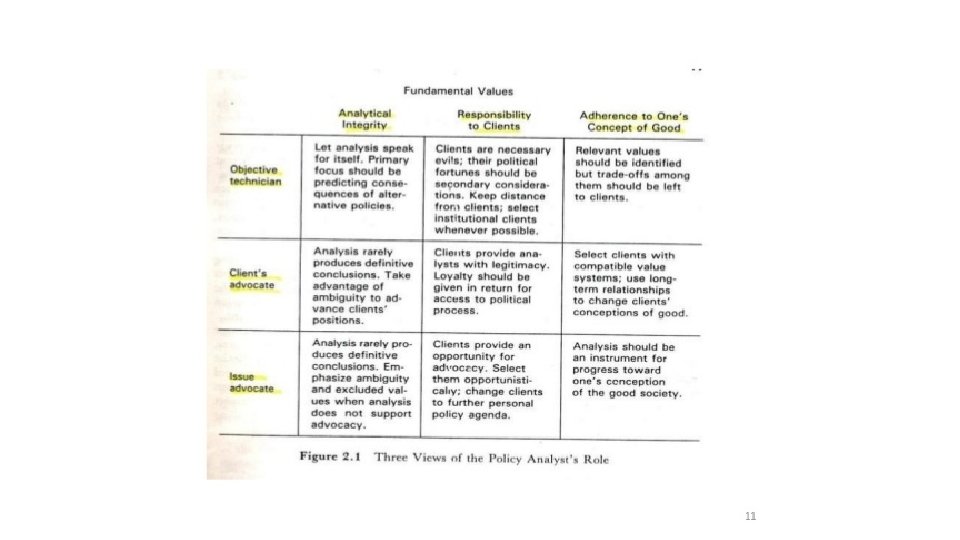
4) Role of the Policy Analyst
Conclusion 1) From Image to Concept: Abstract is Good 2) Ideology: from Family to Politics 3) The Meme: From Concept to Image? 4) The Analyst: Old Challenges & New Forms of Communication?