Identification and monitoring of eating disorders SARAH FULLER


- Slides: 35
Identification and monitoring of eating disorders SARAH FULLER ADVANCED SPECIALIST EATING DISORDERS DIETITIAN
What we aim to cover Myth busting Incidence of ED’s Symptoms of ED’s Different types of ED’s ◦ Greater focus on the main types: Anorexia Nervosa, Bulimia Nervosa and Binge Eating Disorder The Minnesota Study and what happens in starvation How to get help and refer
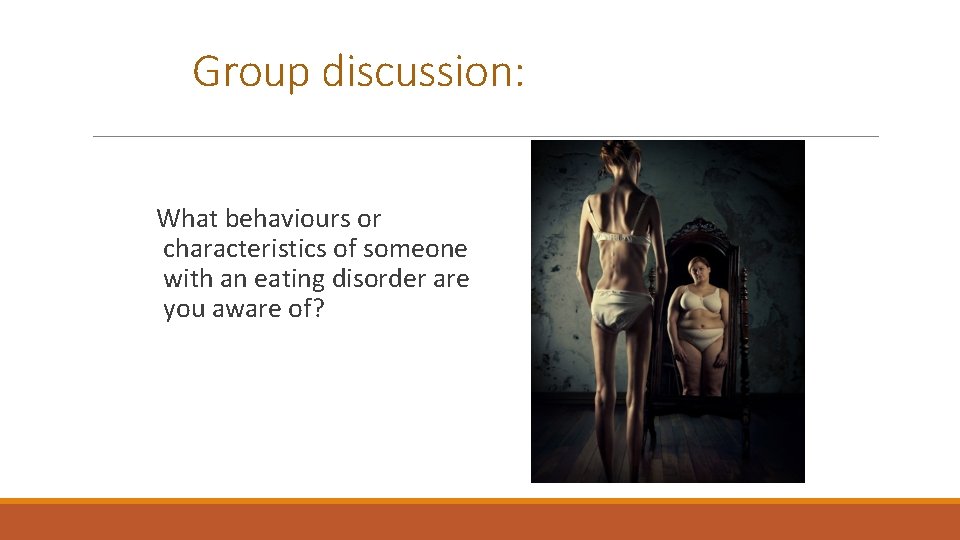
Group discussion: What behaviours or characteristics of someone with an eating disorder are you aware of?
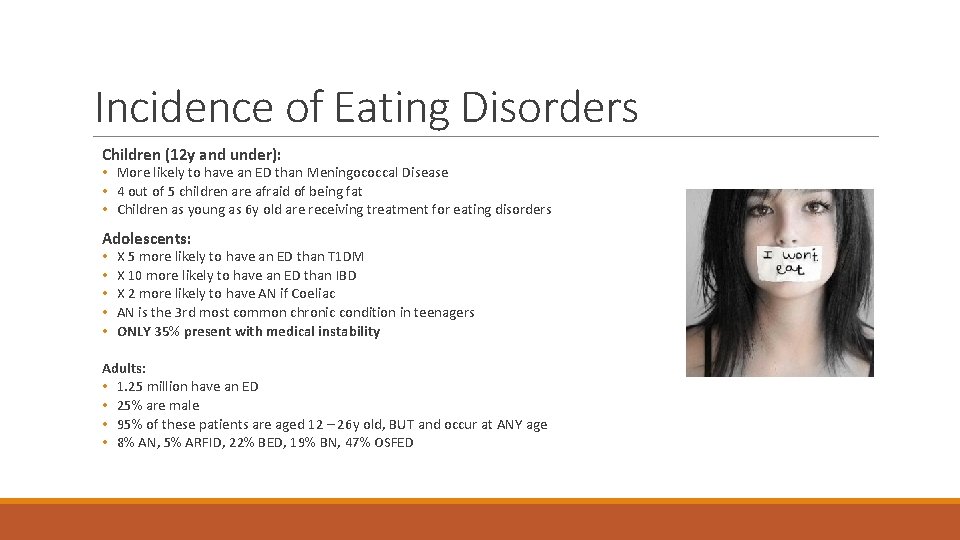
Incidence of Eating Disorders Children (12 y and under): • More likely to have an ED than Meningococcal Disease • 4 out of 5 children are afraid of being fat • Children as young as 6 y old are receiving treatment for eating disorders Adolescents: • • • X 5 more likely to have an ED than T 1 DM X 10 more likely to have an ED than IBD X 2 more likely to have AN if Coeliac AN is the 3 rd most common chronic condition in teenagers ONLY 35% present with medical instability Adults: • 1. 25 million have an ED • 25% are male • 95% of these patients are aged 12 – 26 y old, BUT and occur at ANY age • 8% AN, 5% ARFID, 22% BED, 19% BN, 47% OSFED
What causes eating disorders? We don't know exactly what causes eating disorders. You may be more likely to get an eating disorder if: ◦ ◦ ◦ If you are female If you are an adolescent If you are in a period of transition: changing school, moving house / job, pregnancy etc… If you, or a member of your family, has a history of eating disorders, depression, or alcohol or drug addiction If you have anxiety, low self-esteem, an obsessive personality, or are a perfectionist If you have been criticised for your eating habits, body shape or weight ◦ High number of cases after young people being weighed at school and letter being sent home after being identified as overweight ◦ If you're overly concerned with being slim, particularly if you also feel pressure from society or your job – for example, ballet dancers, jockeys, models or athletes ◦ Women with PCOS or Diabetes (x 2. 4 risk of developing an ED esp BN or BED) ◦ Those who identify as LGBTQ+ ◦ If you have been sexually abused
Symptoms Restricting oral intake • Healthy eating e. g. cutting out snacks, puddings, treats etc… • Excluding food groups e. g. carbohydrates, fats etc… • Socially acceptable restrictions e. g. vegetarian / vegan diets, fasting for religious festivals or beliefs • Hiding foods • On person e. g. in clothes, in hair, in mouth • Elsewhere e. g. given to pets, in bins, behind radiators, in umbrellas! • Poor eating behaviours e. g. long meals, smearing, • Fasting / refusal to eat • Remember: younger patients are at higher risk of restricting fluids and may need medical stabilisation quickly.
Symptoms Exercising • Group exercise e. g. PE, sports, walking to/from school/work etc… • Additional exercise e. g. unable to stop the above, exercising in bedroom or in secret (may have to do repeated exercise routines) • Subtle exercise e. g. standing, seated jiggeling, abdominal crunches, the ‘seated hover’, extra steps, serial pottering Key features of compulsive exercise: • Usually a daily activity that causes high levels of anxiety if missed • Planning their day around the exercise and other activities will be missed to prioritise the exercise e. g. avoiding social situations • Excessive exercisers report that they often feel like they are not good enough, not fast enough or not pushing themselves hard enough during a period of exercise. • They report feeling an intense pressure to increase the duration, intensity or difficulty of their exercise routine
Symptoms Vomiting • After meals or drinks • In secret or in public (dirty protest!) • On supervision: in showers or in tissues • You may find hidden vomit bags or in clothes etc… Medical complications of vomiting: ◦ Dehydration ◦ Electrolyte abnormalities (metabolic alkalosis or hypokalemia) ◦ Oesophageal tear (rare) – either partial (Mallory-Weiss) or complete (Boerhaave syndrome)
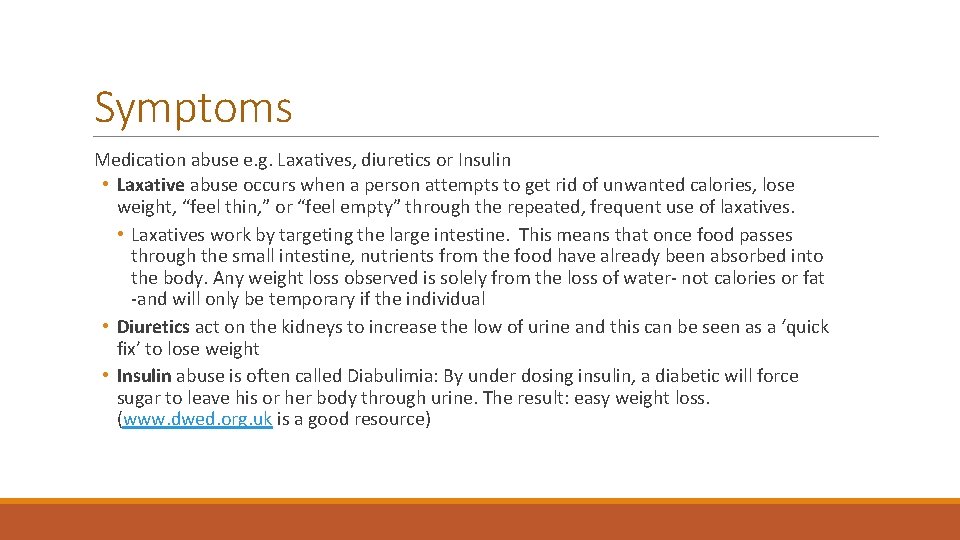
Symptoms Medication abuse e. g. Laxatives, diuretics or Insulin • Laxative abuse occurs when a person attempts to get rid of unwanted calories, lose weight, “feel thin, ” or “feel empty” through the repeated, frequent use of laxatives. • Laxatives work by targeting the large intestine. This means that once food passes through the small intestine, nutrients from the food have already been absorbed into the body. Any weight loss observed is solely from the loss of water- not calories or fat -and will only be temporary if the individual • Diuretics act on the kidneys to increase the low of urine and this can be seen as a ‘quick fix’ to lose weight • Insulin abuse is often called Diabulimia: By under dosing insulin, a diabetic will force sugar to leave his or her body through urine. The result: easy weight loss. (www. dwed. org. uk is a good resource)
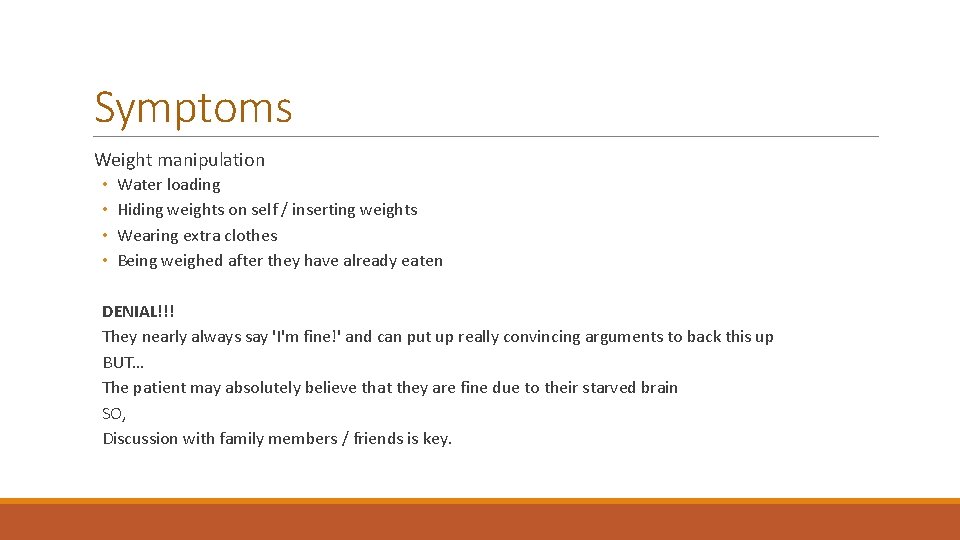
Symptoms Weight manipulation • • Water loading Hiding weights on self / inserting weights Wearing extra clothes Being weighed after they have already eaten DENIAL!!! They nearly always say 'I'm fine!' and can put up really convincing arguments to back this up BUT… The patient may absolutely believe that they are fine due to their starved brain SO, Discussion with family members / friends is key.
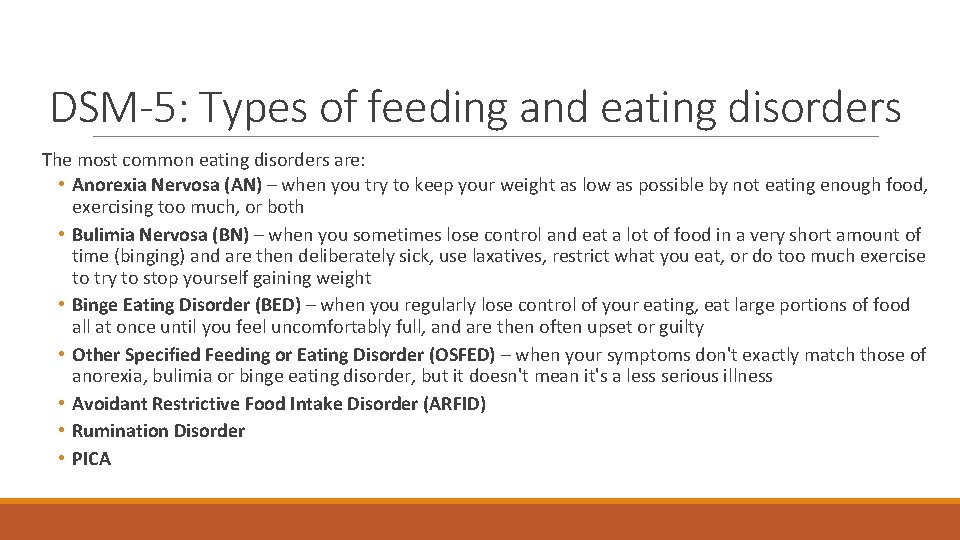
DSM-5: Types of feeding and eating disorders The most common eating disorders are: • Anorexia Nervosa (AN) – when you try to keep your weight as low as possible by not eating enough food, exercising too much, or both • Bulimia Nervosa (BN) – when you sometimes lose control and eat a lot of food in a very short amount of time (binging) and are then deliberately sick, use laxatives, restrict what you eat, or do too much exercise to try to stop yourself gaining weight • Binge Eating Disorder (BED) – when you regularly lose control of your eating, eat large portions of food all at once until you feel uncomfortably full, and are then often upset or guilty • Other Specified Feeding or Eating Disorder (OSFED) – when your symptoms don't exactly match those of anorexia, bulimia or binge eating disorder, but it doesn't mean it's a less serious illness • Avoidant Restrictive Food Intake Disorder (ARFID) • Rumination Disorder • PICA
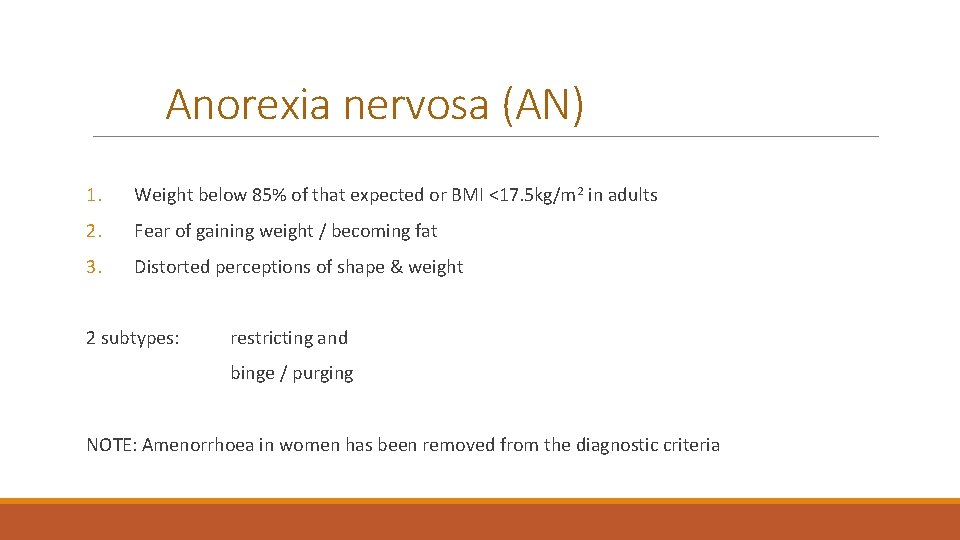
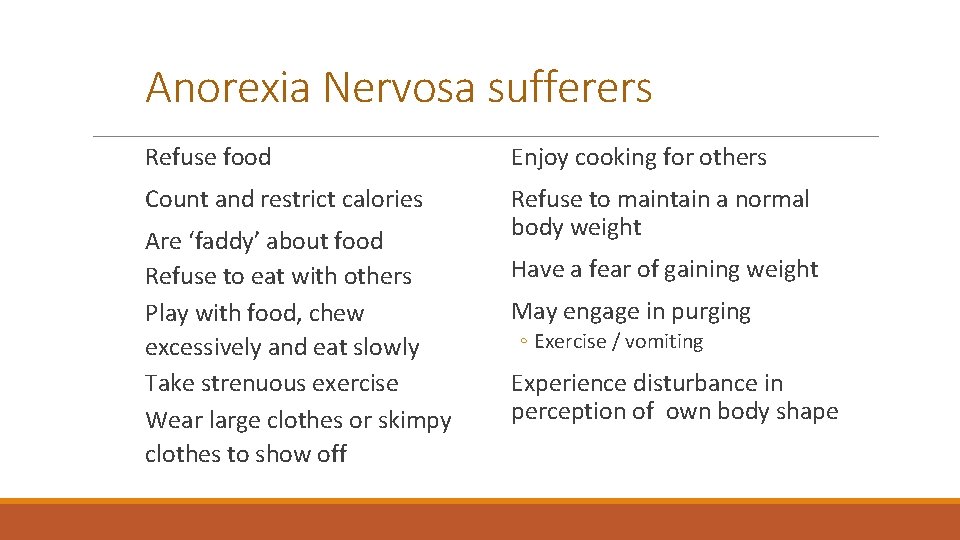
Anorexia nervosa (AN) 1. Weight below 85% of that expected or BMI <17. 5 kg/m 2 in adults 2. Fear of gaining weight / becoming fat 3. Distorted perceptions of shape & weight 2 subtypes: restricting and binge / purging NOTE: Amenorrhoea in women has been removed from the diagnostic criteria
Anorexia Nervosa sufferers Refuse food Enjoy cooking for others Count and restrict calories Refuse to maintain a normal body weight Are ‘faddy’ about food Refuse to eat with others Play with food, chew excessively and eat slowly Take strenuous exercise Wear large clothes or skimpy clothes to show off Have a fear of gaining weight May engage in purging ◦ Exercise / vomiting Experience disturbance in perception of own body shape
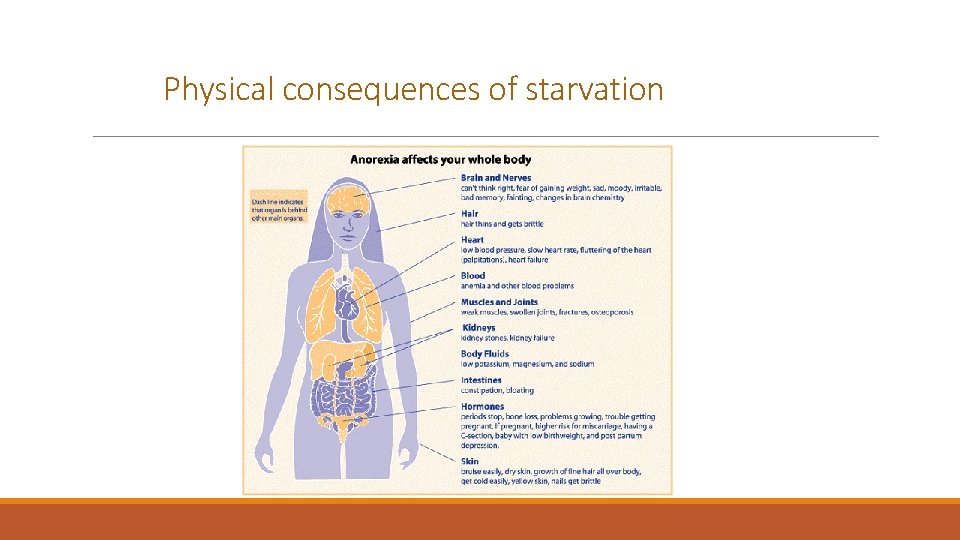
Physical consequences of starvation
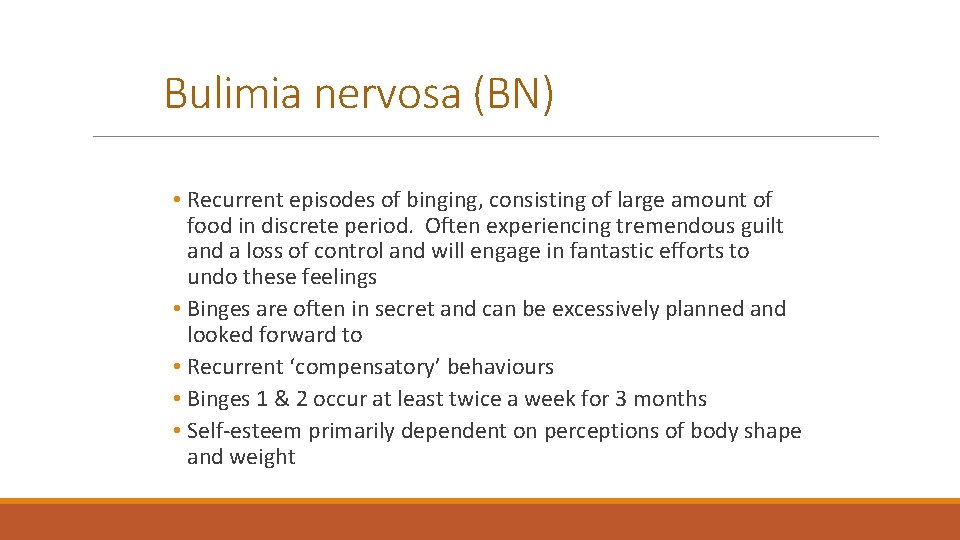
Bulimia nervosa (BN) • Recurrent episodes of binging, consisting of large amount of food in discrete period. Often experiencing tremendous guilt and a loss of control and will engage in fantastic efforts to undo these feelings • Binges are often in secret and can be excessively planned and looked forward to • Recurrent ‘compensatory’ behaviours • Binges 1 & 2 occur at least twice a week for 3 months • Self-esteem primarily dependent on perceptions of body shape and weight
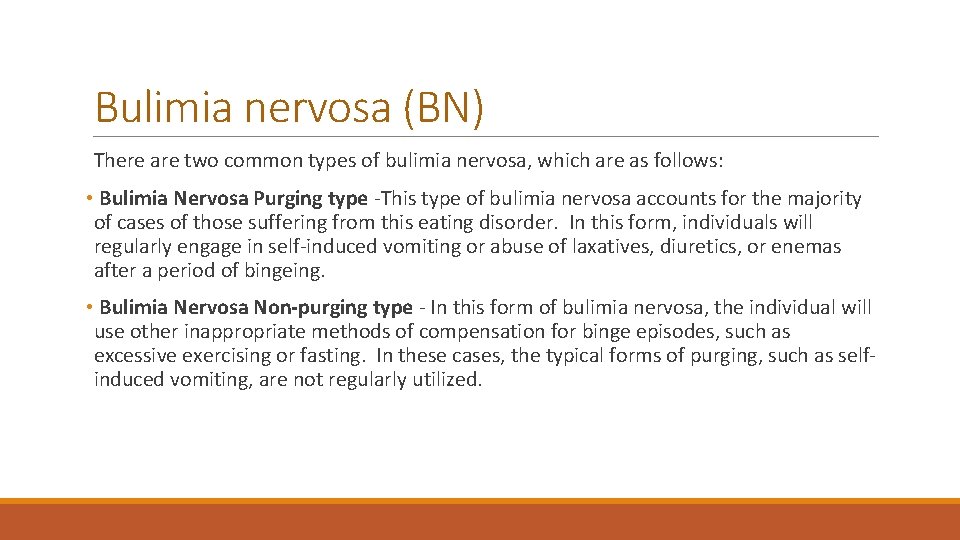
Bulimia nervosa (BN) There are two common types of bulimia nervosa, which are as follows: • Bulimia Nervosa Purging type -This type of bulimia nervosa accounts for the majority of cases of those suffering from this eating disorder. In this form, individuals will regularly engage in self-induced vomiting or abuse of laxatives, diuretics, or enemas after a period of bingeing. • Bulimia Nervosa Non-purging type - In this form of bulimia nervosa, the individual will use other inappropriate methods of compensation for binge episodes, such as excessive exercising or fasting. In these cases, the typical forms of purging, such as selfinduced vomiting, are not regularly utilized.
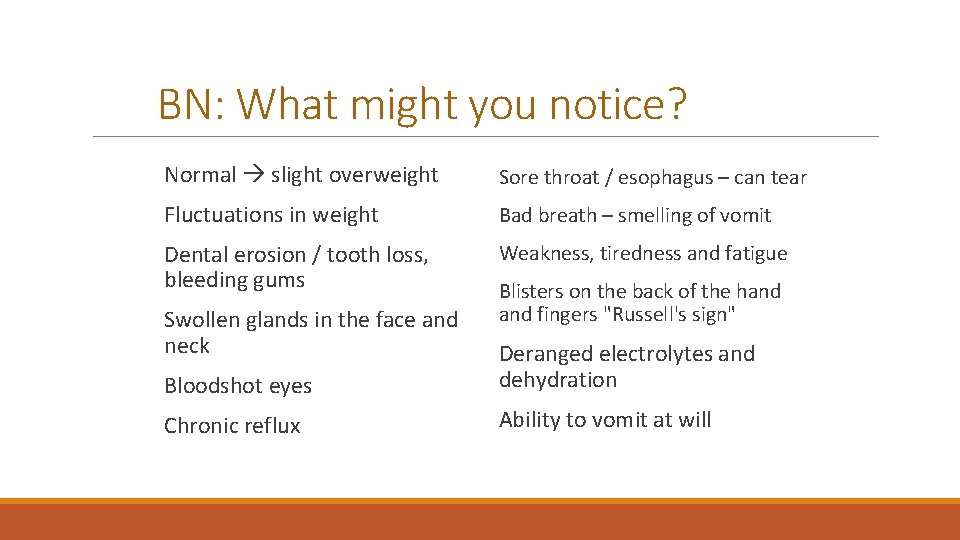
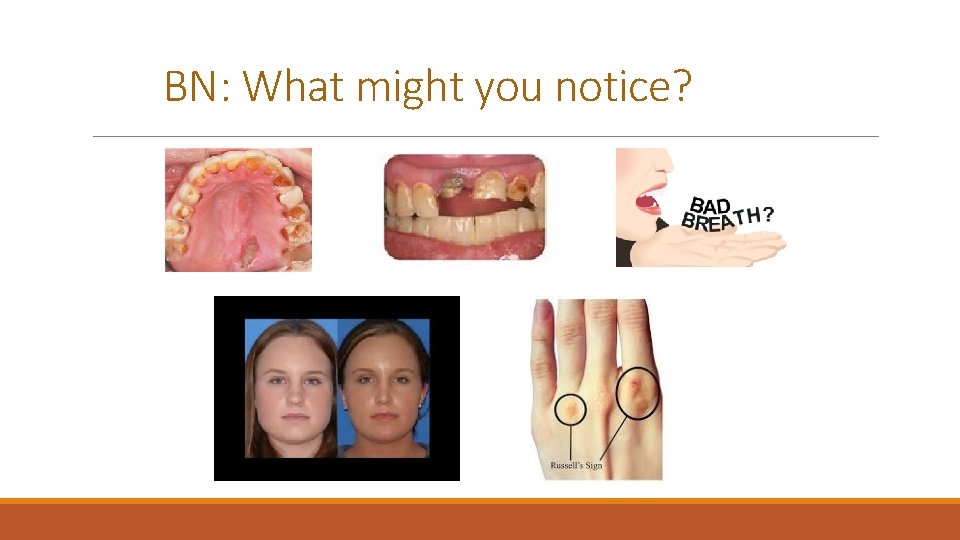
BN: What might you notice? Normal slight overweight Sore throat / esophagus – can tear Fluctuations in weight Bad breath – smelling of vomit Dental erosion / tooth loss, bleeding gums Weakness, tiredness and fatigue Swollen glands in the face and neck Blisters on the back of the hand fingers "Russell's sign" Bloodshot eyes Deranged electrolytes and dehydration Chronic reflux Ability to vomit at will
BN: What might you notice?
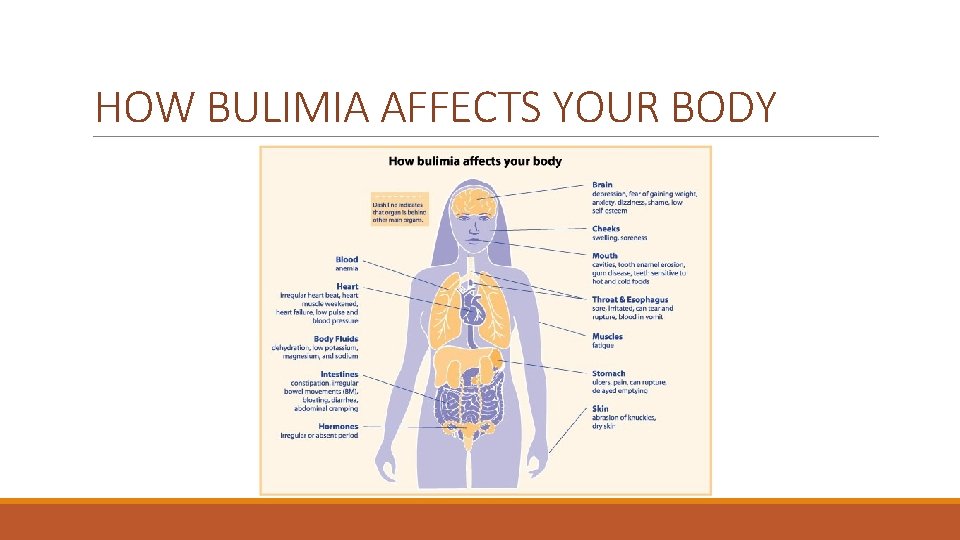
HOW BULIMIA AFFECTS YOUR BODY
Binge Eating Disorder (BED) Defined as ‘recurring episodes of eating significantly more food in a short period of time than most people would eat under similar circumstances, with episodes marked by feelings of lack of control’. • Someone with binge eating disorder may eat too quickly, even when he or she is not hungry. • The person may have feelings of guilt, embarrassment, or disgust and may binge eat alone to hide the behaviour. • This disorder is associated with marked distress and occurs, on average, at least once a week over three months. • No attempt to ‘offset’ (vomiting, fasting, exercise etc…) these calories as seen in BN
Binge Eating Disorder (BED) The binge eating cycle Binge eating may be comforting for a brief moment, but then reality sets back in, along with regret and self-loathing. Binge eating often leads to weight gain and obesity, which only reinforces compulsive eating. The worse a binge eater feels about themselves and their appearance, the more they use food to cope. It becomes a vicious cycle: eating to feel better, feeling even worse, and then turning back to food for relief.
Binge Eating Disorder (BED) Generally, it takes a combination of things to develop binge eating disorder —including a person's genes, emotions, and experience. Biological causes of binge eating disorder Biological abnormalities can contribute to binge eating. For example, the hypothalamus (the part of the brain that controls appetite) may not be sending correct messages about hunger and fullness. Researchers have also found a genetic mutation that appears to cause food addiction. Finally, there is evidence that low levels of the brain chemical serotonin play a role in compulsive eating.
Binge Eating Disorder (BED) Social and cultural causes of binge eating disorder Social pressure to be thin can add to the shame binge eaters feel and fuel their emotional eating. Some parents unwittingly set the stage for binge eating by using food to comfort, dismiss, or reward their children. Children who are exposed to frequent critical comments about their bodies and weight are also vulnerable, as are those who have been sexually abused in childhood. Psychological causes of binge eating disorder Depression and binge eating are strongly linked. Many binge eaters are either depressed or have been before; others may have trouble with impulse control and managing and expressing their feelings. Low self-esteem, loneliness, and body dissatisfaction may also contribute to binge eating.
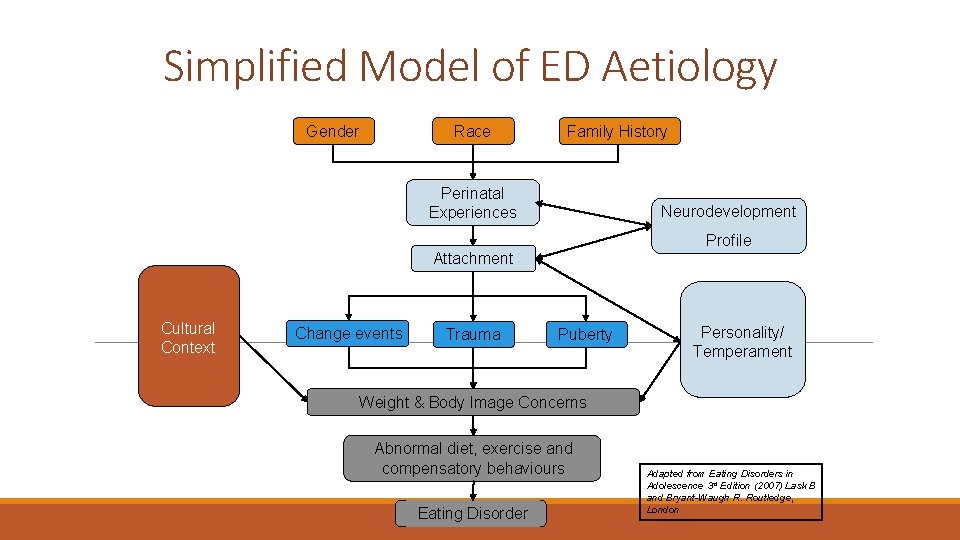
Simplified Model of ED Aetiology Race Gender Family History Perinatal Experiences Neurodevelopment Profile Attachment Cultural Context Change events Trauma Puberty Personality/ Temperament Weight & Body Image Concerns Abnormal diet, exercise and compensatory behaviours Eating Disorder Adapted from Eating Disorders in Adolescence 3 rd Edition (2007) Lask B and Bryant-Waugh R. Routledge, London
The Minnesota Starvation Experiment The Minnesota Starvation Experiment, also known as the Minnesota Semi-Starvation Experiment, was a clinical study performed at the University of Minnesota between November 1944 and December 1945 by Ancel Keys. The investigation was designed to determine the physiological and psychological effects of severe and prolonged dietary restriction and the effectiveness of dietary rehabilitation strategies. The motivation of the study was: ◦ First, to produce a definitive treatise on the subject of human starvation based on a laboratory simulation of severe famine, ◦ Second, to use the scientific results produced to guide the Allied relief assistance to famine victims in Europe and Asia at the end of World War II.
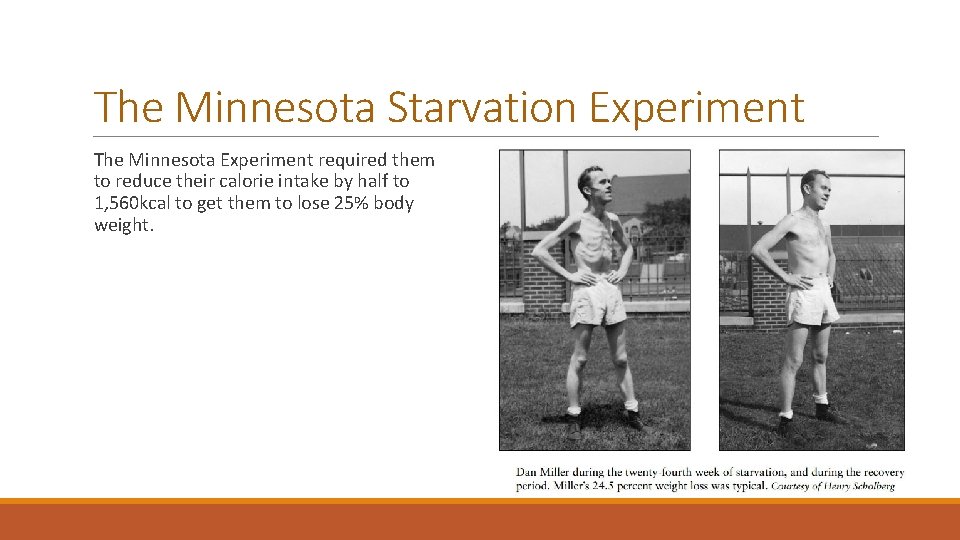
The Minnesota Starvation Experiment The study was divided into three phases: ◦ A twelve-week control phase, where physiological and psychological observations were collected to establish a baseline for each subject. Everyone was on ~3200 kcal/day to get to an ‘ideal’ body weight and psychological screening took place. ◦ A 24 -week starvation phase, during which the caloric intake of each subject was drastically reduced—causing each participant to lose an average of 25% of their pre-starvation body weight by reducing oral intake to ~1560 kcal/day as 2 meals a day. ◦ A recovery phase, in which various rehabilitative diets were tried to re-nourish the volunteers. ◦ 12 weeks where the volunteers were split into different groups, each receiving different calories to see the effect this had on recovery ◦ Then 8 weeks of unrestricted calorie intake
The Minnesota Starvation Experiment The conclusions from the study? • Confirmation that prolonged semi-starvation produces significant increases in depression, hysteria and hypochondriasis. Indeed, most of the subjects experienced periods of severe emotional distress and depression. • Participants exhibited a preoccupation with food, both during the starvation period and the rehabilitation phase. • Sexual interest was drastically reduced, and the volunteers showed signs of social withdrawal and isolation. • The participants reported a decline in concentration, comprehension and judgment capabilities. • There were marked declines in physiological processes indicative of decreases in each subject’s basal metabolic rate- reflected in reduced body temperature, respiration and heart rate. • DO THESE SYMPTOMS SOUND FAMILIAR?
The Minnesota Starvation Experiment The Minnesota Experiment required them to reduce their calorie intake by half to 1, 560 kcal to get them to lose 25% body weight.
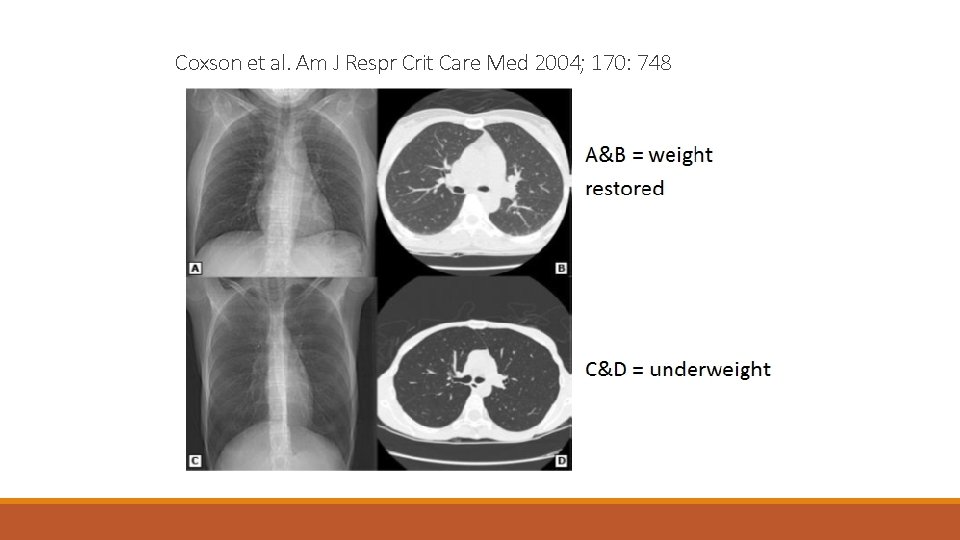
Coxson et al. Am J Respr Crit Care Med 2004; 170: 748
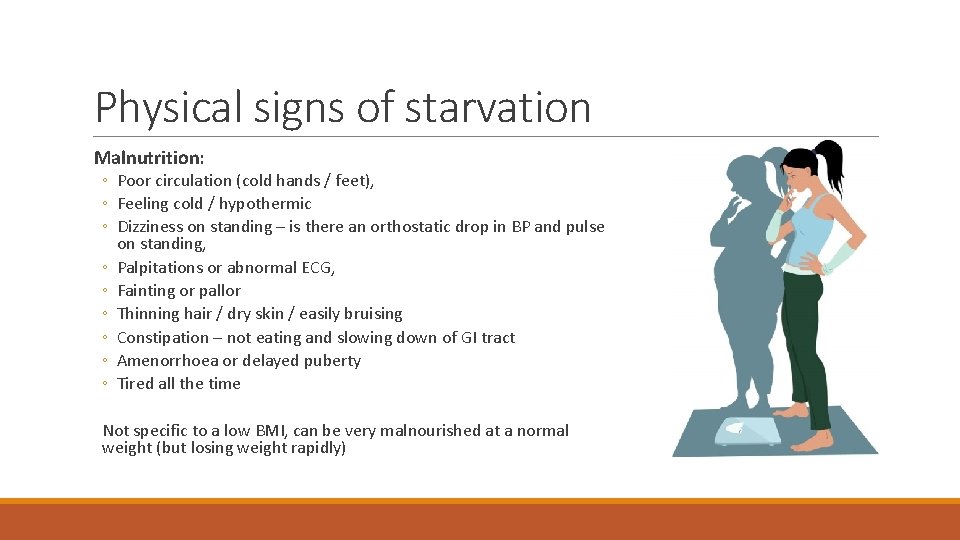
Physical signs of starvation Malnutrition: ◦ Poor circulation (cold hands / feet), ◦ Feeling cold / hypothermic ◦ Dizziness on standing – is there an orthostatic drop in BP and pulse on standing, ◦ Palpitations or abnormal ECG, ◦ Fainting or pallor ◦ Thinning hair / dry skin / easily bruising ◦ Constipation – not eating and slowing down of GI tract ◦ Amenorrhoea or delayed puberty ◦ Tired all the time Not specific to a low BMI, can be very malnourished at a normal weight (but losing weight rapidly)
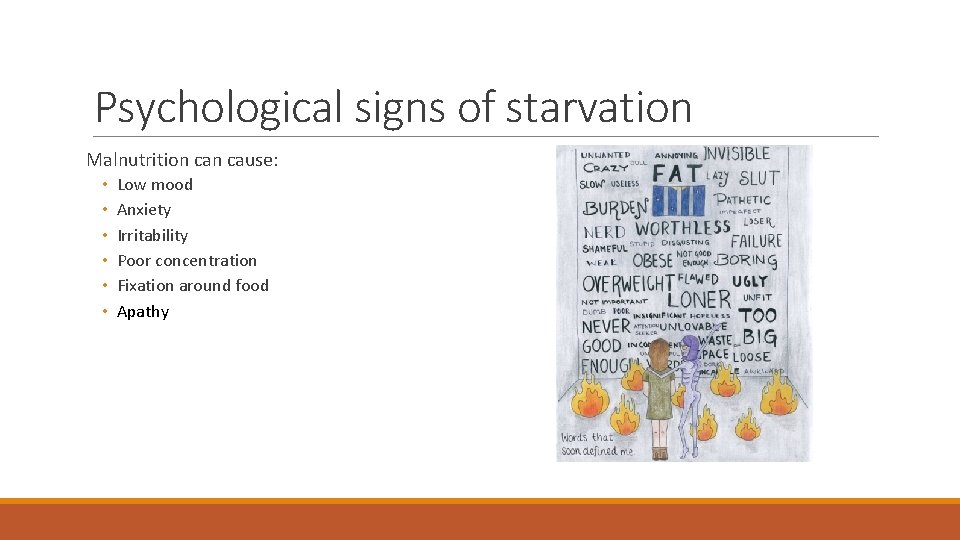
Psychological signs of starvation Malnutrition cause: • • • Low mood Anxiety Irritability Poor concentration Fixation around food Apathy
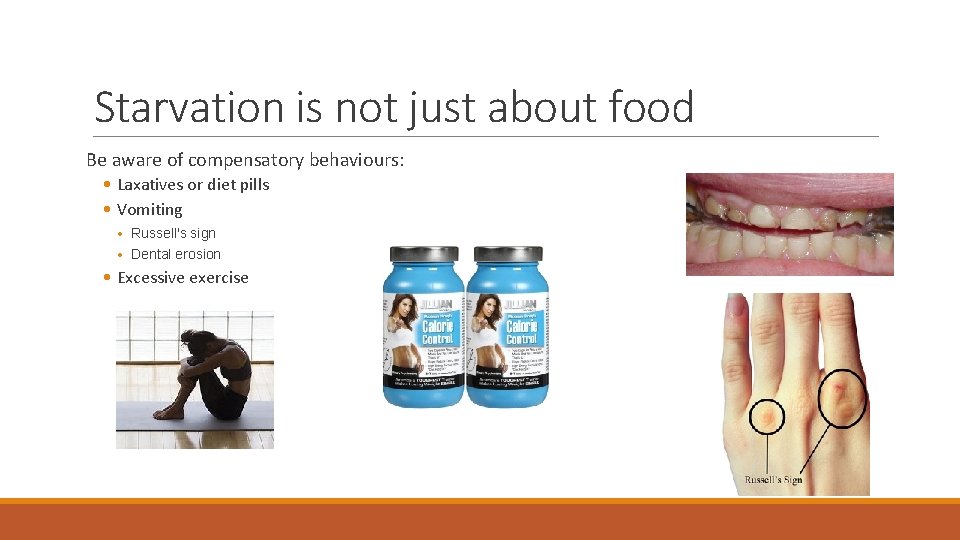
Starvation is not just about food Be aware of compensatory behaviours: • Laxatives or diet pills • Vomiting • Russell's sign • Dental erosion • Excessive exercise
BEAT: www. beateatingdisorders. org. uk HELP LINE 0808 801 0677 YOUTH LINE 0808 801 0711 STUDENT LINE 0808 801 0811 Online Support Groups Echo Peer Coaching
How to refer Tier 2: CARALINE • • Self referral accepted From 17 y www. caraline. com 01582 457 474 Tier 3: NHS – ELFT • CAMHS • Self referral accepted • Under 18’s • 01582 893 308 • Adult ED Team • Over 18’s • GP referral