
The Psychodynamic Explanation for Anorexia Nervosa For one


- Slides: 10
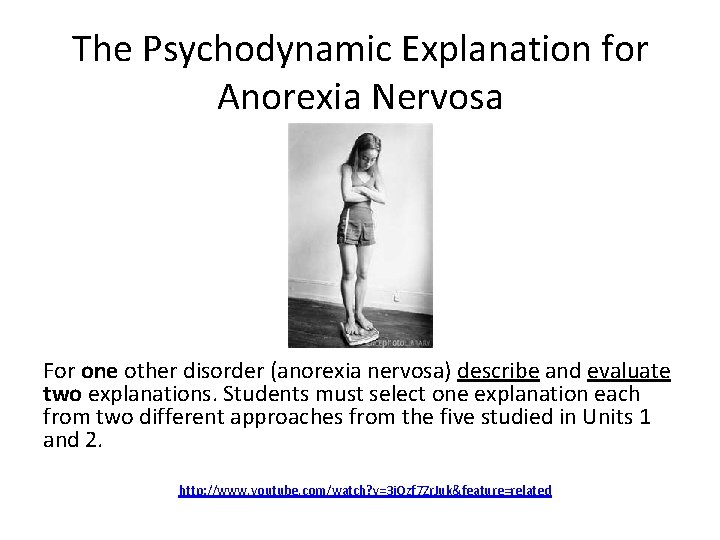
The Psychodynamic Explanation for Anorexia Nervosa For one other disorder (anorexia nervosa) describe and evaluate two explanations. Students must select one explanation each from two different approaches from the five studied in Units 1 and 2. http: //www. youtube. com/watch? v=3 j. Ozf 7 Zr. Juk&feature=related
Swap Sonoda (1974) revision activities with the group next to you Once you have completed the revision task, come up with as many explanations from the Psycho dynamic approach as to why this twin may have had an eating disorder. i. e. – How may Freud's concepts have influenced this disorder? List as many as you can.
In Pairs Explore how Freud’s Concept can link to Anorexia Nervosa
Psychological explanations of anorexia Psychodynamic 1. Freud suggested eating was a substitute for sexual activity 2. Not eating was a way of repressing sexual thoughts 3. Not eating avoids development of an adult body
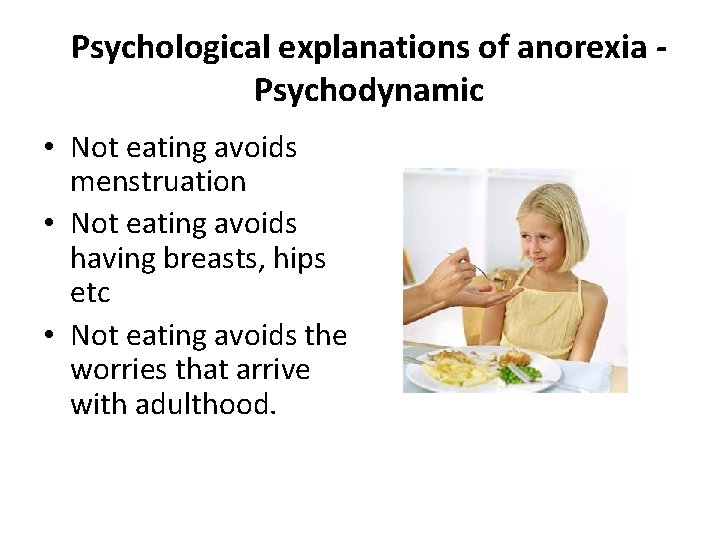
Psychological explanations of anorexia Psychodynamic • Not eating avoids menstruation • Not eating avoids having breasts, hips etc • Not eating avoids the worries that arrive with adulthood.
Hilda Bruch (1980): origins of the illness in early childhood It results from poor parenting and a struggle for independence from the mother • Mother doesn’t cope with her infant’s needs, e. g. food offered when child is anxious.
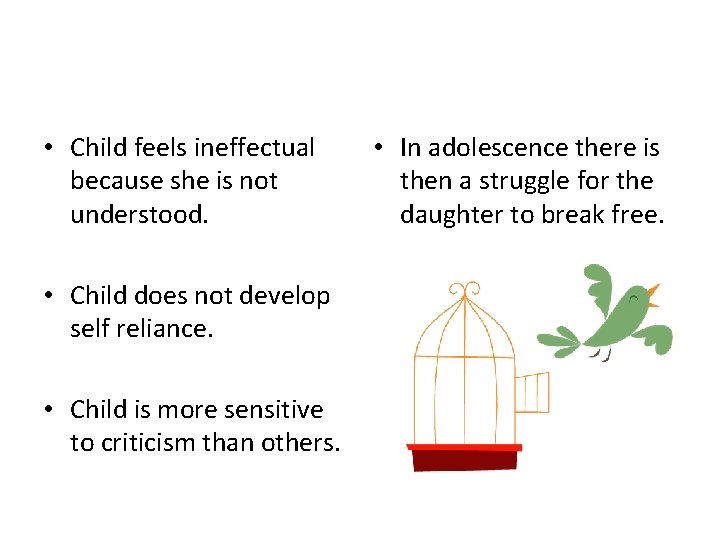
• Child feels ineffectual because she is not understood. • Child does not develop self reliance. • Child is more sensitive to criticism than others. • In adolescence there is then a struggle for the daughter to break free.
In adolescence, anorexia is a means of exerting self-control and establishing independence – the daughter feels she can at least control her own body Mother’s continuing relationship problems mean a desire on the mother’s part to retain dependence and encourage immaturity in her daughter.
Evaluate The Psychodynamic approach
The Psychodynamic approach (evaluation) • Bruch’s explanation • But difficult to falsify based on extensive (prove wrong). studies of case histories. • Relies on her interpretation of what the client tells Bruch.