How is English assessed at Thai schools Richard
- Slides: 29
How is English assessed at Thai schools? Richard Watson Todd King Mongkut’s University of Technology Thonburi
“The consequences of testing and grading students are immense. They can determine the colleges students attend, the careers open to them, and the lifestyles they ultimately maintain. ” Arends, 2007: 247
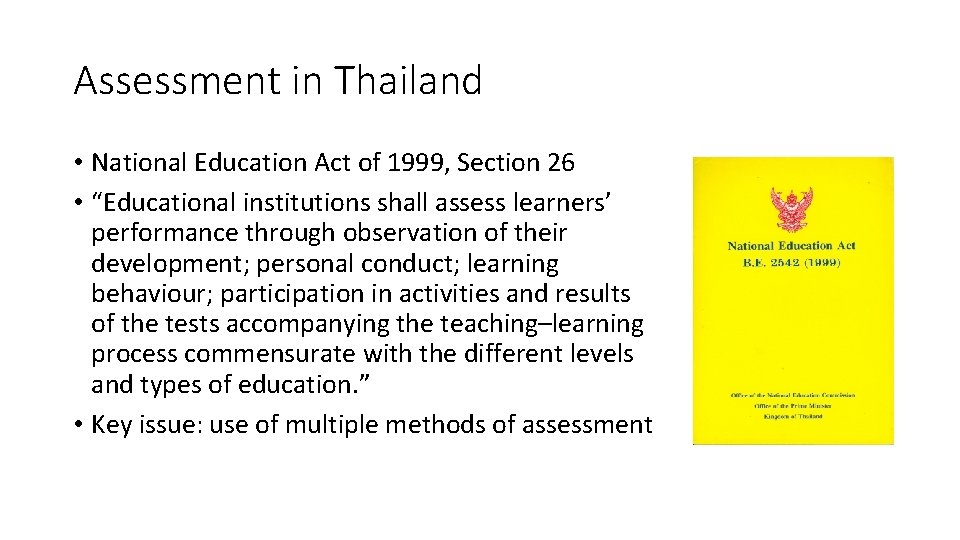
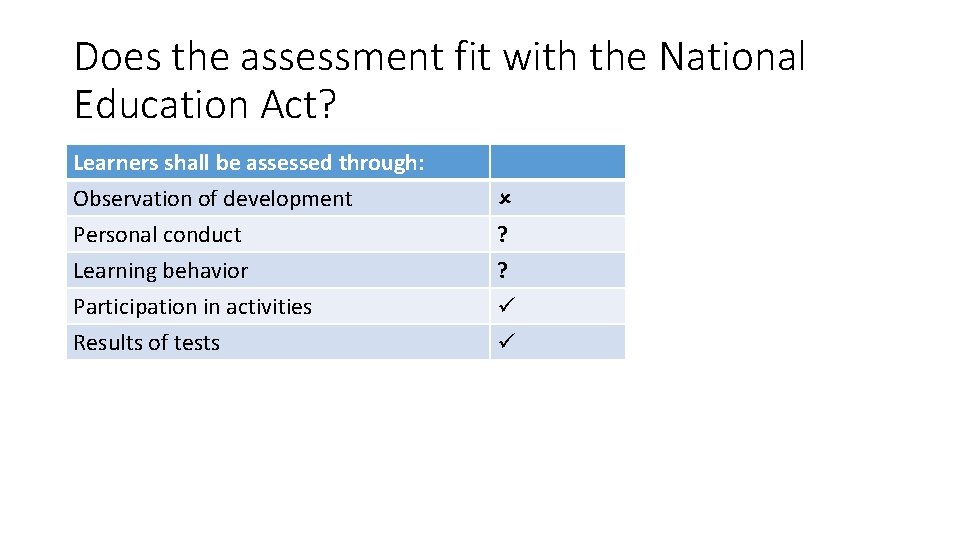
Assessment in Thailand • National Education Act of 1999, Section 26 • “Educational institutions shall assess learners’ performance through observation of their development; personal conduct; learning behaviour; participation in activities and results of the tests accompanying the teaching–learning process commensurate with the different levels and types of education. ” • Key issue: use of multiple methods of assessment
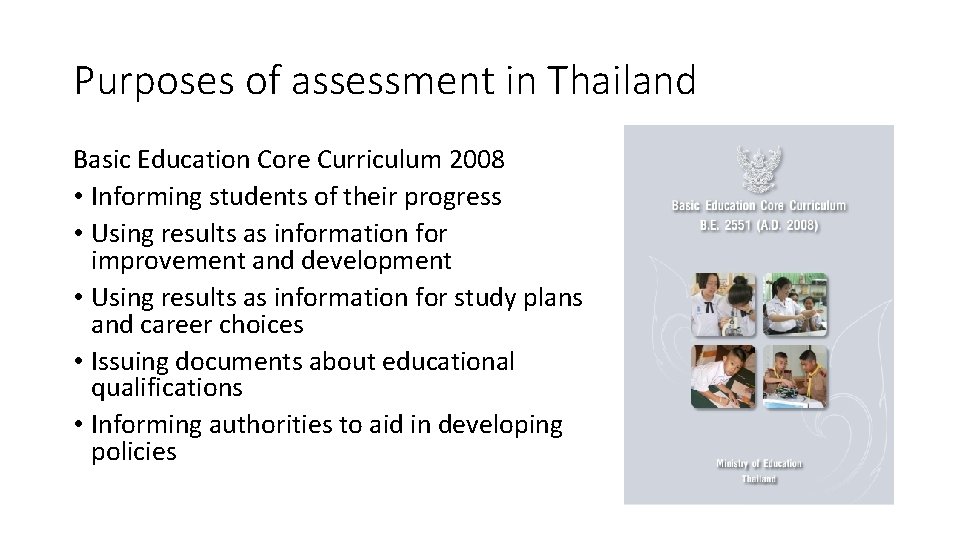
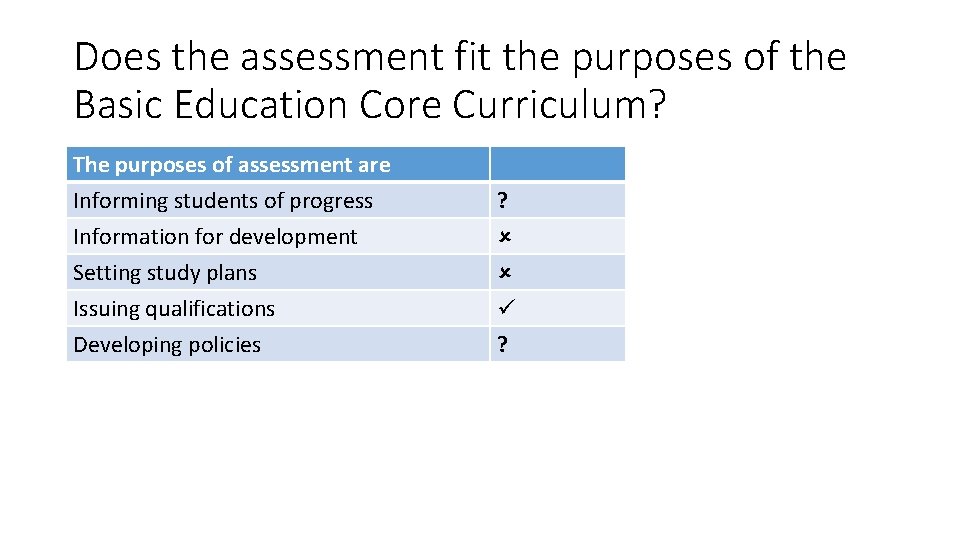
Purposes of assessment in Thailand Basic Education Core Curriculum 2008 • Informing students of their progress • Using results as information for improvement and development • Using results as information for study plans and career choices • Issuing documents about educational qualifications • Informing authorities to aid in developing policies
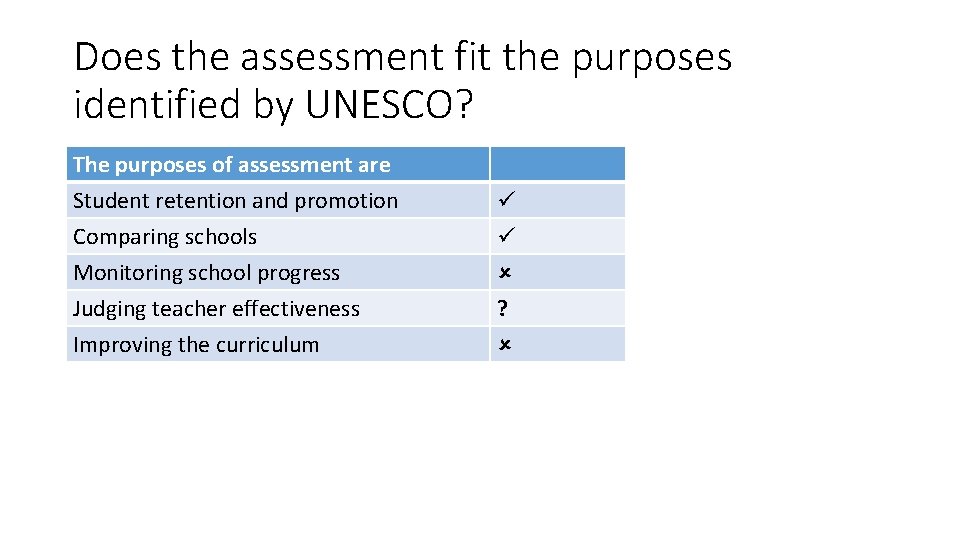
Purposes of assessment in Thailand UNESCO 2016 • Informing decisions about student retention and promotion, and grouping students • Comparing individual schools against other schools or national standards • Monitoring schools’ progress • Making judgments about teachers’ effectiveness • Identifying areas of the curriculum to improve
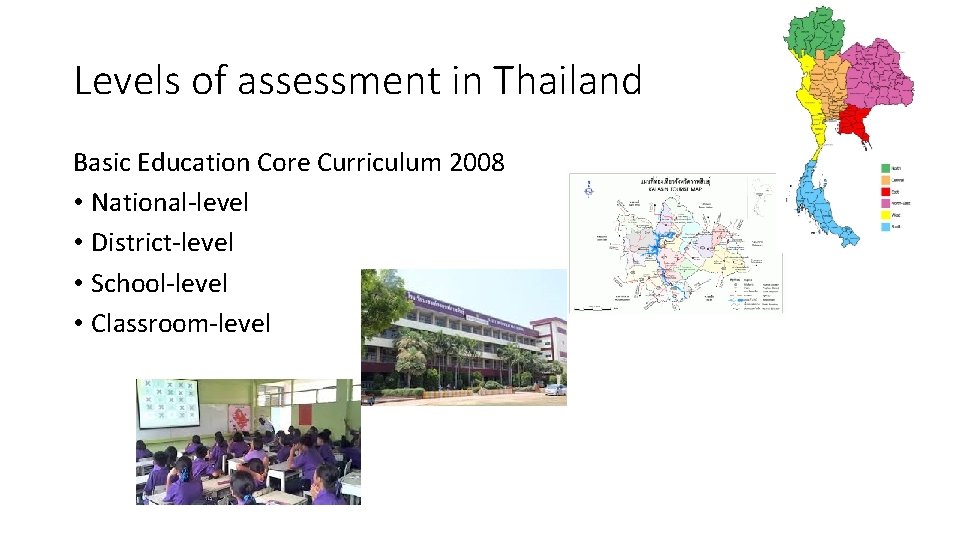
Levels of assessment in Thailand Basic Education Core Curriculum 2008 • National-level • District-level • School-level • Classroom-level
Types of assessment in Thailand Basic Education Core Curriculum 2008 • National-level
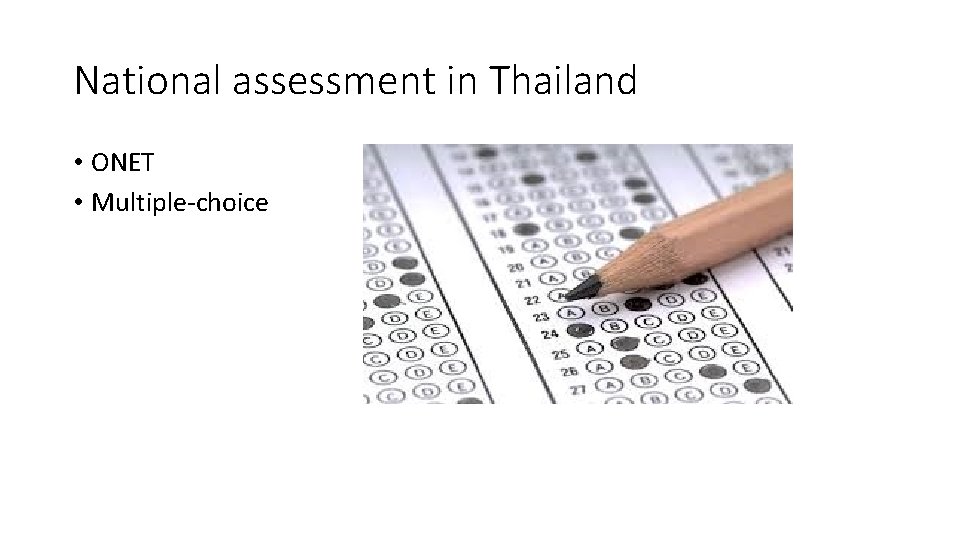
National assessment in Thailand • ONET • Multiple-choice
Washback from ONET • Effects of assessment on other aspects of education • Effects on teaching, how students learn, attitudes towards knowledge etc. • Positive washback – beneficial for education • Negative washback – detrimental to education • In Thailand, most washback is negative (UNESCO, 2016)
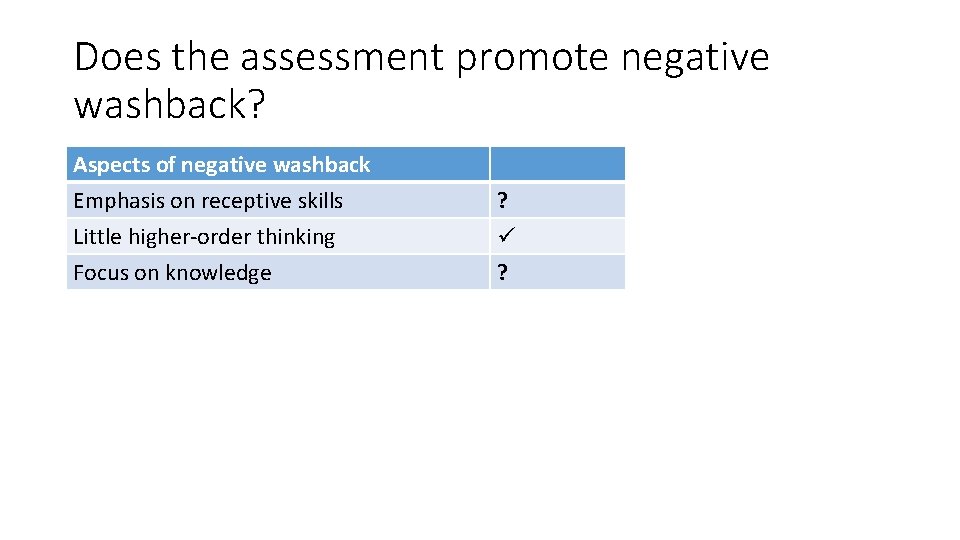
Washback from multiple-choice • Schools use ONET as a model for their tests • Teaching focuses on vocabulary and grammar • Emphasis is on receptive skills • Rote learning is promoted • Little use of higher-order thinking • The focus is on simplistic, non-transferable knowledge • Students are encouraged to be knowledge seekers, not understanding seekers
Evidence of problems from multiple-choice • Too many multiple choice item tests as teachers do not have the time to grade essays or implement continuous assessment (Chulalongkorn University, 2000)
Evidence of problems from multiple-choice • Too many multiple choice item tests as teachers do not have the time to grade essays or implement continuous assessment (Chulalongkorn University, 2000) • Influence of ONET as the most serious problem secondary school teachers face – more serious than class size, overwork, lack of community support, students’ low ability (Thongsri et al. , 2006) • 62% of students want more varied item types in how they are assessed (Jaturapitakkul, 2013)
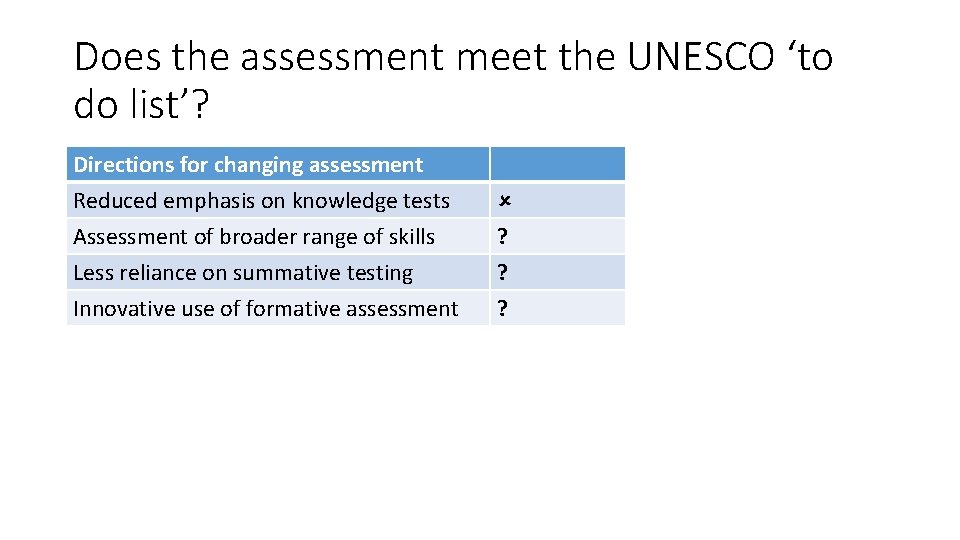
What needs to be done • UNESCO, 2016 • “move beyond the traditional modes of assessment, which have often tended to focus on the reproduction of discrete knowledge, and shift towards a broad mix of assessments that measure – and thus value – the application of knowledge and the development of a broad set of skills” • “Thailand needs to ensure that students are being assessed in the classroom in ways that contribute actively towards their learning. Overreliance on summative testing – in particular, on high-stakes testing linked to national examinations – needs to give way to a strategy that expressly supports the innovative use of formative assessment techniques. ”
What needs to be done • UNESCO, 2016 • “move beyond the traditional modes of assessment, which have often tended to focus on the reproduction of discrete knowledge, and shift towards a broad mix of assessments that measure – and thus value – the application of knowledge and the development of a broad set of skills” • “Thailand needs to ensure that students are being assessed in the classroom in ways that contribute actively towards their learning. Overreliance on summative testing – in particular, on high-stakes testing linked to national examinations – needs to give way to a strategy that expressly supports the innovative use of formative assessment techniques. ”
What needs to be done • Assessment is important • Multiple methods should be used • Assessment serves multiple purposes • Washback from national exams and multiple-choice testing has negative effects • Need more assessment of skills and formative assessment • Need to know how English is assessed at schools
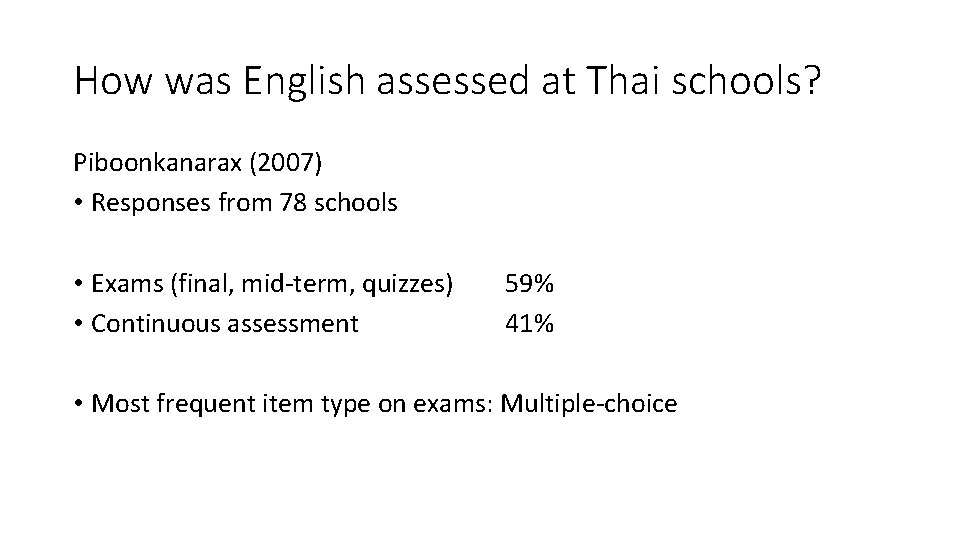
How was English assessed at Thai schools? Piboonkanarax (2007) • Responses from 78 schools • Exams (final, mid-term, quizzes) • Continuous assessment 59% 41% • Most frequent item type on exams: Multiple-choice
How is English assessed at Thai schools? • Online survey of English teachers at Thai schools • Self-selection for respondents • 347 responses • 320 usable responses
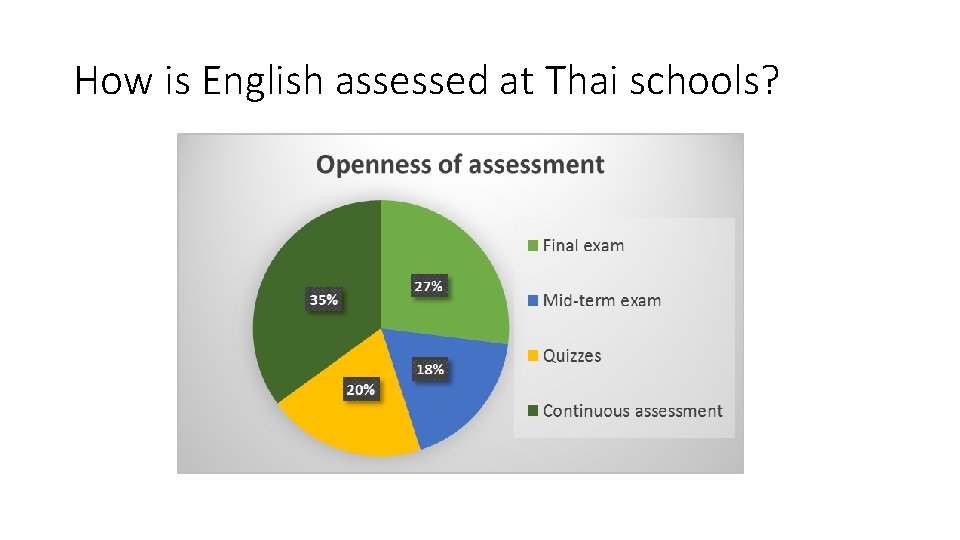
How is English assessed at Thai schools?
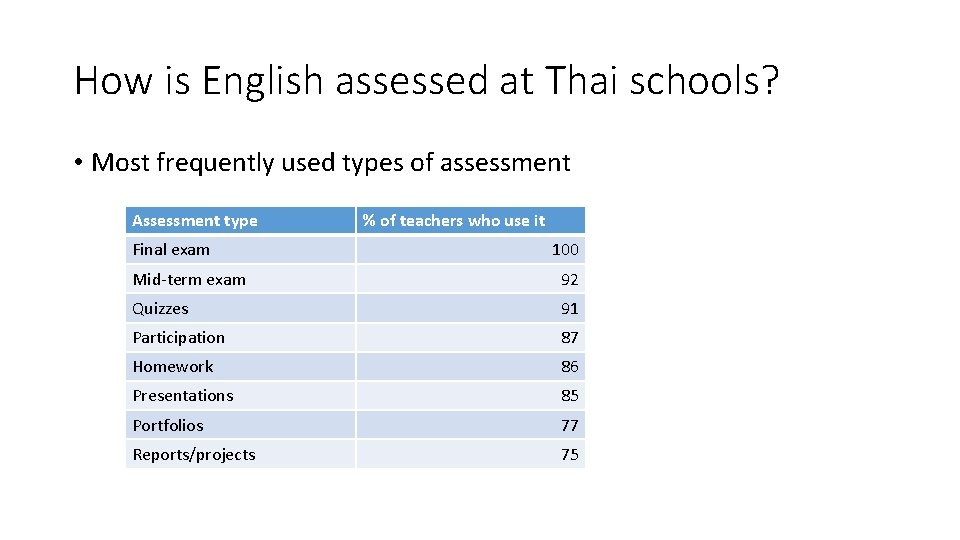
How is English assessed at Thai schools? • Most frequently used types of assessment Assessment type Final exam % of teachers who use it 100 Mid-term exam 92 Quizzes 91 Participation 87 Homework 86 Presentations 85 Portfolios 77 Reports/projects 75
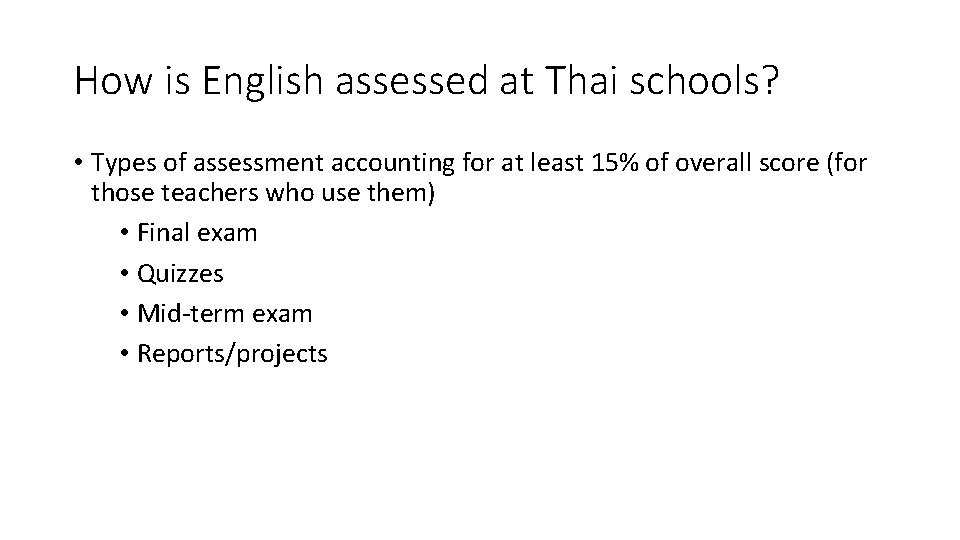
How is English assessed at Thai schools? • Types of assessment accounting for at least 15% of overall score (for those teachers who use them) • Final exam • Quizzes • Mid-term exam • Reports/projects
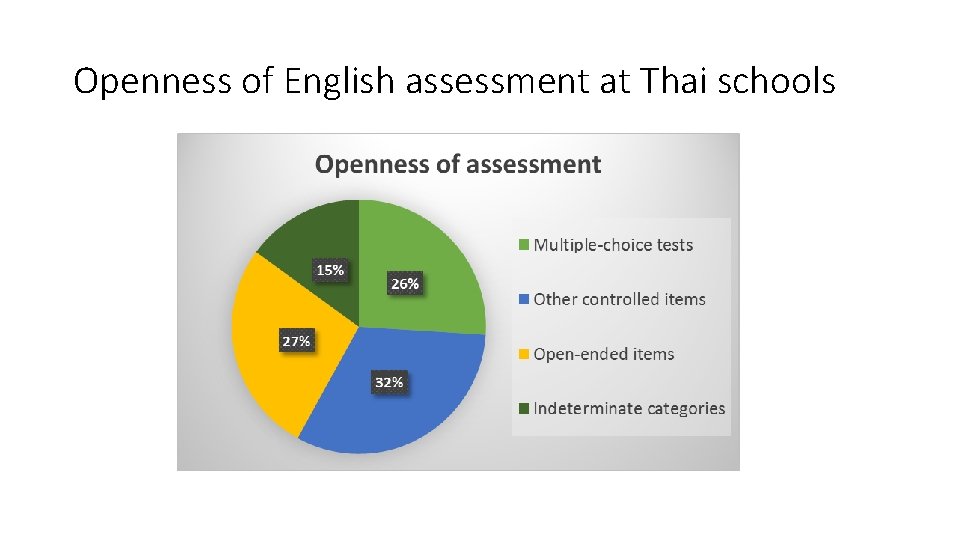
Openness of English assessment at Thai schools
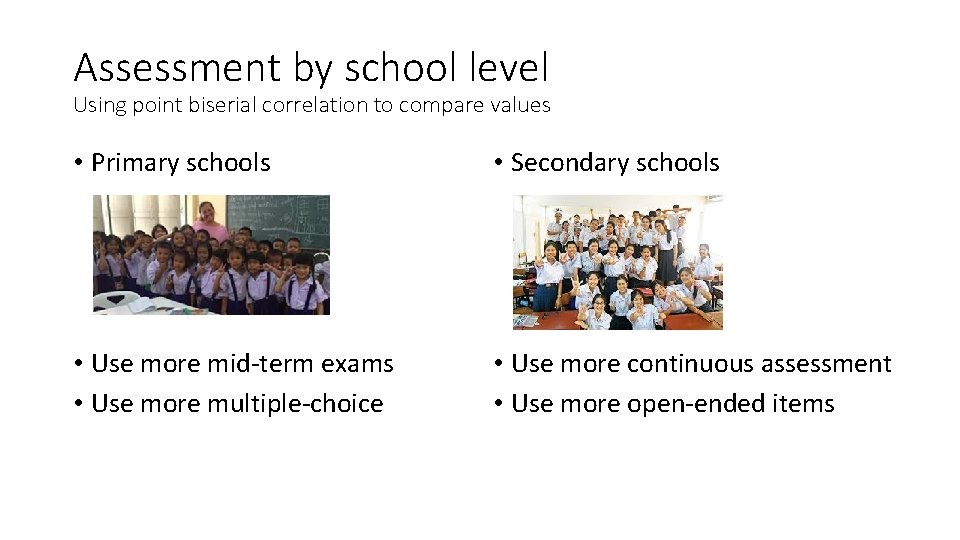
Assessment by school level Using point biserial correlation to compare values • Primary schools • Secondary schools • Use more mid-term exams • Use more multiple-choice • Use more continuous assessment • Use more open-ended items
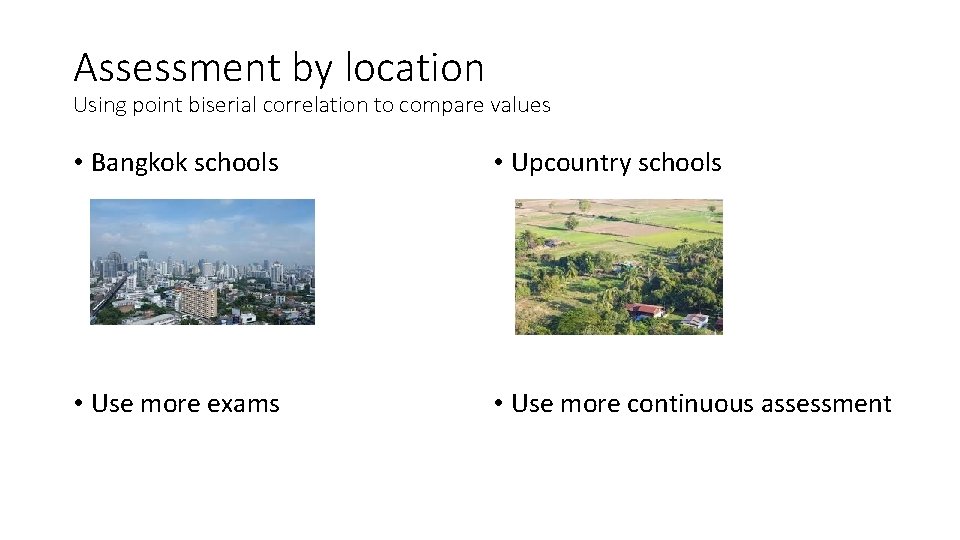
Assessment by location Using point biserial correlation to compare values • Bangkok schools • Upcountry schools • Use more exams • Use more continuous assessment
Does the assessment fit with the National Education Act? Learners shall be assessed through: Observation of development Personal conduct Learning behavior ? ? Participation in activities Results of tests
Does the assessment fit the purposes of the Basic Education Core Curriculum? The purposes of assessment are Informing students of progress Information for development Setting study plans Issuing qualifications Developing policies ? ?
Does the assessment fit the purposes identified by UNESCO? The purposes of assessment are Student retention and promotion Comparing schools Monitoring school progress Judging teacher effectiveness Improving the curriculum ?
Does the assessment promote negative washback? Aspects of negative washback Emphasis on receptive skills Little higher-order thinking Focus on knowledge ? ?
Does the assessment meet the UNESCO ‘to do list’? Directions for changing assessment Reduced emphasis on knowledge tests Assessment of broader range of skills Less reliance on summative testing ? ? Innovative use of formative assessment ?
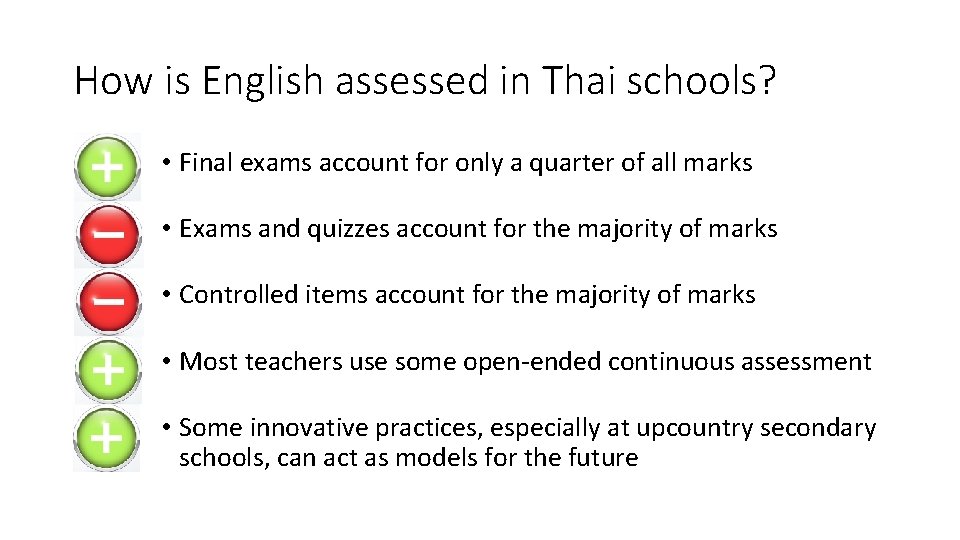
How is English assessed in Thai schools? • Final exams account for only a quarter of all marks • Exams and quizzes account for the majority of marks • Controlled items account for the majority of marks • Most teachers use some open-ended continuous assessment • Some innovative practices, especially at upcountry secondary schools, can act as models for the future