HOOKED ON MNEMONICS It worked for me Karen
- Slides: 25
HOOKED ON MNEMONICS: It worked for me Karen Galassi-Ferrer East Chapel Hill High School Ken Stewart Chapel Hill High School Chapel Hill, North Carolina
What are mnemonics? Mnemonics are cognitive devices used to improve memory and to recall important concepts by linking unfamiliar information to familiar information (Meece, 2002).
Why use mnemonics? Krashen explains the need to make rules more “learnable” and “simple”. Rules need to be made easy enough for the brain to remember (1983).
Types of Mnemonics • Acronyms • Acrostics • Narratives
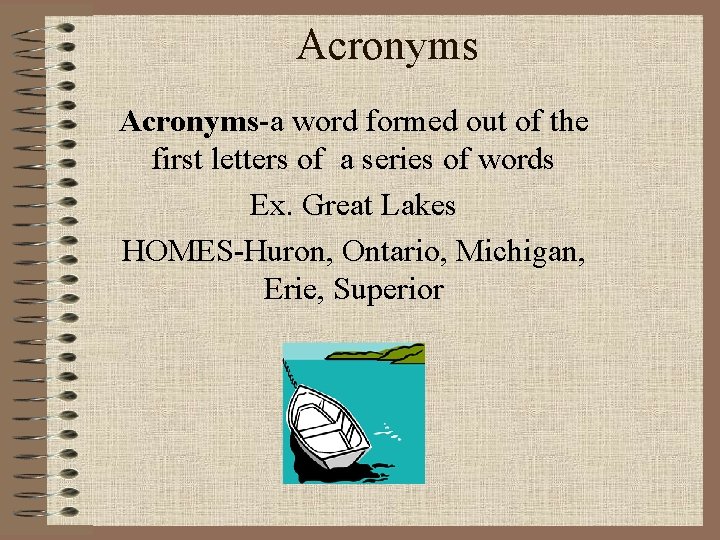
Acronyms-a word formed out of the first letters of a series of words Ex. Great Lakes HOMES-Huron, Ontario, Michigan, Erie, Superior
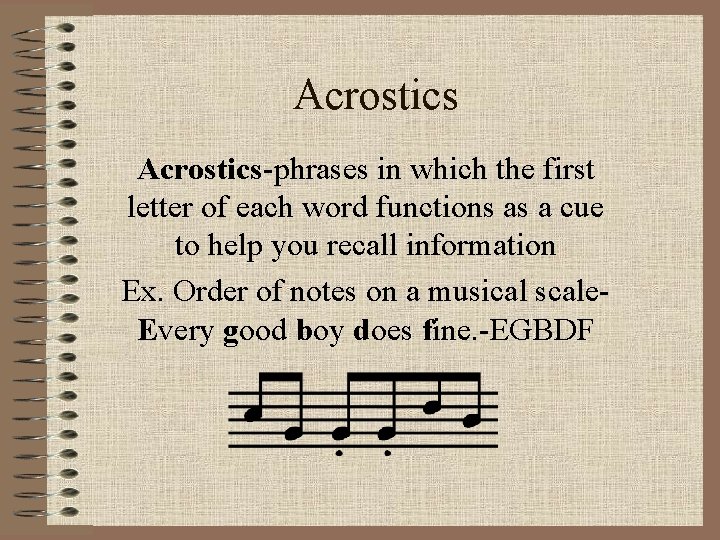
Acrostics-phrases in which the first letter of each word functions as a cue to help you recall information Ex. Order of notes on a musical scale. Every good boy does fine. -EGBDF
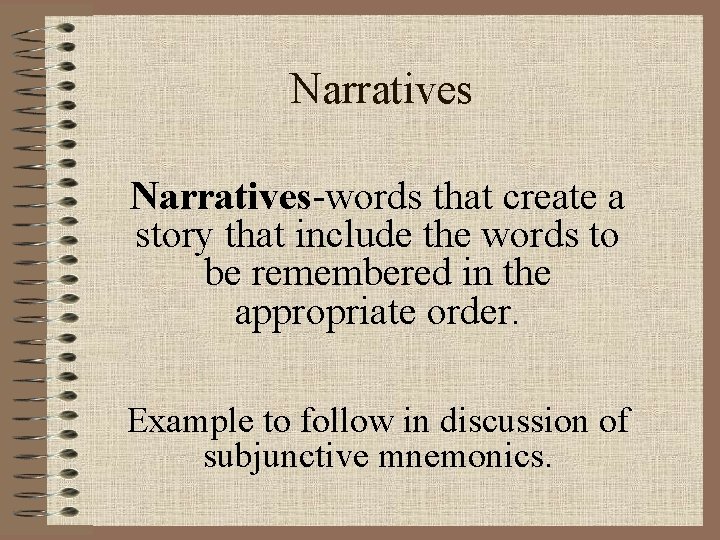
Narratives-words that create a story that include the words to be remembered in the appropriate order. Example to follow in discussion of subjunctive mnemonics.
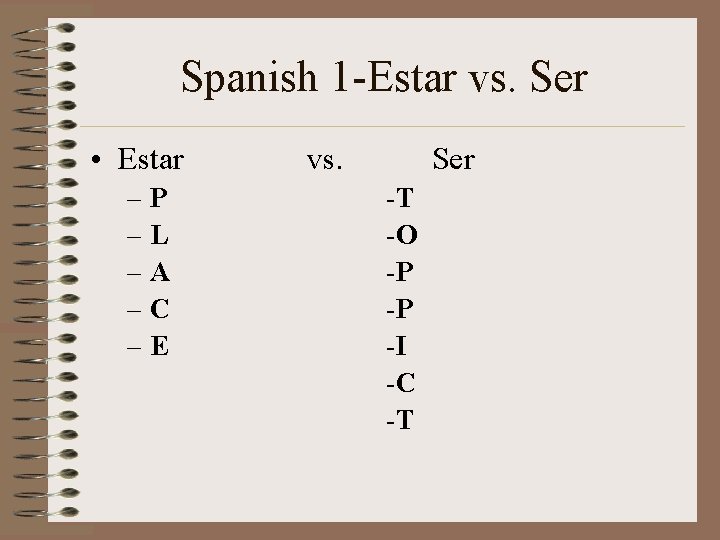
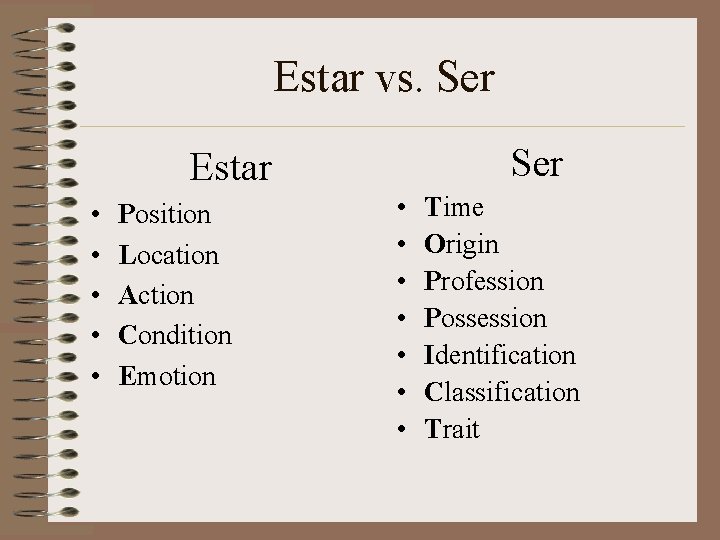
Spanish 1 -Estar vs. Ser • Estar –P –L –A –C –E vs. Ser -T -O -P -P -I -C -T
Estar vs. Ser Estar • • • Position Location Action Condition Emotion • • Time Origin Profession Possession Identification Classification Trait
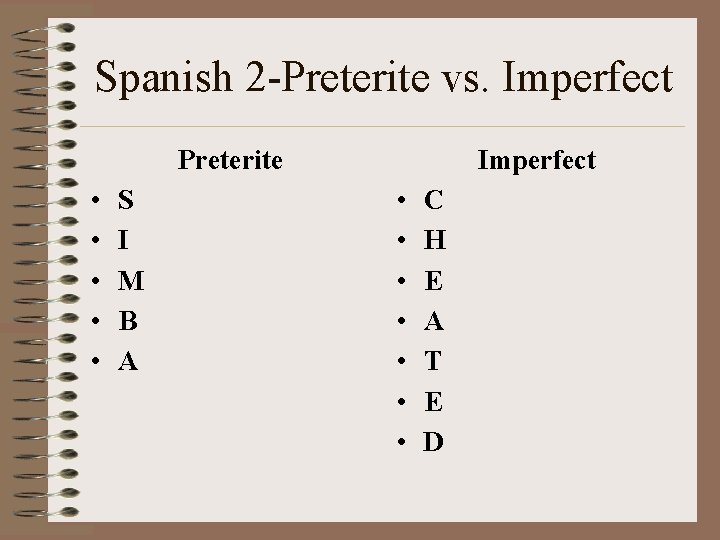
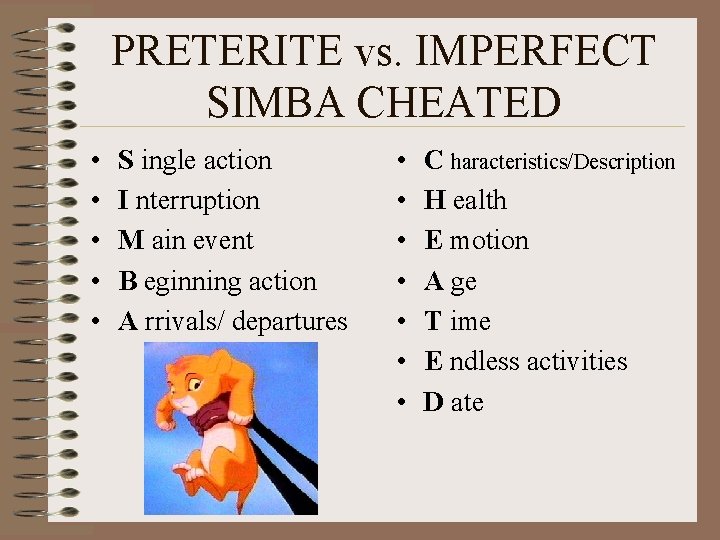
Spanish 2 -Preterite vs. Imperfect Preterite • • • S I M B A Imperfect • • C H E A T E D
PRETERITE vs. IMPERFECT SIMBA CHEATED • • • S ingle action I nterruption M ain event B eginning action A rrivals/ departures • • C haracteristics/Description H ealth E motion A ge T ime E ndless activities D ate
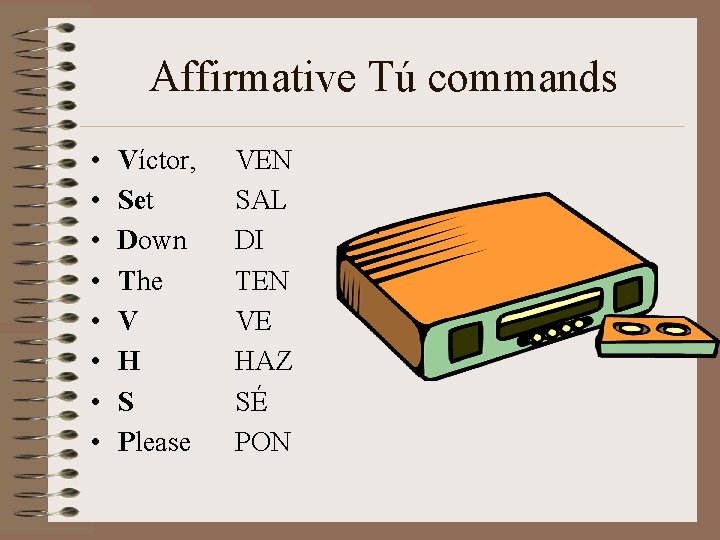
Affirmative Tú commands • • Víctor, Set Down The V H S Please VEN SAL DI TEN VE HAZ SÉ PON
Spanish 3 -Para vs. Por Para • • C C U P I D D Por • Everything else!
Para vs. Por Para • • Career Considering Use Purpose/Goal In order to (infinitive) Destination Deadline Por • Everything else!
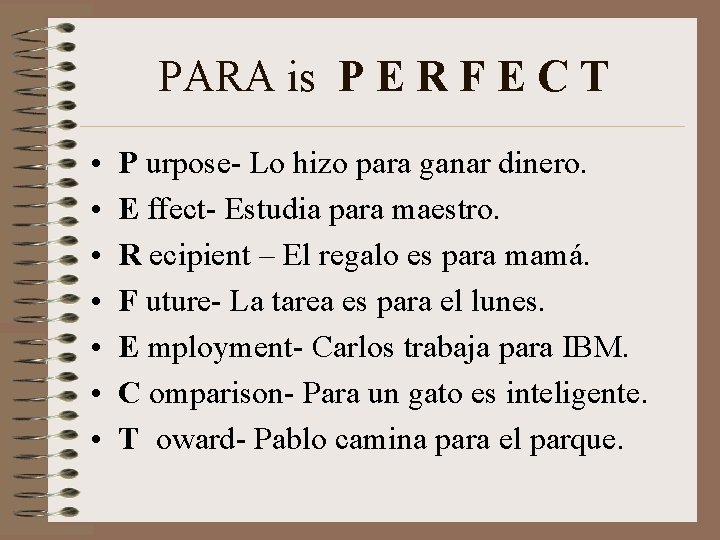
PARA is P E R F E C T • • P urpose- Lo hizo para ganar dinero. E ffect- Estudia para maestro. R ecipient – El regalo es para mamá. F uture- La tarea es para el lunes. E mployment- Carlos trabaja para IBM. C omparison- Para un gato es inteligente. T oward- Pablo camina para el parque.
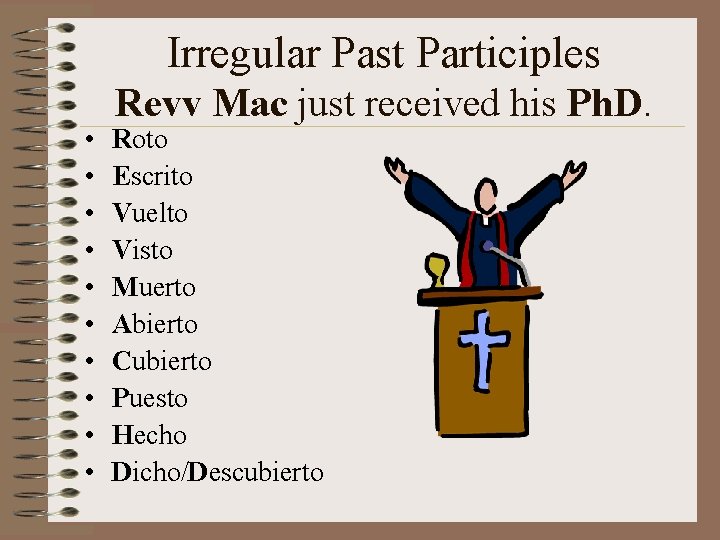
Irregular Past Participles • • • Revv Mac just received his Ph. D. Roto Escrito Vuelto Visto Muerto Abierto Cubierto Puesto Hecho Dicho/Descubierto
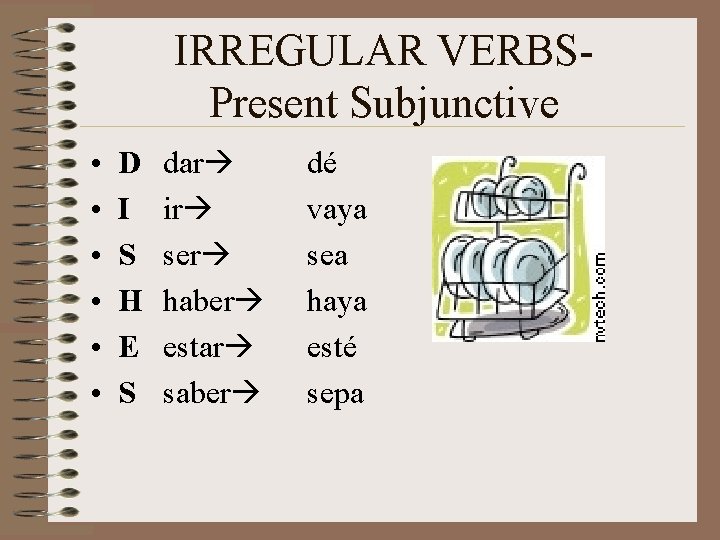
IRREGULAR VERBSPresent Subjunctive • • • D I S H E S dar ir ser haber estar saber dé vaya sea haya esté sepa
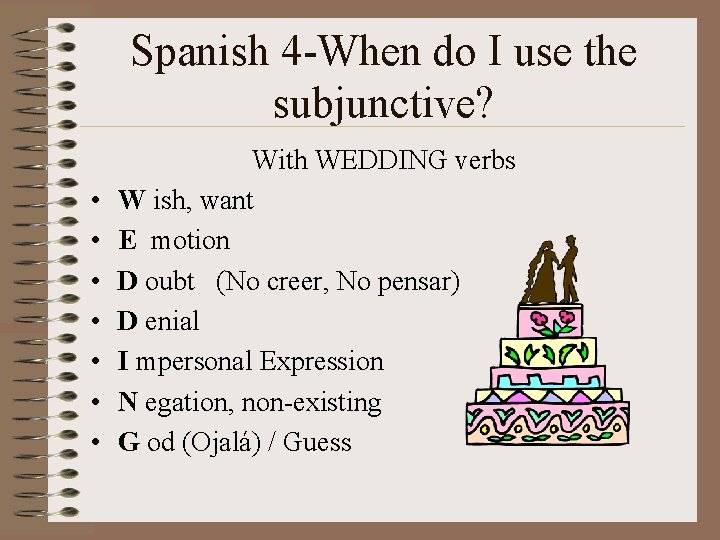
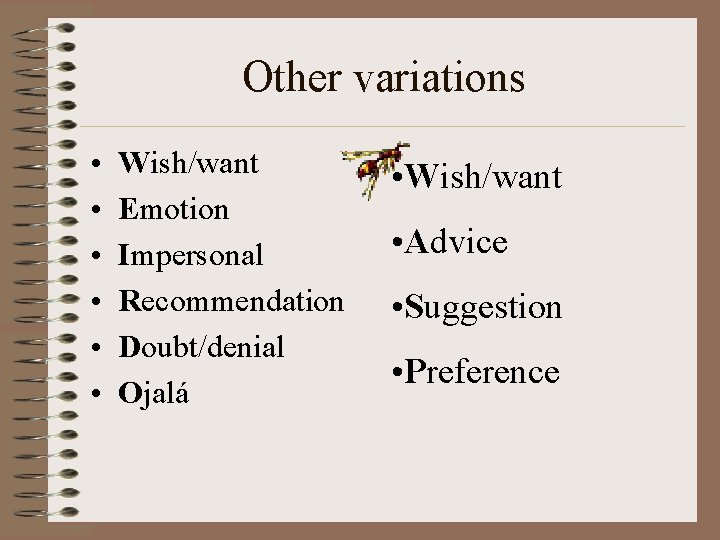
Spanish 4 -When do I use the subjunctive? • • With WEDDING verbs W ish, want E motion D oubt (No creer, No pensar) D enial I mpersonal Expression N egation, non-existing G od (Ojalá) / Guess
Other variations • • • Wish/want Emotion Impersonal Recommendation Doubt/denial Ojalá • Wish/want • Advice • Suggestion • Preference
Versión en español • • (Y) Impersonales Avisos Deseos Ojalá Negación Dudas Emoción ¿Existencia?
ESCAPA= ¡Use subjuntivo! Cláusulas adverbiales • E n caso de que • S in que • C on tal (de) que • A ntes (de) que • P ara que • A menos que
¿Subjuntivo? Ask yourself-Has the action happened yet? • • L uego que… A sí que…/A fin de que. . . T an pronto como… C uando… H asta que… E n cuanto… D espués de que… Or… C H A D A T E
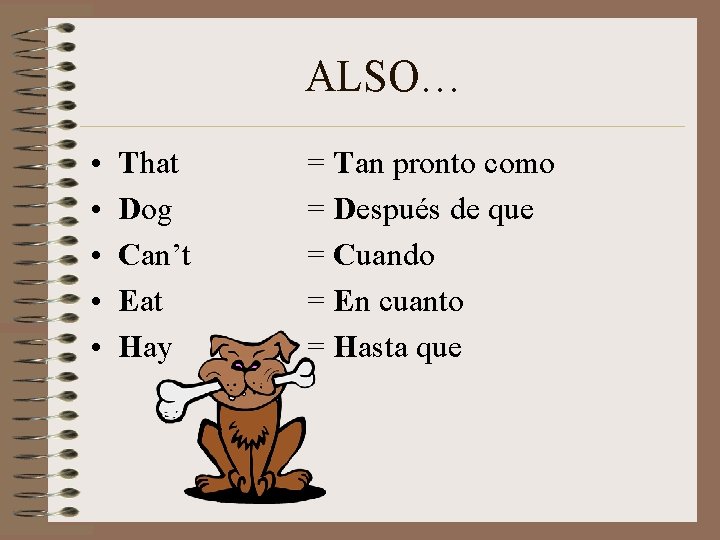
ALSO… • • • That Dog Can’t Eat Hay = Tan pronto como = Después de que = Cuando = En cuanto = Hasta que
Narrative Mnemonic • Subjunctive in adverbial clauses: Pepe y Elena han estado casados por varios años. Pepe es muy desordenado, y Elena se enoja mucho con él. Ella siempre le grita, y él dice “¡¡IADONDEE ESCAPA(R)!!” Entonces, Pepe sale de la casa y le dice a Elena que deje la puerta un. LATCHED.
V O C E S = ¡No use el subjuntivo! • • • V erdad que… O bvio que… C ierto/Claro que… E vidente que… S eguro que… • NEGATIVE “VOCES, ” however do use the subjunctive