Histology The Study of Tissues Chapter 5 Introduction



- Slides: 46
Histology The Study of Tissues Chapter 5
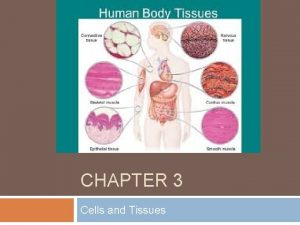
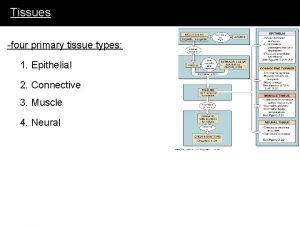
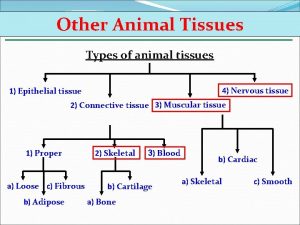
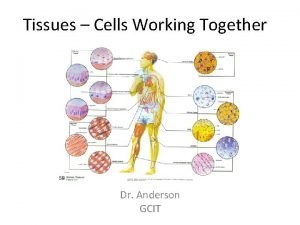
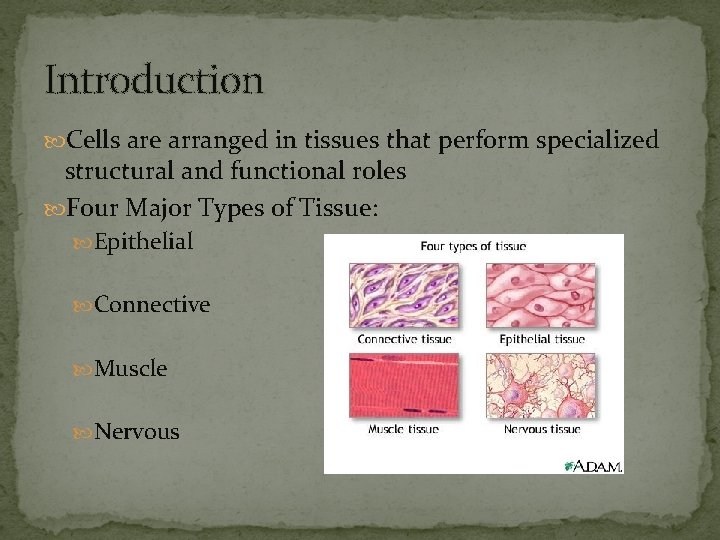
Introduction Cells are arranged in tissues that perform specialized structural and functional roles Four Major Types of Tissue: Epithelial Connective Muscle Nervous
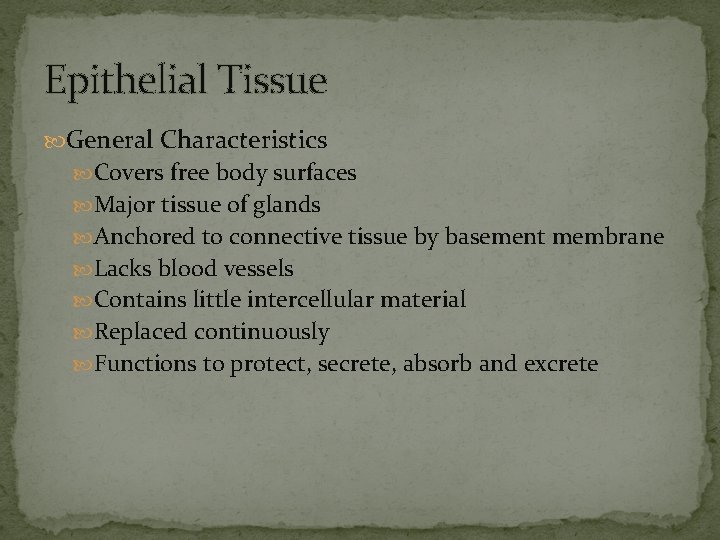
Epithelial Tissue General Characteristics Covers free body surfaces Major tissue of glands Anchored to connective tissue by basement membrane Lacks blood vessels Contains little intercellular material Replaced continuously Functions to protect, secrete, absorb and excrete
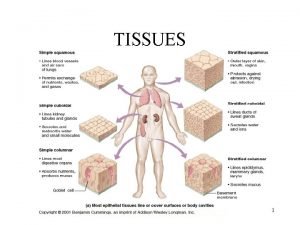
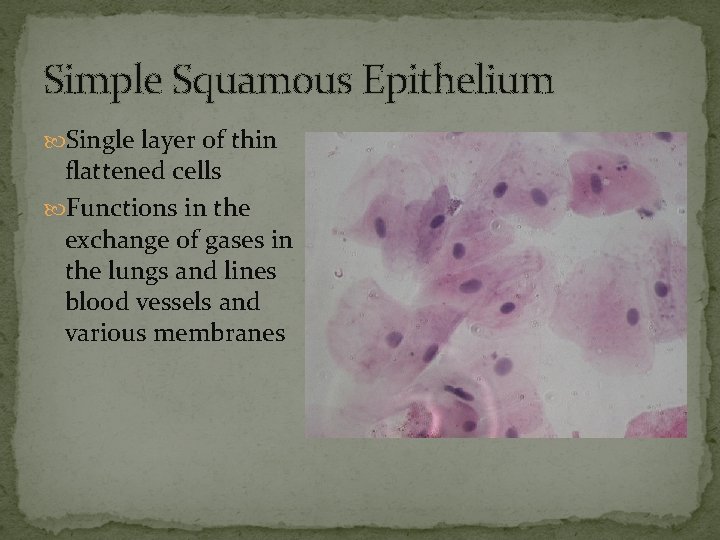
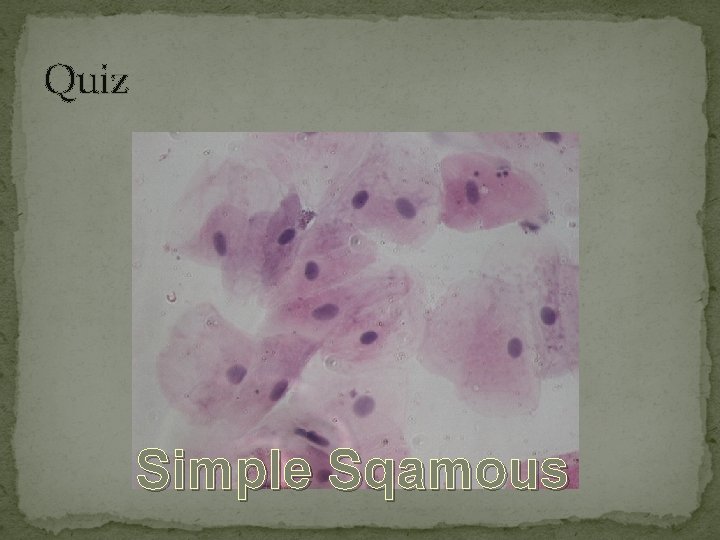
Simple Squamous Epithelium Single layer of thin flattened cells Functions in the exchange of gases in the lungs and lines blood vessels and various membranes
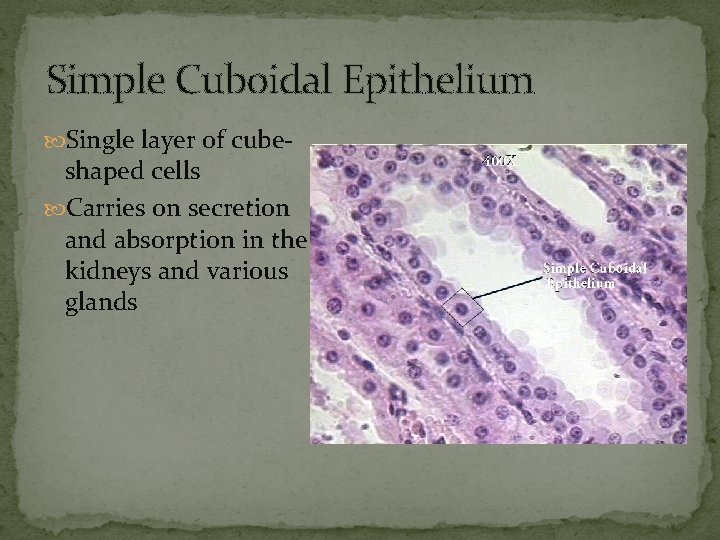
Simple Cuboidal Epithelium Single layer of cube- shaped cells Carries on secretion and absorption in the kidneys and various glands
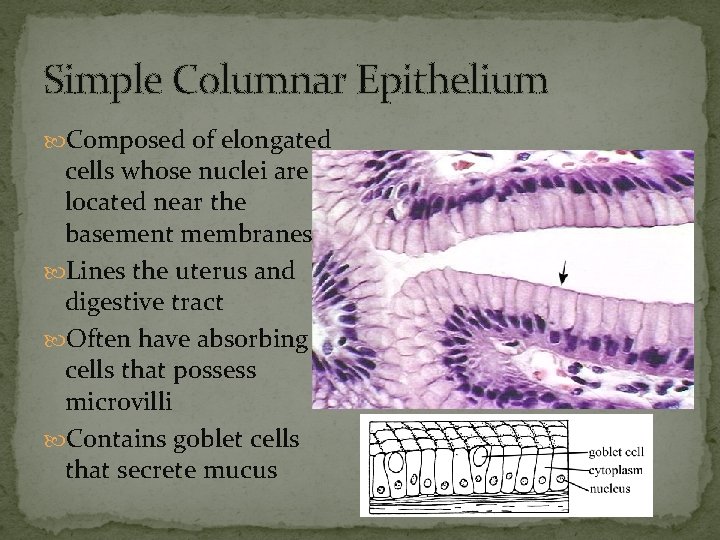
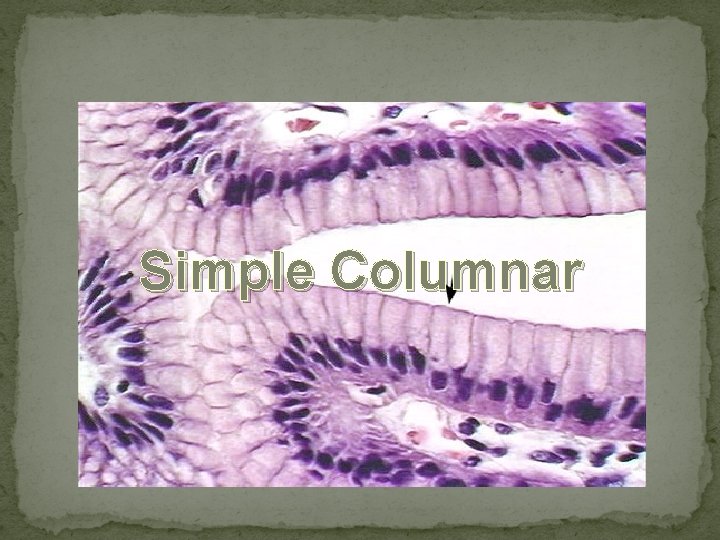
Simple Columnar Epithelium Composed of elongated cells whose nuclei are located near the basement membranes Lines the uterus and digestive tract Often have absorbing cells that possess microvilli Contains goblet cells that secrete mucus
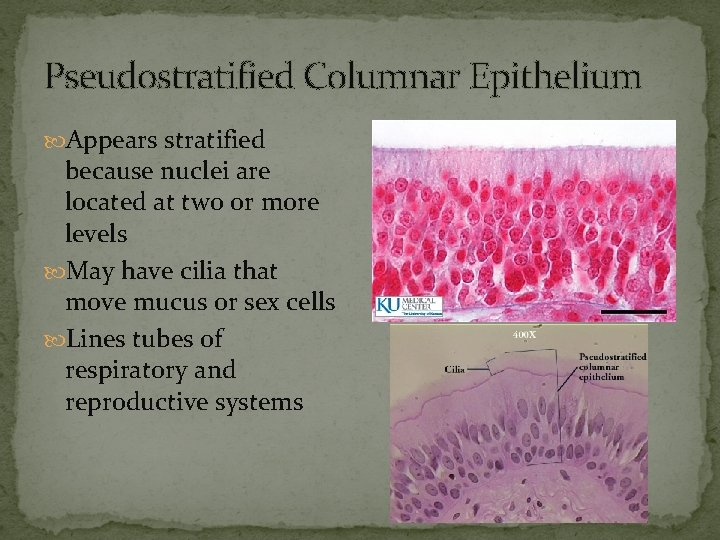
Pseudostratified Columnar Epithelium Appears stratified because nuclei are located at two or more levels May have cilia that move mucus or sex cells Lines tubes of respiratory and reproductive systems
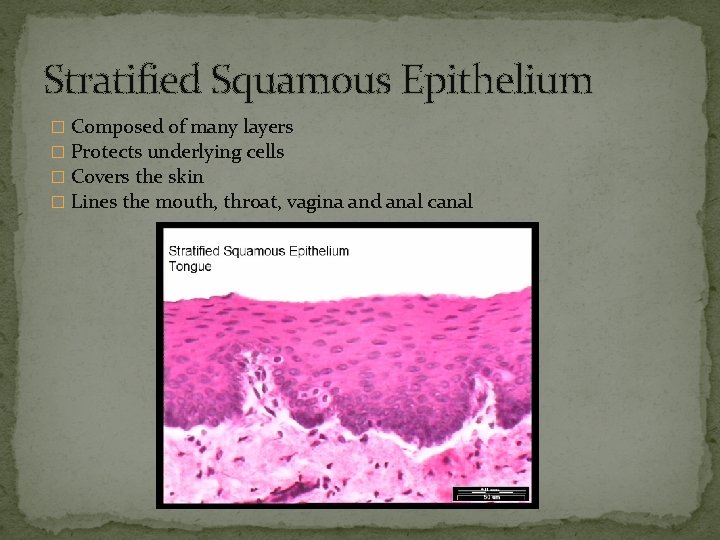
Stratified Squamous Epithelium � Composed of many layers � Protects underlying cells � Covers the skin � Lines the mouth, throat, vagina and anal canal
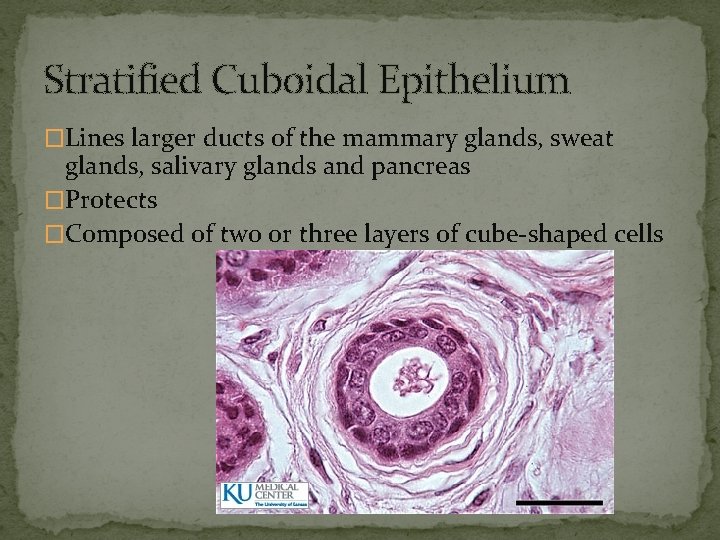
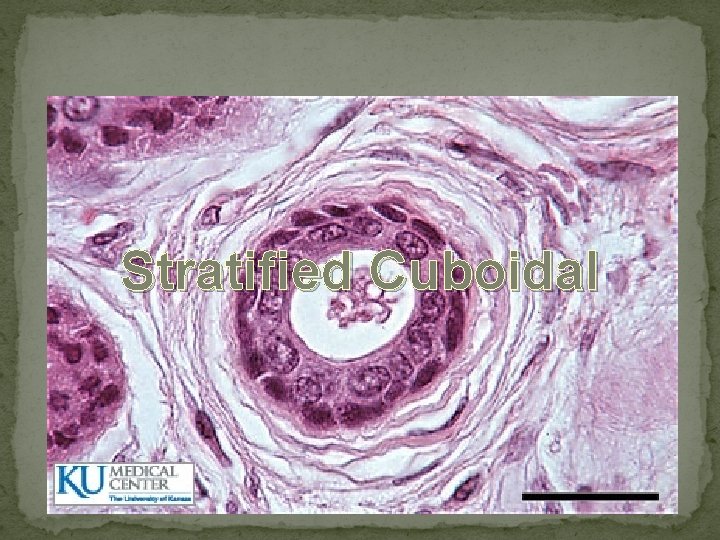
Stratified Cuboidal Epithelium �Lines larger ducts of the mammary glands, sweat glands, salivary glands and pancreas �Protects �Composed of two or three layers of cube-shaped cells
Stratified Columnar Epithelium Top layer of cells in contains elongated columns, bottom layers are cubeshaped Found in male urethra and vas deferens Also in parts of the pharynx Tissue protects and secretes
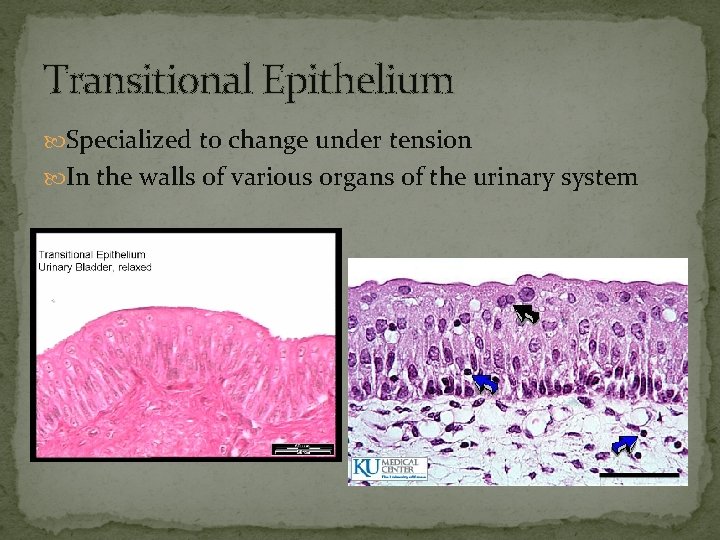
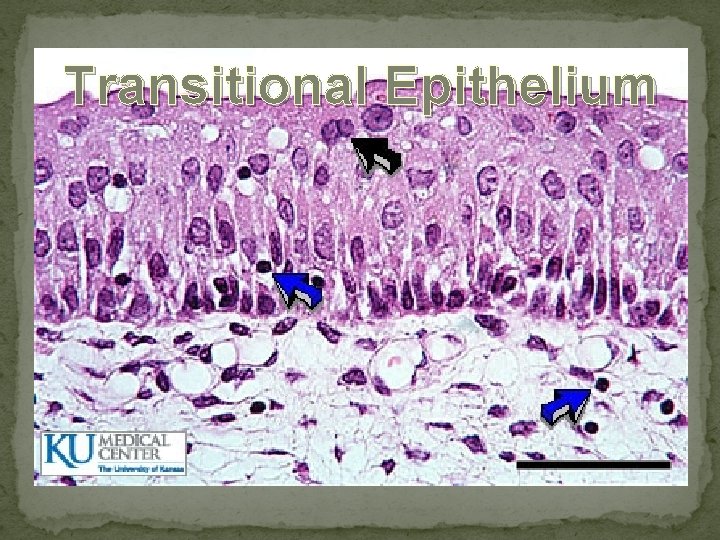
Transitional Epithelium Specialized to change under tension In the walls of various organs of the urinary system
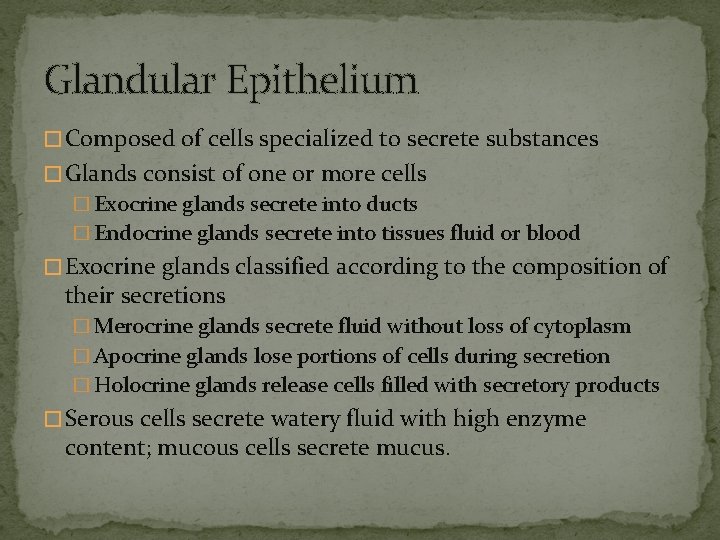
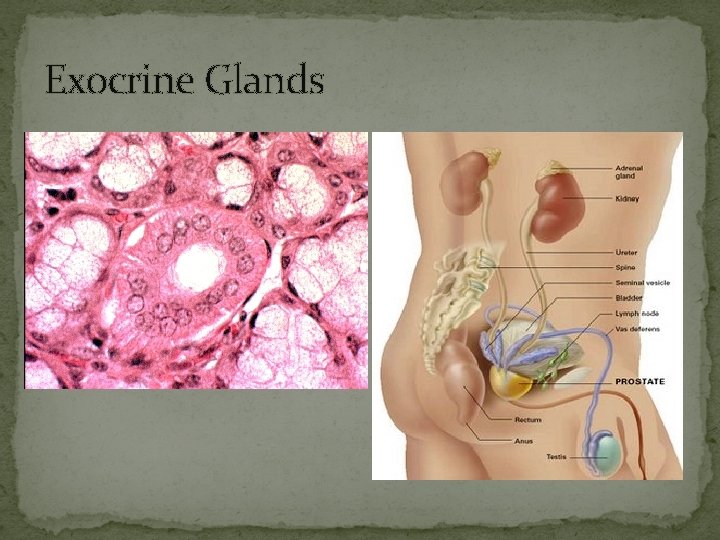
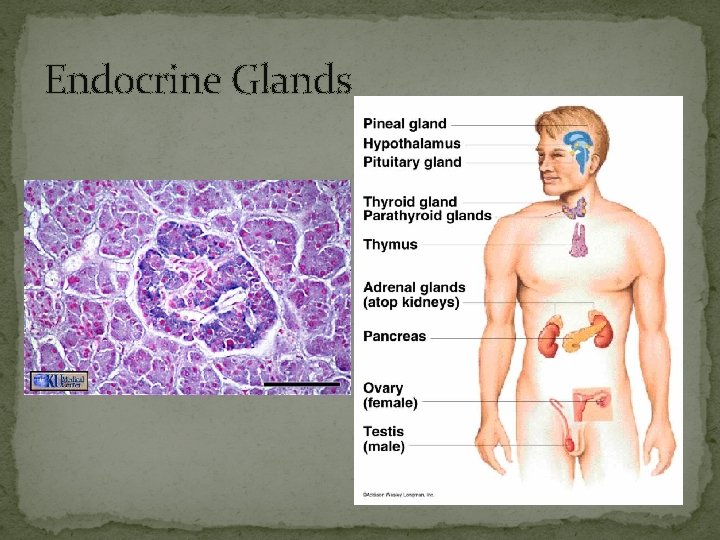
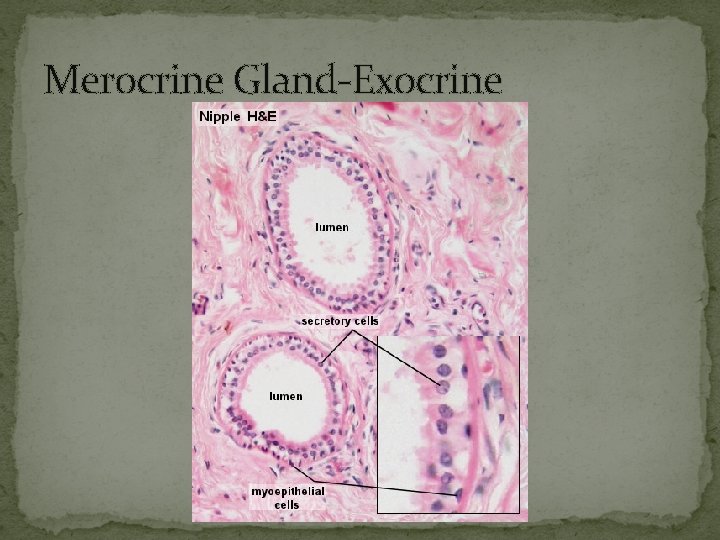
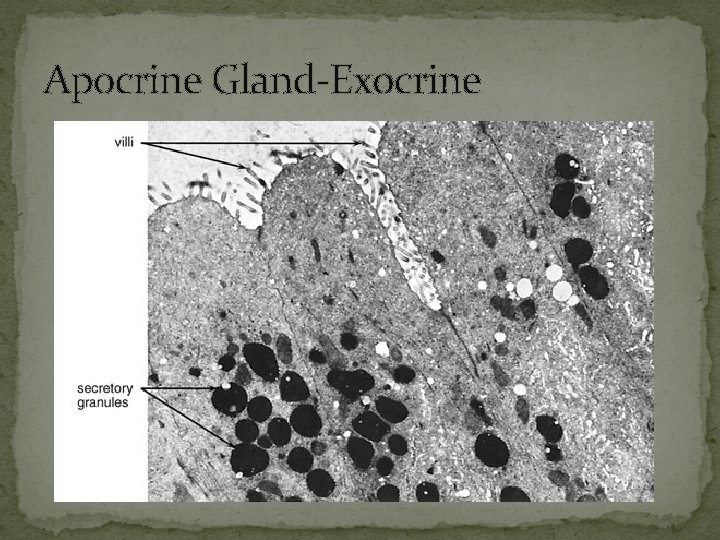
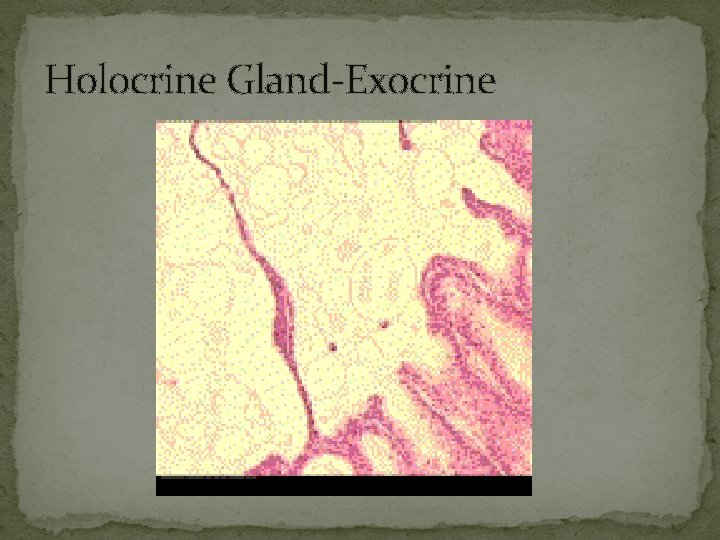
Glandular Epithelium � Composed of cells specialized to secrete substances � Glands consist of one or more cells � Exocrine glands secrete into ducts � Endocrine glands secrete into tissues fluid or blood � Exocrine glands classified according to the composition of their secretions � Merocrine glands secrete fluid without loss of cytoplasm � Apocrine glands lose portions of cells during secretion � Holocrine glands release cells filled with secretory products � Serous cells secrete watery fluid with high enzyme content; mucous cells secrete mucus.
Exocrine Glands
Endocrine Glands
Merocrine Gland-Exocrine
Apocrine Gland-Exocrine
Holocrine Gland-Exocrine
Connective Tissue General Characteristics Connects, supports, protects, provides framework, fills spaces, stores fat, produces blood cells, protects against infection, helps repair damaged tissues. Located some distance apart Intercellular matrix consists of fibers and ground substances
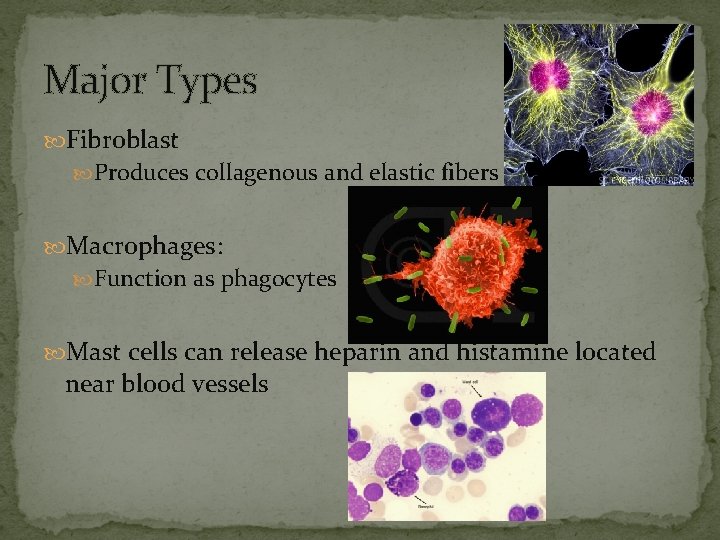
Major Types Fibroblast Produces collagenous and elastic fibers Macrophages: Function as phagocytes Mast cells can release heparin and histamine located near blood vessels
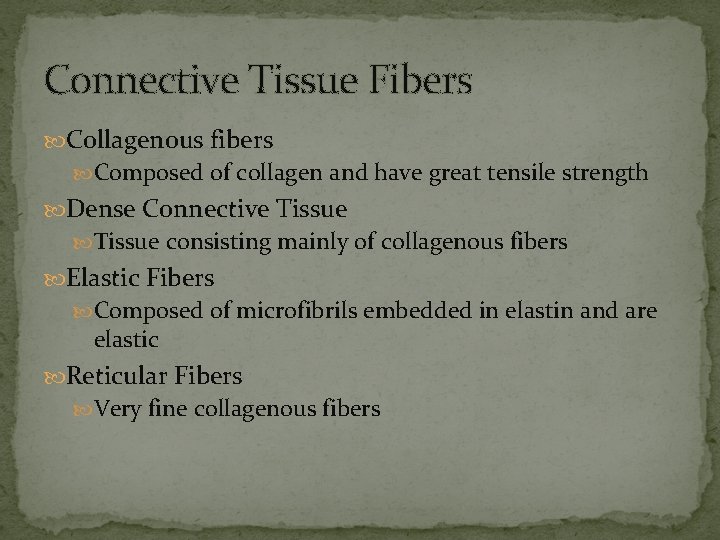
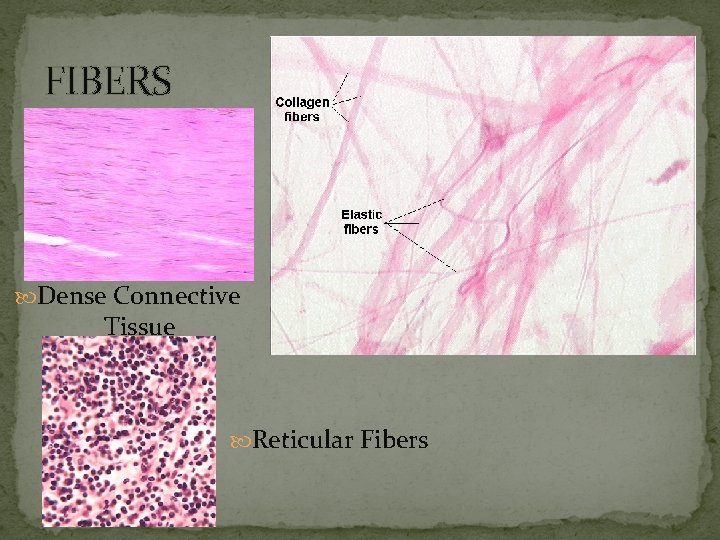
Connective Tissue Fibers Collagenous fibers Composed of collagen and have great tensile strength Dense Connective Tissue consisting mainly of collagenous fibers Elastic Fibers Composed of microfibrils embedded in elastin and are elastic Reticular Fibers Very fine collagenous fibers
FIBERS Dense Connective Tissue Reticular Fibers
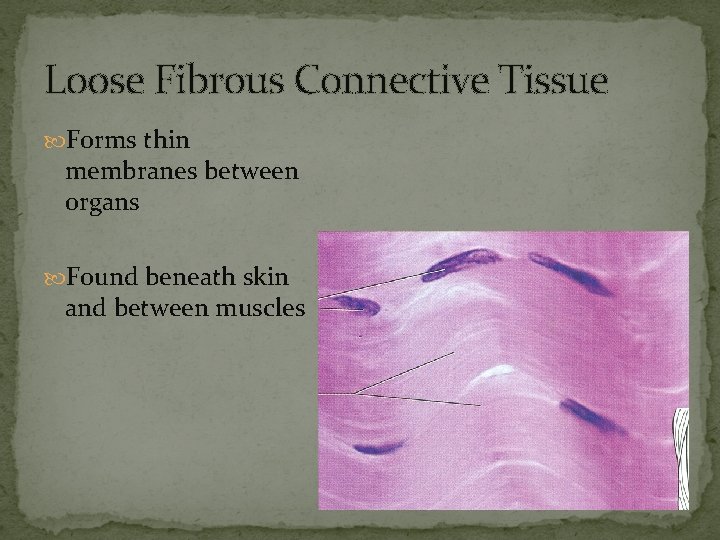
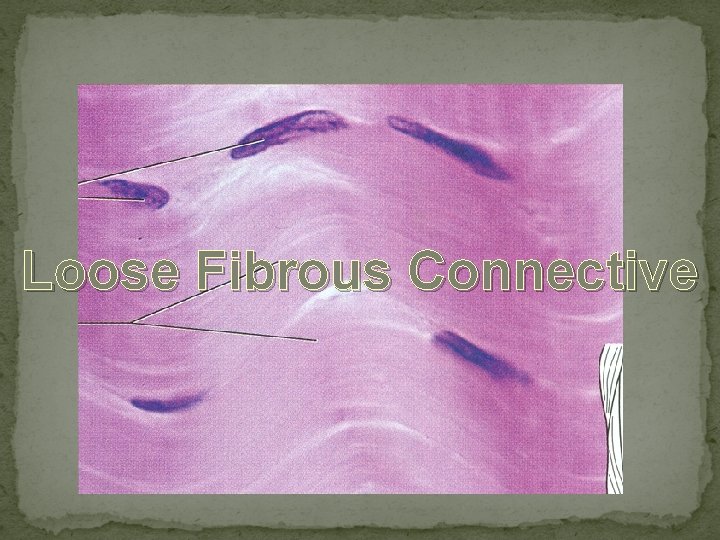
Loose Fibrous Connective Tissue Forms thin membranes between organs Found beneath skin and between muscles
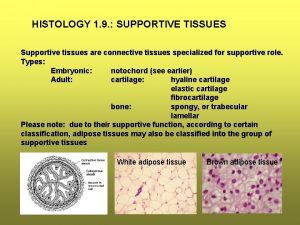
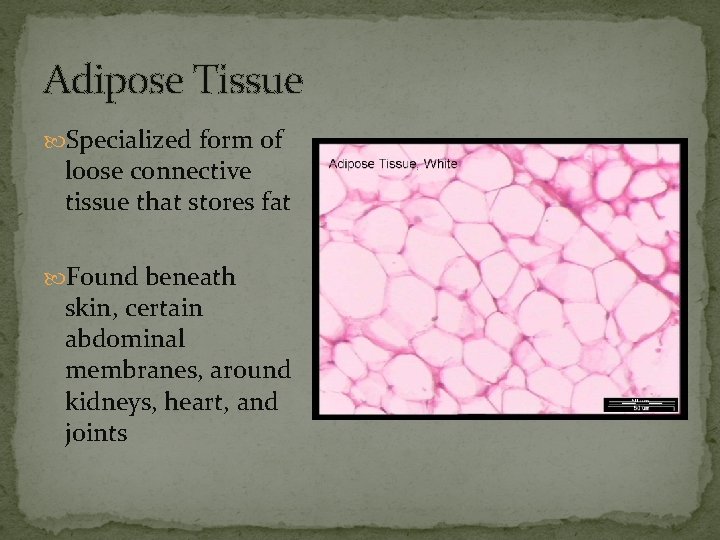
Adipose Tissue Specialized form of loose connective tissue that stores fat Found beneath skin, certain abdominal membranes, around kidneys, heart, and joints
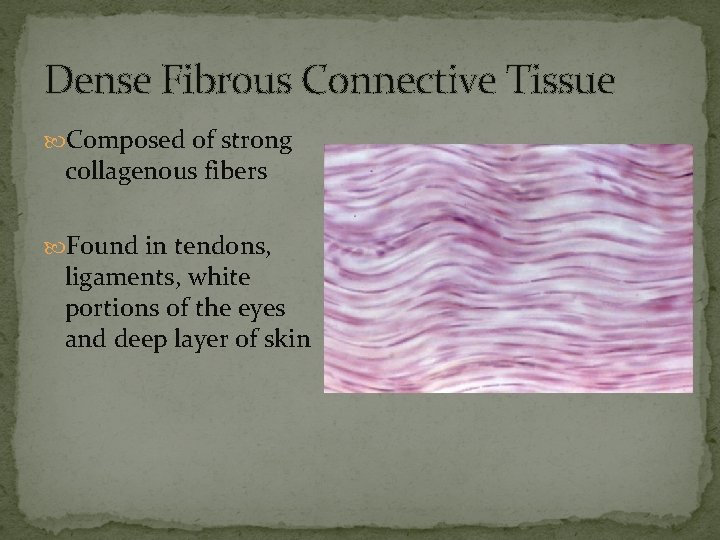
Dense Fibrous Connective Tissue Composed of strong collagenous fibers Found in tendons, ligaments, white portions of the eyes and deep layer of skin
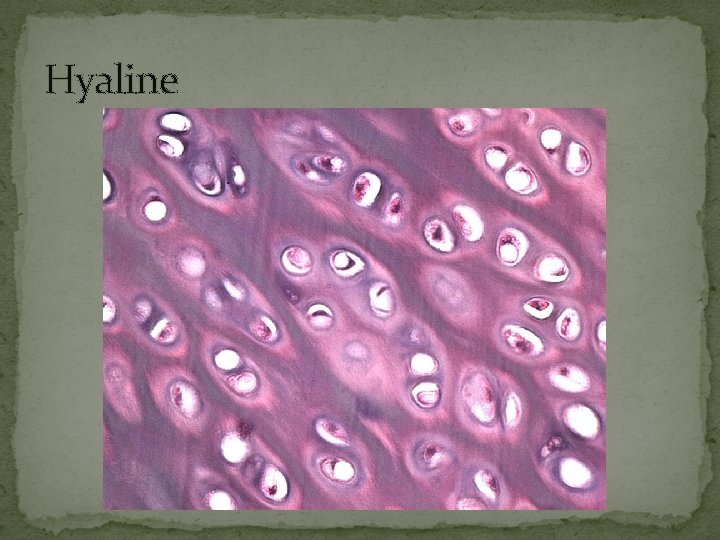
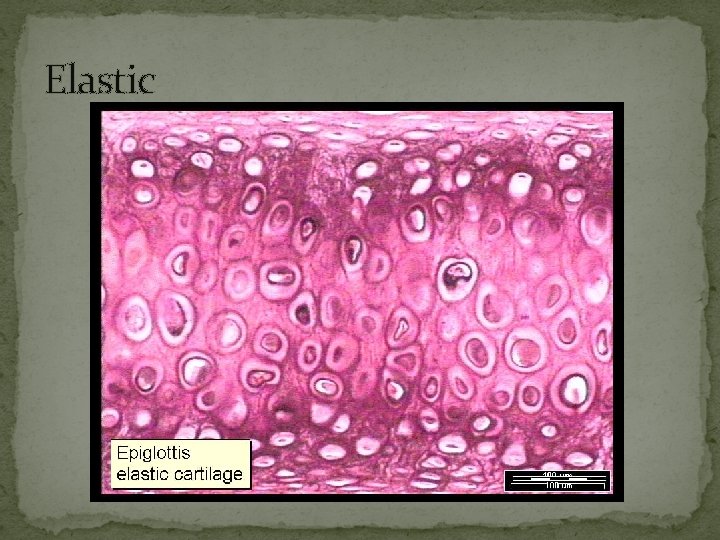
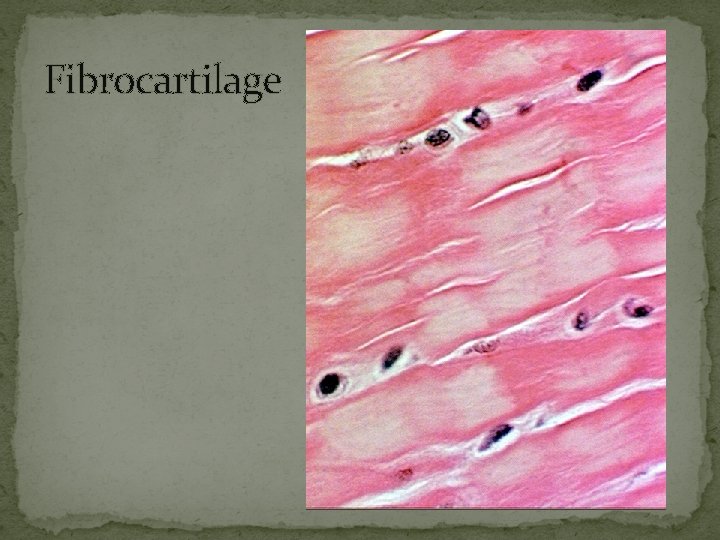
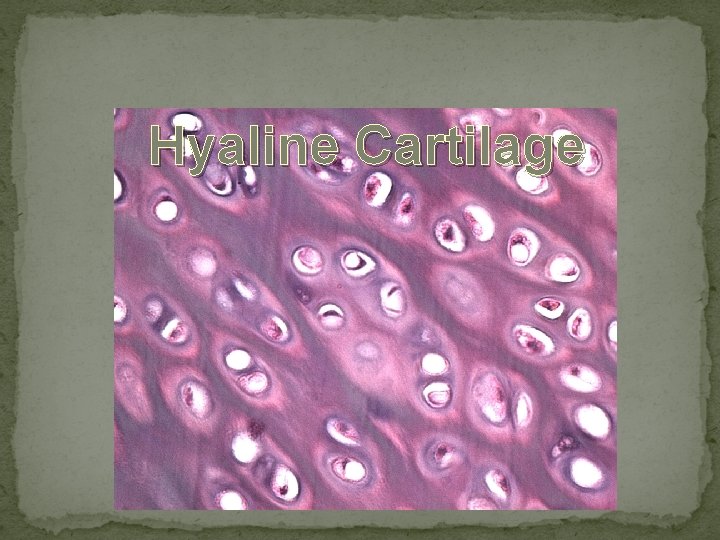
Cartilage Provides framework Composed of fibers and gel-like ground substance Usually enclosed in a perichondrium Lacks direct blood supply and is slow to heal Major Types Hyaline Elastic fibrocartilage
Hyaline
Elastic
Fibrocartilage
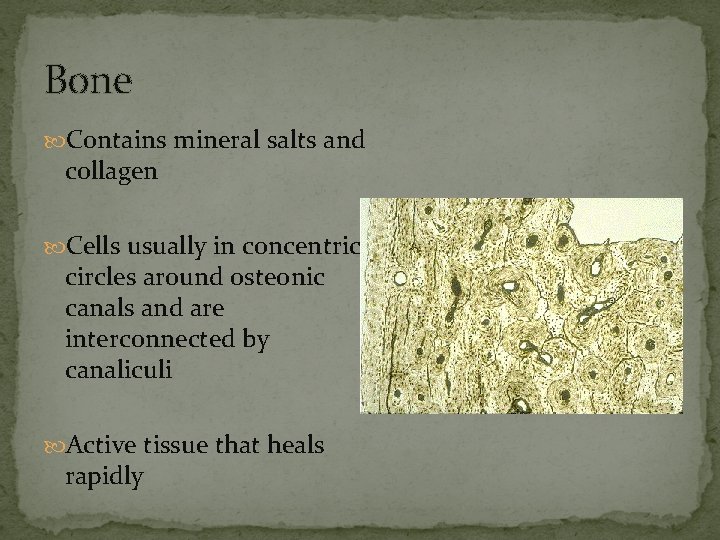
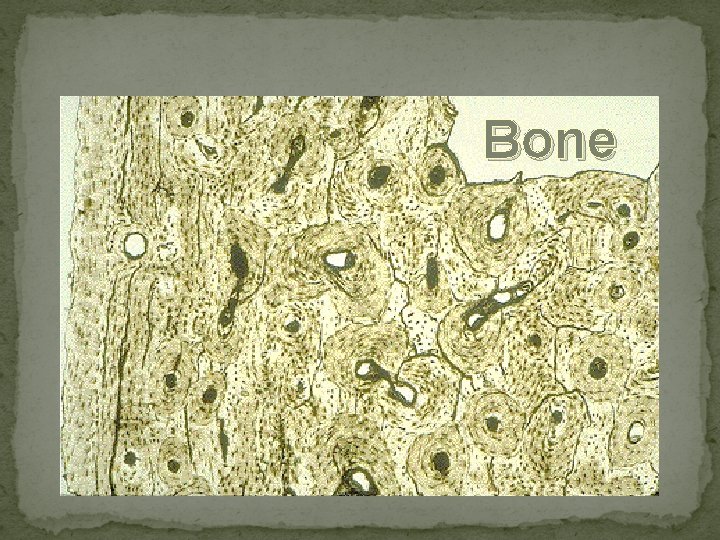
Bone Contains mineral salts and collagen Cells usually in concentric circles around osteonic canals and are interconnected by canaliculi Active tissue that heals rapidly
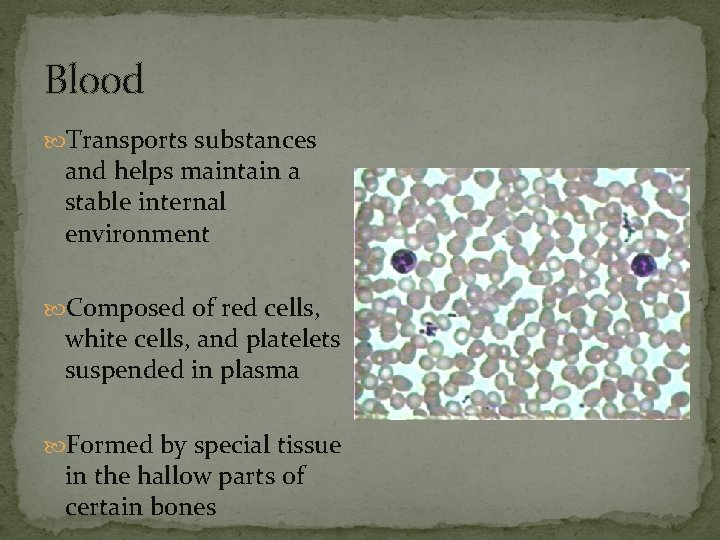
Blood Transports substances and helps maintain a stable internal environment Composed of red cells, white cells, and platelets suspended in plasma Formed by special tissue in the hallow parts of certain bones
Reticuloendothelial Tissue Composed of phagocytic cells that are widely distributed throughout body Defends the body against invasion by microorganisms
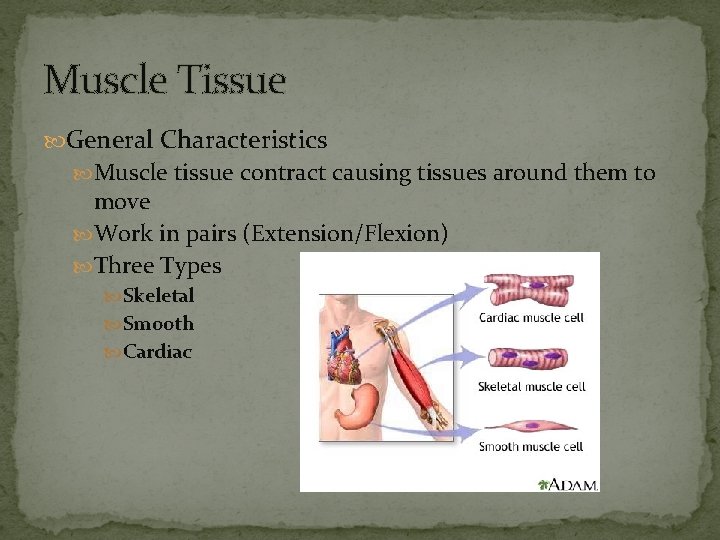
Muscle Tissue General Characteristics Muscle tissue contract causing tissues around them to move Work in pairs (Extension/Flexion) Three Types Skeletal Smooth Cardiac
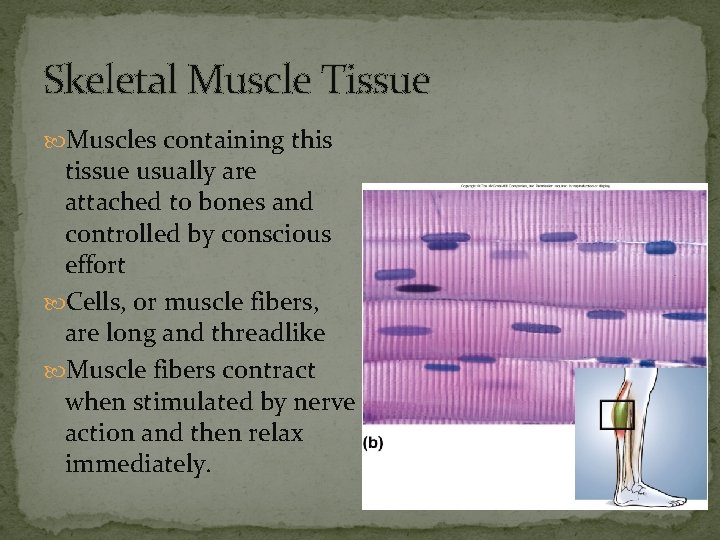
Skeletal Muscle Tissue Muscles containing this tissue usually are attached to bones and controlled by conscious effort Cells, or muscle fibers, are long and threadlike Muscle fibers contract when stimulated by nerve action and then relax immediately.
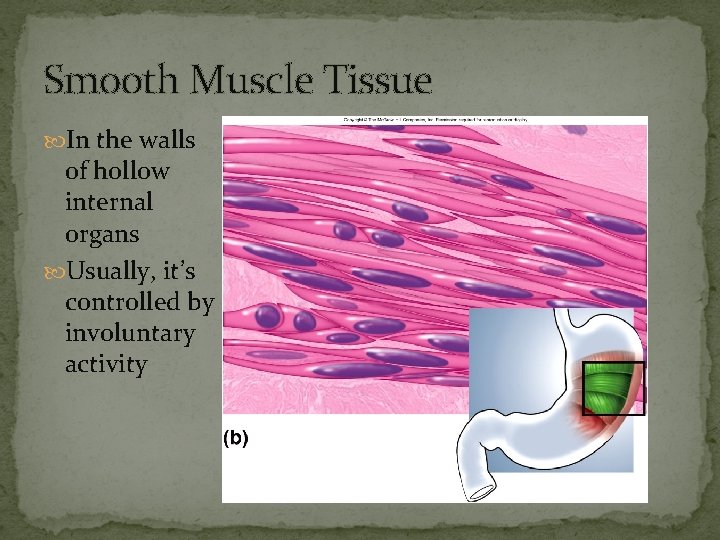
Smooth Muscle Tissue In the walls of hollow internal organs Usually, it’s controlled by involuntary activity
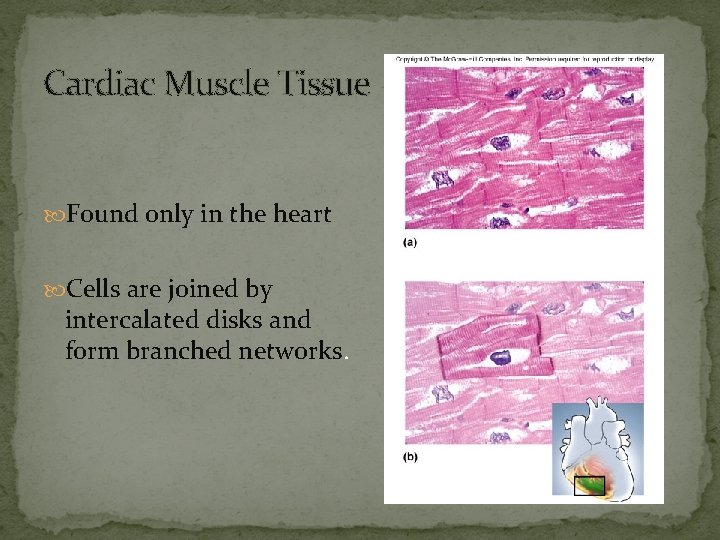
Cardiac Muscle Tissue Found only in the heart Cells are joined by intercalated disks and form branched networks.
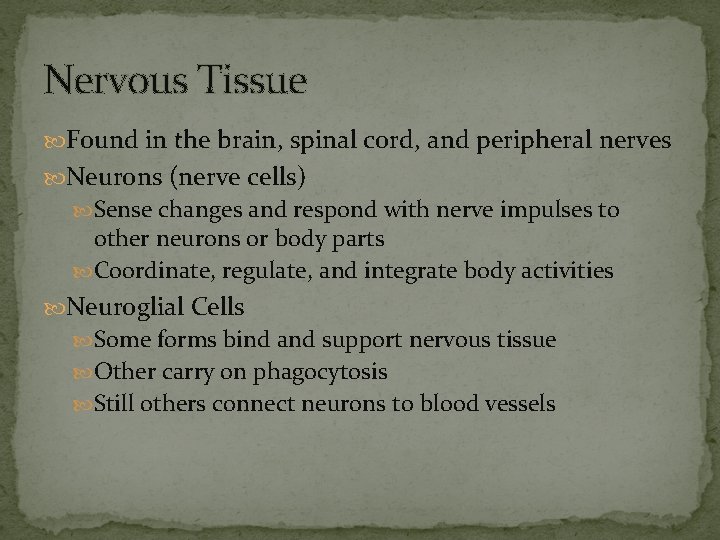
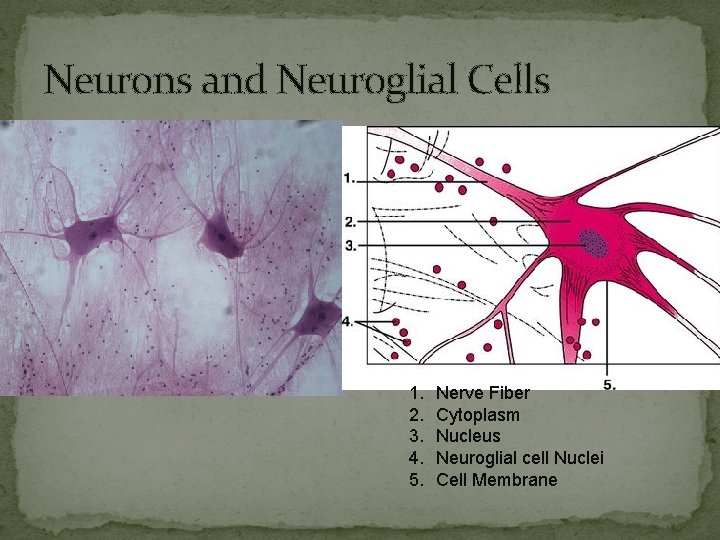
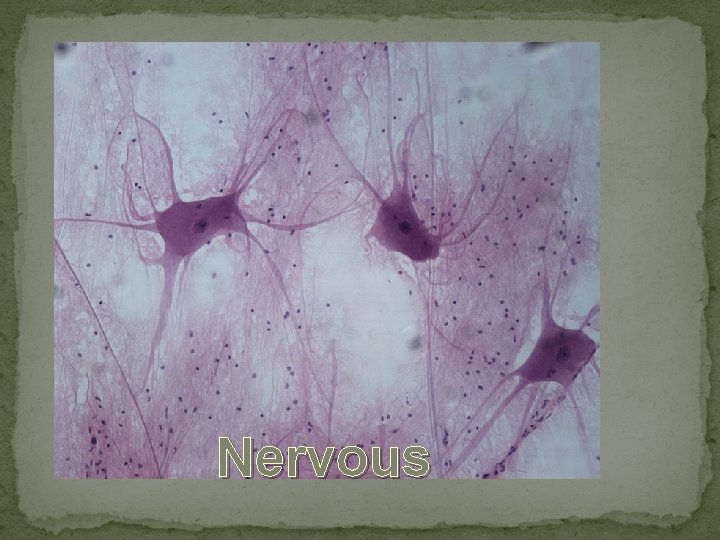
Nervous Tissue Found in the brain, spinal cord, and peripheral nerves Neurons (nerve cells) Sense changes and respond with nerve impulses to other neurons or body parts Coordinate, regulate, and integrate body activities Neuroglial Cells Some forms bind and support nervous tissue Other carry on phagocytosis Still others connect neurons to blood vessels
Neurons and Neuroglial Cells 1. 2. 3. 4. 5. Nerve Fiber Cytoplasm Nucleus Neuroglial cell Nuclei Cell Membrane
Quiz Simple Sqamous
Nervous
Transitional Epithelium
Hyaline Cartilage
Simple Columnar
Stratified Cuboidal
Loose Fibrous Connective
Bone