HIPAA Security Risk Assessment SRA Dan Friedrich CISSP


- Slides: 23
HIPAA Security Risk Assessment (SRA) Dan Friedrich, CISSP Director, Center for Advancement of Health IT Dakota State University
Objectives Discuss QPP and HIPAA Requirements for a SRA Define what constitutes a Risk Identify the elements of a SRA
SRA and the Quality Payment Program
Required by Promoting Interoperability • https: //qpp. cms. gov/docs/pi_specifications/Tran sition%20 Measure%20 Specifications/2018. MIPS %20 ACI%20 Transition%20 Measure_Security%2 0 Risk%20 Analysis. pdf • Required for Base Score: Yes • Percentage of Performance Score: N/A • Eligible for Bonus Score: No Note: MIPS eligible clinicians must fulfill the requirements of base score measures to earn a base score in order to earn any score in the Advancing Care Information performance category. In addition to the base score, eligible clinicians have the opportunity to earn additional credit through the submission of performance measures and a bonus measure and/or activity.
Timing for QPP • It is acceptable for the security risk analysis to be conducted outside the MIPS performance period; • the analysis must be unique for each MIPS performance period, • the scope must include the full MIPS performance period, • and must be conducted within the calendar year of the MIPS performance period (January 1 st – December 31 st).
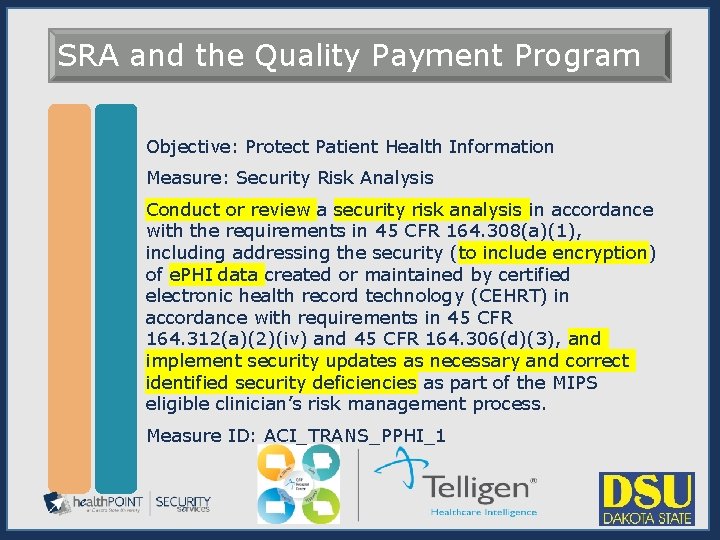
SRA and the Quality Payment Program Objective: Protect Patient Health Information Measure: Security Risk Analysis Conduct or review a security risk analysis in accordance with the requirements in 45 CFR 164. 308(a)(1), including addressing the security (to include encryption) of e. PHI data created or maintained by certified electronic health record technology (CEHRT) in accordance with requirements in 45 CFR 164. 312(a)(2)(iv) and 45 CFR 164. 306(d)(3), and implement security updates as necessary and correct identified security deficiencies as part of the MIPS eligible clinician’s risk management process. Measure ID: ACI_TRANS_PPHI_1
SRA and the Quality Payment Program Conduct or review a security risk analysis in accordance with the requirements in 45 CFR 164. 308(a)(1), including addressing the security (to include encryption) of e. PHI data created or maintained by certified electronic health record technology (CEHRT)
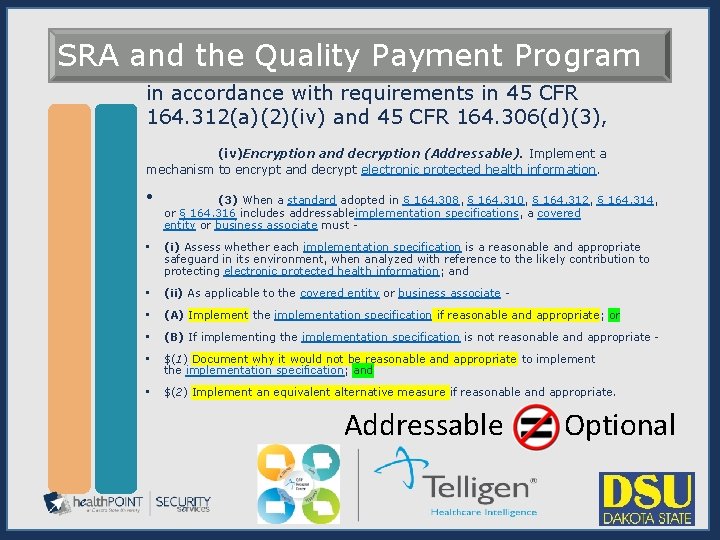
SRA and the Quality Payment Program in accordance with requirements in 45 CFR 164. 312(a)(2)(iv) and 45 CFR 164. 306(d)(3), (iv)Encryption and decryption (Addressable). Implement a mechanism to encrypt and decrypt electronic protected health information. • (3) When a standard adopted in § 164. 308, § 164. 310, § 164. 312, § 164. 314, or § 164. 316 includes addressableimplementation specifications, a covered entity or business associate must - • (i) Assess whether each implementation specification is a reasonable and appropriate safeguard in its environment, when analyzed with reference to the likely contribution to protecting electronic protected health information; and • (ii) As applicable to the covered entity or business associate - • (A) Implement the implementation specification if reasonable and appropriate; or • (B) If implementing the implementation specification is not reasonable and appropriate - • $(1) Document why it would not be reasonable and appropriate to implement the implementation specification; and • $(2) Implement an equivalent alternative measure if reasonable and appropriate. Addressable Optional
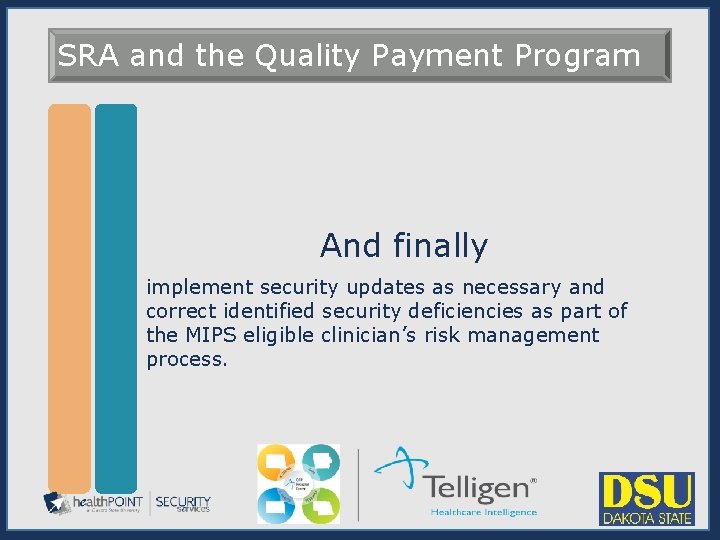
SRA and the Quality Payment Program And finally implement security updates as necessary and correct identified security deficiencies as part of the MIPS eligible clinician’s risk management process.
SRA and the Quality Payment Program Objective: Protect Patient Health Information Measure: Security Risk Analysis Conduct or review a security risk analysis in accordance with the requirements in 45 CFR 164. 308(a)(1), including addressing the security (to include encryption) of e. PHI data created or maintained by certified electronic health record technology (CEHRT) in accordance with requirements in 45 CFR 164. 312(a)(2)(iv) and 45 CFR 164. 306(d)(3), and implement security updates as necessary and correct identified security deficiencies as part of the MIPS eligible clinician’s risk management process. Measure ID: ACI_TRANS_PPHI_1
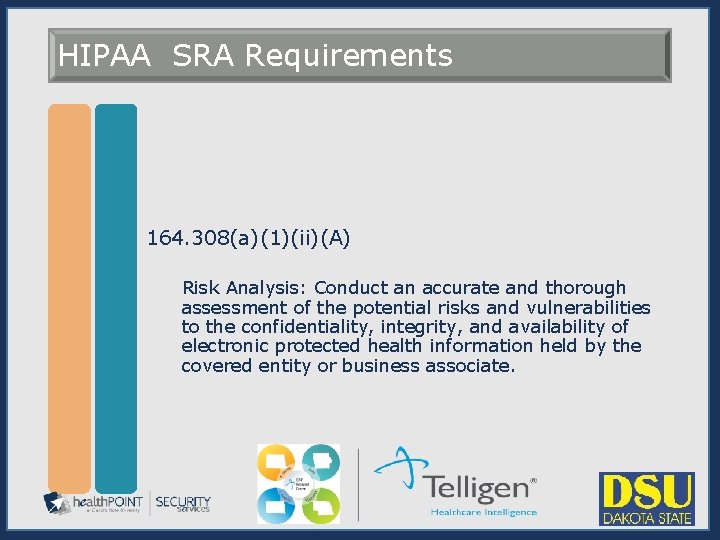
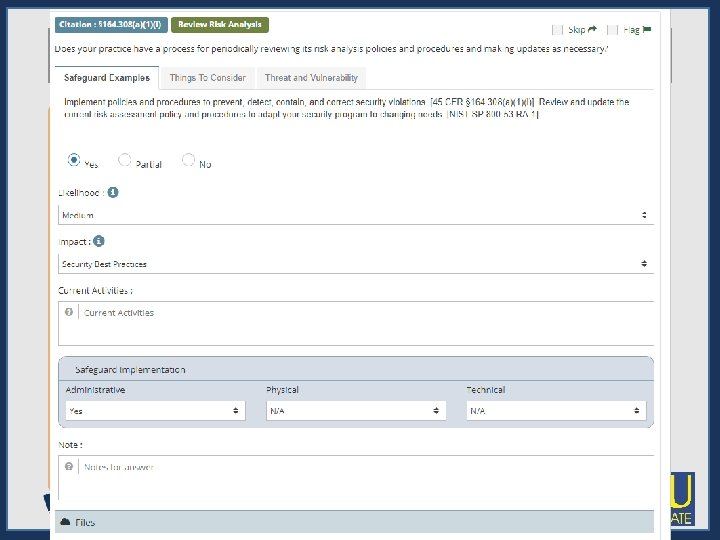
HIPAA SRA Requirements 164. 308(a)(1)(ii)(A) Risk Analysis: Conduct an accurate and thorough assessment of the potential risks and vulnerabilities to the confidentiality, integrity, and availability of electronic protected health information held by the covered entity or business associate.
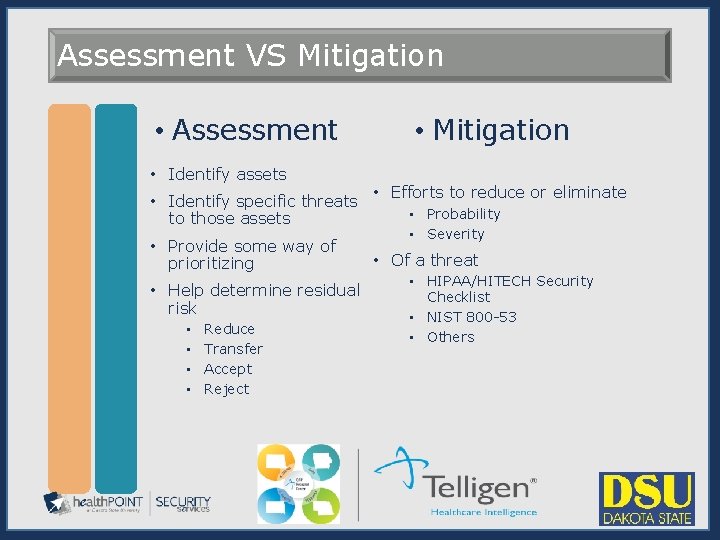
Assessment VS Mitigation • Assessment • Identify assets • Identify specific threats to those assets • Provide some way of prioritizing • Help determine residual risk • • Reduce Transfer Accept Reject • Mitigation • Efforts to reduce or eliminate • Probability • Severity • Of a threat • HIPAA/HITECH Security Checklist • NIST 800 -53 • Others
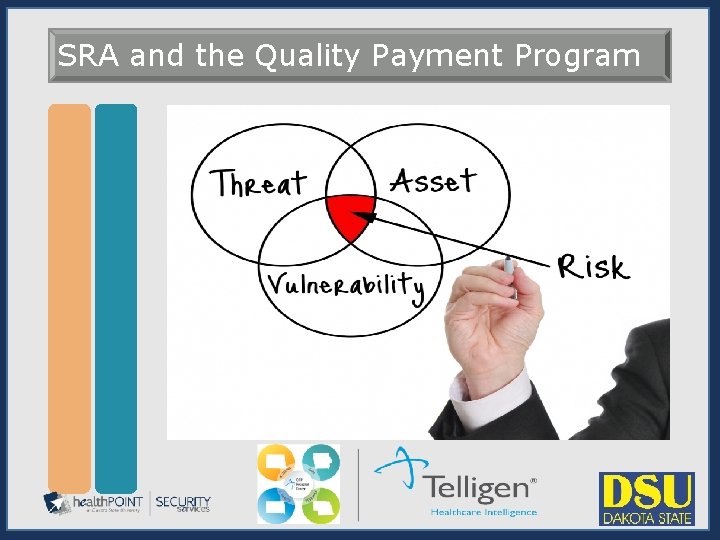
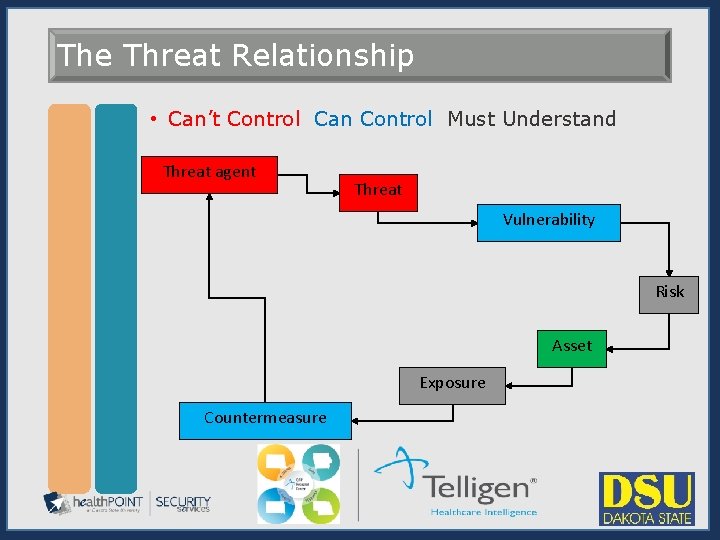
The Threat Relationship • Can’t Control Can Control Must Understand Threat agent Threat Vulnerability Risk Asset Exposure Countermeasure
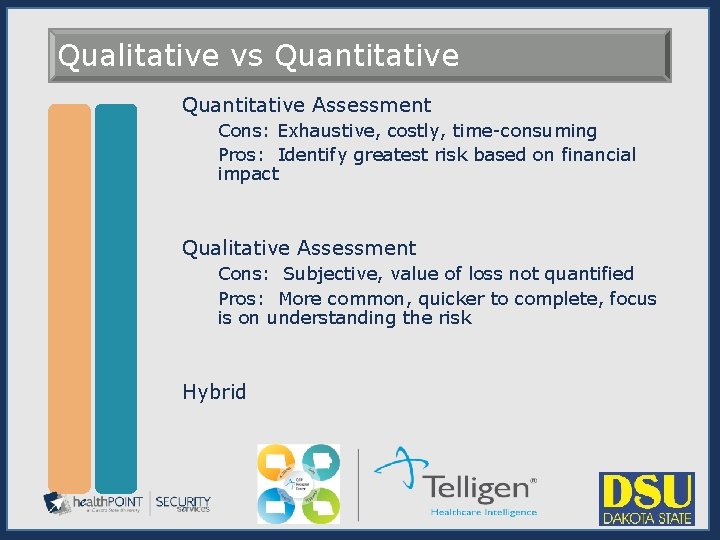
Qualitative vs Quantitative Assessment Cons: Exhaustive, costly, time-consuming Pros: Identify greatest risk based on financial impact Qualitative Assessment Cons: Subjective, value of loss not quantified Pros: More common, quicker to complete, focus is on understanding the risk Hybrid
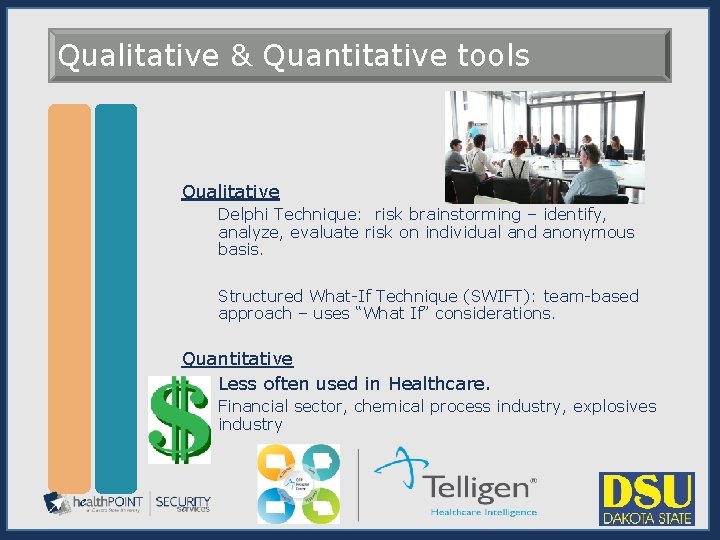
Qualitative & Quantitative tools Qualitative Delphi Technique: risk brainstorming – identify, analyze, evaluate risk on individual and anonymous basis. Structured What-If Technique (SWIFT): team-based approach – uses “What If” considerations. Quantitative Less often used in Healthcare. Financial sector, chemical process industry, explosives industry
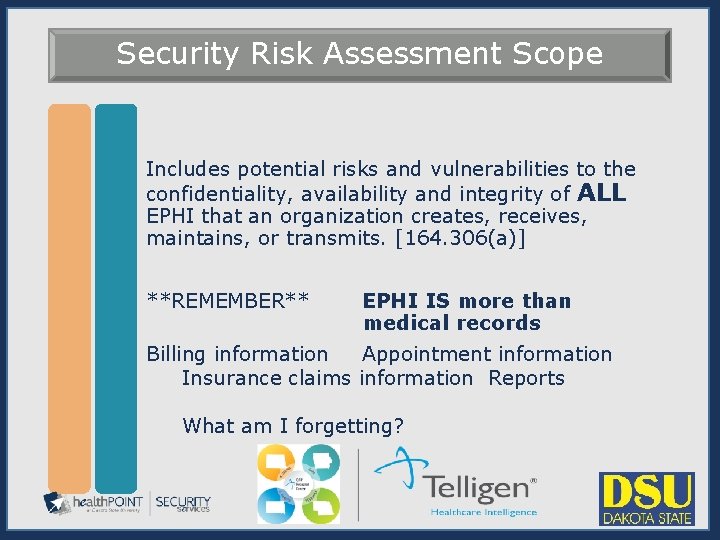
Security Risk Assessment Scope Includes potential risks and vulnerabilities to the confidentiality, availability and integrity of ALL EPHI that an organization creates, receives, maintains, or transmits. [164. 306(a)] **REMEMBER** EPHI IS more than medical records Billing information Appointment information Insurance claims information Reports What am I forgetting?
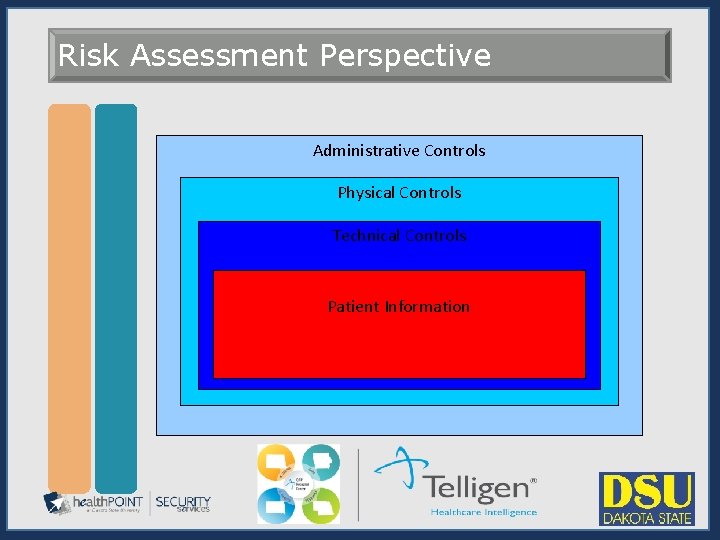
Risk Assessment Perspective Administrative Controls Physical Controls Technical Controls Patient Information
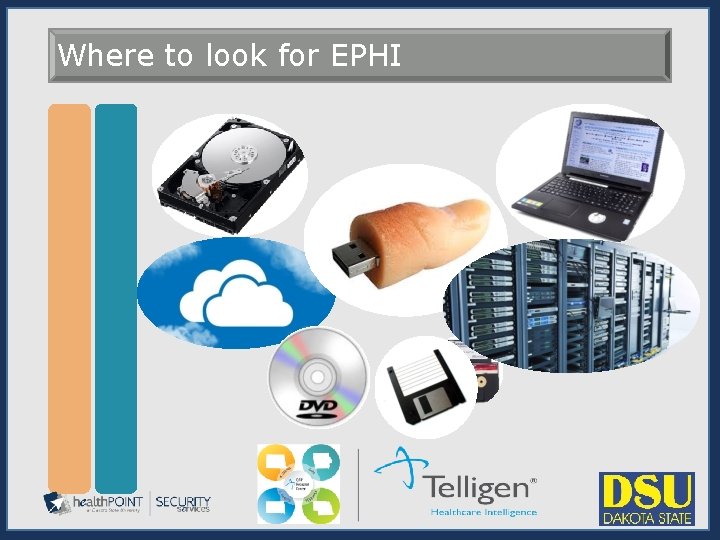
Where to look for EPHI
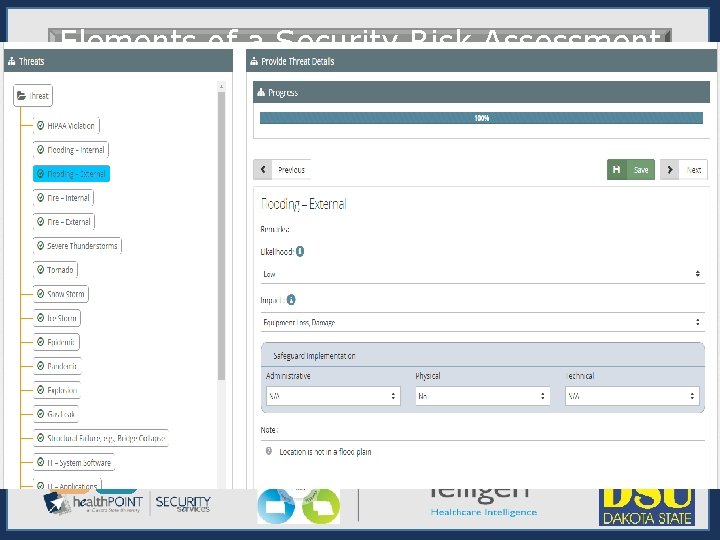
Elements of a Security Risk Assessment Identify and Document Potential Threats and Vulnerabilities Identify and document reasonably anticipated threats to EPHI: Unique to circumstances of environment If exploited create risk of inappropriate access or disclosure
Elements of a Security Risk Assessment Assess Current Security Measures Assess and document security measures used to safeguard EPHI, whether already in place, and if configured and used properly. Will vary among organizations Small orgs – fewer variables to deal with Large orgs – many variables Workforce IT systems Locations
Document Business Associate Agreements Business Associates were (are) focus of OCR during Phase II audits OCR requested specific information 27 data elements Business Associate Name, type of service,
Questions?
THANK YOU Dan Friedrich, CISSP Director, Center for the Advancement of Health IT Dakota State University Dan. Friedrich@dsu. edu (605) 256 5555