HEAT TRANSFER Heat The movement of thermal energy

- Slides: 11
HEAT TRANSFER
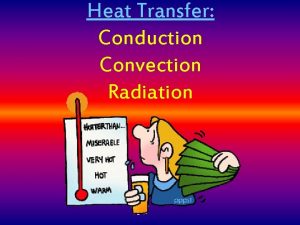
Heat • The movement of thermal energy from a substance at a higher temperature to a substance at a lower temperature.
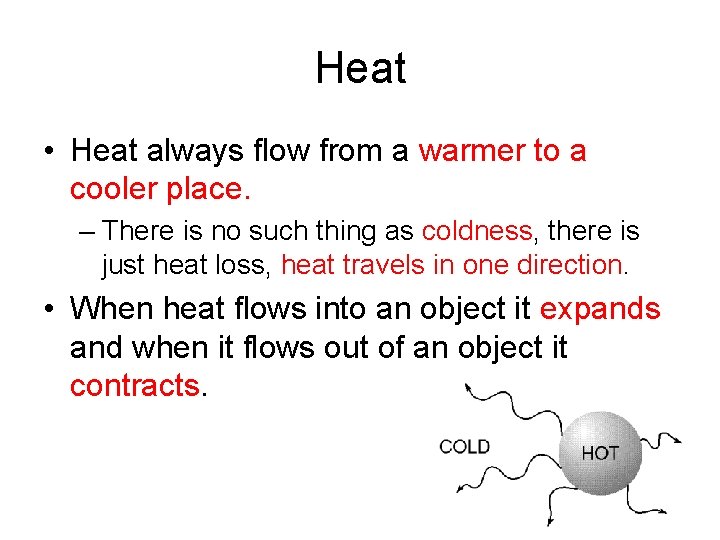
Heat • Heat always flow from a warmer to a cooler place. – There is no such thing as coldness, there is just heat loss, heat travels in one direction. • When heat flows into an object it expands and when it flows out of an object it contracts.
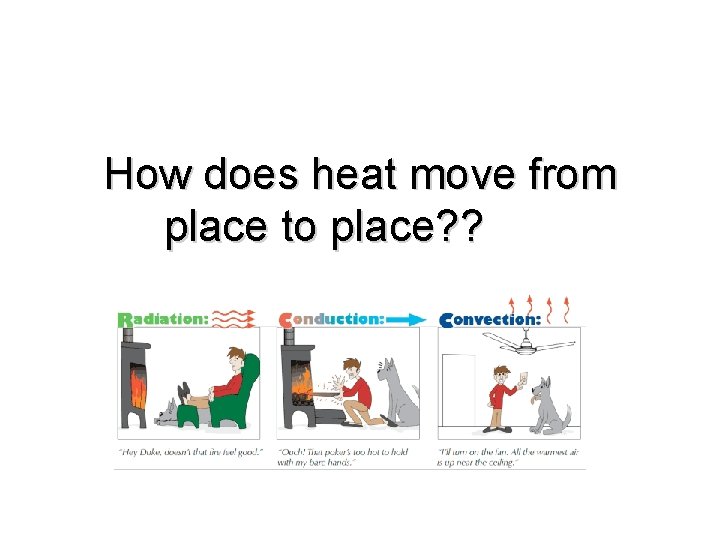
How does heat move from place to place? ?
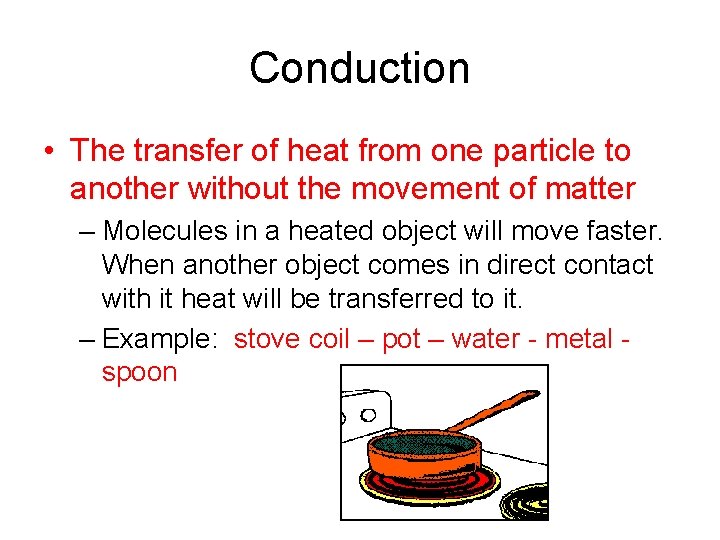
Conduction • The transfer of heat from one particle to another without the movement of matter – Molecules in a heated object will move faster. When another object comes in direct contact with it heat will be transferred to it. – Example: stove coil – pot – water - metal spoon
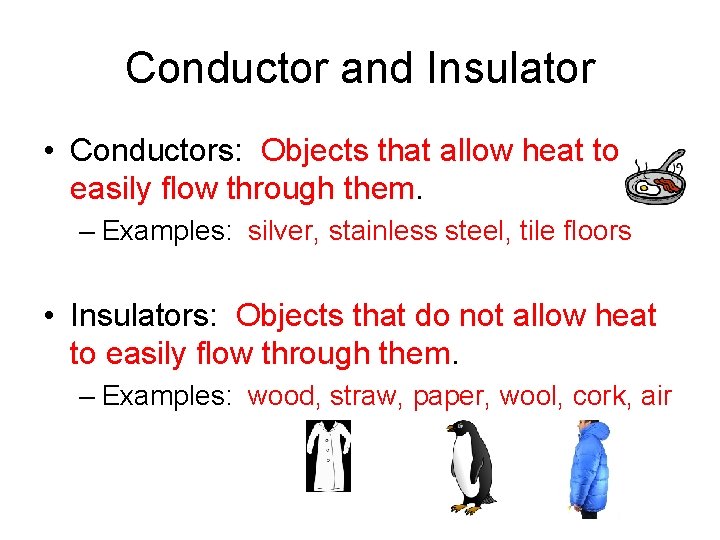
Conductor and Insulator • Conductors: Objects that allow heat to easily flow through them. – Examples: silver, stainless steel, tile floors • Insulators: Objects that do not allow heat to easily flow through them. – Examples: wood, straw, paper, wool, cork, air
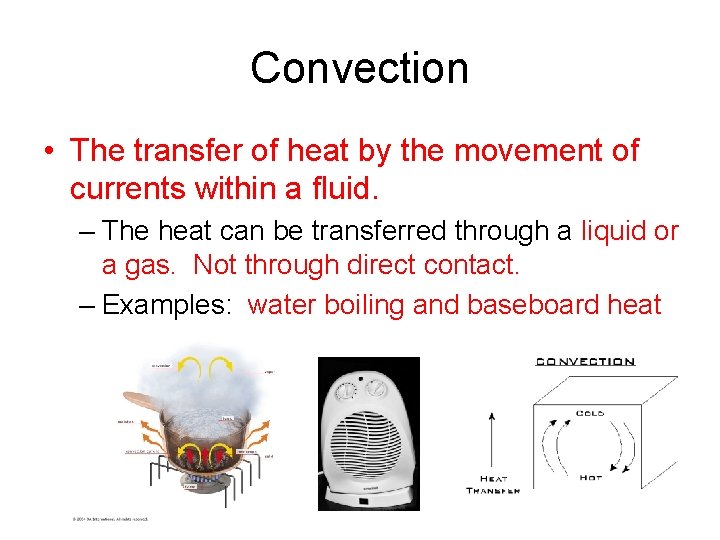
Convection • The transfer of heat by the movement of currents within a fluid. – The heat can be transferred through a liquid or a gas. Not through direct contact. – Examples: water boiling and baseboard heat
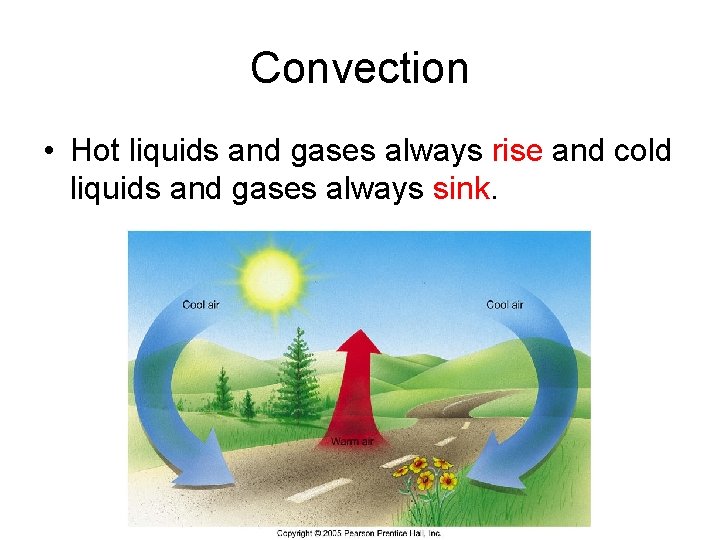
Convection • Hot liquids and gases always rise and cold liquids and gases always sink.
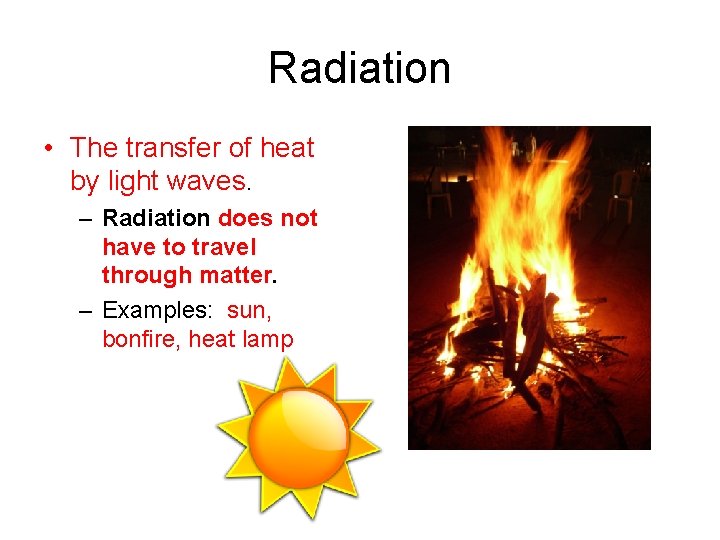
Radiation • The transfer of heat by light waves. – Radiation does not have to travel through matter. – Examples: sun, bonfire, heat lamp
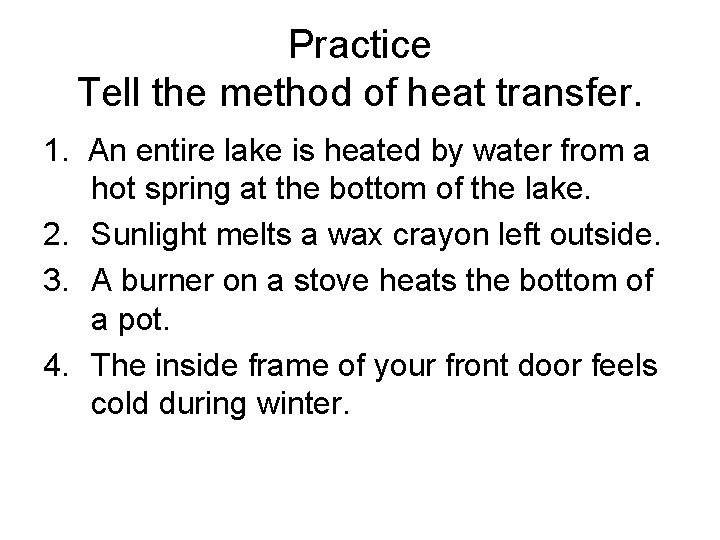
Practice Tell the method of heat transfer. 1. An entire lake is heated by water from a hot spring at the bottom of the lake. 2. Sunlight melts a wax crayon left outside. 3. A burner on a stove heats the bottom of a pot. 4. The inside frame of your front door feels cold during winter.