Groundwater Restoration Remedial Action Completion Welcome u Introduction


- Slides: 27
Groundwater Restoration Remedial Action Completion
Welcome! u Introduction to your instructors 1
Course Objectives u Understand EPA’s recommendations for determining if a groundwater restoration remedial action is complete; u Understand recommendations for evaluating contaminant of concern concentration levels on a well-by well basis; u Have exposure to the groundwater statistics tool and understand how it may be used to evaluate well-specific data; and u Understand how well-specific conclusions may be used to make a determination that the restoration remedial action is complete 2
Course Outline u Overview of the Guidance for Evaluating Completion of Groundwater Restoration Remedial Actions – November 2013 u Overview of the Recommended Approach for Well -specific Analysis and the Groundwater Statistics Tool- August 2014 3
GROUNDWATER COMPLETION GUIDANCE 4
Purpose of the Guidance u Provide guidance for EPA Regions on how to determine when a groundwater restoration remedial action is complete. u Provide EPA Superfund Program and stakeholders an OSWER document that clarifies groundwater attainment expectations that are referenced and/or discussed in a number of existing OSWER and EPA -wide guidance 5
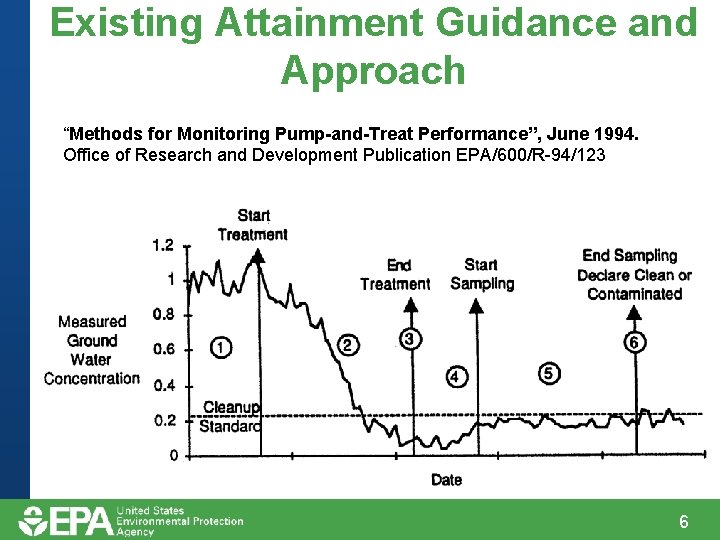
Existing Attainment Guidance and Approach “Methods for Monitoring Pump-and-Treat Performance”, June 1994. Office of Research and Development Publication EPA/600/R-94/123 6
Guidance Overview u Recommends evaluating contaminant of concern (COC) concentration levels on a well-by-well basis u EPA Regions should use monitoring well-specific conclusions to provide a technical and scientific basis supporting the Agency’s conclusion that the groundwater has met and will continue to meet cleanup levels for all COCs in the future 7
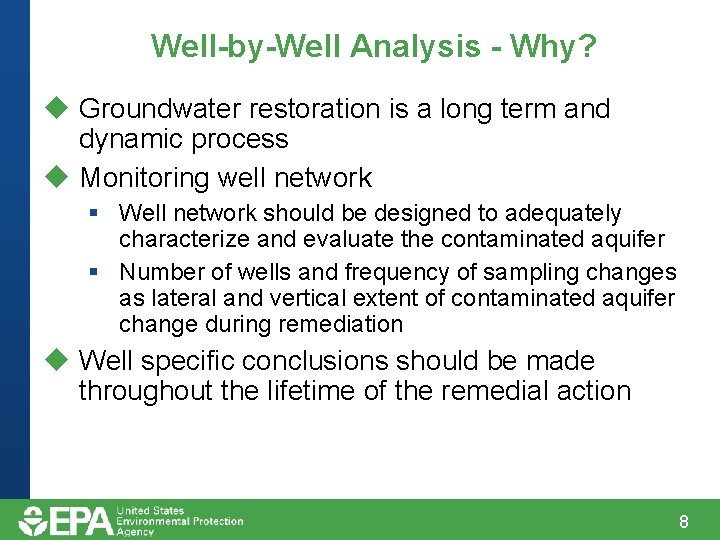
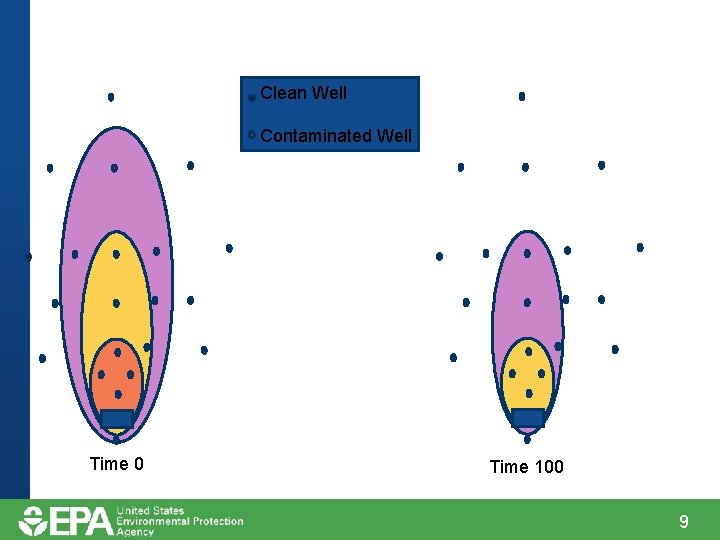
Well-by-Well Analysis - Why? u Groundwater restoration is a long term and dynamic process u Monitoring well network § Well network should be designed to adequately characterize and evaluate the contaminated aquifer § Number of wells and frequency of sampling changes as lateral and vertical extent of contaminated aquifer change during remediation u Well specific conclusions should be made throughout the lifetime of the remedial action 8
Clean Well Contaminated Well Time 0 Time 100 9
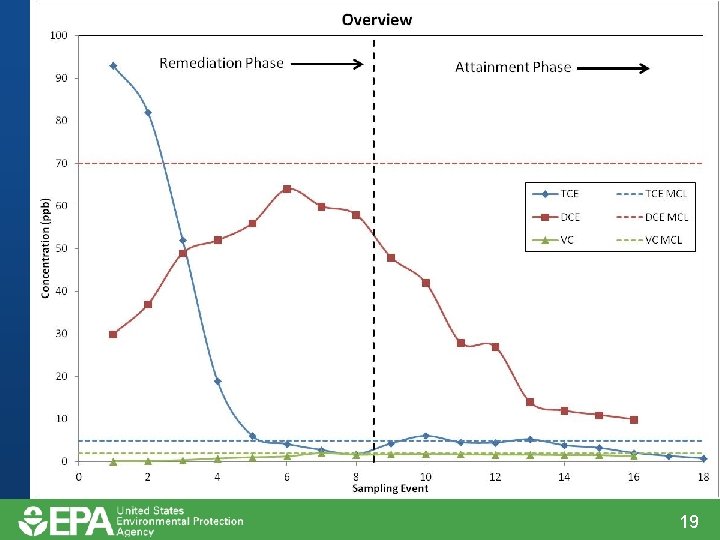
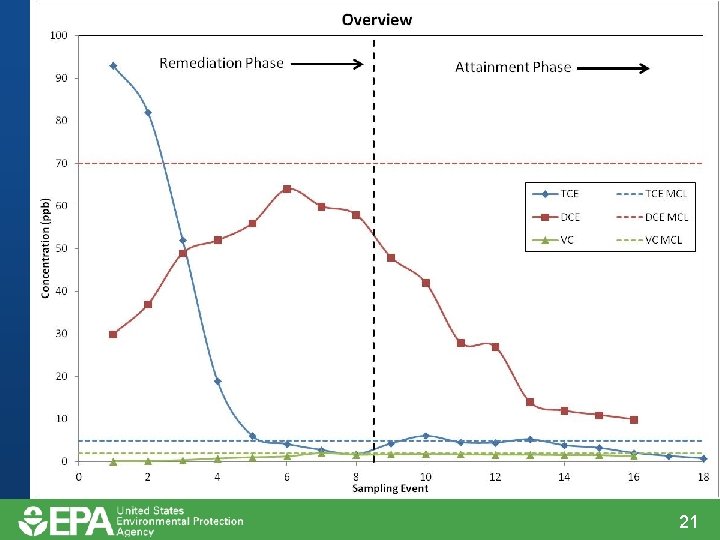
Well-by-Well Analysis: An Overview u Two “Phases” § Remediation Monitoring Phase § Attainment Monitoring Phase 10
Remediation Monitoring Phase u Phase of the remedy where either active or passive remedial activities are being implemented to reach groundwater cleanup levels selected in a remedy decision document u The completion of this phase provides stakeholders a decision point for determining that the groundwater in a well has reached cleanup levels for all contaminants of concern u Decision point to start evaluating attainment 11
Attainment Monitoring Phase u Phase of the remedy and monitoring conducted after cleanup levels have been reached u Considerations of active versus passive systems u Evaluations done on a contaminant by contaminant-specific basis u The completion of this phase when monitoring data analysis provides conclusions that: § The contaminant cleanup level has been met; and § Groundwater will continue to meet the contaminant cleanup level in the future 12
Remedial Action Completion Determination u Based on well-specific conclusions u Guidance does not recommend: § Aggregating conclusions between well § Aggregating conclusion between intervals for wells with multiple discrete screening depths u Well-specific conclusions should be evaluated in conjunction with the conceptual site model to ensure well network sufficient to characterize lateral and vertical extent of contaminated aquifer 13
Remedial Action Completion Determination u Well-specific conclusions should be evaluated in conjunction with the conceptual site model to ensure well network sufficient to characterize lateral and vertical extent of contaminated aquifer u Rationale is documented in a Final Close Out Report 14
QUESTIONS ON THE GUIDANCE? 15
RECOMMENDED APPROACH AND STATISTICAL TOOL 16
Recommended Approach u Provides a methodology for conducting a wellspecific analysis u Document contains recommendations on: § Data set considerations § Remediation Monitoring Phase statistical evaluation (if needed) § Attainment Monitoring Phase statistical evaluation (if needed) 17
Statistical Tool u Comports with the Recommended Approach u Tool to use statistics to evaluate completion of a groundwater remediation action at a specific well (for a specific contaminant) u Other potential uses 18
19
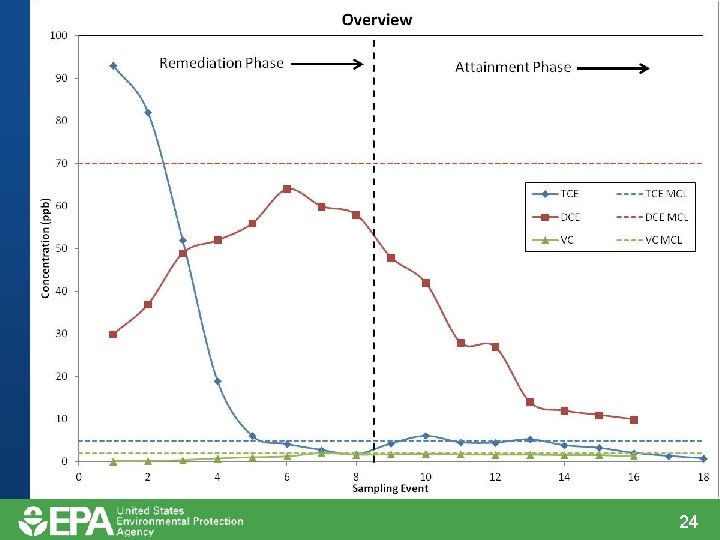
Remediation Monitoring Phase Completion Determination u Done for ALL contaminants in a well u Goal(s): § Provide a decision point to start attainment monitoring phase data collection and analysis § Terminate active systems if they are being employed u Methodology: § Nonstatistical or visual evaluation § Statistical tools (2 types) • Mean test • Trend test 20
21
Attainment Monitoring Phase Completion Determination u Performed for each contaminant separately u Goal(s): § Provide assurance that the cleanup level for each contaminant in the well has been met; and § Provide assurance that the groundwater in the well will remain below contaminant cleanup level(s) in the future u Steady State Considerations § Active systems versus passive systems § Data set considerations 22
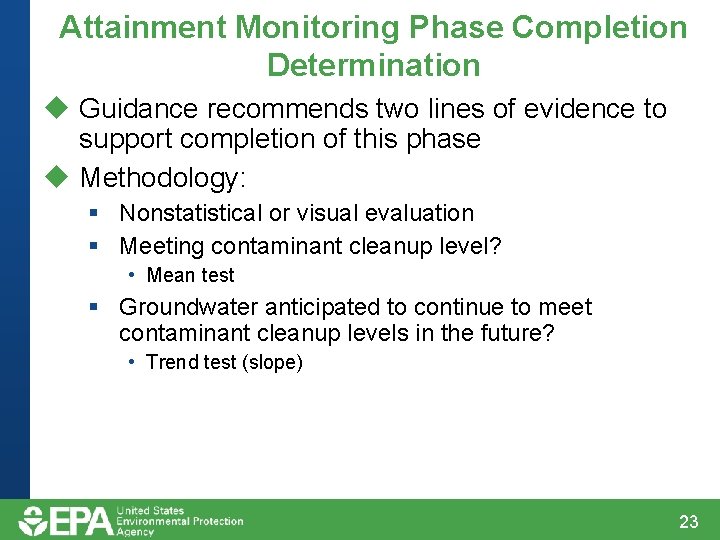
Attainment Monitoring Phase Completion Determination u Guidance recommends two lines of evidence to support completion of this phase u Methodology: § Nonstatistical or visual evaluation § Meeting contaminant cleanup level? • Mean test § Groundwater anticipated to continue to meet contaminant cleanup levels in the future? • Trend test (slope) 23
24
QUESTIONS ON THE RECOMMENDED APPROACH AND STATISTICAL TOOL? 25
Contact Information Kate Garufi Dave Bartenfelder garufi. Katherine@epa. gov 703 -603 -8827 bartenfelder. david@epa. gov 703 -603 -9047 26