Glycaemic control in critically ill patient Wong NgaiPang


- Slides: 48
Glycaemic control in critically ill patient Wong, Ngai-Pang
• Part I: Literature review • Part II: Case discussion
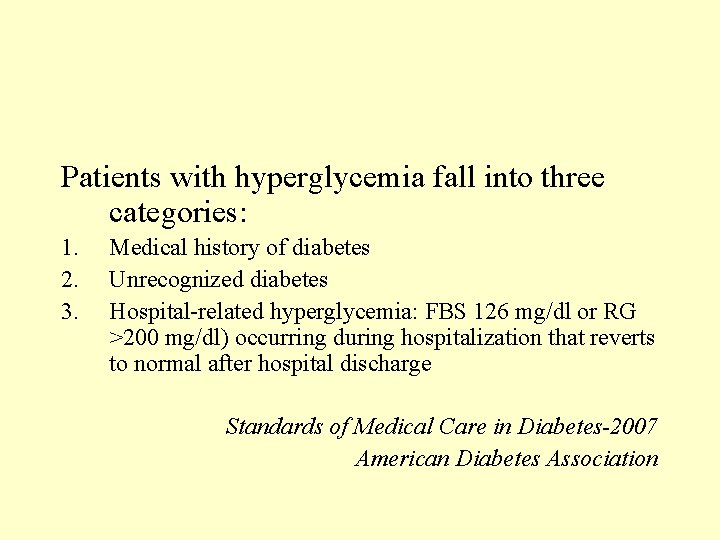
Patients with hyperglycemia fall into three categories: 1. 2. 3. Medical history of diabetes Unrecognized diabetes Hospital-related hyperglycemia: FBS 126 mg/dl or RG >200 mg/dl) occurring during hospitalization that reverts to normal after hospital discharge Standards of Medical Care in Diabetes-2007 American Diabetes Association
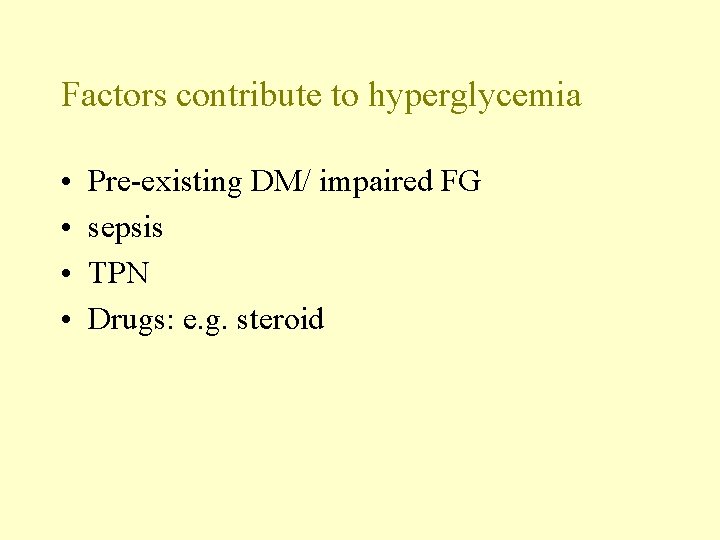
Factors contribute to hyperglycemia • • Pre-existing DM/ impaired FG sepsis TPN Drugs: e. g. steroid
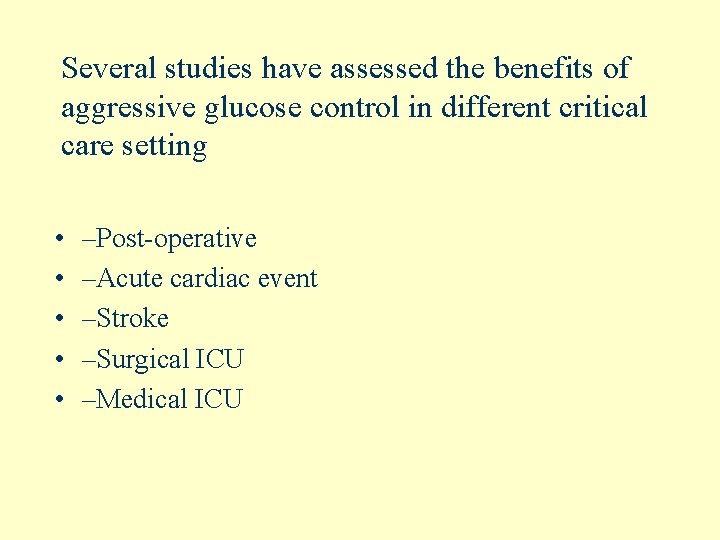
Several studies have assessed the benefits of aggressive glucose control in different critical care setting • • • –Post-operative –Acute cardiac event –Stroke –Surgical ICU –Medical ICU
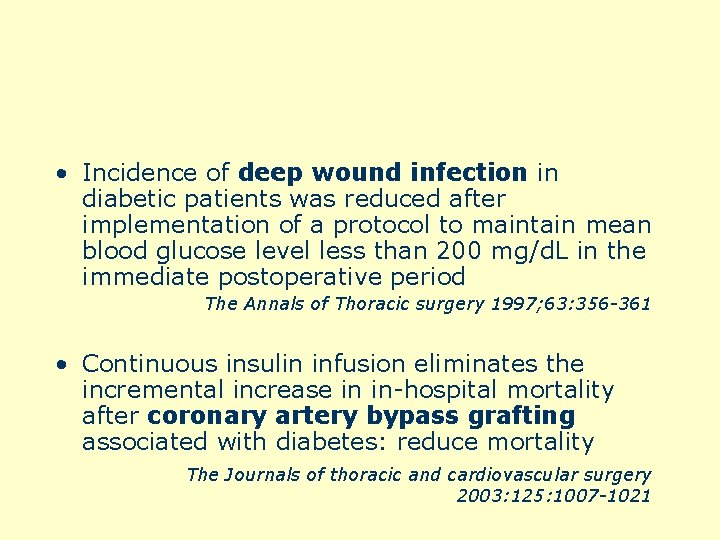
• Incidence of deep wound infection in diabetic patients was reduced after implementation of a protocol to maintain mean blood glucose level less than 200 mg/d. L in the immediate postoperative period The Annals of Thoracic surgery 1997; 63: 356 -361 • Continuous insulin infusion eliminates the incremental increase in in-hospital mortality after coronary artery bypass grafting associated with diabetes: reduce mortality The Journals of thoracic and cardiovascular surgery 2003: 125: 1007 -1021
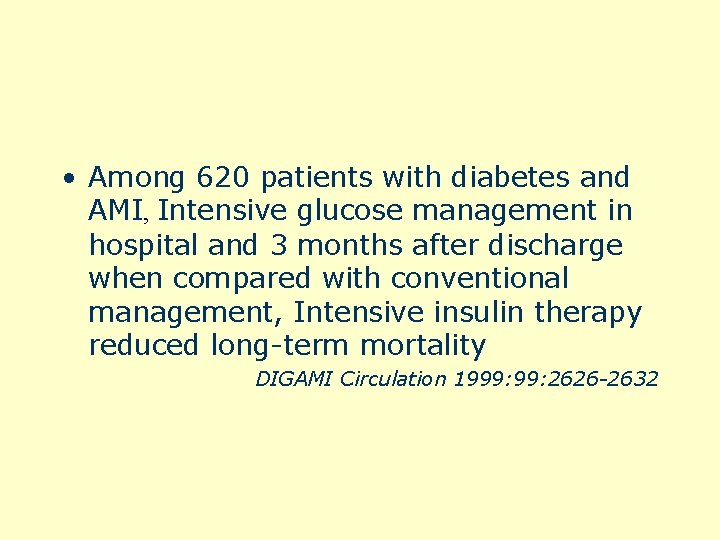
• Among 620 patients with diabetes and AMI, Intensive glucose management in hospital and 3 months after discharge when compared with conventional management, Intensive insulin therapy reduced long-term mortality DIGAMI Circulation 1999: 2626 -2632
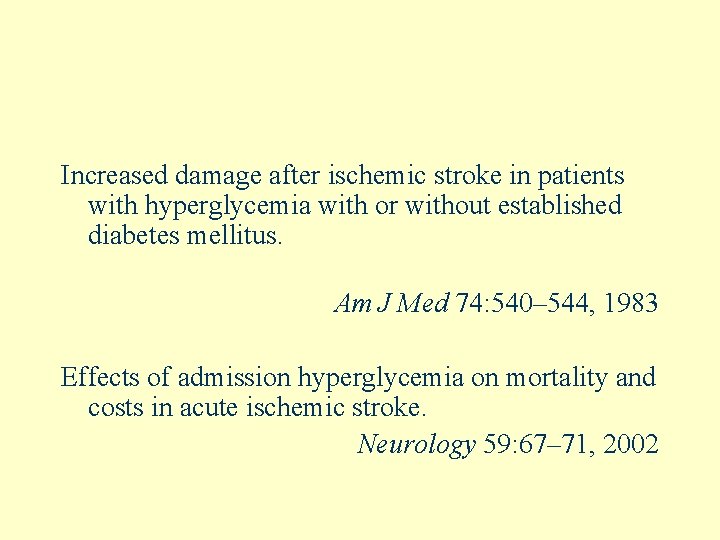
Increased damage after ischemic stroke in patients with hyperglycemia with or without established diabetes mellitus. Am J Med 74: 540– 544, 1983 Effects of admission hyperglycemia on mortality and costs in acute ischemic stroke. Neurology 59: 67– 71, 2002
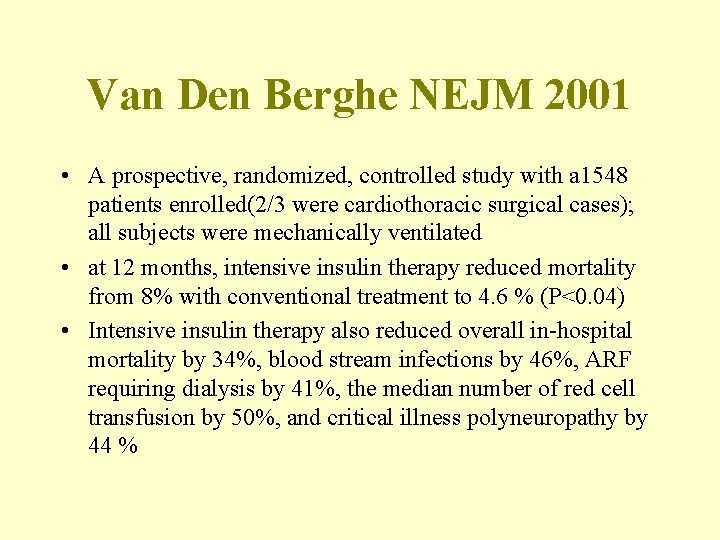
• Van Den Berghe NEJM 2001 A prospective, randomized, controlled study with a 1548 patients enrolled(2/3 were cardiothoracic surgical cases); all subjects were mechanically ventilated • at 12 months, intensive insulin therapy reduced mortality from 8% with conventional treatment to 4. 6 % (P<0. 04) • Intensive insulin therapy also reduced overall in-hospital mortality by 34%, blood stream infections by 46%, ARF requiring dialysis by 41%, the median number of red cell transfusion by 50%, and critical illness polyneuropathy by 44 %
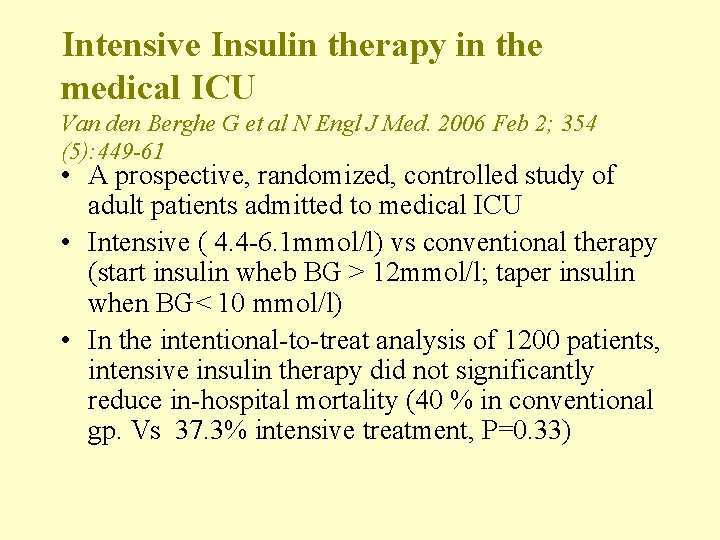
Intensive Insulin therapy in the medical ICU Van den Berghe G et al N Engl J Med. 2006 Feb 2; 354 (5): 449 -61 • A prospective, randomized, controlled study of adult patients admitted to medical ICU • Intensive ( 4. 4 -6. 1 mmol/l) vs conventional therapy (start insulin wheb BG > 12 mmol/l; taper insulin when BG< 10 mmol/l) • In the intentional-to-treat analysis of 1200 patients, intensive insulin therapy did not significantly reduce in-hospital mortality (40 % in conventional gp. Vs 37. 3% intensive treatment, P=0. 33)
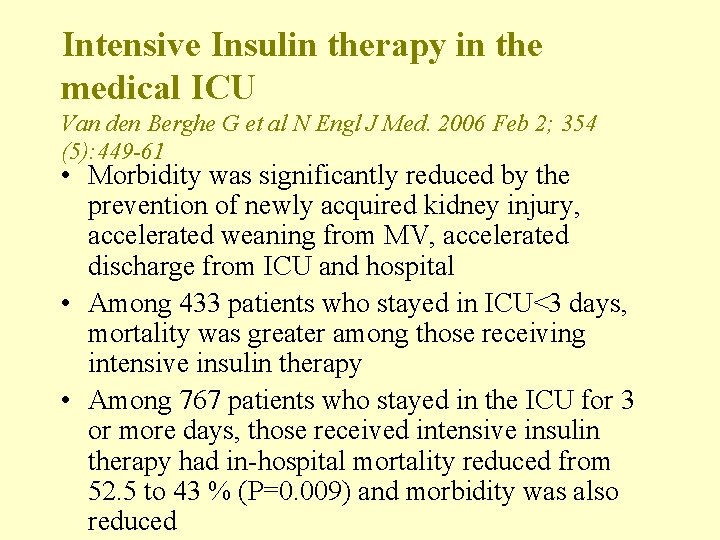
Intensive Insulin therapy in the medical ICU Van den Berghe G et al N Engl J Med. 2006 Feb 2; 354 (5): 449 -61 • Morbidity was significantly reduced by the prevention of newly acquired kidney injury, accelerated weaning from MV, accelerated discharge from ICU and hospital • Among 433 patients who stayed in ICU<3 days, mortality was greater among those receiving intensive insulin therapy • Among 767 patients who stayed in the ICU for 3 or more days, those received intensive insulin therapy had in-hospital mortality reduced from 52. 5 to 43 % (P=0. 009) and morbidity was also reduced
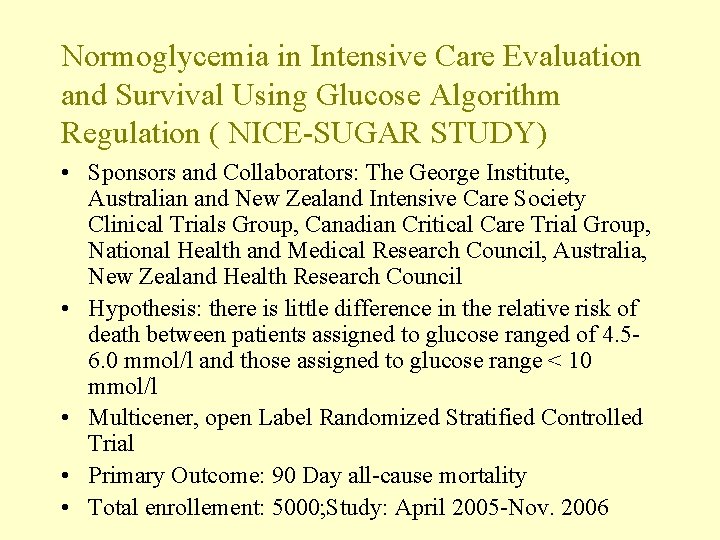
Normoglycemia in Intensive Care Evaluation and Survival Using Glucose Algorithm Regulation ( NICE-SUGAR STUDY) • Sponsors and Collaborators: The George Institute, Australian and New Zealand Intensive Care Society Clinical Trials Group, Canadian Critical Care Trial Group, National Health and Medical Research Council, Australia, New Zealand Health Research Council • Hypothesis: there is little difference in the relative risk of death between patients assigned to glucose ranged of 4. 56. 0 mmol/l and those assigned to glucose range < 10 mmol/l • Multicener, open Label Randomized Stratified Controlled Trial • Primary Outcome: 90 Day all-cause mortality • Total enrollement: 5000; Study: April 2005 -Nov. 2006
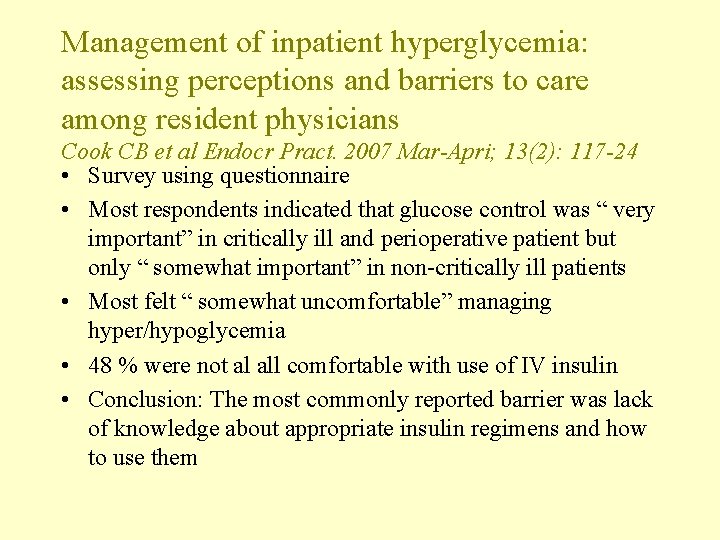
Management of inpatient hyperglycemia: assessing perceptions and barriers to care among resident physicians Cook CB et al Endocr Pract. 2007 Mar-Apri; 13(2): 117 -24 • Survey using questionnaire • Most respondents indicated that glucose control was “ very important” in critically ill and perioperative patient but only “ somewhat important” in non-critically ill patients • Most felt “ somewhat uncomfortable” managing hyper/hypoglycemia • 48 % were not al all comfortable with use of IV insulin • Conclusion: The most commonly reported barrier was lack of knowledge about appropriate insulin regimens and how to use them
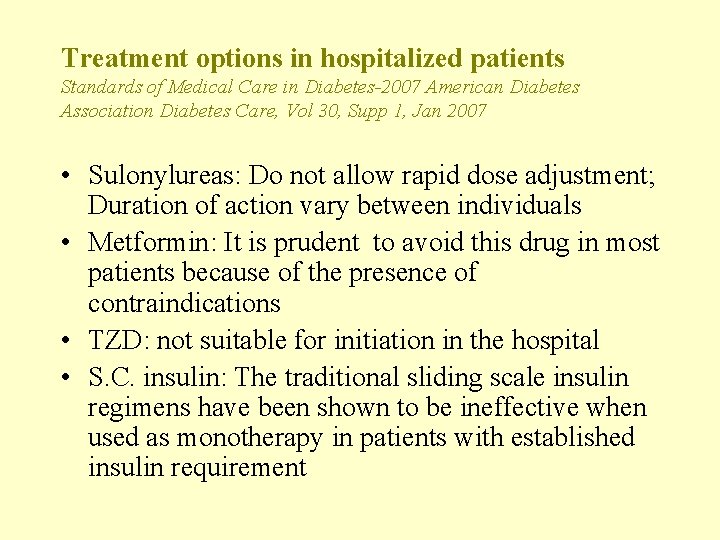
Treatment options in hospitalized patients Standards of Medical Care in Diabetes-2007 American Diabetes Association Diabetes Care, Vol 30, Supp 1, Jan 2007 • Sulonylureas: Do not allow rapid dose adjustment; Duration of action vary between individuals • Metformin: It is prudent to avoid this drug in most patients because of the presence of contraindications • TZD: not suitable for initiation in the hospital • S. C. insulin: The traditional sliding scale insulin regimens have been shown to be ineffective when used as monotherapy in patients with established insulin requirement
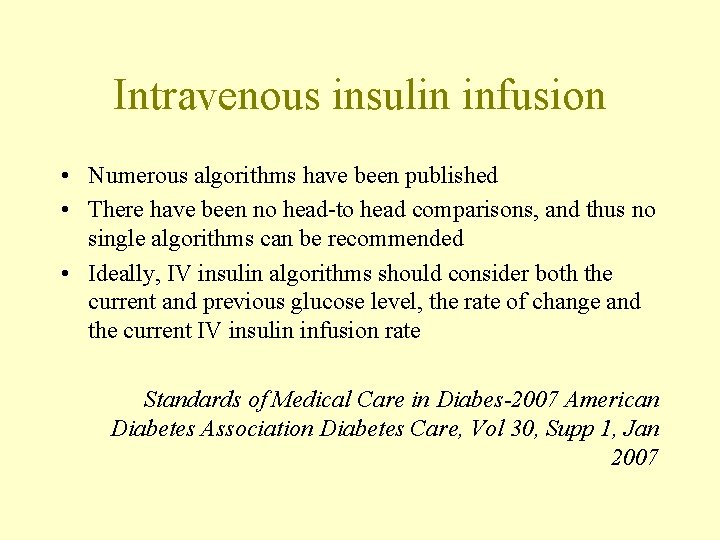
Intravenous insulin infusion • Numerous algorithms have been published • There have been no head-to head comparisons, and thus no single algorithms can be recommended • Ideally, IV insulin algorithms should consider both the current and previous glucose level, the rate of change and the current IV insulin infusion rate Standards of Medical Care in Diabes-2007 American Diabetes Association Diabetes Care, Vol 30, Supp 1, Jan 2007
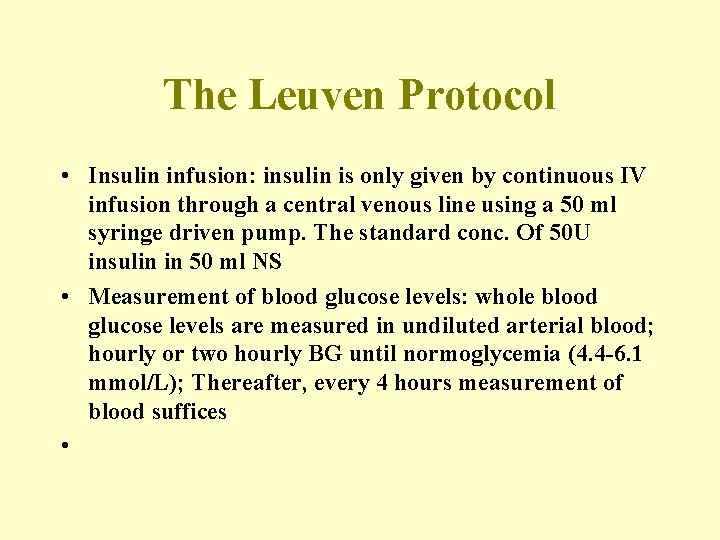
The Leuven Protocol • Insulin infusion: insulin is only given by continuous IV infusion through a central venous line using a 50 ml syringe driven pump. The standard conc. Of 50 U insulin in 50 ml NS • Measurement of blood glucose levels: whole blood glucose levels are measured in undiluted arterial blood; hourly or two hourly BG until normoglycemia (4. 4 -6. 1 mmol/L); Thereafter, every 4 hours measurement of blood suffices •
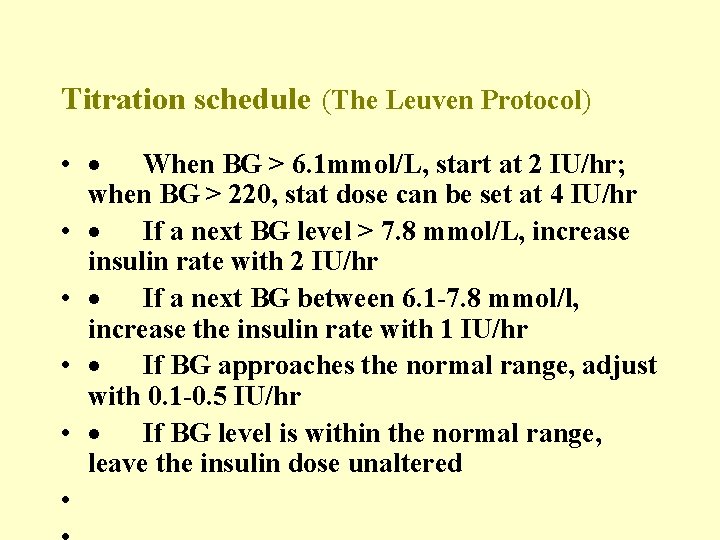
Titration schedule (The Leuven Protocol) • · When BG > 6. 1 mmol/L, start at 2 IU/hr; when BG > 220, stat dose can be set at 4 IU/hr • · If a next BG level > 7. 8 mmol/L, increase insulin rate with 2 IU/hr • · If a next BG between 6. 1 -7. 8 mmol/l, increase the insulin rate with 1 IU/hr • · If BG approaches the normal range, adjust with 0. 1 -0. 5 IU/hr • · If BG level is within the normal range, leave the insulin dose unaltered •
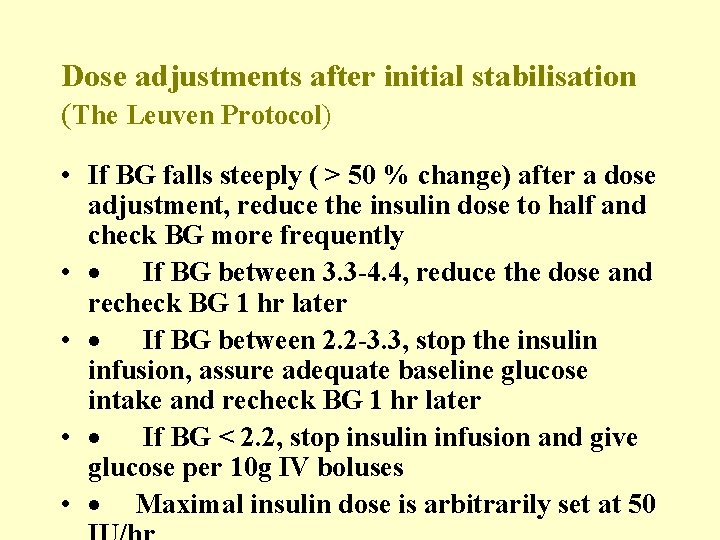
Dose adjustments after initial stabilisation (The Leuven Protocol) • If BG falls steeply ( > 50 % change) after a dose adjustment, reduce the insulin dose to half and check BG more frequently • · If BG between 3. 3 -4. 4, reduce the dose and recheck BG 1 hr later • · If BG between 2. 2 -3. 3, stop the insulin infusion, assure adequate baseline glucose intake and recheck BG 1 hr later • · If BG < 2. 2, stop insulin infusion and give glucose per 10 g IV boluses • · Maximal insulin dose is arbitrarily set at 50
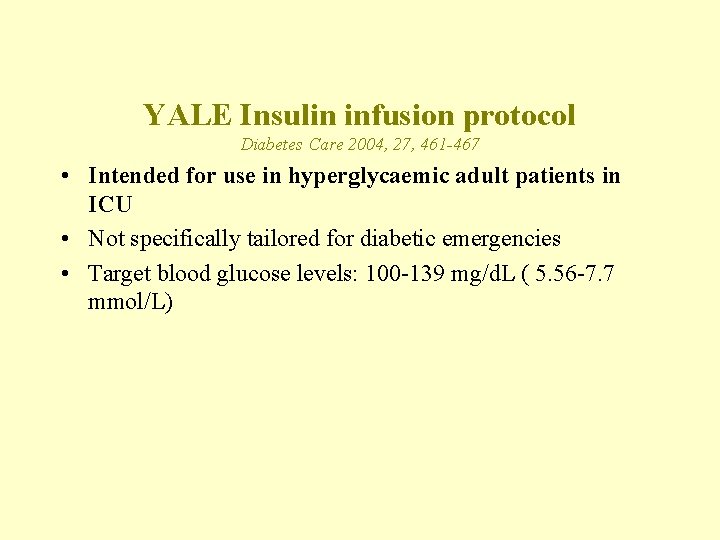
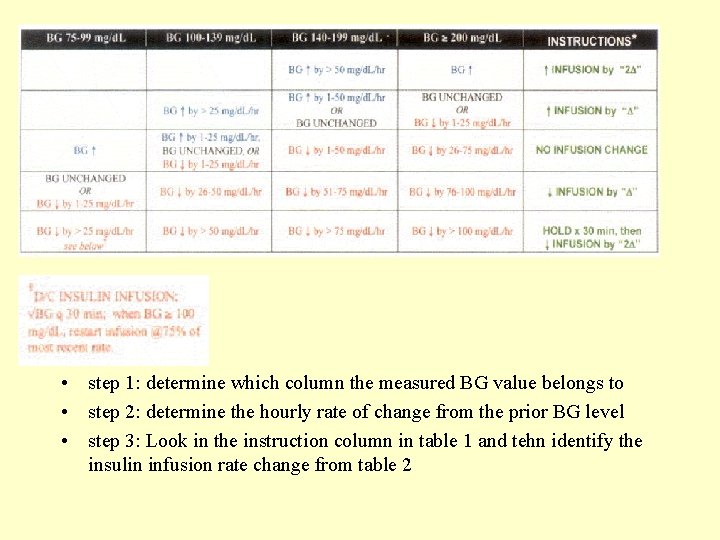
YALE Insulin infusion protocol Diabetes Care 2004, 27, 461 -467 • Intended for use in hyperglycaemic adult patients in ICU • Not specifically tailored for diabetic emergencies • Target blood glucose levels: 100 -139 mg/d. L ( 5. 56 -7. 7 mmol/L)
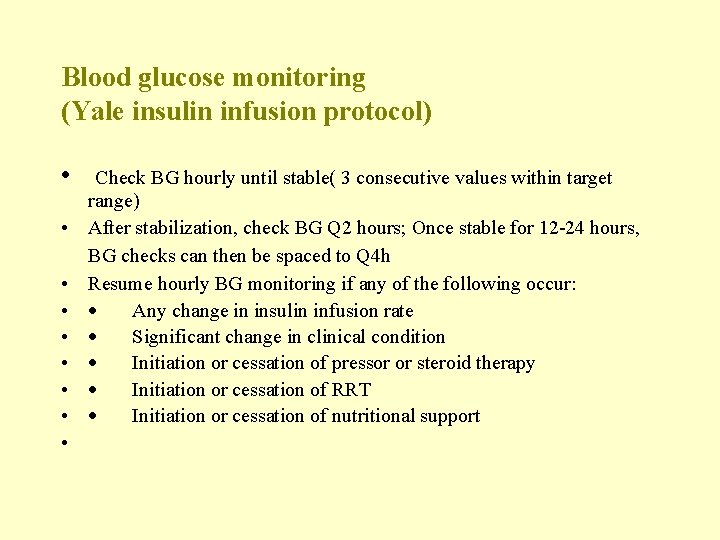
Blood glucose monitoring (Yale insulin infusion protocol) • Check BG hourly until stable( 3 consecutive values within target • • range) After stabilization, check BG Q 2 hours; Once stable for 12 -24 hours, BG checks can then be spaced to Q 4 h Resume hourly BG monitoring if any of the following occur: · Any change in insulin infusion rate · Significant change in clinical condition · Initiation or cessation of pressor or steroid therapy · Initiation or cessation of RRT · Initiation or cessation of nutritional support
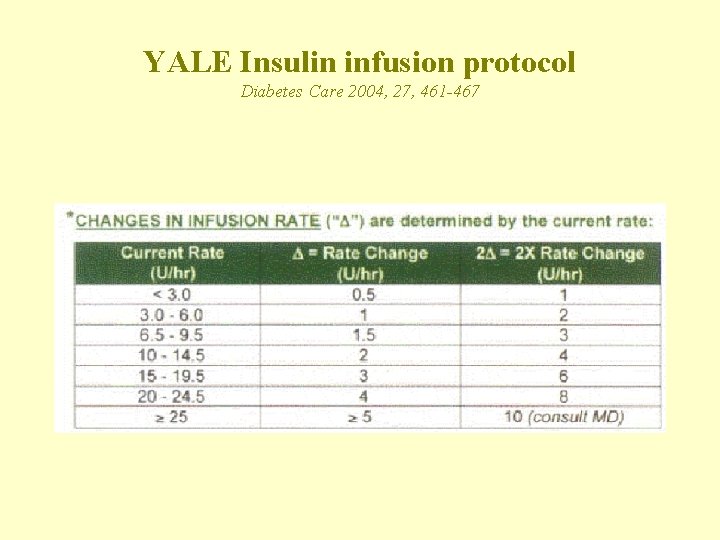
• step 1: determine which column the measured BG value belongs to • step 2: determine the hourly rate of change from the prior BG level • step 3: Look in the instruction column in table 1 and tehn identify the insulin infusion rate change from table 2
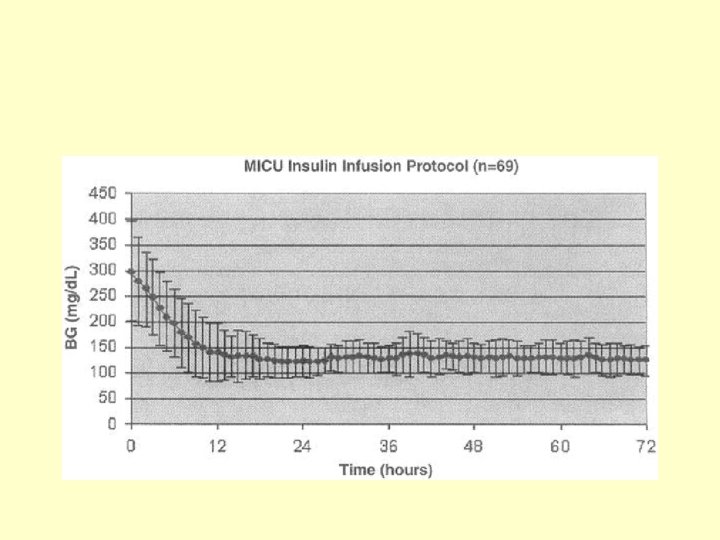
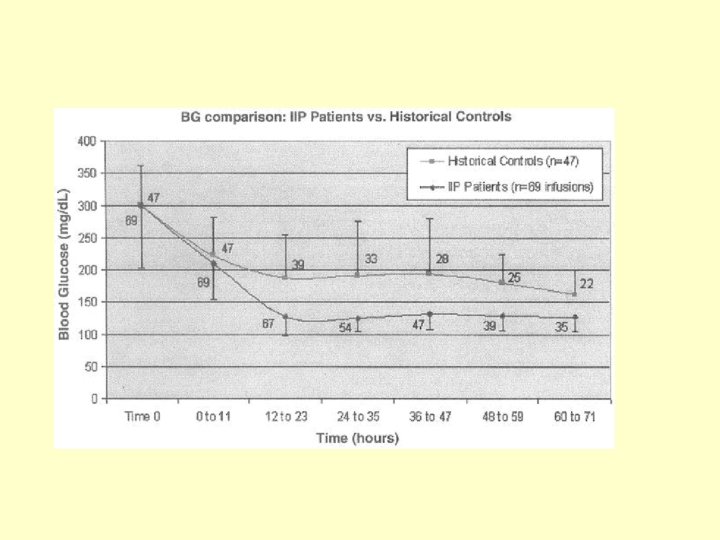
YALE Insulin infusion protocol Diabetes Care 2004, 27, 461 -467
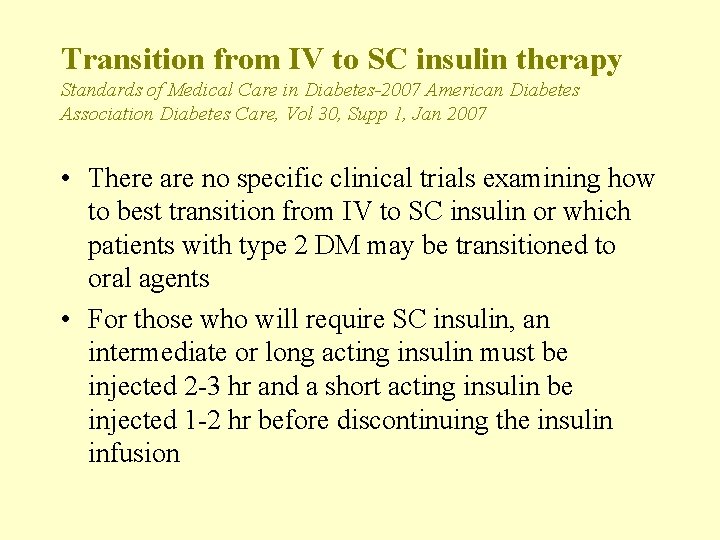
Transition from IV to SC insulin therapy Standards of Medical Care in Diabetes-2007 American Diabetes Association Diabetes Care, Vol 30, Supp 1, Jan 2007 • There are no specific clinical trials examining how to best transition from IV to SC insulin or which patients with type 2 DM may be transitioned to oral agents • For those who will require SC insulin, an intermediate or long acting insulin must be injected 2 -3 hr and a short acting insulin be injected 1 -2 hr before discontinuing the insulin infusion
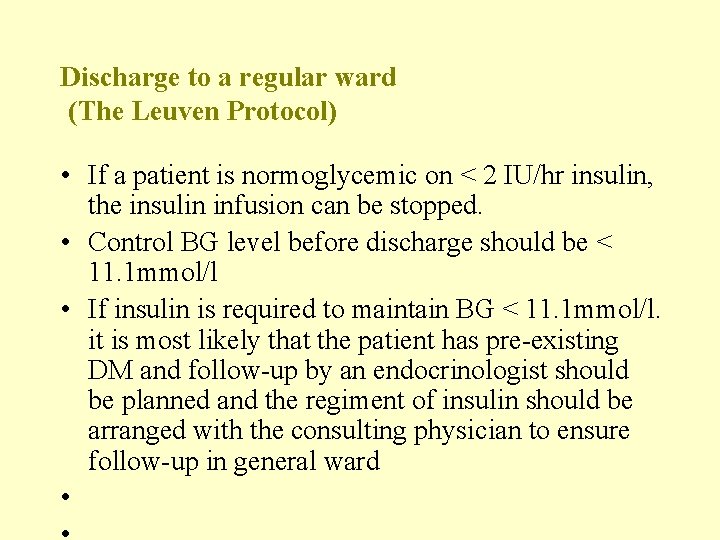
Discharge to a regular ward (The Leuven Protocol) • If a patient is normoglycemic on < 2 IU/hr insulin, the insulin infusion can be stopped. • Control BG level before discharge should be < 11. 1 mmol/l • If insulin is required to maintain BG < 11. 1 mmol/l. it is most likely that the patient has pre-existing DM and follow-up by an endocrinologist should be planned and the regiment of insulin should be arranged with the consulting physician to ensure follow-up in general ward •
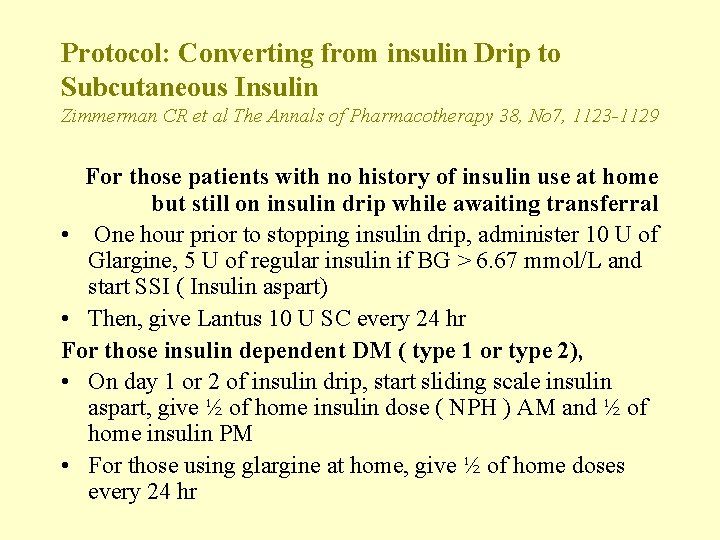
Protocol: Converting from insulin Drip to Subcutaneous Insulin Zimmerman CR et al The Annals of Pharmacotherapy 38, No 7, 1123 -1129 For those patients with no history of insulin use at home but still on insulin drip while awaiting transferral • One hour prior to stopping insulin drip, administer 10 U of Glargine, 5 U of regular insulin if BG > 6. 67 mmol/L and start SSI ( Insulin aspart) • Then, give Lantus 10 U SC every 24 hr For those insulin dependent DM ( type 1 or type 2), • On day 1 or 2 of insulin drip, start sliding scale insulin aspart, give ½ of home insulin dose ( NPH ) AM and ½ of home insulin PM • For those using glargine at home, give ½ of home doses every 24 hr
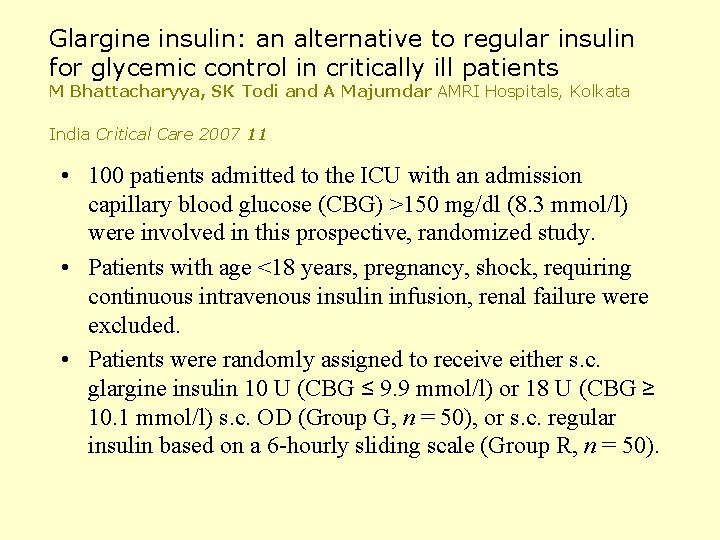
Glargine insulin: an alternative to regular insulin for glycemic control in critically ill patients M Bhattacharyya, SK Todi and A Majumdar AMRI Hospitals, Kolkata India Critical Care 2007 11 • 100 patients admitted to the ICU with an admission capillary blood glucose (CBG) >150 mg/dl (8. 3 mmol/l) were involved in this prospective, randomized study. • Patients with age <18 years, pregnancy, shock, requiring continuous intravenous insulin infusion, renal failure were excluded. • Patients were randomly assigned to receive either s. c. glargine insulin 10 U (CBG ≤ 9. 9 mmol/l) or 18 U (CBG ≥ 10. 1 mmol/l) s. c. OD (Group G, n = 50), or s. c. regular insulin based on a 6 -hourly sliding scale (Group R, n = 50).
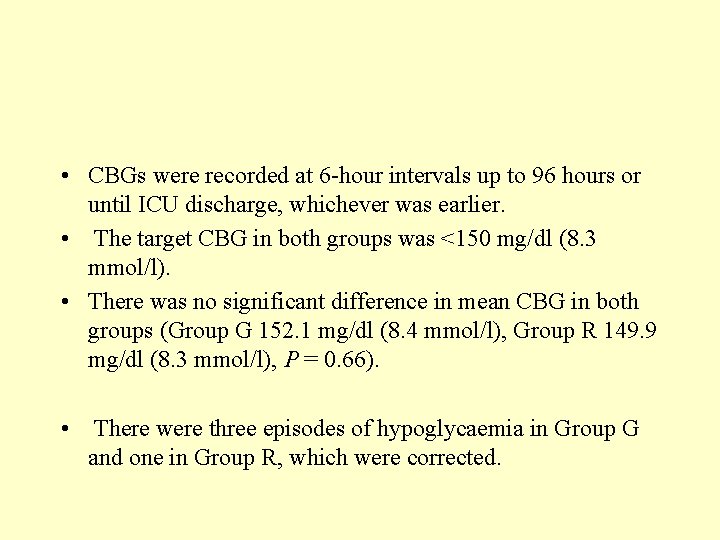
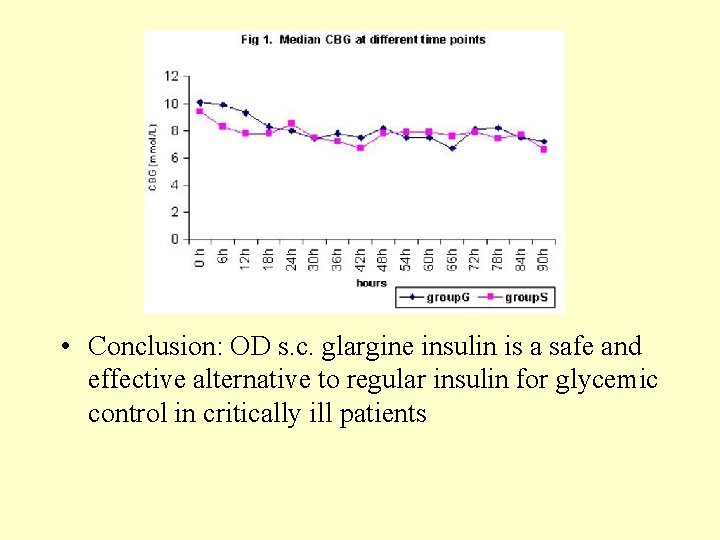
• CBGs were recorded at 6 -hour intervals up to 96 hours or until ICU discharge, whichever was earlier. • The target CBG in both groups was <150 mg/dl (8. 3 mmol/l). • There was no significant difference in mean CBG in both groups (Group G 152. 1 mg/dl (8. 4 mmol/l), Group R 149. 9 mg/dl (8. 3 mmol/l), P = 0. 66). • There were three episodes of hypoglycaemia in Group G and one in Group R, which were corrected.
• Conclusion: OD s. c. glargine insulin is a safe and effective alternative to regular insulin for glycemic control in critically ill patients
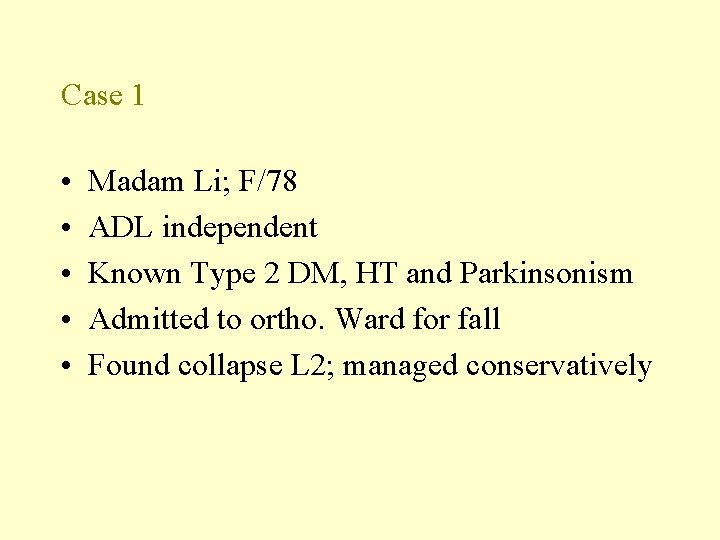
Case 1 • • • Madam Li; F/78 ADL independent Known Type 2 DM, HT and Parkinsonism Admitted to ortho. Ward for fall Found collapse L 2; managed conservatively
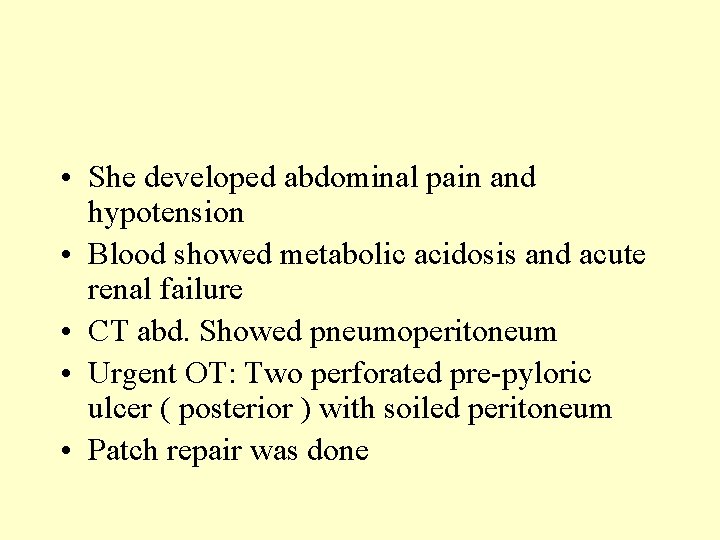
• She developed abdominal pain and hypotension • Blood showed metabolic acidosis and acute renal failure • CT abd. Showed pneumoperitoneum • Urgent OT: Two perforated pre-pyloric ulcer ( posterior ) with soiled peritoneum • Patch repair was done
Post-op. ICU progress: • • • Treated with cefuroxime and metronidazole Extubated RT feeding was commenced Water soluble contrast on post-op. D 5: No leakage Post-op. D 7 CT abd. With contrast: loculated fluid collection over left subhepatic region • CT guided aspiration was done
• Sputum grew acinetobacter ( multi-drug resistant ) • Meropenem was started • TPN (structokabiven 40 ml/D) + Glucerna 20 ml/D were started on Post-op. D 8;
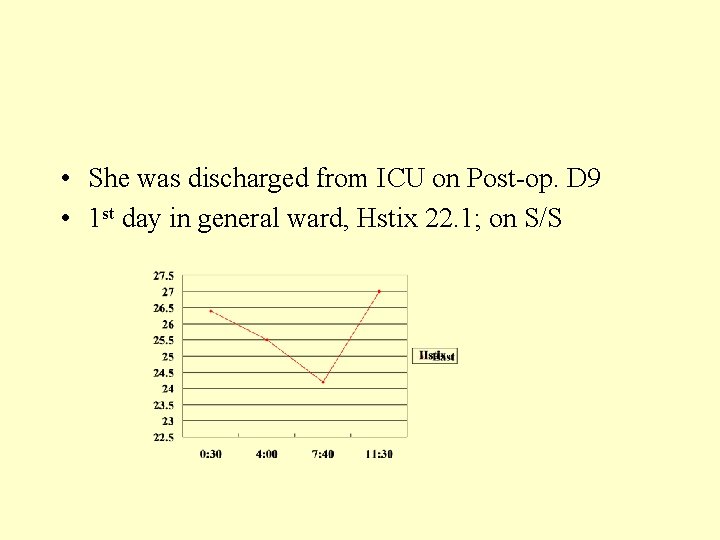
• She was discharged from ICU on Post-op. D 9 • 1 st day in general ward, Hstix 22. 1; on S/S
• Medical team Dr. A’s opinion: resume protaphane as usual dose + actrapid prn + metformin 250 mg tds
Summary of case 1 • Peforated pre-pyloric ulcer with patch repair done • Left subhepatic collection • HAP ( acinetobacter
Discussion (case 1) • Those patients still required insulin ( e. g. > 2 U/hr); an intermediate/long acting insulin is required • A conservative S/S is not useful • Metformin should not be used in septic patients • Better co-operation between ICU/Surgical/medical units
Case 2 Madam Ng; F/55 • Lives with family; NDNS Newly diagnosed type 2 DM; • Had history if biliary colic in 5/06
• Elective lap. Cholecystectomy was done on 29/1/07 • Intra-operatively, biliary leakage was noted; double J stent was inserted; On-table cholangiogram confirmed stent position • Post-op. AXR showed that stent was dislodged • ERCP on 31/1/07: difficult cannulation; procedure was abandoned • EHIDA (2/2/07): confirmed bile leakage • PTBD was attempted on 2/2/07: failed • CT abd. On 3/2/07: right hepatic hematoma and subcapsular hematomas; moderate amount of fluid in upper abdomen, lower abdomen and pelvic cavity •
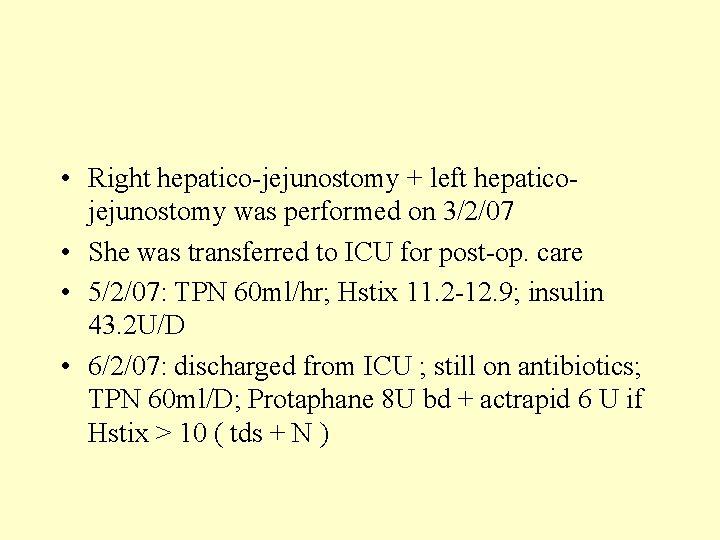
• Right hepatico-jejunostomy + left hepaticojejunostomy was performed on 3/2/07 • She was transferred to ICU for post-op. care • 5/2/07: TPN 60 ml/hr; Hstix 11. 2 -12. 9; insulin 43. 2 U/D • 6/2/07: discharged from ICU ; still on antibiotics; TPN 60 ml/D; Protaphane 8 U bd + actrapid 6 U if Hstix > 10 ( tds + N )
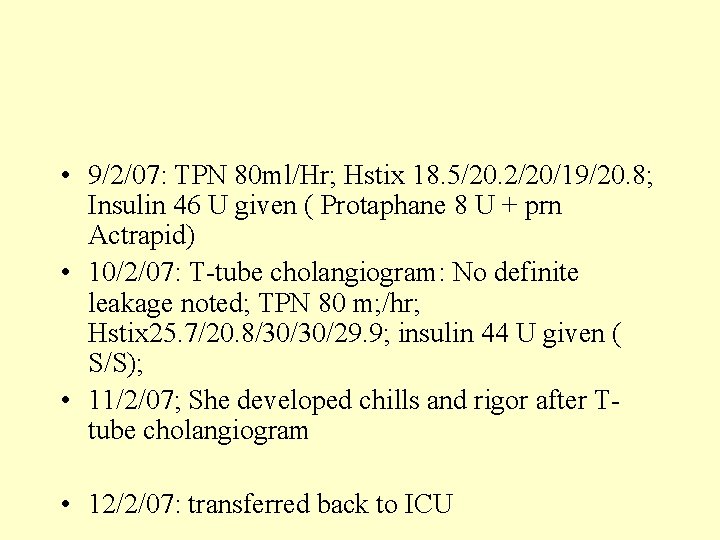
• 9/2/07: TPN 80 ml/Hr; Hstix 18. 5/20. 2/20/19/20. 8; Insulin 46 U given ( Protaphane 8 U + prn Actrapid) • 10/2/07: T-tube cholangiogram: No definite leakage noted; TPN 80 m; /hr; Hstix 25. 7/20. 8/30/30/29. 9; insulin 44 U given ( S/S); • 11/2/07; She developed chills and rigor after Ttube cholangiogram • 12/2/07: transferred back to ICU
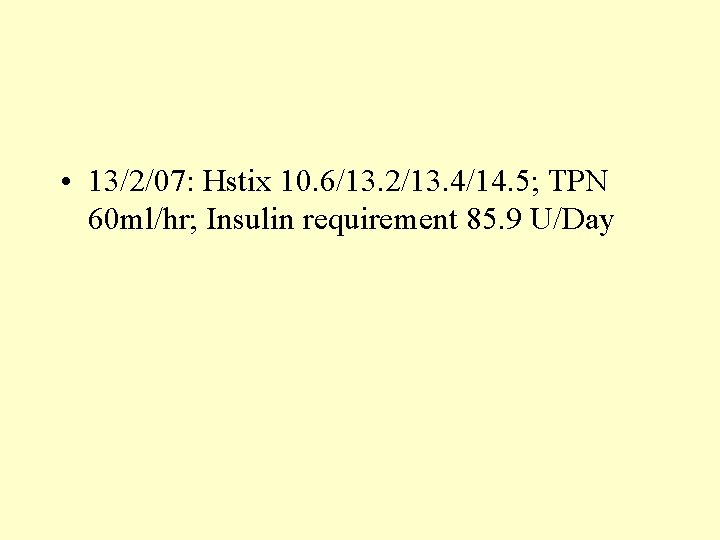
• 13/2/07: Hstix 10. 6/13. 2/13. 4/14. 5; TPN 60 ml/hr; Insulin requirement 85. 9 U/Day
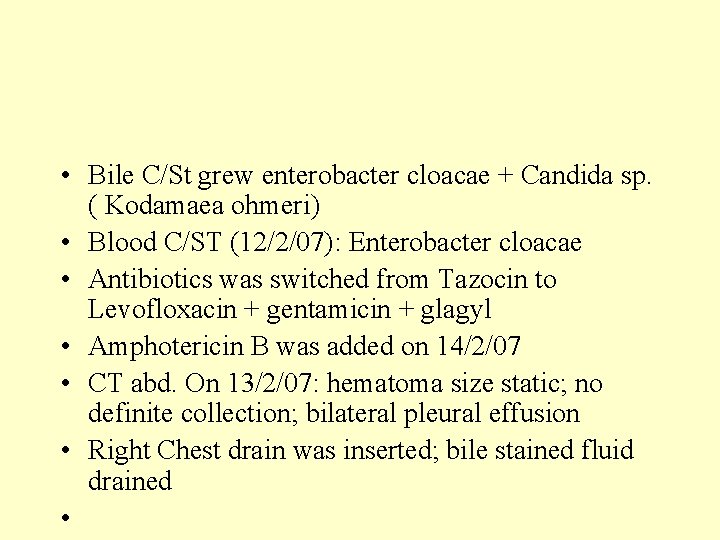
• Bile C/St grew enterobacter cloacae + Candida sp. ( Kodamaea ohmeri) • Blood C/ST (12/2/07): Enterobacter cloacae • Antibiotics was switched from Tazocin to Levofloxacin + gentamicin + glagyl • Amphotericin B was added on 14/2/07 • CT abd. On 13/2/07: hematoma size static; no definite collection; bilateral pleural effusion • Right Chest drain was inserted; bile stained fluid drained •
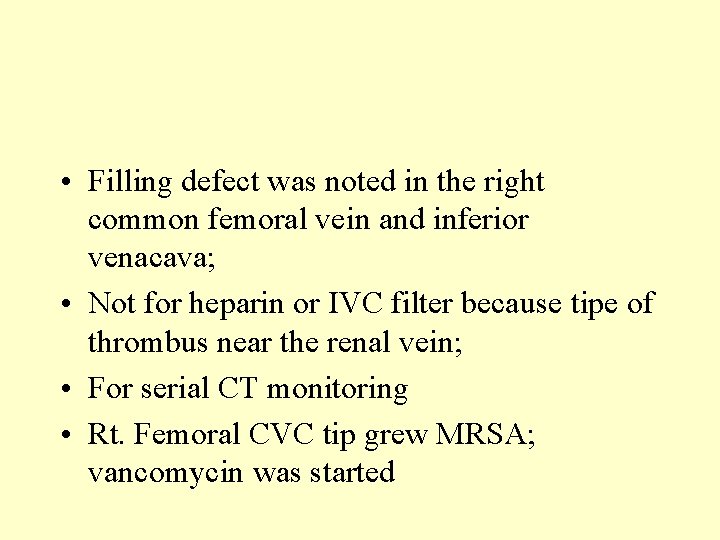
• Filling defect was noted in the right common femoral vein and inferior venacava; • Not for heparin or IVC filter because tipe of thrombus near the renal vein; • For serial CT monitoring • Rt. Femoral CVC tip grew MRSA; vancomycin was started
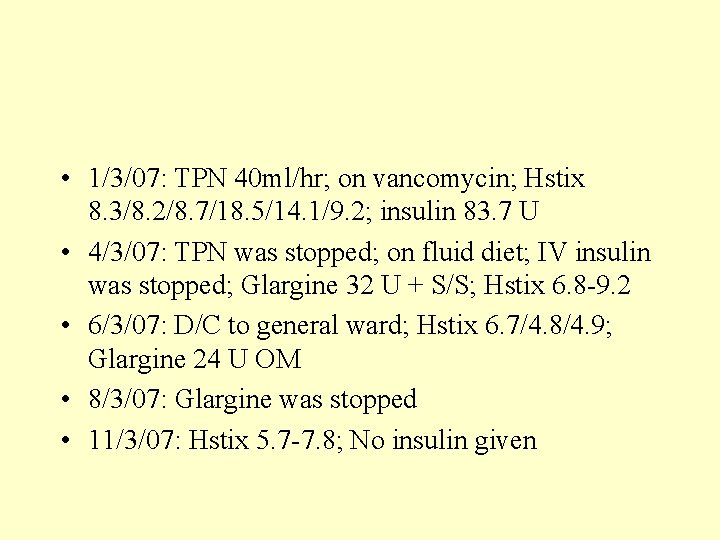
• 1/3/07: TPN 40 ml/hr; on vancomycin; Hstix 8. 3/8. 2/8. 7/18. 5/14. 1/9. 2; insulin 83. 7 U • 4/3/07: TPN was stopped; on fluid diet; IV insulin was stopped; Glargine 32 U + S/S; Hstix 6. 8 -9. 2 • 6/3/07: D/C to general ward; Hstix 6. 7/4. 8/4. 9; Glargine 24 U OM • 8/3/07: Glargine was stopped • 11/3/07: Hstix 5. 7 -7. 8; No insulin given
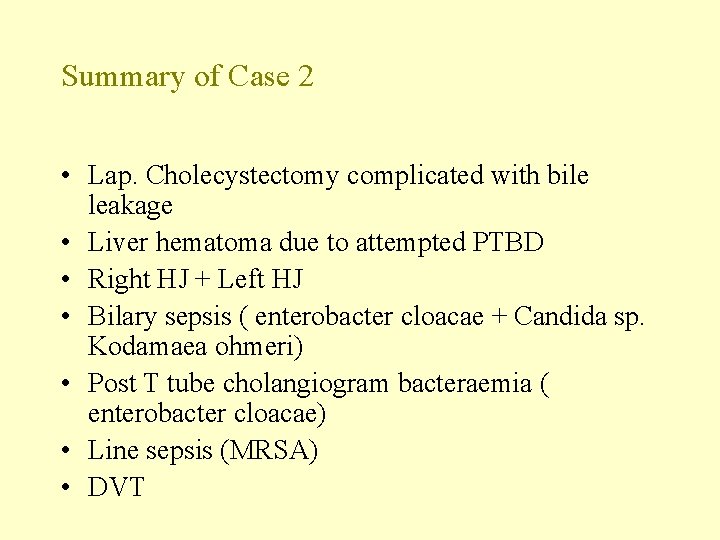
Summary of Case 2 • Lap. Cholecystectomy complicated with bile leakage • Liver hematoma due to attempted PTBD • Right HJ + Left HJ • Bilary sepsis ( enterobacter cloacae + Candida sp. Kodamaea ohmeri) • Post T tube cholangiogram bacteraemia ( enterobacter cloacae) • Line sepsis (MRSA) • DVT
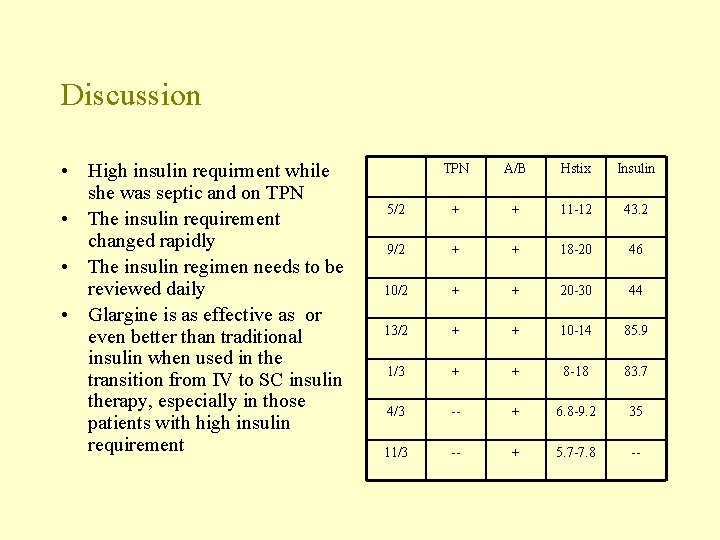
Discussion • High insulin requirment while she was septic and on TPN • The insulin requirement changed rapidly • The insulin regimen needs to be reviewed daily • Glargine is as effective as or even better than traditional insulin when used in the transition from IV to SC insulin therapy, especially in those patients with high insulin requirement TPN A/B Hstix Insulin 5/2 + + 11 -12 43. 2 9/2 + + 18 -20 46 10/2 + + 20 -30 44 13/2 + + 10 -14 85. 9 1/3 + + 8 -18 83. 7 4/3 -- + 6. 8 -9. 2 35 11/3 -- + 5. 7 -7. 8 --