General Psychology Unit 14 Social Psychology Social Psychology


- Slides: 33
General Psychology Unit 14 Social Psychology
Social Psychology • • • What is it? Social Thinking (Cognition) Social Influence
Social Psychology The scientific study of how we think, feel, are affected by and act towards other people. .
Things to keep in mind: • • Personality Psychology-internal influences; Social Psychology-external influences The field boomed after W. W. II; TOPIC: Social Influence. Social Relations was the hot topic in the 60 s and 70 s. Social Cognition is one of the hot topics now.
Things to keep in mind: • • Research is like Candid Camera. . . Ethical problems. . .
Social Thinking (Cognition) How we process information in social situations to help guide our behavior.
Attributions • • Explanations for behavior, either our own or someone else’s. Attribution Theory--Fritz Heider (1958)-Attributions are either internal (dispositional) or external (situational).
The Fundamental Attribution Error For Others’ Behavior We over-estimate disposition!
The Fundamental Attribution Error For Our Behavior + outcome? DISPOSITION! - outcome? SITUATION! (a. k. a. , the self-serving bias).
How do attributions influence our behavior?
Attitudes Beliefs and feelings that predispose us to respond in particular ways to objects, people or events.
Attitudes • • • The concept revolutionized psychology! Attitudes predict actions (behavior)! How do we measure attitudes? By asking. . Do attitudes predict behavior? According to studies in the 60 s and 70 s, NO!
Attitudes Guide Actions When: • • We are made self-conscious or aware of our attitudes. When they are strong. When they are specific as opposed to general. When outside influences are minimized.
Does behavior ever influence attitudes? Yes! Based on the findings of roleplaying studies!
Gergen (1965) • • • Control Group Self-esteem test Regular interview Self-esteem retest: scores did not change • • • Experimental Group Self-esteem test Interview w/ + roleplay Self-esteem retest: scores were higher!
Zimbardo (1972) • • • Mock prison study Guards became brutal, degrading; prisoners became helpless, or extremely rebellious. 2 week study was called off after 6 days!!
Cognitive Dissonance A feeling of discomfort when 2 attitudes are in conflict or when an attitude and a behavior are in conflict.
How do you get rid of dissonance? Change an attitude or change the behavior!
Social Influence What environmental or social factors influence our behavior (towards others)? The confederates are coming!
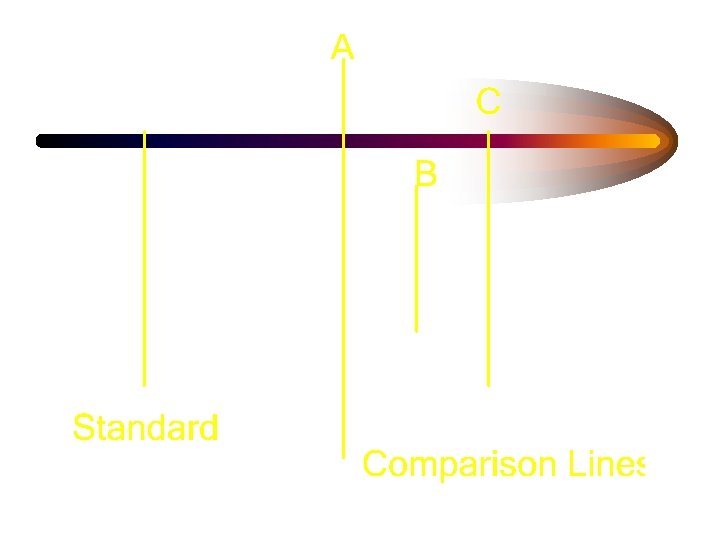
Conformity (Asch, 1956) A change in opinion of behavior in response to real or imagine pressure from others.
Conditions that strengthen conformity: • • • We are made to feel incompetent The group has at least 3 people The group is unanimous We rate the status and attractiveness of the group as high. Our behavior will be observed by the group. . . socialized by a culture that encourages respect for social standards.
Obedience (Milgram, 1963) Compliance with the demands of an authority figure.
Milgram’s Findings: 65 -66% of all “teachers” went all the way to the highest shock level!!
Conditions that increase obedience: • • • The one giving orders is close and is perceived as a legitimate authority. The authority is supported by a prestigious institution. The victim was depersonalized or at a distance.
Social Facilitation Improved performance of tasks in the presence of others; occurs with simple or well-learned tasks. . .
Deindividuation The loss of self-restraint and selfawareness occurring in group situations that foster arousal and anonymity.
Social Loafing The tendency for each person in a group to exert less effort when they are pooling their efforts toward attaining a common goal.
Group Polarization The enhancement of a group’s prevailing attitudes through discussion.
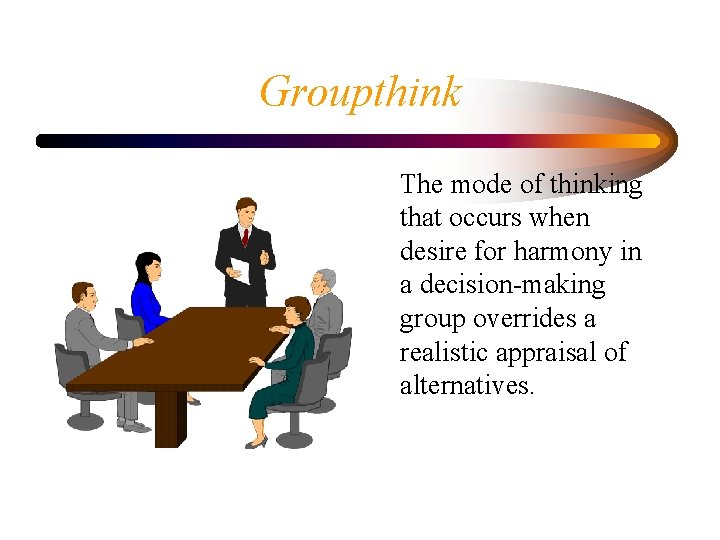
Groupthink The mode of thinking that occurs when desire for harmony in a decision-making group overrides a realistic appraisal of alternatives.
Social Influence Cultural Influences • Culture-enduring behaviors, ideas, attitudes and traditions shared by a large group of people and transmitted from one generation to the next. • Individualism v. Collectivism
Norms Rules for accepted and expected behavior. • • …vary from culture to culture. …facilitate smooth social interactions. …free people from uncertainty. Personal space-the buffer zone we like to maintain around our bodies. – We prefer more; Latinos, Arabs and French prefer less!