EnergyEconomy Modeling Principles and Applications Youngho Chang Division
- Slides: 24
Energy-Economy Modeling: Principles and Applications Youngho Chang Division of Economics and ERI@N Nanyang Technological University 29 June 2013 Workshop at Meijo University
Agenda l Models in energy sector l Analysis of energy technologies l Economic impacts of energy choice l Conclusions 2
Energy l l Socio economic development and energy Rise in oil price l l is a reminder of resource crunch that must be continuously tackled Energy supply must be done more efficiently and with more environmentally friendly and efficient technology l This also means that energy demand must also be managed 3
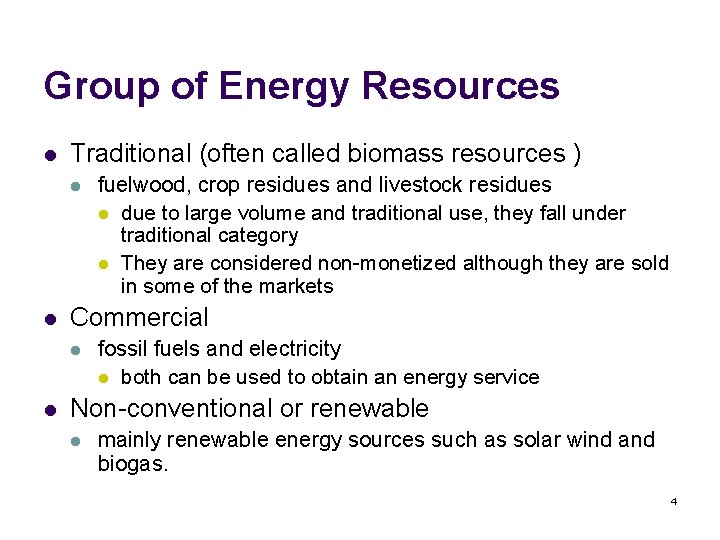
Group of Energy Resources l Traditional (often called biomass resources ) l l Commercial l l fuelwood, crop residues and livestock residues l due to large volume and traditional use, they fall under traditional category l They are considered non-monetized although they are sold in some of the markets fossil fuels and electricity l both can be used to obtain an energy service Non-conventional or renewable l mainly renewable energy sources such as solar wind and biogas. 4
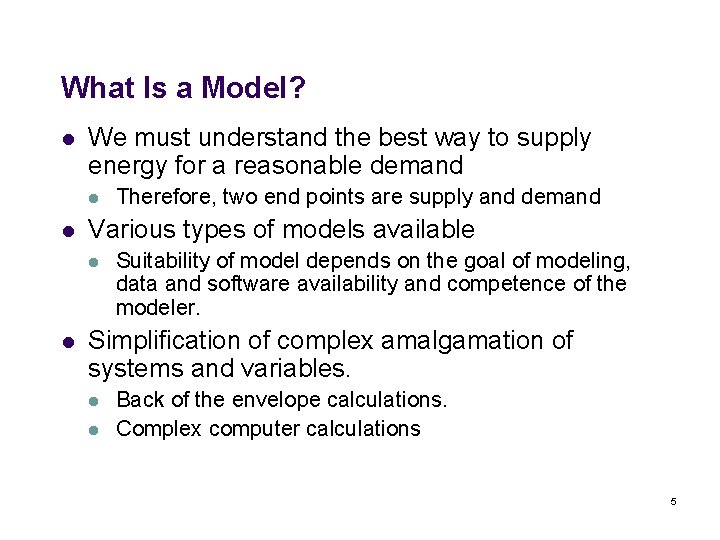
What Is a Model? l We must understand the best way to supply energy for a reasonable demand l l Various types of models available l l Therefore, two end points are supply and demand Suitability of model depends on the goal of modeling, data and software availability and competence of the modeler. Simplification of complex amalgamation of systems and variables. l l Back of the envelope calculations. Complex computer calculations 5
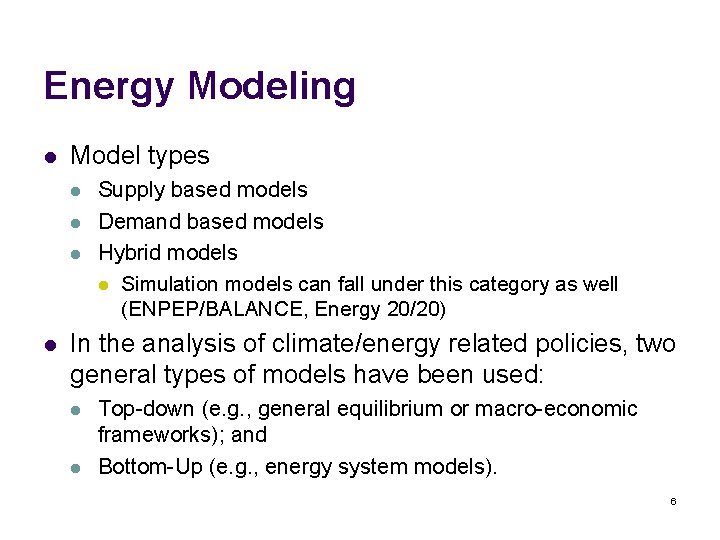
Energy Modeling l Model types l l Supply based models Demand based models Hybrid models l Simulation models can fall under this category as well (ENPEP/BALANCE, Energy 20/20) In the analysis of climate/energy related policies, two general types of models have been used: l l Top-down (e. g. , general equilibrium or macro-economic frameworks); and Bottom-Up (e. g. , energy system models). 6
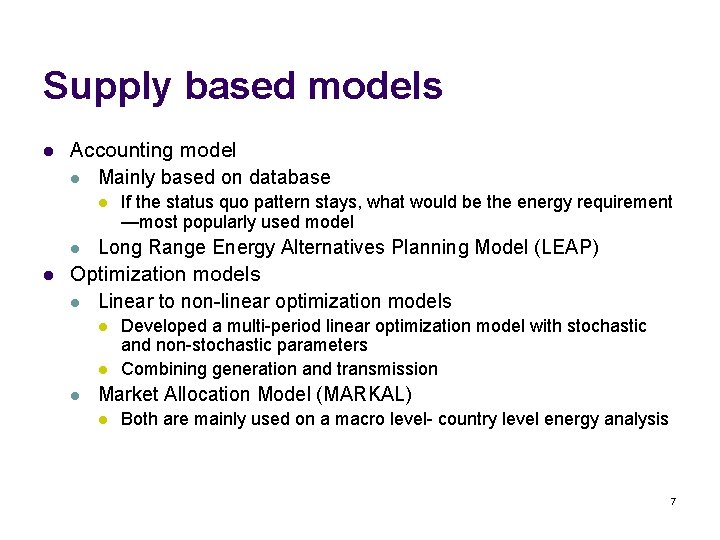
Supply based models l Accounting model l Mainly based on database l l l If the status quo pattern stays, what would be the energy requirement —most popularly used model Long Range Energy Alternatives Planning Model (LEAP) Optimization models l Linear to non-linear optimization models l l l Developed a multi-period linear optimization model with stochastic and non-stochastic parameters Combining generation and transmission Market Allocation Model (MARKAL) l Both are mainly used on a macro level- country level energy analysis 7
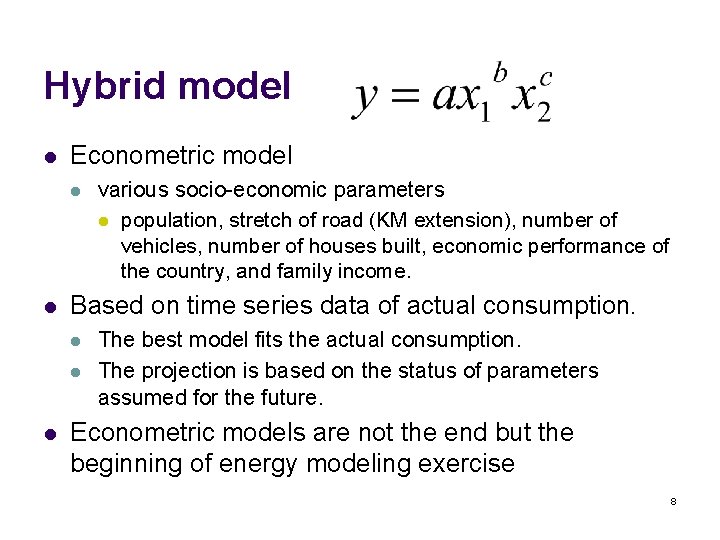
Hybrid model l Econometric model l l Based on time series data of actual consumption. l l l various socio-economic parameters l population, stretch of road (KM extension), number of vehicles, number of houses built, economic performance of the country, and family income. The best model fits the actual consumption. The projection is based on the status of parameters assumed for the future. Econometric models are not the end but the beginning of energy modeling exercise 8
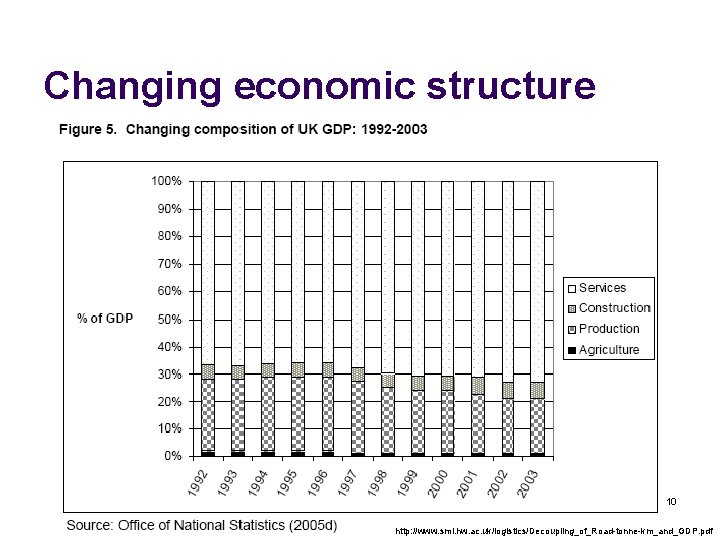
Econometric model l Good for medium range planning (5 -10 years) l l But economy is changing very fast l As the structure of economy can change, the pattern of energy consumption might also change Many companies manufacturing heavy equipment have shifted to China. l This changes the requirement for reliable motor power l This will also shift the energy requirement to other sector such as servicing § Singapore, Hong Kong, Britain’s economy has shifted from materialized economy (heavy manufacturing) to non materialized economy 9
Changing economic structure 10 http: //www. sml. hw. ac. uk/logistics/Decoupling_of_Road-tonne-km_and_GDP. pdf
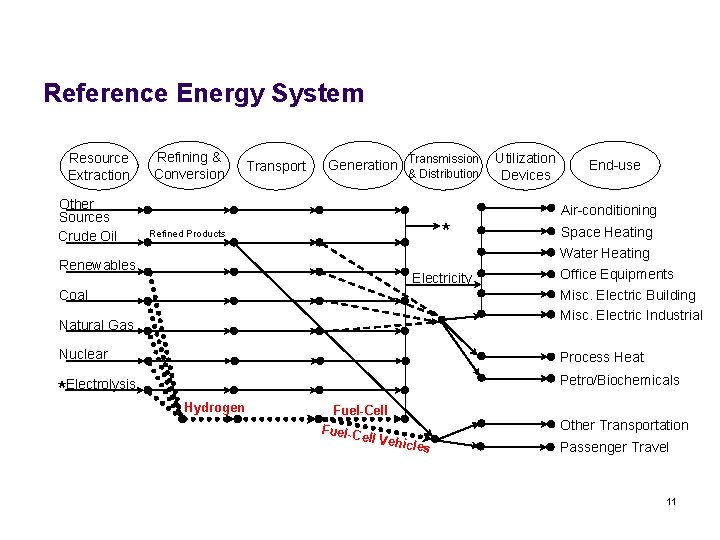
Reference Energy System Resource Extraction Other Sources Crude Oil Refining & Conversion Transport Transmission & Distribution Generation Utilization Devices End-use Air-conditioning * Refined Products Renewables Electricity Coal Natural Gas Space Heating Water Heating Office Equipments Misc. Electric Building Misc. Electric Industrial Nuclear Process Heat *Electrolysis Petro/Biochemicals Hydrogen Fuel-Cell Fuel-C Other Transportation ell Veh icles Passenger Travel 11
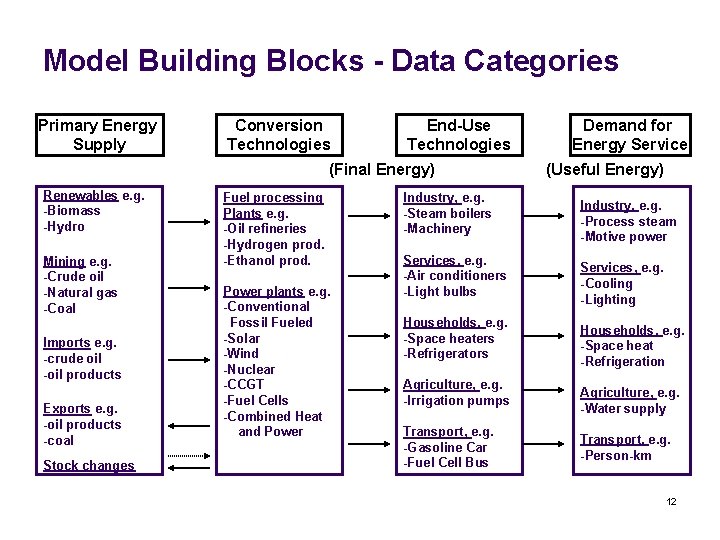
Model Building Blocks - Data Categories Primary Energy Supply Conversion Technologies End-Use Technologies (Final Energy) Renewables e. g. -Biomass -Hydro Mining e. g. -Crude oil -Natural gas -Coal Imports e. g. -crude oil -oil products Exports e. g. -oil products -coal Stock changes Fuel processing Plants e. g. -Oil refineries -Hydrogen prod. -Ethanol prod. Power plants e. g. -Conventional Fossil Fueled -Solar -Wind -Nuclear -CCGT -Fuel Cells -Combined Heat and Power Industry, e. g. -Steam boilers -Machinery Services, e. g. -Air conditioners -Light bulbs Households, e. g. -Space heaters -Refrigerators Agriculture, e. g. -Irrigation pumps Transport, e. g. -Gasoline Car -Fuel Cell Bus Demand for Energy Service (Useful Energy) Industry, e. g. -Process steam -Motive power Services, e. g. -Cooling -Lighting Households, e. g. -Space heat -Refrigeration Agriculture, e. g. -Water supply Transport, e. g. -Person-km 12
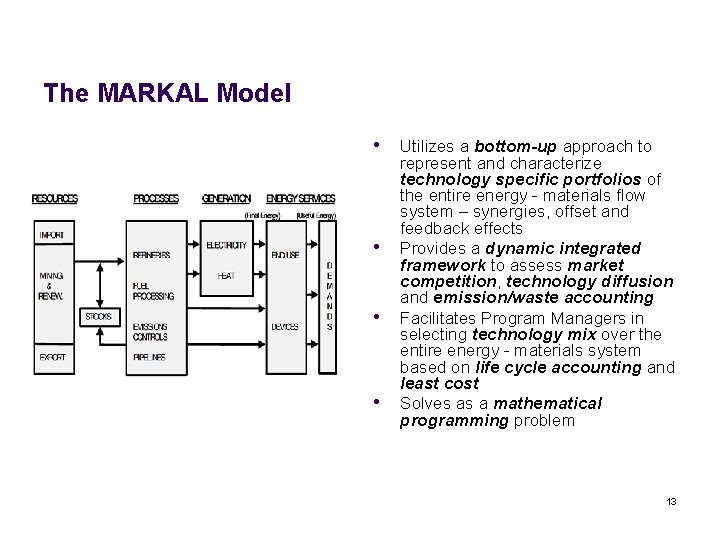
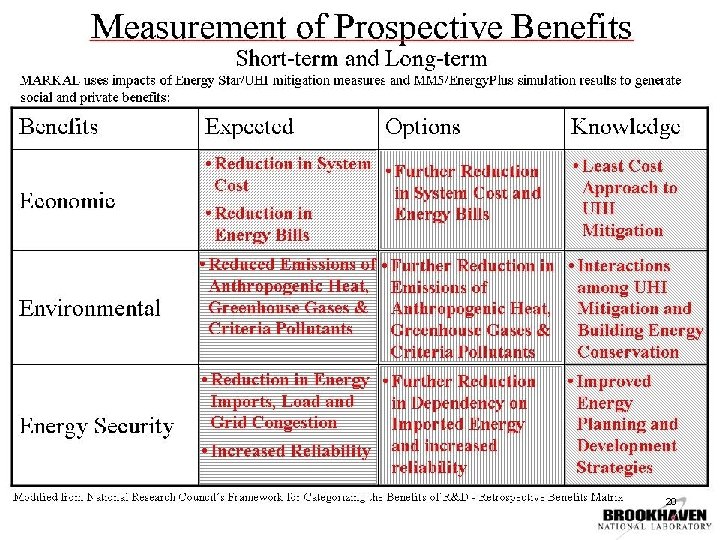
The MARKAL Model • • Utilizes a bottom-up approach to represent and characterize technology specific portfolios of the entire energy - materials flow system – synergies, offset and feedback effects Provides a dynamic integrated framework to assess market competition, technology diffusion and emission/waste accounting Facilitates Program Managers in selecting technology mix over the entire energy - materials system based on life cycle accounting and least cost Solves as a mathematical programming problem 13
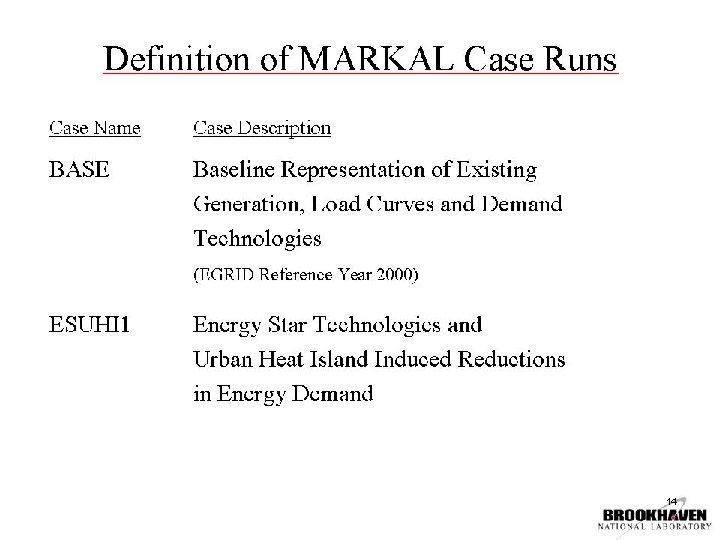
14
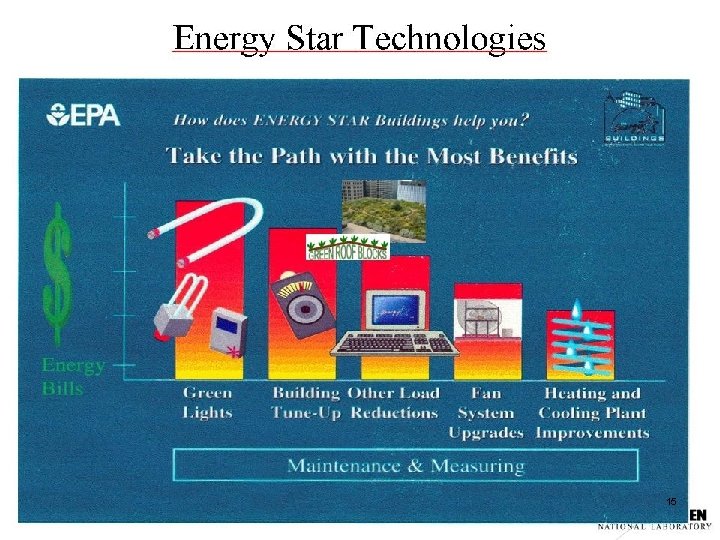
15
16
17
18
19
20
21
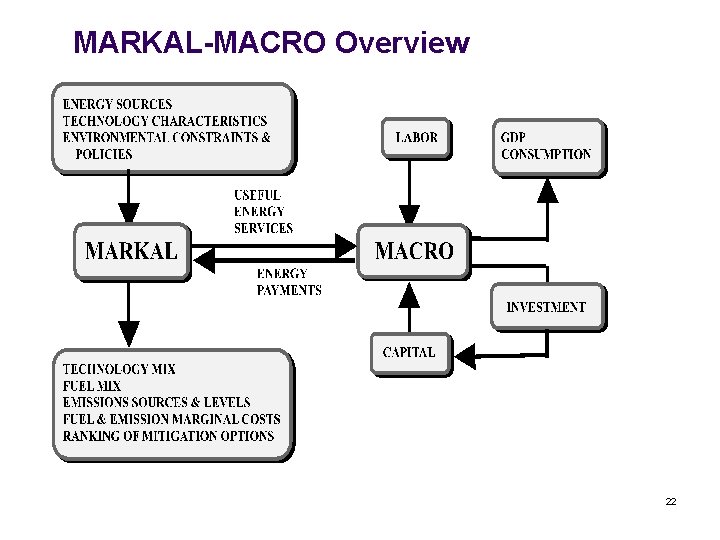
MARKAL-MACRO Overview 22
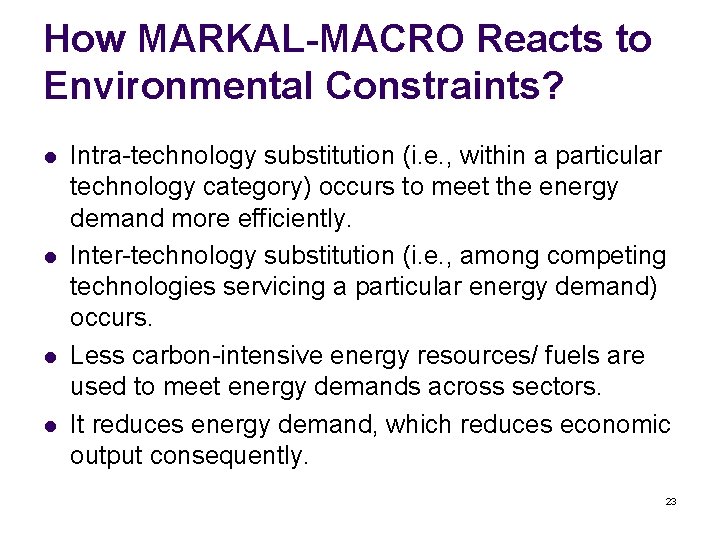
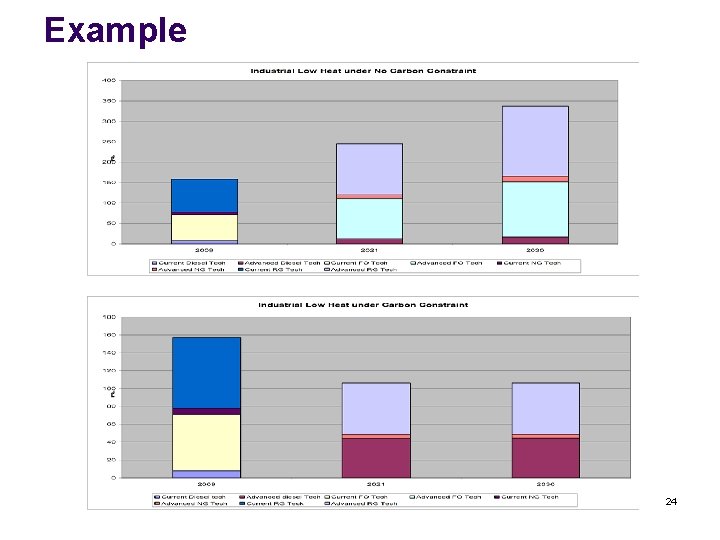
How MARKAL-MACRO Reacts to Environmental Constraints? l l Intra-technology substitution (i. e. , within a particular technology category) occurs to meet the energy demand more efficiently. Inter-technology substitution (i. e. , among competing technologies servicing a particular energy demand) occurs. Less carbon-intensive energy resources/ fuels are used to meet energy demands across sectors. It reduces energy demand, which reduces economic output consequently. 23
Example 24