Energy Consumption Transformation and Sources Lecture 3 HNRT
- Slides: 43
Energy Consumption, Transformation and Sources Lecture #3 HNRT 228 Spring 2013 Energy and the Environment 1
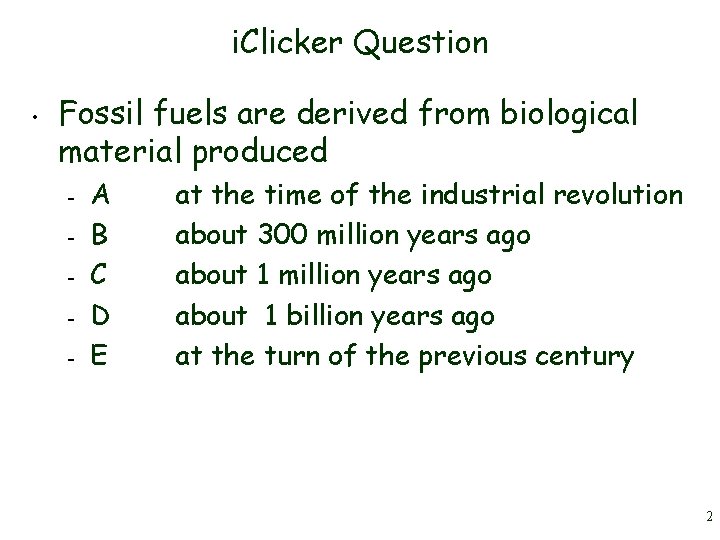
i. Clicker Question • Fossil fuels are derived from biological material produced – – – A B C D E at the time of the industrial revolution about 300 million years ago about 1 billion years ago at the turn of the previous century 2
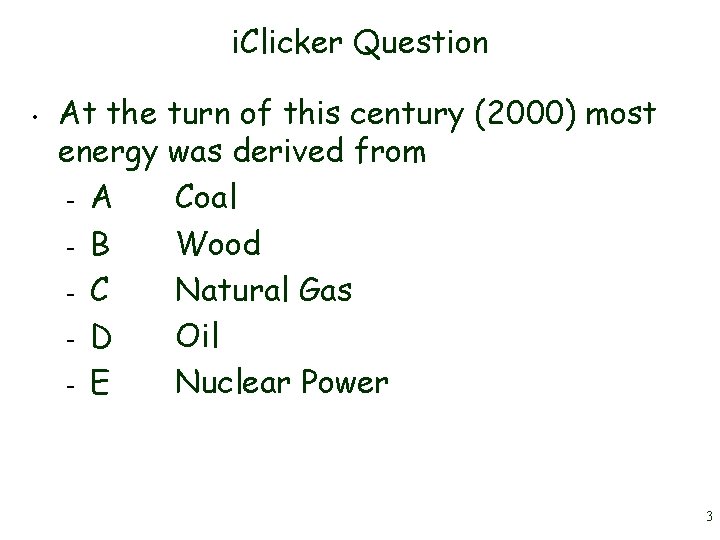
i. Clicker Question • At the turn of this century (2000) most energy was derived from – A Coal – B Wood – C Natural Gas – D Oil – E Nuclear Power 3
i. Clicker Question • Oil use in the U. S. has always risen since 1960. – A True – B False 4
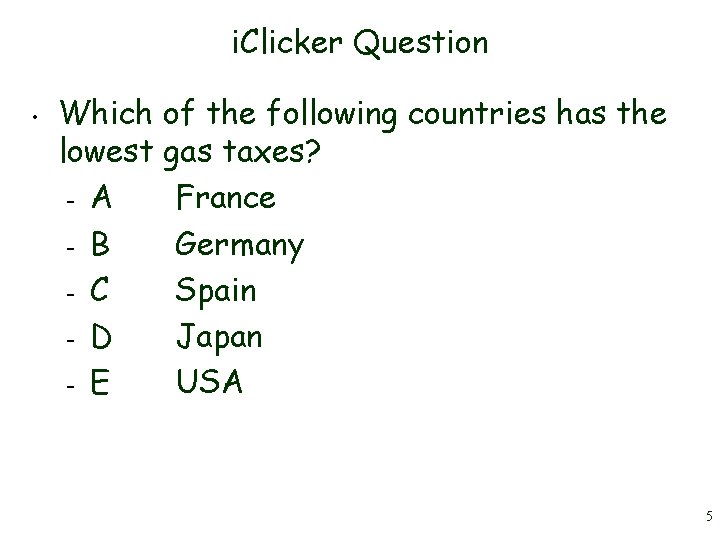
i. Clicker Question • Which of the following countries has the lowest gas taxes? – A France – B Germany – C Spain – D Japan – E USA 5
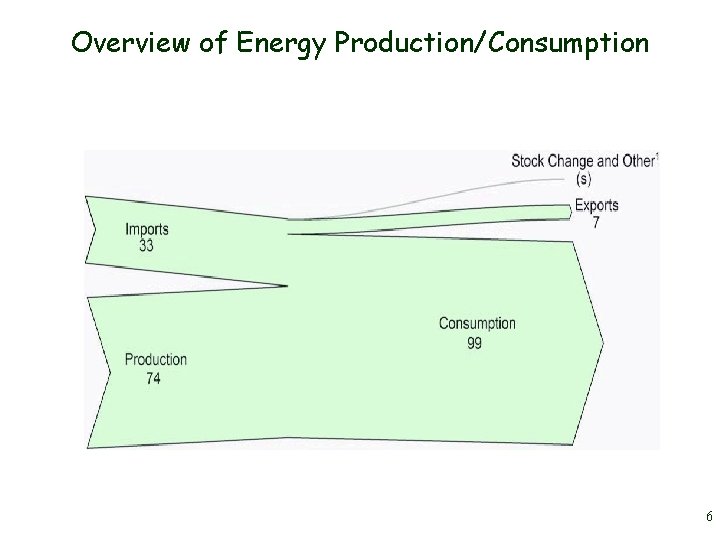
Overview of Energy Production/Consumption 6
i. Clicker Question • The United States imports more energy than it produces? – A True – B False 7
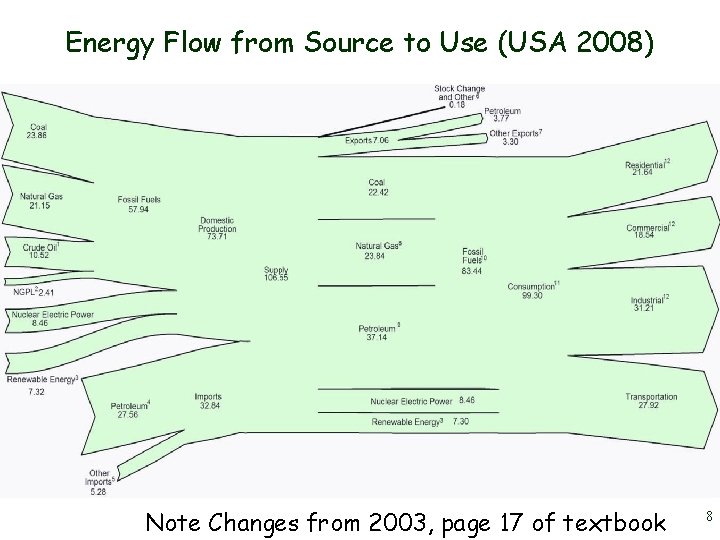
Energy Flow from Source to Use (USA 2008) Note Changes from 2003, page 17 of textbook 8
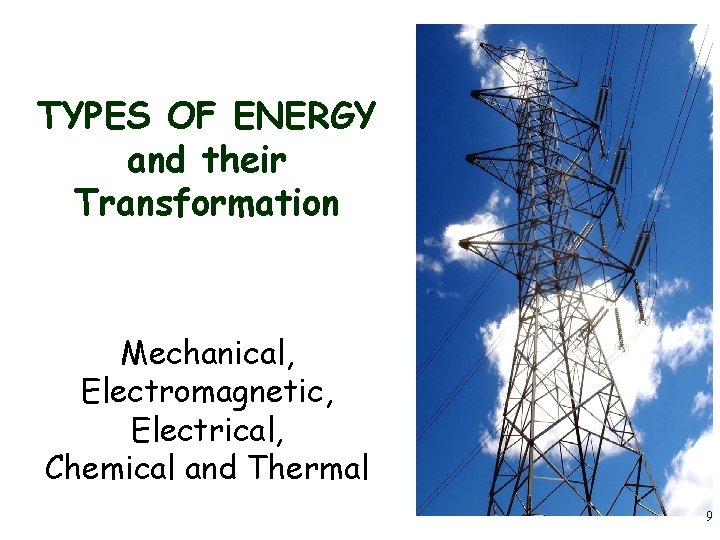
TYPES OF ENERGY and their Transformation Mechanical, Electromagnetic, Electrical, Chemical and Thermal 9
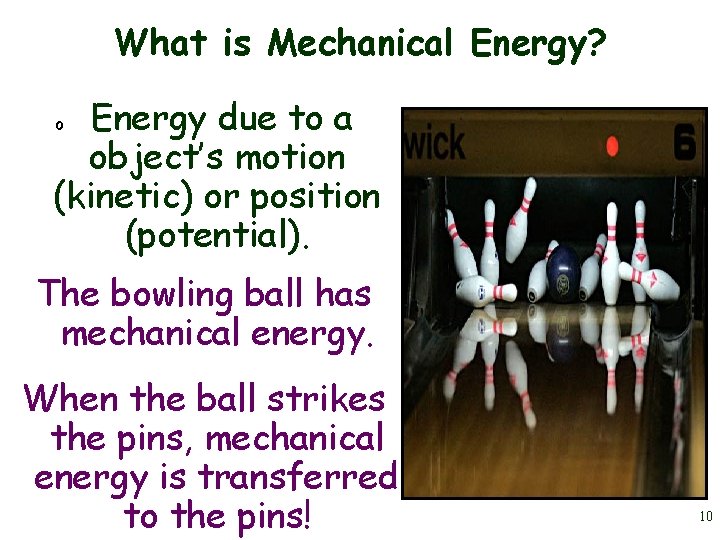
What is Mechanical Energy? Energy due to a object’s motion (kinetic) or position (potential). o The bowling ball has mechanical energy. When the ball strikes the pins, mechanical energy is transferred to the pins! 10
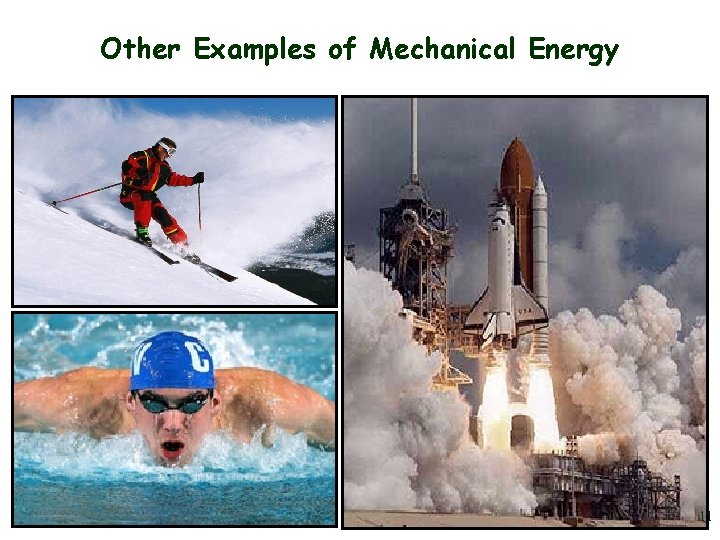
Other Examples of Mechanical Energy 11
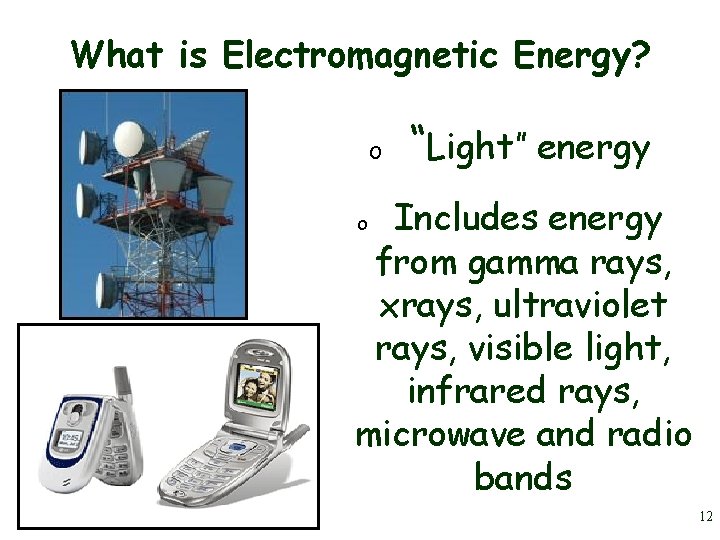
What is Electromagnetic Energy? o “Light” energy Includes energy from gamma rays, xrays, ultraviolet rays, visible light, infrared rays, microwave and radio bands o 12
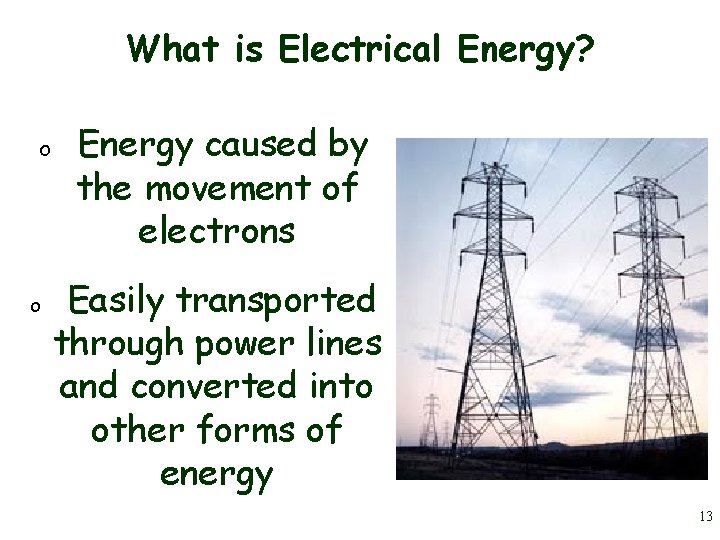
What is Electrical Energy? o o Energy caused by the movement of electrons Easily transported through power lines and converted into other forms of energy 13
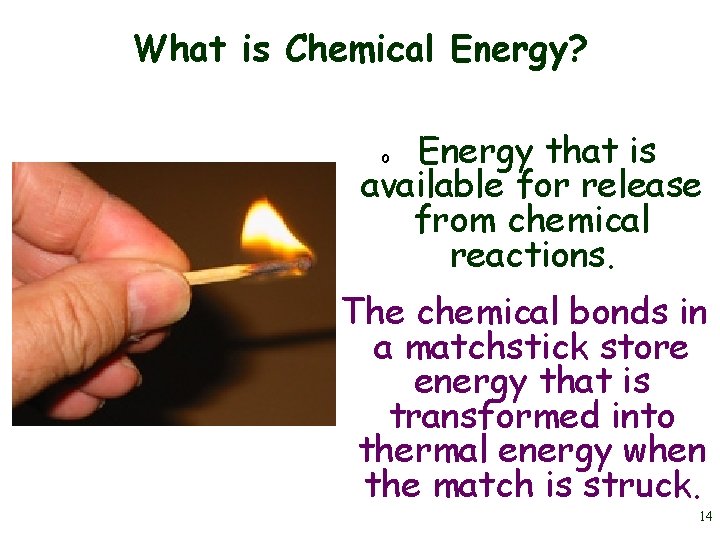
What is Chemical Energy? Energy that is available for release from chemical reactions. o The chemical bonds in a matchstick store energy that is transformed into thermal energy when the match is struck. 14
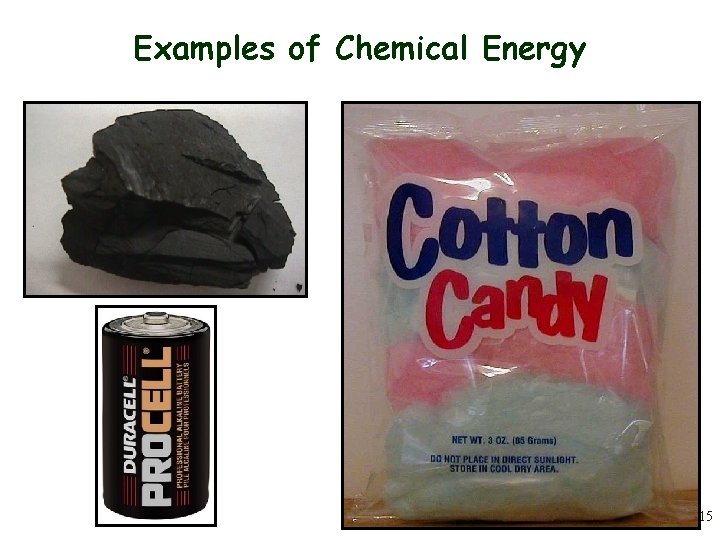
Examples of Chemical Energy 15
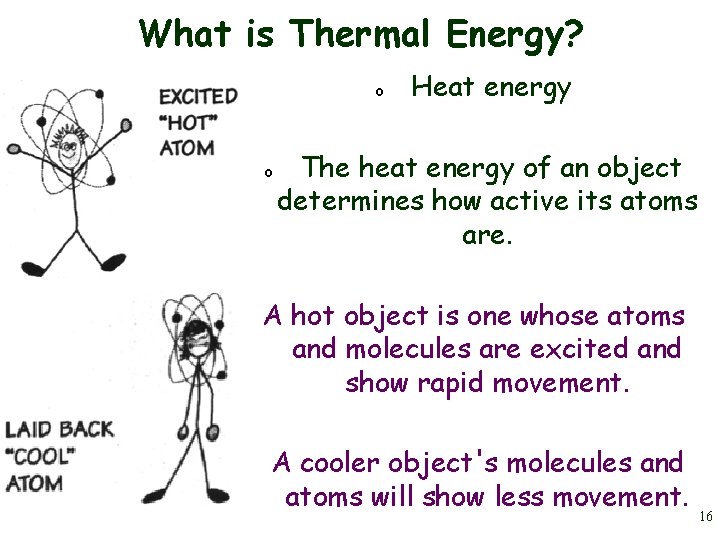
What is Thermal Energy? o o Heat energy The heat energy of an object determines how active its atoms are. A hot object is one whose atoms and molecules are excited and show rapid movement. A cooler object's molecules and atoms will show less movement. 16
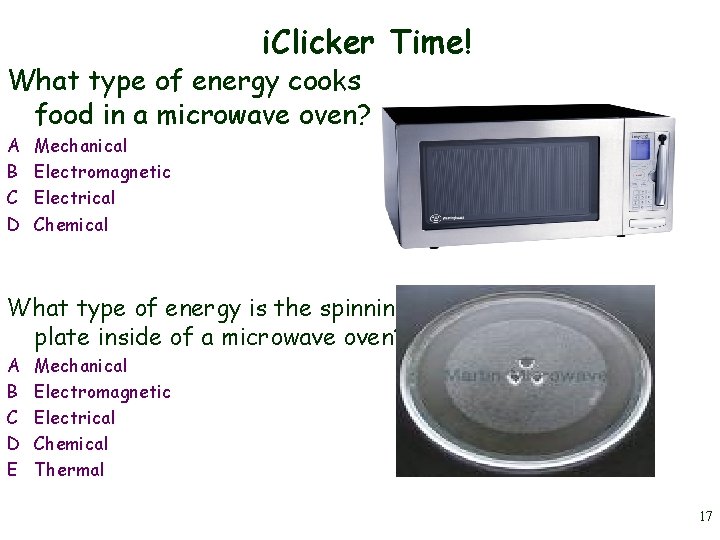
i. Clicker Time! What type of energy cooks food in a microwave oven? A B C D Mechanical Electromagnetic Electrical Chemical What type of energy is the spinning plate inside of a microwave oven? A B C D E Mechanical Electromagnetic Electrical Chemical Thermal 17
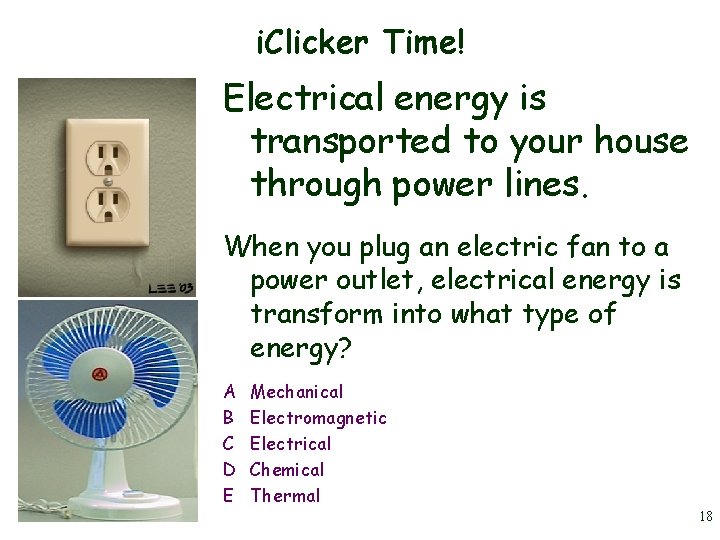
i. Clicker Time! Electrical energy is transported to your house through power lines. When you plug an electric fan to a power outlet, electrical energy is transform into what type of energy? A B C D E Mechanical Electromagnetic Electrical Chemical Thermal 18
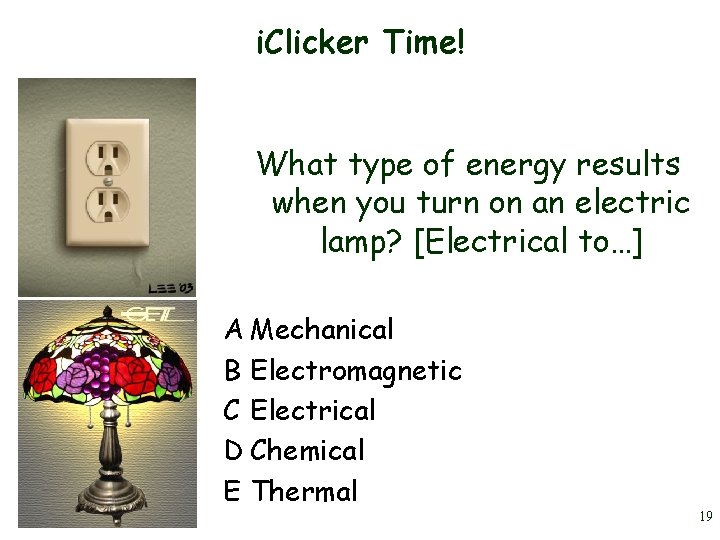
i. Clicker Time! What type of energy results when you turn on an electric lamp? [Electrical to…] A Mechanical B Electromagnetic C Electrical D Chemical E Thermal 19
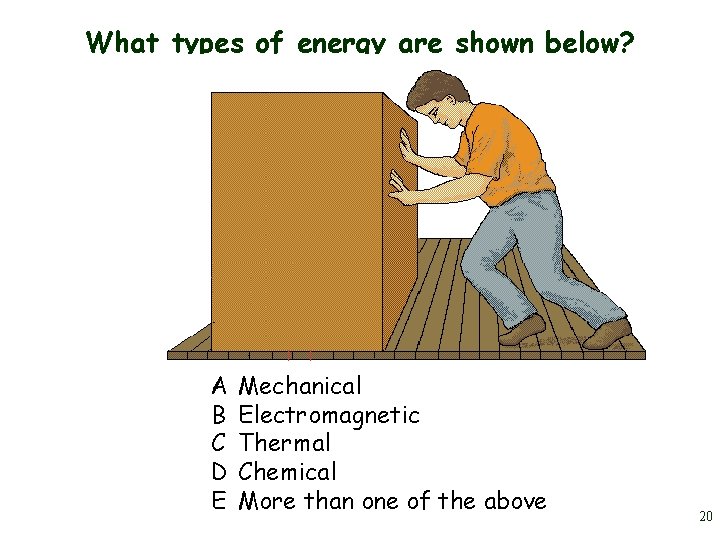
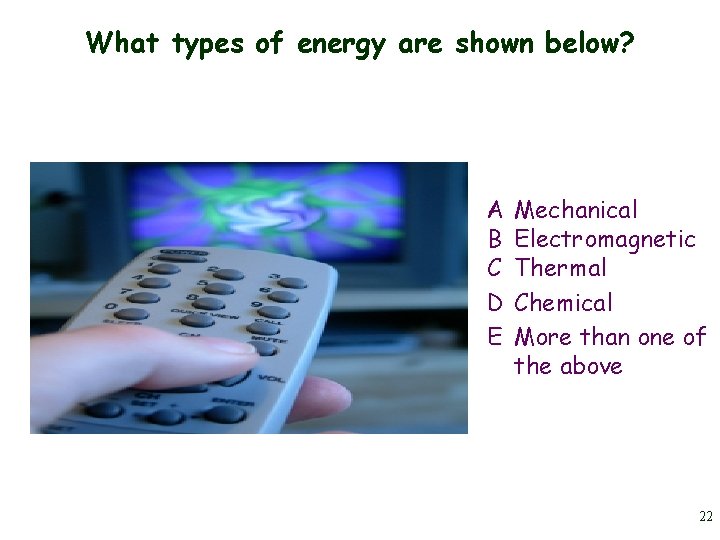
What types of energy are shown below? A B C D E Mechanical Electromagnetic Thermal Chemical More than one of the above 20
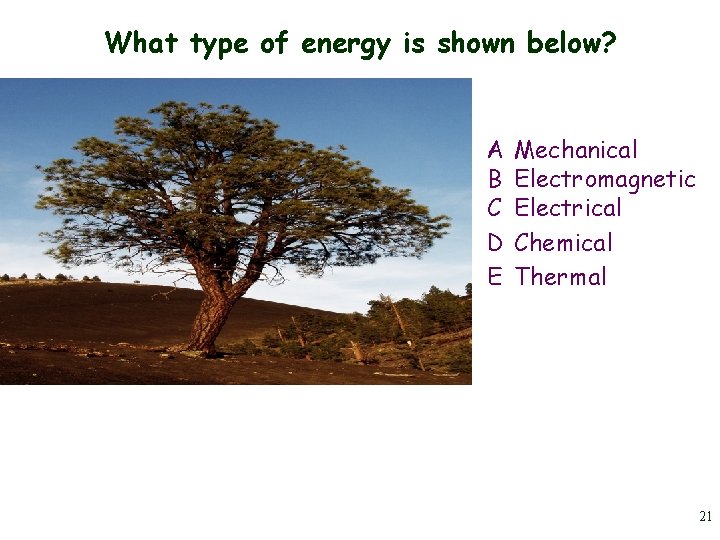
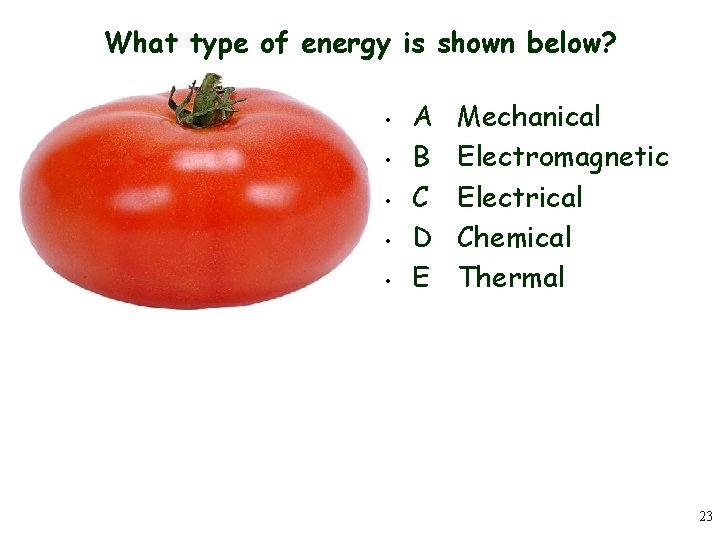
What type of energy is shown below? A B C D E Mechanical Electromagnetic Electrical Chemical Thermal 21
What types of energy are shown below? A B C D E Mechanical Electromagnetic Thermal Chemical More than one of the above 22
What type of energy is shown below? • • • A B C D E Mechanical Electromagnetic Electrical Chemical Thermal 23
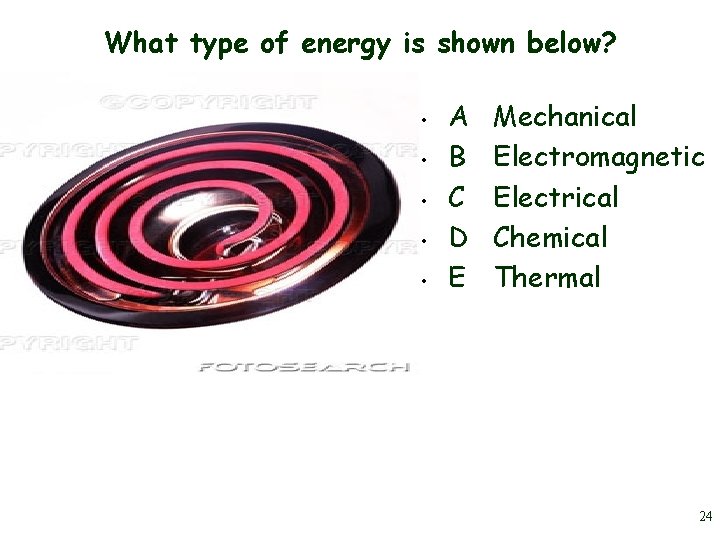
What type of energy is shown below? • • • A B C D E Mechanical Electromagnetic Electrical Chemical Thermal 24
Where does our energy come from for…? • • • Electric light Mobile phones Power for your mp 3 TV Hot Water 25
Energy for these things come from Energy Resources, that are converted into energy that we can easily use. Electricity is the main form of energy that we use and can power or charge what we need energy for. 26
To generate electricity… 1. 2. 3. 4. 5. 6. You need an energy source, e. g. coal This is burnt to produce heat or steam The heat or steam then drives a turbine The turbine then can drive a generator The generator then produces electricity The electricity is then transported in cables to where it is needed 27
Energy Resources can be divided into 2 categories: 1. Non-Renewable Resources For example – coal, oil, gas, uranium or lignite Once used these resources CANNOT be used again 2. Renewable Resources For example – wind, water or solar These resources can be used over and over again 28
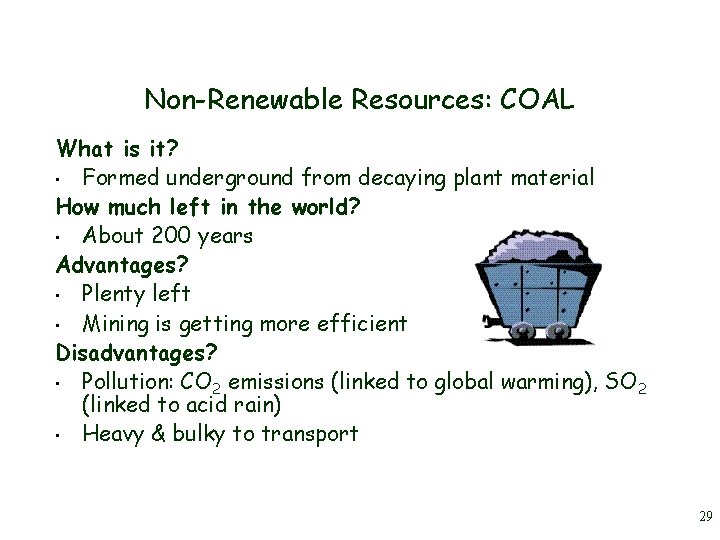
Non-Renewable Resources: COAL What is it? • Formed underground from decaying plant material How much left in the world? • About 200 years Advantages? • Plenty left • Mining is getting more efficient Disadvantages? • Pollution: CO 2 emissions (linked to global warming), SO 2 (linked to acid rain) • Heavy & bulky to transport 29
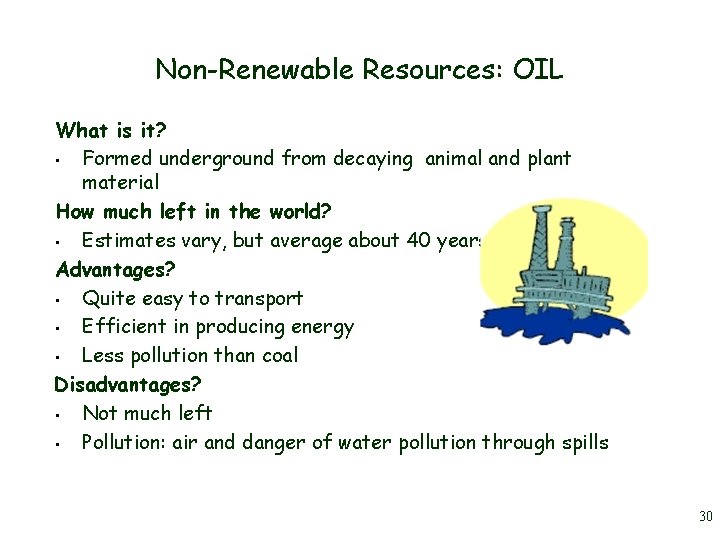
Non-Renewable Resources: OIL What is it? • Formed underground from decaying animal and plant material How much left in the world? • Estimates vary, but average about 40 years Advantages? • Quite easy to transport • Efficient in producing energy • Less pollution than coal Disadvantages? • Not much left • Pollution: air and danger of water pollution through spills 30
Non-Renewable Resources: NATURAL GAS What is it? • Formed underground from decaying animal and plant material How much left in the world? • Estimates vary from 60 -100 years Advantages? • Clean, least polluting of all non-renewables • Easy to transport Disadvantages? • Some air pollution • Danger of explosions 31
Non-Renewable Resources: NUCLEAR What is it? • Uses uranium, naturally found in some rocks How much left in the world? • Not known Advantages? • Not much waste and few CO 2 emissions released, as well as, few other greenhouse gases Disadvantages? • High cost to build and close down power stations. • Waste is radioactive. Problem with getting rid of waste safely 32
Non-Renewable Resources: LIGNITE (between peat and coal) What is it? • Formed underground from decaying plant material How much left in the world? • Estimates vary, but average ~30 years Advantages? • A local resource good for generating electricity Disadvantages? • Air pollution, scarring of landscape through open-cast mining • High moisture content 33
Why is the term, FOSSIL FUEL used for coal, oil, gas and lignite? A Because they all contain fossils. B Because they were once food sources for things that are now fossils. C Because they are derived from living matter of a previous geological age. D Because of their energy per unit of mass. E Because Prof. Geller said so. 34
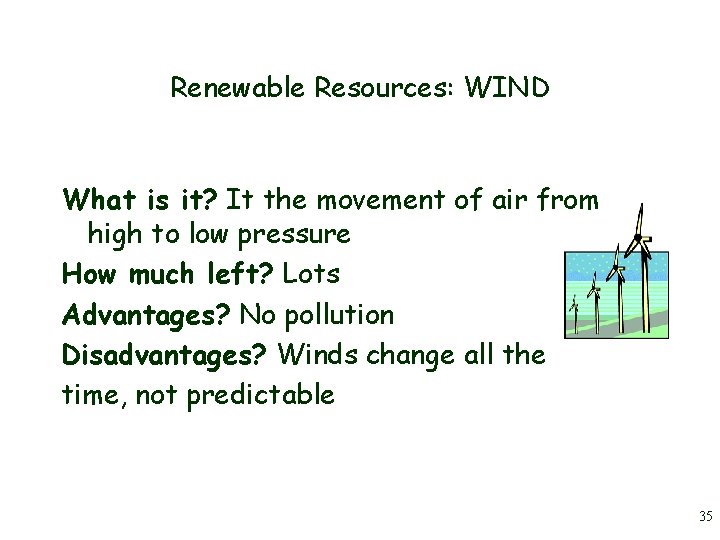
Renewable Resources: WIND What is it? It the movement of air from high to low pressure How much left? Lots Advantages? No pollution Disadvantages? Winds change all the time, not predictable 35
Renewable Resources: SOLAR What is it? Energy from the sun How much left? Lots Advantages? No pollution, can be used in remote areas Disadvantages? Can be expensive, needs sunlight At night it doesn’t work 36
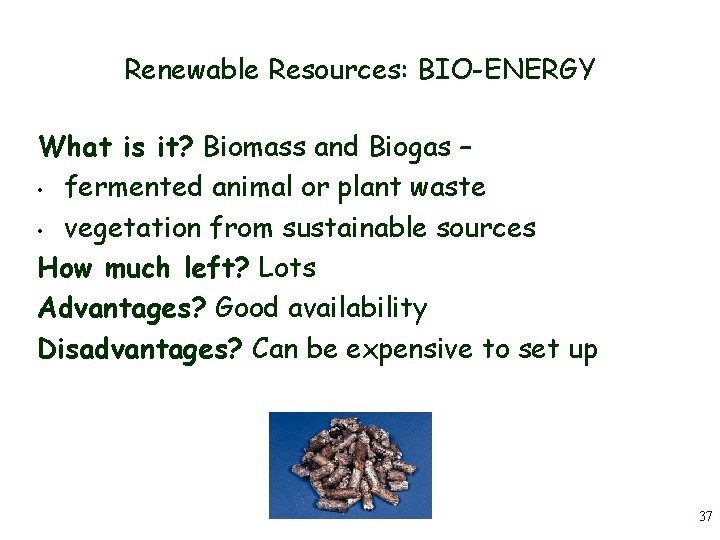
Renewable Resources: BIO-ENERGY What is it? Biomass and Biogas – • fermented animal or plant waste • vegetation from sustainable sources How much left? Lots Advantages? Good availability Disadvantages? Can be expensive to set up 37
Renewable Resources: HYDRO What is it? Movement of water drives a turbine How much left? Lots Advantages? No CO 2 emissions, can control flooding and provide a good water supply to an area Disadvantages? Large areas maybe flooded. Visual and water pollution 38
Renewable Resources: GEOTHERMAL What is it? Heat from the ground – often used to heat water How much left? Lots Advantages? No CO 2 emissions Disadvantages? Expensive and can only be used in certain parts of the world 39
Renewable Resources: WATER & TIDAL What is it? Movement of sea drives turbines How much left? Lots Advantages? Can produce a lot of electricity, no CO 2 emissions Disadvantages? Not many suitable sites 40
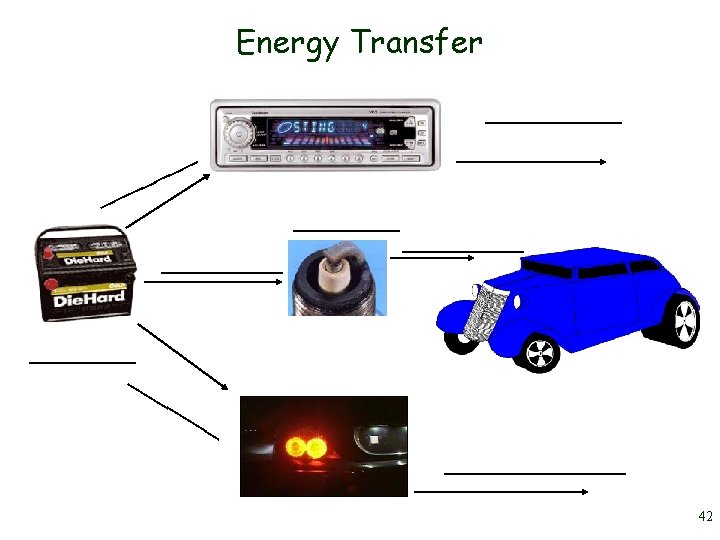
Group Think • Draw a flow map showing the flow of energy transformations in a car from starting vehicle to driving. You should have 5 different types of energy. 41
In-Class Group Question • Compare and contrast differences and similarities (changes in time) in the two diagrams depicting energy flow from source to use in the USA, from 2003 (in textbook), and 2008 (in presentation today). – Please remember to write complete sentences in addressing your comparisons. 43