ELECTIONS 1 Surfacing 2 Primary Season 3 Nomination

- Slides: 40
ELECTIONS
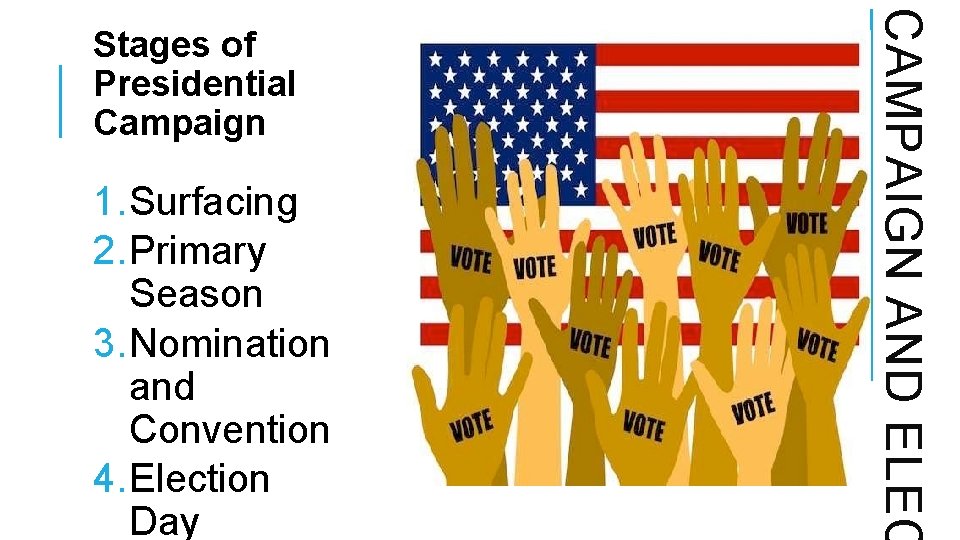
1. Surfacing 2. Primary Season 3. Nomination and Convention 4. Election Day CAMPAIGN AND ELEC Stages of Presidential Campaign
Parties will later nominate who they want to represent them in election Still, anyone who meets qualifications can run for office Local laws sometimes limit who can go on ballots and require party nomination or petition PRESIDENTIAL ELECTIO PROCESS Announcement expresses intentions to run
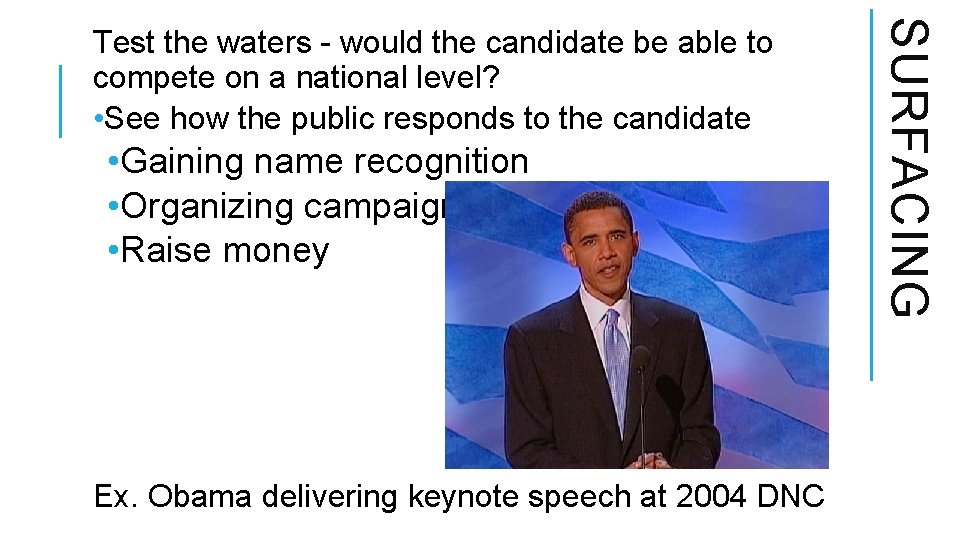
• Gaining name recognition • Organizing campaign • Raise money Ex. Obama delivering keynote speech at 2004 DNC SURFACING Test the waters - would the candidate be able to compete on a national level? • See how the public responds to the candidate
PACs Super PACs We aren’t likely to see change from government anytime soon about campaign funding. Why? The people who are making the laws benefited form the current system, so why change it? PRESIDENTIAL ELECTIO PROCESS Fundraising
Party members coming together to discuss and debate who would make the best candidate Then vote for who they want to represent party Used often at local level Iowa Caucus Most widely known; occurs earliest Sets the tone for primary/caucus season Used to selected Iowa’s delegates sent to National Conventions PRESIDENTIAL ELECTIO PROCESS Caucus
Voters privately vote on ballots for their preferred candidate Whoever has most votes wins New Hampshire Primary First primary for general elections Primary season is “front-loaded”, meaning many states want their primary/caucus early on for president PRESIDENTIAL ELECTIO PROCESS Primaries
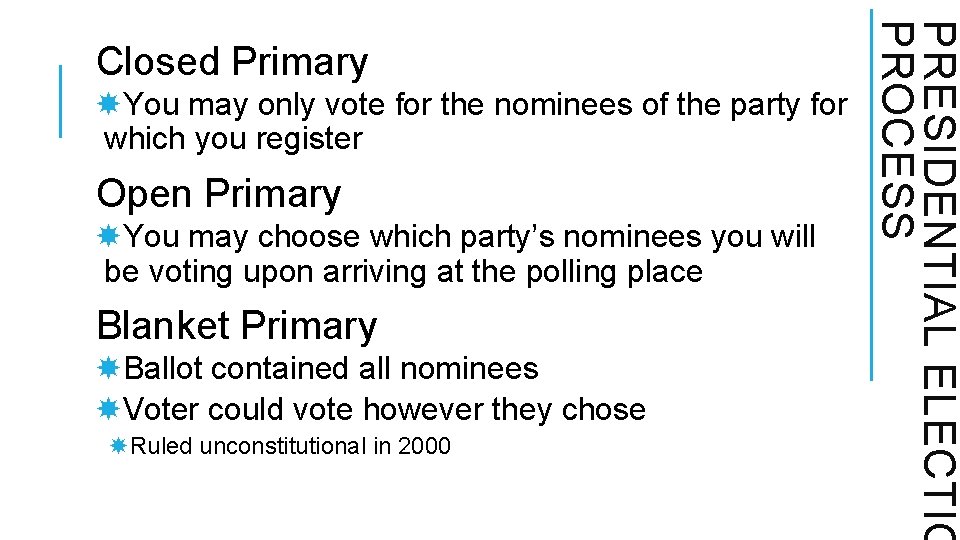
You may only vote for the nominees of the party for which you register Open Primary You may choose which party’s nominees you will be voting upon arriving at the polling place Blanket Primary Ballot contained all nominees Voter could vote however they chose Ruled unconstitutional in 2000 PRESIDENTIAL ELECTIO PROCESS Closed Primary
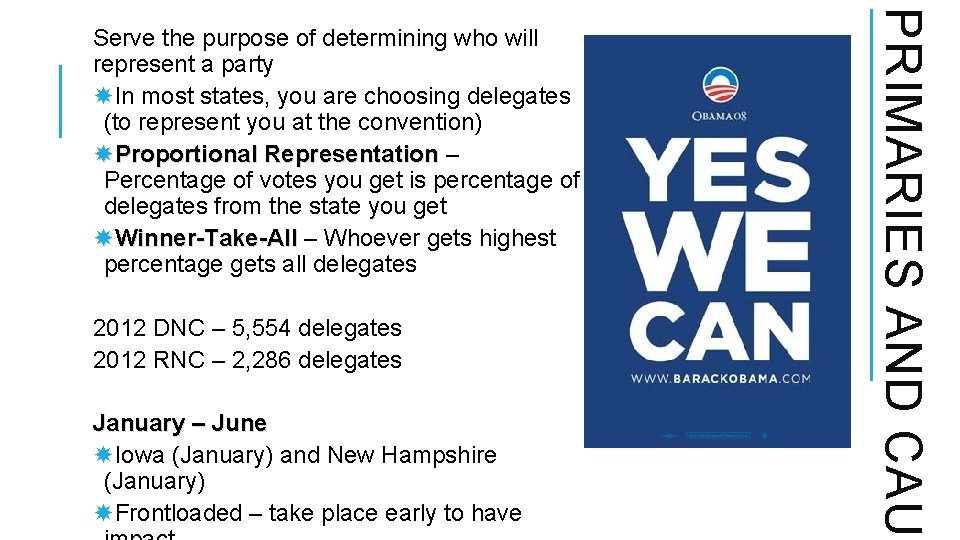
2012 DNC – 5, 554 delegates 2012 RNC – 2, 286 delegates January – June Iowa (January) and New Hampshire (January) Frontloaded – take place early to have PRIMARIES AND CAUC Serve the purpose of determining who will represent a party In most states, you are choosing delegates (to represent you at the convention) Proportional Representation – Percentage of votes you get is percentage of delegates from the state you get Winner-Take-All – Whoever gets highest Winner-Take-All percentage gets all delegates
Caucuses and Primaries used to choose delegates Delegates then go to party’s national convention, representing their state and people’s nomination Delegates vote at national convention to have party choose presidential nominee PRESIDENTIAL ELECTIO PROCESS In Presidential Election
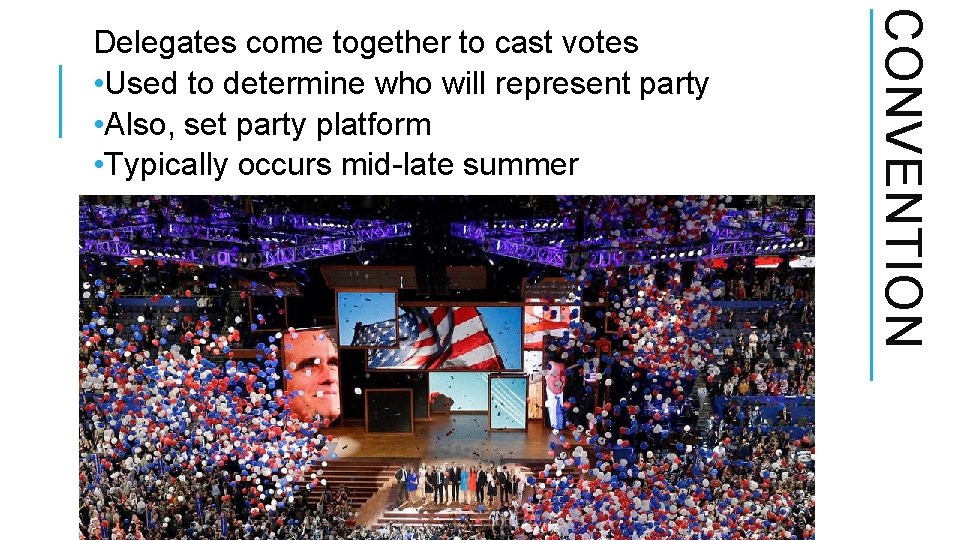
CONVENTION Delegates come together to cast votes • Used to determine who will represent party • Also, set party platform • Typically occurs mid-late summer
Absentee voting – voting ahead of time for convenience Coattail Effect – Strong candidates near the top of the allow lower candidates to “free ride” PRESIDENTIAL ELECTIO PROCESS Election Day – Tuesday after the first Monday
Ballots Office Group – candidates listed by office Party-Column – candidates listed by party Ballots are typically “bed-sheet”, covering all offices and candidates, but therefore are long and cause PRESIDENTIAL ELECTIO PROCESS Precinct – voting district; polling place Precinct within
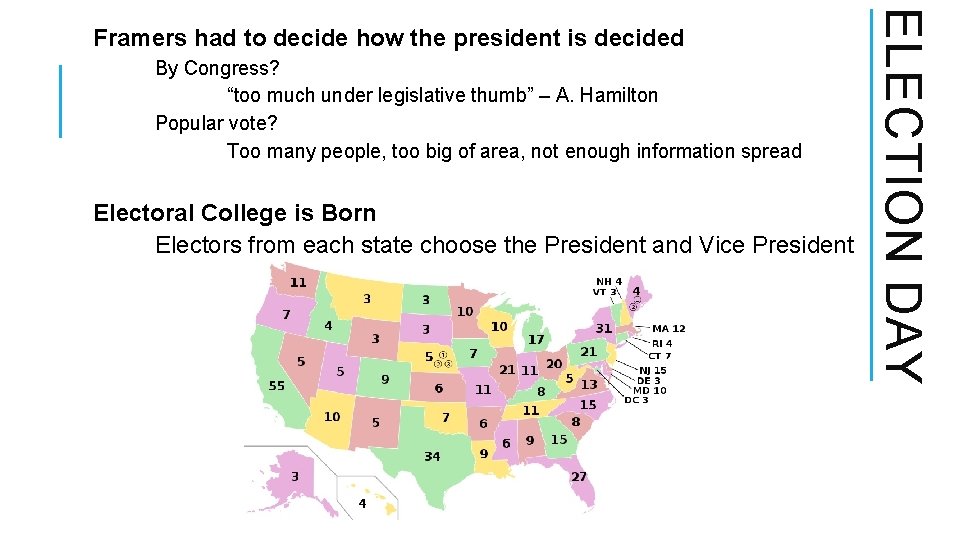
By Congress? “too much under legislative thumb” – A. Hamilton Popular vote? Too many people, too big of area, not enough information spread Electoral College is Born Electors from each state choose the President and Vice President ELECTION DAY Framers had to decide how the president is decided
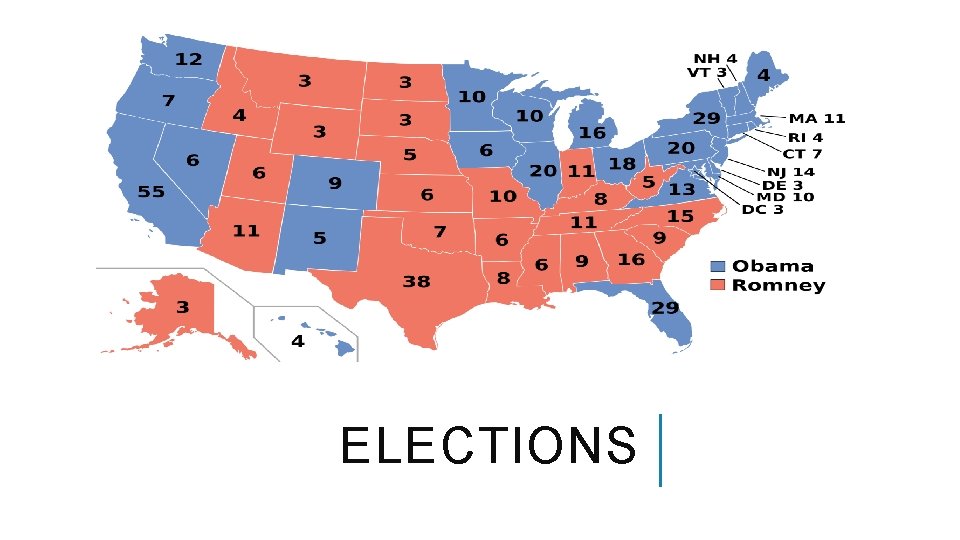
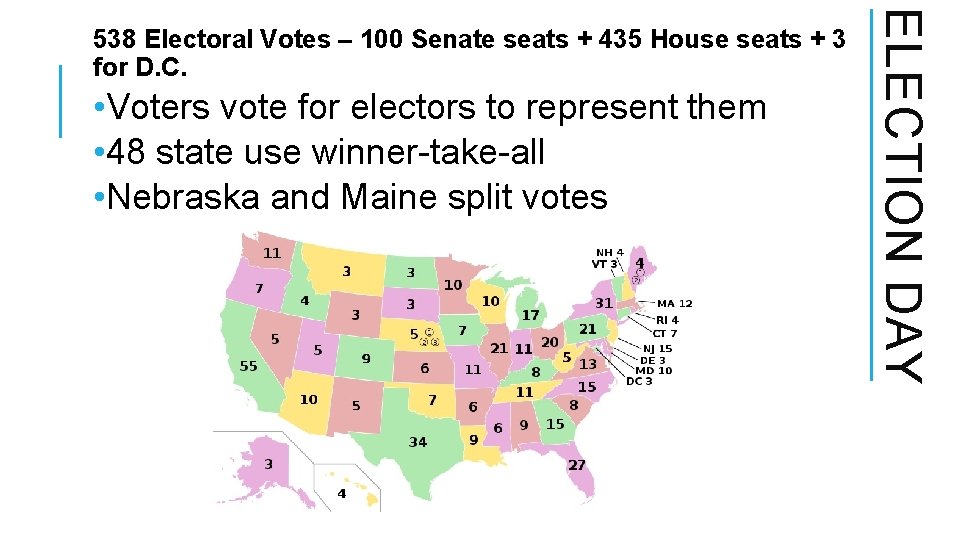
• Voters vote for electors to represent them • 48 state use winner-take-all • Nebraska and Maine split votes ELECTION DAY 538 Electoral Votes – 100 Senate seats + 435 House seats + 3 for D. C.
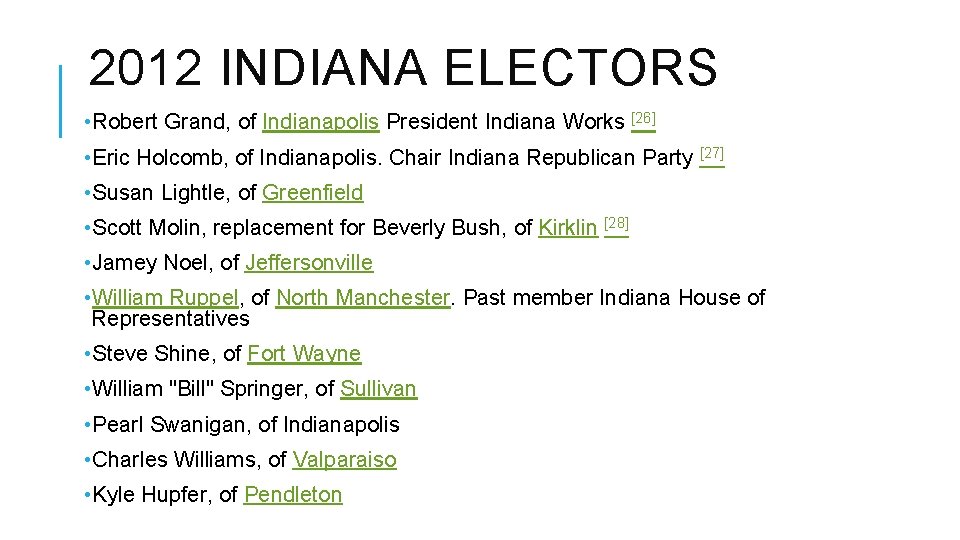
2012 INDIANA ELECTORS • Robert Grand, of Indianapolis President Indiana Works [26] • Eric Holcomb, of Indianapolis. Chair Indiana Republican Party [27] • Susan Lightle, of Greenfield • Scott Molin, replacement for Beverly Bush, of Kirklin [28] • Jamey Noel, of Jeffersonville • William Ruppel, of North Manchester. Past member Indiana House of Representatives • Steve Shine, of Fort Wayne • William "Bill" Springer, of Sullivan • Pearl Swanigan, of Indianapolis • Charles Williams, of Valparaiso • Kyle Hupfer, of Pendleton
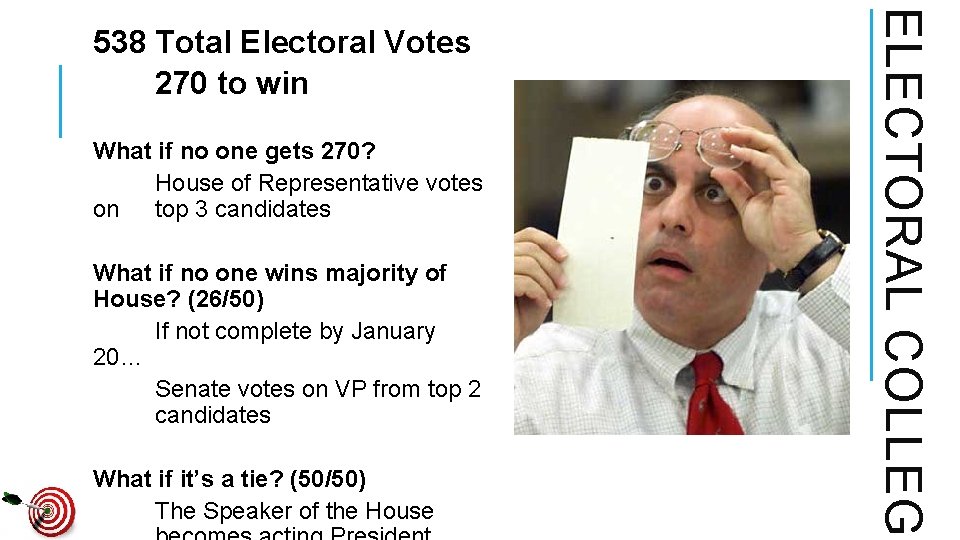
What if no one gets 270? House of Representative votes on top 3 candidates What if no one wins majority of House? (26/50) If not complete by January 20… Senate votes on VP from top 2 candidates What if it’s a tie? (50/50) The Speaker of the House ELECTORAL COLLEGE 538 Total Electoral Votes 270 to win
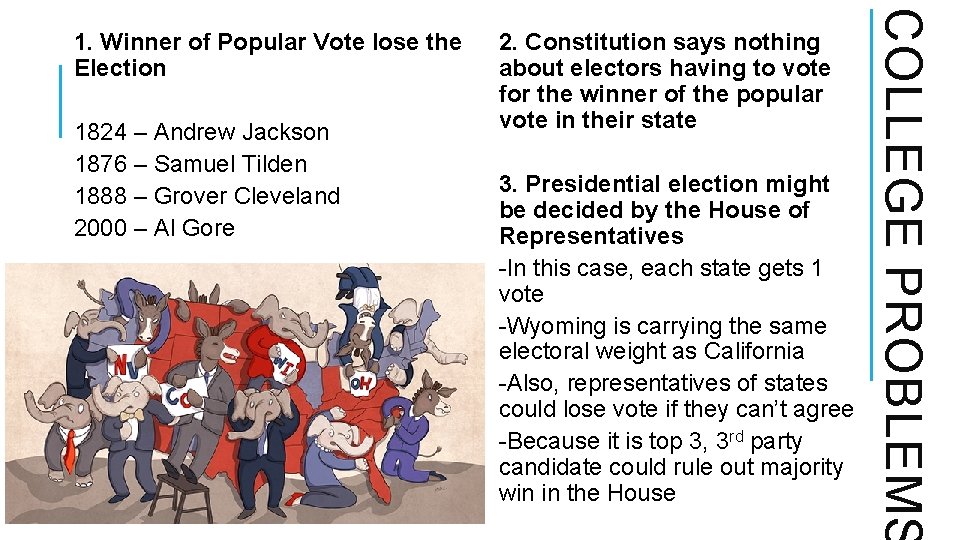
1824 – Andrew Jackson 1876 – Samuel Tilden 1888 – Grover Cleveland 2000 – Al Gore 2. Constitution says nothing about electors having to vote for the winner of the popular vote in their state 3. Presidential election might be decided by the House of Representatives -In this case, each state gets 1 vote -Wyoming is carrying the same electoral weight as California -Also, representatives of states could lose vote if they can’t agree -Because it is top 3, 3 rd party candidate could rule out majority win in the House COLLEGE PROBLEMS 1. Winner of Popular Vote lose the Election
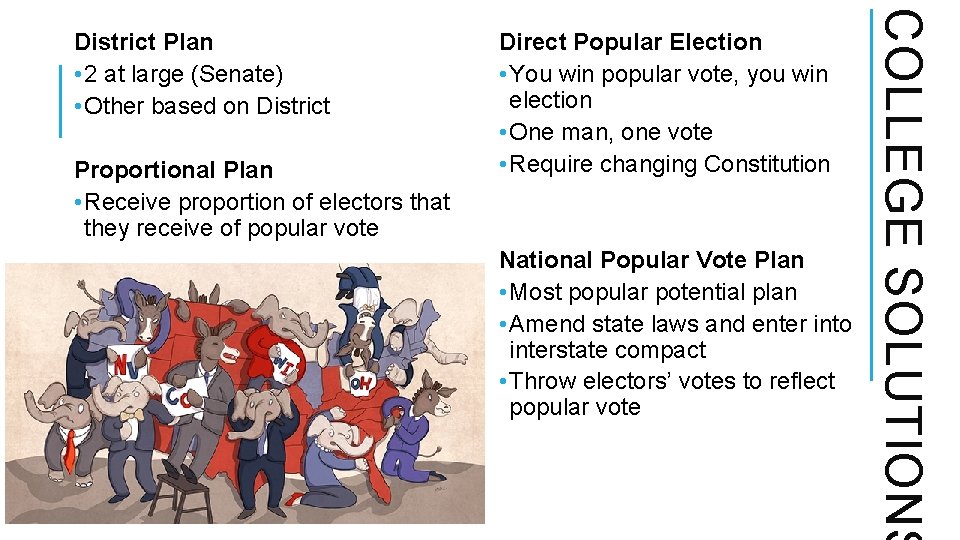
Proportional Plan • Receive proportion of electors that they receive of popular vote Direct Popular Election • You win popular vote, you win election • One man, one vote • Require changing Constitution National Popular Vote Plan • Most popular potential plan • Amend state laws and enter into interstate compact • Throw electors’ votes to reflect popular vote COLLEGE SOLUTIONS District Plan • 2 at large (Senate) • Other based on District
INTEREST GROUPS
TODAY’S GOALS I can describe the influence of interest groups on public policy in the United States
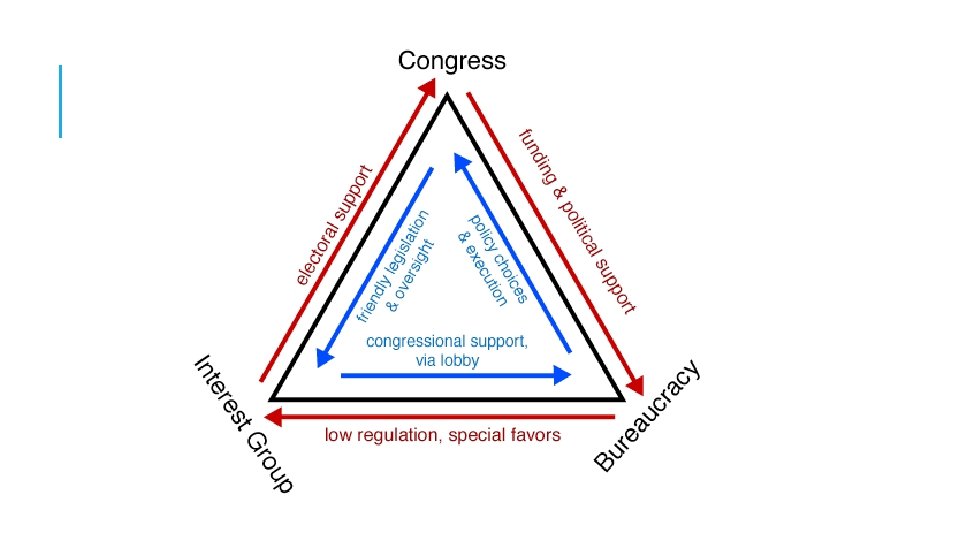
Economic Interest Groups Public Interest Groups INTEREST GROUPS Organization dedicated to certain interests goals, especially pertaining to public policy
INTEREST GROUP INFLUENCE Lobbying – meeting with policy makers to suggest legislation or provide information Testifying before Congress – Providing information to policymakers about issues *Information – most powerful tool*
Providing Campaign Funds – PACs Endorsing Candidates Court Action – Lawsuits or amicus briefs Engage/Inform the Public – Grassroots lobbying INTEREST GROUP INFLUENCE Lobbying – meeting with policy makers to suggest legislation or provide information Testifying before Congress – Providing information to policymakers about issues *Information – most powerful tool*
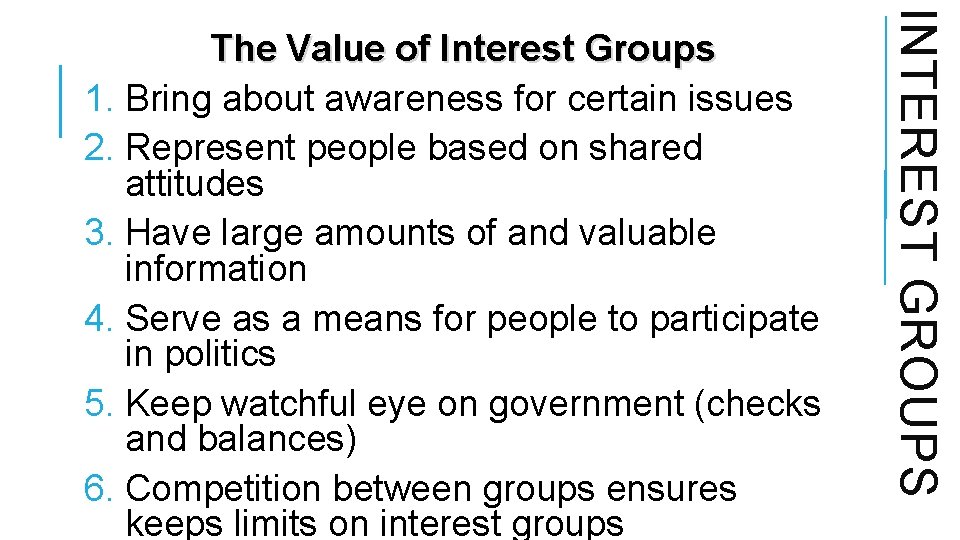
INTEREST GROUPS The Value of Interest Groups 1. Bring about awareness for certain issues 2. Represent people based on shared attitudes 3. Have large amounts of and valuable information 4. Serve as a means for people to participate in politics 5. Keep watchful eye on government (checks and balances) 6. Competition between groups ensures keeps limits on interest groups
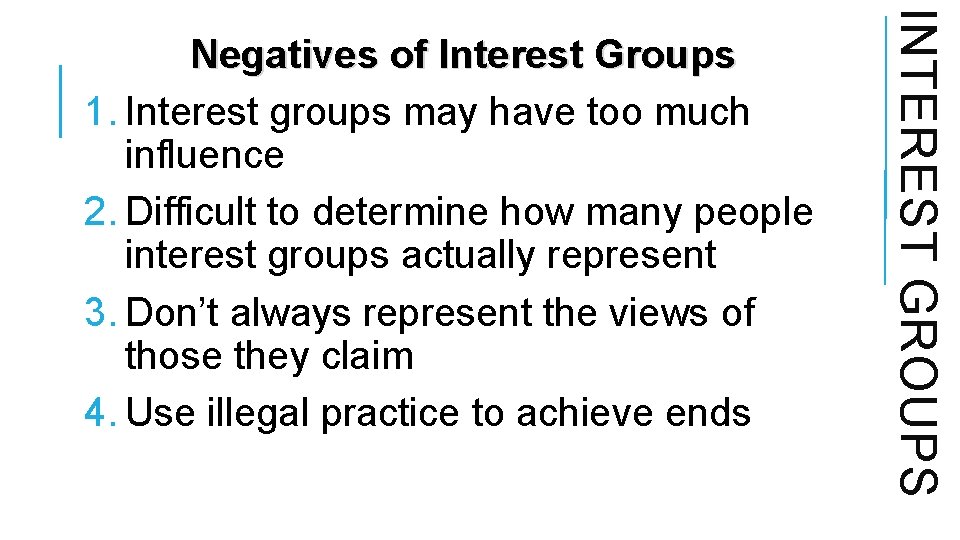
INTEREST GROUPS Negatives of Interest Groups 1. Interest groups may have too much influence 2. Difficult to determine how many people interest groups actually represent 3. Don’t always represent the views of those they claim 4. Use illegal practice to achieve ends
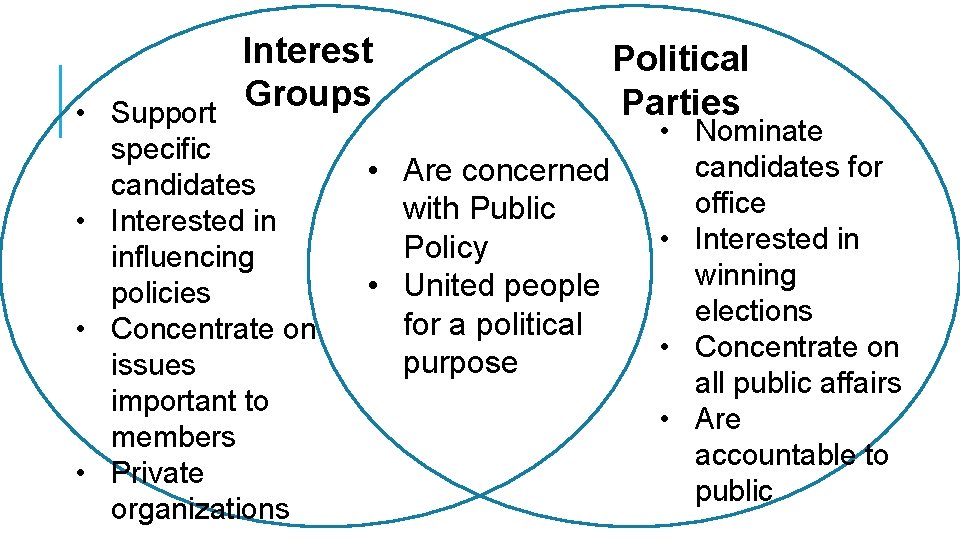
Interest Groups • Support specific candidates • Interested in influencing policies • Concentrate on issues important to members • Private organizations Political Parties • Are concerned with Public Policy • United people for a political purpose • Nominate candidates for office • Interested in winning elections • Concentrate on all public affairs • Are accountable to public
CAMPAIGN MONEY
TODAY’S GOALS 1. I can describe the process for a president running for office 2. I can explain how campaign money is raised and what changes to this system have been made over time
ELECTIONS The process of choosing political officials
In order to succeed, politicians need to make their name known How do you make your name known? Spend money to make it happen 91% of the time the better-financed candidate wins Washington Post; April 4, 2014 FUNDRAISING Why is money so important?
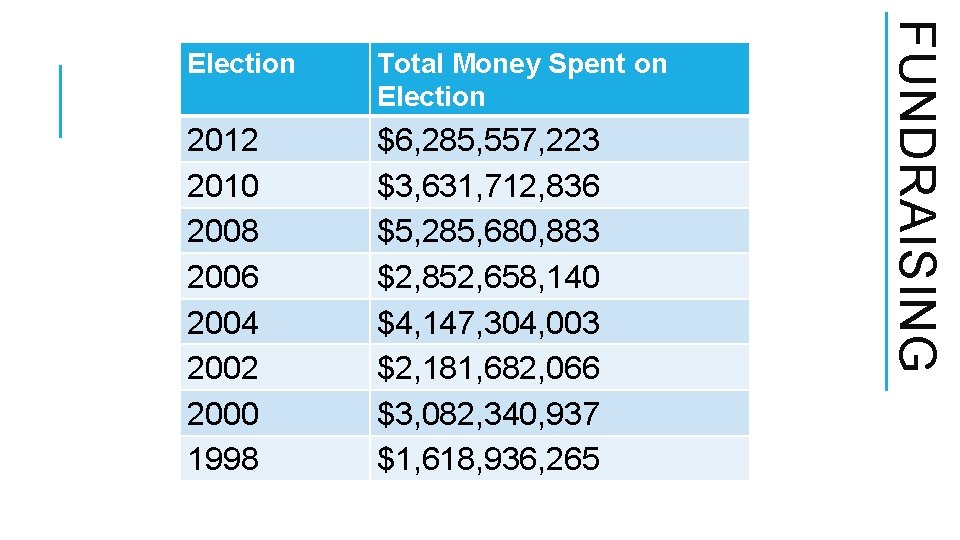
Total Money Spent on Election 2012 2010 2008 2006 2004 2002 2000 1998 $6, 285, 557, 223 $3, 631, 712, 836 $5, 285, 680, 883 $2, 852, 658, 140 $4, 147, 304, 003 $2, 181, 682, 066 $3, 082, 340, 937 $1, 618, 936, 265 FUNDRAISING Election
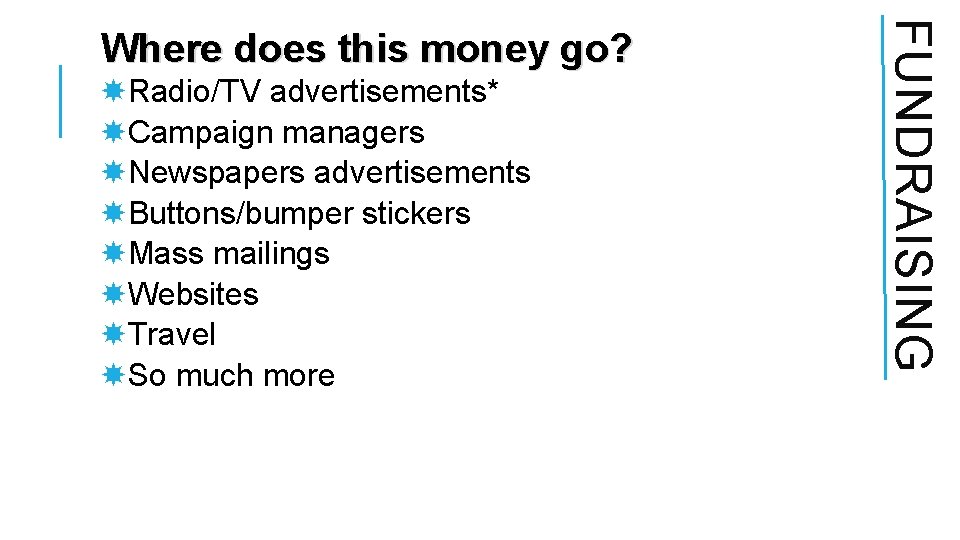
Radio/TV advertisements* Campaign managers Newspapers advertisements Buttons/bumper stickers Mass mailings Websites Travel So much more FUNDRAISING Where does this money go?
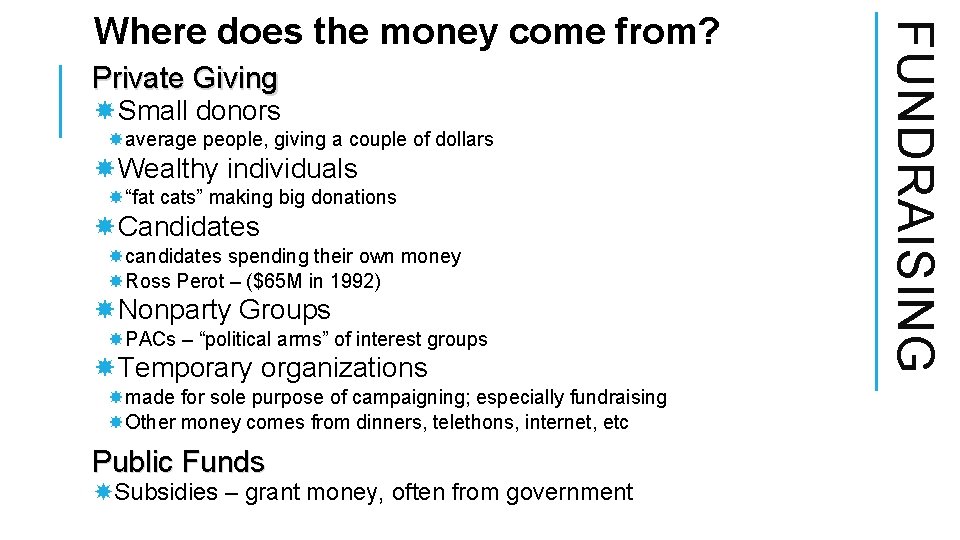
Private Giving Small donors average people, giving a couple of dollars Wealthy individuals “fat cats” making big donations Candidates candidates spending their own money Ross Perot – ($65 M in 1992) Nonparty Groups PACs – “political arms” of interest groups Temporary organizations made for sole purpose of campaigning; especially fundraising Other money comes from dinners, telethons, internet, etc Public Funds Subsidies – grant money, often from government FUNDRAISING Where does the money come from?
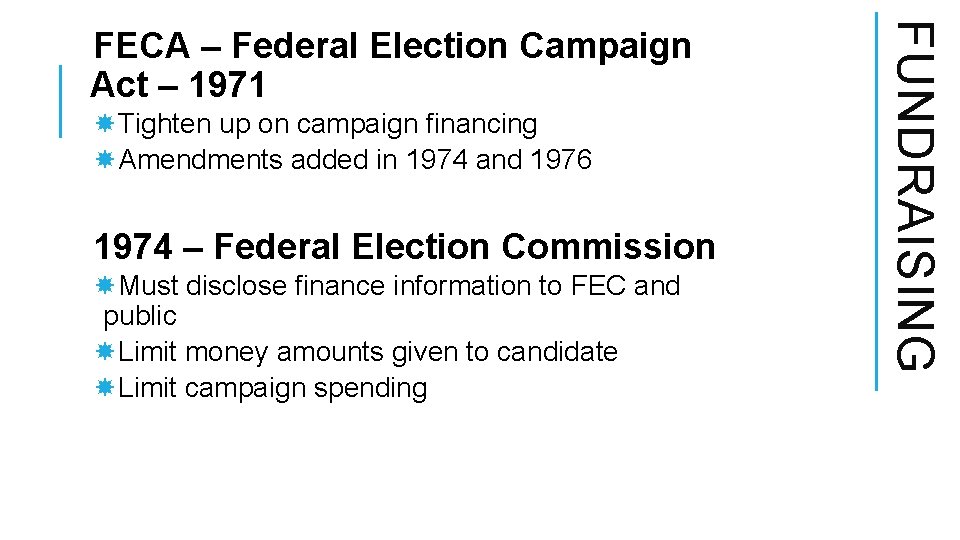
Tighten up on campaign financing Amendments added in 1974 and 1976 1974 – Federal Election Commission Must disclose finance information to FEC and public Limit money amounts given to candidate Limit campaign spending FUNDRAISING FECA – Federal Election Campaign Act – 1971
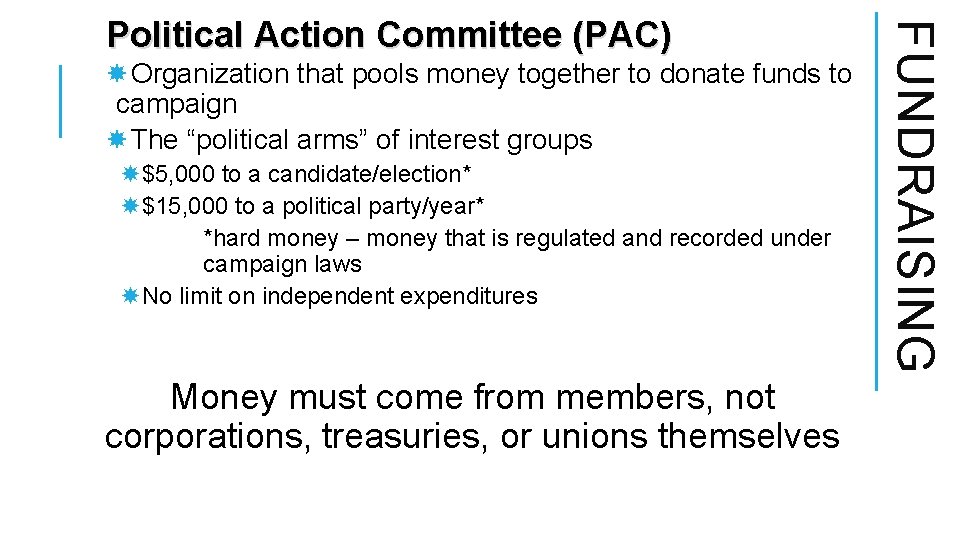
Organization that pools money together to donate funds to campaign The “political arms” of interest groups $5, 000 to a candidate/election* $15, 000 to a political party/year* *hard money – money that is regulated and recorded under campaign laws No limit on independent expenditures Money must come from members, not corporations, treasuries, or unions themselves FUNDRAISING Political Action Committee (PAC)
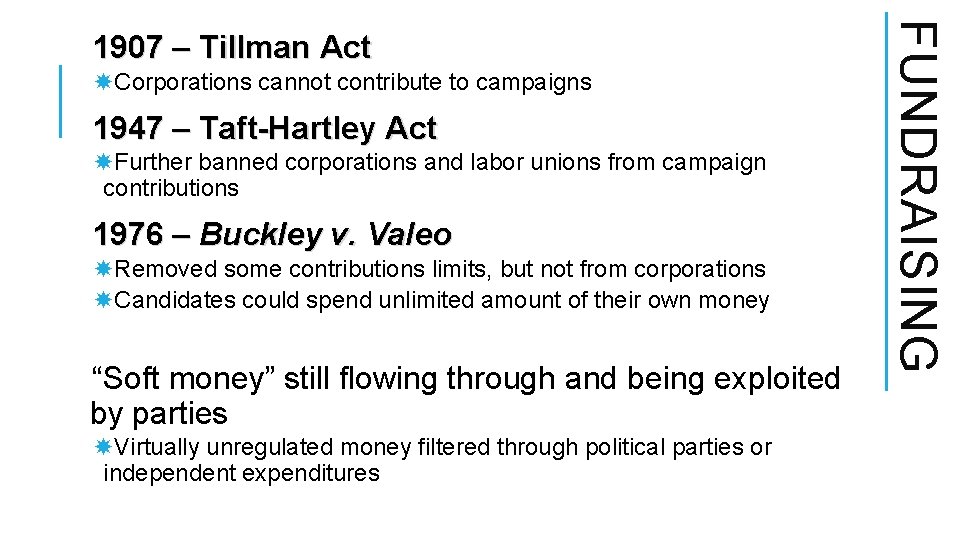
Corporations cannot contribute to campaigns 1947 – Taft-Hartley Act Further banned corporations and labor unions from campaign contributions 1976 – Buckley v. Valeo Removed some contributions limits, but not from corporations Candidates could spend unlimited amount of their own money “Soft money” still flowing through and being exploited by parties Virtually unregulated money filtered through political parties or independent expenditures FUNDRAISING 1907 – Tillman Act
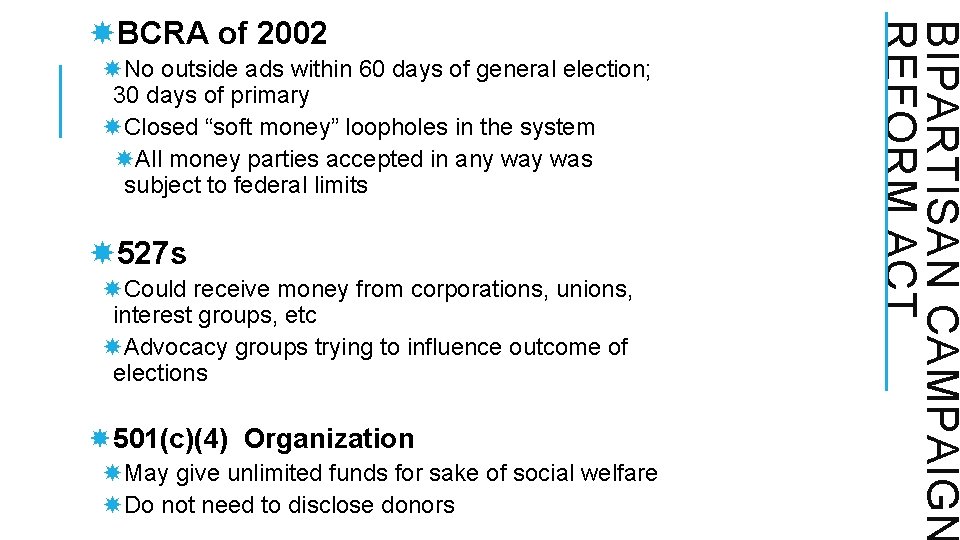
No outside ads within 60 days of general election; 30 days of primary Closed “soft money” loopholes in the system All money parties accepted in any was subject to federal limits 527 s Could receive money from corporations, unions, interest groups, etc Advocacy groups trying to influence outcome of elections 501(c)(4) Organization May give unlimited funds for sake of social welfare Do not need to disclose donors BIPARTISAN CAMPAIGN REFORM ACT BCRA of 2002
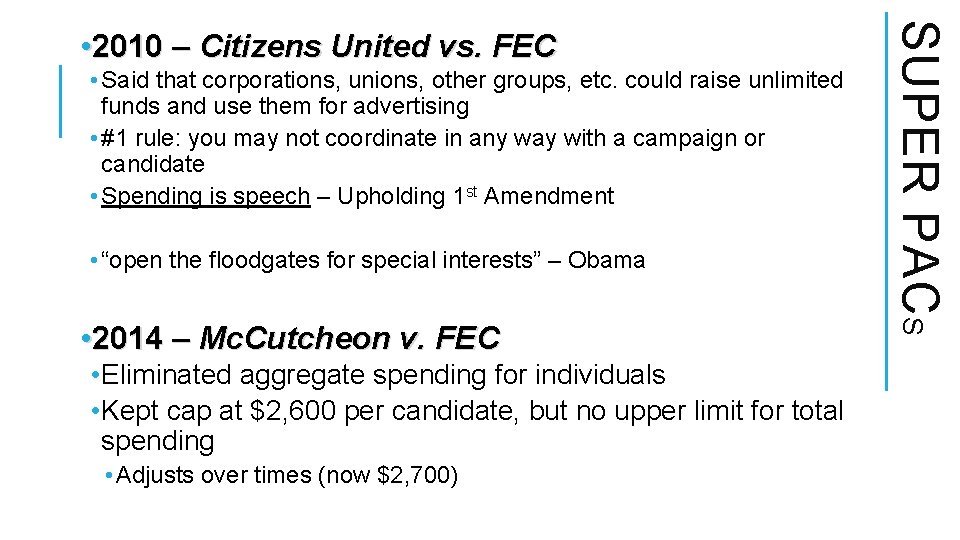
• Said that corporations, unions, other groups, etc. could raise unlimited funds and use them for advertising • #1 rule: you may not coordinate in any way with a campaign or candidate • Spending is speech – Upholding 1 st Amendment • “open the floodgates for special interests” – Obama • 2014 – Mc. Cutcheon v. FEC • Eliminated aggregate spending for individuals • Kept cap at $2, 600 per candidate, but no upper limit for total spending • Adjusts over times (now $2, 700) SUPER PACS • 2010 – Citizens United vs. FEC