Eating Disorders Tammy Danks Azusa Pacific University March

- Slides: 42
Eating Disorders Tammy Danks Azusa Pacific University March 16, 2012
General Definition �Eating disorders involve extreme emotions, attitudes, and behaviors surrounding weight and food issues. �Eating disorders are psychiatric disorders that can have serious and even life-threatening physical consequences. � The key to the diagnosis of an eating disorder is not weight, but attitudes and behaviors.
Disordered Eating �Behaviors that are highly correlated to developing an eating disorder ◦ ◦ ◦ Obsessive calorie counting Anxiety about foods or food groups Rigid approach to eating Inflexible meal times Not wanting to eat outside your home Self-worth based highly on body shape & weight ◦ Calorie (food) restriction prior to drinking alcohol to increase rate of intoxication
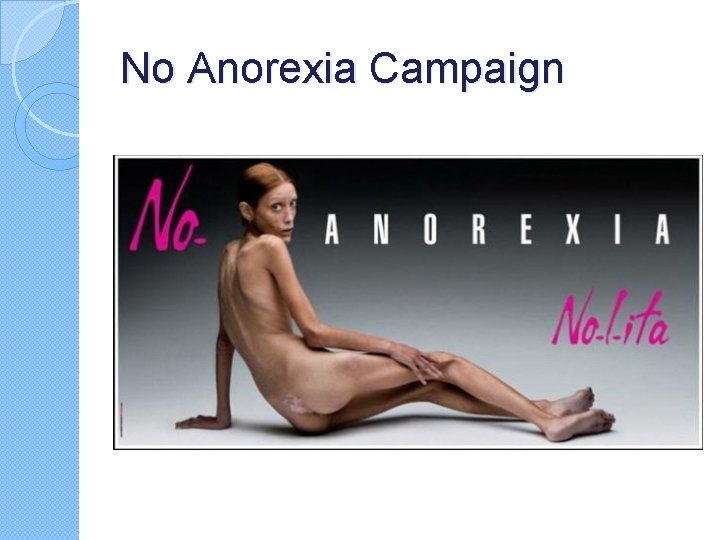
Anorexia Nervosa �Anorexia Nervosa is characterized by self-starvation and excessive weight loss. People with anorexia generally: ◦ Are underweight ◦ Have extreme fear of gaining weight or being “fat” ◦ Have a distorted view of their bodies
Warning Signs of Anorexia �Dramatic weight loss �Obsession with weight, food, calories, fat grams, exercising, etc. �Development of food rituals, like having to eat food in a certain order, rearranging food on the plate, etc. �Consistent excuses to avoid eating and mealtimes
No Anorexia Campaign
An Anorexia True Story
Bulimia Nervosa �Bulimia Nervosa is characterized by a cycle of bingeing followed by behaviors designed to compensate for or undo the bingeing, such as vomiting, fasting, using laxitives, or extreme exercise. These behaviors are collectively known as purging. People with bulimia may be underweight, average weight, or overweight.
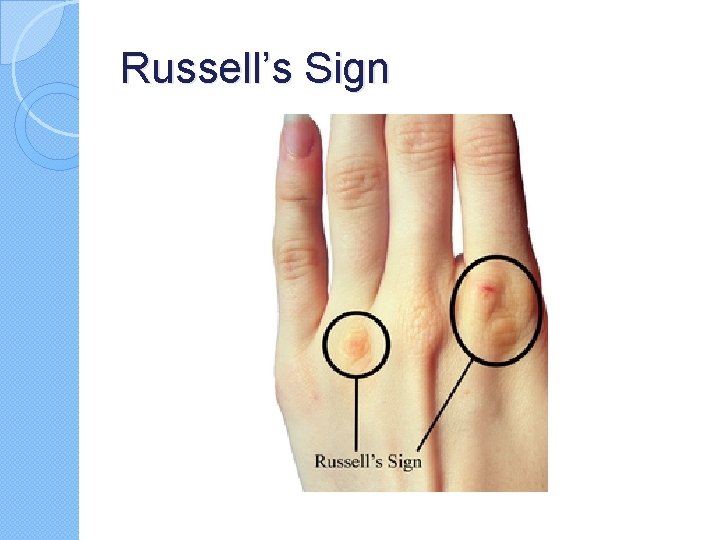
Warning Signs of Bulimia �Evidence of binge eating, including disappearance of large quantities of food in a short time �Evidence of purging, such as frequent trips to the restroom after meals, signs or smells of vomiting �Excessive, rigid exercise regimen �Extreme concern with body size and shape
Russell’s Sign
Binge Eating Disorder �Binge Eating Disorder is characterized by eating large quantities of food in a short period of time, feeling out of control over eating, and feeling shame or disgust by eating behaviors. Binges are not followed by purging. �Binge Eating Disorder sufferers often are overweight, but may be of normal weight.
Nutrition and the Body �Carbohydrates, proteins, lipids, vitamins, and minerals are essential for the body to promote normal growth, maintenance, and repair. �At least 45 and possibly 50 molecules, called essential nutrients, cannot be made by the body and must be provided by the diet. �When the body is deprived of nutrients, such as in an eating disorder, EVERY body system is affected.
Effects of ED’s: Cognitive Functioning �Difficulty concentrating or focusing �Difficulty regulating moods �Poor nutrition can lead to or worsen depression, anxiety, obsessive compulsive disorder (OCD), and substance abuse problems
Effects of ED’s: Cardiovascular �Slow heart rate and low blood pressure �Dizziness or fainting �Shortness of breath �Chest pain �Arrhythmias (irregular heartbeat) or even cardiac arrest resulting from decreased potassium levels or other electrolyte imbalances
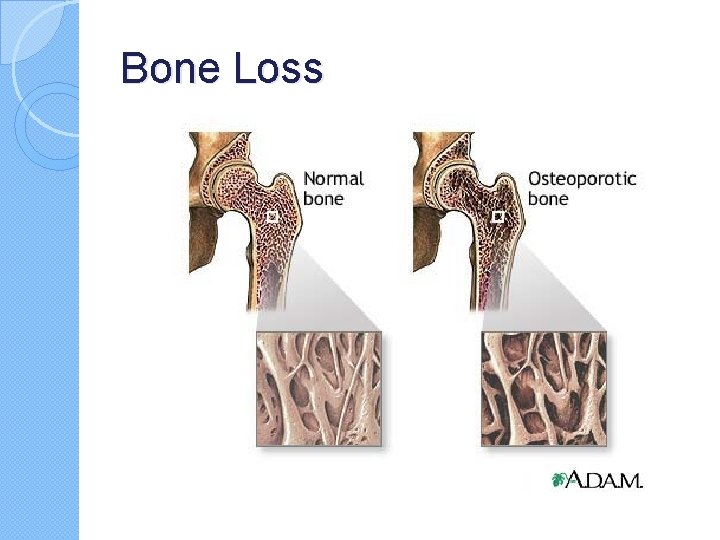
Effects of ED’s: Musculoskeletal �Muscle weakness �Decreased bone density leading to osteoporosis and stress fractures �Stunted growth in children and adolescents
Bone Loss
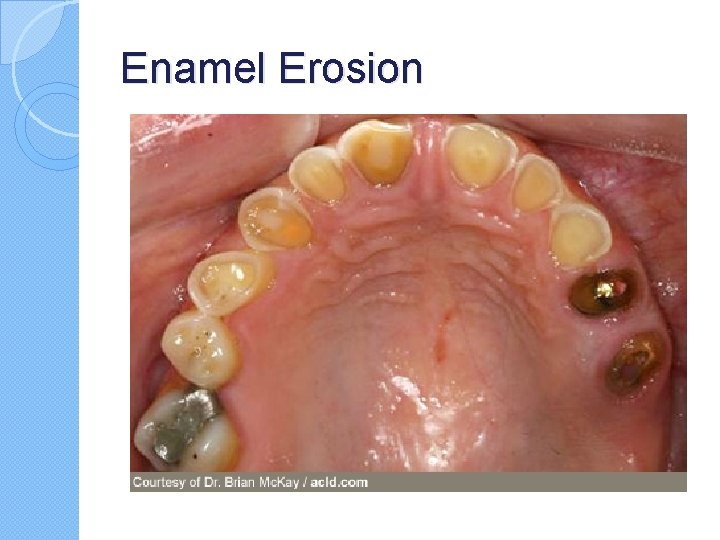
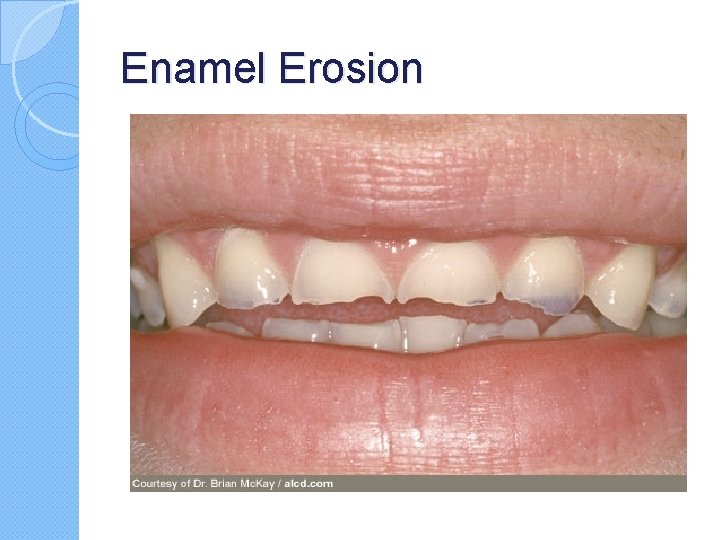
Effects of ED’s: Mouth and Teeth �Erosion of tooth enamel �Loss of teeth �“Chipmunk Cheeks: ” swelling of the salivary glands due to frequent vomiting �Gum disease �Sore throat due to presence of stomach acid
Enamel Erosion
Enamel Erosion
Effects of ED’s: Endocrine and Reproductive �Thyroid abnormalities �Low energy and fatigue �Cold intolerance and low body temperature �Loss of hair on scalp �Development of fine body hair, called lanugo, all over the body, including the face �Loss of menstrual period; indicates inability to bear children (women)
No Period, No Babies!
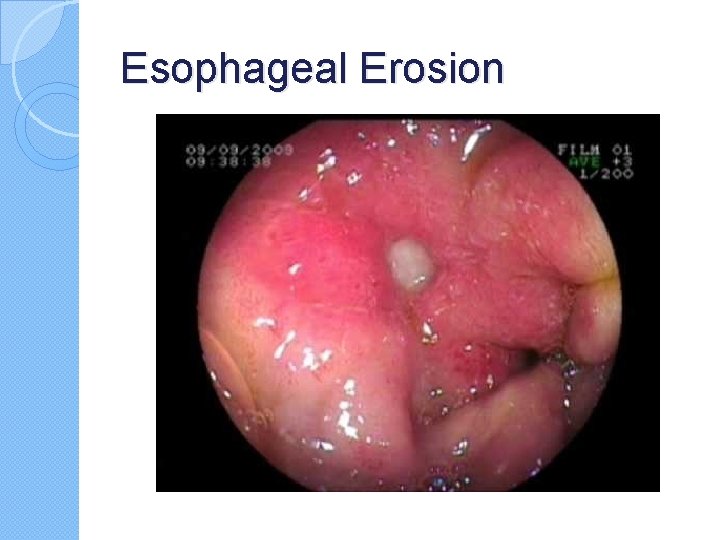
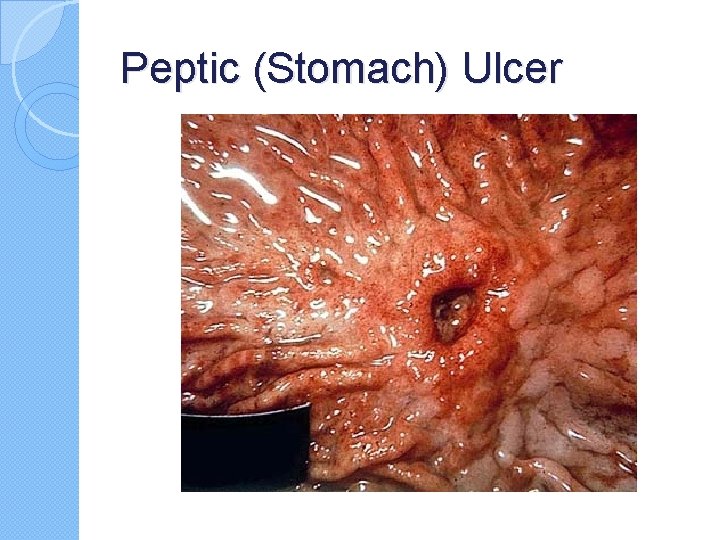
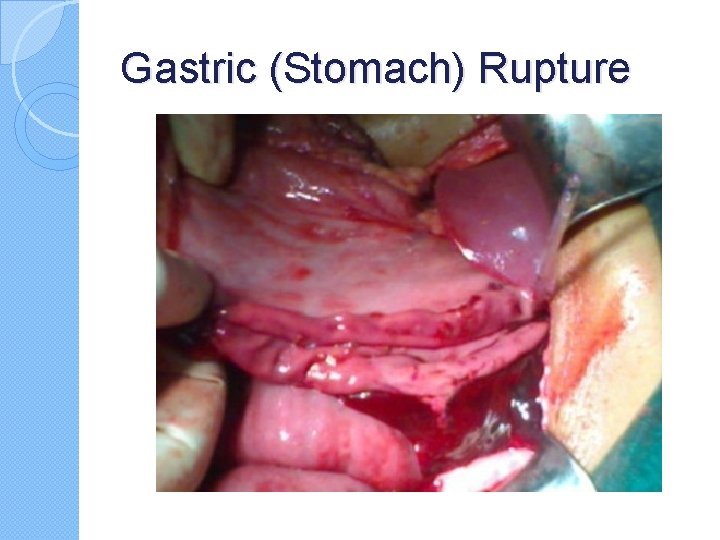
Effects of ED’s: Gastrointestinal �Peptic ulcers �Pancreatitis and gastritis �Gastroesophageal Reflux Disease (GERD) �Gastric rupture from excessive bingeing and vomiting (has 80% fatality rate) �Chronic constipation
Esophageal Erosion
Peptic (Stomach) Ulcer
Gastric (Stomach) Rupture
Effects of ED’s: Urinary and Renal �Kidney Stones �Kidney damage and kidney failure (usually results from severe dehydration) �Electrolyte imbalances such as loss of potassium, sodium, and chloride which can lead to heart arrhythmias and death
What Causes Eating Disorders? �Eating disorders are very complex. There is almost never a single cause. Some things researchers think may contribute: ◦ Low self esteem ◦ Troubled upbringing and/or trauma ◦ Other emotional problems, especially depression and anxiety ◦ Cultural pressure, such as images in the media ◦ Biologic factors (genetics)
True Story of an Exercise Addict
What I Have Noticed �A history of sexual abuse is almost always present in Anorexics, and often in Bulimics �Many people with eating disorders are not able to freely express their emotions �Many eating disorder sufferers come from chaotic backgrounds, and the disorder is a method of control in an otherwise out-of-control life
Case Study: Giselle �Giselle’s dad abused her mom, often in front of her, until her mom left him. After that, her dad had no contact with the children. Giselle had a brain injury at a young age, and learned that being sick was the only way to get her busy mom’s attention. Giselle, feeling rejected by her dad and abandoned by her mom, now refuses to eat and weights 85 pounds.
Case Study: Kendra �Kendra grew up in a normal family. A boy teased her about being fat in front of her whole class in 8 th grade. Kendra now alternates between compulsively eating and vomiting and not eating at all. She is unable to admit that she does not have it all together. Last week, Kendra lost a tooth while brushing because her teeth have been so damaged by her vomiting.
Eating Disorder Myth #1 �Eating disorders are a choice. All the person needs to do is just eat!
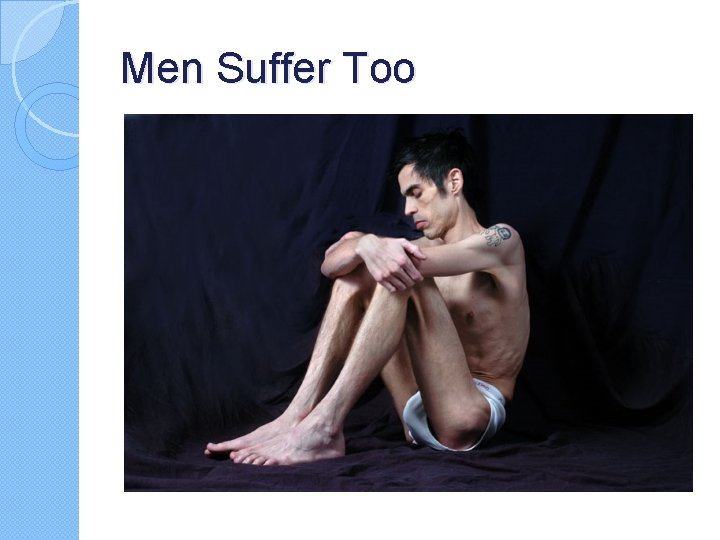
Eating Disorder Myth #2 �Eating disorders only occur in females.
Men Suffer Too
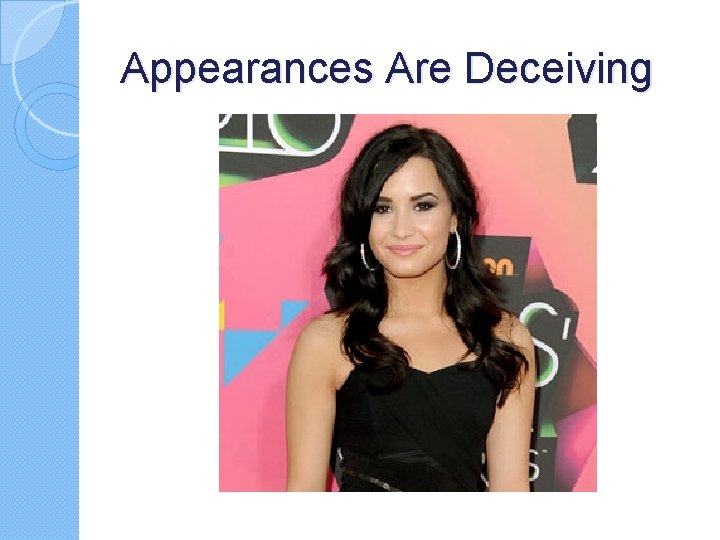
Eating Disorder Myth #3 �You can tell if a person has an eating disorder simply by their appearance.
Appearances Are Deceiving
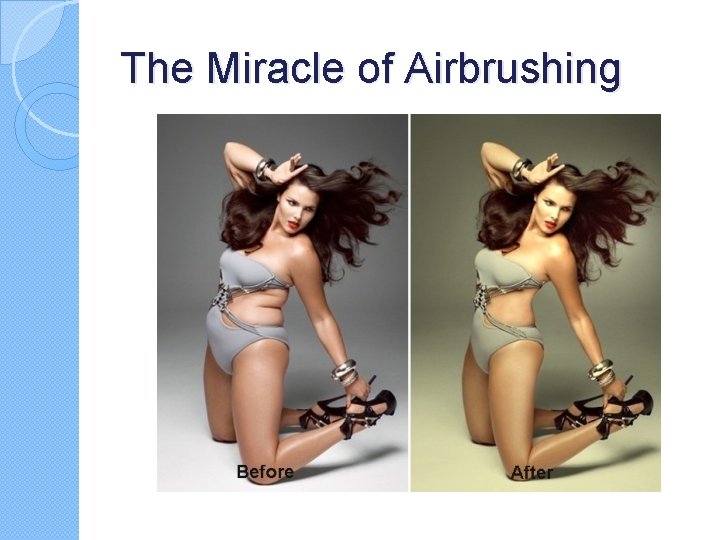
Eating Disorder Myth #4 �Eating Disorders are all about appearance and beauty, and the media with their unrealistic images have caused this problem. People with eating disorders are vain.
The Miracle of Airbrushing
Eating Disorder Myth #5 �Achieving a healthy weight means Anorexia is cured.
Eating Disorder Myth #6 �Purging helps a person lose weight.
Getting Help �If you or someone you know is struggling with an eating disorder, tell an adult you trust immediately. �EDs CAN be treated and recovery IS possible! �When choosing a treatment method, it is imperative to choose a counselor, therapist, or treatment center that has documented experience in treating disorders.
References �Copstead, L. C. , & Banasik, J. L. (2010). Pathophysiology: fourth edition. St. Louis, MO: Saunders Elsevier, Inc. �Marieb, E. N. (2004). Human anatomy and physiology: sixth edition. San Francisco, CA: Pearson Education, Inc. �National association of anorexia nervosa and associated disorders. (2012). Retrieved from http: //www. anad. org/ �National eating disorders association. (2012). Retrieved from http: //www. nationaleatingdisorders. org/