
Action plans at HUH Dr Tammy Rothenberg Starlight

Action plans at HUH Dr Tammy Rothenberg Starlight Unit Homerton University Hospital
Asthma Action Plans • 2012: rate of action plans 18% • June 2013: uploaded the Asthma UK action plans onto the intranet, and started the education regarding the need for this • October 2013, the nursing discharge checklist (for all admissions) was adjusted to include wheeze plan
Asthma Action Plans • November 2013: 91% on basis of nursing checklist alone • In March 2014, implementation of “Action plan generator
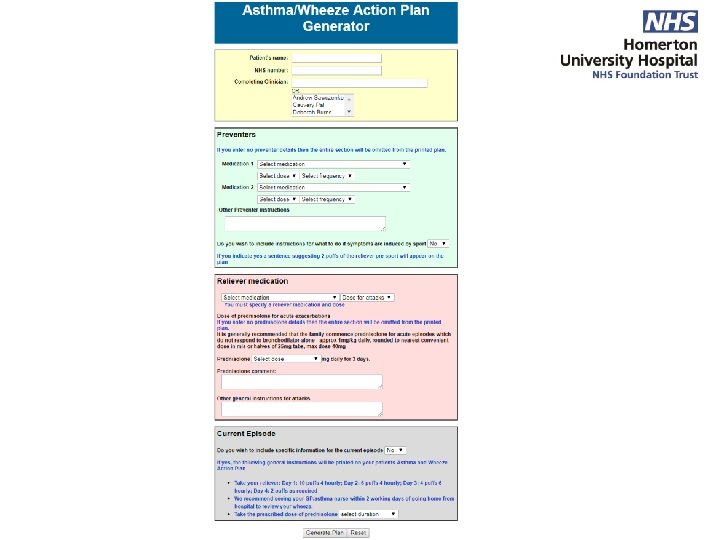
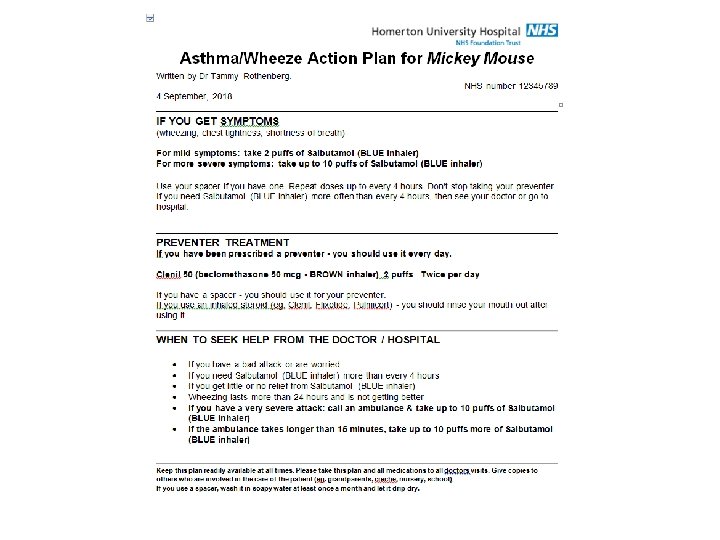
Asthma Action Plans • In March 2014, implementation of “Action plan generator • November 2014 audit: Action plan rate 91%. (using nursing discharge checklist)
Asthma action plans • July 2015: paperless records. Includes pre-existing discharge checklist • November 2015: our data dipped to 64% – ? Eye off the ball due to big change – ? Related to measurement method ? those collecting the data did not look at discharge checklist to measure the rate of action plans, but rather, looked for a copy of the action plan. – ? Related to change to paperless, less filing • 2016: implemented the requirement to copy and paste the action plan into the paperless record , ongoing education
Asthma action plans • Nov 2017: the rate of admissions discharged with an action plan was 98%
Resistance to action plan
Resistance to action plan • No one asked me to • I thought it was someone else’s job • I asked someone else to do if for me, didn’t they do it? • I don’t know where to find the paperwork • The printer was out of paper • I don’t have time • I don’t think it’s worth doing • The patient already has one which is up to date • We’ve run out of paper copies • I’m not sure which one to use • I didn’t know enough information to fill it in
Research • Sheares et al (2007) – structured interviews with 45 specialist physicians providing patient asthma care in 2 New York City medical centres – All 6 doctors in the non-WAAPs group stated that preprinted plans were not available in their clinic sites and therefore they did not give them to patients, and this difference was statistically significant. – 45% of physicians who did use WAAPs stated that time was the major disadvantage to using WAAPs when asked an open-ended question about the disadvantages, – 21% stated that patients lose them or forgot that they received them (Sheares et al. , 2007)
Cycles of PDSA • Zipkin 2013: 4 cycles of PDSA to improve action plans : • clinical care coordinator- identify admissions with asthma, help ensure action plans done ( increase 39 to 74%)- role discontinued due to funding but improvement remained ==== culture change • integration of electronic action plan into EPR (increase 78 -93%)
What did we do? • Electronic action plan https: //www. rch. org. au/clinicalguide/forms/A sthma_Action_Plan/ • Permission from Prof Mike South to adjust it • Input from tech-minded trainee • Multiple tweaks over time • Upload into intranet
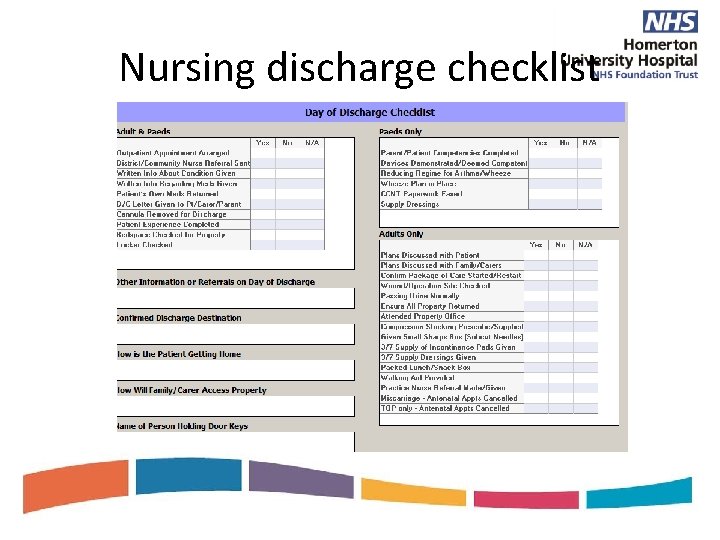
Nursing discharge checklist
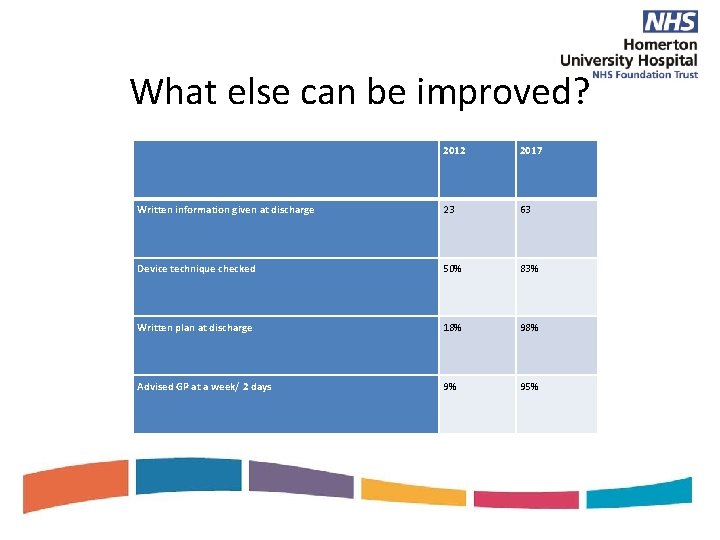
What else can be improved? 2012 2017 Written information given at discharge 23 63 Device technique checked 50% 83% Written plan at discharge 18% 98% Advised GP at a week/ 2 days 9% 95%
What else did we do? • Keep it simple – simple technology, few things to go wrong • … keep going! Change takes time • Keep tweaking • Make friends with IT folks
shortcomings • • Output is not child-centred Output is not based on traffic light system Output does not match GPs or NEL Maintenance requires IT knowledge and IT buy -in from Comms team in hospital
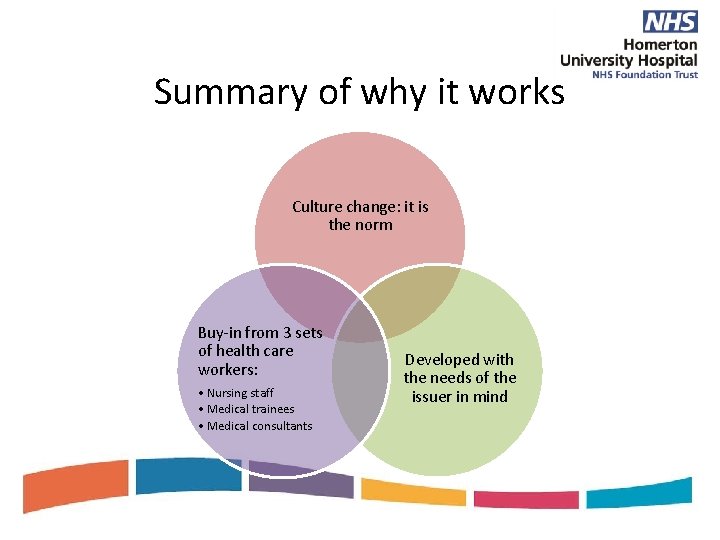
Summary of why it works Culture change: it is the norm Buy-in from 3 sets of health care workers: • Nursing staff • Medical trainees • Medical consultants Developed with the needs of the issuer in mind
Wish list for the future • Implement as the norm in A+E as well as the ward • Keep input fields simple but output to be child -centred- eg Monkey and Me • If you have the tech know-how PLEASE CONTACT ME! • Tammy. rothenberg@nhs. net
- Slides: 19