Dual Diagnosis Contemporary Issues in Ireland Dr Eamon
- Slides: 37
Dual Diagnosis – Contemporary Issues in Ireland Dr Eamon Keenan National Clinical Lead HSE Addiction Services
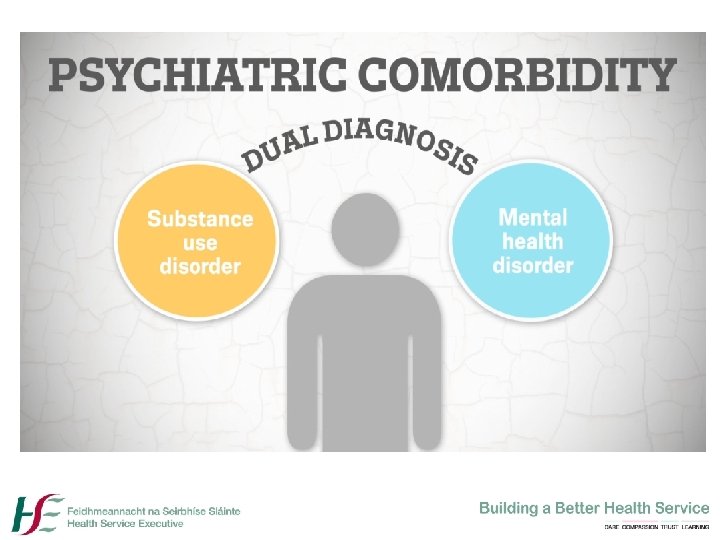
Definition: Dual Diagnosis • The co-existence of both mental health and substance misuse problems including both drugs and alcohol ( Royal College of Psychiatrists 2002) • Each disorder is chronic & relapsing, has independent courses and is capable of influencing the other disorder • Prof Doug Sellman (NZ National Addiction Centre): 2010 stated - It is “somewhat unusual to encounter a person presenting to outpatient addiction services with addiction problems alone. It is “the rule rather than the exception” that they would have a co-morbid mental disorder. ’’
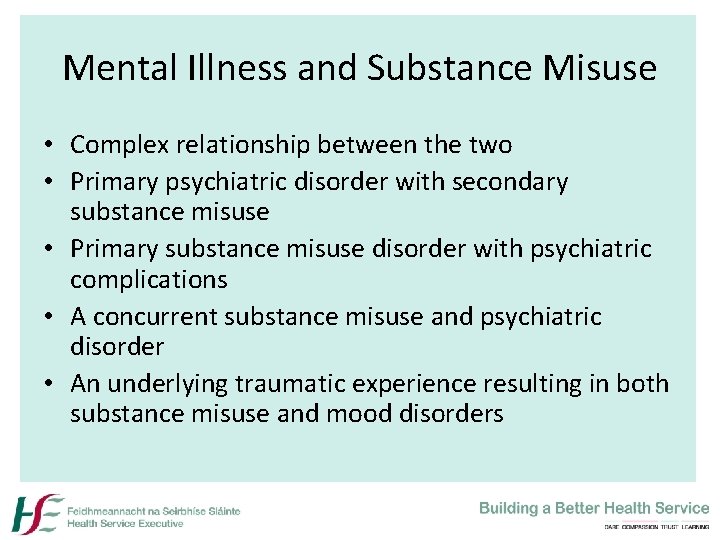
Mental Illness and Substance Misuse • Complex relationship between the two • Primary psychiatric disorder with secondary substance misuse • Primary substance misuse disorder with psychiatric complications • A concurrent substance misuse and psychiatric disorder • An underlying traumatic experience resulting in both substance misuse and mood disorders
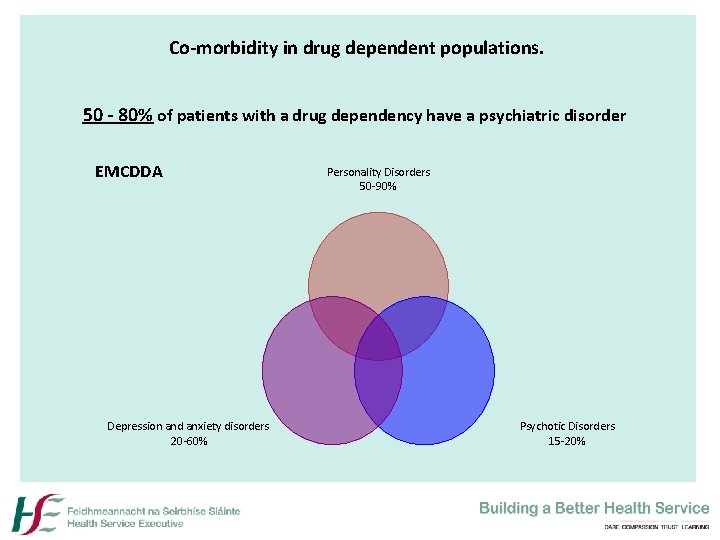
Co-morbidity in drug dependent populations. 50 - 80% of patients with a drug dependency have a psychiatric disorder EMCDDA Depression and anxiety disorders 20 -60% Personality Disorders 50 -90% Psychotic Disorders 15 -20%
Extent of Problem National Household Study • Study in UK examining psychological wellbeing and relationship with substance misuse (Farrell et al 2001) • Psychological morbidity present in 12% of nondependent individuals, 30% of alcohol dependent individuals and 45% of drug dependent individuals
Extent of Problem Comorbidity of Substance Misuse and Mental Illness Collaborative (COSMIC) study • Recent UK research among population of community mental health patients (Weaver et al 2003) • 40% of patients managed in community mental health settings reported problem drug use and/or harmful alcohol use in the past year
Cannabis and Psychosis • 4/5 recent reviews on the subject concluded that cannabis use is a contributary cause of psychosis • Most likely in vulnerable individuals • Risk of psychosis is increased 2 -3 times in cannabis users • Start smoking < 15 yrs » Increase risk of developing psychosis by 26 yrs x 4 times
Implications of Dual Diagnosis • Exacerbation of symptoms • Non compliance with treatment or meds • Interactions between prescribed meds and illicit drugs • Increase relapse rates and severity • Increased costs and use of service (higher rates of admission to hospital) • Increased risk of violence • Increased risk of suicide and self harm
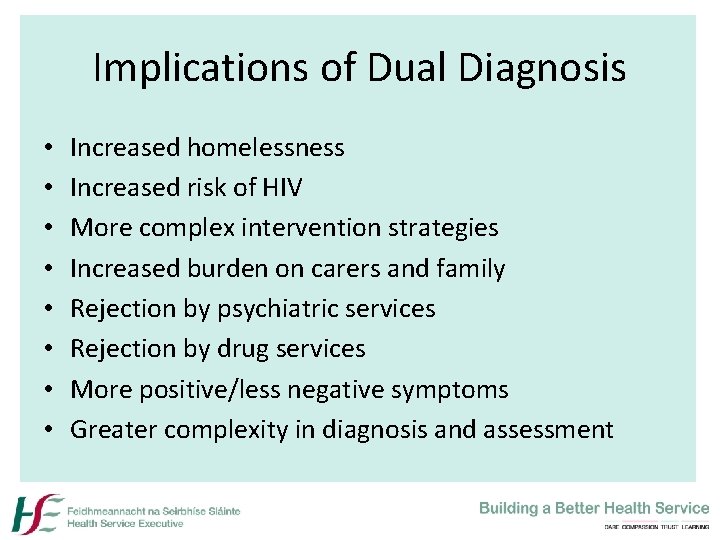
Implications of Dual Diagnosis • • Increased homelessness Increased risk of HIV More complex intervention strategies Increased burden on carers and family Rejection by psychiatric services Rejection by drug services More positive/less negative symptoms Greater complexity in diagnosis and assessment
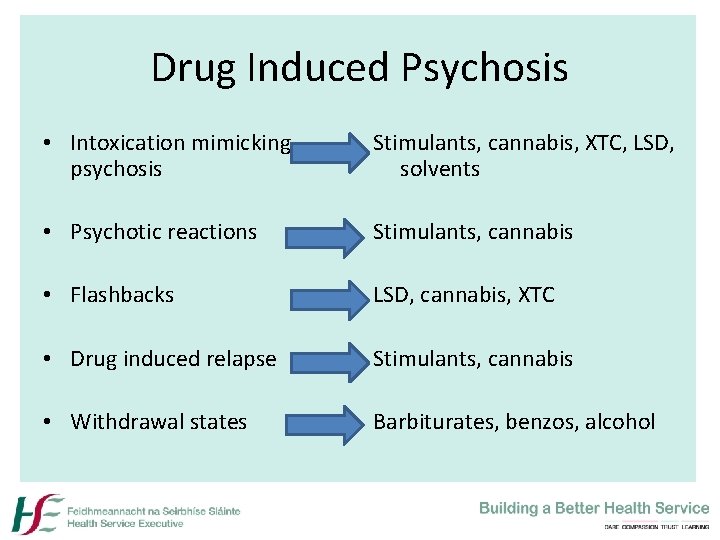
Drug Induced Psychosis • Intoxication mimicking psychosis Stimulants, cannabis, XTC, LSD, solvents • Psychotic reactions Stimulants, cannabis • Flashbacks LSD, cannabis, XTC • Drug induced relapse Stimulants, cannabis • Withdrawal states Barbiturates, benzos, alcohol
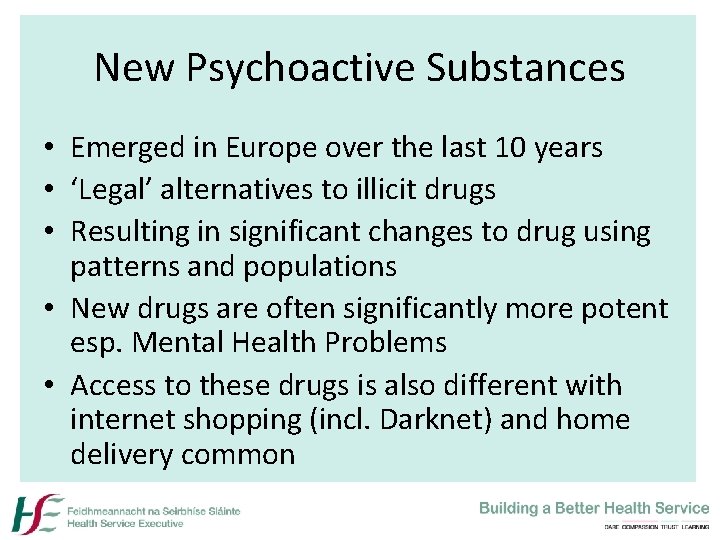
New Psychoactive Substances • Emerged in Europe over the last 10 years • ‘Legal’ alternatives to illicit drugs • Resulting in significant changes to drug using patterns and populations • New drugs are often significantly more potent esp. Mental Health Problems • Access to these drugs is also different with internet shopping (incl. Darknet) and home delivery common
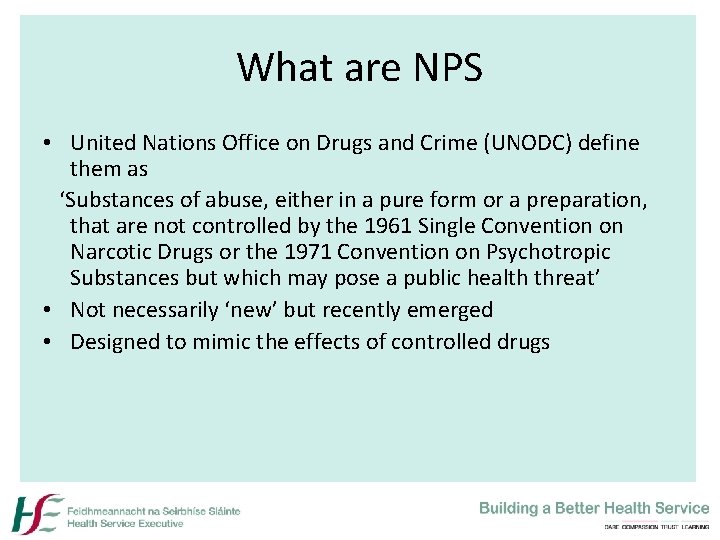
What are NPS • United Nations Office on Drugs and Crime (UNODC) define them as ‘Substances of abuse, either in a pure form or a preparation, that are not controlled by the 1961 Single Convention on Narcotic Drugs or the 1971 Convention on Psychotropic Substances but which may pose a public health threat’ • Not necessarily ‘new’ but recently emerged • Designed to mimic the effects of controlled drugs
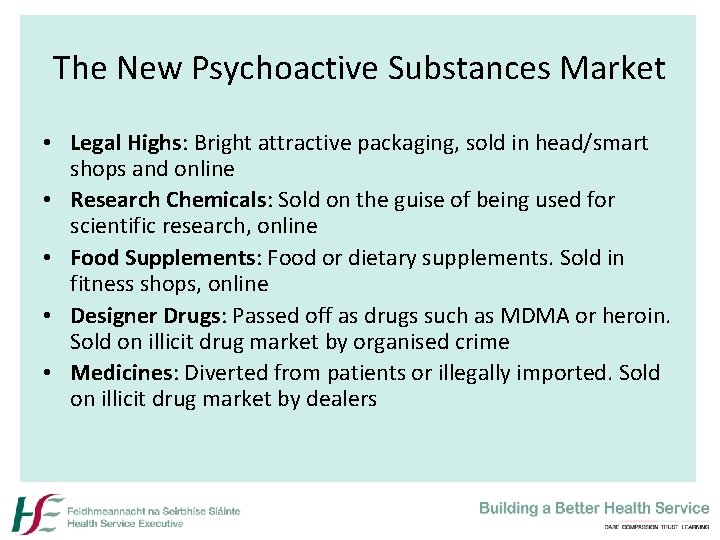
The New Psychoactive Substances Market • Legal Highs: Bright attractive packaging, sold in head/smart shops and online • Research Chemicals: Sold on the guise of being used for scientific research, online • Food Supplements: Food or dietary supplements. Sold in fitness shops, online • Designer Drugs: Passed off as drugs such as MDMA or heroin. Sold on illicit drug market by organised crime • Medicines: Diverted from patients or illegally imported. Sold on illicit drug market by dealers
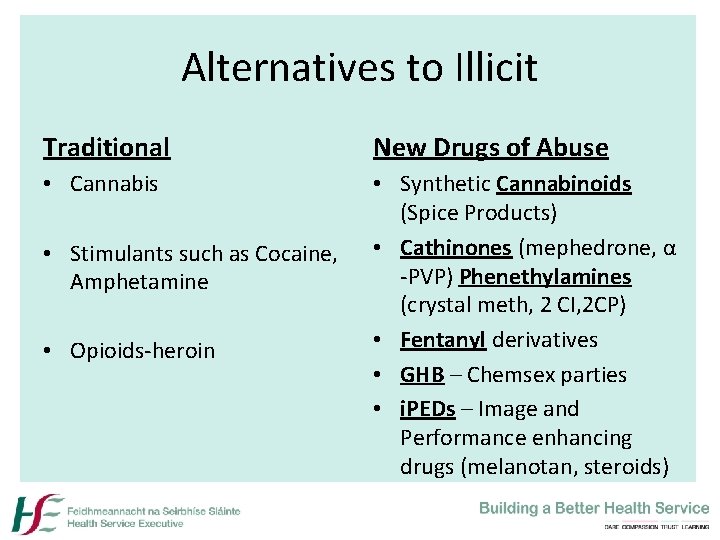
Alternatives to Illicit Traditional New Drugs of Abuse • Cannabis • Synthetic Cannabinoids (Spice Products) • Cathinones (mephedrone, α -PVP) Phenethylamines (crystal meth, 2 CI, 2 CP) • Fentanyl derivatives • GHB – Chemsex parties • i. PEDs – Image and Performance enhancing drugs (melanotan, steroids) • Stimulants such as Cocaine, Amphetamine • Opioids-heroin
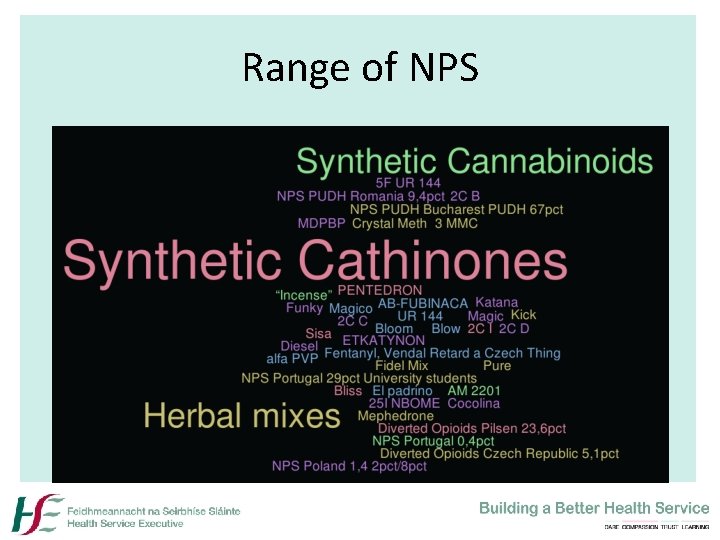
Range of NPS
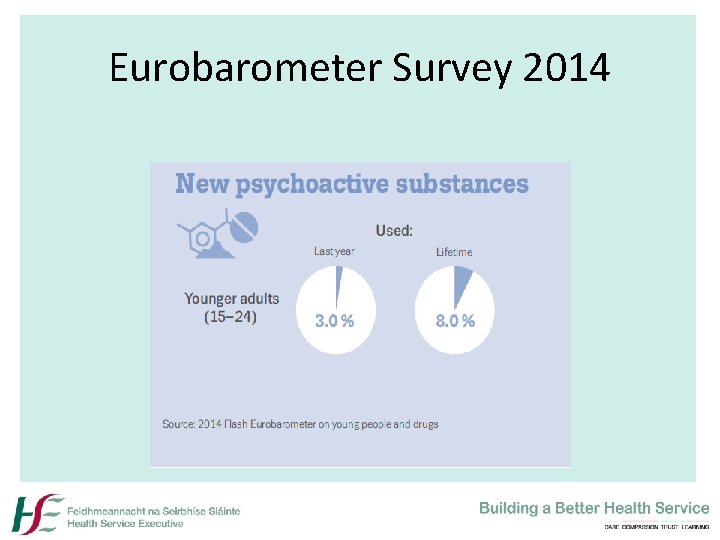
Eurobarometer Survey 2014
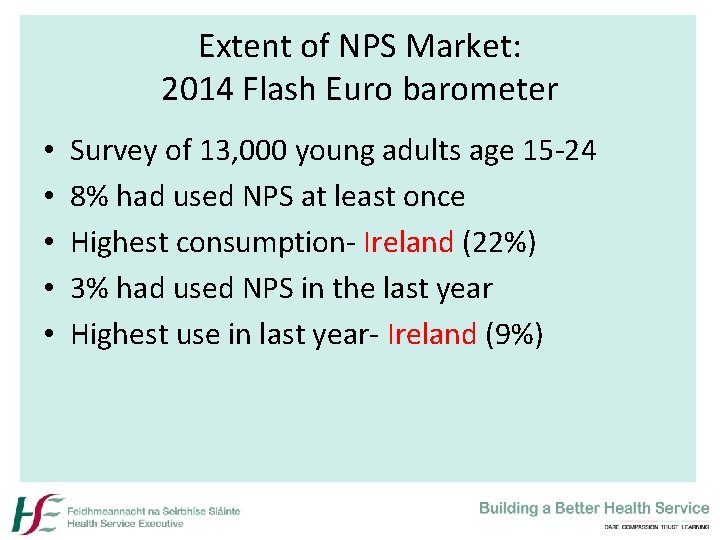
Extent of NPS Market: 2014 Flash Euro barometer • • • Survey of 13, 000 young adults age 15 -24 8% had used NPS at least once Highest consumption- Ireland (22%) 3% had used NPS in the last year Highest use in last year- Ireland (9%)
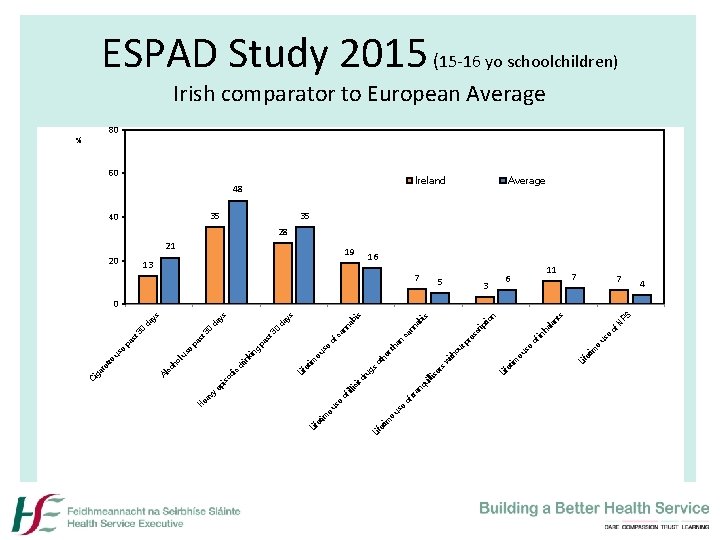
e us e of it e e us of PS N 11 tim s nt la ha in 6 fe of Ireland Li e 3 us 5 e 7 tim n tio rip sc tp re is ab nn ca s 48 fe ha n ou ith w rt he ot bi nn a ca ys da 60 Li rs se ug s dr illi nq u tra llic of 30 s 19 tim of i e us st pa da y 13 fe e us tim e ng 30 ys da 21 Li e tim ki in dr fe Li ic od ep is st 30 35 fe y pa st pa 40 Li ea v H se lu ho co us e 20 Al te et ig ar C ESPAD Study 2015 (15 -16 yo schoolchildren) Irish comparator to European Average % 80 Average 35 28 16 7 7 0 4
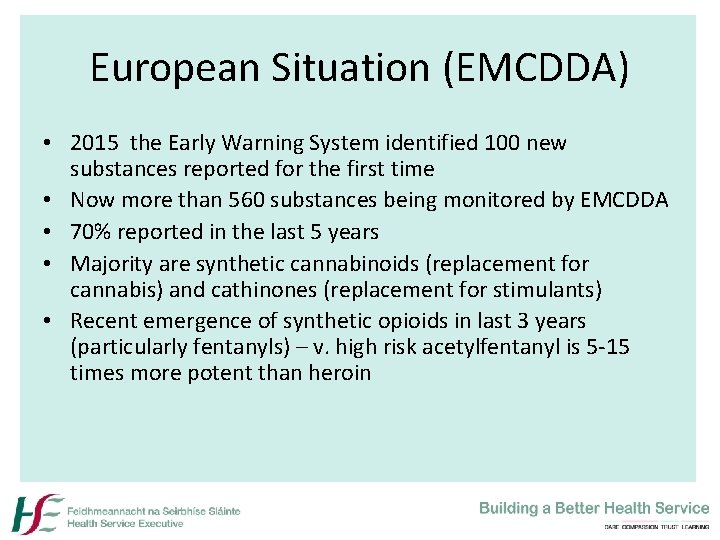
European Situation (EMCDDA) • 2015 the Early Warning System identified 100 new substances reported for the first time • Now more than 560 substances being monitored by EMCDDA • 70% reported in the last 5 years • Majority are synthetic cannabinoids (replacement for cannabis) and cathinones (replacement for stimulants) • Recent emergence of synthetic opioids in last 3 years (particularly fentanyls) – v. high risk acetylfentanyl is 5 -15 times more potent than heroin
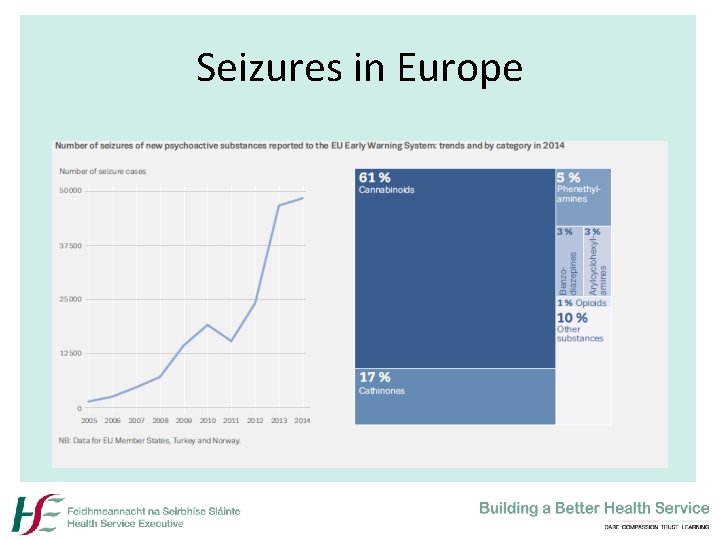
Seizures in Europe
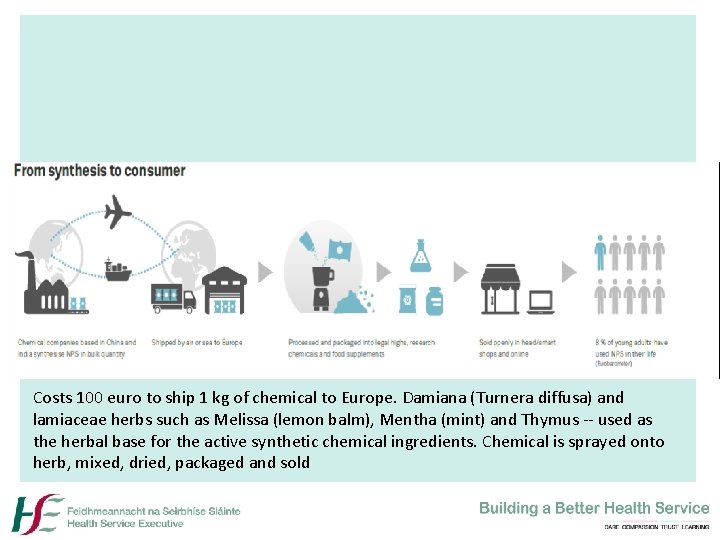
Costs 100 euro to ship 1 kg of chemical to Europe. Damiana (Turnera diffusa) and lamiaceae herbs such as Melissa (lemon balm), Mentha (mint) and Thymus -- used as the herbal base for the active synthetic chemical ingredients. Chemical is sprayed onto herb, mixed, dried, packaged and sold
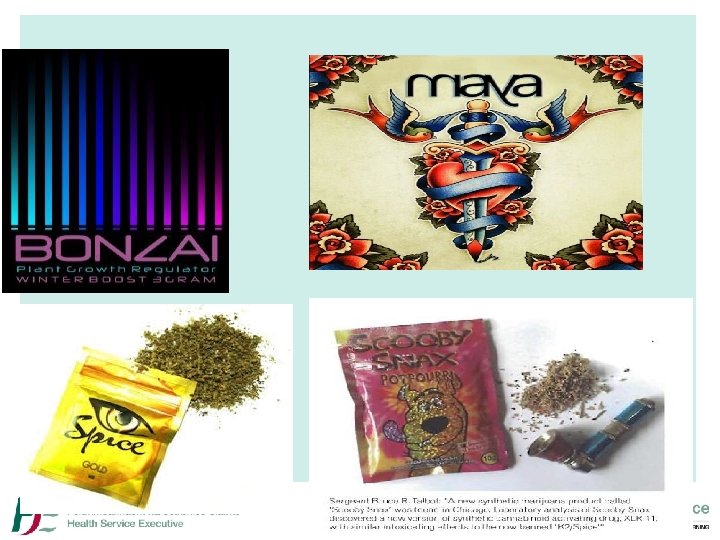
Synthetic Cannabinoids (SC) • Heterogeneous group of cannabinoid receptor agonists with effects similar to delta-9 -tetrehydrocannabinol (THC) • Laced on herbal products and marketed as “designer drugs. ” sold as “legal highs” under brand names such as ‘Spice’, ‘K 2’ • Recent alert re MDMB-CHMICA assoc with 13 deaths in Europe from Sept 2014 – July 2015. 40 kg of MDMB-CHMICA was seized in Luxembourg (2014) en-route from Shanghai to Madrid • Not detectable by standard screening tests. • 160 synthetic cannabinoids have been notified to the EMCDDA
Synthetic cannabinoids(SC) • SC produce more intense (up to 100 times) effects than THC. Developed as legal alternative to cannabis • Associated with medical and psychiatric emergencies. • adverse effects include: cardiovascular, muscular, renal, brain including agitation, psychosis and suicidal thoughts. Longterm or residual effects are unknown. • Psychosis outcomes associated with Spice (‘SPICEOPHRENIA’) provide additional data linking cannabinoids and psychosis. .
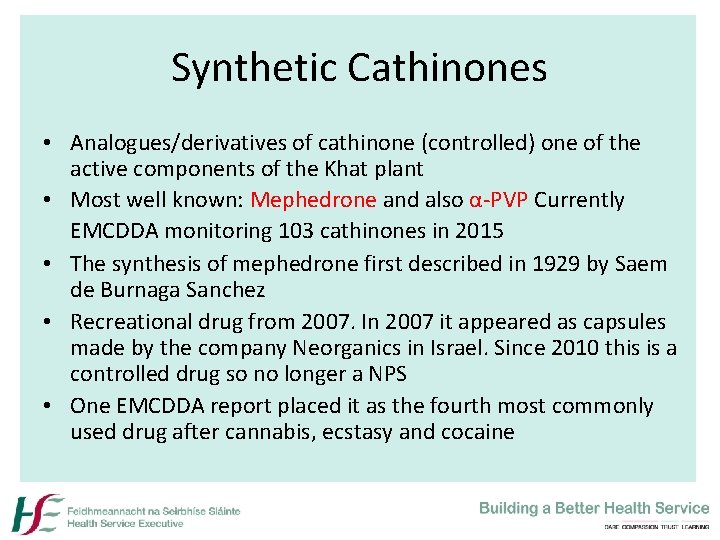
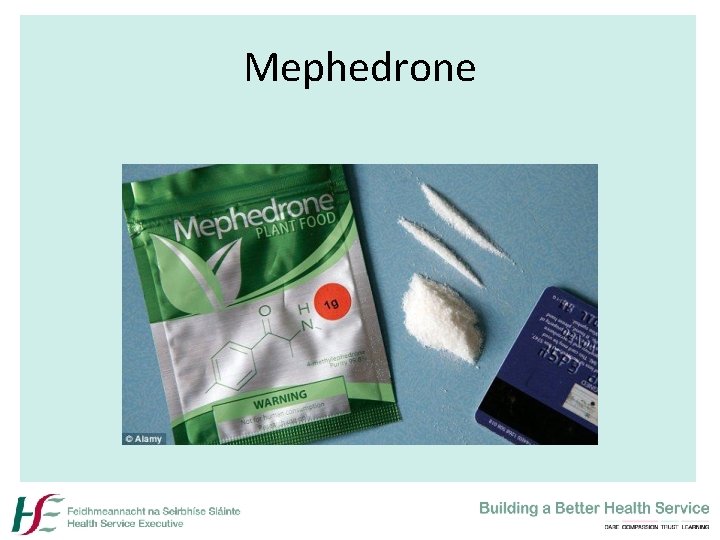
Synthetic Cathinones • Analogues/derivatives of cathinone (controlled) one of the active components of the Khat plant • Most well known: Mephedrone and also α-PVP Currently EMCDDA monitoring 103 cathinones in 2015 • The synthesis of mephedrone first described in 1929 by Saem de Burnaga Sanchez • Recreational drug from 2007. In 2007 it appeared as capsules made by the company Neorganics in Israel. Since 2010 this is a controlled drug so no longer a NPS • One EMCDDA report placed it as the fourth most commonly used drug after cannabis, ecstasy and cocaine
Mephedrone
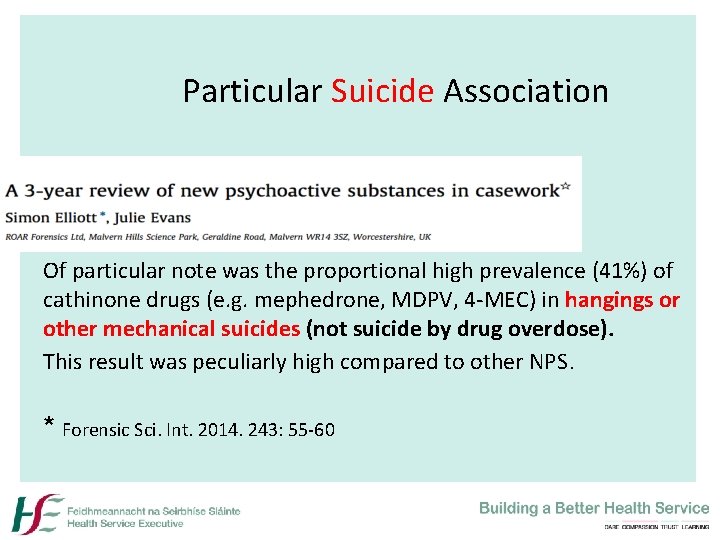
Particular Suicide Association Of particular note was the proportional high prevalence (41%) of cathinone drugs (e. g. mephedrone, MDPV, 4 -MEC) in hangings or other mechanical suicides (not suicide by drug overdose). This result was peculiarly high compared to other NPS. * Forensic Sci. Int. 2014. 243: 55 -60
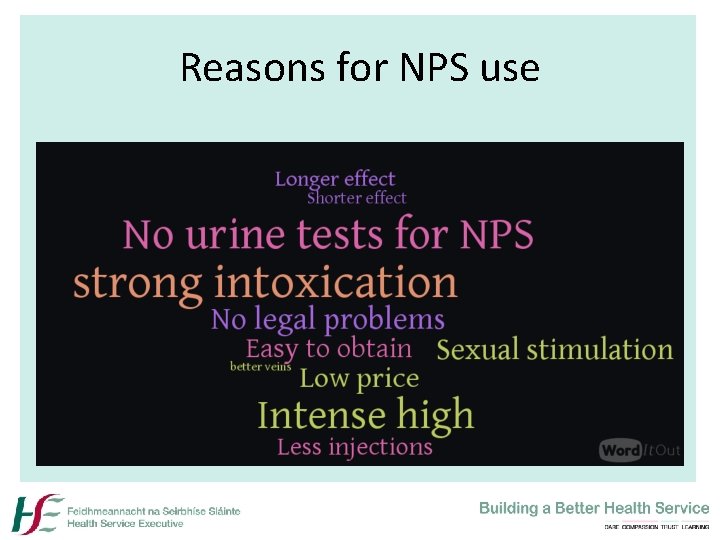
Reasons for NPS use
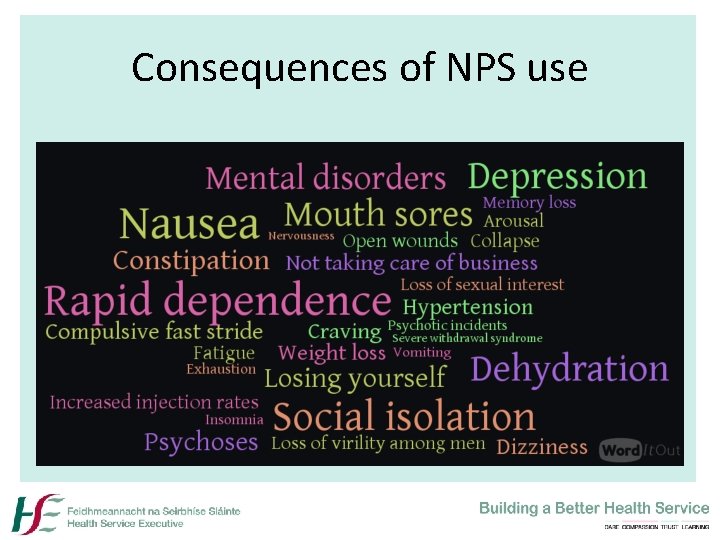
Consequences of NPS use
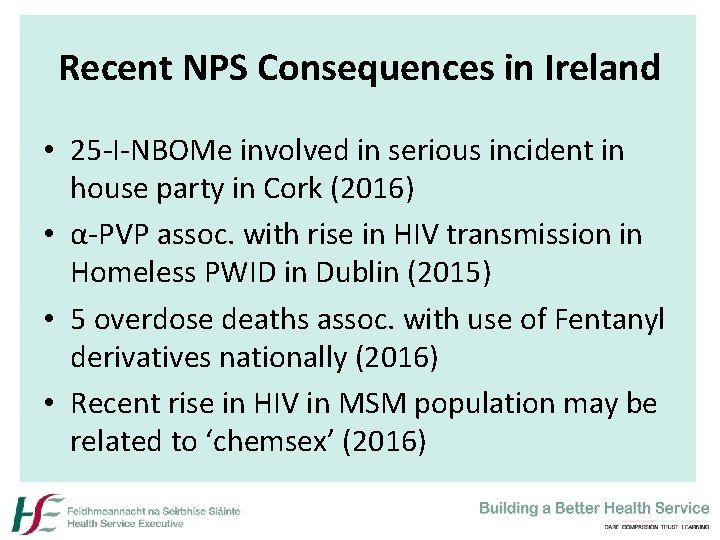
Recent NPS Consequences in Ireland • 25 -I-NBOMe involved in serious incident in house party in Cork (2016) • α-PVP assoc. with rise in HIV transmission in Homeless PWID in Dublin (2015) • 5 overdose deaths assoc. with use of Fentanyl derivatives nationally (2016) • Recent rise in HIV in MSM population may be related to ‘chemsex’ (2016)
Vision for Change • Published by DOHC in January 2006 • Provided template for development of Mental Health Services over the next 10 years • Follow up to ‘Planning for the Future’ in 1984 • Emphasises development of multidisciplinary Community Mental Health Teams (CMHT) core elements of which are psychiatry, nursing, social work, clinical psychology and OT • Plan to close all mental hospitals • Care for people with addiction lies outside the mental health system! Now completely within Primary Care
Vision for Change - Developments • Substance Misuse Strategy 2012 highlights inconsistency and challenges ‘Vision’ • Faculty of Substance Misuse in College of Psychiatrists calling to revisit document • Otherwise asking for 20 -25% of Mental Health budget be diverted to the new Substance Misuse service development • Growing recognition of problem of ‘Dual Diagnosis’
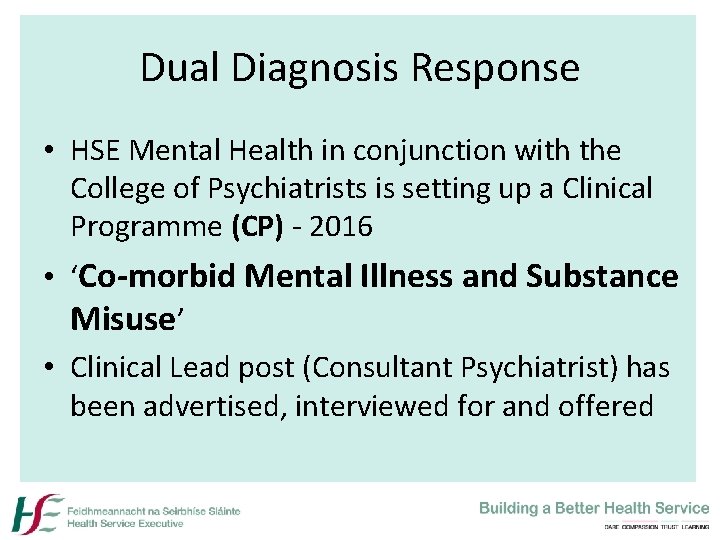
Dual Diagnosis Response • HSE Mental Health in conjunction with the College of Psychiatrists is setting up a Clinical Programme (CP) - 2016 • ‘Co-morbid Mental Illness and Substance Misuse’ • Clinical Lead post (Consultant Psychiatrist) has been advertised, interviewed for and offered
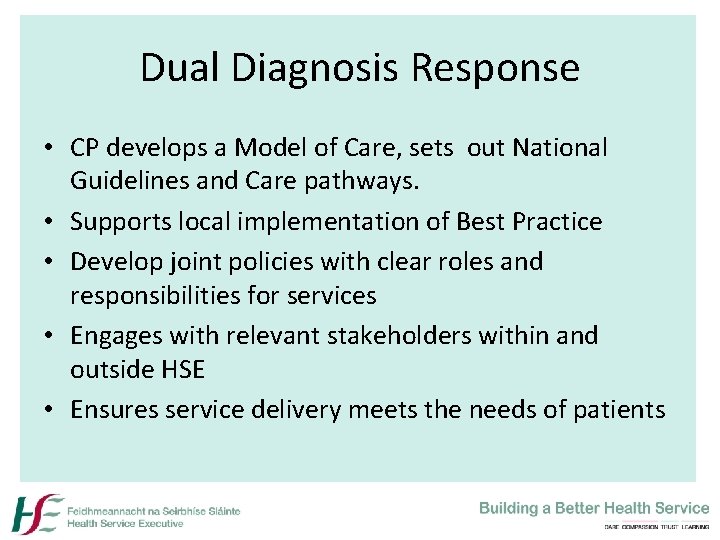
Dual Diagnosis Response • CP develops a Model of Care, sets out National Guidelines and Care pathways. • Supports local implementation of Best Practice • Develop joint policies with clear roles and responsibilities for services • Engages with relevant stakeholders within and outside HSE • Ensures service delivery meets the needs of patients
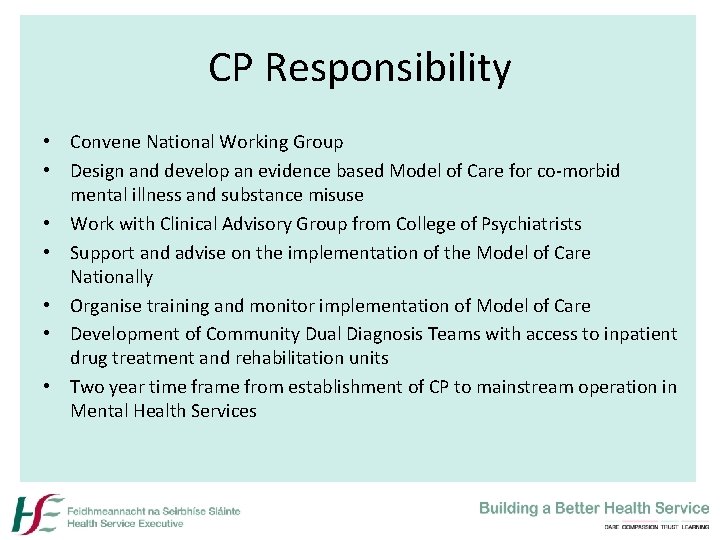
CP Responsibility • Convene National Working Group • Design and develop an evidence based Model of Care for co-morbid mental illness and substance misuse • Work with Clinical Advisory Group from College of Psychiatrists • Support and advise on the implementation of the Model of Care Nationally • Organise training and monitor implementation of Model of Care • Development of Community Dual Diagnosis Teams with access to inpatient drug treatment and rehabilitation units • Two year time frame from establishment of CP to mainstream operation in Mental Health Services
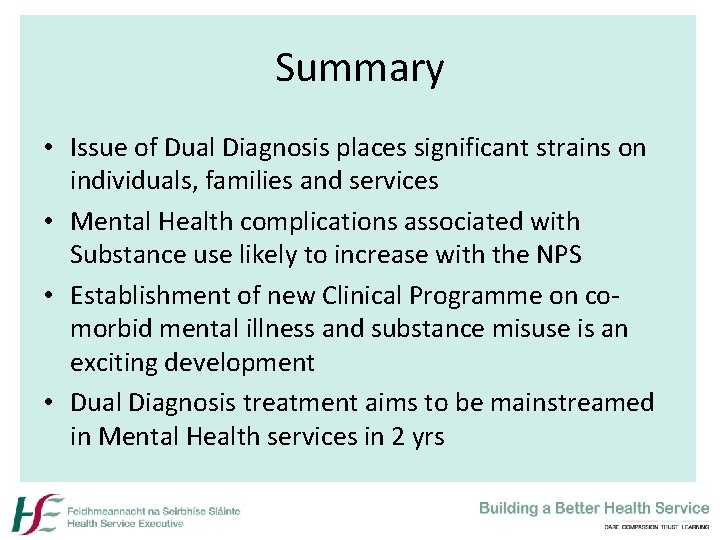
Summary • Issue of Dual Diagnosis places significant strains on individuals, families and services • Mental Health complications associated with Substance use likely to increase with the NPS • Establishment of new Clinical Programme on comorbid mental illness and substance misuse is an exciting development • Dual Diagnosis treatment aims to be mainstreamed in Mental Health services in 2 yrs