Independent Commission on Local Government Finance Eamon Lally
- Slides: 12
Independent Commission on Local Government Finance Eamon Lally CIPFA North West Annual Conference 14 November 2014
The Commission Terms of Reference • Identify the strengths and weaknesses of the local government finance system, • Bring forward practical options for reform in the next Parliament and • Develop and test those proposals against the key challenges facing the country – growth, housing supply, effective welfare provision, affordable health and social care, and early support to families and children. Timetable from here: 30 Oct: interim report published Nov-Dec: Engagement on Interim findings Feb 2015: Final report
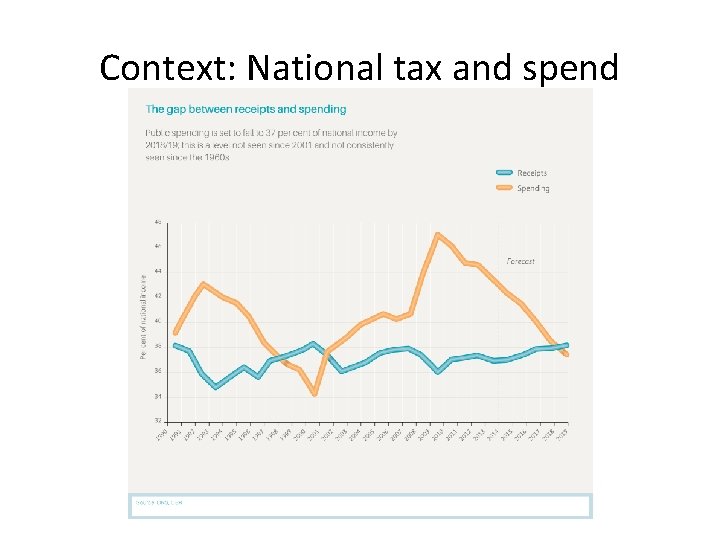
Context: National tax and spend
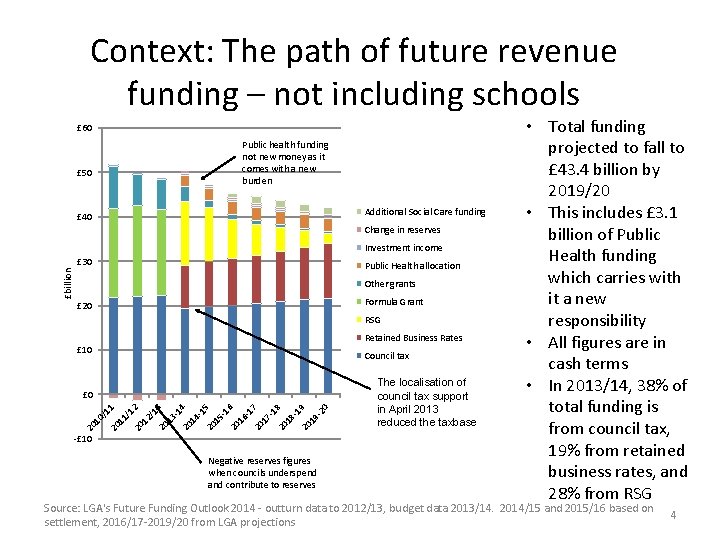
Context: The path of future revenue funding – not including schools £ 60 Public health funding not new money as it comes with a new burden £ 50 Additional Social Care funding £ 40 Change in reserves Investment income £ 30 £billion Public Health allocation Other grants Formula Grant £ 20 RSG Retained Business Rates £ 10 Council tax 20 10 /1 20 1 11 /1 20 2 12 /1 20 3 13 -1 20 4 14 -1 20 5 15 -1 20 6 16 -1 20 7 17 -1 20 8 18 -1 20 9 19 -2 0 £ 0 -£ 10 Negative reserves figures when councils underspend and contribute to reserves The localisation of council tax support in April 2013 reduced the taxbase • Total funding projected to fall to £ 43. 4 billion by 2019/20 • This includes £ 3. 1 billion of Public Health funding which carries with it a new responsibility • All figures are in cash terms • In 2013/14, 38% of total funding is from council tax, 19% from retained business rates, and 28% from RSG Source: LGA's Future Funding Outlook 2014 - outturn data to 2012/13, budget data 2013/14. 2014/15 and 2015/16 based on settlement, 2016/17 -2019/20 from LGA projections 4
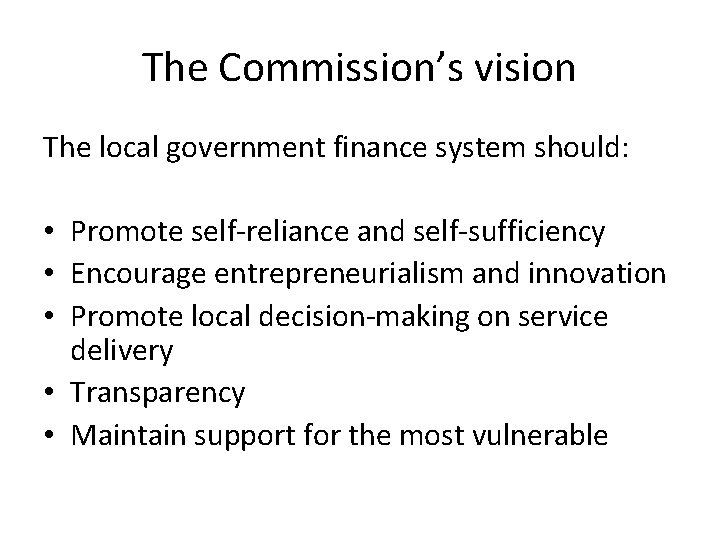
The Commission’s vision The local government finance system should: • Promote self-reliance and self-sufficiency • Encourage entrepreneurialism and innovation • Promote local decision-making on service delivery • Transparency • Maintain support for the most vulnerable
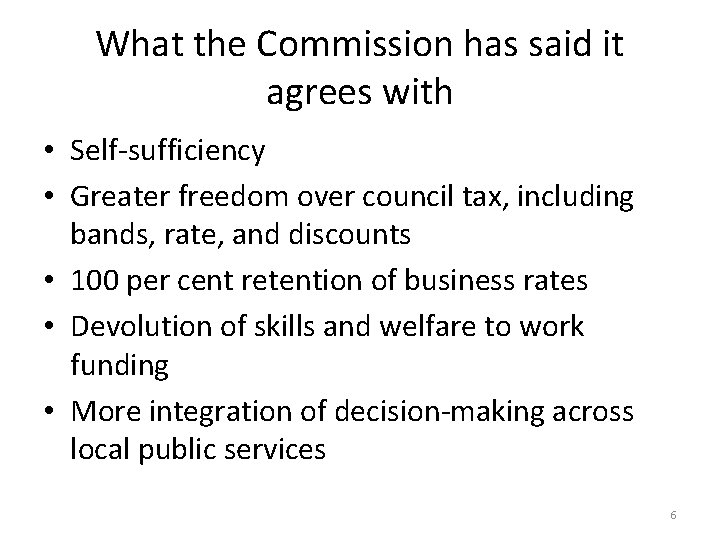
What the Commission has said it agrees with • Self-sufficiency • Greater freedom over council tax, including bands, rate, and discounts • 100 per cent retention of business rates • Devolution of skills and welfare to work funding • More integration of decision-making across local public services 6
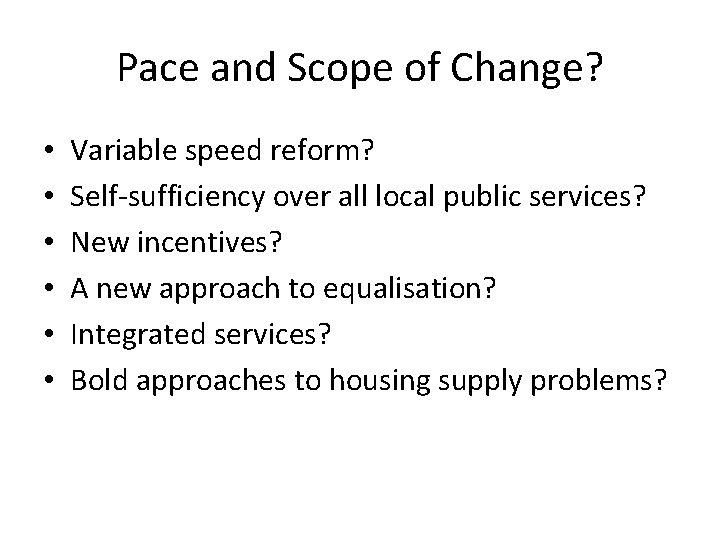
Pace and Scope of Change? • • • Variable speed reform? Self-sufficiency over all local public services? New incentives? A new approach to equalisation? Integrated services? Bold approaches to housing supply problems?
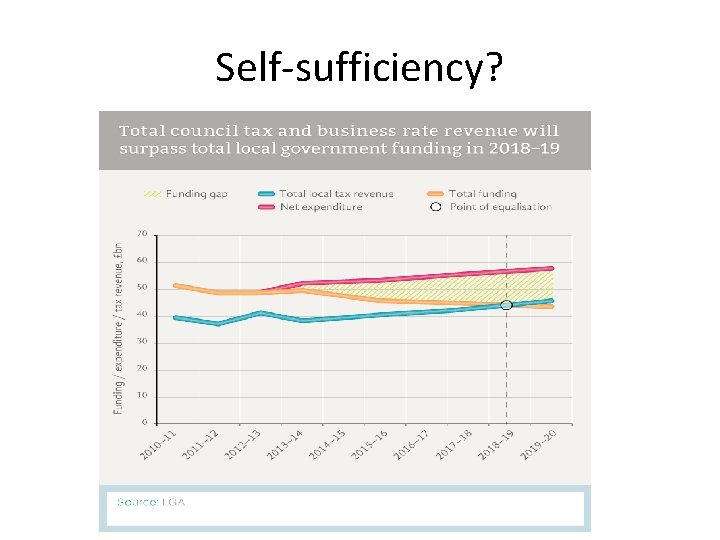
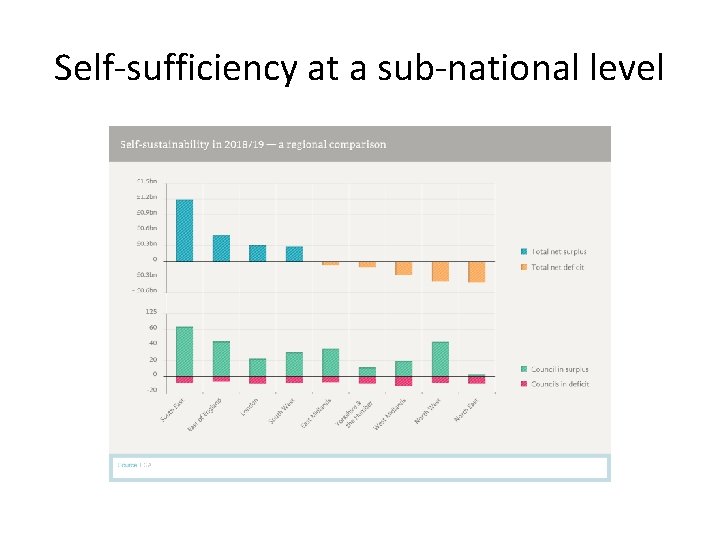
Self-sufficiency?
Self-sufficiency at a sub-national level
Equalisation • Not all Councils can grow economically at the same pace • Not all Councils will grow their populations at the same pace • Councils will face different Levels of demand
Challenges and questions • What is the appetite for radical change? • Is there evidence that integrating health and social care services will create savings? • What incentives are needed if any? • What should the balance be between incentives and equalisation in the system as it moves towards self-sufficiency? • How would it work – the wiring diagram?
Independent Commission on Local government Finance enquiries@localfinancecommission. org Contact Eamon Lally: Tel: 07799768570