Diagnostic accuracy and statistical significance Mirella Fraquelli Gastroenterology

- Slides: 24
Diagnostic accuracy and statistical significance Mirella Fraquelli Gastroenterology and Endoscopy Unit Fondazione IRCCS Ca’ Granda Ospedale Maggiore Policlinico - Milan DIAGNOSIS: the pathway of a diagnostic test from bench to bedside. Basic residential course 4 -8 April 2017 - Palazzo Feltrinelli Gargnano, Lake Garda, Italy
Aim of diagnostic studies In clinical practice diagnosis is not an aim per se The fundamental purpose of diagnostic testing is to reduce uncertainty about the presence or absence of the disease in order to reduce the risks of an improper treatment decision Diagnosis is relevant in as far as it directs treatment and indicates the prognosis of a patient presenting with a particular problem
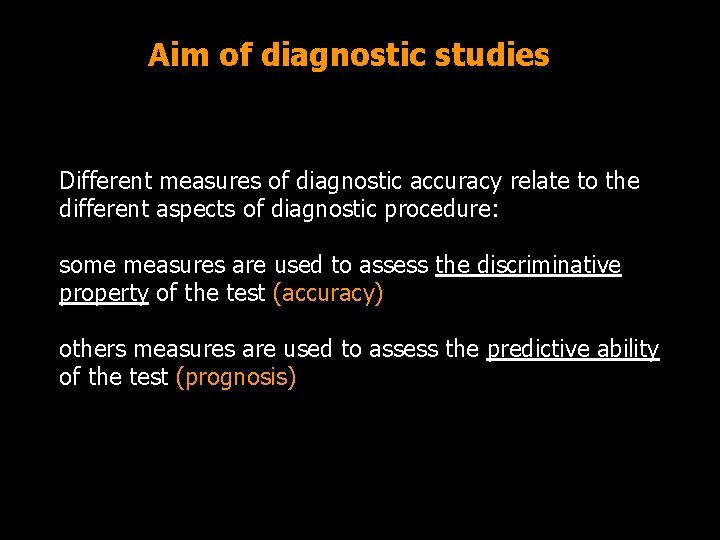
Aim of diagnostic studies Different measures of diagnostic accuracy relate to the different aspects of diagnostic procedure: some measures are used to assess the discriminative property of the test (accuracy) others measures are used to assess the predictive ability of the test (prognosis)
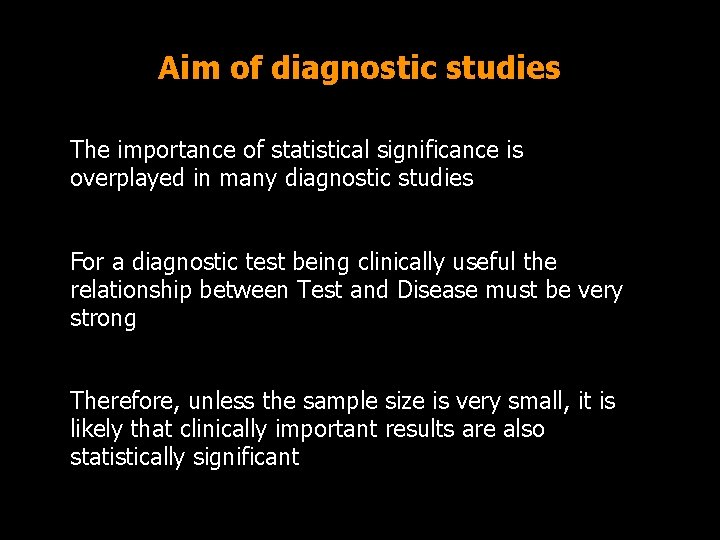
Aim of diagnostic studies The importance of statistical significance is overplayed in many diagnostic studies For a diagnostic test being clinically useful the relationship between Test and Disease must be very strong Therefore, unless the sample size is very small, it is likely that clinically important results are also statistically significant
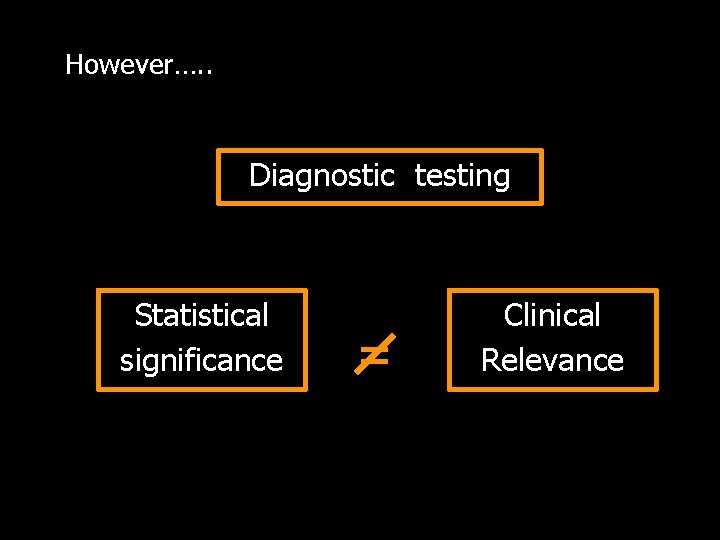
However…. . Diagnostic testing Statistical significance == Clinical Relevance
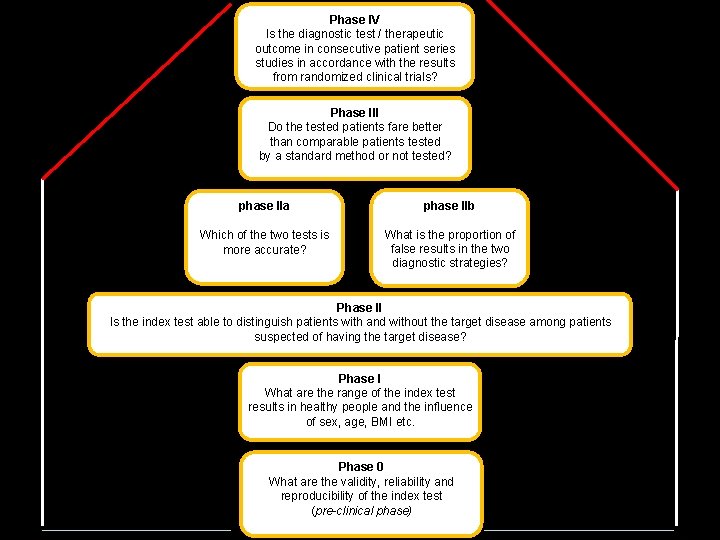
Figure 1 Phase IV Is the diagnostic test / therapeutic outcome in consecutive patient series studies in accordance with the results from randomized clinical trials? Phase III Do the tested patients fare better than comparable patients tested by a standard method or not tested? phase IIa phase IIb Which of the two tests is more accurate? What is the proportion of false results in the two diagnostic strategies? Phase II Is the index test able to distinguish patients with and without the target disease among patients suspected of having the target disease? Phase I What are the range of the index test results in healthy people and the influence of sex, age, BMI etc. Phase 0 What are the validity, reliability and reproducibility of the index test (pre-clinical phase)
Does statistical significance really matter?
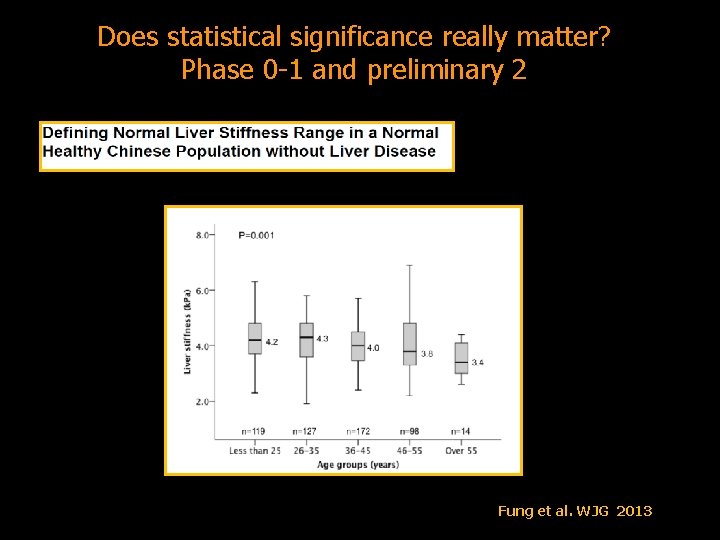
Does statistical significance really matter? Phase 0 -1 and preliminary 2 Fung et al. WJG 2013
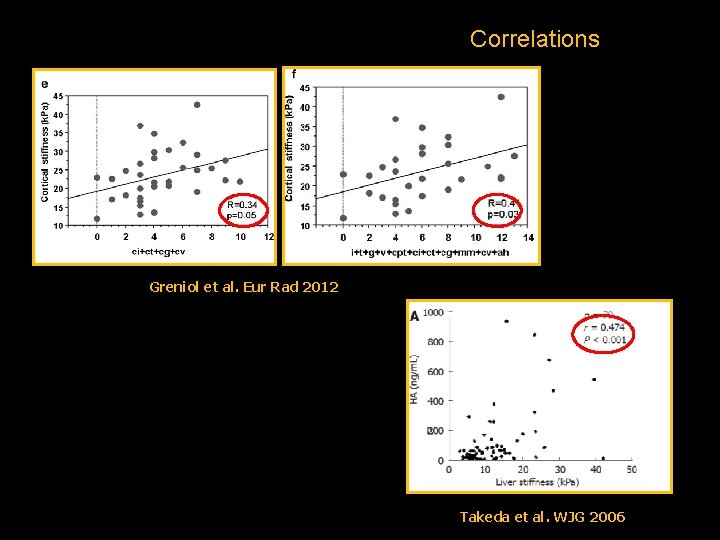
Correlations Greniol et al. Eur Rad 2012 Takeda et al. WJG 2006
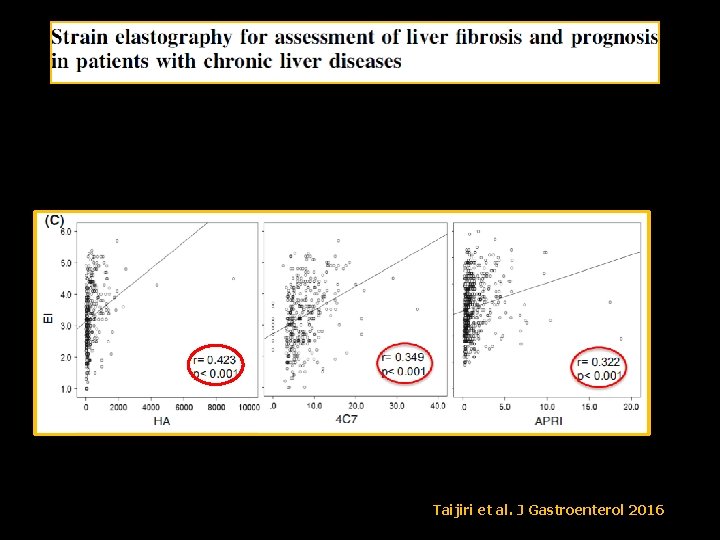
Taijiri et al. J Gastroenterol 2016
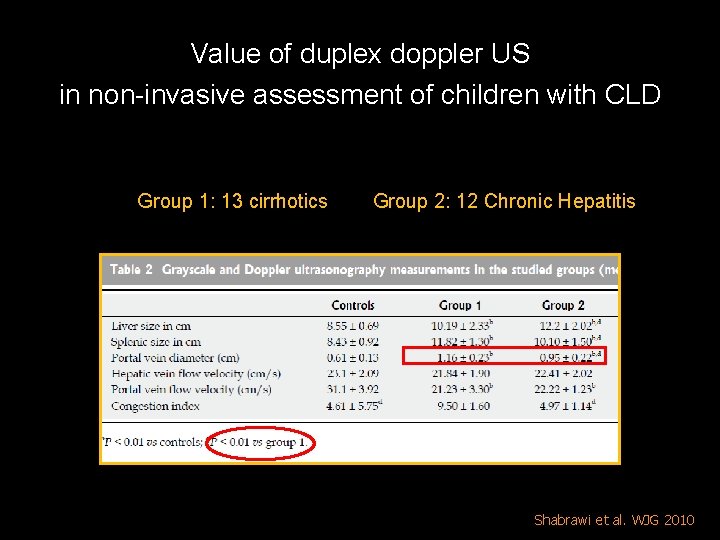
Value of duplex doppler US in non-invasive assessment of children with CLD Group 1: 13 cirrhotics Group 2: 12 Chronic Hepatitis Shabrawi et al. WJG 2010
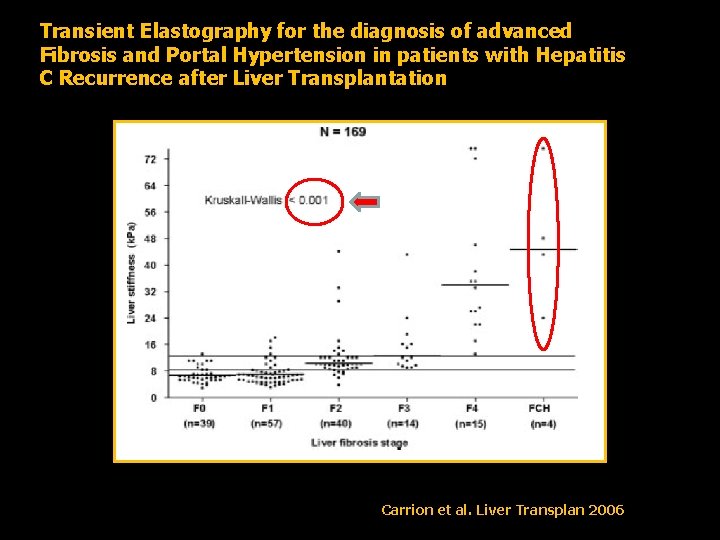
Transient Elastography for the diagnosis of advanced Fibrosis and Portal Hypertension in patients with Hepatitis C Recurrence after Liver Transplantation Carrion et al. Liver Transplan 2006
Does statistical significance really matter? Phase 0 -1 and preliminary 2 • Not always the diagnostic accuracy of an IT will lead to a clinical advantage for the patient • Comparisons between means (medians) are probably not useful in these cases • When analyzing the results of a diagnostic study one should always look at data distribution (graphical data representation)
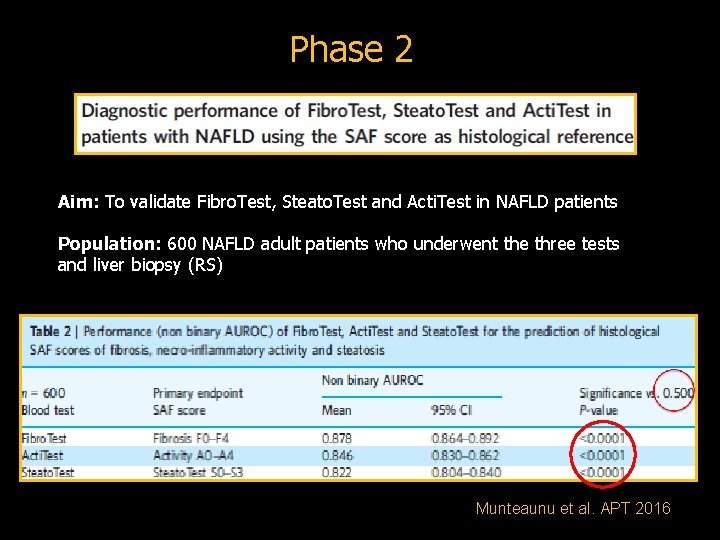
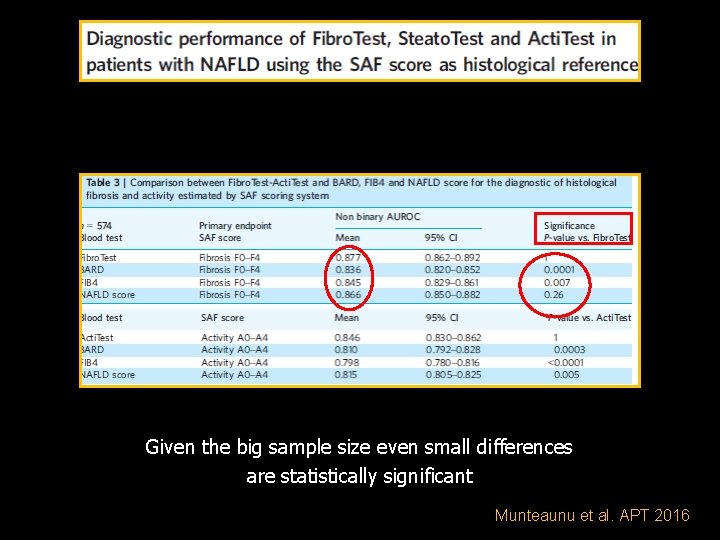
Phase 2 Aim: To validate Fibro. Test, Steato. Test and Acti. Test in NAFLD patients Population: 600 NAFLD adult patients who underwent the three tests and liver biopsy (RS) Munteaunu et al. APT 2016
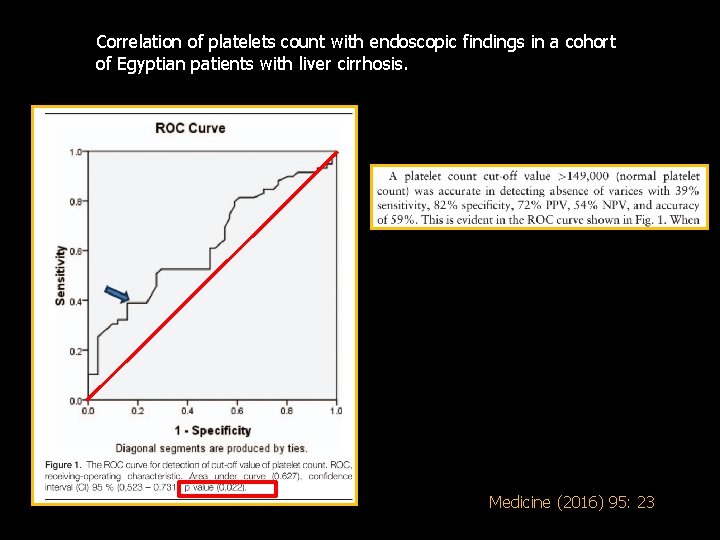
Correlation of platelets count with endoscopic findings in a cohort of Egyptian patients with liver cirrhosis. Medicine (2016) 95: 23
ta Given the big sample size even small differences are statistically significant Munteaunu et al. APT 2016
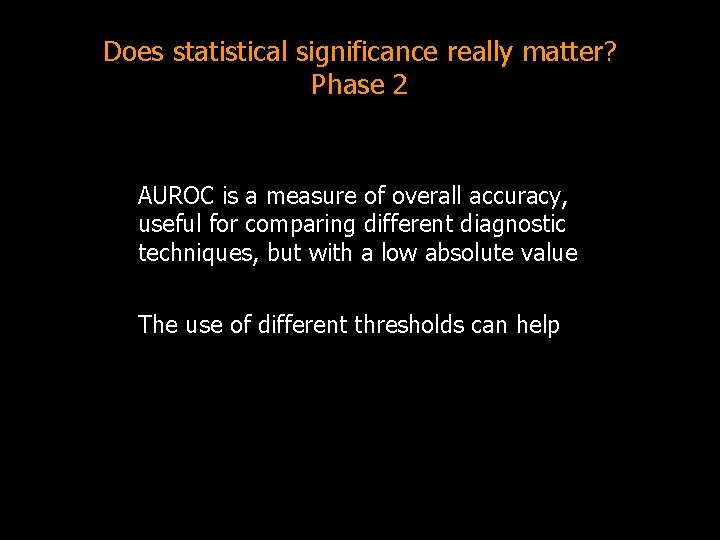
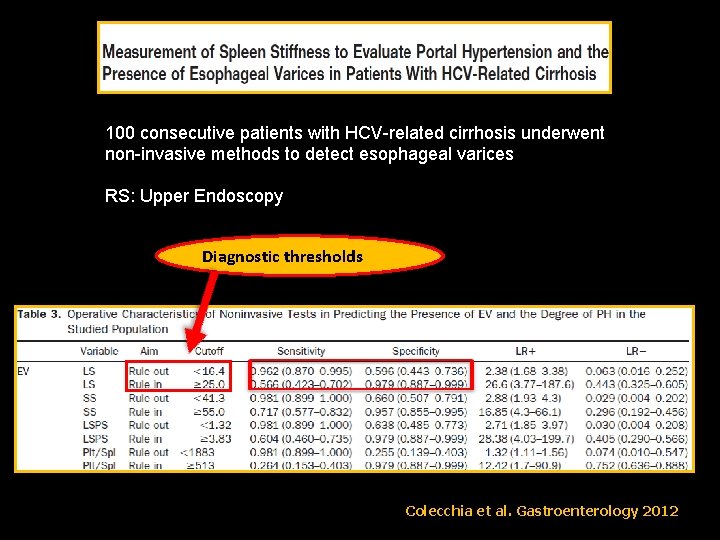
Does statistical significance really matter? Phase 2 AUROC is a measure of overall accuracy, useful for comparing different diagnostic techniques, but with a low absolute value The use of different thresholds can help
100 consecutive patients with HCV-related cirrhosis underwent non-invasive methods to detect esophageal varices RS: Upper Endoscopy Diagnostic thresholds Colecchia et al. Gastroenterology 2012
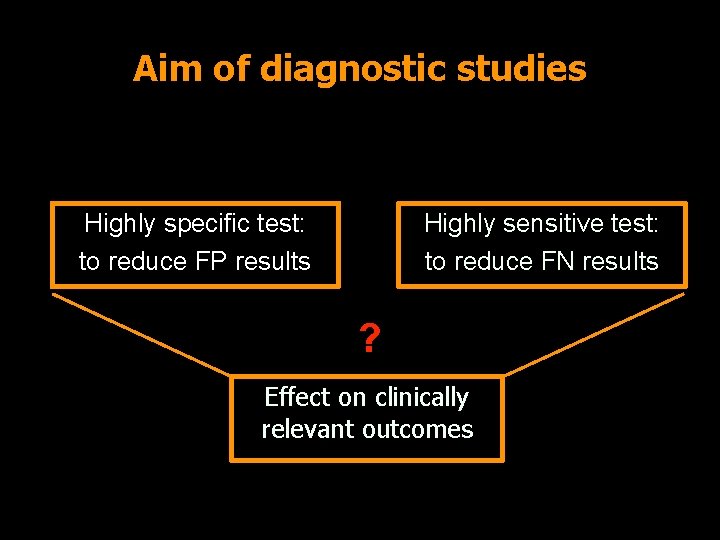
Aim of diagnostic studies Highly specific test: to reduce FP results Highly sensitive test: to reduce FN results ? Effect on clinically relevant outcomes
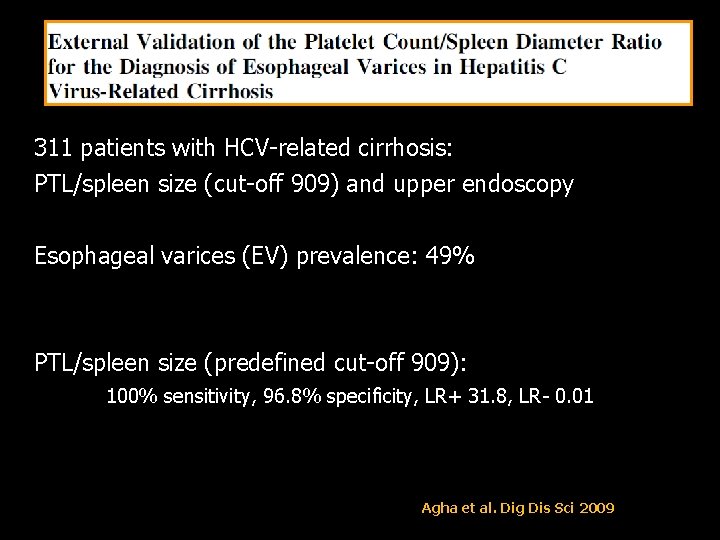
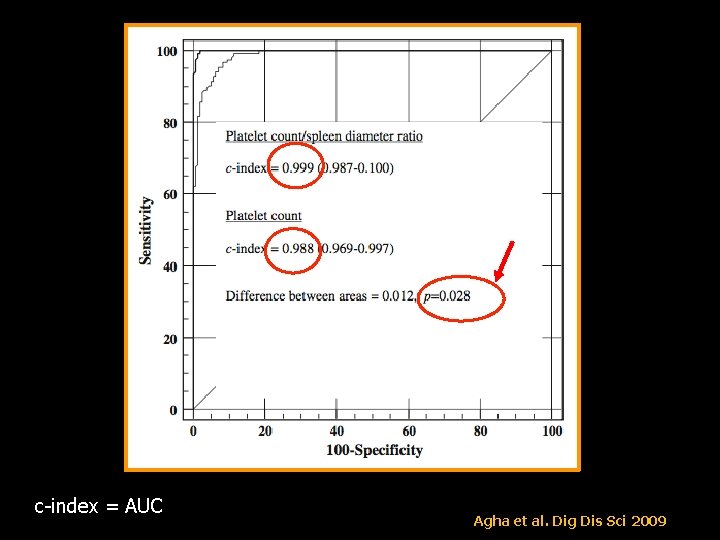
311 patients with HCV-related cirrhosis: PTL/spleen size (cut-off 909) and upper endoscopy Esophageal varices (EV) prevalence: 49% PTL/spleen size (predefined cut-off 909): 100% sensitivity, 96. 8% specificity, LR+ 31. 8, LR- 0. 01 Agha et al. Dig Dis Sci 2009
c-index = AUC Agha et al. Dig Dis Sci 2009
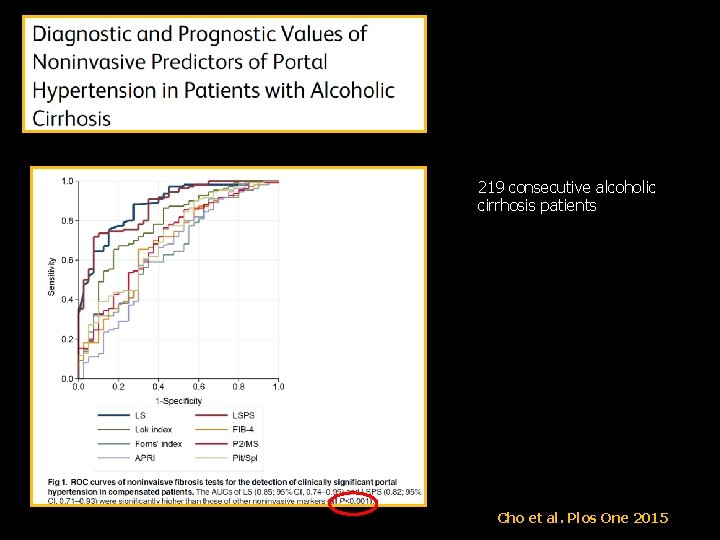
219 consecutive alcoholic cirrhosis patients Cho et al. Plos One 2015
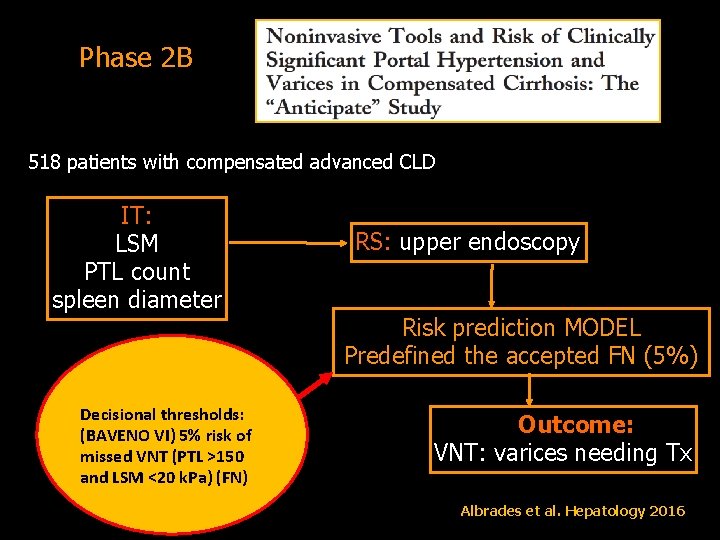
Phase 2 B 518 patients with compensated advanced CLD IT: LSM PTL count spleen diameter Decisional thresholds: (BAVENO VI) 5% risk of missed VNT (PTL >150 and LSM <20 k. Pa) (FN) RS: upper endoscopy Risk prediction MODEL Predefined the accepted FN (5%) Outcome: VNT: varices needing Tx Albrades et al. Hepatology 2016
Does statistical significance really matter? Conclusions • Statistical significance does not always mean clinical relevance • It is crucial to state the role of the IT, the aim of diagnosis in a given context and its effects in terms of clinically relevant outcomes • AUC can be used for raw comparisons (assuming that FP and FN have the same weight) • In order to define the IT role and usefulness it is key to predefined the type error to avoid and to choose an appropriate model (threshold approach)