Developing Social Emotional Learning In Washington State Ron

- Slides: 33
Developing Social Emotional Learning In Washington State
Ron Hertel, Program Supervisor Social and Emotional Learning Office of Superintendent of Public Instruction (360) 725 -6050 ron. hertel@k 12. wa. us
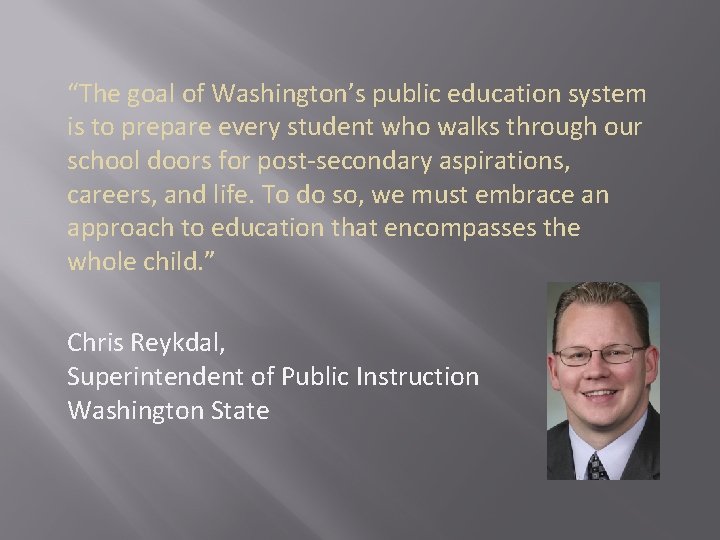
“The goal of Washington’s public education system is to prepare every student who walks through our school doors for post-secondary aspirations, careers, and life. To do so, we must embrace an approach to education that encompasses the whole child. ” Chris Reykdal, Superintendent of Public Instruction Washington State
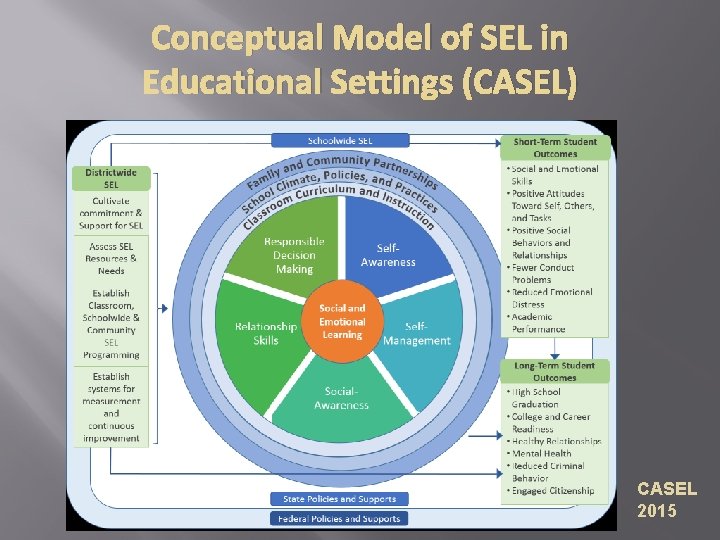
Social Emotional Learning is broadly understood as a process through which people build awareness and skills in managing emotions, setting goals, establishing relationships and making responsible decisions, leading to success in school and in life. CASEL. (2015). What is Social and Emotional Learning? Retrieved from: https: //casel. squarespace. com/social-andemotional-learning
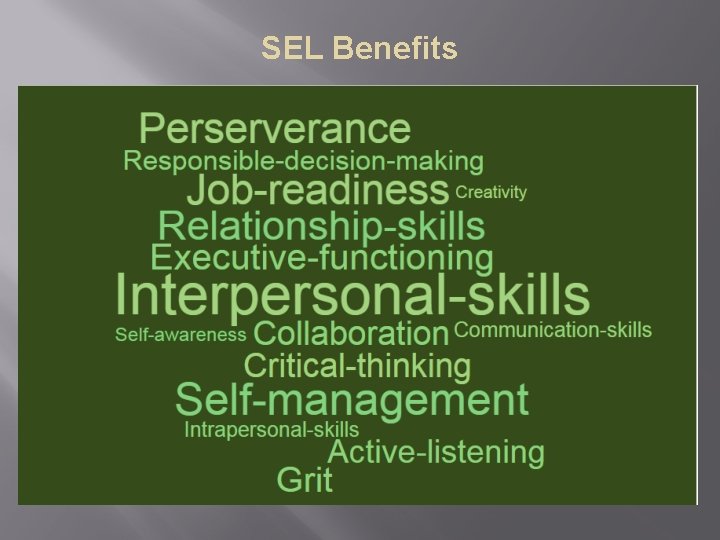
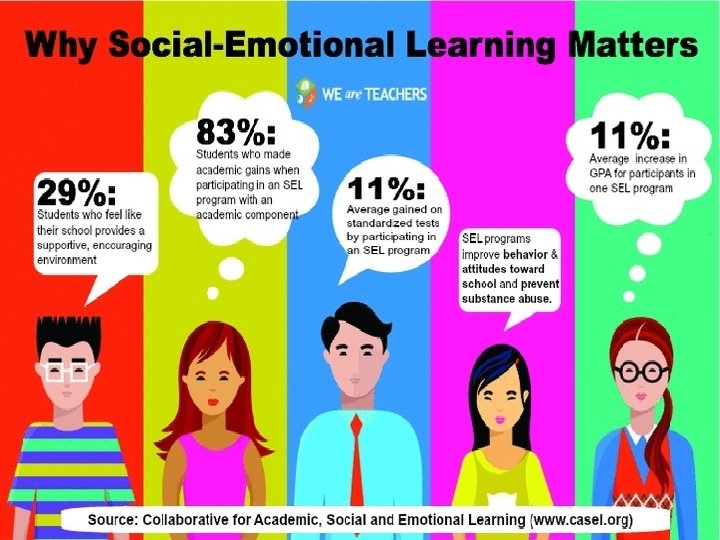
SEL Benefits
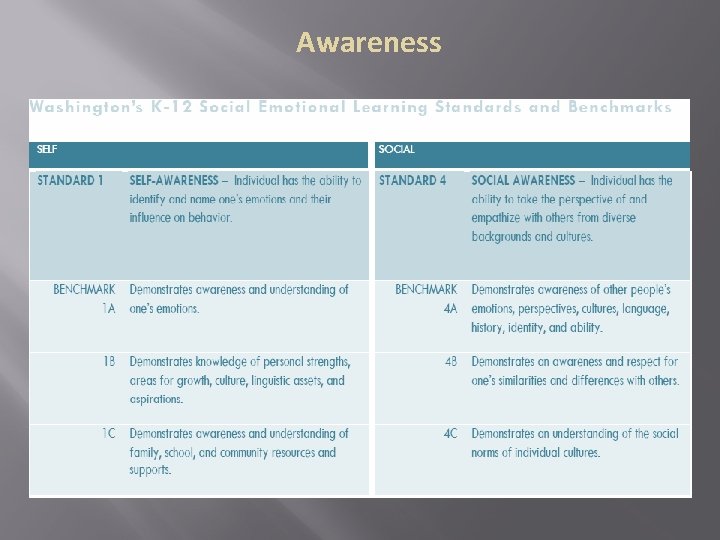
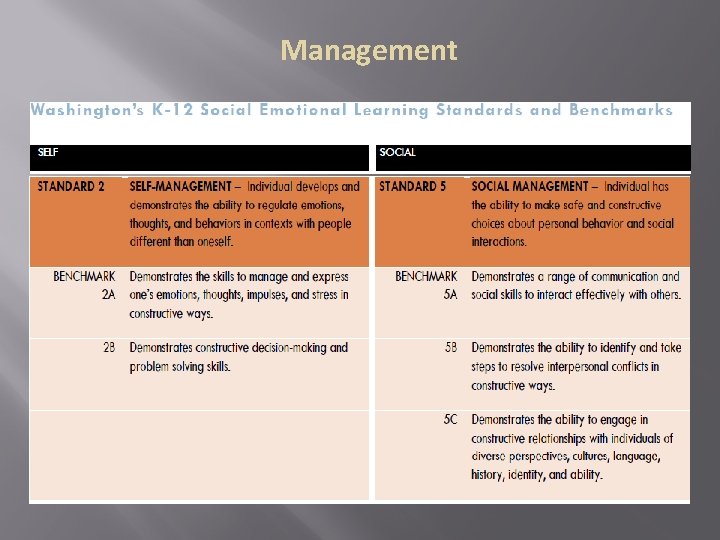
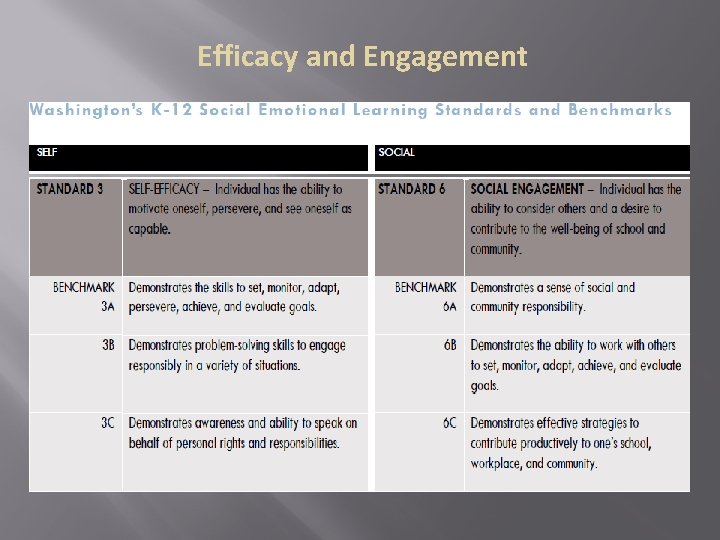
2015 -16 SEL Benchmarks Workgroup • ESSB 6052 Sec 501 (34) SELB workgroup submitted its recommendations to the education committees of the legislature, and the office of the governor on October 1, 2016. To review the report visit http: //www. k 12. wa. us/Workgroups/SELBMeetings/SELBWorkgroup 2016 Report. pdf � Standard 1: Self-Awareness � Standard 2: Self-Management � Standard 3: Self-Efficacy � Standard 4: Social Awareness � Standard 5: Social Management � Standard 6: Social Engagement
Social Emotional Learning Indicators • • Budget Proviso (SSB 5883 (2017), Part V Education p. 188) OSPI to convene a work group to build upon the work of the social emotional learning work group established under section 501(34), chapter 4, Laws of 2015 3 rd sp. sess. The members of the work group must include representatives from the same organizations that were represented on the 2015 work group, as well as five representatives of diverse communities and a statewide expanded learning opportunities intermediary.
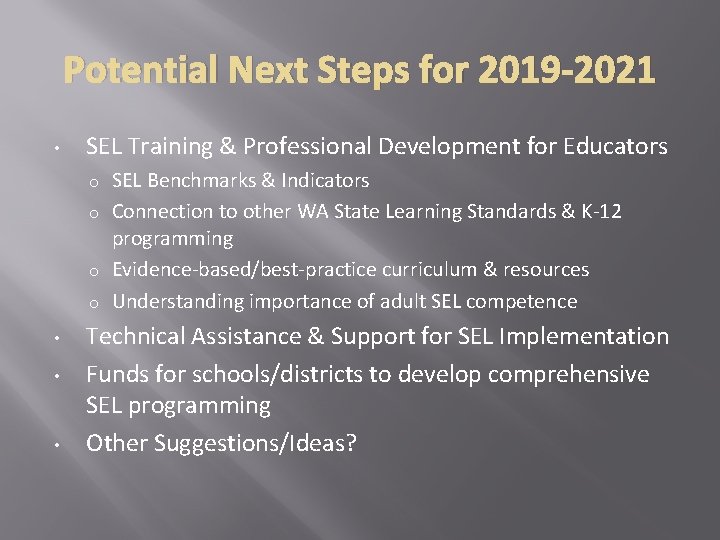
Potential Next Steps for 2019 -2021 • SEL Training & Professional Development for Educators SEL Benchmarks & Indicators o Connection to other WA State Learning Standards & K-12 programming o Evidence-based/best-practice curriculum & resources o Understanding importance of adult SEL competence o • • • Technical Assistance & Support for SEL Implementation Funds for schools/districts to develop comprehensive SEL programming Other Suggestions/Ideas?
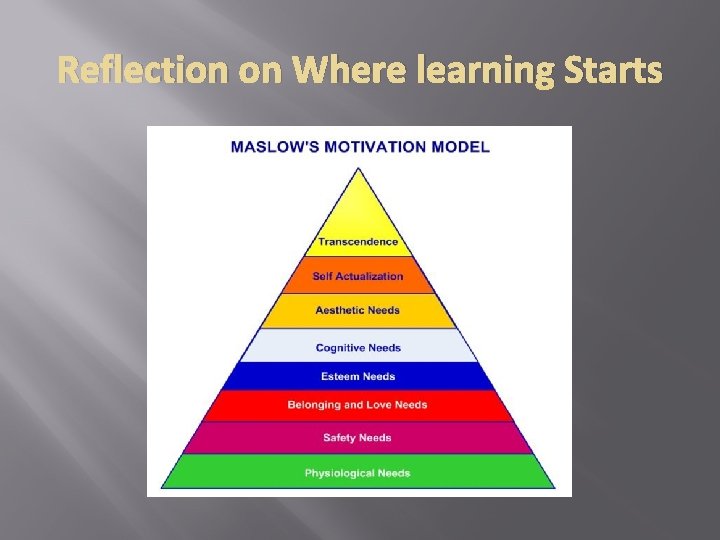
Reflection on Where learning Starts
Conceptual Model of SEL in Educational Settings (CASEL) CASEL 2015
Awareness
Management
Efficacy and Engagement
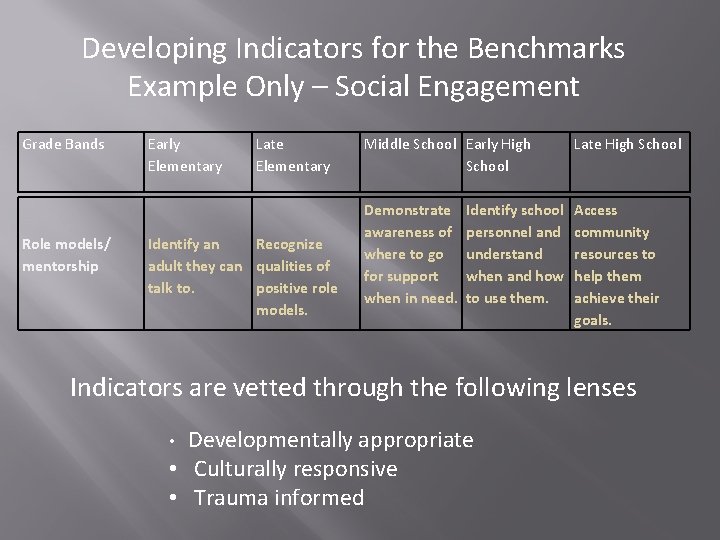
Developing Indicators for the Benchmarks Example Only – Social Engagement Grade Bands Role models/ mentorship Early Elementary Late Elementary Identify an Recognize adult they can qualities of talk to. positive role models. Middle School Early High School Late High School Demonstrate awareness of where to go for support when in need. Access community resources to help them achieve their goals. Identify school personnel and understand when and how to use them. Indicators are vetted through the following lenses • Developmentally appropriate • Culturally responsive • Trauma informed
Applying an Equity Lens to Social, Emotional, and Academic Development , Key Findings: The authors identify five barriers that contribute to inequitable access to a highquality SEL education: • Poverty, • Exclusionary discipline practices and policies in school, • Lack of trauma-informed practices in school, • Implicit bias in school staff, and • Educator stress and burnout. They also identify five opportunities for overcoming those barriers: • School racial and socioeconomic integration initiatives, • Restorative justice practices for school discipline, • Trauma-informed system interventions, • Culturally competent and equity-literate educators, and • SEL and mindfulness programming to support students and teachers. Simmons DN, Brackett MA, and Alder N, Pennsylvania State University, Robert Wood Johnson Foundation, June 1, 2018
Trauma Informed A trauma-informed approach is defined by SAMHSA as a program, organization, or system that realizes the widespread impact of trauma and understands potential paths for recovery; recognizes the signs and symptoms of trauma in clients, families, staff, and others involved with the system; and responds by fully integrating knowledge about trauma into policies, procedures, and practices, and seeks to actively resist re-traumatization.
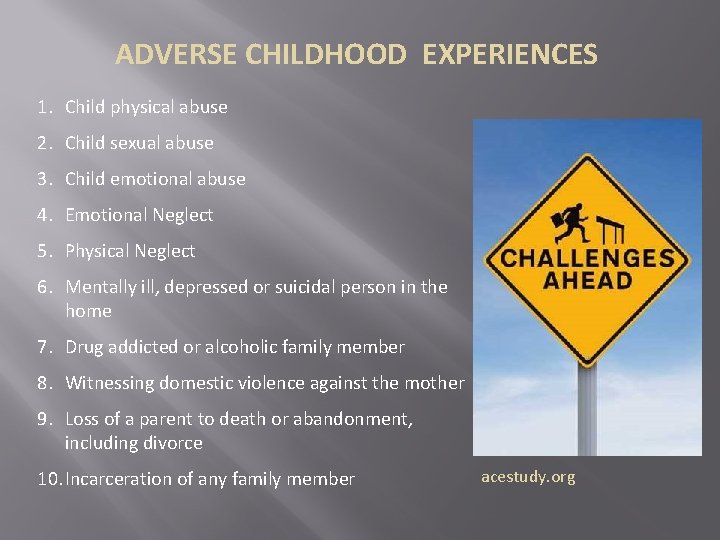
ADVERSE CHILDHOOD EXPERIENCES 1. Child physical abuse 2. Child sexual abuse 3. Child emotional abuse 4. Emotional Neglect 5. Physical Neglect 6. Mentally ill, depressed or suicidal person in the home 7. Drug addicted or alcoholic family member 8. Witnessing domestic violence against the mother 9. Loss of a parent to death or abandonment, including divorce 10. Incarceration of any family member acestudy. org
ACE Impact on Learning Students with 3 or more ACEs… • Are 2 ½ times more likely to fail a grade • Score lower on standardized tests • Have language difficulties • Are suspended or expelled more • Are designated to special education more frequently • Have poorer health Readiness to Learn, Program Evaluation, 2012
What SEL is NOT • SEL is not a way to “grade”. • SEL is not a way to identify deficits. • • While some will argue that SEL can be accomplished by a curriculum that may miss the point. There are great curriculums—Second Step, PBIS, Restorative Practices, CHAMPS—but SEL is really about school climate and culture and individual relationships.
“School climate has been conceptualized to include the physical, academic, social, and disciplinary environment. . . A positive school climate creates the conditions for SEL; the social and emotional competence of each member of the school community, both individually and collectively, affects school climate. ” School Climate and Social and Emotional Learning: The Integration of Two Approaches, Pennsylvania State University, Robert Wood Johnson Foundation, January 2018
Readiness to Benefit – A process by which we ready ourselves to embrace potential change focusing on transitions and gaining new competencies.
SEL Includes a Developmental Approach in 3 overarching Domains • Classroom: SEL curricula, academic integration, and pedagogy • School Climate and Culture • Community and Family
Community and Family Benchmark is ownership and engagement in SEL plans and activities from key actors such as teachers, parents, youth servicing organizations, faith based leaders, and sports and recreation organizations Success depends on active stakeholder engagement, meaningful reinforcement of SEL in out of school time, and parent and student support. Measures: School climate surveys, attendance, suspension, community and family engagement and dropout rates.
• There are no “Silver Bullets. ” • There are many pathways to meet the intended outcomes. • It looks different across different cultures. • It looks different in every school. • The information and thinking about SEL, bolstered by emerging brain science, is not a new idea.
To make connections we must from a culture of SHAME, BLAME AND PUNISHMENT to a culture of CONNECTING, UNDERSTANDING and COMPASSION.
How to We Connect Ø Be present Ø Give the benefit of the doubt Ø Be willing to give up power Ø Be willing to make repairs Ø Recognize the impact of brain development and chemistry Ø Help students/staff to develop a Social Emotional vocabulary Ø Work as a team Ø Use student voice and participation to its fullest extent Ø Avoid transactional agreements
Positive Discipline is a discipline model used by schools, and in parenting, that focuses on the positive points of behavior, based on the idea that there are no bad children, just good and bad behaviors. You can teach and reinforce the good behaviors while weaning the bad behaviors without hurting the child verbally or physically. People engaging in positive discipline are not ignoring problems. Rather, they are actively involved in helping their child learn how to handle situations more appropriately while remaining calm, friendly and respectful to the children themselves.
SEL Online Educator Training Module • • • In 2016, OSPI was tasked by the WA State Legislature to develop an SEL training module per ESB 6620, Sec. 4 (2016). In September 2017, in partnership with the American Institutes for Research (AIR), OSPI launched an online training module for educators, administrators and other school staff on September 1, 2017. Content of the on-line educator training module is based on the recommendations of the 2016 SEL Benchmarks workgroup standards and includes: 1. 2. 3. 4. 5. Introduction to SEL Embedding SEL Schoolwide Creating a Professional Culture Based on SEL Integrating SEL into Culturally Responsive Classrooms Identifying and Selecting Evidence-Based Programs http: //www. k 12. wa. us/Student. Support/SEL/Online. Module. aspx
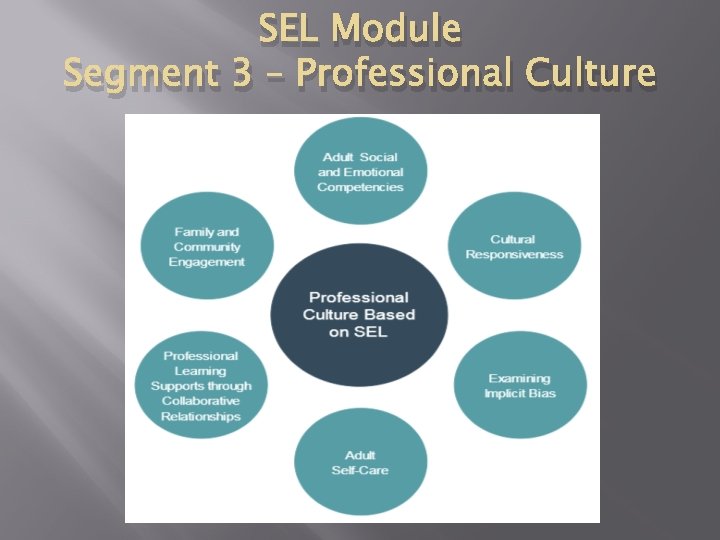
SEL Module Segment 3 – Professional Culture
Self-Awareness Adult SEL Self-awareness refers to their ability to recognize their strengths and their limitations and how these impact their teaching. Self Management Teachers are expected to constantly regulate their own emotions and emotional displays as well as help children regulate their emotions of their own. Social Awareness Socially and emotionally competent teachers recognize that perspectives differ according to age, gender, and social/ethnic/educational/economic background. Relationship skills Socially and emotionally competent teachers establish and maintain healthy and rewarding relationships with students, parents, and colleagues. Responsible decision making Socially and emotionally competent teachers use multiple forms of evidence to make decisions about instruction, classroom management, and interactions with students, students’ parents, and colleagues.
Some Questions to Consider • Your plan to embed SEL across the system should be based on several factors. Ø What are the student needs? Ø What are the staff needs? Ø What are the community attitudes? Ø What are the available resources? Ø How will you measure progress?
Thanks for all you do to support our students!