Developing Career Pathway Strategies that Help Your Organization
- Slides: 29
Developing Career Pathway Strategies that Help Your Organization Retain Talent Presented by: Devona E. G. Williams, Ph. D. Goeins-Williams Associates, Inc. www. goeinswilliams. com
Objectives • Increase understanding about the drivers for more flexible career path options • Understand the framework that leads to successful employee retention • Gain insight on how to guide leaders and managers in your organization with respect to this process
Agenda • • • Why are old career paths gone? Changing view of Career Success Options for Career Paths Role of HR in Career Pathing Retention Issues Best Practices
WHY ARE OLD CAREER PATHS GONE? • Traditional versus contemporary organizations • Generation X and Y
Changing Organizational Structures • Hierarchical organizations • Flattening of organizations – Require team work, leadership, cross functional knowledge – Provide opportunities for professional growth and development – Provide opportunities for lateral moves
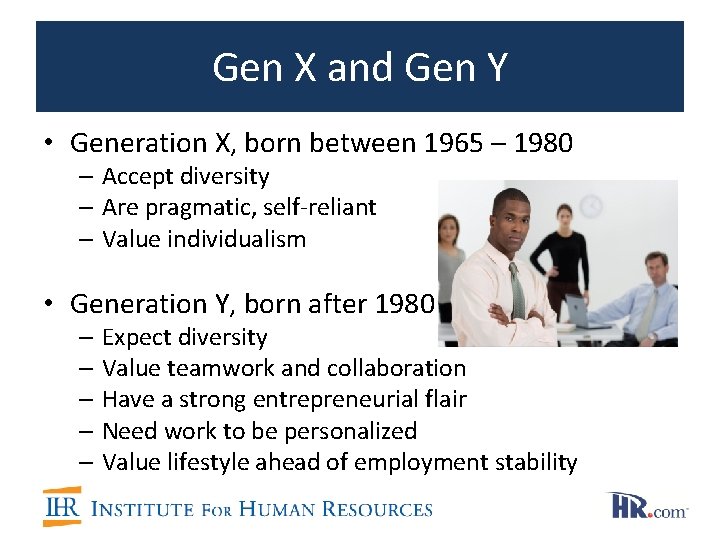
Gen X and Gen Y • Generation X, born between 1965 – 1980 – Accept diversity – Are pragmatic, self-reliant – Value individualism • Generation Y, born after 1980 – Expect diversity – Value teamwork and collaboration – Have a strong entrepreneurial flair – Need work to be personalized – Value lifestyle ahead of employment stability
CHANGING VIEW OF CAREER SUCCESS Elements of Career Success Drivers of Work Satisfaction Organizational Culture
Career Success and Satisfaction Elements of Career Success – Job satisfaction – Quality of Work Life – Meaning of the work – Organizational advancement Drivers of work satisfaction • Attitudes of different generations • Income • Career advancement • Professional growth and development
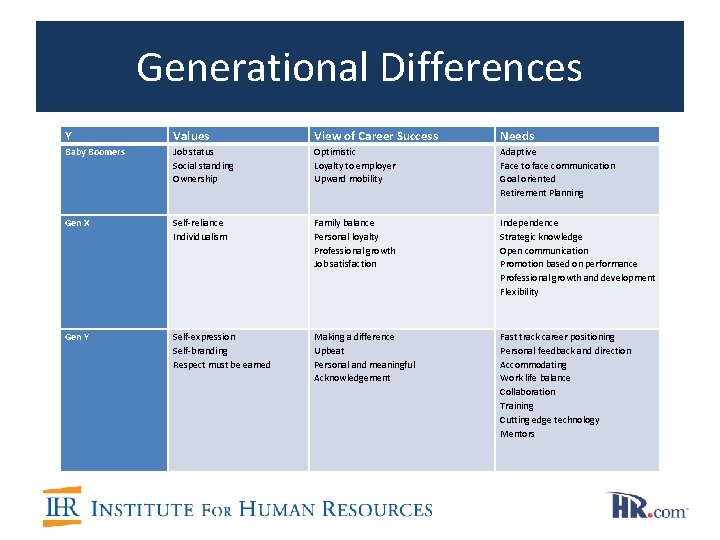
Generational Differences Y Values View of Career Success Needs Baby Boomers Job status Social standing Ownership Optimistic Loyalty to employer Upward mobility Adaptive Face to face communication Goal oriented Retirement Planning Gen X Self-reliance Individualism Family balance Personal loyalty Professional growth Job satisfaction Independence Strategic knowledge Open communication Promotion based on performance Professional growth and development Flexibility Gen Y Self-expression Self-branding Respect must be earned Making a difference Upbeat Personal and meaningful Acknowledgement Fast track career positioning Personal feedback and direction Accommodating Work life balance Collaboration Training Cutting edge technology Mentors
Organizational Culture • Organizational culture affects career pathing • What is the organization’s view of success? – How are jobs aligned and how is advancement measured? – What is the ideal employee?
OPTIONS FOR CAREER PATHS Changing views of work Career path directions Career path alternatives Career ladders vs. career lattices
Changing views of work • • Loyalty contract Career changes Economic realities Self management
General Career Path Directions • Functional path – larger organizations tend to have a hierarchy of functional positions (i. e. accounting, marketing, etc. ) • Industry path – professional choices based on industries like health care, info technology, financial services • Institutional path- primarily non profit sector driven by “heart”
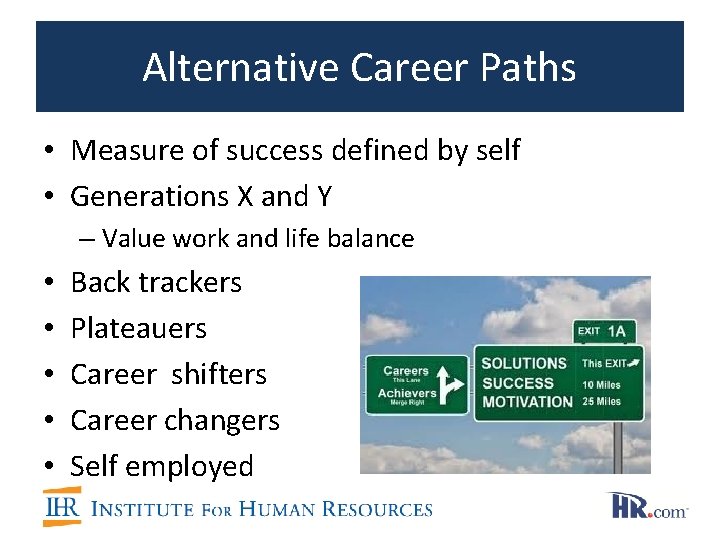
Alternative Career Paths • Measure of success defined by self • Generations X and Y – Value work and life balance • • • Back trackers Plateauers Career shifters Career changers Self employed
Different Kinds of Career Paths • Job centered career path – semi-skilled • Single function career paths – subject matter experts • Cross functional career paths – need transparency • Multi-functional career paths- generalists • Profession centered career paths- specialists • Purpose centered career paths – problem solving
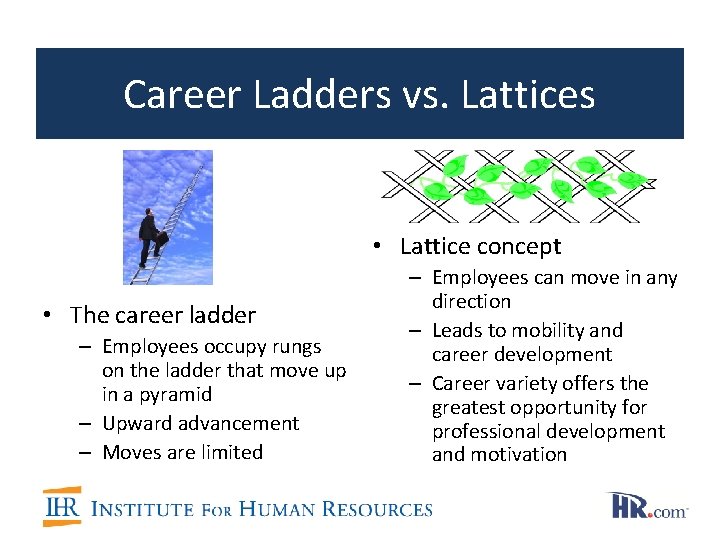
Career Ladders vs. Lattices • Lattice concept • The career ladder – Employees occupy rungs on the ladder that move up in a pyramid – Upward advancement – Moves are limited – Employees can move in any direction – Leads to mobility and career development – Career variety offers the greatest opportunity for professional development and motivation
ROLE OF HR IN CAREER PATHING Requirements for Employability Employer Career Development Activities Role as Influencer Promote flexible career paths
Requirements for Employability • • Job challenges and growth Relationships (development network) Formal education and training Hardship
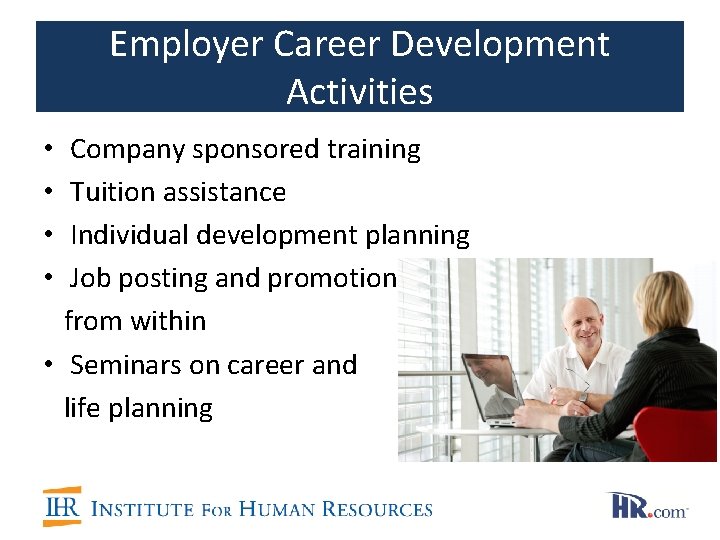
Employer Career Development Activities • Company sponsored training • Tuition assistance • Individual development planning • Job posting and promotion from within • Seminars on career and life planning
Role as Key Influencer • Influence senior leaders and line managers to help employees – Managers have the greatest influence on employee’s careers • Work with managers to remove impediments, barriers • Leaders and managers help employees make and negotiate effective career choices
Promote Flexible Career Paths • Define transferrable skills • Provide opportunities to apply transferrable skills • Facilitate ways for employees to know themselves • Develop flexible career options – Flexible alternatives – Handle transitions – Deal with career breaks
RETENTION ISSUES About Attrition Retention strategies
About Attrition • 46% of the U. S. workforce is made up of women and 81% of women have children by age 44; most good jobs are designed for workers to be available 24/7 - Corporate Voices for Working Families, 2009 • The main drivers of decisions to stay or leave a place of employment are having: – supportive work environment – a challenging job – a good fit between work life and personal life - Catalyst, Families and Work Institute 2008
Retention Issues • Good fit – what is the ideal employee? • Is the Ideal worker biased against any particular group? • Employee groups: – Single parents – Dual career couples – Caregivers – Health issues – Personal issues • Hurdles cause employees to leave
BEST PRACTICES Best Practices and Generation Y Corporate Best Practices 7 Tips to Retain Talent
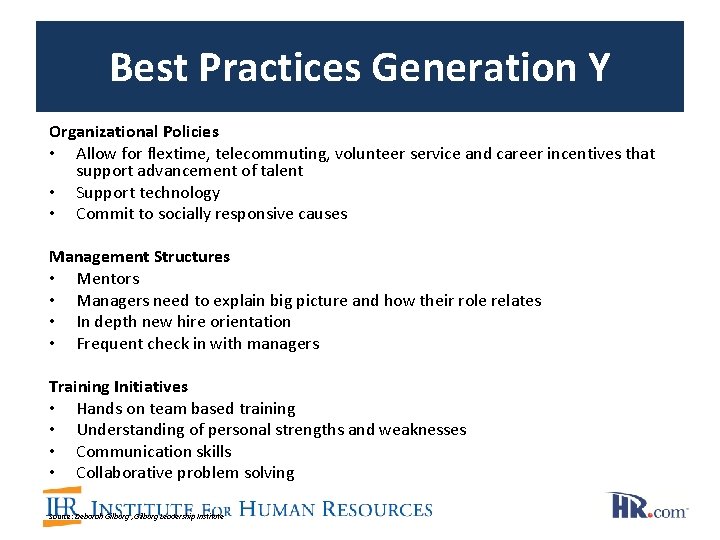
Best Practices Generation Y Organizational Policies • Allow for flextime, telecommuting, volunteer service and career incentives that support advancement of talent • Support technology • Commit to socially responsive causes Management Structures • Mentors • Managers need to explain big picture and how their role relates • In depth new hire orientation • Frequent check in with managers Training Initiatives • Hands on team based training • Understanding of personal strengths and weaknesses • Communication skills • Collaborative problem solving Source: Deborah Gilburg , Gilburg Leadership Institute
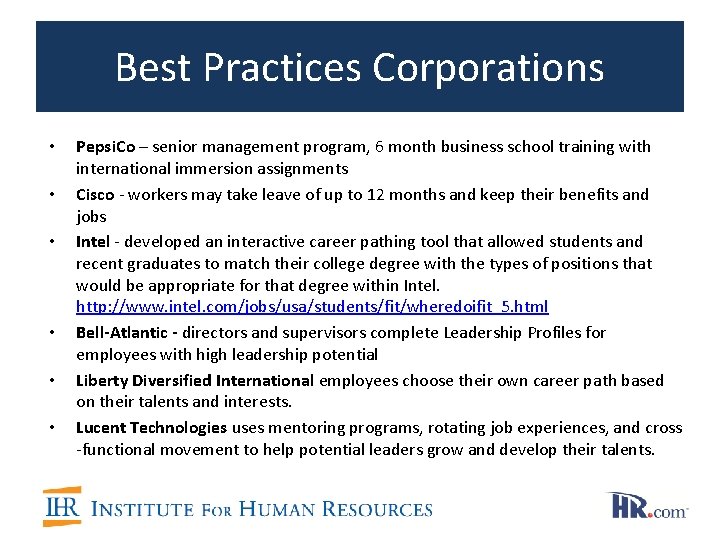
Best Practices Corporations • • • Pepsi. Co – senior management program, 6 month business school training with international immersion assignments Cisco - workers may take leave of up to 12 months and keep their benefits and jobs Intel - developed an interactive career pathing tool that allowed students and recent graduates to match their college degree with the types of positions that would be appropriate for that degree within Intel. http: //www. intel. com/jobs/usa/students/fit/wheredoifit_5. html Bell-Atlantic - directors and supervisors complete Leadership Profiles for employees with high leadership potential Liberty Diversified International employees choose their own career path based on their talents and interests. Lucent Technologies uses mentoring programs, rotating job experiences, and cross -functional movement to help potential leaders grow and develop their talents.
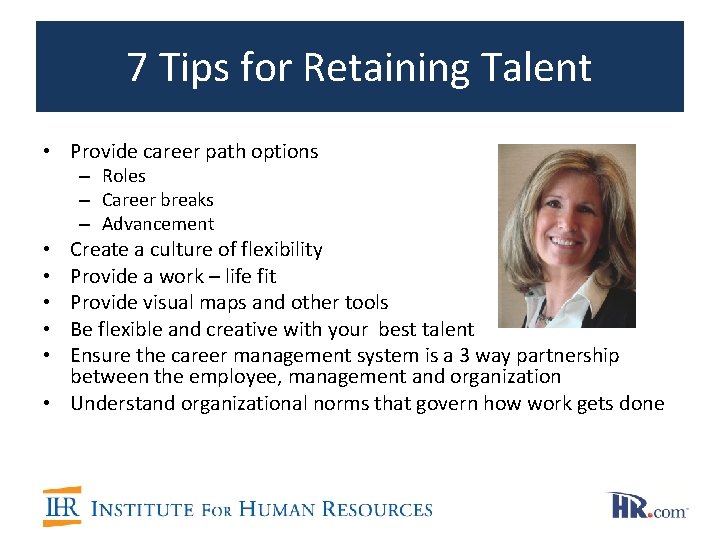
7 Tips for Retaining Talent • Provide career path options – Roles – Career breaks – Advancement Create a culture of flexibility Provide a work – life fit Provide visual maps and other tools Be flexible and creative with your best talent Ensure the career management system is a 3 way partnership between the employee, management and organization • Understand organizational norms that govern how work gets done • • •
QUESTIONS? ? THANK YOU! www. goeinswilliams. com Like us on Face. Book Follow us on Twitter Follow us Linked. In