Definitions Ch 15 WarmUp Sexlinked gene 1 A

- Slides: 35
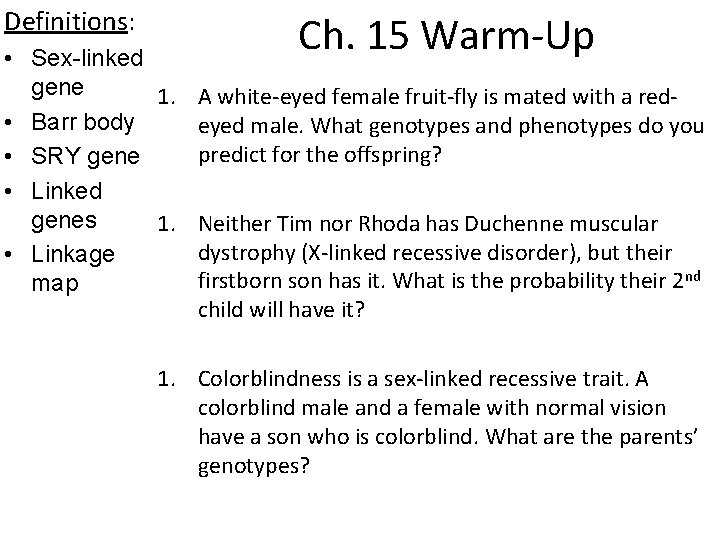
Definitions: Ch. 15 Warm-Up • Sex-linked gene 1. A white-eyed female fruit-fly is mated with a red • Barr body eyed male. What genotypes and phenotypes do you predict for the offspring? • SRY gene • Linked genes 1. Neither Tim nor Rhoda has Duchenne muscular dystrophy (X-linked recessive disorder), but their • Linkage firstborn son has it. What is the probability their 2 nd map child will have it? 1. Colorblindness is a sex-linked recessive trait. A colorblind male and a female with normal vision have a son who is colorblind. What are the parents’ genotypes?
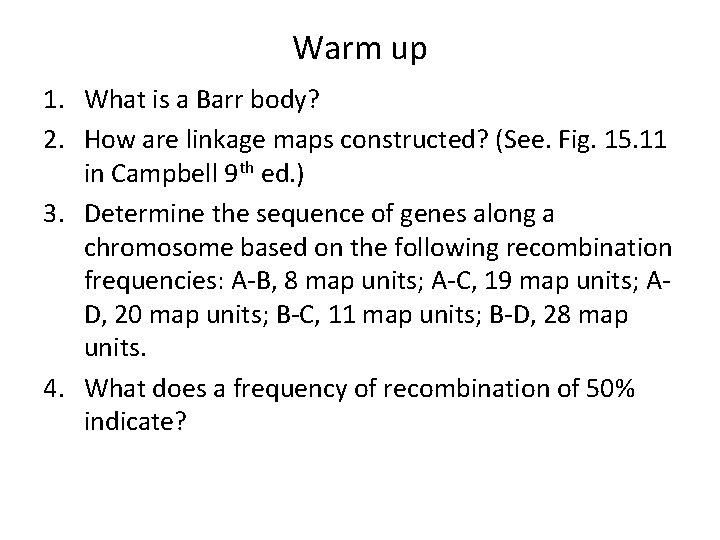
Warm up 1. What is a Barr body? 2. How are linkage maps constructed? (See. Fig. 15. 11 in Campbell 9 th ed. ) 3. Determine the sequence of genes along a chromosome based on the following recombination frequencies: A-B, 8 map units; A-C, 19 map units; AD, 20 map units; B-C, 11 map units; B-D, 28 map units. 4. What does a frequency of recombination of 50% indicate?
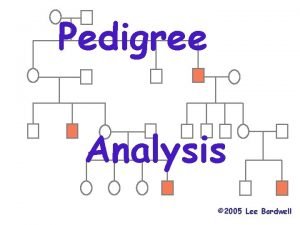
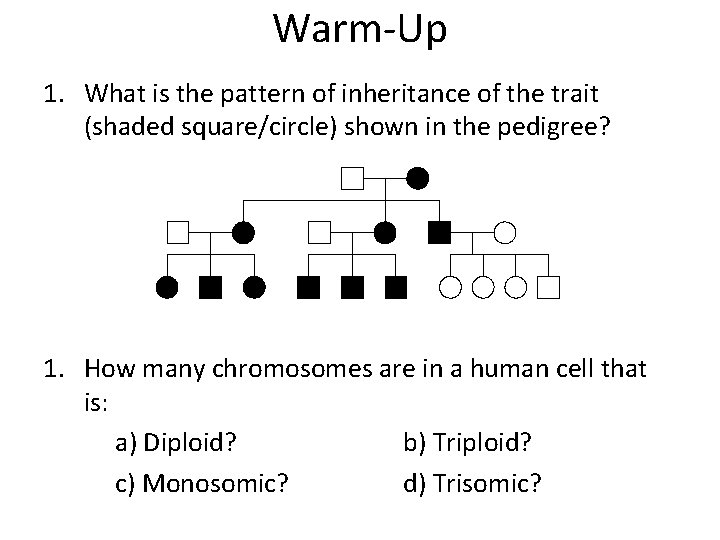
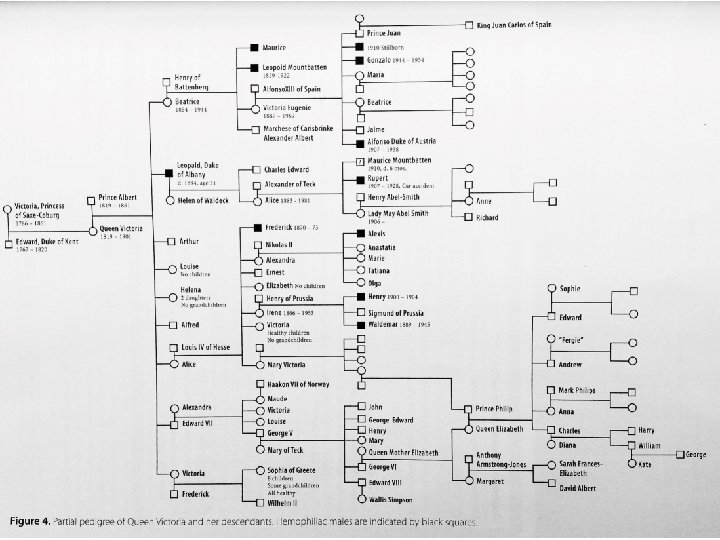
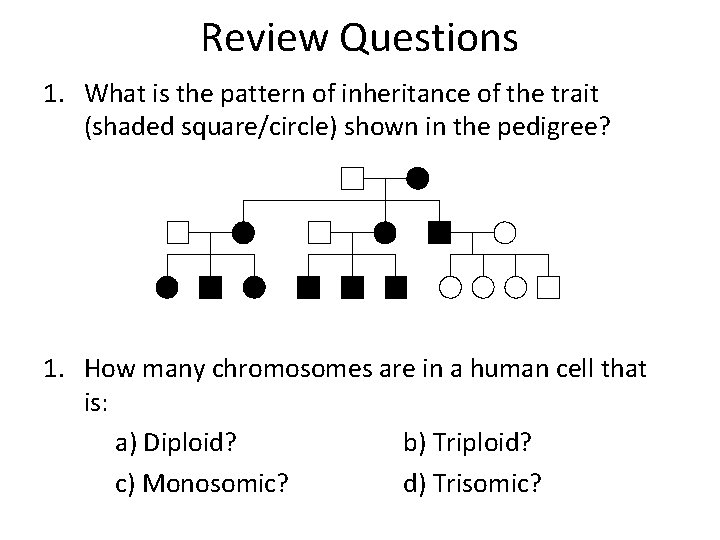
Warm-Up 1. What is the pattern of inheritance of the trait (shaded square/circle) shown in the pedigree? 1. How many chromosomes are in a human cell that is: a) Diploid? b) Triploid? c) Monosomic? d) Trisomic?
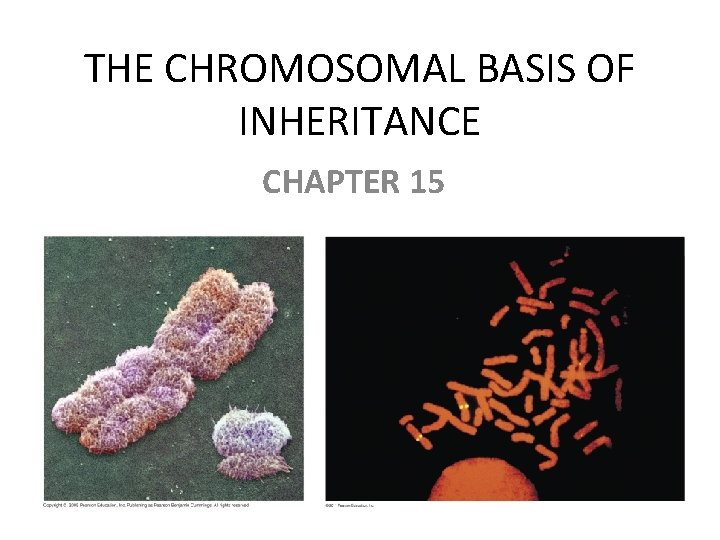
THE CHROMOSOMAL BASIS OF INHERITANCE CHAPTER 15
What you must know: • How the chromosome theory of inheritance connects the physical movement of chromosomes in meiosis to Mendel’s laws of inheritance. • The unique pattern of inheritance in sex-linked genes. • How alteration of chromosome number or structurally altered chromosomes (deletions, duplications, etc. ) can cause genetic disorders. • How genetic imprinting and inheritance of mitochondrial DNA are exceptions to standard Mendelian inheritance.
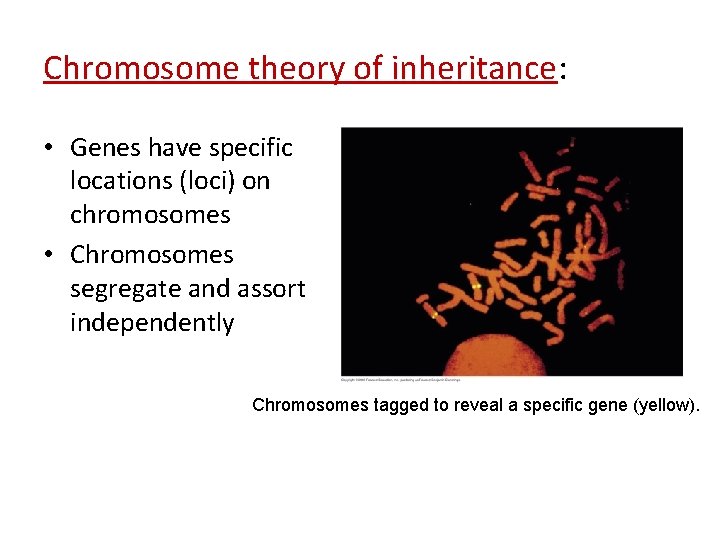
Chromosome theory of inheritance: • Genes have specific locations (loci) on chromosomes • Chromosomes segregate and assort independently Chromosomes tagged to reveal a specific gene (yellow).
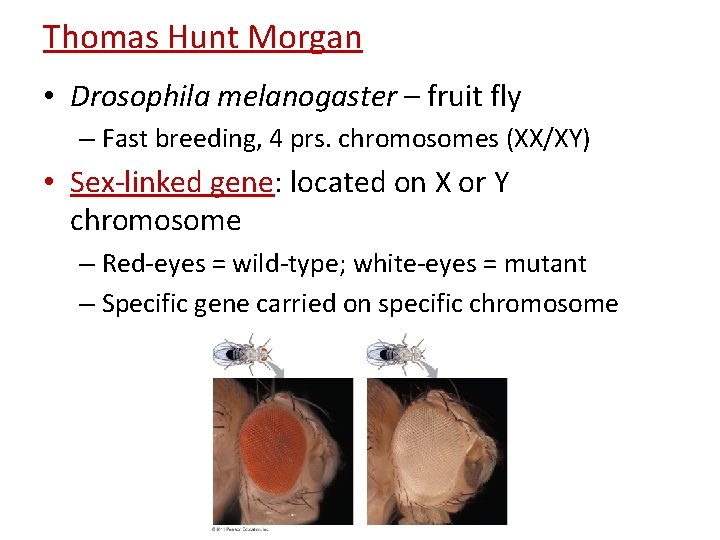
Thomas Hunt Morgan • Drosophila melanogaster – fruit fly – Fast breeding, 4 prs. chromosomes (XX/XY) • Sex-linked gene: located on X or Y chromosome – Red-eyes = wild-type; white-eyes = mutant – Specific gene carried on specific chromosome
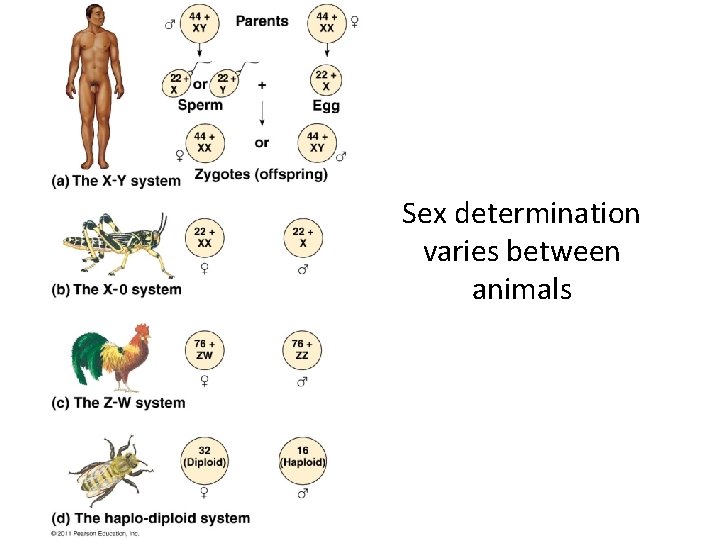
Sex determination varies between animals
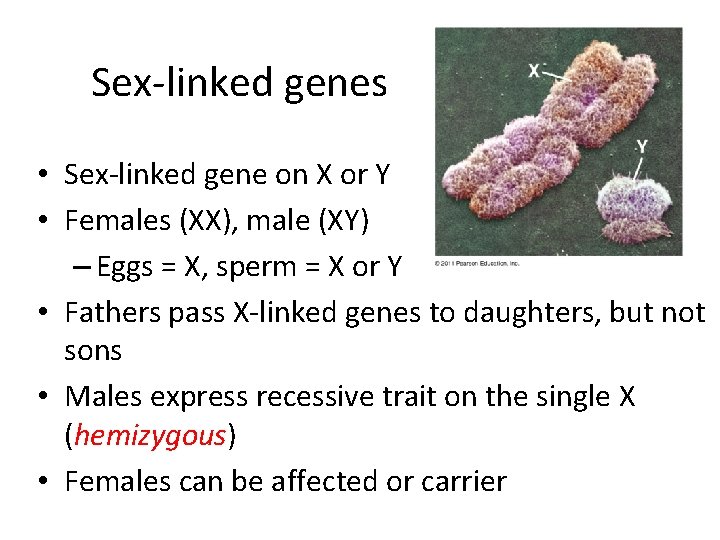
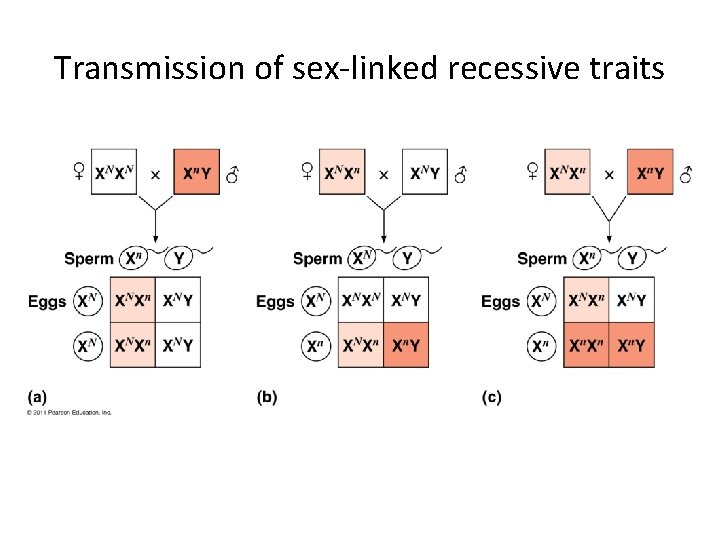
Sex-linked genes • Sex-linked gene on X or Y • Females (XX), male (XY) – Eggs = X, sperm = X or Y • Fathers pass X-linked genes to daughters, but not sons • Males express recessive trait on the single X (hemizygous) • Females can be affected or carrier
Transmission of sex-linked recessive traits
Sex-linked disorders • Colorblindness • Duchenne muscular dystrophy • Hemophilia
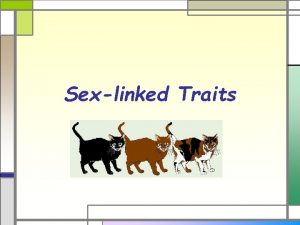
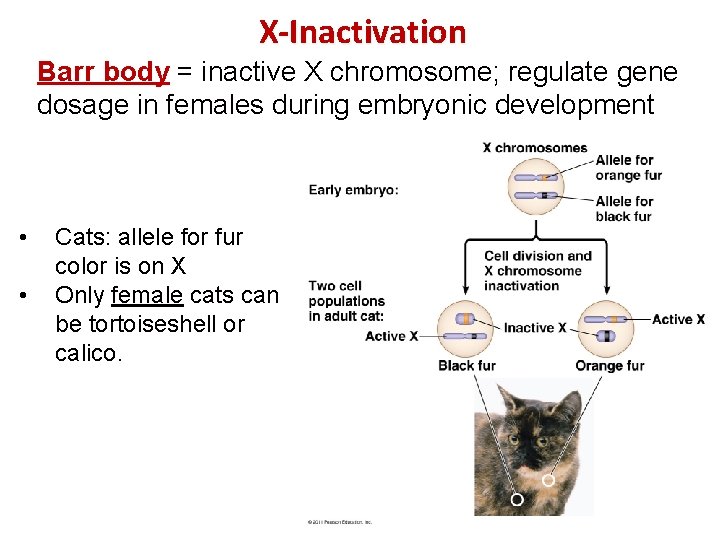
X-Inactivation Barr body = inactive X chromosome; regulate gene dosage in females during embryonic development • • Cats: allele for fur color is on X Only female cats can be tortoiseshell or calico.
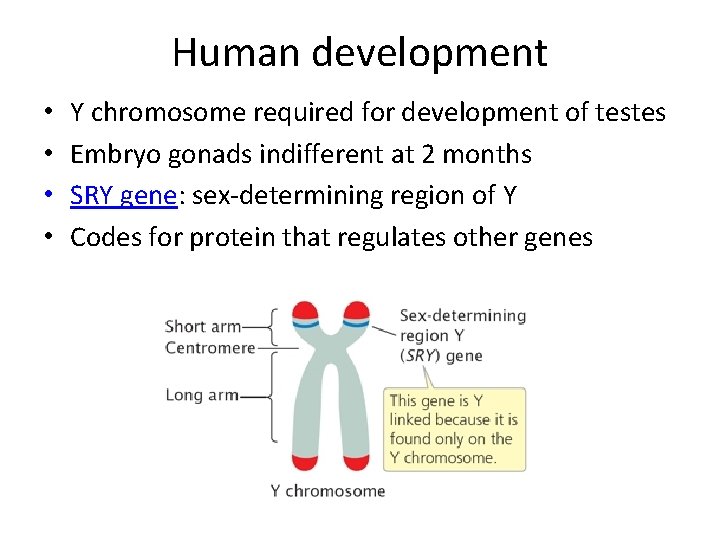
Human development • • Y chromosome required for development of testes Embryo gonads indifferent at 2 months SRY gene: sex-determining region of Y Codes for protein that regulates other genes
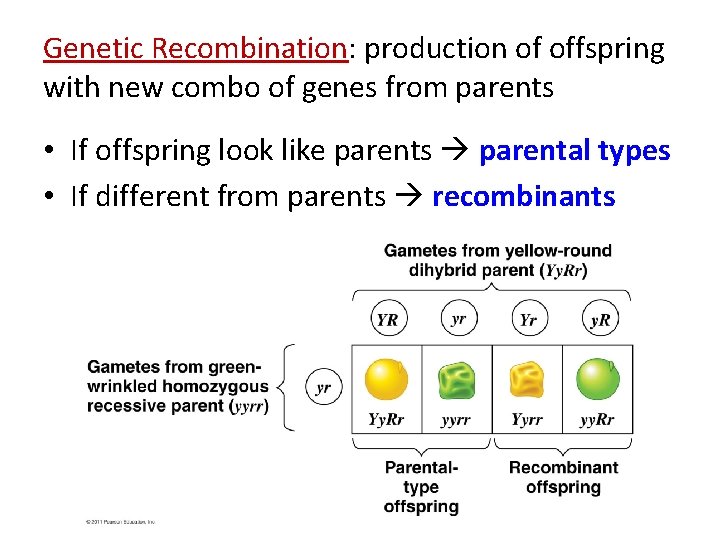
Genetic Recombination: production of offspring with new combo of genes from parents • If offspring look like parents parental types • If different from parents recombinants
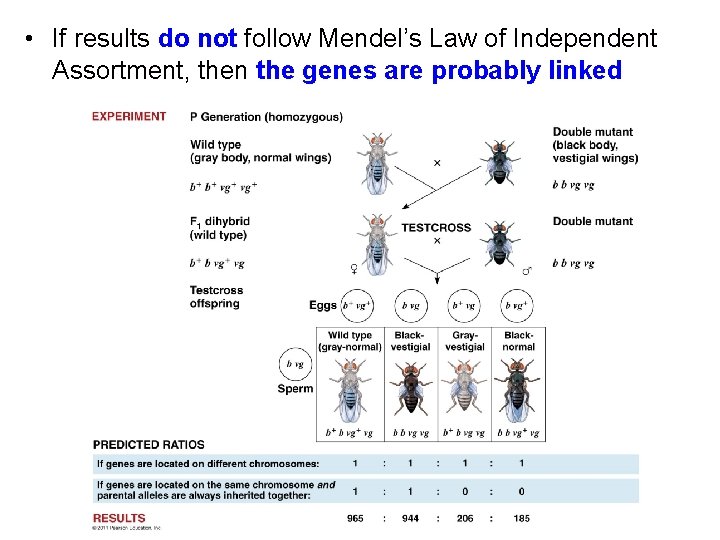
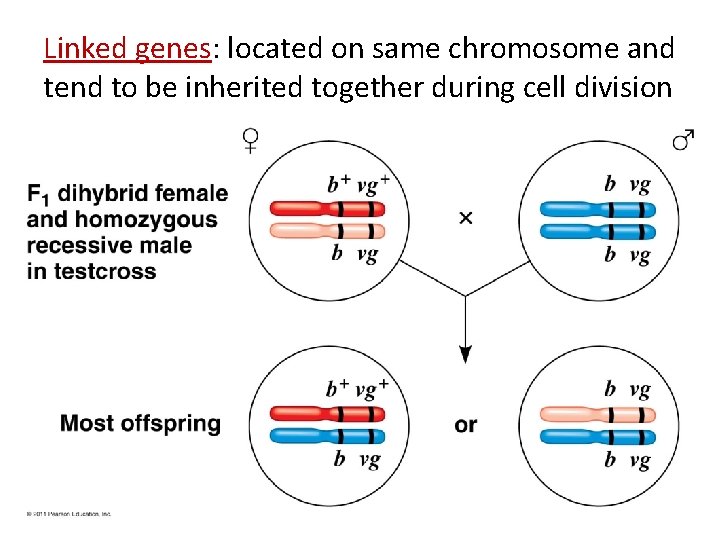
• If results do not follow Mendel’s Law of Independent Assortment, then the genes are probably linked
Linked genes: located on same chromosome and tend to be inherited together during cell division
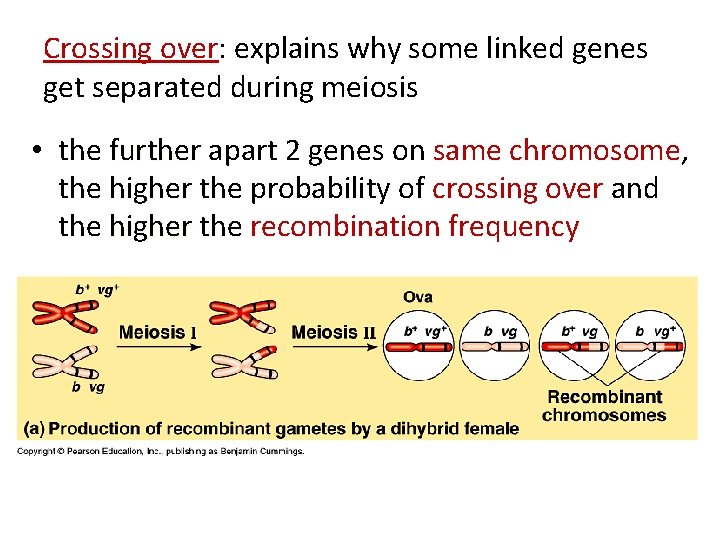
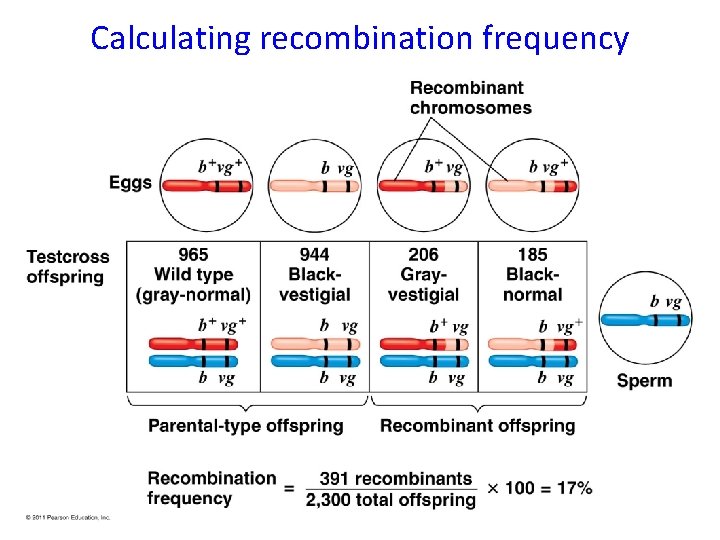
Crossing over: explains why some linked genes get separated during meiosis • the further apart 2 genes on same chromosome, the higher the probability of crossing over and the higher the recombination frequency
Calculating recombination frequency
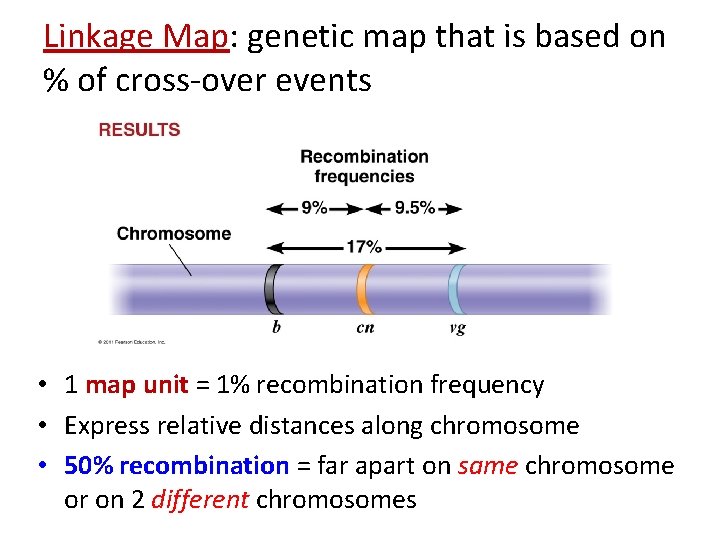
Linkage Map: genetic map that is based on % of cross-over events • 1 map unit = 1% recombination frequency • Express relative distances along chromosome • 50% recombination = far apart on same chromosome or on 2 different chromosomes
Exceptions to Mendelian Inheritance
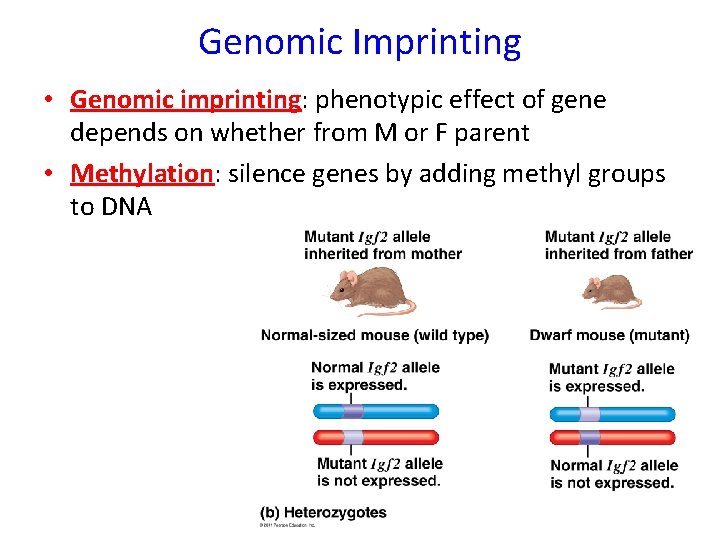
Genomic Imprinting • Genomic imprinting: phenotypic effect of gene depends on whether from M or F parent • Methylation: silence genes by adding methyl groups to DNA
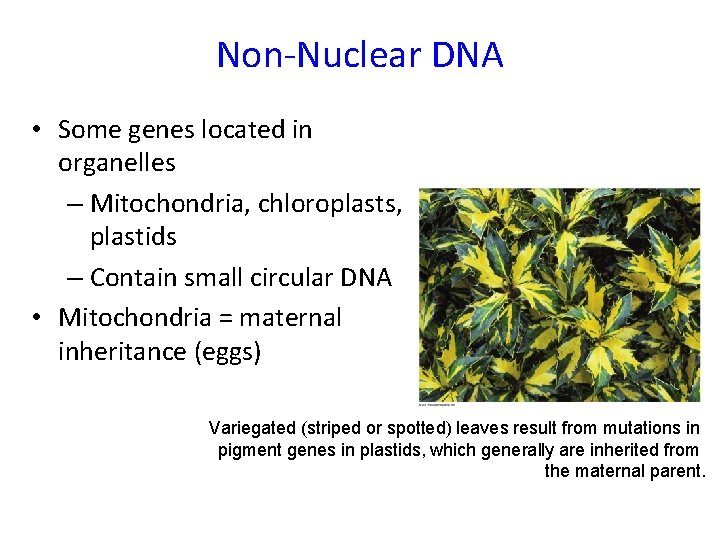
Non-Nuclear DNA • Some genes located in organelles – Mitochondria, chloroplasts, plastids – Contain small circular DNA • Mitochondria = maternal inheritance (eggs) Variegated (striped or spotted) leaves result from mutations in pigment genes in plastids, which generally are inherited from the maternal parent.
Genetic Testing Reasons for Genetic Tests: • Diagnostic testing (genetic disorders) • Presymptomatic & predictive testing • Carrier testing (before having children) • Pharmacogenetics (medication & dosage) • Prenatal testing • Newborn screening • Preimplantation testing (embryos)
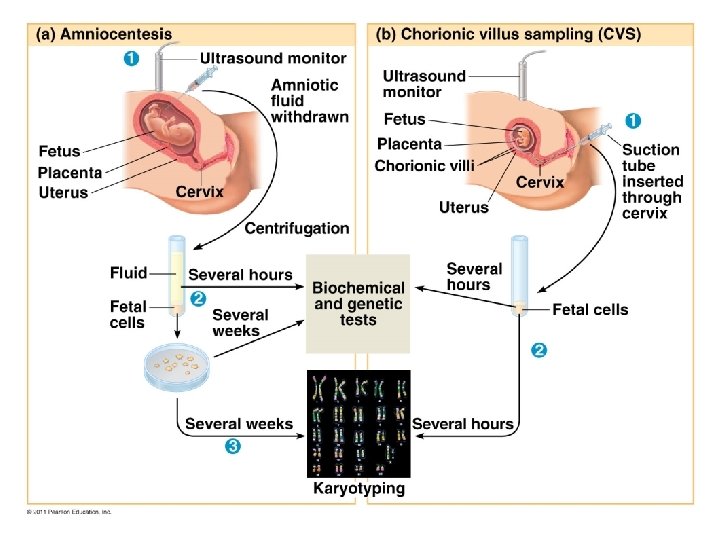
Prenatal Testing • May be used on a fetus to detect genetic disorders • Amniocentesis: remove amniotic fluid around fetus to culture for karyotype • Chorionic villus sampling: insert narrow tube in cervix to extract sample of placenta with fetal cells for karyotype
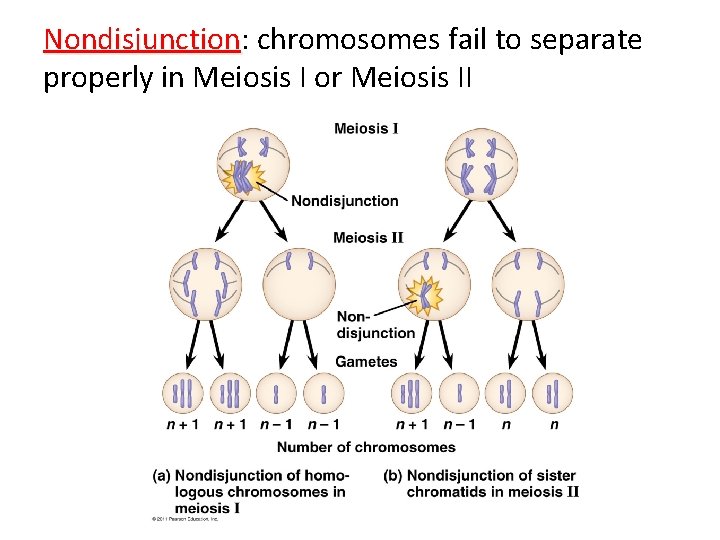
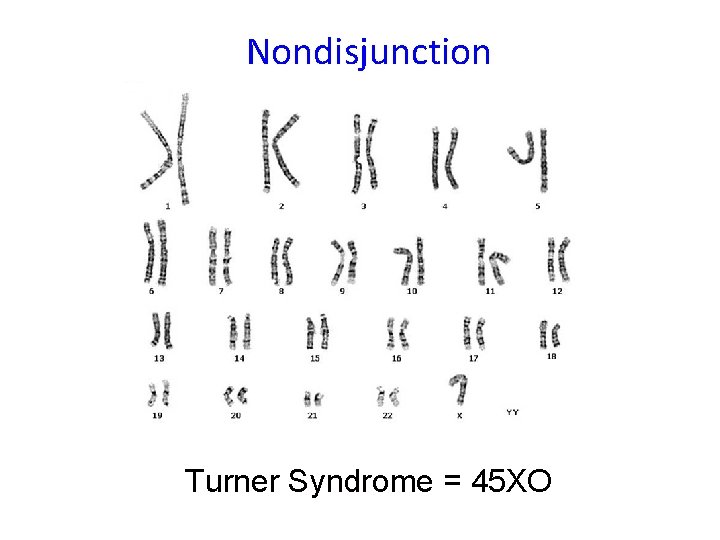
Nondisjunction: Nondisjunction chromosomes fail to separate properly in Meiosis I or Meiosis II
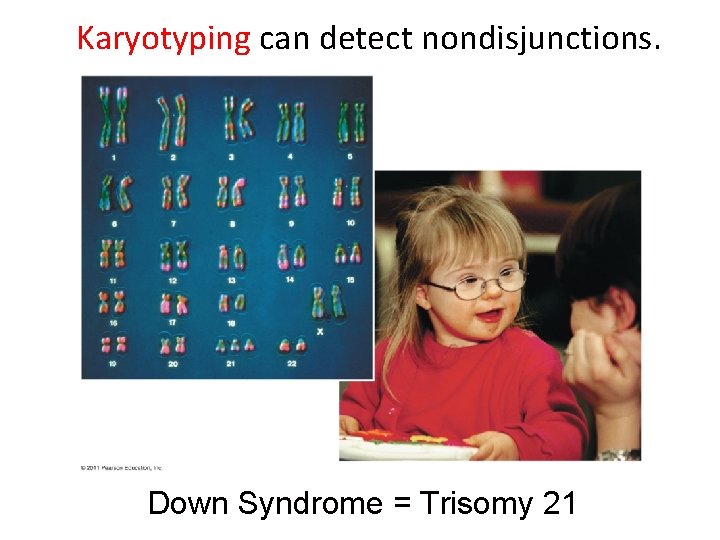
Karyotyping can detect nondisjunctions. Down Syndrome = Trisomy 21
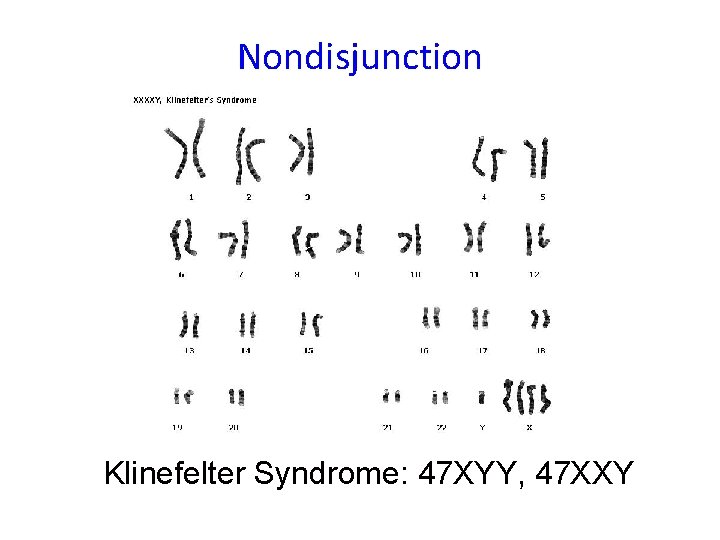
Nondisjunction Klinefelter Syndrome: 47 XYY, 47 XXY
Nondisjunction Turner Syndrome = 45 XO
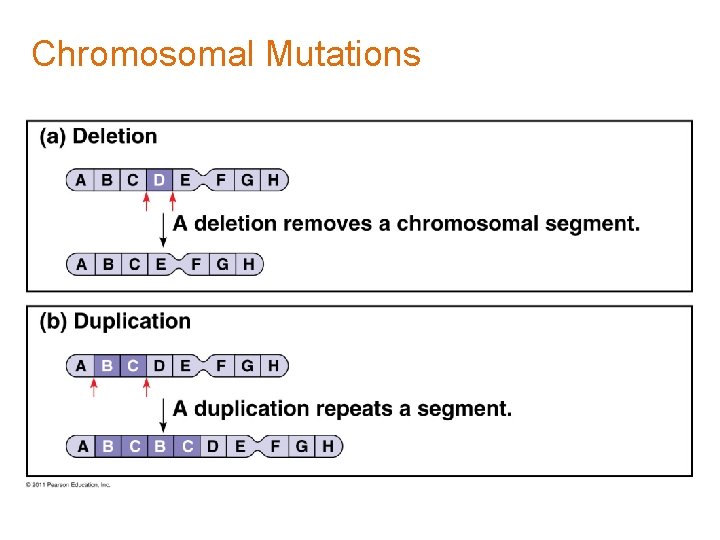
Chromosomal Mutations
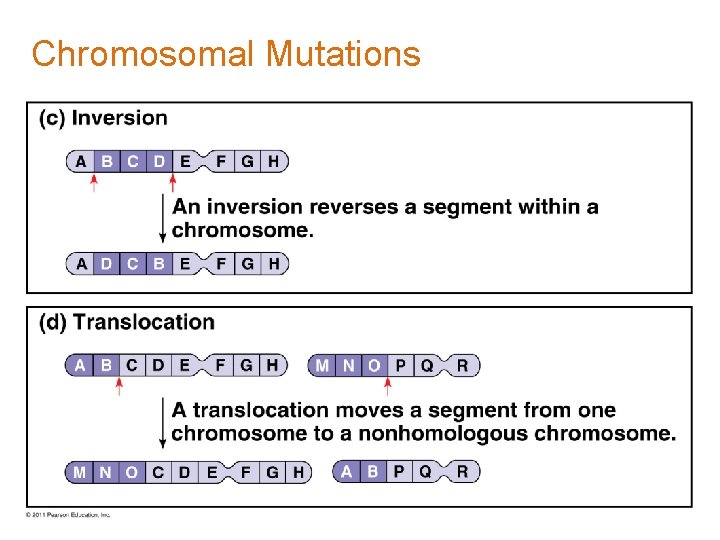
Chromosomal Mutations
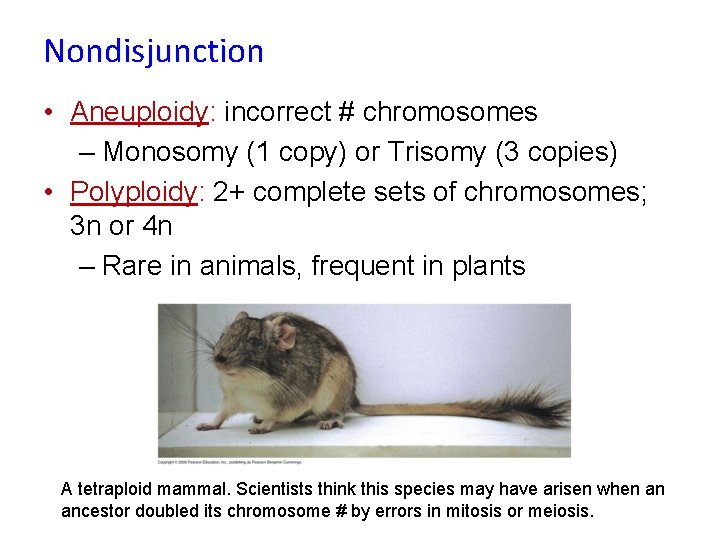
Nondisjunction • Aneuploidy: incorrect # chromosomes – Monosomy (1 copy) or Trisomy (3 copies) • Polyploidy: 2+ complete sets of chromosomes; 3 n or 4 n – Rare in animals, frequent in plants A tetraploid mammal. Scientists think this species may have arisen when an ancestor doubled its chromosome # by errors in mitosis or meiosis.
Review Questions 1. What is the pattern of inheritance of the trait (shaded square/circle) shown in the pedigree? 1. How many chromosomes are in a human cell that is: a) Diploid? b) Triploid? c) Monosomic? d) Trisomic?
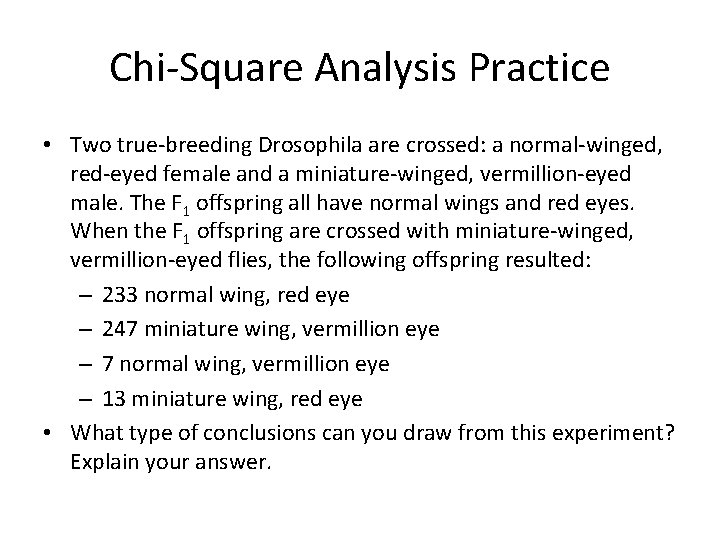
Chi-Square Analysis Practice • Two true-breeding Drosophila are crossed: a normal-winged, red-eyed female and a miniature-winged, vermillion-eyed male. The F 1 offspring all have normal wings and red eyes. When the F 1 offspring are crossed with miniature-winged, vermillion-eyed flies, the following offspring resulted: – 233 normal wing, red eye – 247 miniature wing, vermillion eye – 7 normal wing, vermillion eye – 13 miniature wing, red eye • What type of conclusions can you draw from this experiment? Explain your answer.