
Sexlinked Traits Sex determination Sex chromosomes determines the
- Slides: 34
Sex-linked Traits
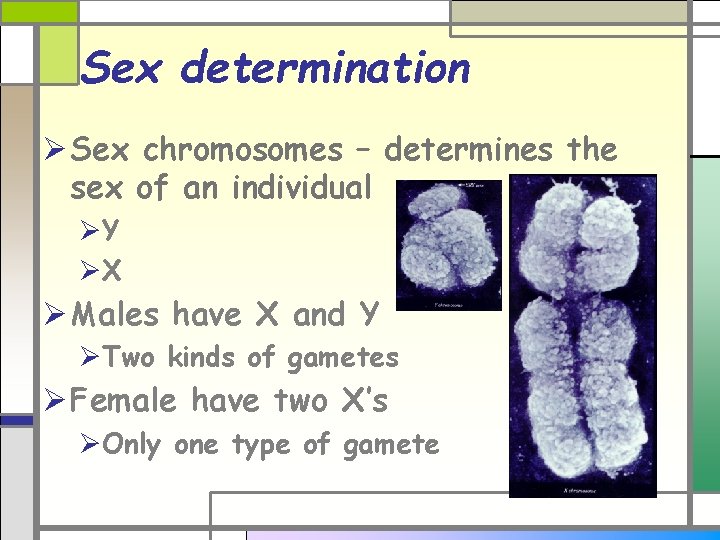
Sex determination Ø Sex chromosomes – determines the sex of an individual ØY ØX Ø Males have X and Y ØTwo kinds of gametes Ø Female have two X’s ØOnly one type of gamete
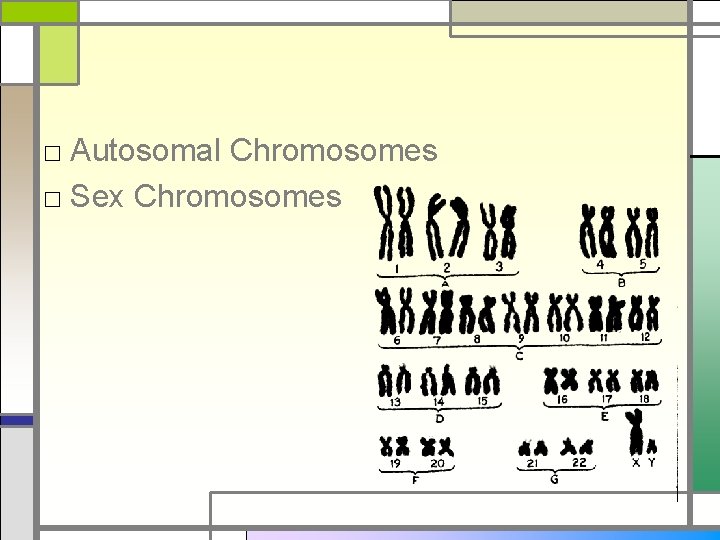
□ Autosomal Chromosomes □ Sex Chromosomes
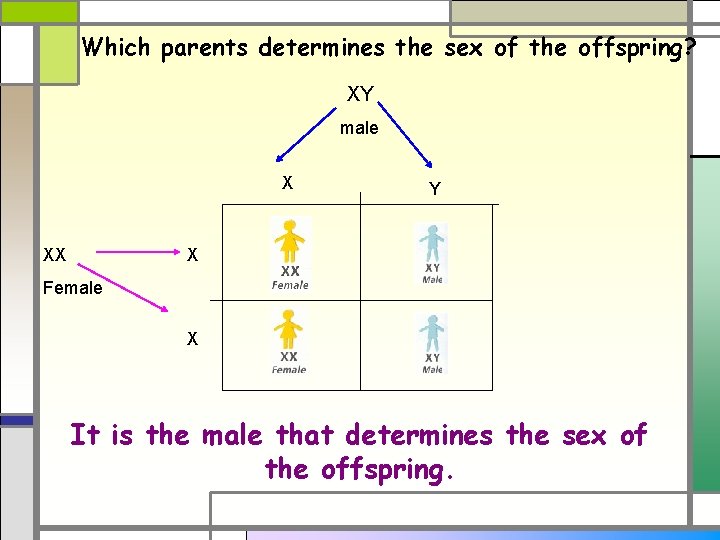
Which parents determines the sex of the offspring? XY male X XX Y X Female X It is the male that determines the sex of the offspring.
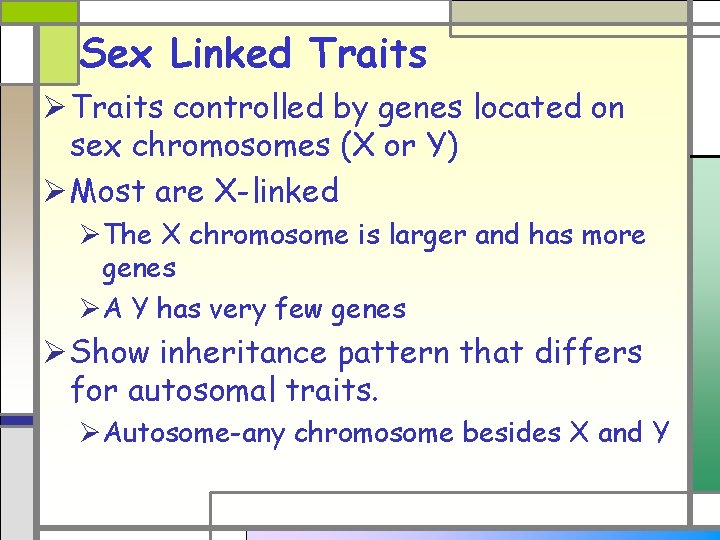
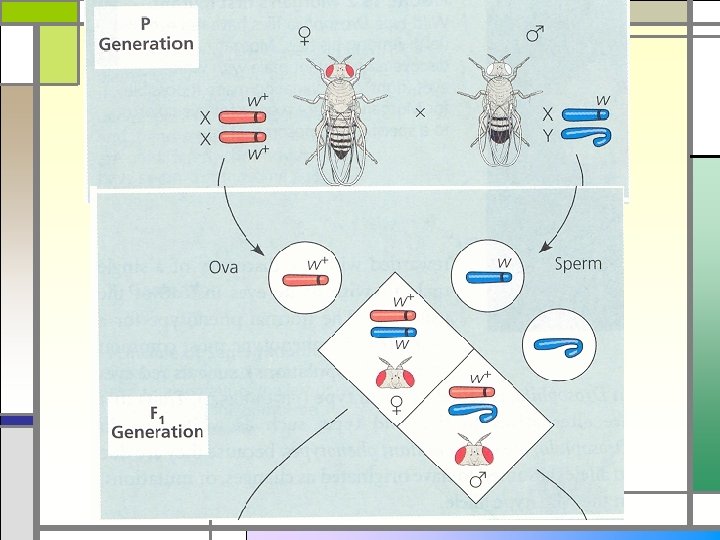
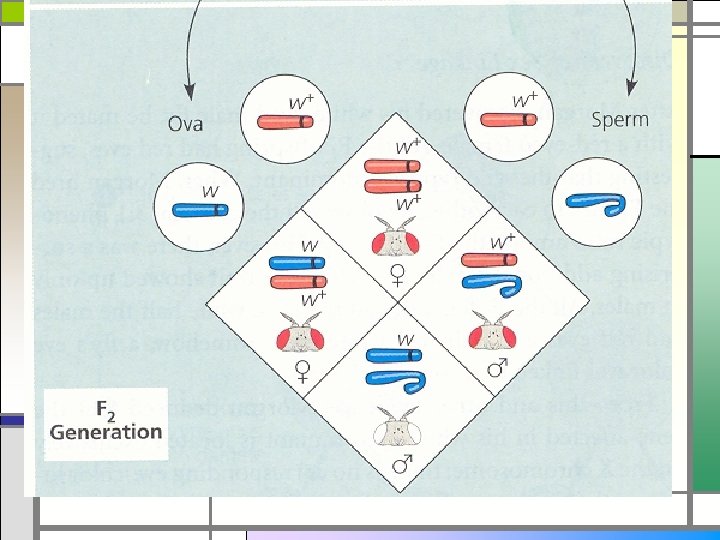
Sex Linked Traits Ø Traits controlled by genes located on sex chromosomes (X or Y) Ø Most are X-linked ØThe X chromosome is larger and has more genes ØA Y has very few genes Ø Show inheritance pattern that differs for autosomal traits. ØAutosome-any chromosome besides X and Y
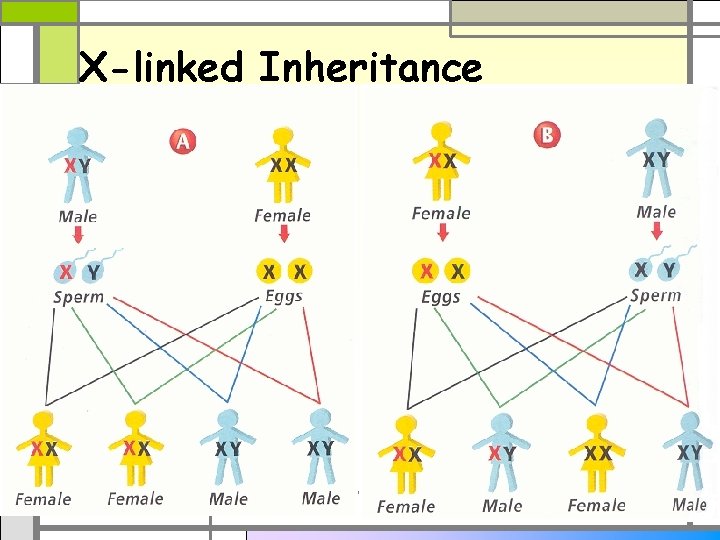
X-linked Inheritance
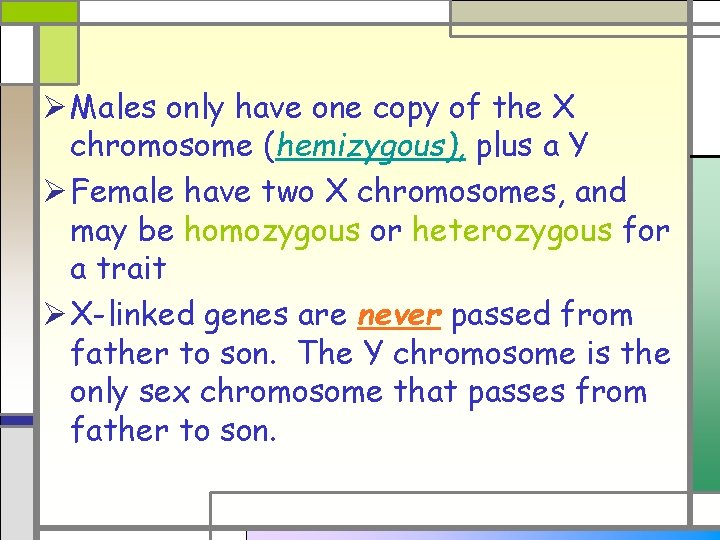
Ø Males only have one copy of the X chromosome (hemizygous), plus a Y Ø Female have two X chromosomes, and may be homozygous or heterozygous for a trait Ø X-linked genes are never passed from father to son. The Y chromosome is the only sex chromosome that passes from father to son.
ØFemales with one copy of the normal gene and one copy of the mutated gene are called carriers. They don’t show the trait. ØMales are never carriers – if they have a mutated gene on the X chromosome, it will be expressed
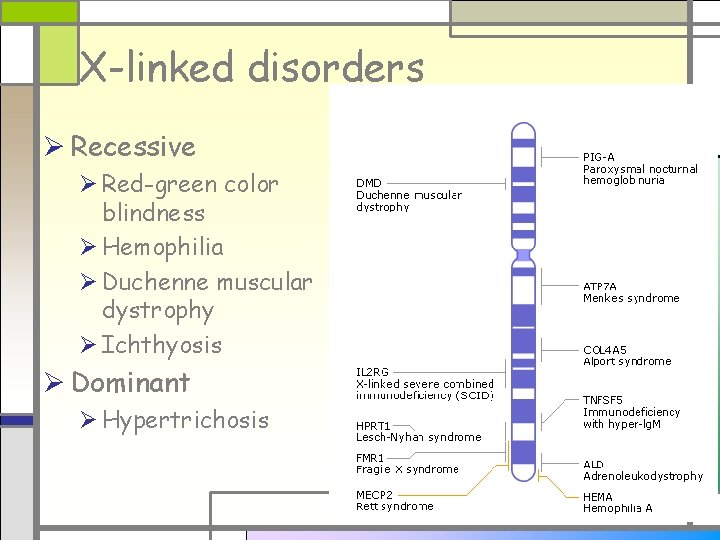
X-linked disorders Ø Recessive Ø Red-green color blindness Ø Hemophilia Ø Duchenne muscular dystrophy Ø Ichthyosis Ø Dominant Ø Hypertrichosis
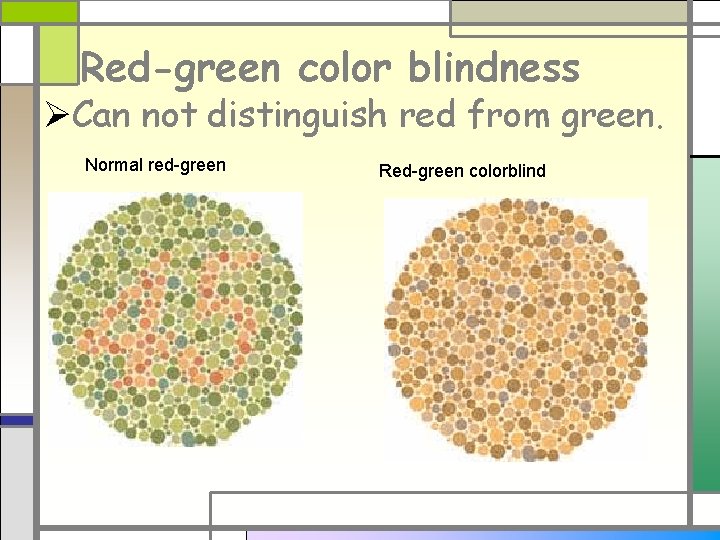
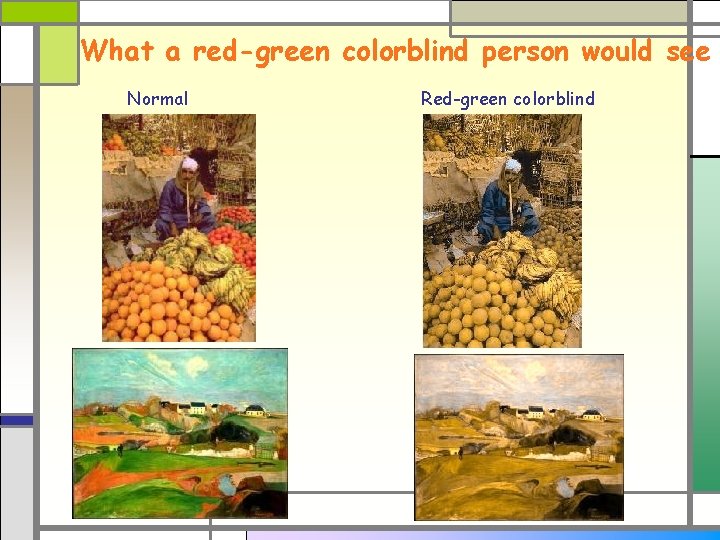
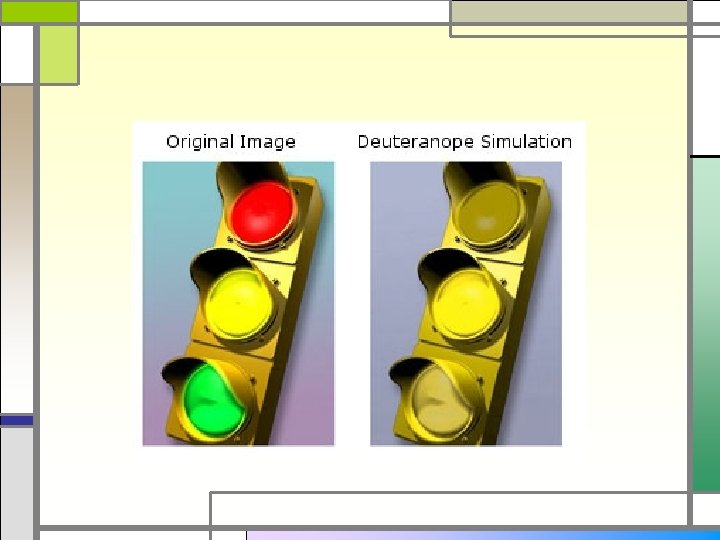
Red-green color blindness ØCan not distinguish red from green. Normal red-green Red-green colorblind
What a red-green colorblind person would see Normal Red-green colorblind
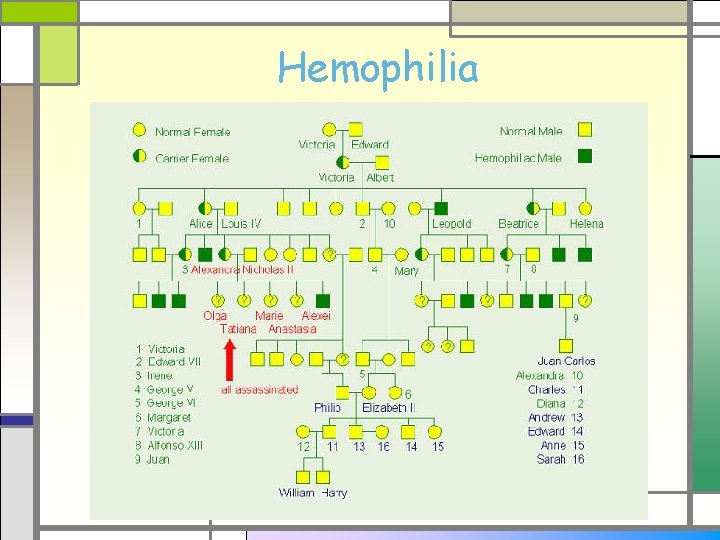
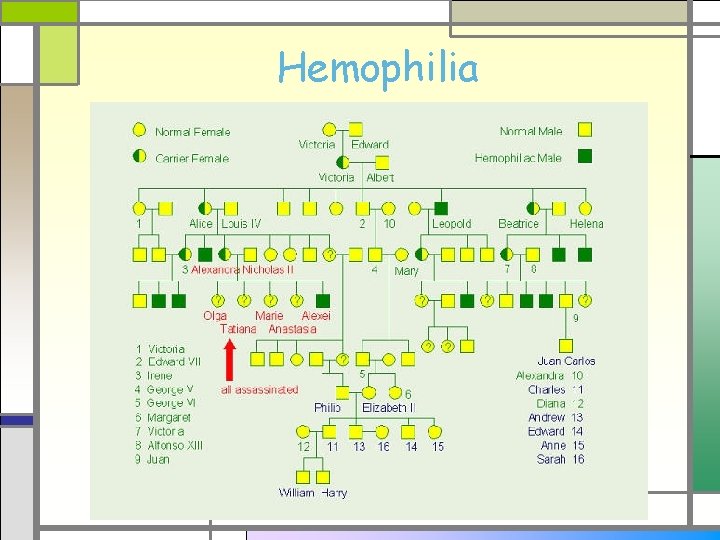
Hemophilia
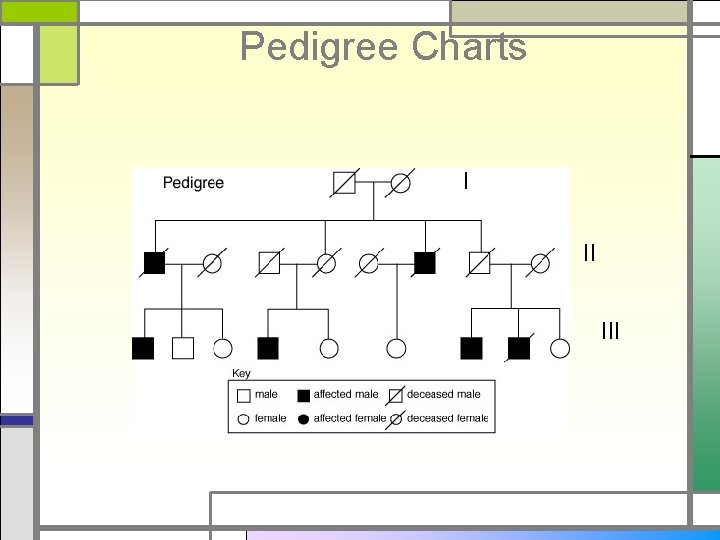
Pedigree Charts I II III
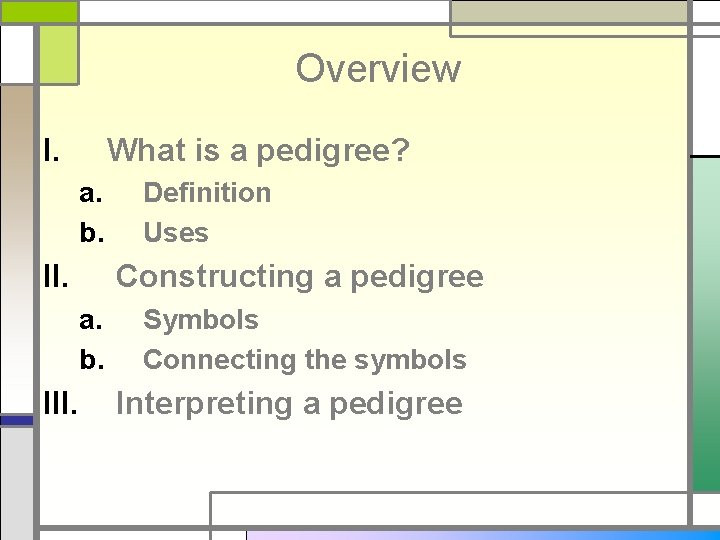
Overview I. What is a pedigree? a. b. II. Definition Uses Constructing a pedigree a. b. III. Symbols Connecting the symbols Interpreting a pedigree
What is a Pedigree? □ A pedigree is a chart of the genetic history of family over several generations. □ Scientists or a genetic counselor would find out about your family history and make this chart to analyze.
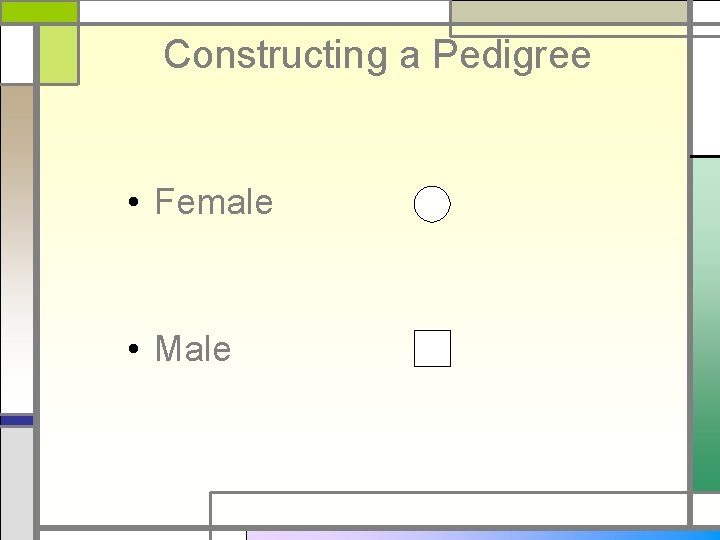
Constructing a Pedigree • Female • Male
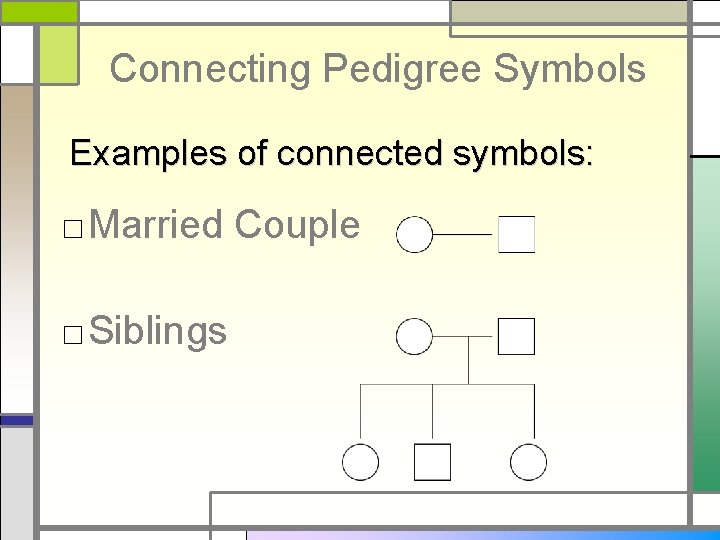
Connecting Pedigree Symbols Examples of connected symbols: □ Married Couple □ Siblings
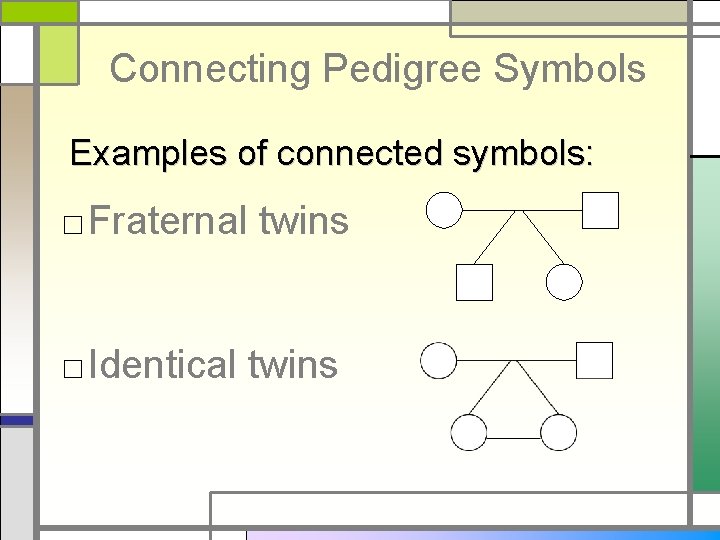
Connecting Pedigree Symbols Examples of connected symbols: □ Fraternal twins □ Identical twins
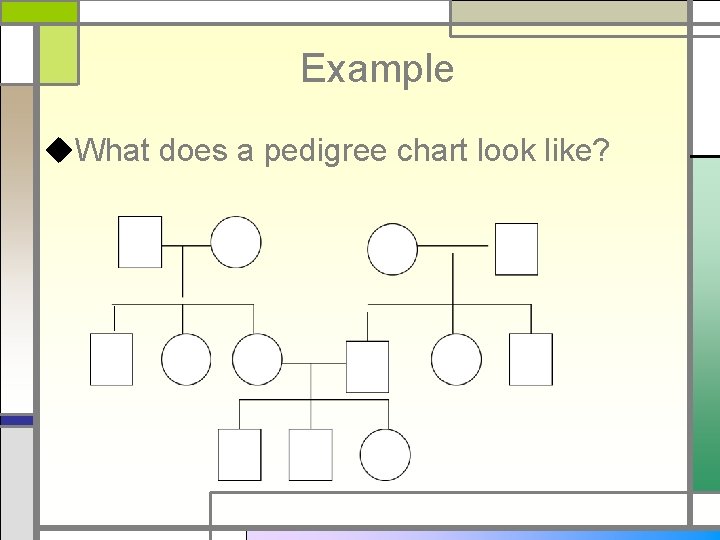
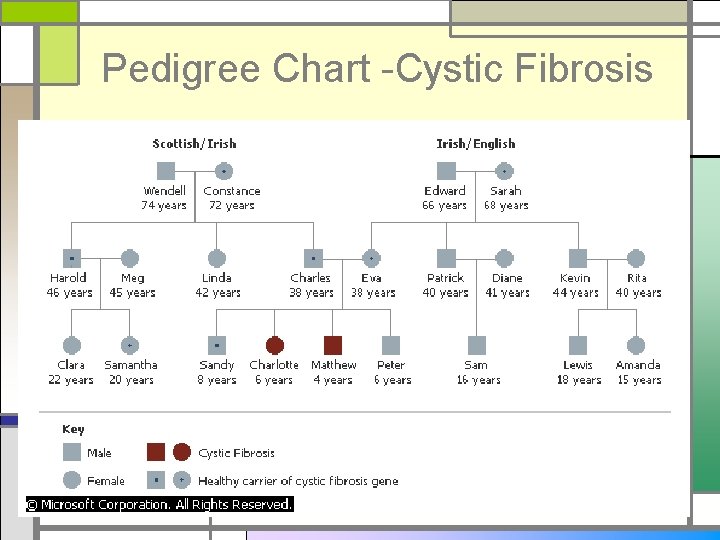
Example u. What does a pedigree chart look like?
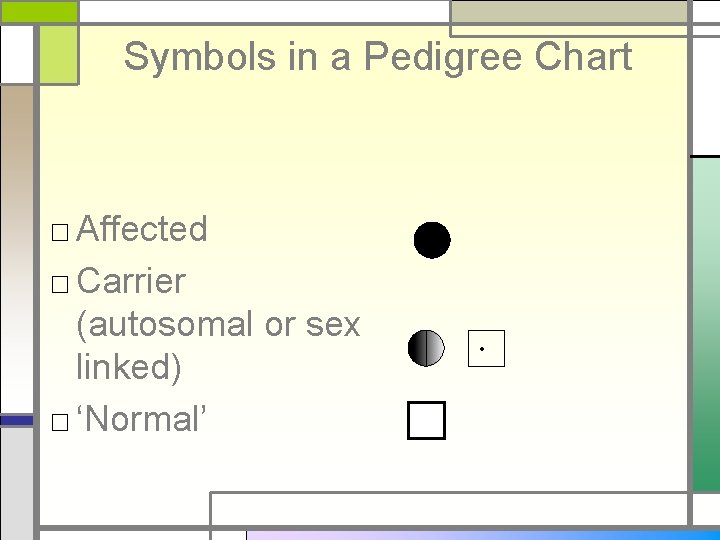
Symbols in a Pedigree Chart □ Affected □ Carrier (autosomal or sex linked) □ ‘Normal’ •
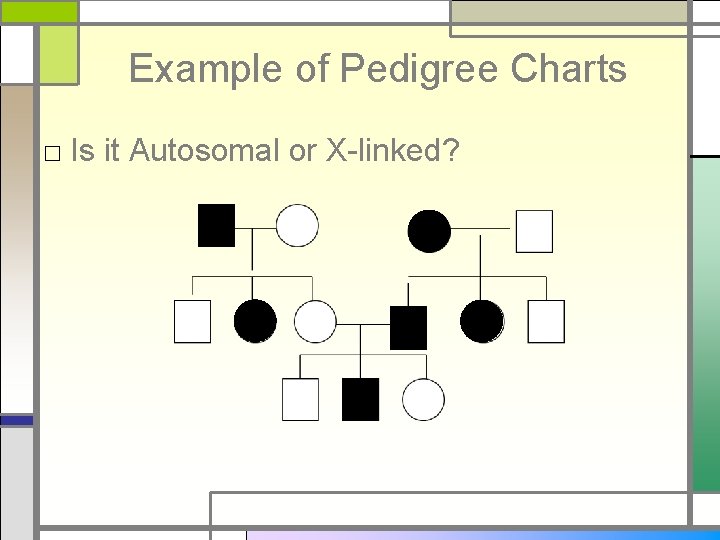
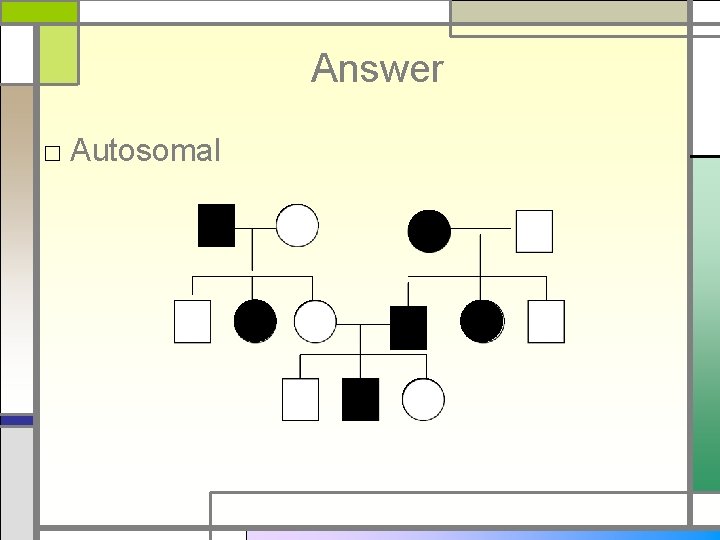
Interpreting a Pedigree Chart 1. Determine if the pedigree chart shows an autosomal or X-linked/sex-linked disease. □ If most of the males in the pedigree are affected the disorder is X-linked □ If it is a 50/50 ratio between men and women the disorder is autosomal.
Example of Pedigree Charts □ Is it Autosomal or X-linked?
Answer □ Autosomal
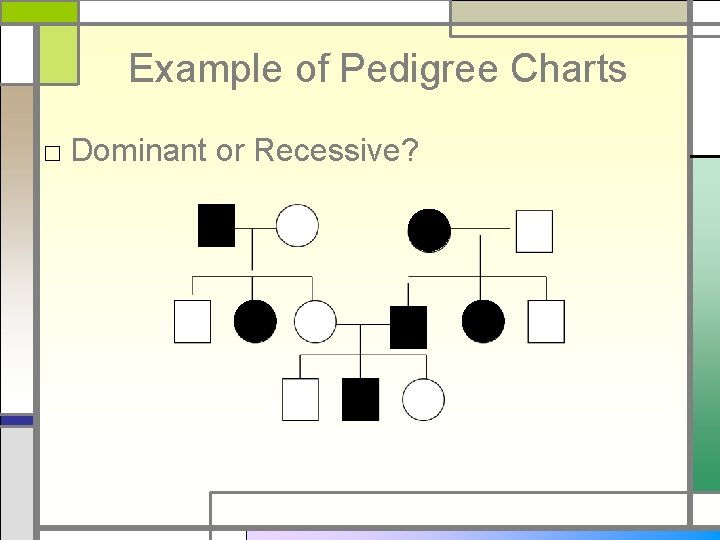
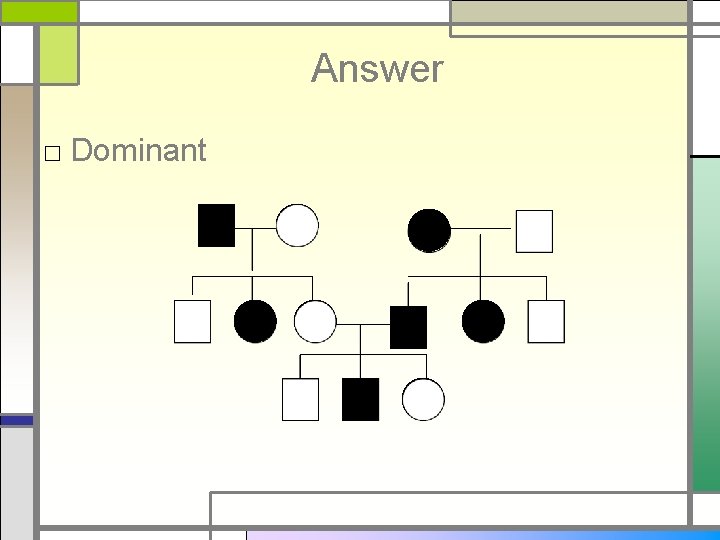
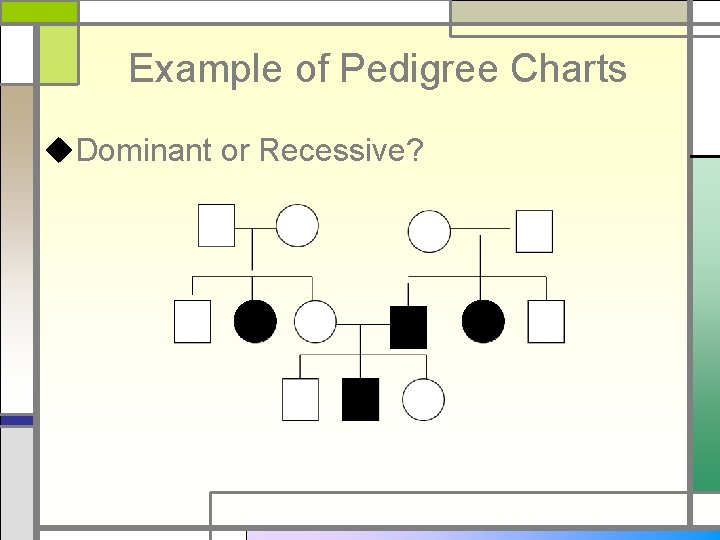
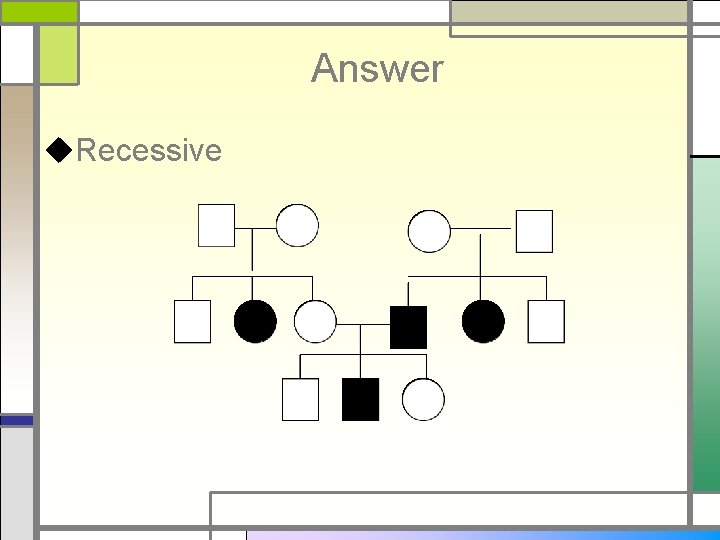
Interpreting a Pedigree Chart 2. Determine whether the disorder is dominant or recessive. □ If the disorder is dominant, one of the parents must have the disorder. □ If the disorder is recessive, neither parent has to have the disorder because they can be heterozygous.
Example of Pedigree Charts □ Dominant or Recessive?
Answer □ Dominant
Example of Pedigree Charts u. Dominant or Recessive?
Answer u. Recessive
Summary u. Pedigrees are family trees that explain your genetic history. u. Pedigrees are used to find out the probability of a child having a disorder in a particular family. u. To begin to interpret a pedigree, determine if the disease or condition is autosomal or X-linked and dominant or recessive.
Pedigree Chart -Cystic Fibrosis
Hemophilia