
Pedigree Analysis 2005 Lee Bardwell Autosomal vs sexlinked
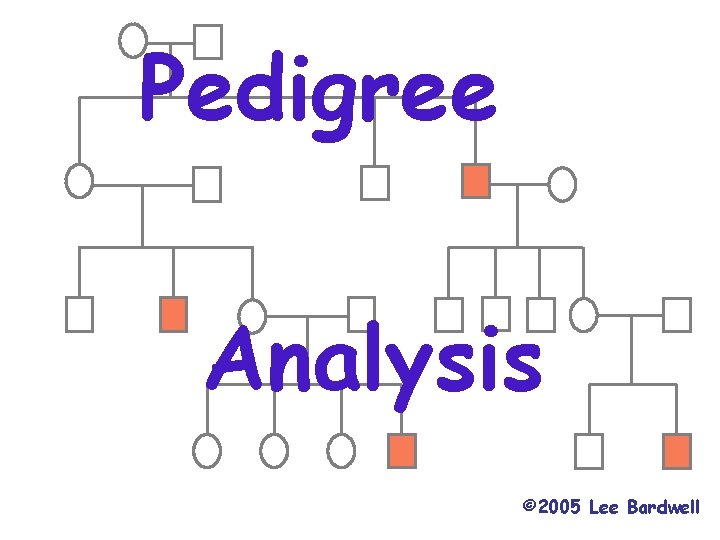
Pedigree Analysis © 2005 Lee Bardwell
Autosomal vs. sexlinked traits • Autosomal traits are caused by genes on autosomes (chrms #1 - #22) – e. g. , we speak of autosomal recessive or autosomal dominant traits or diseases • Sex-linked traits are caused by genes on the sex chrms (X or Y) – e. g. , we speak of X-linked recessive or X-linked dominant traits or diseases © 2004 Lee Bardwell
Dominant inheritance • If D is the disease allele and d is normal, then only dd genotypes are disease free* • Dominant trait/disease found in every generation* • Affected kid never** born to unaffected parents *Assuming 100% penetrance **Assuming no new mutation
Recessive inheritance • If d is the disease allele and D is normal, then only dd genotypes are affected • typically not seen in every generation • Affected kid can be born to unaffected parents
X-linked recessive inheritance • Rules for recessive inheritance apply • Mostly males are affected
X-linked dominant inheritance • Rules for dominant inheritance apply • Dad’s pass disease to all of their daughters and none of their sons
X-linked genes (and X-linked diseases). . . • Males: haploid (= hemizygous) for most X-linked genes. • --> men are more frequently affected by diseases caused recessive alleles of X-linked genes © 2001 Lee Bardwell
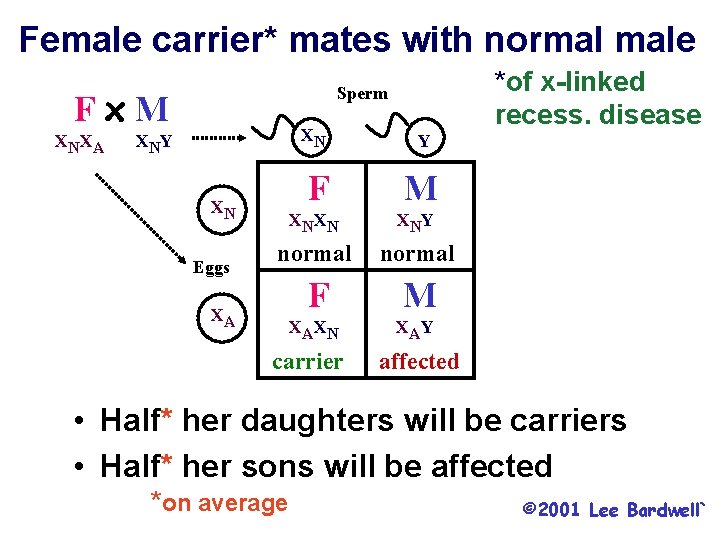
Female carrier* mates with normal male Fx. M XNXA *of x-linked recess. disease Sperm XN Y F M XNXN XNY normal F M XAXN XAY XN Eggs XA carrier affected • Half* her daughters will be carriers • Half* her sons will be affected *on average © 2001 Lee Bardwell`
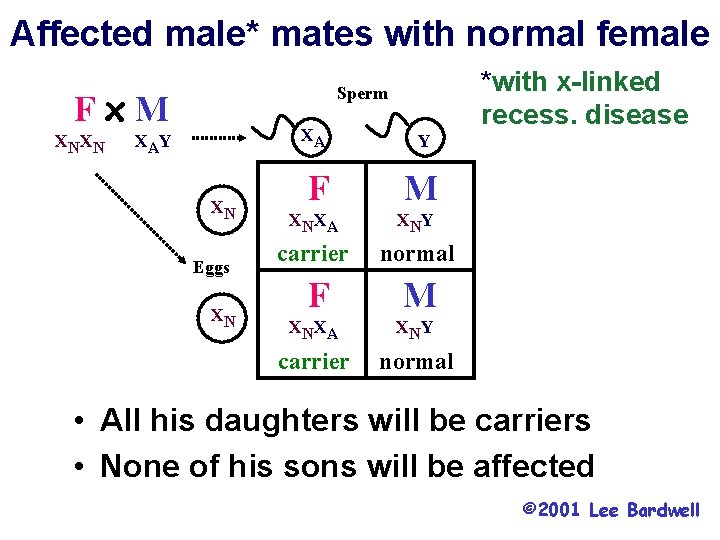
Affected male* mates with normal female Fx. M XNXN *with x-linked recess. disease Sperm XAY XN Eggs XN XA Y F M XNXA XNY carrier normal • All his daughters will be carriers • None of his sons will be affected © 2001 Lee Bardwell
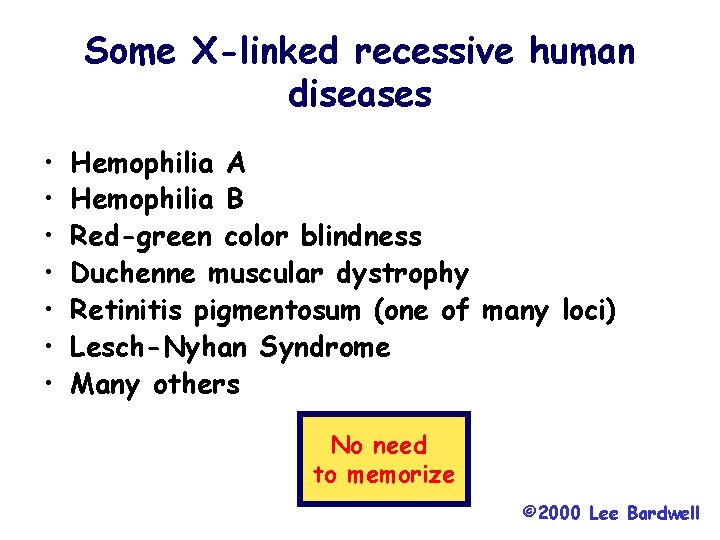
Some X-linked recessive human diseases • • Hemophilia A Hemophilia B Red-green color blindness Duchenne muscular dystrophy Retinitis pigmentosum (one of many loci) Lesch-Nyhan Syndrome Many others No need to memorize © 2000 Lee Bardwell
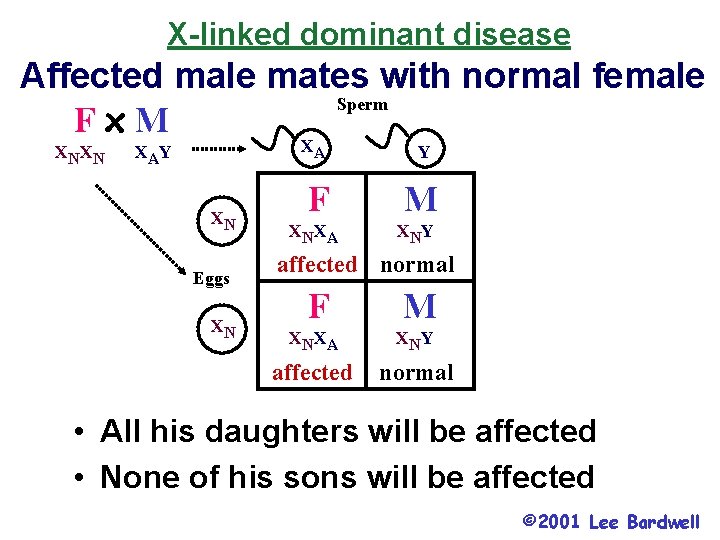
X-linked dominant disease Affected male mates with normal female Sperm Fx. M XNXN XAY XN Eggs XN XA Y F M XNXA XNY affected normal • All his daughters will be affected • None of his sons will be affected © 2001 Lee Bardwell
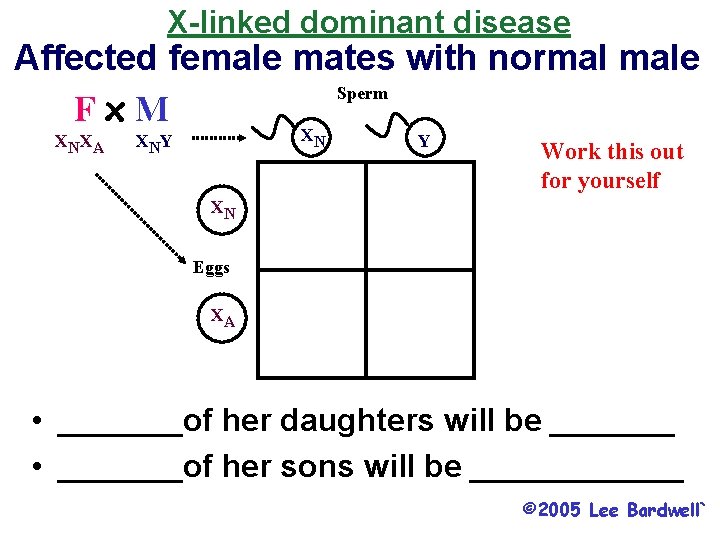
X-linked dominant disease Affected female mates with normal male Sperm Fx. M XNXA XN XNY Y Work this out for yourself XN Eggs XA • _______of her daughters will be _______ • _______of her sons will be ______ © 2005 Lee Bardwell`

Some X-linked dominant human diseases • • Incontinentia Pigmenti Hypophosphatemic Rickets Charcot-Marie-Tooth disease Chondrodysplasia Punctata No need to memorize © 2005 Lee Bardwell
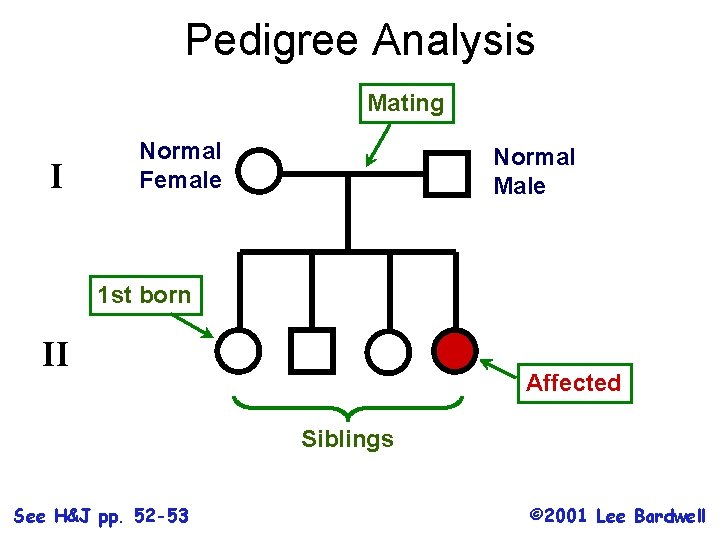
Pedigree Analysis Mating I Normal Female Normal Male 1 st born II Affected Siblings See H&J pp. 52 -53 © 2001 Lee Bardwell
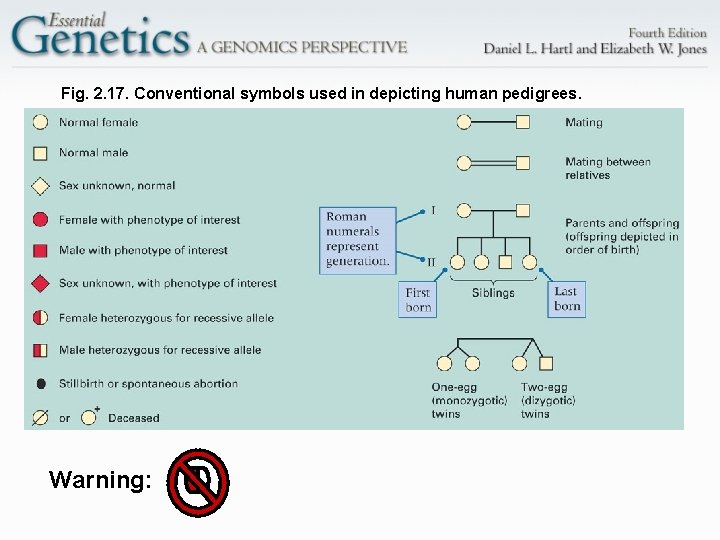
Fig. 2. 17. Conventional symbols used in depicting human pedigrees. Warning:
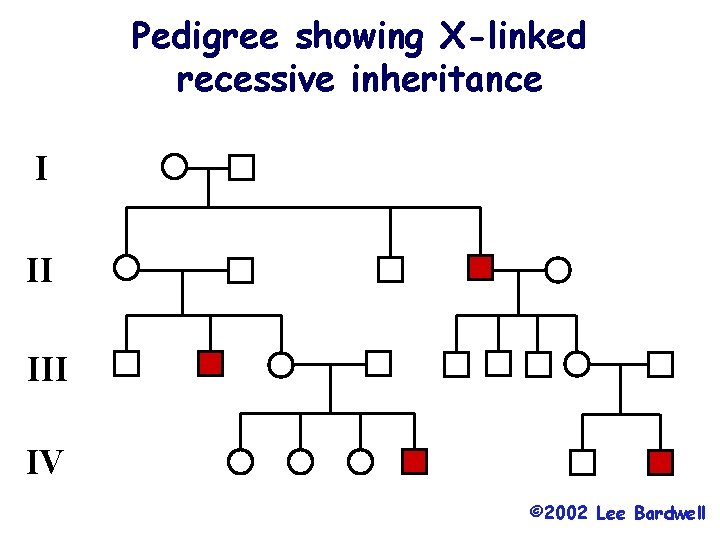
Pedigree showing X-linked recessive inheritance I II IV © 2002 Lee Bardwell
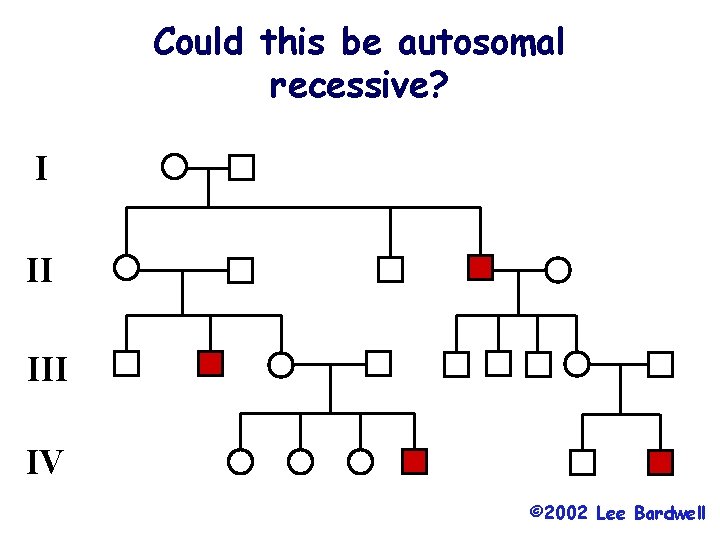
Could this be autosomal recessive? I II IV © 2002 Lee Bardwell
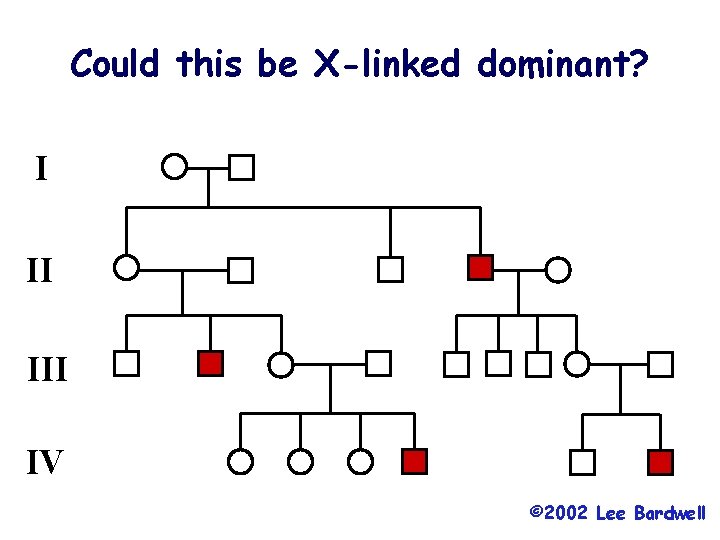
Could this be X-linked dominant? I II IV © 2002 Lee Bardwell
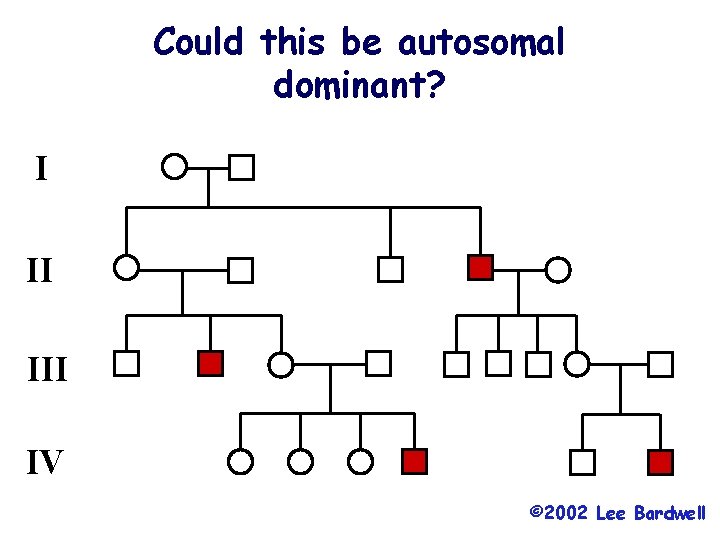
Could this be autosomal dominant? I II IV © 2002 Lee Bardwell
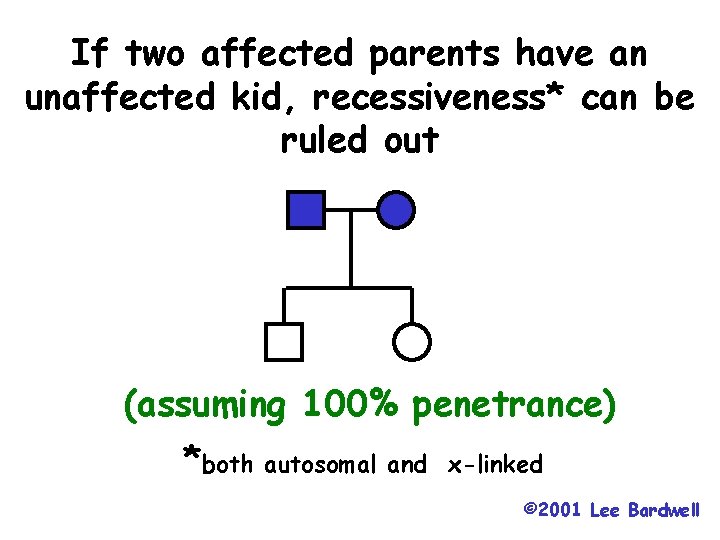
If two affected parents have an unaffected kid, recessiveness* can be ruled out (assuming 100% penetrance) *both autosomal and x-linked © 2001 Lee Bardwell
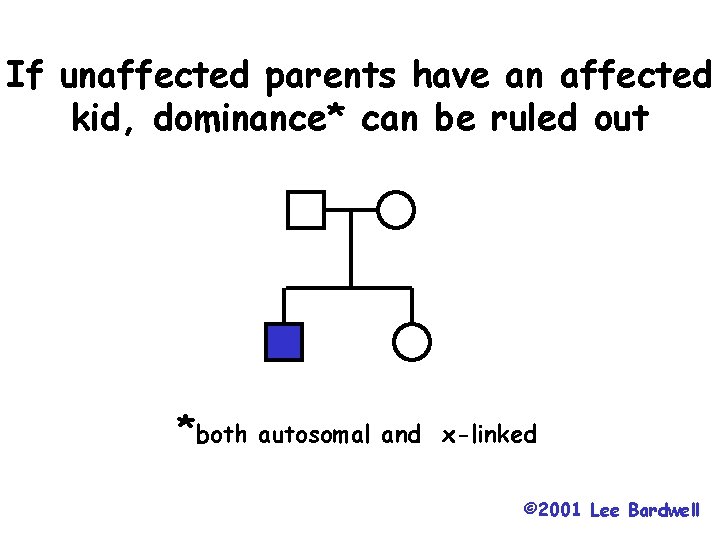
If unaffected parents have an affected kid, dominance* can be ruled out *both autosomal and x-linked © 2001 Lee Bardwell
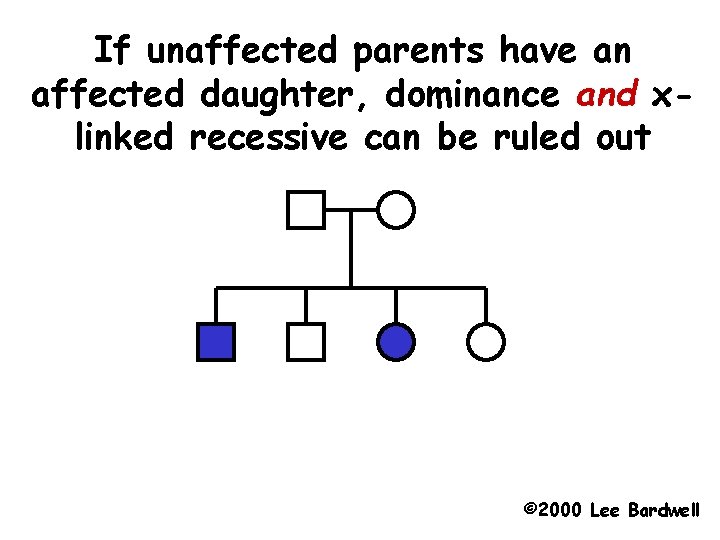
If unaffected parents have an affected daughter, dominance and xlinked recessive can be ruled out © 2000 Lee Bardwell
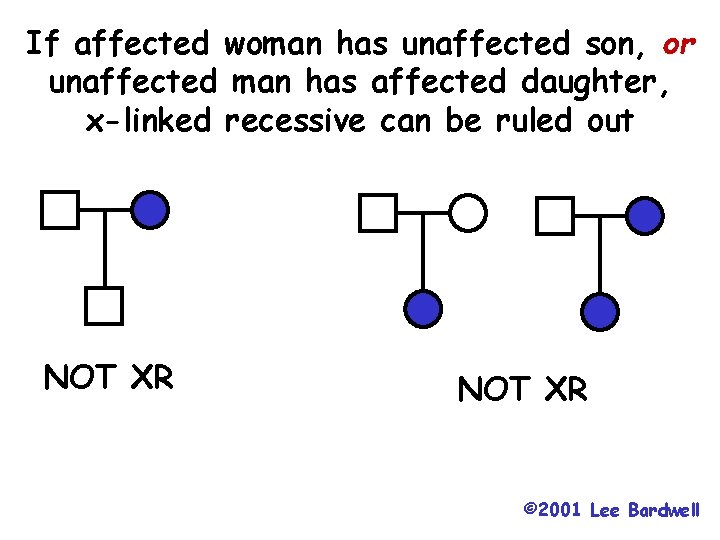
If affected woman has unaffected son, or unaffected man has affected daughter, x-linked recessive can be ruled out NOT XR © 2001 Lee Bardwell
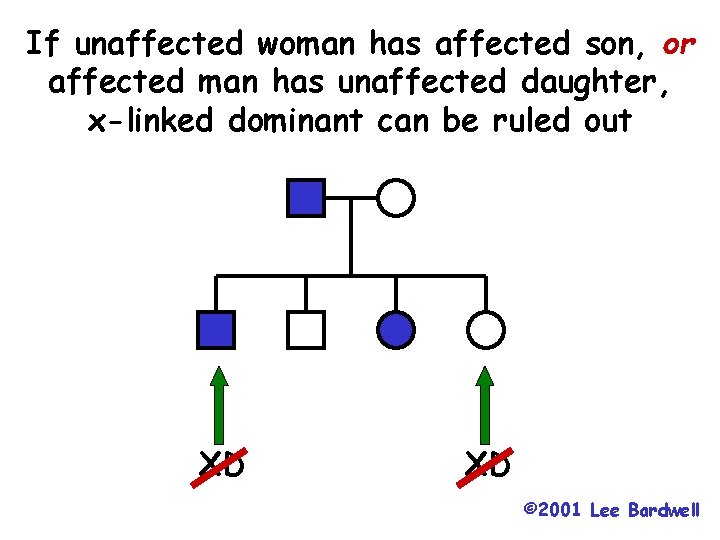
If unaffected woman has affected son, or affected man has unaffected daughter, x-linked dominant can be ruled out XD XD © 2001 Lee Bardwell
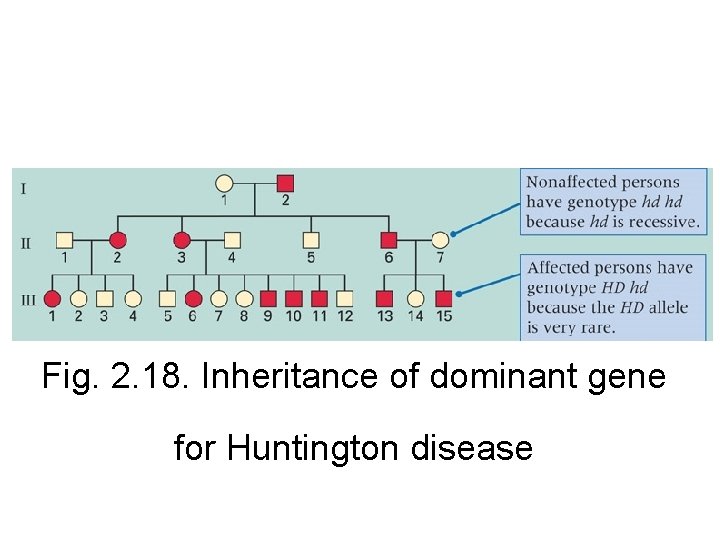
Fig. 2. 18. Inheritance of dominant gene for Huntington disease
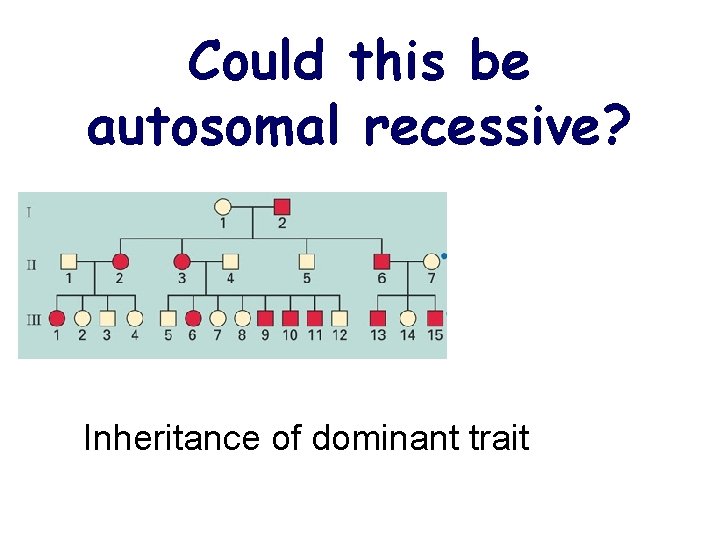
Could this be autosomal recessive? Inheritance of dominant trait
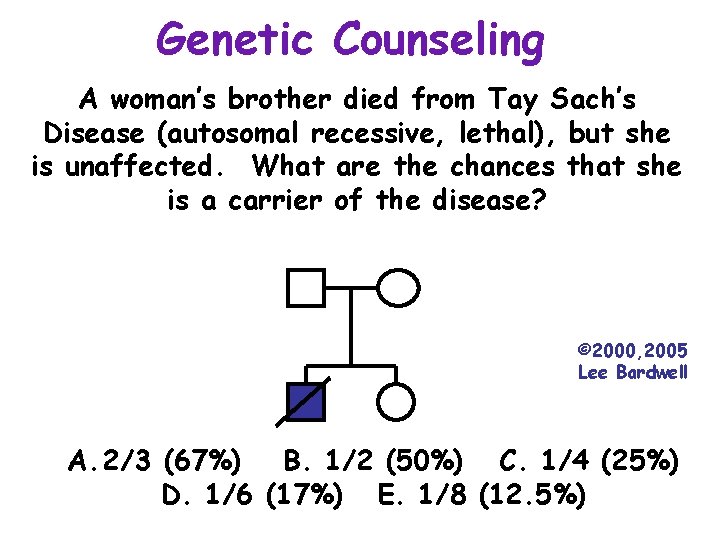
Genetic Counseling A woman’s brother died from Tay Sach’s Disease (autosomal recessive, lethal), but she is unaffected. What are the chances that she is a carrier of the disease? © 2000, 2005 Lee Bardwell A. 2/3 (67%) B. 1/2 (50%) C. 1/4 (25%) D. 1/6 (17%) E. 1/8 (12. 5%)
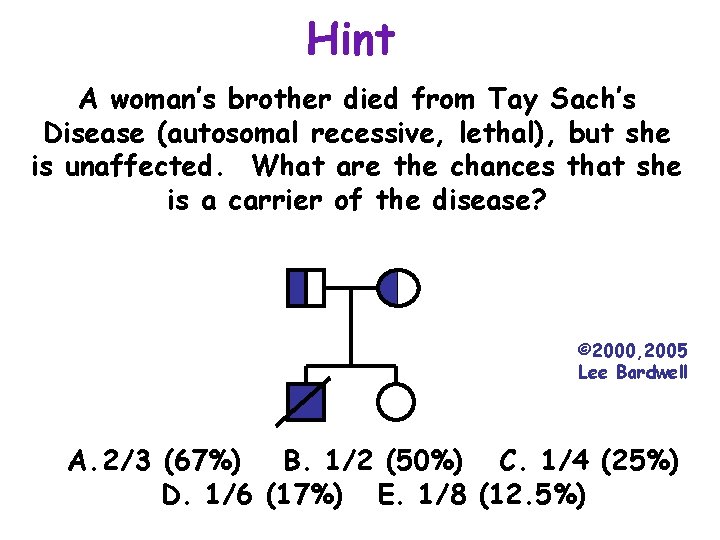
Hint A woman’s brother died from Tay Sach’s Disease (autosomal recessive, lethal), but she is unaffected. What are the chances that she is a carrier of the disease? © 2000, 2005 Lee Bardwell A. 2/3 (67%) B. 1/2 (50%) C. 1/4 (25%) D. 1/6 (17%) E. 1/8 (12. 5%)
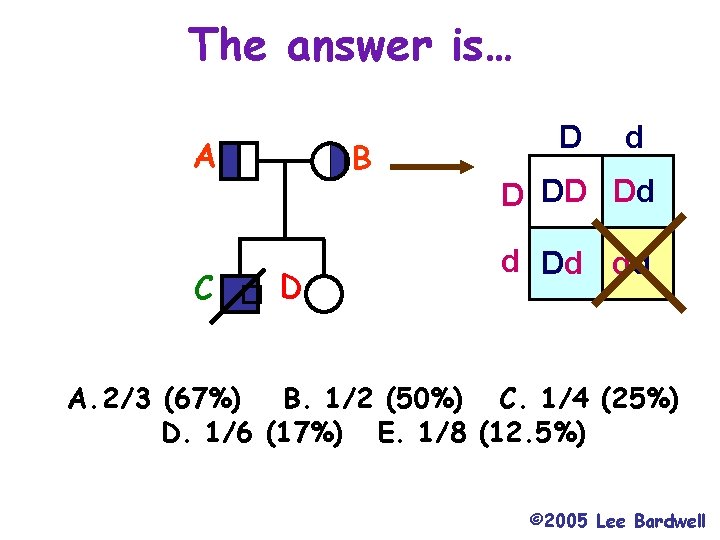
The answer is… A C B � D D d D DD Dd dd A. 2/3 (67%) B. 1/2 (50%) C. 1/4 (25%) D. 1/6 (17%) E. 1/8 (12. 5%) © 2005 Lee Bardwell
Problem 2 Assuming your grandfather is a carrier (heterozygote) for a rare recessive, disease causing allele of a given gene, What’s the chance that you are also a carrier of this allele? © 2001 Lee Bardwell
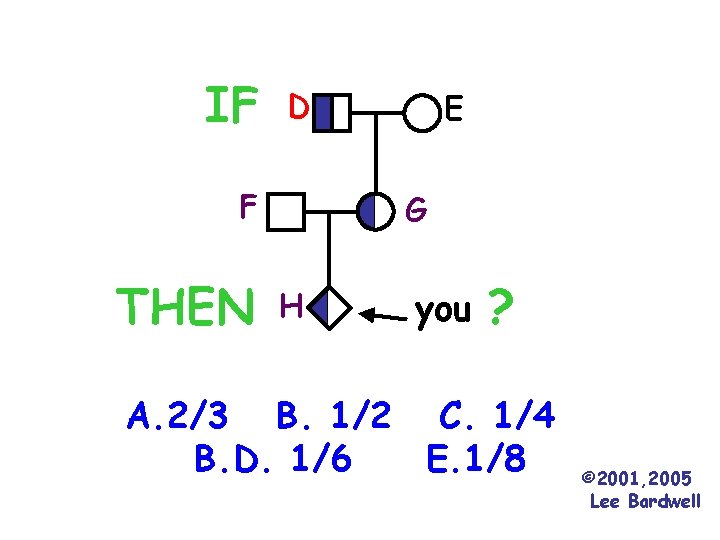
IF D F THEN E G H you ? A. 2/3 B. 1/2 C. 1/4 B. D. 1/6 E. 1/8 © 2001, 2005 Lee Bardwell
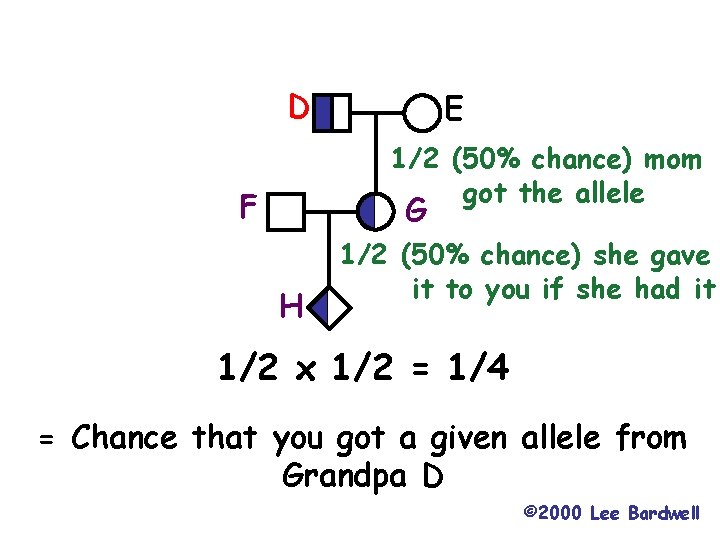
D E 1/2 (50% chance) mom got the allele F G H 1/2 (50% chance) she gave it to you if she had it 1/2 x 1/2 = 1/4 = Chance that you got a given allele from Grandpa D © 2000 Lee Bardwell
Problem 3 Your grandfather’s sister had cystic fibrosis (rare, autosomal recessive). That’s the only case in your family. (A) What’s the chance that you are a carrier of CF? A. 2/3 B. 1/2 C. 1/4 B. D. 1/6 E. 1/8 © 2001 Lee Bardwell
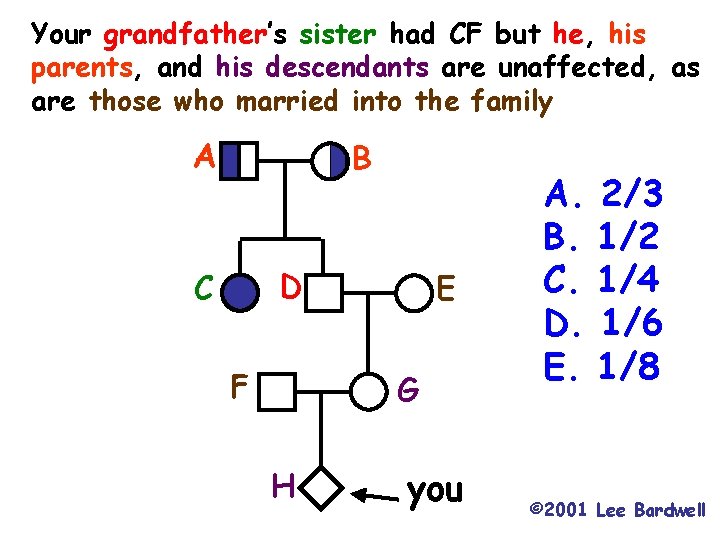
Your grandfather’s sister had CF but he, his parents, and his descendants are unaffected, as are those who married into the family A B D C F E G H you A. B. C. D. E. 2/3 1/2 1/4 1/6 1/8 © 2001 Lee Bardwell
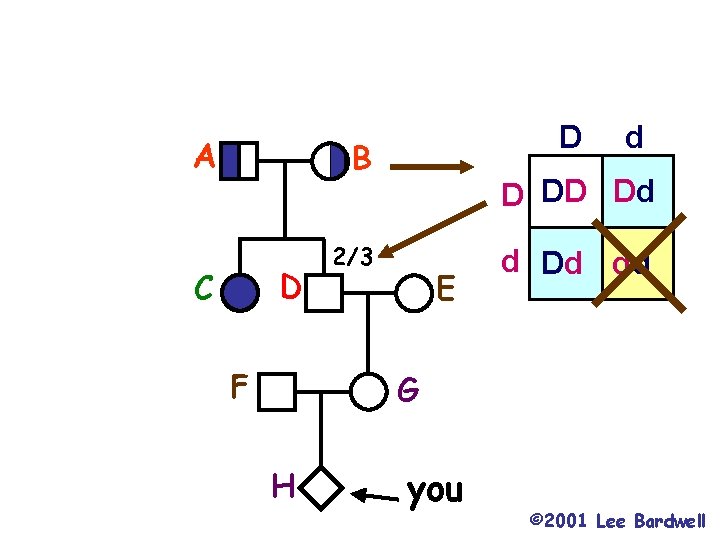
A D B D C F d D DD Dd 2/3 E d Dd dd G H you © 2001 Lee Bardwell
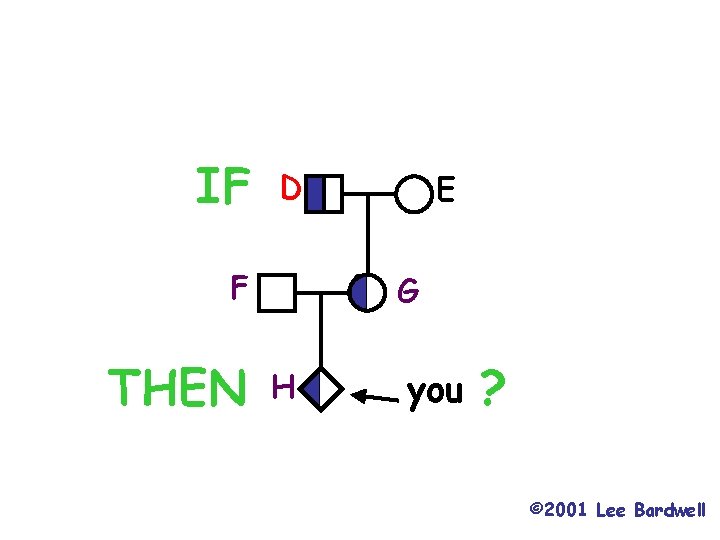
IF D F THEN E G H you ? © 2001 Lee Bardwell
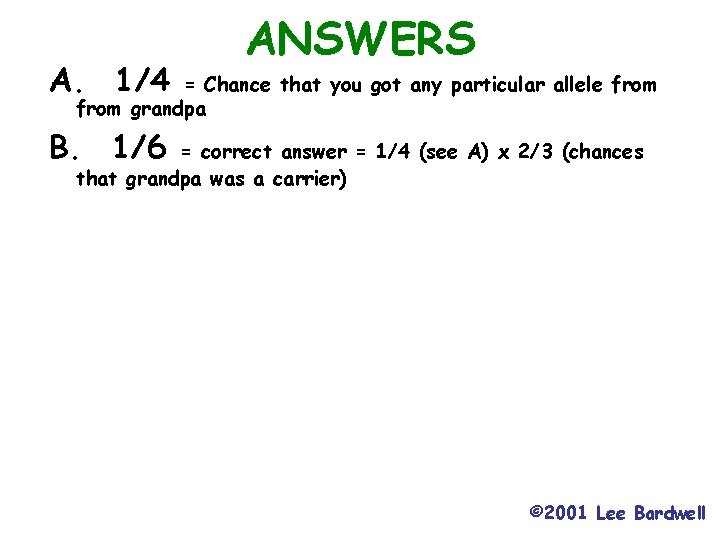
A. 1/4 ANSWERS = Chance that you got any particular allele from grandpa B. 1/6 = correct answer = 1/4 (see A) x 2/3 (chances that grandpa was a carrier) © 2001 Lee Bardwell
- Slides: 37